
Up Next

Zach From WolvesAndFinance Uncovers Alleged Military Fraud Connected to Charlie Kirk's Death at Fort Huachuca
38:44
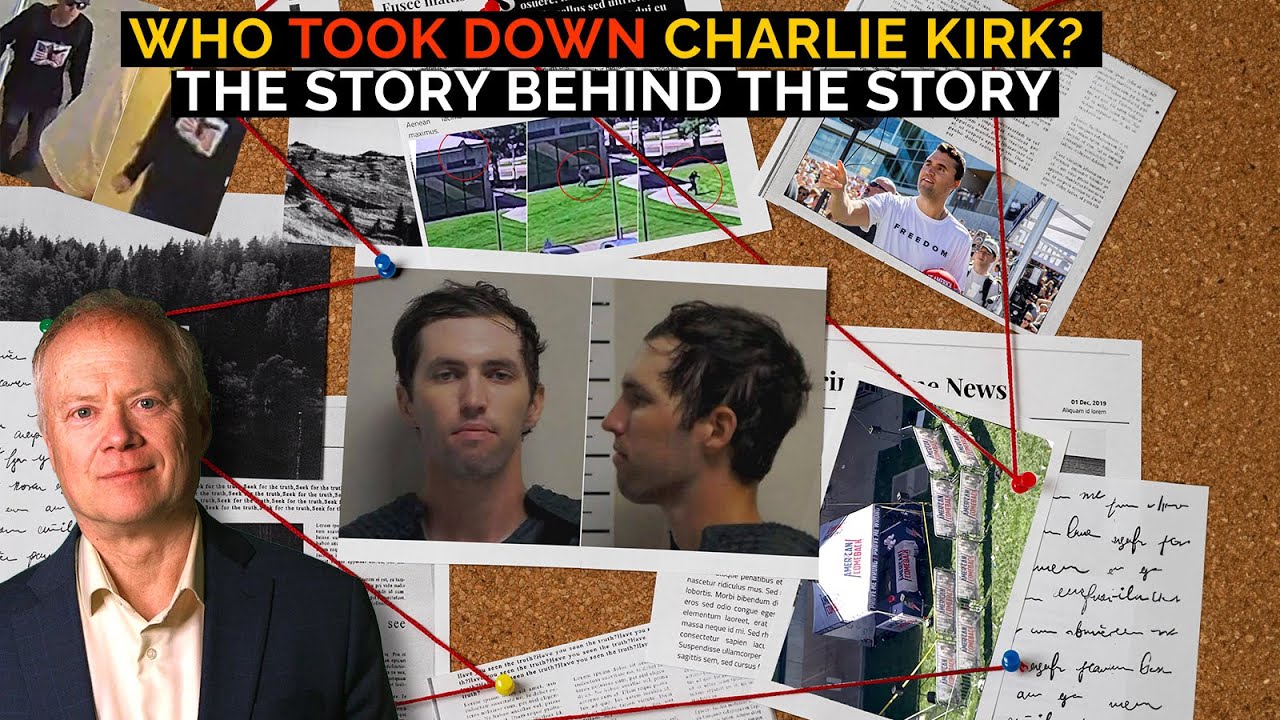
Dr. Chris Martinson Exposes Major Problems with the Official Charlie Kirk Murder Investigation and Tyler Robinson Narrative
54:10

Zach Costello Investigates Body Armor Theory in Charlie Kirk Assassination and Finds Critical Flaws
7:27
Related Books
Browse Conservative Books


Gary Melton from Paramount Debunks Charlie Kirk Shooting Conspiracy Theories with Ballistic Evidence and Analysis
Gary Melton from Paramount addresses the proliferation of conspiracy theories surrounding the Charlie Kirk shooting incident. Drawing on ballistic calculations, Google Earth measurements, and video analysis, he methodically debunks claims about shooter line of sight, shot angles, and weapon capability. Gary examines the 138-yard shot from the alleged shooter's position, calculates the actual 9.2-degree angle, and analyzes the direction of energy transfer visible in video footage. He warns that unfounded theories undermine legitimate investigation efforts and create the same confusion that plagued the Butler, Pennsylvania Trump assassination attempt investigation. Gary emphasizes the importance of evidence-based analysis over sensationalism, urging viewers to distinguish between citizen journalism and conspiratorial speculation that serves only to muddy the waters of truth.
The Problem with Unbridled Conspiracy Theories
Gary from Paramount opens with a concern about the spread of bizarre conspiracy theories related to recent events, particularly the Charlie Kirk shooting incident. He draws parallels to the confusion that surrounded the Trump assassination attempt in Butler, Pennsylvania, where legitimate investigative work was undermined by unfounded speculation. While Gary supports citizen journalism and skepticism toward government narratives, he emphasizes the danger of falling for con artists and nonsensical theories that lack evidentiary support.
The core issue, Gary explains, is that when wild theories proliferate, they delegitimize legitimate concerns and questions. Everything gets lumped together and dismissed, making it harder for people genuinely trying to uncover the truth. He acknowledges that not all misinformation is ill-intended—some stems from overactive imaginations and information gaps—but the harm done to serious investigation is irreparable regardless of intent.
Debunking the Line of Sight Myth
One of the most persistent misconceptions Gary encounters in his comment section is the claim that the alleged shooter could not have had a clear line of sight to Charlie Kirk. The reasoning goes that since the shooter was positioned at an elevated location and Charlie was underneath a tent, the shot would have been impossible.
Gary presents photographic evidence from the alleged shooter's position showing a crystal clear line of sight to Charlie's location. He notes that the photograph was taken from a standing position, and if taken from a prone position—matching the shooter's actual perspective—there would be several feet of clearance between Charlie's head and the top of the tent. This single piece of evidence, Gary argues, should dispel numerous myths that have taken root online.
Calculating the Actual Shot Angle
Another major source of misinformation concerns the shot angle. Gary has seen claims of extreme angles ranging from 20 to 30 degrees, leading people to conclude that if someone was hit in the neck, the bullet would exit in the middle of their back—making the official narrative impossible.
Using Google Earth, Gary provides precise measurements. The distance from the alleged shooter's location to Charlie Kirk's position was 138 yards. The difference in elevation was 72 feet, minus approximately 4 feet 10 inches to account for Charlie not being on the ground level. Using basic trigonometry—which Gary notes can be calculated using AI tools like ChatGPT—the actual angle comes out to approximately 9.2 degrees.
This 9.22-degree angle is negligible when it comes to ballistic effects at 140 yards. Gary explains that over a 10-inch length of neck, a 10-degree angle would result in the exit wound being only 1.76 inches below the entry wound—not the dramatic downward trajectory conspiracy theorists claim.
Weapon Capability and Accuracy
Gary also addresses claims that the firearm allegedly used would not have been capable of hitting a target at 140 yards with the necessary precision. He explains that 140 yards is an easy distance for even novice shooters with basic instruction.
When it comes to rifle accuracy, shooters typically want a minimum precision of 1 MOA (minute of angle), meaning the rifle can shoot a five-round group within less than an inch at 100 yards. An inaccurate rifle might shoot 2, 3, or even 4 MOA. Gary runs the numbers for even an extremely imprecise 4 MOA rifle: at 140 yards, accounting for the angle (which effectively reduces the distance to approximately 125 yards for ballistic purposes), such a rifle would still produce a group size of only about 5 inches.
If a shooter were aiming at a specific spot with even a poorly performing 4 MOA rifle, all shots would land within a small area—well within the capability of hitting a human target. The notion that the rifle wasn't precise enough simply doesn't hold up to scrutiny.
Understanding Ballistic Effects of Angle Shooting
Gary delves into the technical aspects of angle shooting to further dispel misconceptions. When shooting at an angle, the actual ballistic effect is different from shooting on a flat plane. Essentially, you subtract a bit of distance from the target calculation. So while the shot was approximately 140 yards, the ballistic equivalent would be closer to 125 yards.
If a rifle is zeroed at 100 yards and fired at a target 140 yards away, the difference in point of impact is less than one minute of angle—translating to less than 1.3 inches. The shooter could hit slightly high, low, left, or right by this small margin, but it wouldn't prevent a hit on a human-sized target.
Direction of Fire Evidence
Gary turns to the evidence that can help establish the direction of fire. With the limited and often poor-quality video available, there are two primary indicators: sound and the direction of energy transfer.
Regarding sound, Gary references his previous video (around the 22-minute mark) where he analyzed footage from a higher-quality microphone. That audio sounded much more consistent with what would be expected from a 30-caliber round, unlike the compressed and distorted audio from most cell phone recordings. More importantly, the immediate reaction of people in that video shows them looking in the general direction of where the alleged shooter was positioned, not in any other direction.
The most compelling evidence, however, is the direction of energy transfer, which cannot be faked. Gary analyzes video footage taken from almost directly in front of Charlie at his 12 o'clock position. In this footage, something—whether in-ear monitors or a necklace—is clearly seen flying straight back. This backward movement and the direction of energy transfer align almost perfectly with the direction of the alleged shooter's position.
Gary acknowledges that while this doesn't definitively prove the shot came from that exact location, it does establish a very narrow angular window from which the shot could have been fired. The visible direction of energy transfer essentially eliminates the possibility of shots coming from the wild alternative directions some conspiracy theorists propose.
Addressing Alternative Shooter Theories
Gary emphasizes that he's not interested in simply believing government or mainstream media narratives. However, when examining alternative theories, the evidence strongly contradicts them. The notion of multiple shooters timing shots from different locations would require extreme sophistication, yet these supposed sophisticated assassins would also create obviously contradictory trajectories that would be easily discovered—a logical inconsistency.
He specifically calls out theories about spy cameras or shots from behind that would make Charlie move forward, pointing out that the video clearly shows Charlie moving backward, not forward. The evidence doesn't support these elaborate scenarios, regardless of how provocative or dramatic they might seem.
The Damage of Misinformation
Gary expresses frustration with how misinformation campaigns are doing irreparable harm to legitimate investigative efforts. He draws a direct parallel to what happened with the Butler assassination attempt investigation, where the waters became so muddied with competing theories that finding truth became nearly impossible.
He distinguishes between people who genuinely get things wrong while earnestly seeking truth—whom he hopes his video will help recalibrate—and those who intentionally exploit tragedies for personal gain. The latter group, Gary argues, jumps from one sensational theory to the next to keep attention and revenue flowing. They attack anyone who uses logic, reason, and evidence to prove them wrong, often resorting to calling critics government agents or other ad hominem attacks.
Gary commits to admitting when he gets things wrong and adjusting his conclusions based on new evidence. He refuses to chase the most provocative theory simply because it generates engagement or fits a desired narrative.
A Call for Evidence-Based Analysis
The video concludes with Gary urging viewers to remain evidence-based and logical in their approach to understanding what happened. Without this discipline, he argues, there's no way to find out anything meaningful. The goal should be to avoid being tricked—whether by the government or by online personalities peddling unfounded theories.
Gary hopes his analysis, complete with calculations and visual evidence, will help viewers discern fact from fiction and distinguish truth tellers from con artists. He remains open to new information that might change his conclusions, promising to share such revelations with his audience. The key is maintaining intellectual honesty and commitment to evidence over sensationalism.
Video Transcript
[00:00] Hey folks, Gary here with Paramount and
[00:01] I hope everybody out there is having a
[00:02] wonderful Thursday. Today is September
[00:04] 18th. All right, so unfortunately as I'm
[00:07] looking through social media, we're
[00:08] getting to a point where we're seeing
[00:10] almost unmitigated
[00:12] uh quite bizarre conspiracy theories as
[00:15] far as I'm concerned. And look, that
[00:16] causes a real problem because and I saw
[00:18] this firsthand when people were trying
[00:20] to figure out what was going on during
[00:22] the Trump assassination attempt at
[00:23] Butler, Pennsylvania. You had all these
[00:25] people that were putting in real work.
[00:27] Look, I believe in citizen journalism
[00:28] because I do not believe the government.
[00:30] You should not believe the government
[00:31] narrative. You but we also don't want to
[00:34] believe a bunch of con artists and just
[00:37] silly narratives either. We don't want
[00:39] to be tricked by anybody. We need to
[00:40] follow the evidence. We need to pay
[00:41] attention. Look, I don't think all this
[00:42] is ill intended, but I do think there's
[00:44] people out there that are just
[00:45] overindulging their imagination. And the
[00:47] problem with all that is that it
[00:49] undermines everything else. You have
[00:51] people that are trying to confirm or
[00:52] deny our government narrative, trying to
[00:54] come to the truth. And the problem is
[00:56] when we have all this craziness going on
[00:58] over here from, you know, gun cameras to
[01:01] iPhone cameras, all this stuff, folks,
[01:03] that stuff is so easily disproven and we
[01:06] may go through each of those. But when
[01:08] people bring legitimate concerns up, it
[01:11] gets all lumped into that. It gets all
[01:13] of it gets dismissed. So the people that
[01:15] are doing this, you know, not ill
[01:16] intended and maybe and maybe because of
[01:18] some information gaps that we're going
[01:20] to cover today, just understand that
[01:22] there is irreparable harm being done to
[01:25] everything else that is going on with
[01:27] this investigation and people trying to
[01:29] figure out answers. So I want to attempt
[01:31] to dispel some nonsense as quickly as
[01:33] possible and get some information out
[01:34] there so that you can make good
[01:36] decisions on what is truth and not truth
[01:40] based on some facts. So the first thing
[01:41] that I keep hearing in my comments, my
[01:43] comment section is a really good tool to
[01:44] kind of see, get an idea of, you know,
[01:48] some of the perceptions of people out
[01:49] there. I go through and I start seeing a
[01:51] pattern of like people saying this, this
[01:53] or this. It helps me to make a video
[01:54] like, hey, this is true or this is not
[01:56] true. And it helps us to reformulate
[01:59] conclusions, right? Because if we bad
[02:00] have bad information, we're going to
[02:01] come to bad conclusions. So, the first
[02:04] incorrect conclusion that leads to other
[02:06] bad conclusions that I hear all the time
[02:08] is I don't believe that was the real
[02:10] shooter because he would not have a line
[02:12] of sight because the alleged shooter is
[02:13] way up here. Charlie's down here. He's
[02:15] underneath a tent. Well, let's take a
[02:17] look at that shooter's line of sight. I
[02:19] don't know why this picture hasn't made
[02:21] the rounds. It would dispel a lot of it
[02:24] would prevent a lot of myths to say the
[02:25] least. This is the alleged shooter's
[02:27] position and there is a clear line of
[02:29] sight. Now, understand that the person
[02:30] taking this picture is taking this from
[02:31] a standing position. If that person was
[02:33] taking a picture from down the prone,
[02:35] which would be the shooter's
[02:36] perspective, there would be several feet
[02:38] of clearance between Charlie's head and
[02:40] the top of that tent. But even a picture
[02:42] taken from a standing position, it is
[02:44] obvious that the shooter had a crystal
[02:47] clear line of sight to Charlie. The
[02:49] other bad piece of information that I'm
[02:51] seeing floating around everywhere that's
[02:54] leading people to really bad conclusions
[02:56] is the shot angle. I've seen it time and
[02:59] time again where people are talking
[03:00] about this extreme shot angle of like 20
[03:02] 30° or something like that. Now, I can
[03:04] tell you from a conversation, I posted
[03:06] this on X in a reply somewhere. You guys
[03:08] can check this out, but it was days ago.
[03:10] Somebody was basically referencing, hey,
[03:12] you know what? It doesn't make sense
[03:13] because the shot angle was so extreme
[03:15] that if it hit him in the neck, you
[03:16] know, it basically it would come out
[03:19] middle of his back or something like
[03:20] that. And I said, no, that's that's
[03:22] crazy. Just from what I was looking at
[03:24] without doing a single calculation, I
[03:26] was like, I think that shot angle is
[03:28] less than 10°. But guess what? To figure
[03:30] that exact shot angle out, you have all
[03:32] the tools you need at your disposal. And
[03:34] that is you can go to Google Earth and
[03:36] according to Google Earth, that distance
[03:37] is 138 yards from the alleged shooters
[03:40] location to Charlie Kirk's location. The
[03:43] difference in height is 72 feet. And
[03:45] what I did is I subtracted 4 foot 10 in
[03:49] to compensate for the fact that Charlie
[03:51] was not actually on the ground. I'm
[03:53] saying around 4 foot 10 would put the
[03:55] shot where we see it plus or minus some
[03:58] right now. You don't even have to be a
[03:59] sniper to figure this thing out. You can
[04:00] plug it into our future overlords and
[04:02] that is AI chat GPT gro whatever it is.
[04:05] But by my calculations what we come out
[04:07] with is a in degrees that angle is about
[04:11] 9.2°
[04:12] 9.2 22° is negligible when it comes to a
[04:16] ballistic effect of whether or not you
[04:18] will hit a target at 140 yards or not.
[04:20] Now, while we're there, let's talk about
[04:22] some of the misperceptions when it comes
[04:24] to the firearm itself and the difference
[04:26] between the point of a point of impact.
[04:28] If you zeroed a rifle at 100 yards and
[04:30] you shot a target at 140 yards, the
[04:33] difference is less than one minute of
[04:35] angle. And in this instance, it'd be
[04:36] less than 1.3
[04:39] or so inches. So, if he had his rifle
[04:41] zeroed in 100 yards, he could hit one
[04:43] and a half inches low, one and a half
[04:44] inches high, left, right, or whatever
[04:45] else. It doesn't matter. Now, the thing
[04:47] about angles, and you can research this,
[04:50] and I don't want to get too technical
[04:52] when it comes to ballistics and angle
[04:54] shooting, anything else, because we're
[04:55] at an angle, basically what you're going
[04:57] to do is you're going to use that angle
[04:58] and you subtract a little bit of
[05:01] distance from the target. So, while the
[05:03] shot was at around 140 yards, it's
[05:06] probably more like the equivalent of 125
[05:09] yards if we include the effects of that
[05:10] angle into the ballistic calculation.
[05:12] Now, let's talk about the firearm
[05:13] because I've heard about, you know,
[05:15] there's no way that that firearm would
[05:18] be able to hit it hit a target at 140
[05:19] yards. Folks, I could I could take most
[05:22] of you, give you a rifle, give you a
[05:24] fiveminute class on how to shoot and
[05:27] just standing with an AR, you would be
[05:29] able to hit a mansized target free hand
[05:32] at 140 yards. 140 yards is nothing. When
[05:35] it comes to precision and long-range
[05:37] shooting, typically what we want from a
[05:39] gun is a minimum accuracy capability or
[05:42] precision capabilities of 1 MOA, which
[05:44] means that gun will shoot a five round
[05:46] group and in less than an inch at 100
[05:48] yards. And if it can do that, we say,
[05:50] "Hey, that's that's a pretty accurate
[05:51] gun." And what we would consider not a
[05:53] very accurate gun is a rifle that would
[05:55] be shooting 2 in or 2 MOA at 100 3 MOA.
[05:59] But let's go crazy and say that rifle
[06:01] was so imprecise that it is a 4 MOA gun.
[06:05] Meaning that at 100 yards, it would
[06:07] shoot around a 4in shot group. At 140
[06:11] yards, especially after we calculate the
[06:14] angle, we're talking about a group size.
[06:17] if we shot five rounds of around 5 in.
[06:20] So if a shooter with a 4 MOA gun was
[06:23] aiming at this spot at 140 yards, a crap
[06:26] gun, it would still hit somewhere within
[06:28] this piece of paper. So hopefully with
[06:30] that information, you know, the idea
[06:32] that that rifle, there's no way that
[06:34] that rifle was precise enough to be able
[06:36] to do what it did. Hopefully we can pull
[06:38] that out of our calculus and come to
[06:41] better conclusions. Right. All right.
[06:43] The other misconception I see going all
[06:44] over the place that is causing people to
[06:46] come to bad conclusions and then
[06:48] ultimately it also causes them to look
[06:50] for alternative theories that have zero
[06:53] evidence and really there's a lot of
[06:54] evidence against is the idea that
[06:56] because of that shot angle you know if
[06:58] we were hit here it would end up you
[07:01] know in in Charlie's back or something
[07:03] like that folks the difference I I'm
[07:05] estimating number one I went with a 10
[07:07] degree so I I plused up that degree just
[07:09] to kind of room for error for sure but
[07:12] basically of the neck is going to be
[07:13] around 10 in at length or less. Right?
[07:16] So I did the calculation for you at 10°
[07:19] at in 10 in the elevation difference is
[07:23] 1.76
[07:25] 1.76 in. So this would be the entrance
[07:27] wound and then it would travel 10 in it
[07:29] would exit 1.76 in below below where it
[07:34] entered. But my point with this is that
[07:36] all of this stuff that people are
[07:37] looking for alternative solutions
[07:39] because they in their mind based on the
[07:41] misconceptions of the facts that we have
[07:43] here, they're looking for these
[07:44] alternative solutions. Now, I'm with
[07:46] you. I'm not interested in, you know,
[07:48] just believing a government narrative or
[07:50] a narrative from mainstream media or
[07:52] anything else. But what I what I do want
[07:54] to do is independently of what someone
[07:57] tells me is I'm going to look at the
[07:58] evidence and I'm going to come to a
[08:01] conclusion based on evidence and
[08:04] information that's solid. When we start
[08:05] looking at these alternative theories,
[08:07] there's so much evidence against them
[08:09] that it just doesn't make sense. Now,
[08:10] let's talk about direction of fire and
[08:12] the evidence that we can at least
[08:13] observe given the crappy video and
[08:15] things like that that we have that can
[08:17] help us determine a at least a fairly
[08:21] narrow angle or direction of of fire,
[08:24] right? Where that shot originated from.
[08:26] Now, there's really only two things that
[08:28] we can look at with the information that
[08:30] we have that's going to help us
[08:31] establish a direction of fire. One is
[08:33] sound, and then the other one is the
[08:35] direction of energy transfer that we can
[08:37] observe. All right, so let's talk about
[08:38] sound. In my last video, round the 22
[08:41] mark, I'll put that video up there, I
[08:43] show you a recording from a much better
[08:46] microphone, and I talk about sound
[08:48] dynamics and, you know, what cell phones
[08:50] do to loud things like gunshots, it
[08:53] distorts them really bad. But this guy
[08:55] in this video, at the 22-minute mark, my
[08:57] last video, go watch that. Now, the guy
[08:59] in that video is using a much better
[09:00] microphone, and the sound definitely
[09:02] sounds much more like what we would
[09:04] expect from a 30 caliber round versus
[09:06] the really compressed and uh bad audio
[09:09] that we're hearing from a lot of other
[09:11] cell phone footage, which is the
[09:12] majority of what all of us are are kind
[09:14] of working with, right? But what's more
[09:16] important than the sound, and I'm not
[09:17] going to play that video because that
[09:19] video was demonetized, and no, I don't
[09:21] care about the money, but any video that
[09:23] is demonetized by YouTube, all right,
[09:26] they just crush it. They pigeon hole
[09:27] that thing. And I want to get this
[09:29] information out. I don't care about the
[09:30] revenue that comes from the stupid
[09:31] video, but I do want to get the
[09:33] information out. So, I'm not playing
[09:34] that video. So, you can go watch it.
[09:36] It's already demonetized, 22-minute
[09:37] mark. But the point is is the immediate
[09:40] reaction of the majority of people in
[09:43] that video. They immediately look in the
[09:46] general direction of where the shots
[09:49] originated or at least where the alleged
[09:52] shooter was, not in any other direction.
[09:54] Now, I know many of you out there are
[09:55] saying, "Hey, that guy's a psych."
[09:58] And, you know, we think the shot from
[10:00] came from this trajectory. And again,
[10:01] just like I pointed out in that video,
[10:03] that doesn't make sense. We have someone
[10:04] that is so sophisticated that we can
[10:06] time shots from different locations,
[10:08] which is extremely hard to do. But then
[10:10] on top of that, these very sophisticated
[10:12] assassins are also going to create
[10:14] competing or contradictory trajectories
[10:17] that are it's going to be easily seen or
[10:20] found out. Now, the one thing that no
[10:21] one can fake is the direction of energy
[10:24] transfer. And I understand there's a
[10:26] bunch of videos out there from Charlie's
[10:27] different flanks that are really kind of
[10:30] give some deceptive perspectives of kind
[10:34] of what where the motion is and the line
[10:36] of the motion, right? But we do have
[10:38] this one video that's almost directly at
[10:40] Charlie's 12:00. And one thing that we
[10:43] see in this video is that we see some
[10:46] sort of we're not even sure what it is.
[10:48] People are saying it's in-ear monitors.
[10:50] Uh I tend to think it's his necklace,
[10:52] but it doesn't matter. The point is from
[10:55] this perspective, the most accurate
[10:57] perspective to get a sense of direction
[10:59] is that whatever that is is clearly
[11:02] flying straight back, almost straight
[11:04] back. And that movement and direction of
[11:07] transfer of energy aligns almost
[11:10] perfectly with the direction of the
[11:12] alleged shooter. Now, does any of that
[11:14] prove that that shot came from that
[11:15] exact location? Absolutely not.
[11:18] But what I do think it establishes is a
[11:20] very narrow angular window from where a
[11:24] shot could have been fired. All we need
[11:26] to do is follow that uh direction of
[11:29] energy transfer. And while none of that
[11:31] evidence excludes the possibility of an
[11:34] additional shooter or a a different
[11:36] shooter, it has to pretty much be in
[11:39] line with what we're looking at
[11:40] somewhere within a very narrow angular
[11:43] window of Charlie goes back. we see that
[11:47] whatever that is fly to his rear like
[11:49] that points in that direction. It
[11:51] eliminates almost any possibility of a
[11:54] shot coming from any of these crazy
[11:56] directions that people are, you know,
[11:59] proposing. It definitely eliminates, you
[12:01] know, this crazy spy camera where it
[12:02] shoots him in the back and he moves
[12:04] forward. Like he doesn't move forward,
[12:06] he goes backwards. You know, I'm telling
[12:07] you, some of this stuff is just doing
[12:08] irreparable harm and it it just
[12:10] convolutes, confuses everything and it's
[12:13] got to stop. like we got to come we got
[12:15] to sit down and take a look at some of
[12:16] this evidence and stay evidence-based
[12:18] and stay logical or like there's no way
[12:22] to find out anything. And that's exactly
[12:23] what happened to Butler. And I don't
[12:25] know if that was intentional. I don't
[12:26] know if it's just people going nuts. And
[12:28] that doesn't even take into account the
[12:29] people that are intentionally for their
[12:31] own personal gain exploiting Charlie's
[12:34] death and exploiting people's emotions
[12:35] and ignorance. And I'm going to expose
[12:37] you people for what you are because I
[12:39] find it so reprehensible. And look,
[12:41] people out there that like me, I get
[12:43] things wrong. I'm going to come out and
[12:45] admit it right away. I'm not going to
[12:46] jump from one theory to the next to the
[12:48] next to keep the keep the money train
[12:50] rolling. I'm going to show you what I
[12:51] think is taking place. If I get
[12:53] something wrong, I'm going to come to
[12:54] you and say, "Look, I got this wrong."
[12:56] Like, we got to figure out a different
[12:57] solution. What I'm not going to do is
[12:59] look for the most, I don't know,
[13:02] provocative, nonsensical theory and then
[13:04] try to find this evidence that supports
[13:06] it. And by the way, then what they do is
[13:08] they go around and they attack and try
[13:10] to destroy anybody that proves them
[13:12] wrong with logic, reason, and evidence.
[13:14] That is what they do. They are
[13:16] gaslighting at their best. They start
[13:18] calling people government agents. All
[13:20] these things like it's it's their mo. I
[13:23] find it disgusting and I don't know what
[13:26] else to say about it. All right, folks.
[13:27] I hope that was helpful. I hope that was
[13:29] informative. Uh hopefully that will help
[13:31] you
[13:33] be able to discern fact from fiction and
[13:36] truth tellers from con artists. And
[13:38] again, I know there's some people out
[13:39] there that are going to get things wrong
[13:41] and they're completely earnest in their
[13:42] efforts. Uh I understand that and
[13:45] hopefully this will help them to kind of
[13:47] recalculate how they're looking at
[13:49] things. Um and if I find some new
[13:52] information that proves me all wrong,
[13:53] I'm going to recalculate and I'm going
[13:54] to come to you and I'm going to tell you
[13:55] about it. We need to be aware. I don't
[13:56] want to be tricked by the government,
[13:57] but I sure don't want to be tricked by
[13:59] clowns out there either. All right,
[14:00] until next time, stay armed, stay ready.
[14:03] We'll talk to you soon.
[14:07] [Music]



Comments
Be the first to comment on this video.