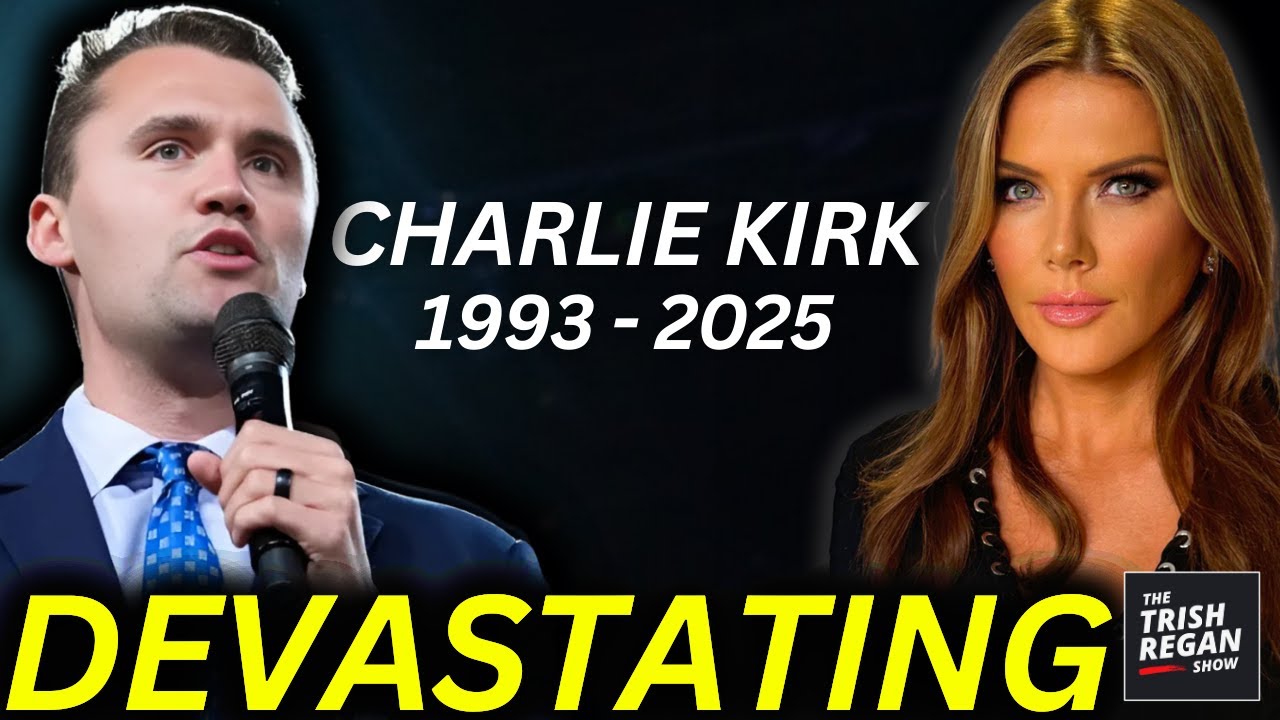
Glenn Beck Remembers Charlie Kirk: The Man Who Surpassed Rush Limbaugh and Would Have Been President
Enjoying this? Share it with someone who needs to see it.
Up Next
Isabel Brown Honors Charlie Kirk's Legacy at AmericaFest With Andrew Kolvet and Mikey McCoy
1:09:17
Tucker Carlson and JD Vance Remember Charlie Kirk's Legacy of Civil Discourse and Faith
9:07
Andrew Kolvet and Mikey McCoy Share Charlie Kirk's Final Asia Trip and Turning Point's Future Vision
1:58:02
Glenn Beck Remembers Charlie Kirk: The Man Who Surpassed Rush Limbaugh and Would Have Been President
Glenn Beck shares intimate memories of his relationship with Charlie Kirk, from their first meeting when Charlie was just 17 years old to the prophetic conversation about assassinations they had on a Miami balcony. Beck reveals how Charlie transcended the role of broadcaster to become a pastor, rabbi, political organizer, and statesman all in one, arguing that replacing Charlie would require six people at the top of their craft. In an emotional tribute broadcast from Turning Point USA headquarters, Beck places Rush Limbaugh's golden EIB microphone in front of Charlie's chair while declaring that Charlie had surpassed even Rush himself. Featuring conversations with Andrew Kolvet, Anna Paulina Luna, Tyler Bowyer, and investigative reporter Ryan Morrow, who unveils explosive new research tracking over $80 million from George Soros to organizations engaged in domestic terrorism.
Glenn Beck opens with an intensely personal tribute to Charlie Kirk, broadcasting from the Turning Point USA studio with Rush Limbaugh's golden EIB microphone positioned in front of Charlie's empty chair. Beck recalls meeting Charlie when he was just 17 years old, immediately recognizing something special in the young man who was so well-read, smart, and clear in his thinking.
Beck shares a story he had never told publicly before, one he regretted not having time to tell Charlie himself. When they first met, Charlie told Beck he wanted to be like him, to do what he did. Beck understood this meant Charlie wanted to be the next Rush Limbaugh, one of radio's greatest of all time. At the time, Beck thought Charlie might have what it takes, but was thinking too small.
More Than a Broadcaster
Beck argues that Charlie was simultaneously a broadcaster and a narrowcaster, a pastor and a priest, and given his ability to think and argue differently, a rabbi as well. But Charlie was also a political organizer, a political think tank himself, and a compassionate friend who surpassed Rush Limbaugh by miles.
The tribute becomes even more profound when Beck declares that Charlie would have been president. Unlike Rush, who never had that desire or perhaps the skill set for it, Charlie could have been a great president. Beck believes there may not be another person in history on the conservative side, at least in the last 150 years, who was like Charlie Kirk. To replace him would require perhaps six people at the top of their craft to cover everything he accomplished.
The Scene at Turning Point USA
Beck describes arriving at TPUSA headquarters at 4:30 a.m. to an enormous tribute on the road in front of the building, with police barricades and security everywhere. The outpouring of love reminded him of the public mourning after Princess Diana's death or when Elvis died. During the broadcast, the building received a bomb threat, forcing everyone to evacuate temporarily, which Beck interpreted as Satan's futile attempt to disrupt the light Charlie represented.
Andrew Kolvet on Charlie's Character
Andrew Kolvet, who worked closely with Charlie, shares insights into how many people begged Charlie to run for president. Charlie would always decline, saying he was happy doing what he was doing. The existence of JD Vance gave Charlie emotional freedom to say that JD was the next man up, and their job was to support him.
Kolvet emphasizes that while Charlie was a brilliant communicator and an autodidact who constantly studied classics, political philosophy, and theology, he was also deeply skilled at the quiet, behind-the-scenes work. Charlie was trusted because if you had a heated discussion with him in private, nobody would ever hear about it. His goal was always to keep people together, understanding that so many forces in politics are designed to rip everyone apart.
Just weeks before his death, Charlie sent Kolvet a hierarchy of what the Greeks considered the highest virtues and callings. Charlie said they needed to strive to be statesmen, philosophers, and theologians at the top, not actors and entertainers at the bottom. He understood that God had put him in a position to keep people together, and he would craft his messaging and strategy around managing the current moment so that everyone remained part of the movement.
Breaking the George Soros Network
Ryan Morrow from the Capital Research Center unveils explosive new findings about George Soros's funding network. According to Soros's own files from his Open Society Foundations, Morrow and his colleagues traced over $80 million going to at least 54 groups engaged in crime and domestic terrorism on U.S. soil, or that are pro-terrorism, endorsing things like the October 7th attacks, or are associated with foreign terrorist organizations.
Of that amount, over $23 million went to at least seven groups doing things that meet the FBI's definition of domestic terrorism. Morrow provides specific examples, including the Center for Third World Organizing, which received $400,000 and openly boasted of their involvement in the Minnesota uprisings and rioting. Many of these groups create protest guides or activism toolkits that appear innocuous but contain hyperlinks to guides recommending property destruction, violence, false IDs, and how to obstruct justice.
The research took about a year to complete and was inspired by Morrow's earlier report on anti-Israel protests, which identified over 150 pro-terrorism groups organizing those demonstrations. One radical entity responded to that earlier report by saying such research posed an existential threat that could mean a quick death for most groups by getting their tax-exempt statuses revoked.
A 2010 Warning About George Soros
Beck shares that he was warning about George Soros and the RICO statute as far back as 2010, playing a clip from that era where he discussed revolutionary tactics and directly asked if Soros had ever heard of the RICO statute. He reveals that around 2010, Soros's number two person met with Beck's number two person for lunch. The meeting began with a threat that Beck needed to stop hurting Soros, and that the ship was already sailing and Beck needed to decide if he wanted to be on it or not.
Beck's representative said his boss wouldn't want to be on that ship. The Soros representative ended the conversation by saying clearly: this is going to stop. Beck took that as a very large threat, which became one of the reasons he did a three-day special called The Puppet Master on Fox, showing everything about Soros they could find at the time.
Now, 15 years later, Beck declares that the ship Soros's people were talking about is going to be sunk. All the big billionaire-funded organizations funding what he calls filth that poisons American civil society and spreads hate are on notice. If they're doing it by mistake, Beck volunteers to help them vet organizations. If they're not genuine and continue, they're next.
Anna Paulina Luna on the Turning Point
Congresswoman Anna Paulina Luna shares her personal connection to Turning Point, recounting how during finals week at the University of West Florida, she saw two girls tabling with pins that said Big Government Sucks. She grabbed one, never imagining that a year later she'd be working with Charlie at Turning Point.
Luna emphasizes that Charlie was fighting indoctrination on college campuses that wasn't just coming from liberal professors from the 1960s, but was actually a foreign government-funded operation. Many left-wing organizations pushing violent riots and targeted campaigns have associations with groups calling for assassinations of the president, conservative commentators, and even Charlie's family.
She reveals that she co-signed a letter to the U.S. Treasury to freeze the assets of Neville Singham, who has been funding the Party for Socialism and Liberation and Code Pink. She met with Judge Jeanine Pirro and learned he's guilty of a FARA violation, and believes the Department of Justice will be charging him.
Luna notes that while it's been hard to see commentary from people on Capitol Hill who didn't know Charlie and continue spreading rhetoric about him, many of them actually know the truth that he was not what they painted him to be. She's happy that Charlie has a team in place standing with Turning Point to continue the fight.
The Electoral Strategy Going Forward
Tyler Bowyer, COO of Turning Point Action, discusses the organization's future plans. Losing Charlie as CEO has been tough, but the beautiful part is they've been putting pen to paper the entire time, focused on 2028 and working backwards, even looking at 2032. This is the same process the left uses, and it allows them to formulate plans quickly through their Chase the Vote initiative.
Bowyer emphasizes that people weren't joining Turning Point because they were fans of Charlie personally; he was teaching principles. The base is principle-based, which is a healthy foundation. Their number one culture point is grassroots humility. If you focus on the grassroots, you get candidates the grassroots wants to work for, and the program builds itself.
He explains they felt they had to step up after the 2022 election when the Republican establishment was lying to people, promising a red wave without showing up with anybody. They knew they could take the talent of people who had become disciples at Turning Point and convert it into action, which built the C4 plan heading into 2024.
Bowyer acknowledges that media coverage leading up to the election seemed designed to put Turning Point on the line, setting them up as someone to blame if Trump lost. But working next to Charlie Kirk for so many years meant living in a pressure cooker, and they lived for that pressure. He wouldn't have it any other way, because without that pressure, the celebration of what they accomplished wouldn't feel the same, and it sets the stage for what Charlie Kirk's legacy will be.
The Overwhelming Response
The response to Charlie's death has been extraordinary. Over 56,000 requests for new Turning Point chapters have come in, not just new members but entire chapters people want to open on college campuses. This number represents an unprecedented grassroots movement that Charlie helped build and that will continue his legacy.
A Prophetic Conversation
Beck shares a conversation he had with Charlie in 2018 or 2019 on a balcony in Miami. When Charlie asked what was coming next, Beck told him assassinations, predicting that Donald Trump was probably the biggest target. He referenced the 1960s when Malcolm X, RFK, and MLK were all assassinated. They discussed what they would do if that started happening.
This makes the reaction to Charlie's death even more significant. Beck is happy to see how everyone is responding, whether they knew Charlie personally, worked with him, were part of TPUSA, or were just fans who felt like they knew him because he was so personal.
A Song for These Times
Beck reveals that he knew these times were coming, which is why around 2018 he had David Osmond write a song for these days. His daughter Cheyenne, who was about 10 feet away from the tent in Utah when the shooting occurred, went into the studio with David Osmond to record the song in honor of Charlie Kirk. The song, titled We Are One, speaks to standing together, raising voices, and overcoming division because injustice anywhere threatens justice everywhere.
Video Transcript
I remember driving around in as a sophomore and a junior in high school listening to your radio program in the
morning. I wasn't there when you gave the speech at the Lincoln Memorial. Is that right?
But I saw it. I remember saw it being simoc casted and uh you you said some very I think prophetic things there.
I know it. I have been looking for the next George Washington.
I can't find him. He may be 8 years old, but this is the moment.
And now 18-year-old Charlie Kirk is saying enough is enough. This is Charlie Kirk reporting from
Marquette University. I I like ideas. I don't like politicians. I don't like parties. I like principle.
Do not go quietly when truth is on the line. I mean, democratic socialism, you know,
the people social, it's socialism which inherently means the following. It is immoral. It is evil. It is impractical
when put in practice. do not surrender to the shadows.
But I'm here for the silent majority that is silent no longer to give them the courage, confidence, and conviction
to fight on campuses even when and especially if
you think the battle can no longer be won. We're not going to allow the ruling class elites, the radical left to
continue to destroy this country from within. And we are a movement here that is growing by leaps and bounds.
Charlie Kirk lived that mandate. And I believe that marriage is a beautiful thing. And I believe that
having children is a moral good for society. Biggest blessing. Oh, without a doubt. I don't think you know the impact. You
say, "Oh, Gwen, you made an impact on my life." Do you realize the impact you're having on the country? Remember when I
did the thing in Washington DC and restoring honor? I do. And I said, "Somewhere in this
crowd, maybe he's seven, maybe he's 15, somewhere in this crowd is the next
George Washington." And 25 years from now,
he will come not to this stair, but to those stairs, we want to overemphasize grace when in
reality, Christ loves us too much to have us continue to live in sin. He
wants us to try to elevate our actions to glorify God in all that we do.
And he can proclaim, "I have a new dream." I just went to church for the first time
in several years. Today, we went to church for the first time in a really long time.
I've never ever opened a Bible before and something was calling me to my husband's Bible.
Here's the line for the second service. And there's never a line. Jesus of Nazareth. And the resurrection
is the is the pinpoint of my belief that Jesus did rise from the grave so that we
may live. The light is dimming. Yes,
but it always does before the dawn.
Hello, my name is Glenn Beck and I am
a friend of Charlie Kirks.
You may not know who I am, but uh one thing I am known uh for is uh
my emotions. And uh I think we're going to need a tarp today. Um this is I knew
this was going to be
difficult,
but to sit in the studio.
right next to his chair is more difficult than I uh imagined.
I want to talk to you a little bit about the future, but I want to talk to you a little bit
about my friend as well.
I knew Charlie when he was young. I first met him, I think he was 17 years
old.
He was amazing. He was so well read,
so smart, so clear.
I thought, "This is an amazing man." I remember the first time I met Ben Shapiro, I think he was 13 years old. I
interviewed him the first time he was sitting on his family's washing machine
doing an interview with me and he said he was on a phone that used to have it
was a hard line so it had the phone wire that he had to pull it all the way around and he couldn't keep his sister
quiet so he went in and closed it on the phone wire and sat on the washing machine stop it I'm gonna be on the Glen
Beck Oh, and he was impressive.
But there was something special about Charlie Kirk.
I want to share a story.
that I've never shared before
and I so regret that we ran out of time.
It's a story that I had hoped to tell Charlie myself
in the next couple of months.
When I first met Charlie, and this the kind of guy he was, he was so gracious.
I first met him, he was young, and I said, "So, what do you want to do?
What is it you want? What What do you want to do?
so gracious. He said, "I want to be you. I want to do what you do."
Let me translate. I want to be Rush Limbbo. He didn't want to be me. He wanted to be
Rush Limbaugh. He wanted to be one of the, as Rush said, radio's greatest of
all time. And I remember thinking, "Well, kid,
maybe someday." because I think you have it.
I brought something with me today that I thought was appropriate while I did the show
that I would sit in front of Charlie's microphone. It was given to me after the death of
Rush Limba by his wife. It is Russia's golden microphone.
I think it's appropriate that it sits in front of Charlie's
microphone.
What I would have said to Charlie
was you were thinking too small.
I want to be Rush Limbbo someday. I'm a broadcaster. Rush was a
broadcaster. But Charlie was a broadcaster and a narrowcaster.
Charlie was a pastor and a priest and listening to the way he could argue and
think differently. He was a rabbi as well and one of the best. He was a
political organizer. He was a political think tank himself.
He was a compassionate friend. He surpassed Rush Limbbo
by miles. We'll continue in a minute.
Andrew Kvet is with us. You were here
a week ago. We're a week away. And what?
Same time. Yeah, we're probably about two hours or so out from,
you know, the the exact time of being a week. How are you doing? How's everybody at
Turning Point doing? Well, after you made everybody ball their eyes out uh in your first segment,
you're open, Glenn, and I I mean, I just I have to say thank you for that. I I
can't even believe I'm seated so close to Russia's golden EIB microphone. I know it's crazy.
And Charlie and I I can't say how many times we said the golden ei microphone.
Yeah. Yeah. Yeah. And uh you it was beautiful. We were all crying out in the control room. And so I
am right now in this moment very emotional and I know that you watched his story
grow and that tribute about the the next George Washington and
and how he was Charlie was so aware of that speech you gave and he wasn't there in person but he watched he watched it u
somewhere else uh live and um I u I'm
right now I don't have many words because of how moving that was. I, you know, I said the other day, and I don't
mean this, I mean, I'm not saying this to self-randise um
at all, but I looked at him
almost like a professional son, you know what I mean? I looked at him and because I
watched him from a distance and I and I saw him young and I saw his desires and
how he built and everything that he did. And as I was thinking about that, as I packed that microphone up yesterday, I I
was thinking about him and I thought Charlie would have been president.
Yeah, Charlie would have been president. Rush wasn't president. Rush didn't have a desire to be president. And I don't know
if Rush would have made a good I'd make a horrible president. I don't know. Rush would have been a better president than me. Charlie could have been a great
president. He He surpassed all of us. I don't know if
there's another person in history on our side, at least in the last 150 years,
that was like Charlie. to replace Charlie, you need maybe six people at
the top of their craft to cover everything that he has done. Yeah. You know,
I can't tell you how many times I was with Charlie and people would beg him, you have to run for president. You have to run for president. And Charlie would
always, you know, say, no, no, no. I'm I'm happy doing what I'm doing. And I will say Charlie was
the existence of JD Vance Mhm. gave Charlie a lot of emotional freedom to say that next man up is JD.
Our job is to support JD. Yeah. And I uh you know, we wouldn't necessarily be loud and proud about that
on this show because we understand there's dynamics, but you know, Charlie was in so many ways
being honed and sharpened and he was Yeah. for such a job. And there was
Look at the difference in him in 10 years. Yeah. 15 years. Look at the difference in him. Can you imagine if he had 10 more years
to keep sharpening? Oh my gosh. I mean, and people need to understand that. Yes, Charlie was a brilliant communicator.
Yes, he was an autodidact who kept studying the classics and political and philosophy and theology and all these
things. And he was deeply deeply sincere in his faith, but he was also so skilled
at the quiet things, the behind the scenes things. And he would honor people. He was trusted. If if you got
into a heated discussion in private with Charlie, nobody would ever hear about that. If anything happened, he because
his goal was to keep people together. He understood that there are so many forces in our world, in our politics that are
ripping everybody apart. And I said this I said this yesterday, but it bears repeating. He just a few weeks before
his death, he sent me this hierarchy of what the Greeks considered to be the highest virtues and the highest
callings. And he said to me, he said,"Andrew, we are not the actors and
the entertainers that are at the bottom." That's how the Greeks put it. He said, "We we need to strive to be
statesmen and philosophers up at the top and theologians." And he said, "This is what we're trying
to be, not that anybody could do that. Not everybody can do that." And God, he he knew that God had put him in a
position that he could keep people together. And so, you know, there would
be times where everybody wanted us to go all in on this story or go all in on that. And Charlie saw three steps ahead
all the time. He was always thinking long term, what will that do to the movement? And so, he would craft his
messaging and his strategy and, you know, who we invited to what, you know, around how do you how do you manage this
current moment so that everybody is still a part of this thing.
I can't thank you enough for inviting us to be here. We are enough for coming. No, I mean it is an honor. I called Stu
yesterday and I said, "Steu, you should come with me." And he said, "This this is history in the making." I mean,
it's an honor to be here. Yeah. Well, you honor us and you're a beautiful tribute and open to him. And I know we're not done yet, but no,
I I I can't thank you enough. Thank you. God bless. And God bless everybody at TPUSA. Want to get
involved? Go to tpusa.com. More in just a minute. First, let me
tell you about relief factor. Most most of us don't realize how much pain we're in until something changes. Maybe you walk up a flight of stairs without
grabbing the rail. Maybe you laugh. You don't really laugh without wincing. Maybe you can uh pick up a paintbrush
again. That's what relief factor did for me. My hands, the pain in my hand were so bad. I couldn't paint anymore. I
couldn't I couldn't write my own letters. And I love to handw write things. Um this is something that
doctors have designed to target the underlying inflammation that um causes
so many of our aches and our pains, our back, our neck, our knees, our joints, everything. And it's not about masking the pain. It's about your helping your
body fight it. And that's the best part. It's natural. It it's not a drug. It's uh there's no prescription, no fog. Uh
just four simple ingredients working together together to give your body a chance to heal. For tens of thousands of
people, including me, that has been life-changing. So, if you've been living with pain, you know, just accepting it,
managing it, enduring it, you don't have to stay there. You don't have to just live with it. Give Relief Factor a try
with their three-week quick starts 1995. That's less than a dollar a day. Try it and see how it can help you turn back
the clock on pain. Visit reliefactor.com or call 8004 relief. That's 800 the number for relief.
Let me describe the scene. I got here this morning about 4:30 a.m. I do a
national radio program starts at 9:00 a.m. uh Eastern time. So by 6 we were
broadcasting and there wasn't anybody here. Everybody is getting some well-deserved sleep. It looks like I
mean nobody here has slept for a while. Um and uh we got here and there's police
that barricade the the road right in front and there police all around. Um
and it's a an enormous
tribute uh that is on the road in sitting in front of TPUSA.
Uh people have come it reminded me honestly of Princess Diana. I hadn't seen the outpouring like this since
Elvis died and when Princess Diana died. Um it's just this amazing uh outpouring
of love. During the show, during my national radio broadcast, um we uh my
staff walked in and said, "You have to move to another building. There is a and somebody's here in front apparently put
a package down and then gave a bomb threat." Um turned out to be just some I
don't know. I don't know. Um but um Satan thinks that he still can win and
the more he pushes the uh the brighter the light is going to get. I want to go
to Ryan Morrow. Uh I talked to him earlier today because one of the things that we have to do is we have to stop
the funding of all of these things that are on the left that we have honestly now started to find out. I mean I've
been exposing this this stuff on chalkboards for years and years almost two decades now. and how the George
Soroses etc. of the world um are funding all of the worst of the worst and Ryan
um has done his work and has really uh come up with some smoking guns
especially on George Soros Donald Trump can use as RICO charges um and uh Ryan
is here to lay this all out. What did you find Ryan? Well, we had some amazing findings.
According to George Soros's own files from his Open Society Foundations, uh, so myself, my colleagues at Capital
Research Center basically went through as many grants of his, as many funding streams as we could find, and here's the
smoking guns that we believe that President Trump, if he's informed of it, um, can use to go after Soros's, uh,
network of hate in various ways. Uh we traced over $80 million
going from the Open Society Foundations to at least 54 groups engaged in crime
and domestic terrorism on US soil or that are proterrorism endorsing things
like the October 7th attacks or are associated with foreign terrorist organizations or explicitly pro-terror
groups. And this is according to his own file, so it's rock solid. Uh, and over of that
amount, over 23 million went to at least seven groups that are doing things that
meet the FBI's definition of domestic terrorism. Can you rioting and things like that?
Can you be specific, more specific than this? Absolutely. Uh, I'm happy to. So, the
Center for Third World Organizing, for example, is an organization that has a hub that fused together several uh
really extreme organizations. Uh we found $400,000 going to them. Uh and
they openly boast of the fact that they threw down uh during the uprisings in Minnesota. Obviously referring to the
rioting and boasting of how many thousands of people they helped train. A lot of these groups have created what
they'll call like a protest guide or an activism toolkit. And it sounds innocuous. Then you open it up and
you'll see support for Hamas in it. But then they'll sometimes slightly say for more information go to these hyperlinks.
and you go to the hyperlinks and there'll be guides recommending things like property destruction, uh, violence,
false IDs, how to obstruct justice, all of these things. And they know darn well
what they're doing. They don't put that there by accident. Um, some of the more careful ones will just direct their
readership to anarchist websites with all that material, knowing that they'll see it when it's there. Um, and so yeah,
the the I mean, it's really stunning. And some of these groups are coalitions. So when I say 54 groups, just one of
those might have 300 entities in that one. So it it's actually the
real number is actually much higher. Let me play something from October 2010
um where I was talking about the RICO act and George Soros. Listen to this.
But this is the ABCs of revolution. This is only a copy of it. I only have a copy
of it. I don't have the original yet. They talk about
uh urban gerilla tactics. The instant any any area is occupied by
revolutionaries, it must be appropriated forth with according to two incontestable principles, self-defense
and free distribution of the goods produced. The best way to avoid isolation is to attack. Thus, one must
with an eye to the internationalist direction. Remember, workers of the world unite. Create other nuclei for
occupations and appropriations. Strengthen and protect liaison between re revolutionary zones. Isolate the
enemy and destroy communications. Use commando tactics uh to harass
and uh rear a guard and avoid encirclement by splitting up his forces.
Disorganize the counterrevolution by rendering its principal leaders and the best strategist harmless.
Do you have that one? disorganize the counterrevolution by rendering its principal leaders and the
best strategists harmless. How do they do that?
Is the left threatening? Is that something that people who are in
that position should worry about their lives or is that just render them harmless by? Well, let's just live see
if I can come up with a crazy example. I hear some rich dude takes a million dollars and does everything they can to
smear and discredit. By the way, George, have you ever heard of the Rico Rico statute? I just Anyway,
RICO, this is 2010, 15 years ago. I was saying George Soros should be grabbed by
the RICO act. Donald Trump looks like he's now willing to go there. And again,
we're talking to Ryan Morrow who uh says he has the the goods on this. How long
have you been working on this, Ryan? Probably about a year.
And what got you started on this? Well, I think it started when I released
a report breaking down the anti-Israel protests that were going on. I saw that that was like manufactured. It was like
pushing a button and we identified over 150 proterrorism groups organizing those
protests. There weren't peaceful groups behind it. Uh and so when that report came out, which is very similar to this
one, this is almost almost somewhat of a sequel. One of the radical entities that's Hamas friendly had this to say
about the research that we released. So, the same would be true of the source report that we're about to release at 1:00. It said that these reports we're
doing pose an existential threat that could easily mean a quick death for most
of the groups by getting their tax exempt statuses ripped away from them. And so, those that survive would suffer
mass chaos. So, they're saying that we have figured out how to beat them if we
just get this into the right hands. And so at 1:00, this is what we're dropping about George
Soros as part of our investigation. And that's why I said on your show earlier, the counter offensive begins today. It
begins at 1:00. you know, um it was probably 2010
that um George Soros's number two guy met with my number two guy. Um and they
had lunch in a public place because that's what we requested when they said we want to have lunch. And uh I was not
part of it, but it was just the second in command, if you will, meeting with each other and sending messages and and
um it started, this lunch started with um you need to tell your boss, your
boss, me, is hurting my boss, Soros, and it's going to stop. And my guy said, I
don't think it is. I mean, if he's getting something wrong, he'd be more than happy to correct it. And he said at
the time, um, your boss needs to understand the ship is already sailed. It's it's just pulling out of port right
now, and you're either on that ship or you're not, and you want to be on that
ship. And he said, "My boss is going to say he doesn't want to be on that ship." Um, and at the very end of the
conversation, he said, "I want you to hear me clearly. This is going to stop."
We took that as a very large threat. And that is one of the reasons why I did uh the puppet master show on Fox. I did a
three-day special showing everything about uh George Soros that we could find at the time. You realize who you're
getting into war with, don't you? I do, and I don't care. Uh I I know I'm
supposed to do this. Um, and so that ship that he was talking about, we're
going to sink it. And all the other big billionaire funded organizations that
are out there that are funding this type of filth that are poisoning American civil society and spreading this type of
hate that resulted in what we've what happened a week ago. You're on notice. If you're doing this
by mistake, I will volunteer my time to help you vet the organizations that you finance so you don't fund terrorism and
hate. If you're genuine, well, there's you're not genuine and you continue doing it, you're next. looking at uh you know
looking at your research there's there's a handful of grants that are nuts uh for things like children that include uh
ideas of hierarchy, supremacy, colonialism and to the Alinsky Institute
in France which is honor in honor of Solinsky if I'm not mistaken. Right. That's exactly right. Um and when you go
through the report you'll see that the organizations that they're funding are so blatantly connected to foreign terrorist organizations so blatantly
extremist. goes on year after year. So before when there would be reports about this and drips and drabs, I could kind
of understand some people saying, well, out of thousands of grants, maybe some mistakes are made. This this is no mistake. We've we have disproven this.
And I keep thinking about how when the Iranian regime allows proterrorism
entities to fund raise on Iranian soil, what do we call that? We call that state sponsorship of terrorism. In the United
States, when American nonprofits in the nonprofit sector allow proter terror
entities to fund raise on American soil, what do we call it? We call it charity.
And so that has to come to an end. The IRS code, as we talked about in the report, is being violated. You're not
allowed to engage in crime. You're not even allowed to encourage crime. That can't be part of your nonprofit mission.
Uh and so these taxes need to be revoked. And just like that one extremist group said, if we go down that
path, we don't even have to get into the hate speech argument. Yeah, we can beat them. We can beat them
rapidly. Ryan, thank you so much. I really appreciate your conversation with us. Back on the Charlie Kirk show in a
minute. September is National Preparedness Month, and if there were ever a time to
get out ahead of this curve, this is it. Whether we're headed into a recession or more of the same unpredictable chaos,
being prepared isn't paranoia, it's just common sense. And that's why I would like to recommend Jace Medical. These
are the only people that offer anything like this. And this is the hardest thing if you really want to be prepared. It's practical realworld solutions. Um, and
it it it it's you you don't want to be reactive to things. You're going to be too late if you're just reacting to
things. With Jay's case, you get 10 emergency medications and antibiotics prescribed by a doctor and shipped right
to your door. It's not just a good idea. It's a game plan for when disaster strikes. And for those of us who take
daily prescriptions, they also offer Jace daily, giving you a full year supply of your chronic meds, so you're
not at the mercy of any kind of supply chain or pharmacy shortage or anything like that. During National Preparedness
Month, Jace is running a massive sale to make it even even easier to afford. Preparedness isn't giving into panic,
it's peace of mind. And with Jace, it's actually doable. Go to jace.com and enter the promo code beck at checkout
for a discount on your order. That's promo code beck at jass.com.
We're now filling in for Charlie Kirk. Uh and uh I'm going to see Erica here
for the first time. And uh I don't No, I mean that might not be
good for her to see me cuz I'm going to be a sppy mess. I've had her. You're surely going to embarrass
yourself. I am. Uh but my wife and I my wife is just obsessed. She can't stop watching
the kids and everything and just she I can't watch it. I can't watch it. I I I'm having a hard time looking over in
this corner because Erica did her speech right there last week.
Anyway, Anna Paulina Luna is uh here. Uh hello Anna. How are you?
Hi Glenn. You were a dear dear friend of Charlie
Kirks. How are you holding up? Uh, I don't think anyone can ever
anticipate something like this happening, but what I can tell you is Charlie would not want us to throw in
the towel. And so I know that right now everyone in the country, for good reason, is
still kind of grappling at what happened. But what I am happy to see is the overwhelming support not just in
voter registration but the amount of young people especially over 30,000 requests for college campuses.
No, no, no, no, no, no, no, no, no. Don't don't diminish that. It's now 56,000
chapters that have been requested to be open. Not new members. 56,000 chapters.
That's remarkable. It is. And I know that in the end, no matter what, Charlie really did win
because even half of that number would make an incredible difference on these college campuses. And just a little bit,
I guess, Glenn, of how I initially found Turning Point, this was a little quantum breadcrumb, right? Like everyone at some
point in your life, you're going to see these little kind of God winks that will pop up and let you know that you're on your right path. But I remember being in
my finals week when I um was getting ready to graduate from college at University of West Florida and I saw
these two girls and they were tableabling and they had these pins that said big government sucks. And I
remember going into the library and grabbing this pin. I was like, you know, that's pretty cool. I I didn't even think, you know, that later on, fast
forward, you know, a year later that I'd be working with Charlie and at Turning Point. But um what I will tell you is
that you know a lot of people there needs to be action outside of the legislative and the federal branch. And
you know what we're finding is that what Charlie was fighting this indoctrination that was taking place on college
campuses. These weren't just, you know, liberal professors from the 60s that had been radicalized, right? Like, this is
actually a foreign governmentf funed operation. And a lot of these left-wing
organizations that have been pushing these violent riots, the targeted campaigns, a lot of the people that have
associations with these groups that are calling for assassinations of the president, of conservative commentators,
um, and even of, you know, Charlie's family are tied to these organizations. And I guess what I'd like to share today
is so you know Glenn that we were on the show talking about Neville Singham how he's funding the party of socialism and
liberation code people a lot of the stuff um comr signed on on a letter to the US treasury to freeze all of his assets and
I just met with Judge Janine and he's guilty of a FAR violation I think the department of justice is going to be
charging him with that. So um you know miracle of miracles miracle of miracles. Yeah, I you know,
we were just talking about this new George Soros information that Ryan Morrow has just released. Is it 1:00
Eastern yet? Um and um and it I mean you're going to be able to get George Soros on RICO charges. Something I've
been asking for for 15 years and it's it's happening. I I think you know
there's just no better name uh to name Charlie's Movie than Turning Point. I
mean, we are truly at a turning point and uh I couldn't be happier.
I'm glad that everyone is doing what needs to be done because Charlie ultimately was a freedom fighter and
everything that he was doing, you know, the GOP failed to recognize and he was able to transcend politics, but then
also to able to share his message. And so, yes, it's been extremely hard. It's been even harder to see some of the
commentary coming out of people that I have to walk by every single day up here on the hill and not knowing him and then
continuing this rhetoric. But what I will tell you is a lot of them know the truth and that he was not what they
painted him out to be. And I am happy that he has the team in place that's standing with Turning Point because I
know that this organization is going to continue not just for voter engagement and for youth
engagement, but to really help fight back. And I think that there are a lot of very powerful people now that are
listening to what needs to be done and this is the change that we needed. Anna Paulina Luna, thank you so much.
You know, the one thing that's come to me in prayer several times is these are not enemies of yours, Glenn. These are
not enemies of yours. These are enemies of mine. Um, and he will deal with them.
We just have to do the next right thing and stand exactly where he asks us to
stand. Anna Luna, thank you so much. Tyler Boyer's uh with us. Um he is the
CEO COO COO of Turning Point Action. We we just played a clip of Charlie and I talking
right after the election last time. And I've talked to people who said what you guys have planned for the midterms and
even looking forward to 2028 is awesome. Going to make it look like child's play
what happened last time. Are you concerned at all? you know, uh, Glenn, thank you for that.
I mean, I'm obviously this has been a lot to process this whole last week.
Uh, you know, I'm the COO because Charlie's the CEO. So, losing, you know, the, you know, the
the head of the the household here has been has been tough, I think, for all of us. But the the beautiful part about
what we've done and we've been doing is we've been putting our pen to paper this entire time. Really focused on what what
the plan is, like you mentioned. focused on 2028 and working our way backwards from that, looking at 2032 and working
our way backwards. And when you do it, when you take that process, I mean, that's the way the left does it. Uh,
when you take that process, you can actually formulate a plan pretty quickly. And that's what we've done with our Chase the Vote initiative.
You know, the really great thing is Charlie was not a guy you you weren't you weren't joining because you were a
fan of him. I mean, he was teaching principles. So, the base is
principalbased. That's right. Um, and that's really a healthy thing. Yeah. I mean, this is that's at the core
of the elections. 2028 in particular is really focused on the grassroots. Uh, we
are our our number one culture point that we have at Turning Point USA and Turning Point Action is what we call
grassroots humility. If you focus on the grassroots, then you get candidates that
the grassroots wants to work for and then therefore it kind of builds the program for you. Uh and that's really
the beauty of Turning Point and we where we felt like we had to step up really uh coming out of the 2022 election when we
realized that you know everybody was not being honest at the what I call the Republican establishment the the core at
the you know I like to call them the evil empire the the national Republican apparatus. Yeah. The evil empire whatever you want
to call them but the apparatus itself was kind of lying to people and saying hey we've got this handle. We got this handle we can do this. We can do this
red wave. Red wave. and they didn't show up with anybody. And so we knew and this is the beauty of of Charlie and what we
we had done was we had seen the culmination of of how many people kind of became disciples at Turning Point and
we knew that we could take that and we had to take that talent and convert it into action. And so that's what really
built the C4 plan heading into 2024. You know, it's really interesting thinking about the coverage leading up to the election. um Turning Point, I
think, was really put on the line by the coverage. And I think this was intentional. There was a a big belief
that if Trump lost, if this didn't turn out the right way, there was someone to point
blame at. And it was you and Charlie. It was it was turning point. That was that was the big setup beforehand. Oh, you're
going to put Charlie Kirk in ahead of your turnout operation. I mean, was there a moment where you
were like, "This is really a a moment that's going to make or break not only the country, but also this organization."
Uh, the beautiful part about being right next to Charlie Kirk for as many years as I've been, is that it's a pressure
cooker unlike anything else. Even with the small stuff in the early days, is
that uh we live for this pressure. I mean, that's at the end of the day, that's you talk about Super Bowls, the
Super Bowls, that's what you have to, you know, that's what you want. You want the coverage. you want to invite in all
of that. So, uh I think the the real beauty in the story uh from this last election cycle and I'm so glad
everything worked out the way it did, you know, not knowing at the time that it was going to be the last time that we would,
you know, run a race together, right? Like do do the work because that that wasn't the plan.
That was never the the anticipated outcome here. Uh but but looking back
it's now like it's been really hard thinking about all this last week was this is I value that and those those
individual experiences where it was tough where people did put all that pressure on us I wouldn't have it any
other way. I really would not have it any other way at all because uh excuse me
because had it not been positioned that way um I don't know if if the
celebration of of what we were able to accomplish for this last election would
feel the same and and what that would lead into for this next election cycle in the future
now what the legacy of Charlie Kirk will be. And so that's what we have to live up to. That's what we have to do.
We are your friends because we're your friends, but we also believe in your mission and uh we know what you guys are
doing. We are here for you at any time, anything you need.
Thank you very much, Glenn. I appreciate that. Thanks a lot. And we love everybody at TurningPoint. If you want to get involved, go to
turningpointusa.com.
back with more of my appearance with uh the Charlie Kirk program in just a minute. First, I want to talk to you
about pre-born. Every life begins with a sound. It's not words. It's not crying. It's a heartbeat, a tiny, unmistakable
rhythm that tells you someone is there. It's life. That's why Preborn exists.
They offer free ultrasounds to women who are facing unplanned pregnancies. Often, they're scared, they're pressured,
they're unable to see their way forward. Everybody is pressuring this mom, but when she hears the heartbeat, everything
changes. More often than not, she'll choose life. And Pre-born pairs that
moment with real tangible help, counseling, maternity support, long-term resources for up to 2 years. They stand
by these women after they choose life. It's not politics, it's compassion, and it works. Your gift to pre-born doesn't
just fund equipment or services. It creates moment, a moment where life wins, where truth is heard, where a
mother's heart changes because she heard her baby's first wordless word, the sound of life, the heartbeat. That's
what's happening every day. And it's why your monthly support is so crucial. Just $28 a month can save a life every single
month, restoring a precious gift from God. Dial pound 250, say the keyword baby. That's pound250 keyword baby. Or
go to pre-born.com/glenn. That's pre-born.com/glenn. Let's rescue a generation one heartbeat
at a time. Sponsored by Preborn. Charlie and I in one one day maybe 2018
or 2019 I can't remember. Um he said, "What's coming next?" And we were on this balcony in Miami and it was just
the two of us and we had a really amazing conversation about what was what what our responsibilities were and what
we had to look out for. And he said, "What is coming next?" And I said, "Charlie, assassinations." And I he
said, "How do you see that?" And I said, "Well, Donald Trump is probably the biggest target, but I don't know. I
don't know. I mean, you know, last time in the 60s, it was Malcolm X, it was RFK, and it was MLK. And there were
three of them. And um with an exception of RFK, they were just they were people
that were, you know, in the arena, if you will. And so Charlie and I talked
about, you know, what do we what do we do if that starts happening? And that's why I am so happy to see the way people
that knew Charlie, loved Charlie, worked with Charlie, uh were part of TPUSA,
were just fans of Charlie. I think everybody felt like they knew him because he was so personal. But um the
way everybody is reacting, I wanted to uh play something um that I
have not even heard yet myself. This is something that um was written by David
Osmond because I knew these times were coming in probably 2018 is when um this song
was first written for these days. Um and here we are. And
last night, my my daughter uh Cheyenne, who
was about 10 ft away from the tent in Utah uh last week, thank God. She turned
her head and turned around cuz she was hearing people screaming at Charlie and she thought, "What are these idiots
saying?" And she turned around and that's when she said she heard what she thought was a firecracker. And by the
time she turned back to look at Charlie, she was pushed to the ground. So, she didn't, thank God, um, see it um,
firsthand. Um, last night, she and David Osman went into the studio to record this in honor
of Charlie Kirk.
[Music]
I know we don't see
everything in the same way, but I know We
won't be really free if we don't stay
united cuz divided. We will fall for anything.
It's true. So I have decided
I will stand for you and I will I will
make a stand. I will raise my voice. I will hold your hand cuz we are one. I
will beat my drum. I have made my choice. We will overcome
cuz we are one.
[Music]
Some say there's no way your way will ever be okay.
They say the best days are behind so wide and you
will find the times when the best men
defend every friend, neighbor, country man. But now there's
nohere where you can speak your mind.
I will I will make a stand. I will raise
my voice. I will hold your hand. Cuz we
are one. I will beat my drum. I have made my choice. We will overcome.
Cuz we are one. Times may change but truth remains. We won't be silenced,
won't be changed. Cuz injustice anywhere
threatens justice everywhere.
I will make a stand. I will raise my voice. I will hold your hand. Cuz we are
one. I will beat my drum. I have made my
choice. We will overcome. Cuz we are one. I will make a stand. I
will raise my voice. I will hold your hand. Cuz we are one. I will be my God.