Up Next
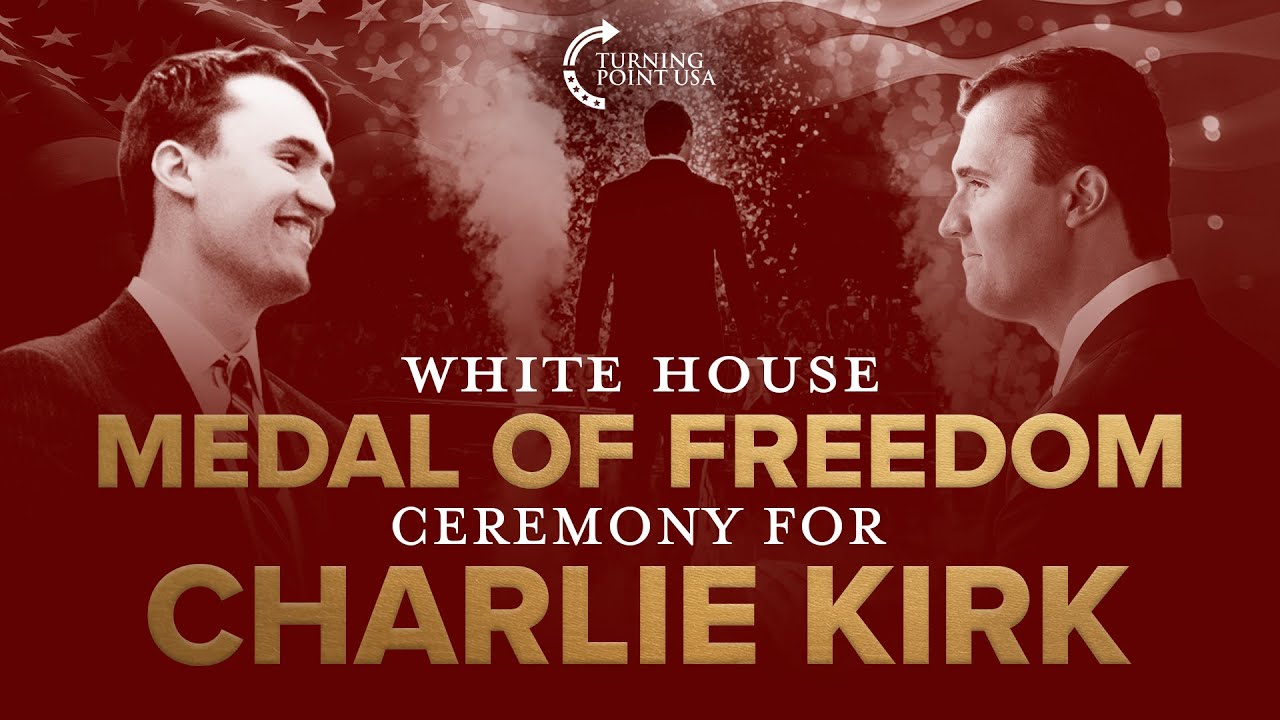
President Trump Awards Presidential Medal of Freedom to the Late Charlie Kirk on His Birthday
1:11:28
Charlie Kirk Tribute: Trump, Conservative Movement, and Reaching Young Voters for America's Future
54:31
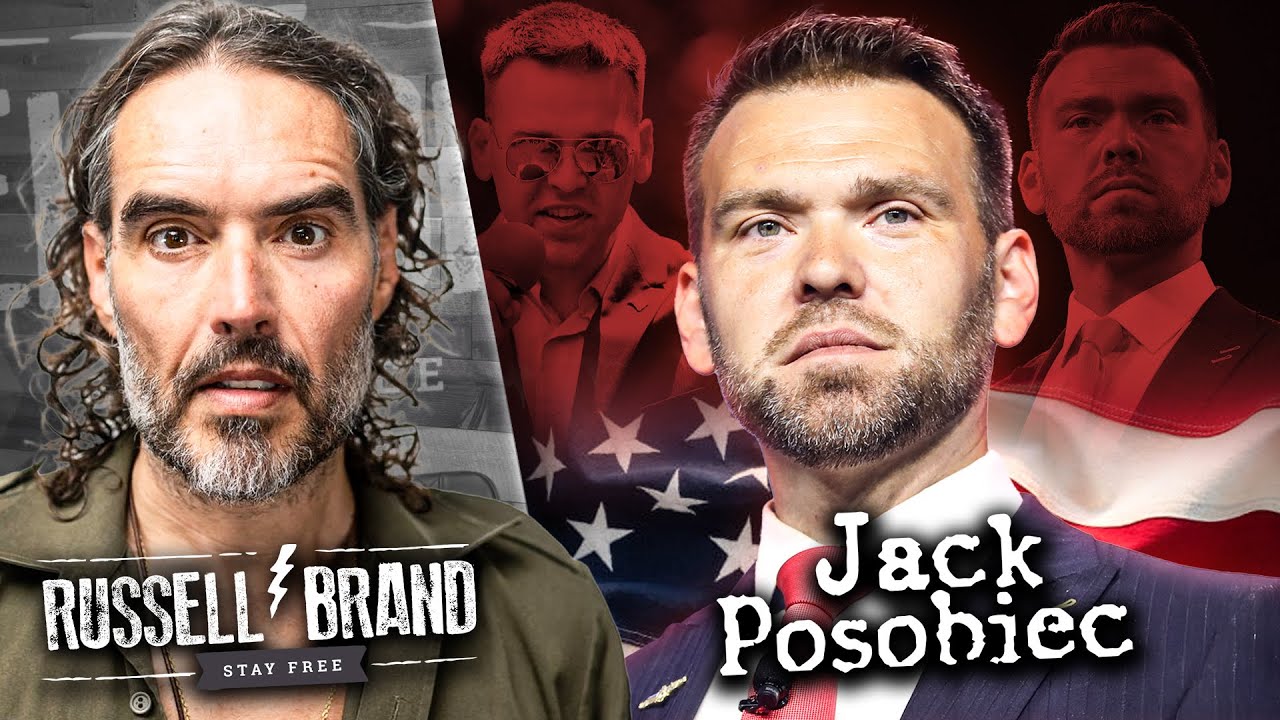
Russell Brand and Jack Posobiec Explore Spiritual Warfare Following Charlie Kirk's Death and America's Fragmentation
29:57
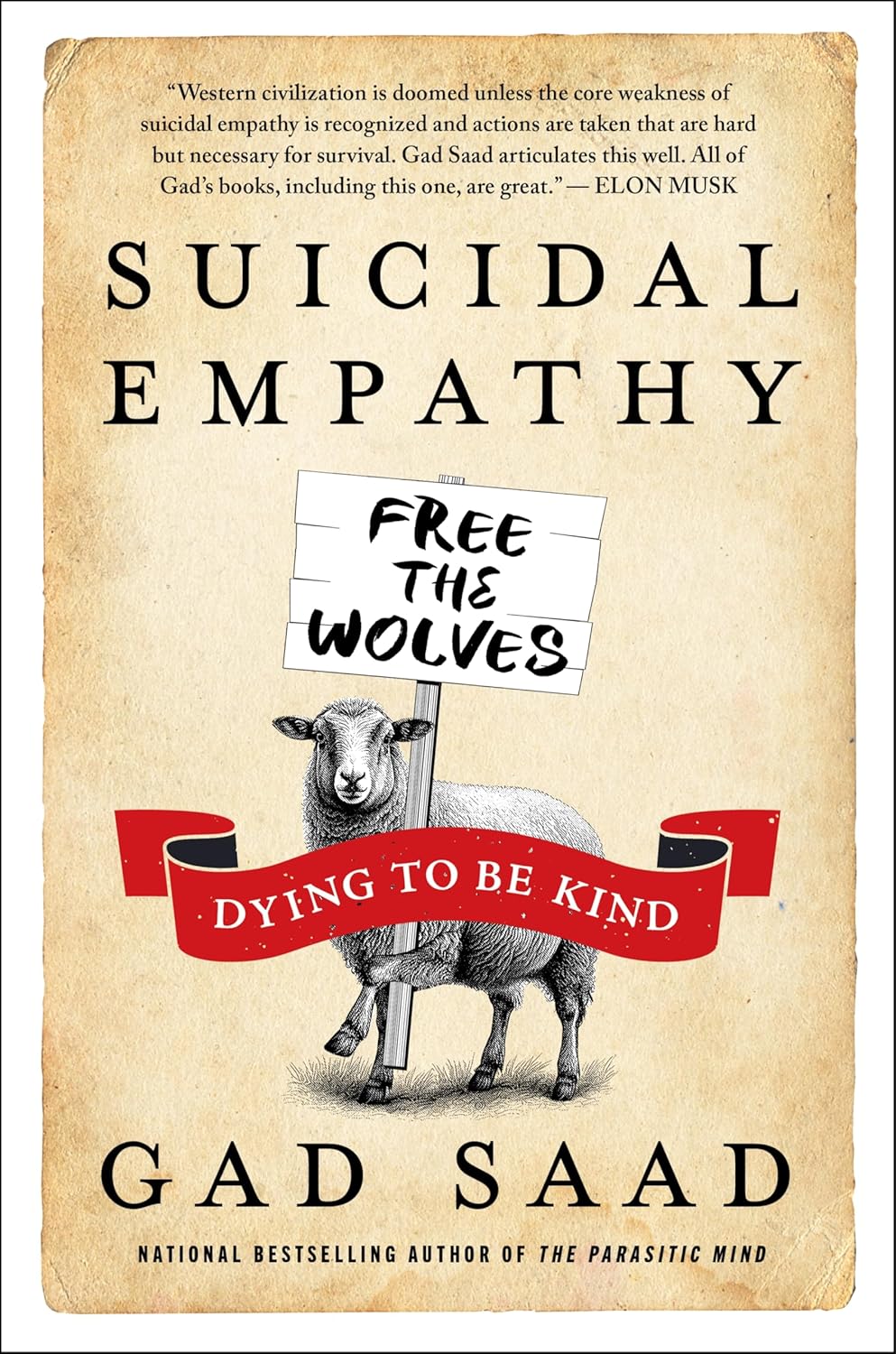
Andrew Kolvet and Jack Posobiec Honor Charlie Kirk's Legacy with Dr. Gad Saad on Freedom and Truth
Andrew Kolvet and Jack Posobiec sit down with evolutionary psychologist Dr. Gad Saad to reflect on Charlie Kirk's enduring legacy following his passing on September 10th. Dr. Saad, now a scholar at the Declaration of Independence Center for the Study of American Freedom at the University of Mississippi, shares how Charlie inspired generations from teenagers to intellectuals alike. The conversation explores Charlie's concept of the "inner honey badger," the dangers of suicidal empathy in Western civilization, and how consequentialist ethics can corrupt foundational principles like free speech. With breaking news of President Trump's diplomatic wins and insights into the alleged assassin's twisted psychology, this episode captures both the grief and determination to carry forward Charlie's mission of activating young Americans to defend freedom.
Reflecting on Charlie Kirk's Immeasurable Legacy
Andrew Kolvet, executive producer of The Charlie Kirk Show, opens this powerful episode alongside Jack Posobiec, host of Human Events Daily. They welcome Dr. Gad Saad, evolutionary psychologist and scholar at the Declaration of Independence Center for the Study of American Freedom at the University of Mississippi, to honor Charlie Kirk's memory and discuss his lasting impact on the conservative movement.
Dr. Saad shares a touching personal story that encapsulates Charlie's unique ability to inspire across generations. While Dr. Saad has interviewed countless prominent figures throughout his career, his 16-year-old daughter never asked to meet anyone until Charlie appeared on the show. "I'm 61 years old and a fan of Charlie and my 16-year-old is a fan of Charlie," Dr. Saad reflects. "That kind of gives you a sense" of Charlie's extraordinary reach and influence.
The conversation oscillates between sadness and determination, as Dr. Saad describes his emotional journey since Charlie's passing. Yet the focus remains on promoting and expanding Charlie's legacy, ensuring he lives on in the hearts and minds of everyone he touched.
The Inner Honey Badger: Charlie's Fearless Spirit
Dr. Saad introduces the concept of the "inner honey badger" from his book The Parasitic Mind, using it as a framework to understand Charlie's exceptional character. The honey badger has been officially classified as the most fierce animal in the animal kingdom, and Dr. Saad urged readers to activate their own inner honey badger—not to be violently ferocious, but to get off the couch, do big things, and stand tall.
"Charlie was not only physically tall at 6'4, but he was a tall honey badger," Dr. Saad explains. At just 18 years old, when most people struggle with teenage angst, Charlie started something absolutely impossible that most people in their 80s wouldn't dare attempt. He had what Dr. Saad calls "hutzpah"—a Yiddish word for existential courage—the confidence to say he wasn't going to university because he had better ways to contribute to the cause.
Charlie's ability to inspire and organize young people became his defining characteristic. He possessed a rare combination of intellect, political organizational ability, and genuine warmth. "He always has a smile. Even when he's engaging in difficult debates, he's warm. He's engaging," Dr. Saad notes. "He's an immeasurable loss. Truly one in a generation type of fellow."
The outpouring of love and support from students on campuses nationwide demonstrates how deeply Charlie's mission resonated. Turning Point USA and The Charlie Kirk Show remain committed to growing and expanding his legacy, honoring the giant of this generation whose memory will continue to inspire.
Suicidal Empathy and the West as a Woman to Be Mounted
The conversation turns to one of Charlie and Dr. Saad's most discussed topics: the rise of Islam and the concept of suicidal empathy. Dr. Saad recounts a phrase he repeatedly heard from Arabic-speaking Muslim immigrants in Canada: "The West is a woman to be mounted." This disturbing creed reflects how virtues the West considers laudable—compassion, magnanimity, generosity, empathy—are heard as weakness by cultures that don't necessarily share Western values.
Dr. Saad provides a comprehensive framework for understanding suicidal empathy, addressing the common misconception that he considers empathy itself a bad thing. "We are a social species and therefore it makes perfect evolutionary sense that empathy would be part of our repertoire of possible strategies," he explains. Cognitive empathy, including theory of mind, allows meaningful human interaction and communication.
The problem arises when empathy becomes dysregulated—hyperactive and targeting the wrong recipients in inappropriate amounts. Dr. Saad uses the analogy of laughter, which has medicinal properties but becomes pathological in pseudobulbar affect, causing uncontrollable laughter in wrong situations. "Suicidal empathy takes this beautiful virtue and then because it becomes dysregulated, it becomes hyperactive and it targets the wrong targets leads to the demise of the West," Dr. Saad warns. "Unless we get rid of this reflex really quickly, I can assure you that the West will fall. It might take five years, it might take 50 years or it might take 500 years, but it will fall the way many other societies have."
MAGA's Muscular Conservatism as Antivenom
Andrew Kolvet connects Dr. Saad's analysis to the transformation of conservatism under President Trump, Charlie Kirk, and the MAGA movement. This new conservatism has a muscular quality, a backbone, a fighting spirit that makes it effective—which explains why the left hates it so intensely.
"It is the counteraction to what the left has been doing in this country since essentially post World War II," Kolvet observes, referencing the long march through institutions by progressivism and liberalism. The MAGA movement and conservative revival represent the antivenom to decades of institutional capture, which is why the political fight has become so intense.
Breaking News: Trump Achieves Peace Through Strength
Mid-conversation, breaking news arrives: President Trump has concluded a lengthy call with Vladimir Putin. They agreed to send high-ranking delegates led by Marco Rubio to meet, after which President Trump will meet with Putin in Budapest. Having already achieved peace in the Middle East, Trump now works to end what he calls the "glorious war" between Russia and Ukraine, with a meeting scheduled with President Zelenskyy the following day in Washington DC.
Jack Posobiec, who traveled to the war zone weeks after it started in May 2022 and accompanied the president's delegation to Alaska as a new media member, reveals he was in the room during meetings with Putin and Lavrov. With the Budapest summit announced, Posobiec quips, "Looks like I'm going to Budapest."
Trump Understands Human Nature and Real World Power
Dr. Saad connects Trump's diplomatic success to his understanding of human nature and real-world power dynamics. "Many Muslims say the West is a woman to be mounted. President Trump lives in the real world where he actually understands human nature," Dr. Saad explains. "He may not call himself an evolutionary psychologist, but he is an evolutionary psychologist."
Throughout his successful career in real estate and television, Trump developed an acute understanding of human nature. Having "super sweet and kind and empathetic diplomats who cross their legs like Justin Trudeau might look nice because you could show off your really colorful socks, but that's not what really nasty folks around the world respect," Dr. Saad observes.
Coming from the Middle East, Dr. Saad understands the regional creed: might is right. He references classical maxims like "if you wish to have peace, prepare for war" and "speak softly but carry a big stick." These principles exist throughout history because the world doesn't operate in a democratic progressive utopia but in reality where people respect might. "Donald Trump exemplifies that. That's why you're seeing win after win."
The Pesky Shackles of Reality
Andrew Kolvet recalls a memorable phrase Dr. Saad used years ago during a show recording at Berkeley: "the pesky shackles of reality." The line, which Charlie Kirk adopted, captures how reality imposes constraints regardless of ideology or wishful thinking. You might think you can fly, but gravity still pulls you down. You might think the rules of nature and nature's God don't apply, but testing them reveals otherwise.
"You are a realist. Trump is a pragmatist," Kolvet tells Dr. Saad. Trump knows that dealing with vile monsters on the world stage requires them to fear and respect you rather than viewing you as weak. This pragmatic approach, grounded in reality rather than utopian fantasies, explains Trump's unprecedented diplomatic success.
Consequentialist Ethics and the Alleged Assassin's Twisted Logic
Jack Posobiec asks Dr. Saad to unpack the psychology of Tyler Robinson, the alleged assassin. Robinson, an ex-Mormon who traveled hundreds of miles from home, was in a relationship with a trans boyfriend (a biological male transitioning to female) and allegedly believed he was defending his boyfriend by shooting Charlie Kirk.
Dr. Saad explains the critical distinction between deontological ethics and consequentialist ethics. Deontological ethics are absolute statements, like "it is never okay to lie." Consequentialist ethics weigh outcomes, such as "it's okay to lie to spare someone's feelings." While consequentialism works for many life situations—like telling your spouse the jeans look fine—certain foundational principles must remain deontological.
"When it comes to certain foundational principles that certainly define the unique American experience, presumption of innocence in the courtroom, freedom of speech, freedom of inquiry, those things cannot be consequentialist principles," Dr. Saad emphasizes. If someone says they believe in freedom of speech "but not if you marginalize a particular group," they're succumbing to dangerous consequentialism.
The alleged assassin "drank from the Kool-Aid of the pool of consequentialism, which basically says Charlie Kirk is such a dangerous guy that the deontological principle of freedom of speech and an exchange of ideas no longer applies to Charlie Kirk," Dr. Saad explains. By viewing Charlie's words as violence, the shooter believed taking him out would make him a hero rather than a criminal.
Toxic Empathy in One Individual
This twisted logic represents suicidal empathy concentrated in a single person. "There is no empathy for Charlie Kirk and his right to speak freely. There is only empathy for the trans community," Dr. Saad concludes. No consideration existed for Charlie's wife, children, friends, or anyone else affected by this violence—only misplaced empathy for an ideological cause, weaponized through consequentialist thinking that justified murder.
The conversation underscores why Charlie's mission remains so vital: defending foundational principles of freedom, speech, and inquiry against those who would destroy them through twisted logic and ideological possession. As Dr. Saad, Andrew Kolvet, and Jack Posobiec continue this important work, they ensure Charlie Kirk's legacy of activating the inner honey badger in young Americans lives on.
Video Transcript
[Music]
[Music]
All right, welcome back to the Charlie
Kirk show. Andrew Kovit in here,
executive producer of this show, joined
by Jack Poic, uh, host of Human Events
Daily with Jack Pobic. So honored to
have our next guest here, Dr. Gad Sad,
who is a great friend of the show, has
been a great friend to Charlie Kirk. He
is also the a scholar. I want to get
this title right because he has he's
actually uh a new wonderful title. Dr.
Gadsad, scholar at the Declaration of
Independence Center for the Study of
American Freedom at University of
Mississippi. Uh is also the author of a
bunch of amazing books, The Parasitic
Mind. He's working on a new one. I want
to talk to him about that. Uh Dr. Sad,
welcome to the Charlie Kirk show and
thank you for making the time.
>> Oh, thank you so much for having me.
Cheers.
>> Yeah. Well, Dr. I want to let you start
uh where you know I think it makes sense
most and that is you know we haven't had
you back on the show since you know
Charlie was taken from us on September
10th and I just want to give you a
chance to reflect on what this last
month and plus has has meant to you um
and and just let you reflect on on what
a loss we've all suffered.
>> Uh I mean I sort of oscillated from
sadness to anger.
uh only maybe I think it was maybe a
month prior to the tragic day I had
appeared on the show with uh Charlie and
I I I've told the story before but it's
worth repeating here. You know I've
spoken to many wonderful people you know
throughout my professional career many
of whom have come on my show. I mean
really really top people. My daughter,
who's 16 years old, never asked for me
to introduce her to anybody when I was
appearing on Charlie's show this last
time, she came home excitedly and said,
"Could you please just introduce me to
Charlie?" And so that kind of gives you
a sense. I'm 61 years old and a fan of
Charlie and my 16-year-old is a fan of
Charlie. So, uh, it is an immeasurable
tragedy, but here we are, uh, promoting
his legacy. So hopefully he lives on in
all our hearts and minds.
>> Yeah. And Dr. Sad, maybe that's the next
best place to start is, you know, you
talk about his legacy. I I don't
typically throw this question out to
people, but you are a public
intellectual. You are a great thinker.
You have a way of distilling ideas. What
is Charlie's legacy in your mind, and
what do you hope that it will grow into?
You know there are several ways by which
I could answer this question. I I'll
take a stab at one or two ways. Number
one, you know, in chapter in the last
chapter of the parasitic mind, I ask
people to activate their inner honey
badger. And I use that terminology
because the honey badger has been
officially
uh classified as the most fierce animal
in the animal kingdom. Now, I don't mean
when I say activate your inner honey
badger for you to be violently
ferocious, but it means, you know, get
off the couch and do big things, stand
tall. And Charlie was not only
physically tall at 6'4, but he was a
tall honey badger in that at 18 years
old when most of us are worried about
how we're going to get through the next
day as you know with teenaged angst, he
starts off something that is absolutely
impossible that most people in their 80s
wouldn't dare start. And so, first of
all, the fact that he had the hutbah,
right, which is a Yedish word for sort
of existential gull, the fact that he
had the confidence to say at 18 years
old, I'm not going to university. I've
got better ways to be able to contribute
to the cause is something that we could
all uh cherish and be inspired by. But
then the fact that he was able to cater
to the young people to get involved to
get excited so that my daughter is not
asking me to introduce her to Elon Musk
but is asking me to introduce her to
Charlie Kirk that says everything you
need to hear about his legacy. He is a
unique individual in that he had the
intellect, he had the the political
ability to organize, he had the the
warmth, right? He always has a smile.
Even when he's engaging in difficult
debates, he's warm. He's engaging. So,
he's he's he's an immeasurable loss.
Truly one in a generation type of
fellow.
>> Yeah, absolutely. Giant of our
generation. And but he his memory and
his legacy will live on and you know,
we're committed at Turning Point on the
show to growing it, to expanding it as
best we can. and the outpouring of love
and support that we've seen both at the
show but at the students on campuses uh
has been truly truly wonderful and
heartening to see. Now Dr. Sad you you
we are going to get into some news the
day with you because you have a way of
making sense of the chaos unlike few
can. But I do want to pick up on
something we touched on in the previous
hour and that is the rise of Islam. is
something you and Charlie talked a lot
about and I just want to play one clip
from a conversation that you had with
Charlie on this show 290.
>> What would you said the west is a woman
to be mounted that is the Islamic creed
remind us of it. I would repeatedly hear
from Arabic speaking, Muslim speaking
immigrants and in this case it was in
Canada always say that the West is a
woman to be mounted. And what the reflex
that that captures is that all of the
virtues that we think as laudable in the
west, compassion, magnanimity,
uh generosity, empathy are heard as
weakness. weakness, weakness, and
weakness by cultures that don't
necessarily share our infinite less. And
so it's exactly what they're saying.
West is weak. It's a woman. Therefore,
>> yeah, powerful stuff. And we we've seen
those clips go viral where you can
actually hear them in their own words
say, "The West is a woman to be
mounted." especially obviously I think
the clip that I've seen was from the UK,
a place that Charlie visited uh
relatively recently before I mean soon
before uh the tragic events of September
10th happened. And so he saw it up close
and you had zeroed in on this idea of
suicidal empathy. This this it's almost
a an opening that both the left and
Islam were exploiting.
>> Exactly. Okay. Uh maybe I can give you a
a quick synopsis of the the framework of
suicidal empathy. Many people have
wrongly uh presumed that what I mean by
suicidal empathy is that empathy is a
bad thing. Of course, nothing could be
further from the truth. We are a social
species and therefore it makes perfect
evolutionary sense that that empathy
would be part of our repertoire of
possible strategies. Right? For you and
I to have a meaningful conversation, I
need to put myself in your mind and vice
versa. That's called theory of mind,
which is part of cognitive empathy.
Autistic children, for example, fail a
theory of mind test. This is how we
diagnose them as being autistic. So
empathy when properly modulated to the
right targets in the right situations in
the right amounts is a perfectly
relevant and appropriate evolutionary
response. The problem arises as is the
case with many psychiatric disorders
when you have a disregulation of this
otherwise beneficial virtue. Right? So
for example laughter is great right? It
has medicinal properties. But then you
could have pseudo balbar effect what the
Joker in the movie had where he because
of abuse he starts laughing
uncontrollably in wrong situations or
the way Kamala Harris can cackle the way
that she does that becomes an
inappropriate form of laughter. And so
suicidal empathy takes this beautiful
virtue and then because it becomes
disregulated, it becomes hyperactive and
it targets the wrong targets leads to
the demise of the west. And unless we
get rid of this reflex really quickly, I
can assure you that the west will fall.
It might take five years, it might take
50 years or it might take 500 years, but
it will fall the way many other
societies have.
>> Yeah. No, that's really well said. I you
know and I I think of basically what
MAGA is, what conservatism has
transformed into in large part thanks to
President Trump, but also to Charlie
Kirk and others is that it now has a
muscularness to it. It has it has a
backbone. It has a a fighting chance.
Ultimately, that's why the left hates it
so much because it's effective. because
it is the it is the anti-m it is the
counteraction to what the left has been
doing in this country since essentially
post World War II in the uh the invasion
the the the move in our institutions the
long march through the institutions of
progressivism of liberalism uh in a
negative sense obviously in that second
sense in the second word but yeah this
is the this is the antivenenom of what
we've what we're doing at MAGA what
we're doing in the conservative movement
and President Trump that's why the fight
is So intense. Uh Dr. Sad, we're going
to continue in the break. Uh we got to
say bye to radio for one second here and
we'll be right back.
[Music]
>> All right, welcome back to the Charlie
Kirk show. We're going to roll through
the breaks with Dr. Sad because it's
just there's just too much to get to. I
want to uh share with the audience a
little bit of breaking news right now.
President Trump has just concluded his
call with uh Vladimir Putin. They've
been on a very long call and it looks
like he's saying that they have agreed
to send uh high high-ranking delegates
led by Marco Rubio to meet uh and then
they are going to after that meeting
with high level adviserss the United
States will be meeting or President
Trump will be meeting with uh Putin in
Budapest. So, President Trump hot off
the heels of
>> getting peace in the Middle East is now
going to be meeting with uh President
Putin in the near term. So, hopefully we
can get that as he calls it in glorious
war between Russia and Ukraine brought
to an end. He is going to be meeting
with President Silinski tomorrow here in
Washington DC. So, uh Jack, that feels
like a good time to throw to you. uh
yeah, you you are uh you you you do uh
have a a bit of a feel for Eastern
Europe as well as uh war analysis in
general.
>> Yeah. No, I mean uh look, I've I've
traveled to the war um couple weeks
after it started in back in uh March of
2022
or excuse me, May of 2022. Um I've been
to Budapest a few times. I was at the
Anchorage uh meeting. I accompanied the
president's delegation as a new media
member there aboard Air Force One when
he met with Putin um just uh in Alaska
just a few weeks ago in Alaska. So I was
in the room with himself, Putin, Lavrov,
all the rest. And uh what can I say?
Looks like I'm going to Budapest.
>> Oh wow. There you go. Uh Dr. Sad um and
we'll keep Jack involved in I want to
make sure we we're working you in Jack
here.
>> No, but Dr. Sad maybe maybe comment
really quickly. We we we've been told
that American leadership on the world
stage was coming to an end, that Trump
was going to to ruin America's standing
in the world, and yet here he is pulling
off win after win after win, achieving
peace.
Tie that into what it means for the West
that that America's leadership is strong
and robust and we're leading the way.
Look, uh to to go back to our earlier
conversation where many Muslims say the
West is a woman to be mounted. Uh
President Trump lives in the real world
where he actually understands human
nature. He he may not call himself an
evolutionary psychologist, but he is an
evolutionary psychologist because
throughout his long and successful life,
he's had to deal with many people,
whether it be in his real estate life or
in his TV life where his ability to
succeed in those forums stems from his,
you know, understanding of human nature.
And so having people like Joe Biden and
the others super sweet and kind and
empathetic diplomats who cross their
legs like Justin Trudeau might look nice
because you could show off your really
colorful socks, but that's not that's
not what really nasty folks around the
world respect, right? So under, you
know, I come from the Middle East. In
the Middle East, we have the the creed,
right? might is right or as you probably
of course know the old term you know if
you wish to have uh peace prepare for
war. There are endless, you know,
military dictims that speak to the fact
that it's nice to have a velvet glove
while you're shaking someone's hands.
But make sure that behind your back you
have a really big stick, right? As you
also know, speak softly but carry a big
stick, right? So all of these maxims
exist throughout history because the
world doesn't exist in a utopia, in a
democratic progressive utopia. It exists
in the real world where people respect
might and Donald Trump exemplifies that.
That's why you're seeing win after win.
>> Well, Dr. Sad, you know, you're you're
reminding me of something you said on
the show with Charlie years ago. I I
remember it very clearly because we were
at Berkeley and he was about to do a
campus stop at Berkeley and a
tableabling stop there and we had to we
had to do the show. So, we set up, you
know, in some back room. We set up a
kind of a mobile mobile studio in some
back room at Berkeley and you you guys
were talking about gender ideology and
the transing of youth and this things,
but but it relates to this conversation
too. The line you used and he stole it.
I don't know that he always gave you
attribution, but I remember hearing it
and going, "Oh, that's a good line. I I
texted to he's like, "Oh, totally.
That's great." But you said the the
pesky shackles of uh reality. the pesky
shackles of reality, the these things
like you might think you can fly, but
you're gonna jump off a building and
find out really quick that gravity still
pulls you down. You might think that uh
the rules of nature, nature's god don't
apply to you, but just test nature's god
and find out. Um so, so I I I love that
because you you you are a realist. Trump
is a pragmatist. Uh and he knows that
the vile monsters on the stage, it's
better to work with them. It's better to
have them fear you and respect you uh
than to be cowed by them. So we're going
to welcome back national radio more with
Dr. Gadsad and Jack Pobic in just one
minute.
[Music]
All right, welcome back to the Charlie
Kirk show. I'm Andrew Kov, executive
producer of the Spine Show, which is of
course the Charlie Kirk show. joined by
Jack Bobic, Human Events Daily, also a
Turning Point USA friend and
contributor. Uh Jack, uh Dr. Sad, I'm a
little upset at Jack right now because
Jack uh spilled the news that uh I
spilled coffee in all that's spilled
around here.
>> Yeah. And now he's spilling tea, coffee,
all all the things. U but but listen, I
I love this because uh well, I don't
love the coffee spill. There's like
memes being made.
>> I warned him about the Kurig. I said we
got a bum Kirigan here and he did not
heed my warning. And
>> have my coffee right here.
>> By the way, I have a I have a bone to
pick with both of you. I don't like to
be on a show where the hosts are both
extremely good-looking. It's pissing me
off.
>> No, you know, you know,
>> come back when Blake is here, then.
>> Blake was a handsome man. We're going to
get him married. Anyways, here here's
here's when he joins the non. What's
funny is we have teams that clip the
show and like some of them are connected
with us and they're our staff and others
they just kind of come in and out. One
of those ones that just come in and out
uh was basically told me this morning
that Jack looks much better than me and
I said, "Okay, that's fine. That's a
weird observation."
>> Do you do push-ups this morning?
>> I did not do my push-ups. I woke up
early to get to the fox.
>> That's what he didn't do his push-ups
this morning.
>> So, you know, one of what I love here
though, Dr. Sad, is that you and Jack
Bobic are on a show together. think um
you and you and Jack have disagreed on
on minor honestly very minor things in
the past but in the in this post era uh
of this post Charlie era we all have to
come together and I love that and and
you know I I feel like if you look at
the the medal ceremony Dr. sad. You had
all these Fox hosts, you had uh senators
and congressmen that don't always see
eye to eye coming together to celebrate
Charlie and u so I'm just glad this
moment is happening. And Jack, I don't
know if you want.
>> Well, no, I actually the the question
that I had and and honestly it was, you
know, really to kind of pick your brain
because you you have such a good theory
of mind of the left and such a good
theory of mind of of you have this
ability to really get into what makes
them tick. And one of the things that
we've all been grappling with here, Dr.
Sad, is this this idea that
there was this kid, Tyler Robinson, an
ex Mormon or comes from a Mormon family,
would then find himself on a roof
hundreds of miles away from where he
lives in a relationship with a trans
boyfriend. And so a a biological male
who was transitioning to a female and
then somehow thinks he's defending his
boyfriend by and again allegedly legally
speaking pulling a trigger and shooting
Charlie Kirk. And I wonder at all if you
could possibly attempt to unpack that
twisted psychology for us.
>> Yeah, thank you for that question. Uh so
I t I don't know if you guys have heard
me discuss uh the difference between
deontological ethics and
consequentialist ethics. So it might be
worth repeating it here even if some of
the viewers might be familiar with it.
Deontological ethics are absolute
statements. So for example if I say it
is never okay to lie that would be a
detological statement. If I were to say
it's okay to lie to spare someone's
feelings I would be engaging in
consequentialism. And of course, for
many things in life, we are all
consequentialists. I always joke,
although I'm being serious, that if you
wish to have a long happy marriage, if
you hear the following question, do I
look fat in those jeans? Very quickly,
put on your consequentialist hat. And
even if you have to slightly lie, you're
doing it because you love your spouse
and you don't want to hurt her feelings.
So that's perfectly fine. But when it
comes to certain foundational principles
that certainly define the unique
American experience, presumption of
innocence in the courtroom, freedom of
speech, freedom of inquiry, those things
cannot be consequentialist principles.
Right? So if I say I believe in freedom
of speech, but not if you marginalize a
particular group, then I'm succumbing to
consequentialism. Well, to now wrap that
up to your question, I think what this
the the the alleged assassin has done is
he's drank from the Kool-Aid of the pool
of consequentialism, which basically
says Charlie Kirk is such a dangerous
guy that the deontological principle of
freedom of speech and an exchange of
ideas no longer applies to Charlie Kirk.
He is saying words that are akin to
violence. So if I stand on that rooftop
and take him out, boy, I should be
louded as a hero rather than be put in
prison. So that's what makes
consequentialism so dangerous.
And so in in his mind, it's almost like
he he feels as though he's he's
defending uh his his boyfriend, his
lover. Um again, we don't know all the
specific details there, but I'm just
just going off of what we've seen. And
and and it's it's a complete, you know,
you talk about this the um tox suicidal
toxic empathy. It seems like it's almost
that suicidal empathy but in in the
person of one individual here.
>> Well, exactly. But that's why
>> so suicidal empathy is targeting the
wrong targets, right? We love the Hamas
fighters, but we have no empathy for the
Jews. So there is no empathy for Charlie
Kirk and his right to speak freely.
There is only empathy for the trans
community.
right? Or his wife, his children, his
friends, and everyone else.
>> And so on. Um Dr. Gad, we're going to
keep going through the breaks because
it's just too good. Jack Basobic. Uh
hang right there. We're going to take a
quick break. We'll be right back.
[Music]
[Applause]