Inside Charlie Kirk's Assassination At Utah Valley University And America's Rising Political Violence Crisis
Enjoying this? Share it with someone who needs to see it.
Up Next
Pod Save America on the Charlie Kirk Assassination: Political Violence and America's Dangerous Turning Point
1:26:23
Brandon Tatum on Charlie Kirk's Murder: The Radical Left's Indoctrination Has Gone Too Far
22:38
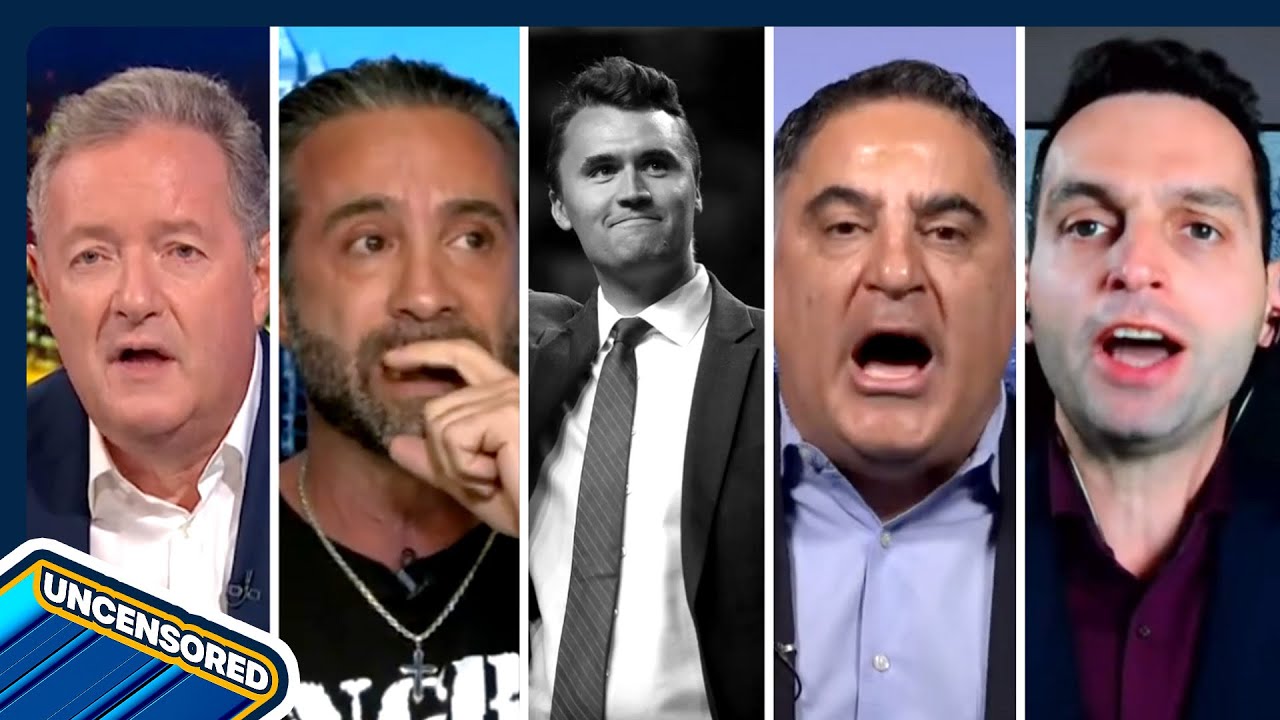
Piers Morgan Uncensored Panel Debates Political Violence After Charlie Kirk Assassination and America's Dangerous Turning Point
1:30:11
Inside Charlie Kirk's Assassination At Utah Valley University And America's Rising Political Violence Crisis
Charlie Kirk, the Turning Point USA founder credited with turning campus debate videos into a MAGA-era media empire, is shot and killed while addressing a crowd at Utah Valley University during his American Comeback Tour. The shooting sets off a manhunt that briefly detains the wrong man, George Zinn, before investigators identify 22-year-old Tyler Robinson through CCTV footage, a Dodge Challenger sighting, and a family tip that leads to his surrender. Robinson's texts to his roommate and the engraved bullet casings recovered from his rifle reveal a young man steeped in internet culture rather than a clear political ideology, complicating easy explanations for the killing. University of Chicago political violence researcher Robert Pap situates the assassination alongside the killing of a UnitedHealthcare executive by Luigi Mangione and the attack on Nancy Pelosi's husband, arguing that America has crossed into a more volatile, socially amplified era of political violence. Reactions split sharply along ideological lines, from grief-stricken tributes and calls for civility to open celebration of Kirk's death, exposing a country struggling to agree on how to respond to a killing everyone claims to condemn.
Charlie Kirk built his career on provocation. Thirteen years before his death, he had, in his own words, "no money, no connections, no idea what I was doing" when he started Turning Point USA at eighteen, convinced the country was "in serious shape" and needed a conservative youth movement to push back. What followed was a rise fueled by campus debate videos — clips of Kirk sparring with college students on race, immigration, gender, and COVID-19 that he posted to YouTube and that eventually amassed more than a billion views.
His commentary was frequently blunt and often inflammatory. He argued that undocumented immigrants "have committed a crime and are a criminal," that the southern border represented "the great replacement" of white Americans, and that "there are zero genders, two sexes, infinite personalities." He said COVID-19 "came from China" and "came from a laboratory," and that Dr. Fauci "should be in prison." He told women to "reject feminism" and "submit to your husband." That mix of provocation and reach built him into what supporters called a hero and critics called deliberately dangerous — and it earned him a direct line to Donald Trump, who publicly thanked Kirk for "working so hard" to turn out young voters ahead of the 2024 election.
A Deadly Q&A at Utah Valley University
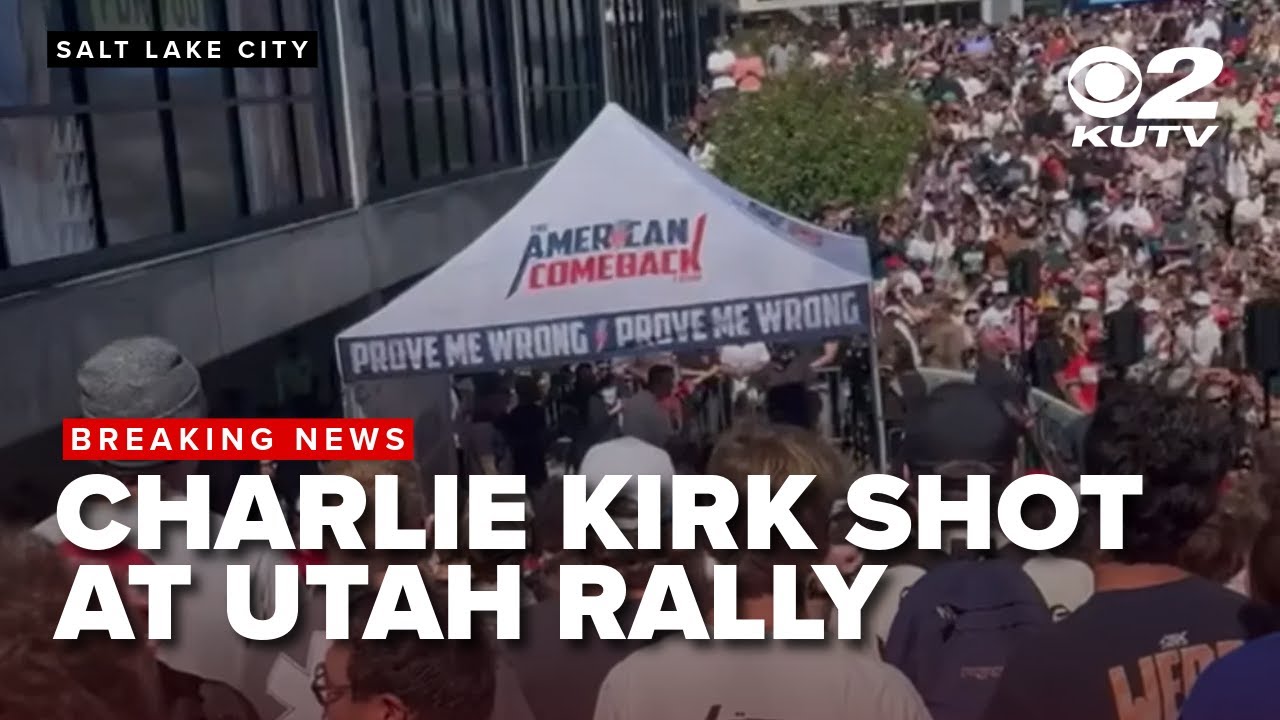
Utah was friendly territory for Kirk — a state where most of its 3.5 million residents have voted Republican in every presidential election since 1968. Kirk brought his American Comeback Tour, a series of open-mic debates on college campuses, to Utah Valley University, drawing roughly 3,000 people to watch him take questions from students in the same format that had built his following for over a decade.
Fifteen minutes into the event, a student named Hunter Kozak stepped up to the microphone and asked Kirk how many mass shootings had occurred in America over the previous decade, "counting or not counting gang violence." A single shot struck Kirk in the neck. He slumped back immediately and was fatally injured in front of the crowd. Panic spread instantly. "You just hear the gunshot and you just see his neck just open up and there's just so much blood," one witness recalled. Another described the crowd's reaction as "a stampede." Kirk's body was pulled into a car as police swarmed the campus, which was declared a crime scene.
Chaos, Grief, and a Nation's First Reactions
Tributes and condemnations arrived quickly. President Trump called Kirk "a patriot who devoted his life to the cause of open debate." Vigils were held with crowds chanting "thank you, God, for Charlie Kirk" and singing "Amazing Grace." Prayers were offered for "Erika, Charlie's young widow," and their two children. Reactions came from overseas as well, including a vigil in Sydney, Australia, where mourners called Kirk "knowledgeable" and "articulate." Officials across the political spectrum, divided on nearly everything else, agreed in condemning the shooting as a political assassination.
The Manhunt: A Wrong Arrest and a Family Tip-Off
Investigators initially detained George Zinn as a suspect but released him without charge once it was clear he did not match the shooter's description. The FBI then released CCTV images of a man photographed on a rooftop opposite Kirk's stage, seen fleeing the area afterward.
The break in the case didn't come from surveillance footage, though — it came from Robinson's own family. A relative of Tyler Robinson contacted a family friend, who in turn contacted the Washington County Sheriff's Office, reporting that Robinson had confessed to or implied involvement in the shooting. Investigators separately placed Robinson on campus that morning, arriving in a gray Dodge Challenger at approximately 8:29 a.m. on September 10th. The 22-year-old was arrested and the manhunt was over.
Who Is Tyler Robinson?
Robinson came from a Mormon, Republican family in Utah and had recently been notified he'd been selected for a resident presidential scholarship at Utah State University worth approximately $32,000 over four years. Those who knew him described him as smart and quiet, someone who "never caused any problems." According to officials, Robinson's politics had shifted in a more progressive direction over the previous year, and he shared a home with a roommate described as a boyfriend transitioning from male to female.
Texts, Bullet Casings, and an Unclear Motive
Before turning himself in, Robinson allegedly exchanged text messages with his roommate. Asked directly whether he was the shooter, he replied, "I am. I'm sorry." He went on to describe watching authorities detain "some crazy old dude" and interrogate someone in similar clothing, and described a plan to retrieve his rifle from a drop point that was complicated by a police lockdown of the area. Asked why he did it, he wrote only, "I had enough of his hatred. Some hate can't be negotiated out."
The rifle, recovered from a wooded area near campus, held four bullet casings engraved with messages that read more like internet in-jokes than a coherent political statement: "Notices bulges, what's this?" on the fired casing, and on the unfired casings, "Hey fascist! Catch!" alongside directional arrow symbols, the lyrics "Bella ciao, Bella ciao, Bella ciao, ciao, ciao," and "If you read this, you are gay. LMAO." Researchers who study political violence note that this kind of internet-inflected messaging, disconnected from a clear ideological program, has become increasingly common — and increasingly hard to parse.
Charlie Kirk in the Larger Pattern of Political Violence
University of Chicago political violence researcher Robert Pap, who had warned months earlier that an attack like this was likely, argues that perpetrators of political violence don't fit a narrow demographic profile. "What you really have with political violence are typically individuals who are volatile individuals," he said. "They are volatile for their own mix of psychosocial reasons, but they are also influenced by broad trends in the public... public opinion or public attitudes."
Pap draws a direct line between Kirk's killing, the assassination of a UnitedHealthcare executive by Luigi Mangione, and the 2022 attack on Nancy Pelosi's husband at their home. In each case, he says, a volatile individual was pushed toward violence by a surrounding community that seemed to celebrate or excuse it. Mangione, Pap notes, had supporters who saw him as "a Robin Hood-like figure" rather than a killer, and Robinson drew similar sympathy from people who framed the shooting in ideological terms. Pap also points to social media as an accelerant rather than a root cause: "It's like throwing gasoline on the fire. It's not the fire itself." He estimates that roughly 10 to 15 percent of people who express support for political violence, on both the right and the left, are heavy users of social media.
A Country Divided Over How to Grieve
Kirk's death pushed parts of the MAGA base further to the right, with some supporters warning that his killing had "unleashed" something across the country. Pap describes this as a predictable pattern: communities move from grief into anger, often directed at perceived enemies. That anger showed up in public calls to fire anyone who celebrated Kirk's death, alongside statements from others that they would not extend him the same compassion he was known for showing his opponents.
Faith leaders and Kirk's own family pushed back against that anger. One family member said forgiveness for the shooter was "what Christ did and is what Charlie would do," adding, "the answer to hate is not hate... love for our enemies and love for those who persecute us." Whether that message or the anger it responds to defines the aftermath of Kirk's assassination remains an open question — one that speaks less to Kirk himself than to the volatile state of American politics he spent his career provoking.