James Li Breaks Down the Candace Owens vs Andrew Wilson Debate on Charlie Kirk's Assassination
Enjoying this? Share it with someone who needs to see it.
Up Next
Candace Owens Exposes Turning Point USA's Debate Disaster With Andrew Wilson
1:29:06
Andrew Wilson Caught in Multiple Lies During Candace Owens Debate on Charlie Kirk Case
31:30
Candace Owens Reveals New Evidence on Charlie Kirk Investigation: Dairy Queen Stop and Car Wash Mystery
55:05
James Li Breaks Down the Candace Owens vs Andrew Wilson Debate on Charlie Kirk's Assassination
James Li analyzes the heated debate between Candace Owens and Andrew Wilson regarding Charlie Kirk's assassination. The debate, hosted by Patrick Bet-David, centered on whether Tyler Robinson killed Kirk, with Owens claiming 0% likelihood while Wilson expressed 75-85% certainty despite paying $300,000 to debate her. Li examines their competing interpretations of evidence, hearsay testimony, and credibility, highlighting Wilson's inability to name the charges against Robinson and his admission that he thinks "all women are stupid." The breakdown reveals sharp contrasts in preparation, conviction, and investment in uncovering the truth about Kirk's death.
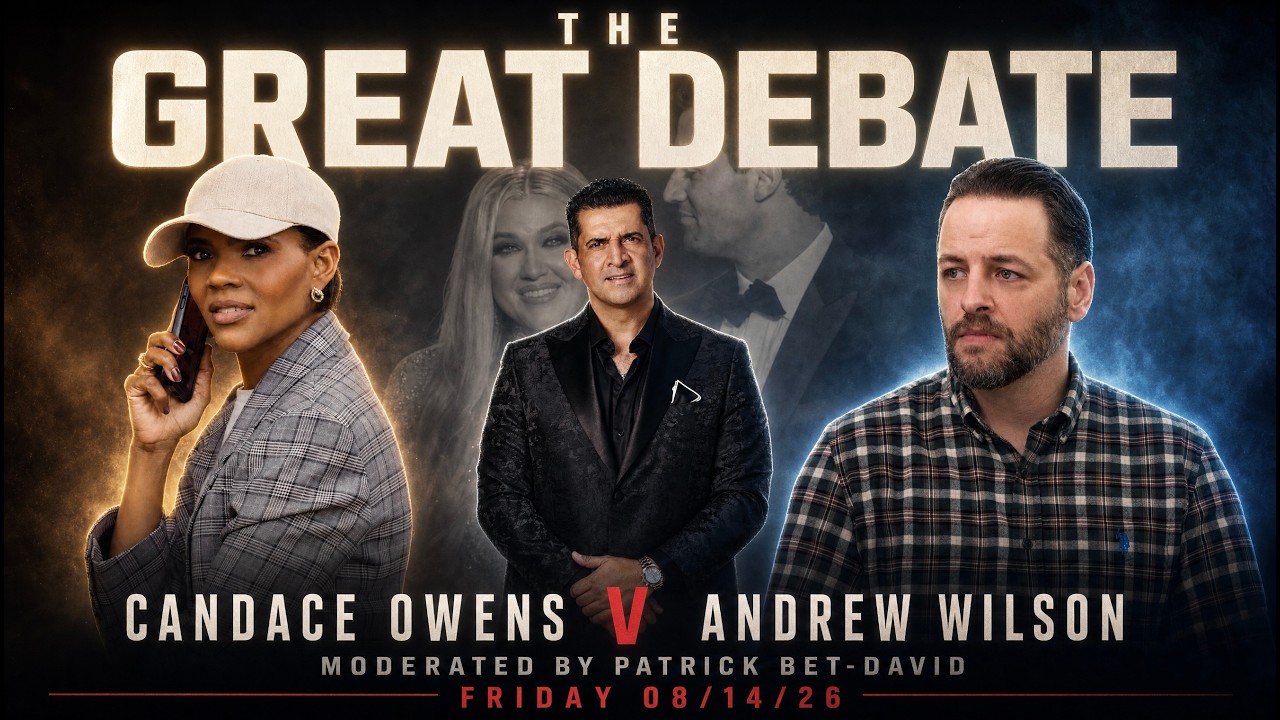
The debate between Candace Owens and Andrew Wilson centered on the assassination of Charlie Kirk, specifically addressing whether Tyler Robinson was responsible, potential Israeli involvement, and questions about Erika Kirk and Turning Point USA. Patrick Bet-David hosted this highly anticipated exchange that quickly revealed stark differences in preparation and conviction between the participants.
Assessing the Likelihood: A Telling Gap
When asked to rate the likelihood that Tyler Robinson killed Charlie Kirk on a scale of 0 to 100, the responses were striking. Wilson answered 75-85%, while Owens stated flatly: 0%. This disparity raised immediate questions about Wilson's confidence level, especially considering his previous tweet from July 9th claiming "the evidence is so overwhelming and damning" from the preliminary hearing alone. The disconnect between "overwhelming evidence" and 75% certainty became a recurring theme throughout the debate.
Wilson had paid $300,000 to debate Owens, yet his conviction appeared surprisingly weak compared to his public statements. Owens has made strong claims about Tyler Robinson being a patsy and Erika Kirk being "complicit," positioning herself at absolute zero regarding Robinson's guilt based on current evidence.
The Evidence Debate: Hearsay vs Facts
Much of the debate revolved around what constitutes legitimate evidence. Owens introduced Utah Rule of Evidence 1102, which allows reliable hearsay to establish probable cause during criminal preliminary hearings. This means assertions made outside the courtroom can be admitted without the witness being under oath or subject to cross-examination.
The distinction became crucial as they discussed evidence like blurry images allegedly showing Tyler Robinson, text messages purportedly sent by him, and testimony from Lance Twiggs. Owens argued that without corroboration, much of this constitutes hearsay rather than concrete evidence. She pointed out that when authorities say an image "looks like Tyler Robinson's car" or that he "drives a similar car," they're making inferences, not stating facts.
Wilson pressed Owens on her inference that degraded fingerprints on the gun could indicate a patsy situation. Owens explained that multiple DNA samples on the weapon besides Tyler Robinson's creates plausibility for alternative theories—that someone could have taken his gun and placed it at the scene. She emphasized she was using the same inferential mechanism that prosecutors use, just exploring different possibilities.
The Trust Factor: Who Do You Believe?
The debate essentially came down to a question of trust. Wilson appeared more willing to accept evidence presented by government prosecutors, while Owens questioned the credibility of key witnesses like Lance Twiggs, suggesting he might be an asset. She pointed to numerous inconsistencies in the federal case, including the .30-6 ammunition question, multiple changes of clothes, and the bizarre screwdriver situation involving disassembling and reassembling the gun.
Owens argued both sides were looking at hearsay evidence and developing plausible theories, just from different perspectives. She trusted alternative evidence sources more than government testimony, particularly given historical examples of conspiracies that later proved true. Wilson, conversely, seemed more comfortable accepting the prosecution's narrative despite acknowledging it wasn't 100% certain.
Wilson's "Devastating" Evidence About Erika Kirk
One of the most memorable moments came when discussing Wilson's tweet claiming Erika Kirk was "too stupid" to have participated in her husband's assassination. He had promised to "devastate Candace" with facts backing this position. When asked to explain how he developed evidence for this claim, Wilson simply responded: "I just think all women are stupid."
This admission drew laughter and exposed Wilson's approach as based on feelings rather than facts. Owens pointed out he was "allowed to just say stuff" and noted his evidence was merely his feelings. The exchange highlighted Wilson's debate style, which may work against younger, less experienced opponents on podcasts but fell flat against a prepared, serious investigator like Owens.
The Fact-Check Moment
Owens did face one fact-check during the debate. She claimed Tyler Robinson had texted that people would "be able to see me on security footage at the campus." Wilson challenged this, saying he didn't remember such a text. When the messages were pulled up, one read: "It was me. Look at the pictures from the surveillance footage. It was me."
Owens conceded immediately, saying she didn't remember that specific text and was happy to have it fact-checked. However, this didn't substantially damage her position, as she maintains that Lance Twiggs may not be credible and that Robinson himself could be a federal asset. The credibility of these witnesses remains central to her skepticism of the entire case.
The Charges: A Revealing Exchange
Perhaps the most damaging moment for Wilson came when Owens asked which specific charges he thought Tyler Robinson was guilty of. Wilson couldn't name even one correctly, stating he thought Robinson was charged with "murder," which was incorrect. When pressed, he asked to have them listed so he could review them.
Owens then listed all seven charges from memory:
Aggravated murder (which carries the death penalty)
Felony discharge of a weapon
Obstruction of justice (counts three and four)
Witness tampering (counts five and six)
Violence in front of a minor
After demonstrating her comprehensive knowledge of the case, Wilson then accused Owens of cheating, suggesting someone had texted her the charges. Owens immediately offered her phone for inspection, showing no communications during the debate. Wilson had exposed himself as unfamiliar with basic facts of a case he claimed had "overwhelming evidence."
The Steakhouse Receipt and Other Details
Wilson attempted to recover by mentioning a steakhouse receipt, referencing evidence found by researcher Diligent Dennis. This receipt and witness testimony supposedly showed Tyler Robinson drove three hours to eat at a restaurant in Panguitch, Utah, then drove three hours back to Orem to unsuccessfully retrieve his rifle. Owens and others have noted this seems as questionable as federal evidence like Tyler Robinson's note, which was photographed but later burned.
Debates as Theater vs Truth-Seeking
The analysis concluded with an observation about debates generally: they rarely change minds. Studies consistently show debates function more as theatrical spectacle than persuasion tools. The exception might be cases like Joe Biden's debate performance that was so poor it raised fundamental questions about capability.
Patrick Bet-David, CEO of Valuetainment, hosted this debate, fitting given his brand combines value and entertainment. While debates may not change opinions, they can reveal character and conviction. This debate clearly showed Owens as 100% invested emotionally, spiritually, and physically in uncovering the truth about Charlie Kirk's death, whether due to her relationship with Kirk or concerns about implications for global geopolitics and American politics.
Wilson, by contrast, appeared to care little about the case itself. His approach seemed pseudointellectual, focused on sounding smart rather than genuine truth-seeking. Real investigation requires hours of research over months or years. Wilson's performance suggested he was primarily a clout chaser rather than a serious investigator.
The Long Road Ahead
Given the importance of the Charlie Kirk case, the truth will likely take considerable time to emerge. Those genuinely committed to understanding what happened will continue following developments, analyzing evidence, and questioning official narratives where they contain inconsistencies. The debate revealed who approaches this case with serious intent and who treats it as an opportunity for attention and entertainment.