Up Next
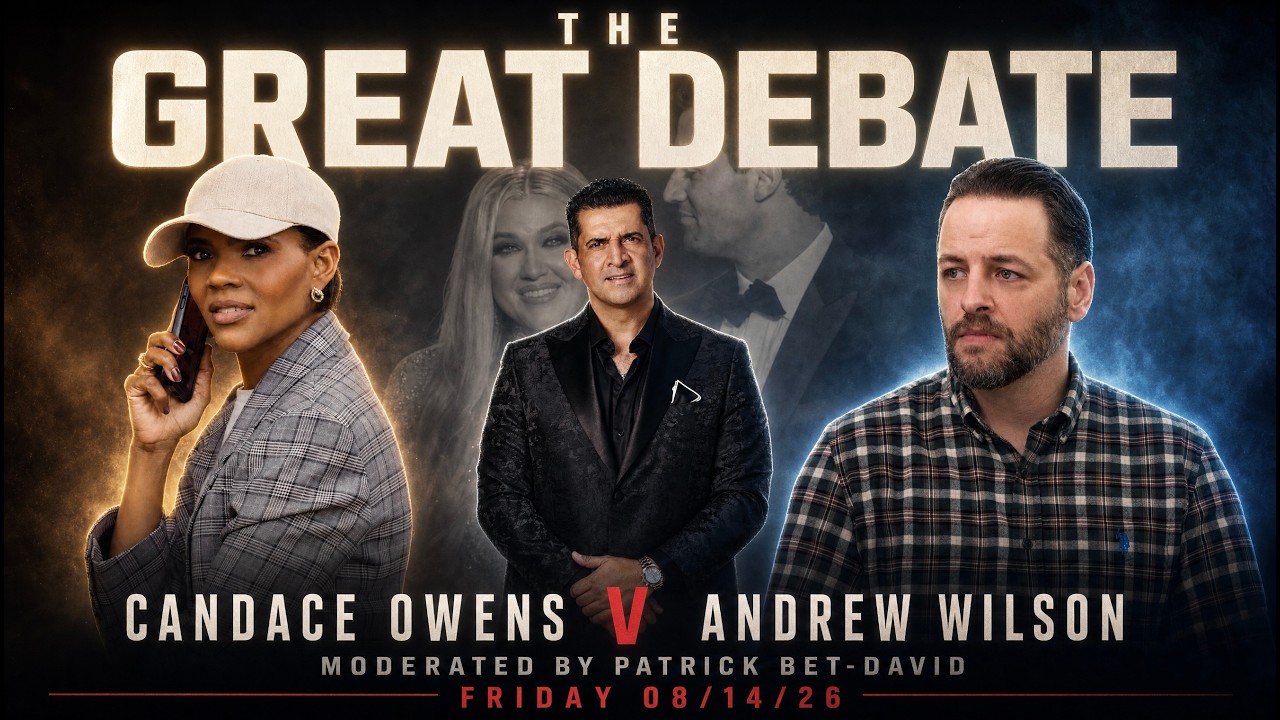
Candace Owens and Andrew Wilson Debate the DNA and Ballistics Evidence Against Tyler Robinson
21:37
Andrew Wilson and Candace Owens Clash Over Tyler Robinson and Charlie Kirk Assassination Evidence
3:11:07
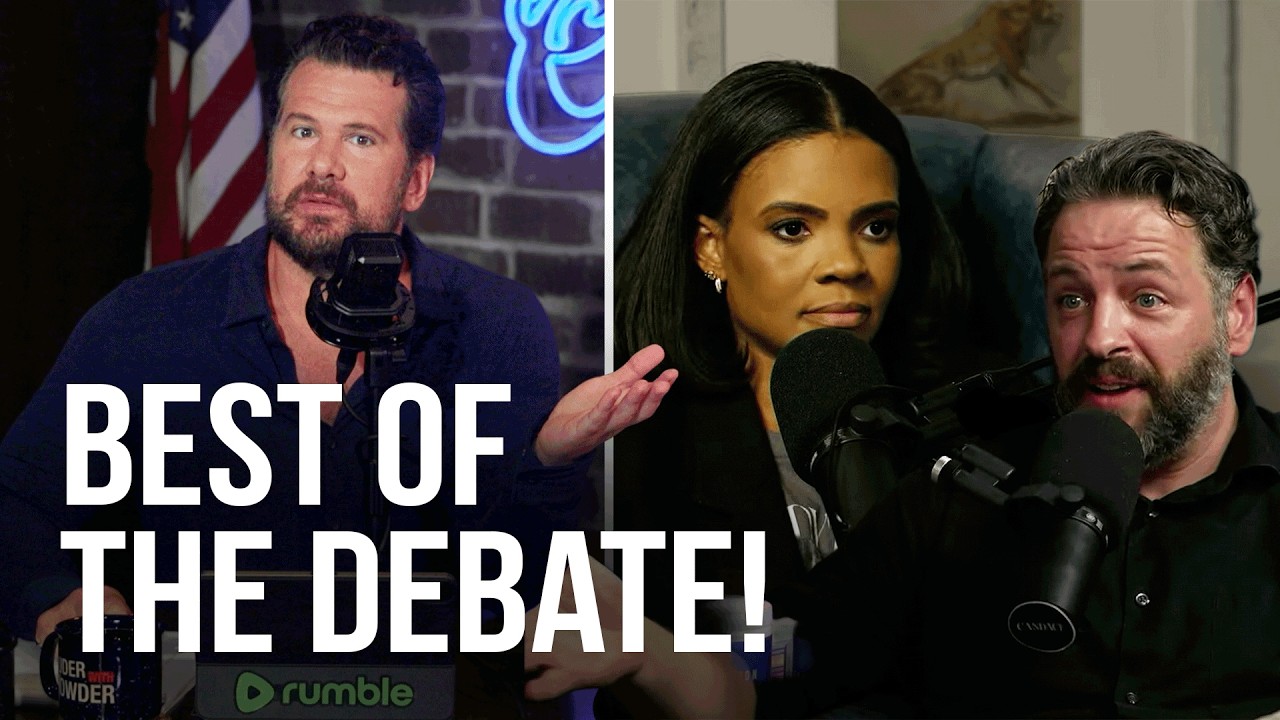
Candace Owens Challenges Andrew Wilson on Tyler Robinson Evidence: 0% Shooter Conviction
24:22
Candace Owens Challenges The Tyler Robinson Case: DNA Evidence, Degraded Prints, and the Patsy Theory
Candace Owens dissects the Tyler Robinson case in a heated exchange examining critical forensic evidence. She questions how Robinson's DNA on the rifle could be the most degraded among five contributors, challenges claims about dust in the gun barrel, and argues the evidence points toward a setup rather than guilt. This detailed analysis explores DNA testimony, fingerprint degradation, and whether the prosecution's case holds up under scrutiny.
The Central Question: DNA Degradation and What It Reveals
At the heart of this debate lies a forensic puzzle: Tyler Robinson's DNA was found on the rifle trigger and trigger guard, but among at least five contributors, his sample showed the most degradation. Candace Owens argues this fact demands explanation. If Robinson recently fired the weapon, his DNA should be among the freshest, not the most degraded. The opposing argument dismisses this as a "so what" moment, claiming degradation proves nothing about whether Robinson is a patsy.
Expert testimony from the ATF's Caitlyn Oliver and FBI forensics analysts revealed that the DNA sample was complex—containing contributions from at least four people, possibly more. Crucially, when samples contain DNA from multiple contributors above two people, the science becomes less definitive. The prosecution cannot make source attribution claims with scientific defensibility when dealing with such mixed samples.
The Gun Barrel: Dust, Debris, and What It Means
Another piece of disputed evidence centers on dust and debris found inside the rifle barrel. Owens questions how a recently fired weapon could contain debris. The counterargument suggests firing a rifle doesn't always clear all debris from the barrel, and since the weapon was left in a forest, environmental contamination could explain the presence of dust.
However, this explanation raises its own questions. If the rifle had been recently fired in commission of a crime, would we expect to find the level of debris described in testimony? Or does this support the theory that the weapon had been sitting unused, perhaps as a family heirloom that Robinson rarely fired?
Family Heirloom or Murder Weapon?
According to conversations Owens had with members of both the Robinson and Twiggs families, the rifle in question was a family heirloom—passed down from Robinson's grandfather or great-grandfather. Robinson inherited it as the firstborn, but he wasn't known as an active shooter. This context becomes relevant when examining whose fingerprints appeared on the weapon.
The DNA testimony revealed that Matt Robinson (presumably Tyler's father) was explicitly named as having prints on the gun, along with elimination samples taken from Amber Robinson and Lance Twiggs. If the weapon primarily sat on a shelf as an inherited keepsake, the presence of family members' DNA—and the degradation pattern of Tyler's DNA—takes on new significance.
The Medical Examiner and Ballistics Questions
The debate also touches on whether a .306 rifle with 150-grain Remington Core-Lokt ammunition could have caused the wound in question. Owens points out that soft-point ammunition with just a small jacket around the lead could fragment upon impact or even in flight. The medical examiner's summary apparently confirms this possibility, though opponents argue this would require the medical examiner to be part of a conspiracy.
The ballistics question centers on whether frangible ammunition could shatter when hitting bone, particularly the neck. Both sides agree smaller caliber rounds can penetrate bone, but the specific wound characteristics and ammunition type remain points of contention.
Five Plus Fingerprints: When Science Becomes Uncertain
Perhaps the most compelling forensic issue involves the fingerprint analysis. FBI forensics testimony established that above two contributors in a DNA sample, the science becomes unreliable. Yet the trigger and trigger guard sample contained at least five contributors, possibly more. Among these multiple contributors, Tyler Robinson's DNA showed the most degradation.
DNA degradation typically occurs over time. Items tested after 20 or 40 years often show less degradation than was found in Robinson's sample. How could his DNA be the most degraded among five plus contributors if he was the last person to fire the weapon? This question remains central to the patsy theory.
The Patsy Theory: Connecting the Dots
Owens argues these evidence points collectively support the theory that Robinson was set up. If his DNA is most degraded, if the gun was a family heirloom he rarely used, if other family members had stronger DNA presence on the weapon, and if the gun could have been taken from his home and planted near the crime scene, this pattern suggests setup rather than guilt.
The opposing view dismisses this as "pure conjecture"—arguing that degraded DNA doesn't prove anything about being a patsy, and that the presence of family DNA on a family gun means nothing suspicious. However, Owens counters that she's not conjuring evidence but rather asking for explanation of evidence that already exists in the testimony record.
What the Preliminary Hearing Revealed
The preliminary hearing featured extensive testimony from forensic experts including Caitlyn Oliver from the ATF and Samantha Carer. Their testimony covered DNA analysis, fingerprint examination, and the scientific limitations of mixed DNA samples. The prosecution cannot claim, with scientific defensibility, that Robinson's DNA definitively places him as the shooter—yet this nuance often gets lost in media headlines.
Expert witnesses also could not establish when DNA was deposited on the trigger or trigger guard, how many total contributors were present, or which DNA came from which part of the weapon. These uncertainties create reasonable doubt, yet the rifle's discovery near the crime scene has been presented as damning evidence.
The Army Sniper Clarification
A tangential issue arose regarding Robinson's background. Claims circulated that he was an army sniper, which he denies. He clarifies that he was never an army sniper, though his wife made a "colloquial" reference years ago. His actual expertise comes from being an NRA instructor and operating a gun shop as a private citizen, where he taught rifle skills for many years.
Evidence vs. Narrative
The fundamental disagreement centers on what constitutes evidence versus narrative. Is finding a gun near a crime scene overwhelming evidence of guilt, or is it merely one data point that could support multiple theories? Can DNA degradation patterns tell us about timeline and handling, or are they meaningless without additional context?
Owens maintains that asking these questions isn't conspiracy theorizing—it's demanding that evidence withstand scrutiny. The forensic testimony itself reveals significant limitations and uncertainties. The question is whether media coverage and public perception accurately reflect these scientific limitations, or whether a simpler narrative has overtaken the complexity of the actual evidence.
Video Transcript
describe how this actually links in to
Robinson being a pathy.
>> Okay. I just described that for you, so
I'm not I can explain it to you, but I
can't understand it for you. So, I'm
going to move on from that. I want to
address what you think is evidence so we
can keep this on par with what your
claim is since
>> Well, I think that that's a piece of
evidence that's in dispute, and that's
why I'm
>> Yeah, but we're we're trying to get to
whether there's overwhelming evidence
that Tyler Robinson did this. Yeah.
If you want to use the first part of
that for the internal
>> critique, we should go over the actual
evidence that we feel
>> the first reason that I think and I
think it's compelling evidence is that
Tyler Robinson's rifle was found uh near
the crime scene. So, I would consider
that to be very good evidence. And also,
the fact of the matter is is that I
dispute this claim that a 306 could not
have made this wound. I think that
that's absurd. 150 grain Remington
corlocked. absolutely could shatter when
it hits the neck of any human being.
When you say that there's some steel
neck and it's a smaller caliber, you
have to make a counter explanation. Why
wouldn't a smaller caliber also go
through bone?
>> It could. I didn't say it can't.
>> Right. Exactly. So, if that's the case,
then ammunition is going to be the
critical key here. And if we have
frangible ammunition, which we do in
this case, a flex tip round, well, I'm
sorry, not a flex tip, a soft point
round from a 150 grain Remington core
lock, that's just a small jacket that
goes around the actual lead piece. These
that this thing could have split apart
in air for all we know, but definitely
upon impact. And we have the medical
examiner who confirms this in a summary,
and my team can bring that up, the
summarization, which means he would have
to be a part of some kind of conspiracy
as well.
>> Okay. So, just to start with your point
about saying that the gun was found near
him, I mean, uh, near Loy Center or I
guess off in the woods. That gun, did
you watch the the testimony? Did you I'm
Did you watch the preliminary hearing?
>> Covered it live. Yeah.
>> Okay. So, forgetting what the summary of
the medical report was, did you watch
the testimony that was given by the uh
Caitlyn Oliver, the ATF woman, Samantha
Carer, any of those people who went into
the science of
>> Yes, I recall. You're talking about
>> the bullet analysis.
>> Yeah. When they went into the DNA.
>> Okay. So,
>> that's kind of the most relevant part.
Okay.
>> I'm not denying I've never denied on my
platform or anywhere else that a gun
owned by Tyler Robinson was found near
the crime scene, right?
>> That doesn't that doesn't remove if you
think somebody set up as a psy you could
take a gun out of this room right now
and you could walk out and plant it in a
woods near a crime scene. That's not
convincing evidence to me.
>> I concur. I concur with the fact that
that's a possibility. So you are you I
think have said on a platform that you
were a gunsmith.
>> Mhm.
>> Okay. And for how many years?
>> Many many years.
>> For many years. You also said that you
were an army sniper.
>> I wasn't a sniper in the army. Okay.
>> And I never said that. But
>> sorry. Your wife tweeted that you were
an army sniper.
>> Yeah. I don't know. Like 15 years ago,
she said something.
>> Does it change 15 years later?
>> She said that it was colloquial. So
>> Army sniper is a colloquial term.
>> Yeah. I'm not an I was never an army
sniper.
>> Okay. Um what did you do in the army?
Did you teach this? She then I corrected
it and said you taught rifles in the
army.
>> Not. No, I didn't teach rifle. No, I
taught rifles as a private citizen.
>> Okay.
>> Mhm.
>> Uh
>> and I was an NRA instructor for many
many many years alongside my my gun shop
>> as with your expertise when
>> she uh gave testimony on the stander
that there was dust and there was
debris.
>> Mhm.
>> That was found in the gun barrel. Yep.
>> Um, did you inspect the interior of this
barrel?
>> I did. Yes.
>> And did you notice uh whether it had any
debris or dust in it?
>> I believe [clears throat] my notes state
that debris and dust was observed in the
inside of the barrel. Yes.
>> Uh, and then when we had the person who,
and this was, I believe, Caitlyn Oliver,
who explained painfully about the DNA,
the prince.
>> Well, let's start with a
>> No, I'm not done. You you said
something, so I'm I'm going to finish my
thought. Right.
>> You don't want to do a point in time?
>> No. Well, sure. If you want to respond
to I want you to respond to two points.
I want I want you to start with two
points.
>> Okay.
>> Dust and debris in the gun barrel.
>> Yeah.
>> Secondly, the fact that there were five
sets of prints, five plus actually by
the end of the testimony. Five sets of
prints. Uh for which we already had the
woman who worked for the FBI forensics
testify that above two prints, if you're
taking a sample, it it's no longer a
science. Right. She testified that when
they took the sample of what was on the
trigger, they saw five plus prints. And
among those five plus prints, Tyler
Robinson's was the most degraded.
>> From a scientific standpoint, you
couldn't read the paragraph that sets
out the likelihood ratio in your report,
whatever the number, and then blast a
headline in the media, Mr. Robinson's
DNA is found on this item. That's a
source attribution, is it not?
>> Correct. Yes.
>> And that would not be scientifically
defensible, would it?
>> Correct.
>> And you can't tell us anything about
when
the DNA was deposited on the trigger
guard or the trigger. Correct.
>> Correct.
>> You can tell us anything about
whether when you say it's at least four,
it could be five, six, or seven people
with DNA on that trigger or trigger
guard. Correct.
>> Correct. which is why we have the major
contributor that is suitable for
comparison and the minor contributor is
not suitable for comparison due to that
complexity.
>> The 1.3 sample
is described as swabs of trigger and
trigger guard. Right.
>> Correct. You didn't do the swabs, but um
am I correct that you have no way of
knowing which part was from the trigger
and which part was from the trigger
guard?
>> Correct. So, they were swabbed together.
So, I wouldn't be able to say um where
the DNA came from.
>> Um and that's one of the samples that
was degraded. Correct.
>> Uh there were signs of degradation
present in that sample. Yes. And you
said with regard to that sample that
that was a sample
consistent with at least four
contributors.
>> Correct.
>> Correct.
>> And did the what you term the major
profile
have the largest amount of degradation
in that sample?
>> There was. Yes. So, I would like you to
explain how Tyler Robinson's prints
could be the most degraded when she
said, "Actually, you could have DNA on
something that you've touched. You could
have DNA on something that you've never
touched." And to get DNA degradation,
we've they've looked at pieces um of
items 20, 40 years on that don't have
degradation. Yet, Tyler Robinson's
prints amongst five plus other prints
were the most degraded on that weapon.
>> Yeah. So, let's get into all three of
the claims. First with debris. When it
comes to debris, firing a rifle doesn't
always blow the debris out of the
barrel.
>> Okay. That I I
>> You think there could be debris? Uh I'm
sorry. Debris and dust.
>> Yeah.
>> He just fired the weapon.
>> Okay.
>> Not only that, he left it in a forest.
>> Now, I don't know if if you agree with
me, but if you leave a rifle in a wooded
area, it's also possible that debris
could get in that way. But I'm not even
sure that that's what the case is. I
think it's far more likely that he fired
the shot. It just didn't blow all the
debris out. And it often doesn't. You'll
find this if you if you take Grand
Papy's, you know, dirty rifle and it's
all dusty inside the bore and you go
fire it. You'll often look down the
board and there's still dust.
>> Okay.
>> Happens all the time.
>> Okay. And the prince?
>> Yeah. So, the prince we don't know all
of the details on just yet.
>> We do. It was It was excruciatingly long
testimony.
>> We don't because they haven't gone to
trial. So, we don't know uh on the print
front, but Tyler Robinson's DNA was on
there. You made the claim that Lance
Twig's DNA was on there and it was not.
>> Uh, well, when she gave the testimony.
No, hold on. First, let's go to your
first point cuz that's wrong. We can get
a fact check on that. What do you mean
we don't know until it goes to trial
about the degraded prince? She testified
and this is the person who who took the
prince.
>> Yes. But the problem is is that inside
of this particular testimony, you agree
with me that there's going to be much
more of the DNA analysis trial, right?
>> But you also would agree that her fact
is not going to change, that among the
prince, his was the most degraded. So,
I'm asking [clears throat] you to
address that. How could that be
possible? Let's give it um let's just
grant this for a second as a possibility
that his fingerprints were degraded.
>> It's not a possibility. It's it's a
fact. The person who took I'm just
granting it for the sake of argument.
>> You should grant it because it's a fact.
>> So now So now So now it's granted. So
what?
>> What do you mean so what?
>> Yeah. So what what does that prove?
>> It proves that if his prince were the
most degraded amongst five of them.
You're going to have to explain how
that's possible. If he's the one that
recently fired the weapon. Yeah. So,
wait a second. You're saying that it's
an impossibility that if his
fingerprints are the most degraded,
you're you're the gunsmith.
>> Wait a second. How would a gunsmith give
an analysis on fingerprints or DNA? Do
you think that I've worked in a DNA
laboratory?
>> So, your answer is I don't know. You can
just say you don't know. You don't have
to.
>> But I did. But I did.
>> No, you said so what? So say I don't
know. I actually don't have an
explanation for that. Candace is my
question. Well, I think that what it
would prove is that it is a more viable
theory that people who had stronger
prints on the gun may have used it more
recently.
>> Did they tell did they say who else had
fingerprints on the gun?
>> They named Matt Robinson explicitly and
then and this was a part of the
testimony where she was speaking about
how they got samples of um elimination
samples from the home of Amber Robinson,
[clears throat] Matt Robinson, and Lance
Twigs. So, those were the three names
they named. So, are you saying that
twigs?
>> Would you like me to finish my
statement?
>> I just want to make sure I'm clarifying.
>> I'm I'm I'm trying to finish the answer,
but it can't be clarified until the
answer comes out of my mouth.
>> Okay. So, go ahead. This was a portion
of her testimony where she was
explaining how they got elimination
samples from the home. And she named
Matt Robinson, Amber Robinson, and Lance
Twigs as the elimination samples that
she was using. Um, and so she explicitly
said she said some of them some, so we
can assume two out of the three
>> uh were their prints were found on the
gun. She explicitly named Matt Robinson
um as someone who had prints on the gun
and then said there were five people
that they had taken that sample from.
And again, what's also relevant here is
the earlier testimony uh which came from
uh the FBI forensics analyst. I believe
it was on day two where she said that
when you're using those mixtures and
those samples and you get up to five
plus, it's really hard to make any sort
of a determination. So, both of those
things are relevant. If you can't
explain why his prints are the most
degraded and you're saying he is the
shooter, it's not really a so what, it's
an open-ended question that people have
a right to pursue. It's not a
conspiracy. It's actually proof of my
claim that there is evidence that he was
set up as a psy
>> that wouldn't prove anything about him
being a psy. It said it's evidence it to
support the claim that he could have
been set up as a
>> py. So this is why I said earlier, so
what because even if it's the case, this
doesn't have an explanation for it yet.
That doesn't actually give you any
evidence in your corner for Tyler
Robinson being a psych.
>> Hang on, hang on, hang on. I didn't cut
you off,
>> right? You would need to actually
explain how this would demonstrate Tyler
Robinson. This is tied into to Robinson
being a pathy. Are you claiming that
these fingerprints were Lance Twigs or
that he had any DNA there? I I'm saying
that it could be Matt Robinson. It could
be Amber Robinson. That sort of
information is going to come out during
the trial.
>> How would that tie into the idea that
he's a psych?
>> Yes. Because if his is the most degraded
prince and the information that I shared
on my platform is true that this gun was
given to Tyler Robinson as an heirloom.
I had conversation with members of the
Robinson family, Twigs family, both of
them. You know, like I said, we're not
just dreaming. Um, and if we're having
those conversations and they told me
that that gun was only given to Tyler
Robinson because it was a family
heirloom. Okay. So, it was his
grandfather's gun or great-grandfather's
gun. I don't remember the difference.
Uh, I don't remember which one it was.
And so, he got it because he's the
firstborn. So, but he's not much of a
shooter is what I was told. Uh, and so
he has this because he inherited it
essentially. So, if I get something from
my grandpa and I put it up on the shelf
and I own this, you could see that could
be
>> How do we get to the patchy part? But
you don't let me ever get to the end of
the sentence. So, how could we get to
the psy part if I can't get to the end
patiently till we get
>> So, that could be a reasonable
explanation as to why there was dust in
the barrel because he doesn't often
shoot this weapon and he is indeed a
fisher. Um, and it could also be a
reasonable explanation for why we have
Matt Robinson's prints on this.
Obviously, Lance Twigs, even if he has
prints on things, they live together.
That doesn't really mean anything. But
that could demonstrate that somebody
took his weapon and put it somewhere.
His prints are the most degraded.
somebody else's prints there. There
there's more presence of somebody else's
prints and that could demonstrate that
somebody is taking items from his house
and putting it into very
>> but it also could demonstrate nothing.
So the problem the problem that you have
here is that this is pure conjecture.
>> This is hang on. This is not evidence
that Tyler Robinson is a pathy. It's
only evidence that you have conjectured
up that uh well if it's the case that
these are the the more degradated prints
then therefore that means must be psy
parents finger dad's fingerprints on
guns must be
>> describe how this actually links in to
Robinson being a psy
>> okay I just described that for you so
I'm not I can explain it to you but I
can't understand it for you so I'm going
to move on from
>> [music]