2,422 videos 1,389,747,653 views US Joined Aug 30, 2018
Charlie Kirk is the Founder and President of Turning Point USA, the largest and fastest growing conservative youth activist organization in the country with over 250,000 student members, over 150 full-time staff, and a presence on over 2,000 high school and college campuses nationwide. Charlie is also the Chairman of Students for Trump, which aims to activate one million new college voters on campuses in battleground states in the lead up to the 2020 presidential election. His social media reaches over 100 million people per month and according to Axios, he is one of the "top 10 most engaged" Twitter handles in the world. He is also the host of “The Charlie Kirk Show,” which regularly ranks among the top news shows on Apple podcast charts.
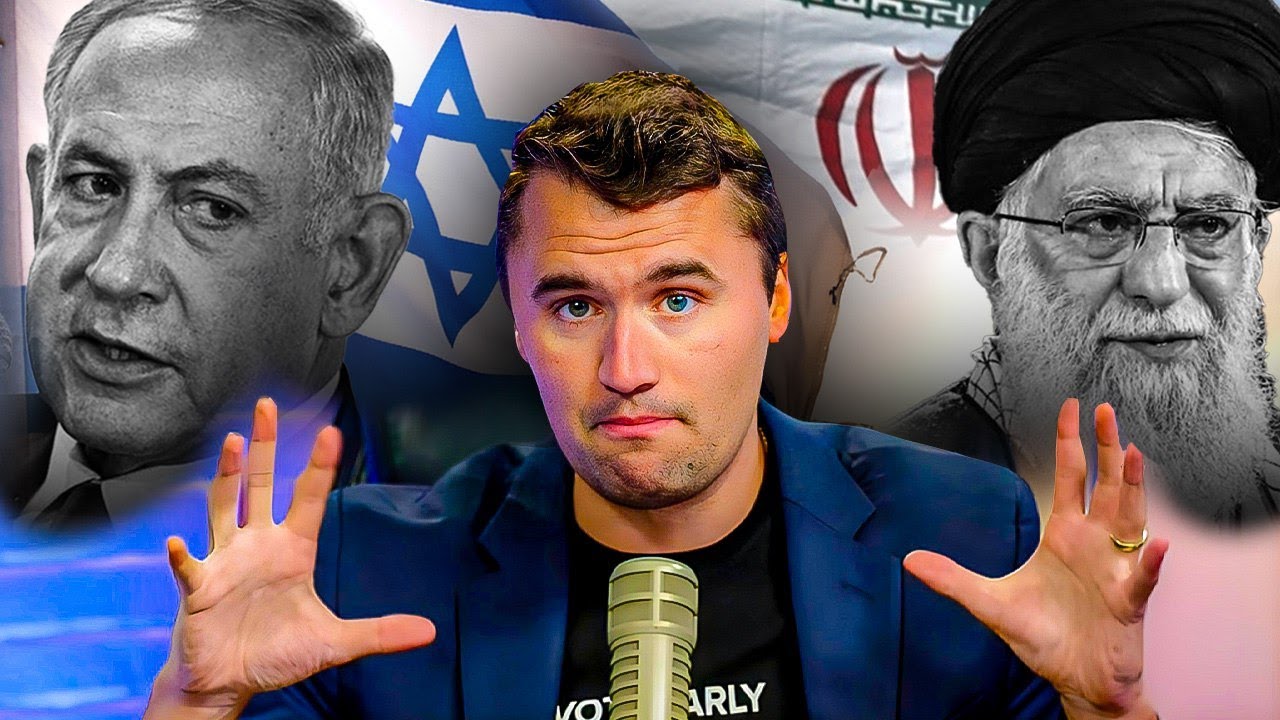
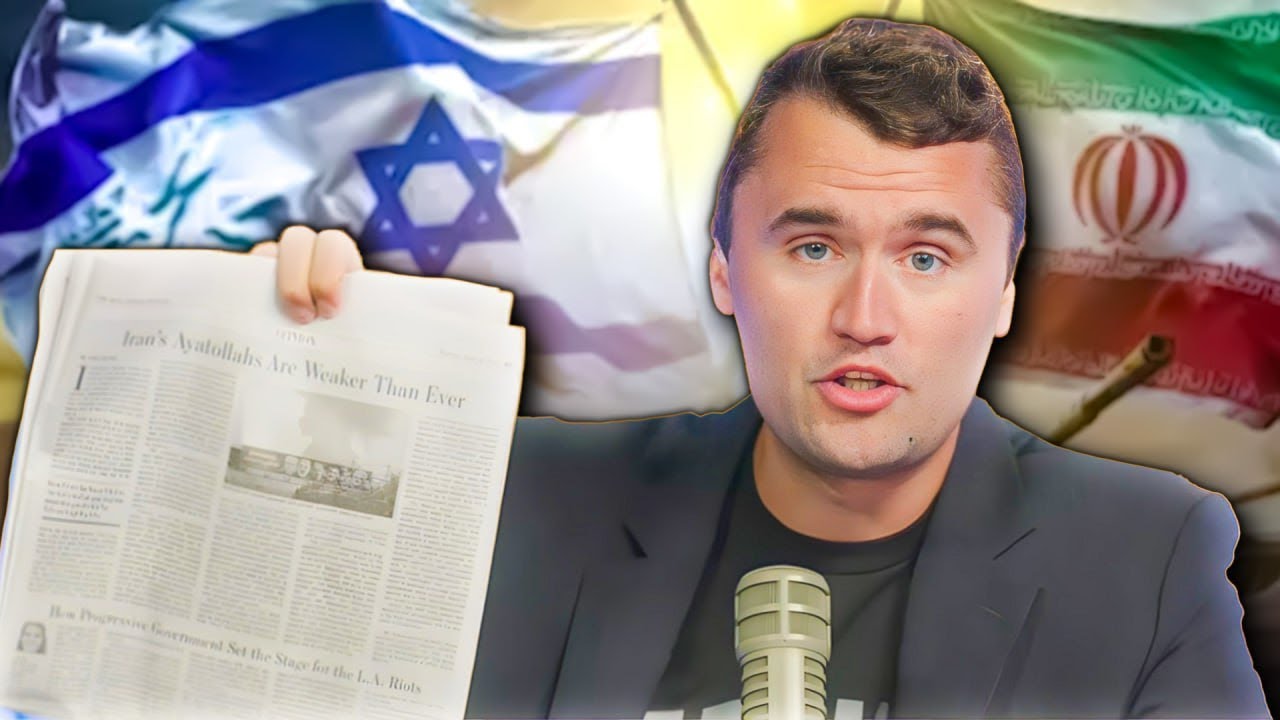
JD Vance Reveals How Donald Trump Destroyed Iran's Nuclear Program Without Losing A Single American Life
JD Vance provides an inside account of one of the most significant diplomatic achievements in recent history. The Vice President details how President Trump destroyed Iran's nuclear program through precise military action, then brokered a ceasefire between Israel and Iran within hours, all without a single American casualty or boots on the ground. Vance describes the tense 24-hour period when the ceasefire nearly collapsed, Trump's explosive public intervention that salvaged the deal, and how this operation represents a complete reset of a generation of failed American foreign policy in the Middle East. He also discusses the administration's domestic priorities, including mass deportations and the push to pass legislation eliminating taxes on tips and overtime.
Vice President JD Vance joined Charlie Kirk to discuss one of the most remarkable diplomatic and military operations in recent American history. The Trump administration successfully destroyed Iran's nuclear program, brokered a ceasefire between Israel and Iran, and accomplished all of this without losing a single American life or deploying ground troops. Vance emphasized that all credit goes to President Trump, who had a clear vision from the outset: destroy the Iranian nuclear program and then get out of the Middle East.
"He wanted to destroy the Iranian nuclear program. He did that militarily. Of course, we tried to do it diplomatically, but the Iranians were not willing to play ball," Vance explained. "But he also wanted us to be in a very narrow, very defined operation where once we solved the problem, he wanted to get the hell out and not have to deal with the Middle East anymore."
The 24-Hour Diplomatic Sprint
Vance provided a detailed timeline of the ceasefire negotiations that culminated in the agreement. On Monday morning, he entered the Oval Office to find that both the Israelis and Iranians had made contact with the administration. The Israelis communicated that they were exhausted, had achieved their military objectives, and did not want to continue fighting. The Iranians, meanwhile, indicated their planned counterattack would be largely symbolic and even telegraphed exactly where they would strike to help the U.S. protect its troops.
"The president basically said let's figure out what the Iranians are actually doing. Let's obviously do everything that we can to save our troops and then after the attack, let's reconvene and see where we are," Vance recounted. Around 3:00 PM, President Trump gathered his senior team and assessed the situation. The Iranians had clearly not intended to cause casualties, and the Israelis had confirmed they achieved their objectives. Trump's decision was immediate: get a ceasefire done.
Three hours later, the ceasefire was accomplished. Vance was coordinating the final details while traveling to do an interview with Bret Baier, and President Trump finalized the agreement while Vance was on air. "A really big day for America, a really big day I think for Israel and Iran, but just a big day for world peace," Vance declared.
Trump's Explosive Intervention
The ceasefire nearly fell apart the following morning. Vance described waking up to discover that what seemed secure the night before was now in jeopardy. At approximately 6:30 AM, he genuinely feared the entire agreement would collapse. What followed was one of President Trump's most memorable public interventions.
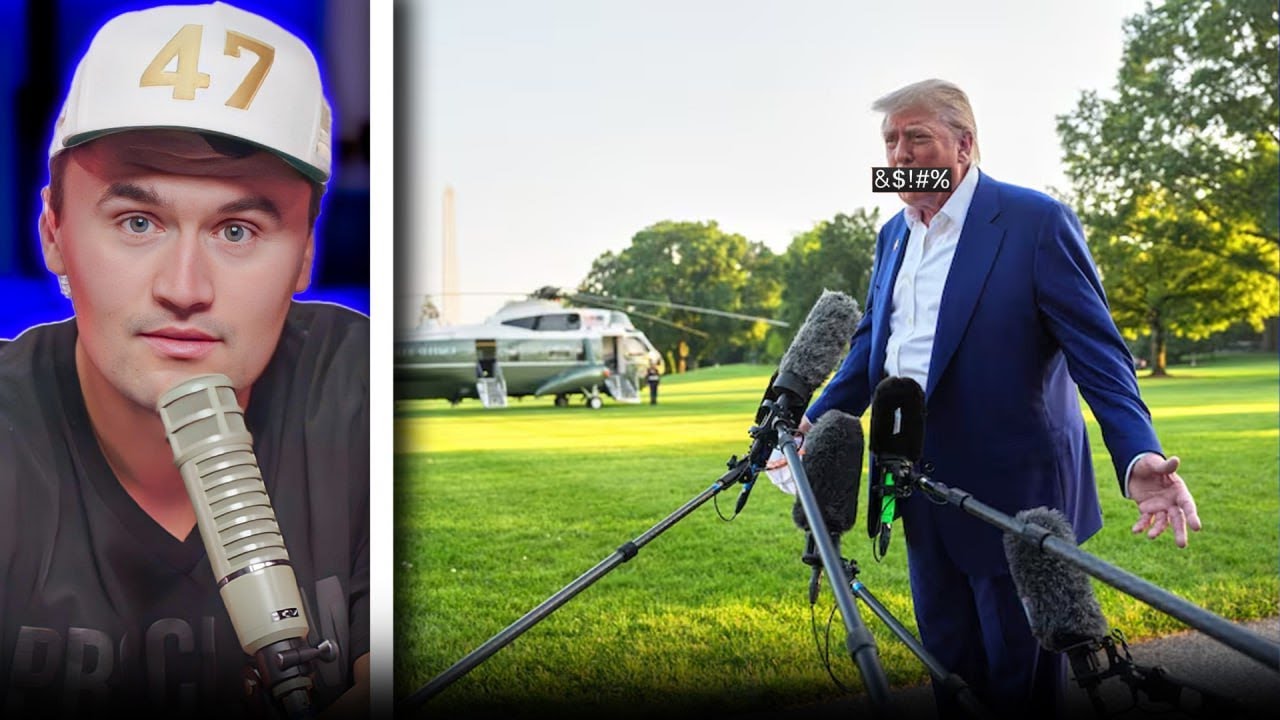
Charlie Kirk noted that he had never seen President Trump as publicly angry as he was that morning, when the president essentially dropped an expletive heard around the world directed at both Israel and Iran, demanding an immediate end to hostilities. Vance explained the situation: "Ceasefires are always a little bit of a mess, Charlie, and we don't even know fully exactly what happened."
According to Vance, there appeared to be one errant rocket that the Iranians fired at the very end—it did not land or cause any damage—but the Israelis perceived it as a breach and were preparing a massive response. President Trump had reached his limit. "I called him five minutes before this press conference and we talked about it. And I think the president was just like, 'This is ridiculous. These guys are exhausted. Both of them want to stop fighting. This stupid tit for tat is unacceptable. And I'm just going to go out there and I'm going to make it very clear to each party that this needs to stop,'" Vance recalled.
The forcefulness of Trump's public statement actually changed the trajectory of the morning and saved the ceasefire. "The president got it back on track as only he can do. It was really amazing," Vance said.
Pitching A Perfect Game
Kirk emphasized the extraordinary nature of what the administration accomplished, describing it as "pitching a perfect game." The operation resulted in no nuclear program for Iran, no troops on the ground, no nation-building, no U.S. troop casualties, and no protracted conflict. This combination of outcomes is virtually unprecedented in modern American Middle East policy.
Vance agreed enthusiastically: "That's right. It really is a dream, Charlie. And I think you and I are similar age. We grew up in the same generation. I think a lot of people in our generation assume that every single time we do anything in the Middle East that is necessarily going to lead to some protracted quagmire."
The Vice President emphasized that President Trump was simply not interested in that outcome. "I actually think he pressed the reset button on a generation of failed American foreign policy. He basically said it is actually possible for Americans to go and do important things in the American interest and then to get out."
The Military Operation
Vance provided details about the remarkable military precision involved in the operation. B-2 bombers flew halfway across the world and dropped 30,000-pound bombs—twelve of them—on ventilation shafts literally the size of a washing machine. The bombers then returned without ever landing, using aerial refueling throughout the entire mission.
"It's an amazing testament to American military power," Vance said. "But the president used that military power to accomplish something that mattered to the American people. He's been saying it for 10 years. We can't let Iran get a nuclear weapon. He accomplished it and now he's moving on, I think, to build more peace and more prosperity all across the Middle East."
Rejecting False Dichotomies
Vance addressed the criticism the administration has faced from various quarters. "You of course have heard some of the president's supporters and even the president himself, me, have been attacked as isolationists. And then you had people sort of attacking us and saying that we were going to get involved in another forever war."
What he witnessed was a president who asked a simple question: "What do we need to do to accomplish America's interests? Let's go and do it and then let's get out." This approach, Vance argued, demonstrates that there is a third way between isolationism and endless interventionism—a path that uses American power decisively for American interests and then disengages.
Domestic Priorities Moving Forward
Kirk shifted the conversation to domestic policy, noting that much of the base is now demanding attention to domestic wins. Vance outlined the administration's top priorities, starting with their major legislative initiative: no taxes on tips, no taxes on overtime, and massive funding for the border wall and immigration enforcement.
"It's impossible, I think, really to do mass deportations unless you get some more money into border patrol resources that have been really depleted under the Biden administration and not reinvested in our own security," Vance explained. He identified immigration as the most important domestic policy issue and the primary reason Donald Trump is the 47th president of the United States.
Vance pointed to a key metric: net migration numbers. "For the first time in a very long time, we have fewer people coming into the country than we are getting out of the country. That shows that we've stopped the flow of illegal immigration and we're starting the deportations."
He acknowledged that courts have attempted to block some of these efforts, but the administration is starting to accumulate wins in the judicial system. Once the "big beautiful bill" passes, Vance predicted an acceleration of deportations as the administration implements the most important part of its agenda.
Kirk's Reflection on JD Vance
Following the interview, Kirk reflected on why he and others worked so hard to support JD Vance as vice president. He praised Vance's prudence, precision, temperament, and comprehensive understanding of issues, calling him "a thought leader for a generation."
Kirk noted Vance's exceptional ability to articulate President Trump's agenda and his complete alignment with the president's philosophy: violent, precise, short action without long quagmires or continued conflicts. He described Vance as "a masterclass communicator" who represents the best future of the Republican Party.
Kirk emphasized an important aspect of Vance's selection that often gets overlooked: "JD Vance was not a Trump supporter originally, and that was actually the argument I made to the president as to why I think JD Vance would make a great vice president. It shows that there can be reconciliation and that people can come on board."
The Class Traitor Dynamic
Kirk drew attention to what he sees as a profound connection between Trump and Vance despite their vastly different backgrounds. Trump was born into wealth and redefined the New York skyline; Vance came from a broken home with no money in Appalachia and was, by many measures, destined for failure before he rose above his circumstances.
"However, they do have something in common that people forget. They are both class traitors. Both JD Vance and Donald Trump, they have defected from the ruling class," Kirk explained. Vance had been embraced by the establishment after "Hillbilly Elegy," speaking at prestigious venues like the Aspen Institute and receiving a Netflix movie. Yet he defected from all of that to become Trump's vice president and a steadfast defender of the MAGA agenda.
The Vice President's Diplomatic Role
Kirk stressed an often-overlooked aspect of the vice presidency: extensive involvement in diplomacy. Vance was intimately involved in the peace settlement between Israel and Iran, working directly with the Qataris and serving as the president's right-hand man. Kirk contrasted this with what a different vice president might have done: "Mike Pence right now would be beating the drums of war, saying that we need regime change privately."
Vance's consistency with the MAGA base, Kirk argued, stems from his lived experience. He is from Appalachia, from the hills of Ohio, from a broken family. He understood de-industrialization, drug abuse, and hardship. He served in the military, attended Yale, educated himself, and never forgot where he came from. "It's one of the most incredible authentic journeys and stories we've ever seen," Kirk said.
A Personal Endorsement
Kirk shared his personal perspective on Vance's character: "There's so much that gets said about politicians. He is a great person. You know, when JD calls me, it's just like talking to a normal guy. It's not like talking to one of these senators. It's just so exhausting. It's so scripted. It's real. It's raw. It's authentic. It's personal. He's always asking, 'Hey, how's your family? How are your kids?'"
Kirk gave President Trump credit for going out on a limb during the vice presidential selection process. There was major pressure from various quarters, but Trump resisted and chose Vance. "It was a huge risk and he was attacked out of the gate," Kirk recalled. Now, Vance's favorability ratings exceed 55 percent, and he is becoming a true statesman.
The interview and Kirk's reflection together paint a picture of an administration that has accomplished something many believed impossible: decisive action in the Middle East that advanced American interests without the quagmire that has characterized U.S. policy in the region for generations, combined with a domestic agenda focused on immigration enforcement and working-class economic relief.