2,422 videos 1,389,747,653 views US Joined Aug 30, 2018
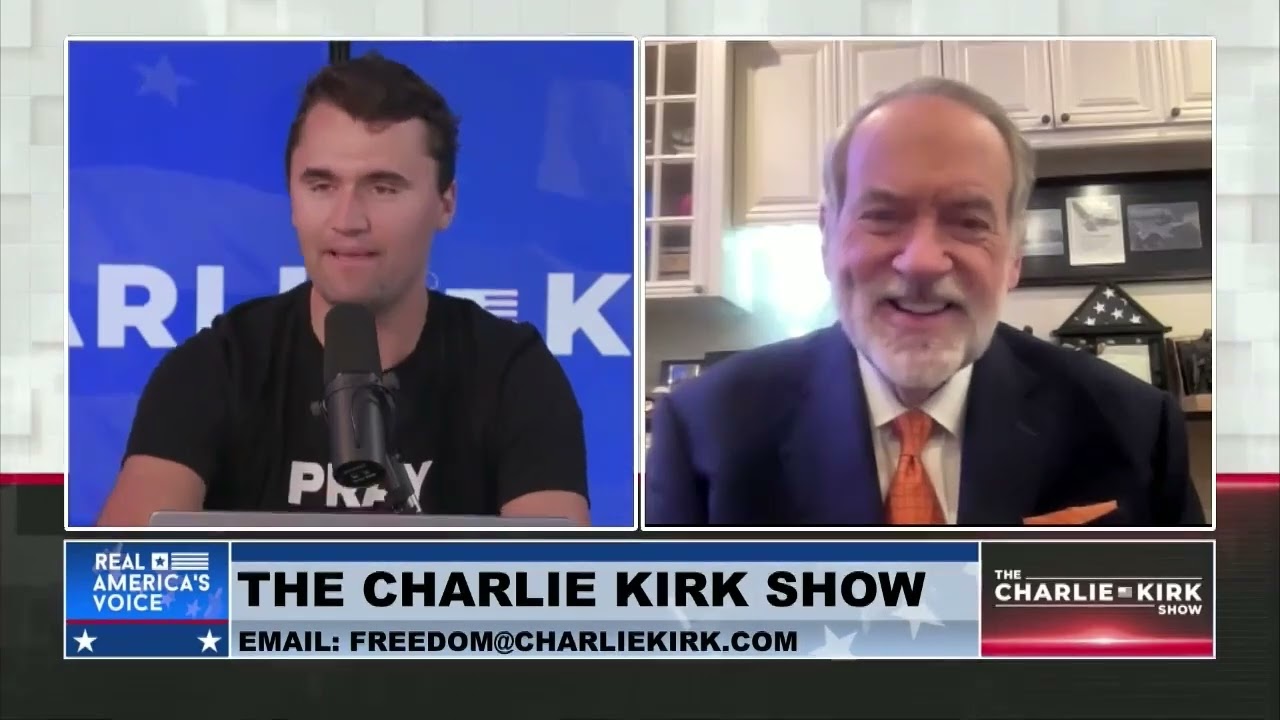
Charlie Kirk is the Founder and President of Turning Point USA, the largest and fastest growing conservative youth activist organization in the country with over 250,000 student members, over 150 full-time staff, and a presence on over 2,000 high school and college campuses nationwide. Charlie is also the Chairman of Students for Trump, which aims to activate one million new college voters on campuses in battleground states in the lead up to the 2020 presidential election. His social media reaches over 100 million people per month and according to Axios, he is one of the "top 10 most engaged" Twitter handles in the world. He is also the host of “The Charlie Kirk Show,” which regularly ranks among the top news shows on Apple podcast charts.
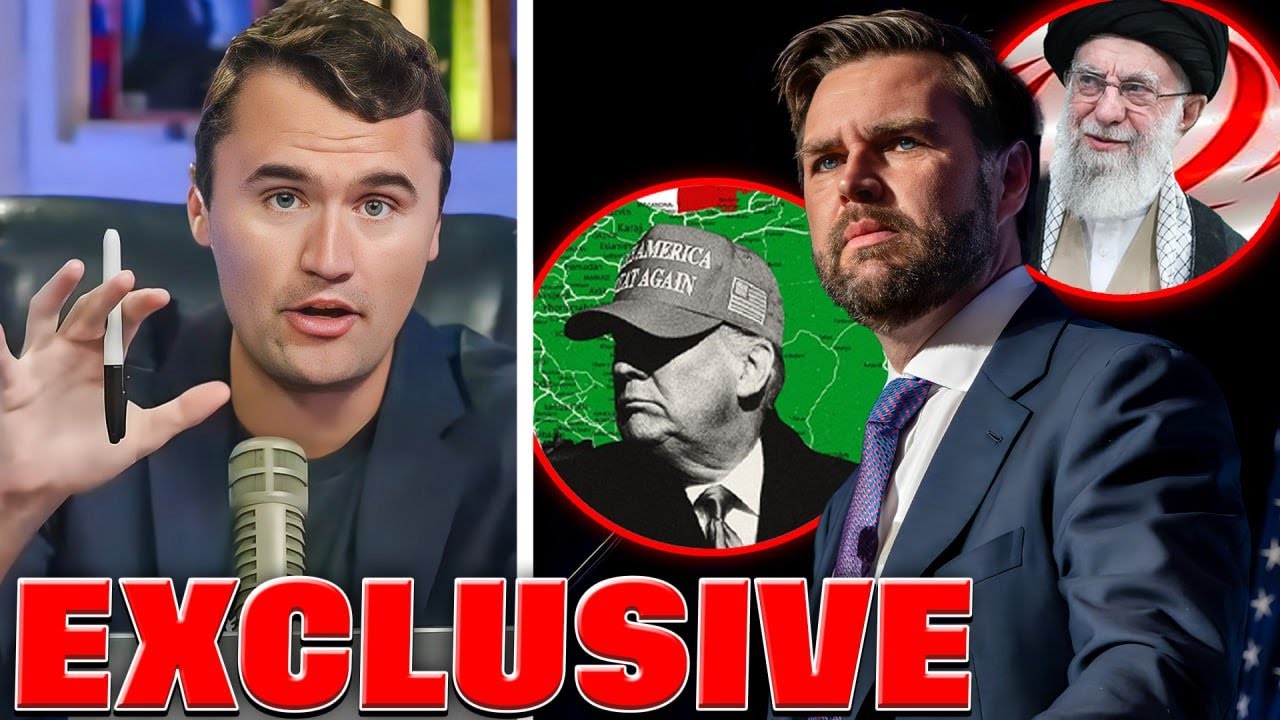
Charlie Kirk on Trump's Iran Dilemma: Rejecting Neocons and Isolationists for American Patriotism
Charlie Kirk examines President Donald Trump's critical decision on Iran as the United States mobilizes military assets to the Middle East. With Trump threatening unconditional surrender while resisting calls for regime change, Kirk analyzes the two extremes facing the president: the neoconservative push for war championed by Lindsey Graham versus the isolationist approach. Kirk argues that Trump, who has consistently said for a decade that Iran cannot have nuclear weapons, represents a prudent middle ground as an American patriot. As the USS Nimitz deploys and Trump posts warnings on Truth Social about Iran's Supreme Leader, Kirk warns that regime change in a massive, diverse nation of 90 million people could create a catastrophic quagmire worse than Iraq and Afghanistan combined.
President Donald Trump issued a stark warning to Iran through Truth Social, stating that the United States knows exactly where the so-called Supreme Leader is hiding. Trump declared the leader is an easy target but safe for now, emphasizing that America will not tolerate missiles shot at civilians or American soldiers. The message concluded with two words in all caps: unconditional surrender.
The warning comes amid a mass mobilization of US aircraft and the USS Nimitz into the Middle East. For ten years, President Trump has maintained a consistent position that Iran should not acquire a nuclear weapon. Now he faces a critical decision about whether the United States should get involved kinetically against Iran, particularly regarding nuclear facilities hidden within deep mountain bunkers that would potentially require US bunker-busting bombs delivered by B-52 bombers.
The Nuclear Threat at Fordo
Israel has conducted extensive operations in Iran, bombing numerous targets. However, some nuclear facilities remain protected within mountains and deep bunkers beyond Israel's current capabilities. The most basic American action would be dropping a bunker buster on the underground nuclear plant at Fordo.
The concern about Iran obtaining nuclear weapons is legitimate. When North Korea acquired nuclear weapons, it fundamentally changed the geopolitical calculus. What would otherwise be treated as a third world country now demands significantly more time, attention, intelligence resources, and troops because of their nuclear capability. The same transformation would occur with a nuclear-armed Iran.
However, bombing Fordo carries serious risks. Iran would likely consider this an act of war and could respond by targeting US bases, attacking US troops, or activating sleeper cells within the United States. President Trump must factor in all these potential consequences. The cautionary principle remains: it's very hard to stop a war when you want, and it's hard to stop a war once you're in the midst of it.
The Neoconservative Extreme: Lindsey Graham's Call for Regime Change
Senator Lindsey Graham represents one extreme in this debate, actively calling for regime change in Iran. Graham declared it's time to close the chapter on the Mullahs and the Ayatollah, advocating for starting a new chapter in the Middle East characterized by tolerance, hope, and peace. He urged going all in to help Israel eliminate the nuclear threat and suggested the world would be better off if the Ayatollahs were replaced by something better.
This neoconservative approach sounds appealing theoretically but ignores the lessons learned from Middle Eastern wars. What you draw up on a whiteboard rarely happens in reality. Unforeseen and unintended consequences emerge, especially when dealing with a country two and a half times the size of Texas with 90 million people and well over a dozen ethnic groups. Iran was an ancient great power with underground Christians, secular younger Persians, and massive diversity.
The regime change approach raises critical questions: Who would run the country? How would power be transferred? The situation mirrors Hillary Rodham Clinton's approach in Libya. Regime change is not like changing a head coach in sports—it's not a clean transfer. In the Middle East, it typically creates messy quagmires followed by civil war. Iran's mountainous terrain and vast size would make any intervention make Afghanistan and Iraq look like a cakewalk. Additionally, regime change would likely create a major refugee crisis, with people flooding into Europe and America.
President Trump has consistently rejected this neoconservative extreme. He has never run on regime change, doesn't believe in it, and remains resistant to these calls. While he should and does engage in rhetorical threats and information warfare on Truth Social, he understands the difference between rhetoric and actual policy.
The Isolationist Extreme: The Ron Paul Perspective
The opposite extreme is represented by the Ron Paul isolationist perspective, which has been underrepresented in public dialogue for the past 20 years. This viewpoint deserves respect because it challenges established assumptions. Ron Paul had the courage to challenge old sacred cows of the Republican Party and made people defend the indefensible. Had this perspective prevailed, the invasion of Iraq might never have happened.
The strictly isolationist approach argues that it doesn't matter if oil reaches $140 per barrel or if Iran gets a nuclear weapon. This perspective advocates for fortress America—fortifying the homeland and letting the rest of the world do what it wants without policing places like the Strait of Hormuz.
While this sounds appealing philosophically, it doesn't align with economic reality. The American economy is largely dependent on intertwined global trade. Whether we like it or not, that's the current state of affairs. An online poll showed that 90 percent of 400,000 respondents opposed US involvement in a war with Iran, reflecting the strength of this perspective among the MAGA base, particularly younger supporters.
This resistance is understandable given the history of quagmires, lies, and deception from intelligence agencies. These are the same agencies that spied on Trump, lied about weapons of mass destruction, and misled the country about Libya and nearly every corner of the Middle East region.
Trump's Prudent Middle Path
President Donald Trump finds himself navigating between these two extremes, and he is uniquely qualified for this moment. He is neither an isolationist nor a neocon—he is an American patriot. A statesman is defined as someone who acts with prudence rather than ideological fervor when carrying the weight of the world on their shoulders, like Churchill or Lincoln.
Trump receives phone calls from people like Lindsey Graham urging invasion and liberation of Iran from the Mullahs—a non-starter that would be an administration ender, just as it was for George W. Bush. On the other side, the online MAGA base strongly opposes US involvement in Iran, a position that is understandable and shared by many.
For nearly ten years, Trump has consistently maintained one position: Iran cannot have nuclear weapons. This isn't a recent campaign promise but a decade-long commitment. Trump has repeatedly stated that nuclear weapons are the single greatest threat to the world. He wanted to make a deal with Iran where everyone would be happy and Iran would prosper, but the absolute red line was no nuclear weapons.
The Man Made for This Moment
President Trump ran on two principles ten years ago that he has maintained consistently: the Iraq War was a bloody catastrophe and disaster that will never happen again, and Iran cannot get a nuclear weapon. Only President Trump can hold both these truths simultaneously. Only Trump, with prudence, practicality, and wisdom, is able to weigh them both, thread the needle, and walk the tightrope.
It's easy to lob criticisms from the sidelines about mobilizing the USS Nimitz or question how things will work out. But it's the man in the arena that counts. As this situation develops over the coming days, we should resist viewing things through overly ideological lenses. We should resist ideological fervor calling for taking out oil fields, which would lead to $180 per barrel gas, starving Iranians, and potentially an Iranian civil war. We should resist the temptation to take out the Ayatollah, recognizing that this isn't prudence or self-control but a zeal—the same zeal that got America involved in the disaster in Iraq.
It all felt good with shock and awe in March 2003. The belief was that America would take Iraq in a weekend. But it didn't work that way. A lot of people died. A lot of Americans died unnecessarily. President Donald Trump now sits in the decision-making chair, facing a challenge that defines statesmanship. Thanks to the real politic approach of President Trump and the MAGA agenda, he can navigate this crisis with the wisdom and prudence required for this historic moment.