Nick Fuentes Reflects on Charlie Kirk Assassination and Calls for Love Over Hate in Conservative Movement
Enjoying this? Share it with someone who needs to see it.
Up Next
Dave Smith and Nick Fuentes Reveal the Truth About Charlie Kirk's Final Stance on Israel
30:01
The Assassination of Charlie Kirk: How Justin Giboney and Corey Ruth Navigate America's Political Violence and Christian Response
1:14:53
Alex Stein and Vic Mignogna Process Charlie Kirk Assassination Through Faith, Community and Warning Against Violence
1:05:05
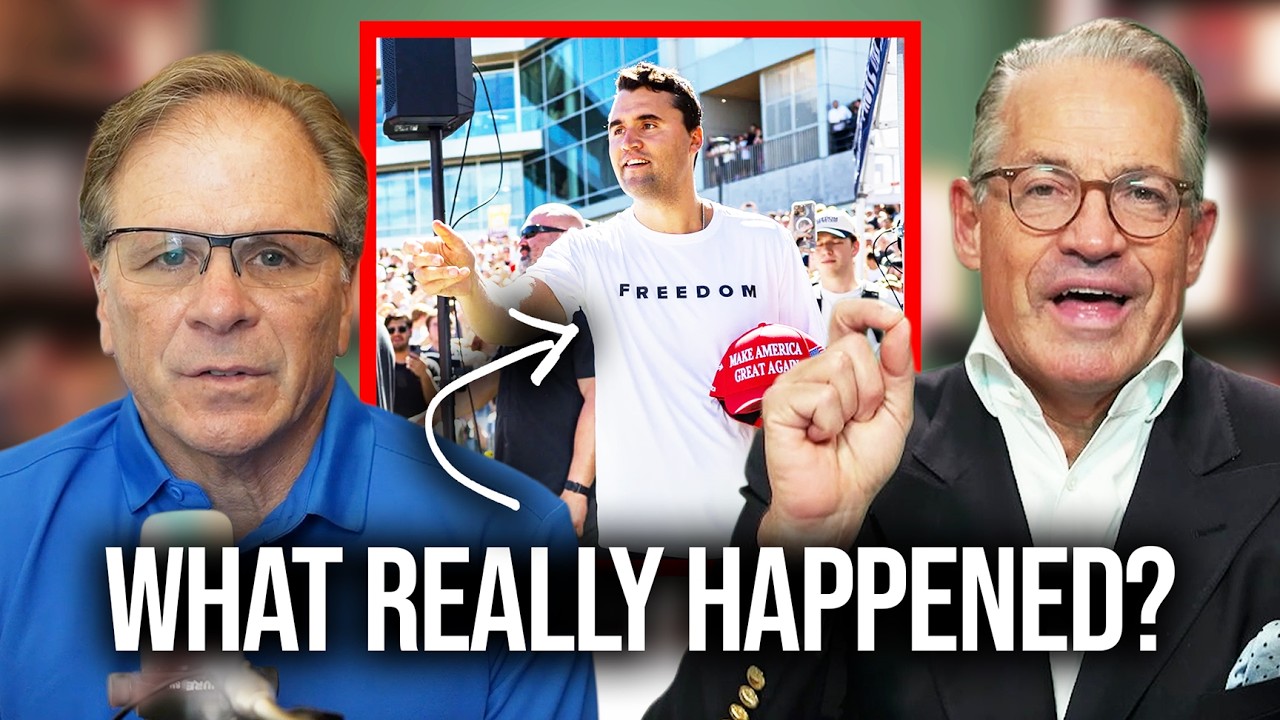
Nick Fuentes Reflects on Charlie Kirk Assassination and Calls for Love Over Hate in Conservative Movement
Nick Fuentes opens up about his complex relationship with Charlie Kirk and how the assassination has changed his perspective. Despite their political disagreements and being adversaries, Fuentes shares how witnessing the outpouring of support and grief made him realize Kirk's true impact wasn't just political, it was his faith, moral values, and kindness to others. Fuentes discusses the terrifying reality of political violence after experiencing his own death threats, and challenges the conservative movement to move forward with intensity but in love rather than hate. He reflects on how Kirk's death serves as a reminder of life's fragility and what truly matters when facing mortality.
Nick Fuentes describes his initial reaction to Charlie Kirk's assassination as terrifying on a personal level. Kirk was killed while doing a public event, something Fuentes and other public figures do regularly. The fear became even more real for Fuentes because someone had come to his door with a gun while he was doing his show the previous year and tried to kill him. This made him realize the country has a serious problem with political violence.
Fuentes didn't initially know if Kirk's killer was a lone actor or part of a coordinated attack, and he worried about potential copycats. But as time passed, he began processing the event on a deeper level, particularly regarding accusations of hypocrisy for having complimentary things to say about Kirk despite being his political adversary.
A Change in Perspective
Fuentes admits he viewed Kirk's activism in a one-dimensional way, seeing him primarily as someone pushing Republican talking points—hence the joke "Talking Points USA." But witnessing millions of people touched by Kirk's activism changed his view. Young men and women attended vigils, genuinely distraught over the loss.
Fuentes came to understand that people were upset not just because of the evil violence, but because Kirk had genuinely touched their lives. While Fuentes still disagrees with Kirk's politics, he has come to respect that Kirk was a hard worker, kind to people, open to others, and willing to change his mind. Fuentes notes that Kirk was never particularly nice to him personally, but was kind to many others.
Faith as Kirk's True Legacy
What Fuentes believes people will remember most about Charlie Kirk isn't his political debates, but his testimony of faith and his advocacy for Christianity. Kirk preached marriage values, decent Christian values, and Christ's sacrifice on the cross. At Kirk's memorial service, Fuentes found some aspects distasteful but was moved by how the name of Christ was proclaimed to everyone.
Kirk's sudden death at age 31 jarred people because it made them realize how fragile and temporary life is. Nobody expects someone that young, with that much money and influence, to die suddenly. Kirk had plans—he was going to get on his private jet and fly to another event. His death forced people to confront their own mortality and ask what really matters in life.
Harsh Judgment and Common Ground
When asked if he wished he had changed his approach to their relationship, Fuentes said he doesn't know if he would have changed his approach because politics is vicious—that's the game. Kirk was vicious to them, and they were vicious to him. However, Fuentes admits he harshly judged Kirk and came to realize Kirk wasn't actually the worst guy in the world. Despite being nemeses in some ways, they had far more in common than they disagreed on.
Rejecting Calls to Lower the Temperature
Fuentes rejects the idea that conservatives need to "lower the temperature." He describes himself as an intense person who believes America is at a decisive moment. What truly upset him wasn't just that someone killed Kirk—there are many crazy people who carry out violence—but that around a hundred thousand liberals in their right mind celebrated the killing, crashed vigils, danced, laughed, mocked it, and said Kirk deserved it.
This convinced Fuentes that the battle is between good and evil, and he doesn't believe you lower intensity when fighting evil. Decent people must fight intensely because if they lose, evil people will hurt them and destroy what they care about. However, Fuentes makes an important distinction: the issue isn't about temperature or intensity, but about love versus hate.
Moving in Love, Not Hate
Fuentes argues that killing Charlie Kirk was a hateful action, as is celebrating his death. He believes conservatives should be intense but move in love. He explains that people kill each other literally with bullets and take lives, but they also kill each other by destroying reputations through lies and gossip. During Catholic confession, when examining sins systematically, one violation of the commandment "thou shalt not kill" is gossip and detraction—attacking somebody with a lie is a form of killing them in a certain sense, a form of damning somebody.
Fuentes clarifies he's not advocating for some vague, new age concept of moving in love, but rather willing the good for everybody—for conservatives, their enemies, and the whole country. When he did his show after the assassination, many people said conservatives needed to "kill two of theirs" since they killed one of ours, that conservatives should get violent and pick up arms. Fuentes believes there were many conservatives—not just his own supporters but conservatives generally—who were thinking this way.
An MLK Moment for Conservatives
The conversation touches on whether vengeance is the right response. Fuentes's interviewer admits his very initial reaction was vengeance, calling it normal, but then catching himself. He notes that he faces constant attacks and false accusations but has learned not to fight every battle, especially as he's gotten older.
The interviewer suggests this is a moment for the conservative movement, comparing different conservative factions to mob families that came together to form a commission under Lucky Luciano. It doesn't mean everyone has to be buddy-buddy, but maybe the enemy isn't who they think it is. If Fuentes and Kirk were 80-90% on the same page, is it worth getting nasty over the 10%?
When asked about his aspirations, Fuentes says he potentially wants to run for office one day. He agrees that Kirk absolutely would have run for office eventually. The interviewer believes this is an MLK moment for Republicans and conservatives, noting that even though Martin Luther King was a Republican, his wife called Nixon for help, didn't get a callback, then called John F. Kennedy, leading to the political flip. He reminds Fuentes that African-Americans were conservatives for many years statistically, and suggests this tragedy could be a similar turning point for the conservative movement.