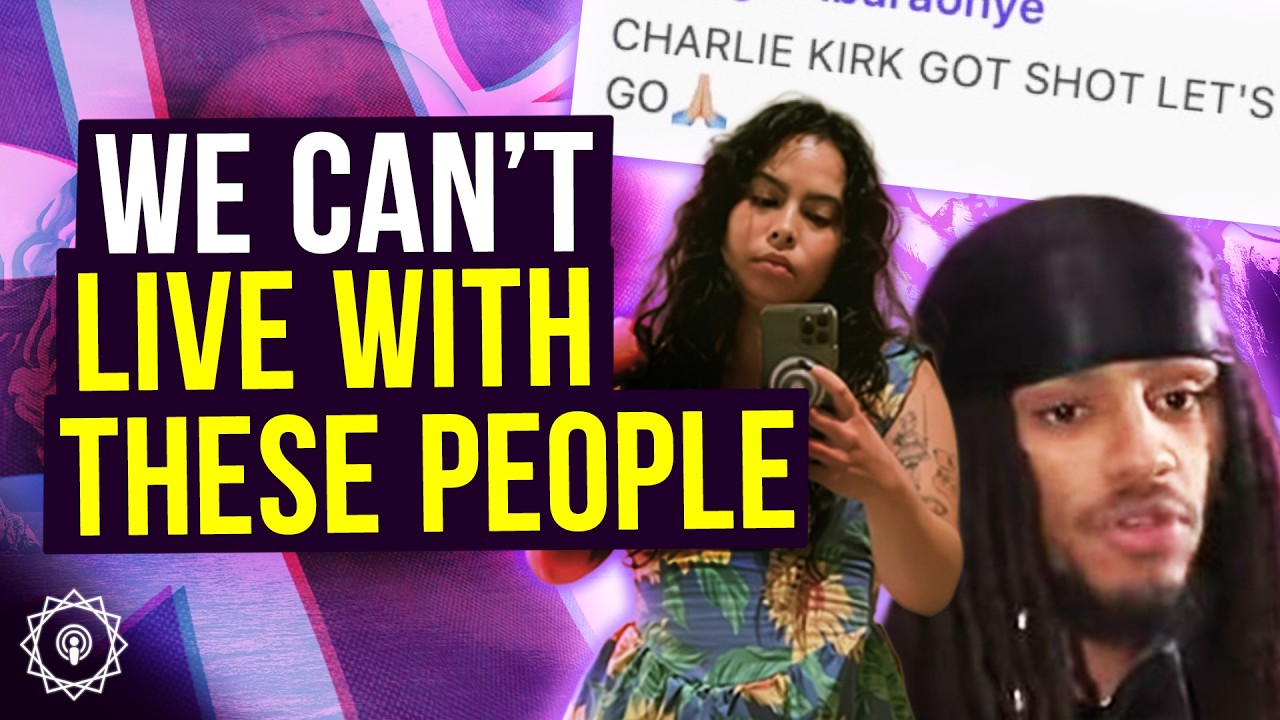
Robbie Williams and Andrew Gold Discuss Online Outrage Culture and the Shooting of Charlie Kirk
Enjoying this? Share it with someone who needs to see it.
Up Next
Brandon Tatum Defends Charlie Kirk Against Cancel Culture Hypocrisy and Job Loss Celebrations
15:01
British Commentators Lotus Eaters React to Charlie Kirk Assassination and the Disturbing Celebration of Political Violence
27:10
Community Members Confront City Council Over Social Media Posts Mocking Charlie Kirk's Assassination
5:18
Robbie Williams and Andrew Gold Discuss Online Outrage Culture and the Shooting of Charlie Kirk
Robbie Williams sits down with Andrew Gold for a wide-ranging conversation that touches on the tragic shooting of Charlie Kirk, the evolution of public outrage from the early 1990s to today's social media age, and why political commentators across the spectrum often come across as toxic. Williams reflects on how a simple food fight on television in 1991 generated complaint calls about food waste, and compares that to the instant, relentless nature of modern controversy. The discussion explores status-seeking behavior, evolutionary biology, and why humility has become a luxury in our current cultural moment. From Take That's early TV appearances to understanding tribal politics, Williams and Gold examine what happens when everyone has a platform to broadcast their outrage at any moment.
Robbie Williams and Andrew Gold begin their conversation with a humorous anecdote about guitar lesson advertisements and unwanted internet feedback, before turning to more serious territory. Williams recalls an early Take That television appearance on a Saturday morning show with Michaela Strachan in 1991 or 1992, where the band participated in a food fight. Even in that pre-internet era, their manager informed them that afternoon that the show had received phone calls complaining about food waste.
Williams remembers being genuinely affected by the criticism at the time, thinking they had upset somebody. But he observes that the person who made those complaints in 1991 now represents the most vocal segment of society. That complainer, he suggests, is now in charge of the conversation for the rest of the Western world.
The Immediacy of Modern Tragedy
The conversation shifts to the shooting of Charlie Kirk, which had occurred the day before their recording. Gold notes that in 1989, 1990, or 1991, people would have read a headline about such an event and discussed it briefly before moving on. But in 2025, the actual footage appears online within seconds of an incident occurring. Fifteen minutes later, it has circulated around the world. Twenty minutes later, it arrives as a text message link.
In these moments, Gold suggests, people experience confusion rather than sustained grief or contemplation. They become self-focused, wondering what the event means for them personally, what they should feel, and what it says about the world. Then, inevitably, they forget about it as the news cycle moves forward.
Gold points to the shooting of President Trump, where a bullet grazed his ear, as an example of this phenomenon. Despite being one of the biggest moments in living memory, the news cycle shifted within two weeks. Williams speculates that if Trump had died, the event might have stayed in public consciousness longer, but Gold counters that even that monumental moment now resides in distant history despite occurring just months ago.
Both acknowledge the deep impact such events have when people first consume them, followed by the strange human tendency to move on to something else within minutes. Williams notes that while some people cannot or will not move on and instead base their entire personality on reacting to such events, others find it impossible to carry all the information being beamed into their consciousness 24 hours a day.
The Rush to Be First with Tragic News
Gold observes that some people seem desperate to be the first to announce deaths or tragedies on social media. He has adopted a practice of waiting a couple of days for the fog to subside before forming opinions about breaking news events.
Williams references previous phone conversations with Gold about his ongoing education to determine what he thinks about various issues. He poses a question that has puzzled him: why does everyone with a strong opinion, whether on the left or right, come across as toxic? He clarifies that he is not referring to Charlie Kirk specifically, and offers blessings to Kirk and his family, noting that Kirk has four children who were present at the shooting.
Why Strong Opinions Feel Toxic
Gold offers an explanation rooted in evolutionary biology, drawing on Will Storr's theory from the book "The Status Game." According to this framework, humans evolved needing status, and there are three primary ways to achieve it. The healthiest method is through success, which Williams has achieved through his music career. Not everyone can attain status through success, so two other pathways exist: dominance and virtue.
Dominance involves being a bully, similar to how chimps reach the top of their social hierarchy through physical power. Those who cannot be physically dominant instead gain status through virtue signaling, demonstrating how good they are by providing for others or displaying moral superiority. Even when people do not realize they are doing it, they compete for status. Those who are not successful clash with others as they employ dominance or virtue to climb the social ladder.
Williams suggests a simpler explanation: anger and self-righteousness simply do not look good on anyone, even when they happen to be correct. He acknowledges that the internet could provide countless counterexamples, but his general observation stands. Whether someone holds left-wing, right-wing, or centrist views, the presentation of those views often feels slightly toxic.
Humility as a Luxury
Gold agrees with Williams's assessment and suggests that humility might be a luxury available only to those whose lives are going well. Being humble is easier when things are good. He invites listeners to reflect on times in their own lives when they were struggling, noting that during those periods, they likely found it harder to be happy for others and got into arguments more easily.
When life is not going well, people struggle with humility and compassion. Gold also points to tribalism as a fundamental factor. People align themselves with tribes, whether political, cultural, or otherwise, and defend those tribal identities reflexively.
Williams offers a personal counterpoint, noting that even though things are going well for him, he still experiences jealousy. The conversation leaves the question partially unresolved, acknowledging the complexity of human emotion and social behavior in an age of constant connectivity and instant outrage.