Sophie Cunningham Violently Attacked on Court as WNBA Descends Into Racial Chaos and Media Rushes to Defend Her Attacker
Enjoying this? Share it with someone who needs to see it.
Up Next
DailyWire+ Team Reveals Inside Jokes, Personal Quirks, and the Great Hot Dog Sandwich Debate
15:50
Matt Walsh Calls Charlie Kirk Assassination an Act of LGBT Terrorism Demanding Federal Crackdown
25:26
Candace Owens Shares Her Journey From Protestantism to Catholicism Through Politics and Persecution
35:55
Sophie Cunningham Violently Attacked on Court as WNBA Descends Into Racial Chaos and Media Rushes to Defend Her Attacker
Sophie Cunningham faced a brutal on-court assault from Deja Carrington after speaking out about biological sex in women's sports. The attack, which could have caused serious injury, sparked outrage, not at the attacker, but at those who dared call it what it was. While mainstream sports media scrambled to excuse the violence as "just how she plays," the double standard became impossible to ignore. When Carrington posted "white privilege" after being ejected, the contrast was stark: had the roles been reversed, Cunningham's career would be over. Instead, the league and media establishment closed ranks to protect the attacker.
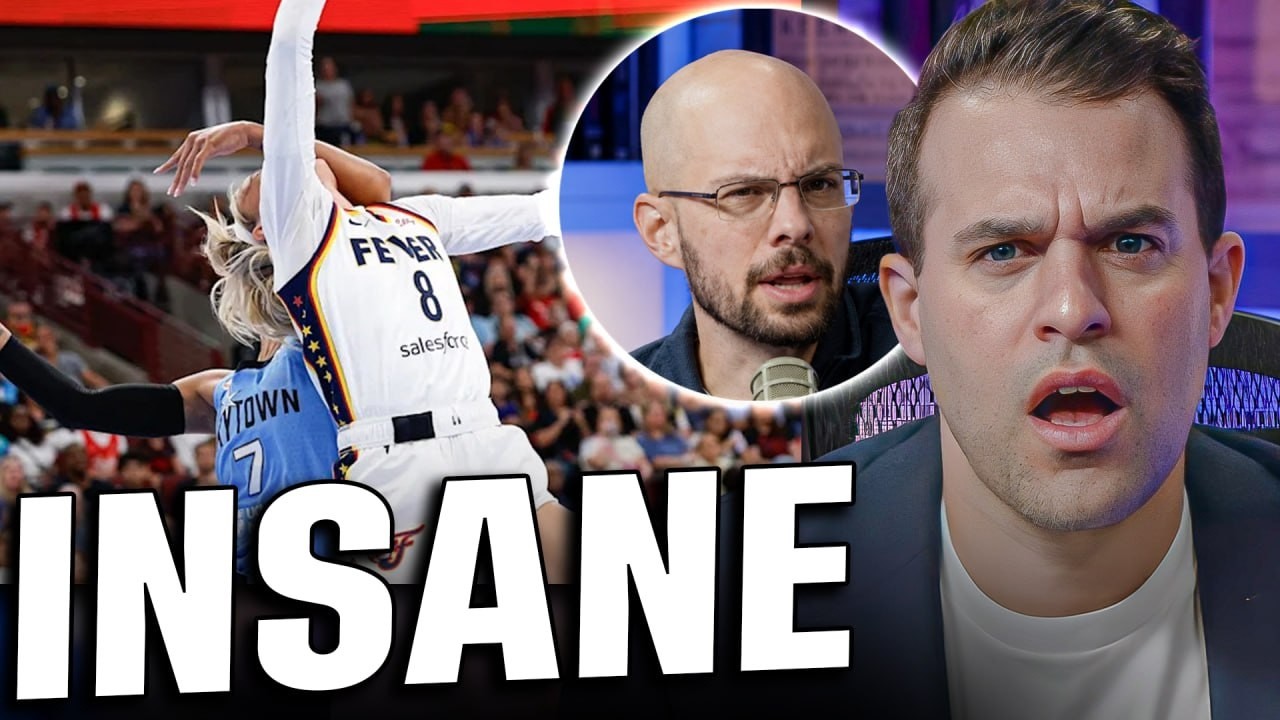
Sophie Cunningham, already under fire for stating the obvious truth that men and women are biologically different, found herself targeted in a way that goes far beyond typical sports competition. During a fast break, as Cunningham drove to the basket, Deja Carrington came from behind and struck her forcefully across the face and neck area in what can only be described as a deliberate act of violence rather than a basketball play.
The incident was captured on video, showing Carrington's arm making contact high across Cunningham's face as she attempted a layup. The force of the blow and the nature of the contact left no doubt about the severity of the foul. Commentators initially suggested it would be upgraded to a flagrant two foul, which would result in an ejection from the game.
Like Caitlyn Clark Before Her
Cunningham's situation mirrors that of Caitlyn Clark, who also became a lightning rod for controversy and physical targeting after bringing unprecedented attention to the WNBA. Both white players found themselves subjected to increasingly aggressive play from opponents, with the league seemingly unwilling or unable to adequately protect them despite the obvious pattern of escalation.
The parallel is striking: both players elevated the profile of a league that typically struggles for relevance, and both faced physical retaliation that appeared to cross the line from competitive sports into something more personal and dangerous. The fact that these incidents keep occurring in 2025 raises serious questions about the league's culture and priorities.
Media Rushes to Defend the Indefensible
Rather than condemning the obvious violence, WNBA media personalities immediately went to work defending Carrington. On a show called "WNBA Countdown," analysts showed footage of Carrington making other plays, attempting to argue that this type of aggressive contact is simply "how she plays."
The defense fell flat on its face. The clips shown to supposedly justify the attack actually demonstrated the opposite—they showed Carrington making legitimate basketball plays against other players, most of whom were black. The contrast with what she did to Cunningham only highlighted how different and more dangerous that particular play was.
The attempted justification that a player who regularly commits dangerous fouls should somehow be excused for it defies all logic. If anything, a pattern of reckless play should result in stricter enforcement, not a free pass to continue endangering opponents.
The Racial Double Standard Made Explicit
After being ejected from the game following a replay review, Carrington took to social media to post "white privilege," directly implying that the enforcement action taken against her was racist rather than a response to her obvious foul.
This response perfectly encapsulates the racial dynamics at play. A black player commits a flagrant act of violence against a white player, faces minimal consequences, and then claims to be the victim of racial bias—all while enjoying the protection of league officials and media personalities who rush to defend her actions.
The double standard is impossible to ignore. Had Cunningham attacked a black player and then posted "black privilege" on social media, her career would be instantly over. Endorsements would evaporate, the league would face enormous pressure to ban her permanently, and prosecutors might even explore criminal charges. Instead, when the roles are reversed, we're told to look the other way and accept that this is just part of the game.
Violence As a Feature, Not a Bug
What's most remarkable about these incidents is that they're happening with such frequency and openness in a professional sports league in 2025. Men's professional sports leagues have black and white players competing together without these kinds of racial tensions erupting into violence. The problems that plagued American sports a century ago have long been resolved in male leagues.
Yet here in the WNBA, racial animosity is apparently so intense that it regularly manifests in physical attacks on the court, with the league and media establishment treating it as either acceptable or too politically sensitive to address honestly. This directly contradicts the frequent feminist assertion that women are more peaceful, empathetic, and better suited to leadership than men.
The Deeper Pattern of Resentment
The attack on Cunningham appears to be driven by more than just competition or even racial animus—there's an element of pure envy at work. Carrington herself was wearing a blonde wig during the incident, a detail that speaks to a deeper psychological dynamic where the attacker harbors resentment toward the very person she's attempting to emulate.
This pattern of envious hatred directed at those you simultaneously wish to become is not unique to this situation. It's a recurring theme in American culture, where success and natural attributes that others lack become targets for resentment rather than admiration.
The League's Complicity
By failing to adequately punish these attacks and allowing media personalities to excuse them, the WNBA is essentially endorsing racial violence as an acceptable response to players who draw positive attention to the league. The message being sent is clear: if you're white and successful in this league, you can expect to be physically targeted, and when it happens, the league will look the other way while the media makes excuses for your attackers.
This creates an untenable situation where the very players who could potentially save the league from irrelevance are being driven out by a toxic culture of resentment and violence. The WNBA is essentially eating its own future in service to a political narrative that refuses to acknowledge reality.
The Broader Implications
This incident reveals something important about where we are as a society. We've created a system where certain groups can commit acts of violence, claim victimhood when held accountable, and face no real consequences—all while anyone who points out what's happening is demonized as the real problem.
The fact that this is occurring so openly in a professional sports league, with video evidence available for everyone to see, and yet the perpetrators still enjoy institutional protection, demonstrates just how deeply this dysfunction has penetrated American institutions. When we can't even enforce basic rules against physical violence in a basketball game without being accused of racism, we've lost the plot entirely.