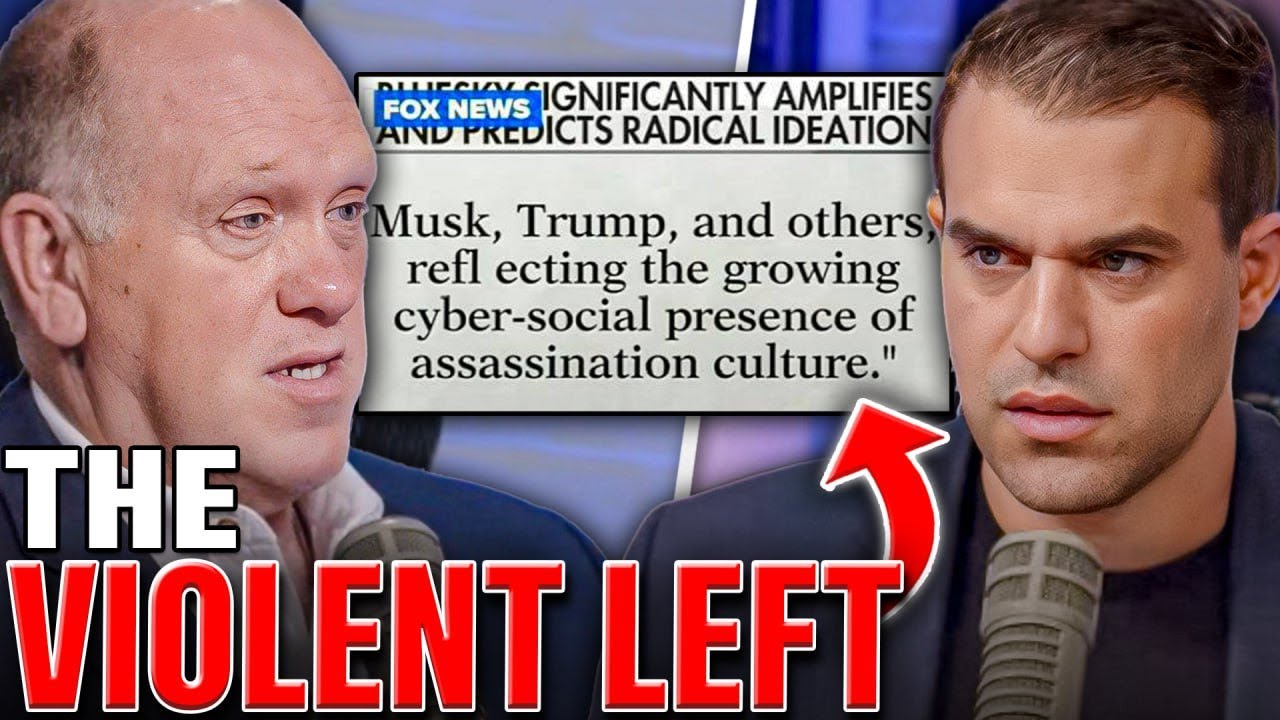
I'm totally saddened by the death of Charlie Kirk. He's somebody that I interviewed several times. His group allowed me to come to my first political event with a VIP pass as a reporter. I'm completely horrified by this. Just minutes before the death of Charlie Kirk, I was finishing up a podcast with Josh Hammer. We were specifically talking about outofc control crime with the Ireina uh Ukrainian refugee death. Uh we were talking about how CNN and others were shaming Charlie Kirk, saying that he should be ashamed of himself and that people like him shouldn't have a first amendment right. I still want to show you all of that. Uh now one thing that I have been digging into is this uh Zarena Zartusa uh death that happened in North Carolina. This was completely buried by the mainstream media. And I started digging in and guess who the podcaster was that brought this story to national attention? It was Charlie Kirk. And this is why they were shaming him and saying that he's anti-trans and anti-f family and anti- good and that he's a Nazi. They were literally fmenting rage against Charlie Kirk. Van Jones, who I don't wish any harm on or negative words towards on CNN, was one of the people pushing that he should be ashamed of himself for pointing out truth. So, I still want to show that. I hope you enjoy it. God bless Charlie Kirk. Here is the podcast between Josh Hammer and I. CNN has quite possibly said the stupidest thing I've ever heard. And as a white person, it was extremely offensive. I want to go through this. I want to go through this tragic murder down in North Carolina. I want to figure out how does somebody with no judge or legal experience end up being a judge? Sharia law and President Trump going into cities with the National Guard. To help me do that, I have Josh Hammer. Josh, thank you so much for joining me. >> Stephen, it's a pleasure. Thanks for having me on again. >> Absolutely. I always enjoy having you on. Um, just so my audience knows a little bit about you. Uh Josh Hammer is the host of the Josh Hammer Show. It's a podcast that covers uh culture, political events. Um he is a writer and author. He's also the senior editor at Newsweek and author of Israel and Civilization. I want to get your thoughts on this uh situation. So, we have this uh Ukrainian refugee. She comes to the United States seeking uh peace and a quieter life. She gets off of her pizza job. She ends up being stabbed to death in the neck by a gentleman who I not a gentleman uh this man who uh had previously been arrested 14 times. So the police go through all of the effort to round this man up, bring him in front of a judge, and then he's he's released. What do you what do you make of this? This this seems crazy to me that so many repeat offenders are allowed to just be put right back on the street. >> Stephen, look, among the other hats I wear is I'm also an attorney and I I I'm a senior counsel for the Article 3 Project and I I remember my first year criminal law classes at the University of Chicago Law School and I remember having these vigorous debates with my left-leaning colleagues on this on these very topics there. I I mean the left has been pushing this this get out of jail free card agenda. This this anti-inccarceration, anti- prison, anti-locking people up, anti police agenda. You know, I was in law school 2013 to 2016. It was picking up steam then. So, you know, back then there was there was the Michael Brown incident in St. Louis. You know, there were various other kind of cultural touchstones there. The shooting of the police in Dallas, Texas in the final year of the Obama presidency in 2016. But it's really gotten just completely out of hands. I I I mean, New York City imposed a no cash bail policy back in 2019, 2020. All you know, how many of these blue cities have implemented these these insane so-called criminal justice reform policies? But, you know, I I I look at tragedies and this is a horrific horrific horrific tragedy. By the way, I still haven't quite figured out, Stephen, how this happened on August 22nd. But apparently the whole world learned about it for the first time on Sunday, September 6th, 5th, whatever, you know, whatever that Sunday was. I mean, how like literally, how did that happen there? So, just I I I genuinely I I mean, you know, not to sound like like uh you know, like a conspiracist, but I I am kind of asking questions here, aren't I? I mean, I actually want to know how the word did not get out. I mean, was was the tape suppressed? Did the media not cover there? There has to be some sort of answer there. But it's a horrific horrific tragedy. And unfortunately, I guess what I would add is it's all too eminently predictable based on blue city, blue state, light on crime, so-called criminal justice reform policies. When you continually mllycodle criminals, when you let them out time and time again after they've been indicted, after they've been after they've been convicted, after they've actually been in the slammer for a brief period of time there, when you have an individual like this who has a rap sheet going back 14 convictions there, this kind of guy who back in the good old days, back in the three strike law era, you know, three strikes, you're out. See, this guy would have been behind bars not that long ago, probably for the rest of his life. And that really clearly is what should have happened here. It's just a horrific horrific situation there. And I have no doubt, Stephen, frankly, not to go there, but I guess I'll go there. That if the roles were reversed and if you had if you had a white person slaughtering slaughtering a black person there, then this would be global global news rather than confined as it currently is to conservative media. >> Well, from Thank you for that. My my understanding is, and and this is from left-leaning media, this story wouldn't even make national news if it wasn't for white conservative podcasters uh making a big deal of it and the fact that there are too many cameras around America. So, they're they're blaming white people for bringing this story to the attention of the mainstream media and the fact that it was captured on camera. So that that's the only explanation that I've seen uh that I can share with you. But the the thing that I would ask is uh so Democrats defend criminals all the time. It's this because they're trying to stick with this we're the party of kindness. I mean somebody that I respect and have followed for a long time is Dennis Prager and he says you should never assume that humans are good. You know they have to be trained to be good. They don't come innately good. I I don't know. Is this just like giving people the benefit of the doubt 14 times? That that seems excessive to me. >> Well, look, I I'm also a huge fan of Dennis Prager. And you know that Stephen, that definitely is the biblical worldview, right? I mean, that's that's that's both the Jewish and the Christian worldview is that man is naturally inclined towards sin. I mean, God himself says very early on in the book of Genesis in chapter 7, chapter 8, right around there around the story of Noah, he says that man has been evil since the beginning. God at first regrets having created man in the first place. So I mean that's kind of the whole point of not merely religion but also the whole point of having societies and having a rule of law which is actually to discipline men and to channel man's instincts which admittedly can be pretty barbaric and violent towards the good towards flourishing and so forth there. So so I I I completely agree with that and the left when they assert a different position that man is naturally inclined towards good that we should be giving 15 20 25 30 however many chances has it's a fundamental misreading of human nature. a fundamental misreading of human nature. That's the first thing to say. The second thing they say, and this is, I think, the other half of the equation here, is also just part of the whole DEI woke race obsession, isn't it? I mean, back when I was arguing against my liberal classmates in law school 12, 13 years ago around the beginning of the Black Lives Matter era there, a lot of these folks were making overtly racially tinged arguments where they're basically saying that America's current prison system tends to disproportionately incarcerate black people, arrest black people, things like that there. And if you actually take the whole DEI argument to its conclusion, which is this this neo-Marxism that views the world through this outrageous arbitrary dualism of oppressors versus oppressed classes. And if you think that every person simply because he or she is white is an oppressor and every person who is black is an oppressed simply because he or she is black, then it stands to reason that if that is your only data point, if that is your singular prism through which you view the world, then you're going to want fewer black people in jail. Even if as the case was in this tragedy in Charlotte, North Carolina, that the black person was a career criminal who never ever should have been out of jail. I It's a completely obtuse way to view the world. I don't really know how else to say it there. It is evil, frankly, because it ultimately has as its foremost goal the molly coddling of the criminal and and the complete neglect of the victims of crime there. I pref I much prefer myself a a crime policy, a law and order approach that tends to I don't know. I mean, h how about we actually talk about the victims of crime more than the criminals? You know, once upon a time, that was a somewhat bipartisan thing in America these days, unfortunately, it's it's pretty much increasingly a partisan thing. >> Yeah, it is interesting. Um, you know, two two big tragedies that have happened in the last 10 days. So, you have the the shooting of the the Catholic children on their first day back to school. You now have uh this story coming forward. uh each time the left-leaning media tries to make you have sympathy for this person with mental illness, like, "Oh, yeah, but they they were trans and they had mental illness or this person, you know, although locked up 14 different times has has mental illness." It's like there's there's never enough talk about the victim or the crime, it's always it's this like DARPO of trying to throw the throw the empathy onto the the person who committed the crime. Elon Musk uh talks about this um regularly. Let me let me switch gears with you. Although I did want to point out, you know, it's interesting. The first story of of the Jewish Bible outside of the Garden of Eden is murder. Uh Cain and Abel, you know, so again, are are humans innately good? I I don't know. But let me let me get your take on this. not only because of your legal background but also as a senior editor over at Newsweek, one of the most well-known uh publications uh in America. So Elon Musk pointed this out. Um so when it comes to the New York Times, whenever they write stories about race, they make the B for black capitalized and the W for white lowercase. Why? Just grammatically from a senior editor, this is on purpose. They they they say that this is on purpose. Why why would they do that? Is is this to put whites in a one-down position and elevate black? Why why would they do this from a a grammatical writing standpoint? So, first of all, I obviously think that this is completely ridiculous, but if I'm trying to steel man the argument, as they say, if I'm trying to present what they're probably thinking there, this really started after the George Floyd summer of 2020. It really started after the terrible Black Lives Matter Antifa summer where all these various woke institutions had their great racial reckoning. And specifically what happened back then, Stephen, was the the AP style guide, the Associated Press style guide, which is pretty much I I mean, it's not the gold standard, but it's the standard. You know, it's the standard for corporate media companies. The New York Times is probably big enough where they have their own style guide, but most media organizations, including Newsweek, actually, use the use the AP style guide. And the AP style guide after the summer 2020, decided they were going to capitalize B. I I I I think the professed purported reason was that blackness was an inherent trait of some sort there that it was that it was something innate to the condition where whereas white was too broad of a description there. Again, I think I think this is totally ridiculous. Okay. And for what it's worth, you know, people can go to my own columns at at Newsweek. I I make sure that for my own personal writings, I don't do this actually. So, you know, hopefully hopefully hopefully I don't get in trouble with with my boss for saying that. But I make sure actually that I personally do not actually follow the AP style guide when it comes to this very thing because I think it's utterly frankly ridiculous there. But this is this is what the AP style guide said after the summer 2020. George Floyd, Black Lives Matter, all that there. I think it was basically just a bone to throw to Black Lives Matter activists. They are trying to kind of exalt the notion of blackness and kind of implicitly maybe kind of demean or belittle the notion of whiteness, but they clearly are the same thing. So, they should either both be capitaliz both be lower case in my in my opinion. >> Yeah. No, I agree. Like, if we're trying to create everybody's equal society, then everything should be equal, including our our grammar. Um, I typed this into chat GPT and it basically came back and said, uh, because the white race doesn't have the same history as the rest of the world, they get a lowercase W. Kind of a lame copout, but that's that's what I guess AI uh, could figure out. Let me let me bring something up from uh, CNN, which I I thought was very weird. So Van Jones, a well-known host on CNN, said, "Shame on Charlie Kirk and others for making this crime about race, even though D Carlo Brown said twice on camera, "I got that white girl. I got that white girl." He said that Charlie Kirk should feel ashamed of himself. Then listen to what Van Jones had to say because he kind of loses credibility with this comment that was uh allegedly made last night. >> Even the most liberal, well-intentioned white person has a a a a virus uh in his or her brain that can be activated at an instant. And so what you're seeing now is a curtain falling away. And those of us who have been burdened by this every minute, every second of our entire lives are fragile right now. >> Okay. So, um, black Americans, uh, live oppressed every minute, every second of every day, and inside of every white person's brain is a virus that makes them evil. That's a kind of a weird thing to say. Yeah, I think that's an understatement. Uh, that's that's a really really really weird thing to say. I I mean that's like a borderline eugenic style comment. I mean I mean he's basically making arguments about some sort of alleged inferiority of white European DNA versus other people's DNA. I mean if I'm if I'm going to take him literally, that's what he's saying. I mean I mean maybe he's being proverbial speaking culturally there. Whatever it is, it's terrible. I you know it's also sad because Van Jones is not crazy across the entire spectrum of issues. Every so often he actually makes an intelligible point. He's actually been pretty vocal about getting the hostages and Gaza back. He wears the yellow hostage pin. So every every so often he actually has a pretty decent take. But when it comes to these racial issues, these crime issues, policing, he's totally off to La La Land there. So I I I can say I'm surprised as far as his condemnation of Charlie Kirk. Charlie's a a pretty good friend of mine actually. I I just did the Turning Point USA uh student action summit in Tampa, Florida just about a month and a half, two months ago or so. Char, you know, we're in regular touch. I think Charlie's right. I mean, how can you avoid the obvious racial element to this horrific horrific tragedy in Charlotte, North Carolina, as you correctly said, Stephen, the the man Carla Brown said, he literally said, "I got the white girl." Or or something along those lines there. And he said this, I believe, multiple times there. And there's also the media coverage angle there, as you and I were discussing. Is there does anyone have an iota of doubt the slightest doubt in the world that if the races were reversed here and it it was a white man murdering a young black refugee woman from Nigeria or Ghana instead of Ukraine does anyone doubt for a second that the media that the media would have pounced on this made it a global story an international headline overnight no obviously not a corissant there so we can't avoid the elephant in the room as much as Van Jones apparently would wish it to be there but man I I I come back to where we started, which is like this really really really weird thing about a tick in white person's brain. I I I I I would kind of be interested to hear where he goes from there because it's going to be so deeply twisted that it might make him lose further credibility, which frankly is probably a good thing, honestly. >> Yeah. Yeah. I thought it was a really weird thing. I mean, I have a lot of uh black Americans that watch my show. Oh, I have a lot of a lot of white Americans and I don't want any black person to feel like, oh, because of the color of your skin that you are inherently black or bad or that uh if you're white that there's a a mind virus inside of you that makes you evil and automatically a hateful person. Just such a weird thing. Um, let me let me ask you this. Going back to the Ireina Zerutska death, Magistrate Judge Teresa Stokes uh is not listed as a registered lawyer, meaning she's not passed the bar exam. She's not qualified to practice law as an attorney in North Carolina. Uh this information has been widely reported following the controversy of the Brown murder. Uh, but this this lady has like no nothing. No experience as a judge. So now put on your lawyer hat for me, Josh. How do we have a judge with no law degree, no law experience, didn't climb the the ladder from intern to to lawyer to law degree to bar exam to partner to being named a judge, never took the the bar exam? How on earth does she become a judge that can say this gentleman who was brought, you know, before a judge 13 times on the 14th time, I'm going to use my years of judging experience to say he shouldn't go to jail. You're I don't I guess I don't understand how that ends up happening. >> You know, I would like to know the answer myself, Stephen. I I I can't say I do. I mean, this is this is a truly bizarre twist to this truly tragic story. I mean, I I myself embarred as a lawyer in Texas, not not not North Carolina, although I did live in North Carolina for a few years. Is it's a it's a wonderful state, contrary to, you know, this horrific incident and tragedy there. Clearly, someone should be a lawyer to be any kind of a judge, right? I I mean I mean, that's just like stating the most obvious of any obvious thing whatsoever. Now, look, admittedly, magistrate judges tend to be the lower end of the totem pole. This is not a district court judge an an appellet judge the you know state supreme court judge there. So mary judges definitely tend to be the lowest end the totem pole but at a bare minimum you would like to think that the ones who are actually making decisions have a a a a law license you know have sat for a bar exam that are actually certified and trained as a lawyer. This has to be a quirk of the North Carolina constitution North Carolina judicial system there. I don't know the exact legal provision that allows for someone like this to become a magistrate judge. But I know that it's ludicrous and it's ridiculous on its face. And if I were a lawyer in North Carolina, if I were actually a B attorney living in Raleigh, Durham, Charlotte, elsewhere there, I would probably be pretty up in arms over this there because this obviously is a glaring glaring loophole that never shouldn't have been allowed to happen in the first place. >> Yeah. When I when I read that, I was like, "Oh my gosh, wait a minute. the the person that let this guy go has no legal experience, didn't rise through the ranks, gaining wisdom and knowledge and all the nights of reading this case versus this case in order to have a rebuttal and build build a case like none of that experience. Um, very very strange. And then her wife has connections to mental health facilities and it and now they're questioning were they letting people out of jail in order to get money over to these mental health pro I don't know. So we'll we'll have to dig in more on that. But like a weird rabbit hole is opening up around this whole thing. Um let me switch gears with you. President Trump has done an excellent job in Washington DC bringing down crime stats. Um, now there's talk about National Guard supporting these ICE raids in Chicago. The court system with actual judges uh has approved uh his ability to go into Los Angeles, California. What What are your thoughts on that? Hey friends, I've got something huge for you today, but it's only for a limited time. As you know, I've partnered with Monetary Gold, the company I trust when it comes to protecting your retirement with physical gold and silver. And right now, they've put together an exclusive deal for my channel only. If you pick up the phone and call Monetary Gold today and tell them you want the Steven Gardner deal, they'll cover all of your IRA fees for life. That's right, for life. But you have to call and ask for the deal today. No gimmicks, no gotchas, just a smart mo move to secure your retirement with a company that cuts out the middleman and puts you first. But here's the catch. This deal won't last forever. And it's only available for my audience. So don't wait. Call now. Ask for the Steven Gardner deal and take the first step towards protecting your future with real tangible wealth. I want you to call them right now at 8006081770 and make sure to say Stephven Gardner sent me. Well, look, the ICE decision uh you know get allowing ICE to enforce immigration law and this this is a no-brainer of all no-brainers. I I I mean, how the how federal judges got involved in the first place in the purported ability to tell a president that he can or cannot enforce the immigration laws is ludicrous. I mean, this is this an inherently enforcement executive branch decision there. You know, I actually would go even further, Stephen. I I would I would argue that when it comes to immigration laws, there's something in constitutional law known as the pleenary power doctrine. The pleary power that it refers to is that the political branches namely article one the congress and article two the executive branch have pleenary as as to say absolute power over enforcement of this nation's immigration laws. So to me if you are you know if if you are being arrested for grounds of removal or deportation in my opinion you don't even have a constitutionally guaranteed judicial review option in an article 3 federal court which by the way is why congress many years ago created immigration courts that are not part of article 3. They're actually part of article 2. They're actually part of the executive branch here. So, so the notion that federal judges could get involved to try to hamstring the executive's ability to enforce immigration law is just completely preposterous and ludicrous on his face. Now, they might get involved if the president is not enforcing the immigration laws, right? Because there's the take care clause of article 2, which says that the president must take care that the laws be faithfully executed. So if the president announces that he's simply not going to enforce the law as for instance Barack Obama did back with the DACA amnesty of 2012 and the DACA amnesty of 2014 that strikes me as a primmaascia as a likely violation of the take care clause. So that would be an interesting case for the courts to get involved in. As for this for Donald Trump sending in ICE agents to pursue his immigration enforcement agenda, the notion of this ever saw the light of day in federal court is completely bamboozling to me. So, an absolute no-brainer, but nonetheless, a pretty solid win, I would say, for the Trump administration. >> Okay. Uh there's there's this saying, uh you you get more bees with honey than vinegar. Um you've maybe heard that. Um, so President Trump has done a a great job of telling these Democrat governors and and mayors, we're going to come in, we're going to clean up crime, and then they take the 180 position and say, no, we don't want you here. We like, so he's done a great job of getting Democrats publicly on national TV to say, "We're okay with the crime. We're okay with the criminals." It's a pretty brilliant PR strategy. I do wonder, however, though, uh, from a setting an example and having people in other cities go, "Oh, wait a minute. If my leaders cared about cleaning up crime, they could do it. It was just proven in DC or it was just proven in Memphis or in St. Louis or New Orleans." What are your thoughts about uh going into a red state where Trump would be welcome and then some of these blue cities within red states that have horrible, horrible crime stats? Yeah, Stephen, you know, as they say, uh, you know, great minds think alike. I actually had this same idea myself. I think I saw Eric Ericson have the same idea in in his newsletter as well. And I say as much on my own show, the Josh Hammer show. I mean, it makes all the sense in the world, doesn't it? I I mean, it's the governor of the state who's responsible for saying that the National Guard can come in or not. How do we know this? Because, well, I mean, we have history. I mean, I mean, think about Little Rock, Arkansas, when Dwight D. Eisenhower sends in the National Guard after Brown versus War of Education to enforce desegregation. Well, it was it was the governor of Arkansas. It was Governor Orville Fabbus who was there standing at the door to resist desegregation. So, it's not necessarily the mayor of a city that makes these sorts of decisions. It really is ultimately up to the governor who is the head of the state of the actually constitutionally recognized unit. That is the individual who can either cooperate or attempt to obstruct the federal government there. So, it makes all the sense in the world. I can think of any number of great examples. By the way, you have St. Louis, Missouri, a total crime ridden city there in a in what is increasingly a very bright red state, Missouri. Memphis, Tennessee, a per example. Memphis has has gone really, you know, down down the tube when it comes to crime there. Very, very red state. Governor Bill Lee, I'm sure that he would welcome that with, you know, with open arms, frankly, there. Austin, Texas could be a fun one. I mean, I'm sure Governor Greg Abbott would would have loved that. Austin's a very kind of political hot potato city. Uh, as a former text myself, I I know all about the local politics there and how they clash with with the state politics. That would be a particularly, I think, fiery fun example. But it makes it makes a lot of sense. Now, having said that, Stephen, there I think that that there is some benefit to trying to go to an iconic blue city in a blue state like Chicago as well because it's not necessarily that you're going to make the most improvement quickly if you're actually trying to get bang for your buck results. I agree. It makes more it makes better sense to go to Austin, Memphis, St. Louis, place like that. But if you're trying to really just prove a political point, if you're trying to kind of just win over voters by trying to show just how absurd this party is, the Democrat party, down the rabbit hole of just warming up to criminals and defending crime and apologizing for crime and resisting any help whatsoever to try to eradicate crime there. They're trying to win over voters there. I think I think that it's it's a very effective example. And also on a personal level, you know, I'm a former Texan. I'm also a former Chicago. That's where I went to law school. Chicago is a world-class city and it it's it's gotten a lot worse just in the past nine years since I moved out. It was pretty bad Frank when I was there. It's gotten a lot worse just in the past nine years. But I I I have a sentimental soft spot for Chicago Stephen. I would love to see Chicago made great again. Unfortunately, it's going to be a real uphill battle for for the reasons that we've discussed. >> Yeah, I agree with you. Uh I mean, from the Tik Toks that I see there there's actually a lot of people in Chicago that are asking Trump to come. >> Yeah. >> Um they're they're saying we want more police. We we want the National Guard. The crime is beyond the police here. Like we need your help. And so, uh, you know, if the campaign trail taught us anything, Trump likes to go where he probably shouldn't go, right? So, he goes into New Jersey, has a record-breaking uh attendance. He goes to California, record-breaking attendance. He goes to the Bronx, has record-breaking attendance. Right? So he likes to go where he's maybe maybe not uh politically welcome all of the time, but there's people there that want it. They they want that, you know. So the governor Pritsker, he would have us believe that there's not a soul in Chicago that's against the crime, that worries about the crime. Everybody's able to walk these streets with no fear. Um, so but at the same time, you know, my background was showing people how to plan for retirement and how to get out of debt, right? And it's like, okay, let's let's start by, you know, getting the easy debt paid off very very quickly. Let's let's go where we're wanted. Let's let's get the tasks on our to-do list that are easy done really quickly. I, you know, I agree with you. I think you go into a red state and you go after that crime and you set that example and then you go but I do believe that you know Trump Trump loves to raz uh these people. So >> yeah you there's one more interesting point about the Chicago thing if I may which is >> that if you listen to what Governor Pritsker and the mayor there Brandon Johnson if if you listen to what they're saying there basically saying we don't need your help we're fine. Chicago is what it is. It will always be this way. I I actually interpret that as an implicitly racist argument because what they're basically saying is that a a large city like Chicago that has a disproportionately high black population is forever condemned to have horrific crime. I mean, is it? I don't think so. I mean, to me that that strikes me as a as a a pretty actually racist thing to say, somewhat ironically as well. >> Yeah. Uh just from a couple shows ago, uh over 700 murders in Chicago in the last 24 months, over 80% of those were black Americans. And then they have the audacity to say we're the party for black people. Black lives matter. Well, I guess not. Unless you're raising money, right? They don't really matter if it comes to making life better, making life safer. Um it's kind of sad. Okay, final question. I appreciate you coming on. Um, let me show a a video here. Um, and then I'll I'll set this question up. But basically, uh, Muslims down in Texas are trying to force Sharia law onto American citizens. They're saying no alcohol, no gambling, no pork, no pigs allowed, no bacon, no nothing. Uh, they're they're trying to force this. They're going doortodoor. Let me just play this. and not violate the religion of Islam by selling and distributing products that are against the religion because we should love what Allah loves and we should hate what Allah hates. This is what we're here for. and and and little by little, one by one, we're going to be visiting all of the stores in the neighborhood, particularly the inner city neighborhoods where the religion of Islam is ignored by not >> so down in Texas, up in Deerfield, Michigan, other areas that the the uh the Muslim population, they're literally going business by business, harassing them, trying to shut down alcohol. I I I don't drink alcohol personally. I never have. don't plan to uh but you I just think trying to force all this stuff on people Governor Greg Abbott of Texas had to come out and actually sign that Sharia law I is illegal. What what are your thoughts on this? What is Sharia law and why should we do everything we can to avoid it? >> Yeah. So I I I have a lot of thoughts on this. So first of all, let me say that any person of any religious background, Jewish, Christian, Muslim, Buddhist, whatever it is, h has the ability to enter the American political sphere and to lobby and advocate for laws the traditional way that laws are passed, right? I mean I mean you have the ability to petition your government for a redress of grievances. You know, that's right in the First Amendment. You have the ability to call up your congressman. These are all publicly available tools that anyone can do and historically it's been mostly Jews and Christians that that have relied upon what the Bible says and teaches in order to advance public policy. Something that I certainly believe strongly in there. So I I I don't have an an intrinsic uh there's nothing intrinsically wrong with with a with a Muslim who is acculturated and assimilated into American culture. There's nothing wrong with that person kind of relying on his faith to necessarily lobby for legislation. obviously depends what that legislation is. That's the that's the massive massive devil in the details here, right? But look, there's a difference here between between Islam and Islamism. Islamism is a hegemonic ideology that seeks to impose Sharia law, which is the religious law of Islam unto everyone else, unto non-believers, onto what Islam refers to as infidels. Ultimately seeking to replace Western legal cannons, Western laws with Sharia law. That is the goal of the Islamist. Now there there are such thing as similar to Muslims there. So for instance, my friend out in Arizona, Dr. Judy Jasser, ran for Congress, unfortunately lost. Amazing amazing American patriot there. Also a faithful Muslim in his private life. I have no issue with that whatsoever there. When you are trying then to aggressively try to take your your religion and the law and then to try to force it onto others, then you have ceased to to to be an American, I would argue, in kind of the civic sense of the term, right? There there there's there's no such thing historically as quote unquote separation of church and state. That is a fake legal concept. But nonetheless, there is a political sphere and there is a civic sphere. So, so for instance, as a religious Jew, you know, we have baked deans, we have Jewish religious courts when it comes to things like divorce, when it comes to to things like marriage, divorce, you know, you know, certain types of religious Jewish contractual disputes there, that's fine. If Muslims want to have, you know, those kind of private courts for their own kind of communities there, I have no issue with that there. But, but I would I would never go doortodoor, you know, saying that you must not be allowed to sell to sell crabs or oysters or shellfish because it's not kosher. I mean, there's a there's a massive difference here between kind of an assimilated American worldview on the other hand and what we what we see in this video on the other hand. So, if that's what Governor Abbott and if that's what Texas are essentially trying to to abolish there, I have no issue with that whatsoever. More more generally speaking, I and and I guess I guess I'll end with this. There's a broader question which we probably don't have time to fully get into here. Stephen, the broader interesting question is how compatible is actually Islam with Judeo-Christian society? How compatible is Islam with with the Bible with America frankly there? I I have some very very real concerns about that there. But if there is any role for Muslims to assimilate into America, they have to look a lot more like my friend Dr. Judy Jasser out in Arizona and a lot less like the lunatics in that video. >> Okay. Interesting. I mean, I I live in Utah. This is like the the holy land of Mormons, right? But there's bars, there's alcohol, the grocery store has, you know, uh, Blue Moon, there's uh, Starbucks, there's coffee shops. Like, can you I just like for me, I try to imagine like going to a megaphone with a megaphone to Starbucks. You are not allowed to serve vente coffee with mocha latte uh and and foam on top because it uh offends uh my god. So I I don't know. I just it's kind of a weird thing. So we'll we'll see. But I know more and more uh you know Islam is trying to infiltrate the United States of America. They are trying to infiltrate Europe. And they come in with this very dominant attitude. It's not about assimilating, it's about dominating. And we're seeing a lot of that in Europe. And and sadly, uh I I see I don't know that Europe is going to exist in a hundred years, if I'm being honest. >> Um and I hope that, you know, with Trump and and more people being more patriotic, America doesn't go the way of Europe. >> Look, Stephen, I mean, cards on the table. Look, I I I I am of the opinion that Islam is broadly incompatible with America, with with with the Judeo-Christian West, with with our biblical inheritance, with the Anglo-American common law tradition there. Again, that that's not to say that individual Muslims cannot assimilate. That that obviously can happen. But talking here in terms of categories and not individuals, we have to acknowledge here that Islam is fundamentally structured in a very different hegemonic conquering way that Judaism and Christianity and the biblical tradition more generally simply are not there. So the these very much are two things that that are coming to a head. And I I would argue that one of the most pressing public policies that our government should pass starting tomorrow would be to allow no new Muslim immigration into this country. Period. full stop whatsoever for the very simple reason that I cannot identify a single country I'm talking mostly about Europe I cannot identify a single country that has actually benefited that is actually better off from taking in large numbers of Muslims who simply cannot assimilate to that culture I do not want to see America go go down the road to put it mildly >> yeah well I'll just end on this it is interesting you have uh you know some of the wealthier Islamic nations like they they block people from Palestine uh they block the Muslim Brotherhood. Yep. They like they don't want the radical side of Islam infiltrating even their Muslim societies. You know, Turkey uh is is constantly fighting this. So, uh it is an interesting it's a bigger topic than we have for today, but wanted to get your insight since it was in the news that Governor Greg Abbott had just signed that into law. Josh, thank you so much for your time. If people want to catch your show, uh where can I point them? >> Yeah, so Stephen, I appreciate as always. So the Josh Hammer show is available everywhere. Podcasts are available. My ex is Josh_Hammer. Instagram Josh B Hammer and my weekly syndicated column goes up at Newsweek Los Angeles Times Real Clear Politics and elsewhere. >> Okay. I'm going to put a direct link to those as well as your book Israel and Civilization so people can check that out. I appreciate your time. We'll have you on in the future. I hope you have a great rest of your day. >> You too. Thank you.