Victor Davis Hanson on Cancel Culture, Charlie Kirk's Death, and the Double Standards in Public Discourse
Enjoying this? Share it with someone who needs to see it.
Up Next
A Tribute to Charlie Kirk: The Dialogue Champion Murdered for Bridging Political Divides at 31
33:01
Tyler Robinson Faces Death Penalty for Charlie Kirk Assassination as Chilling Text Messages Reveal Political Motive
29:20
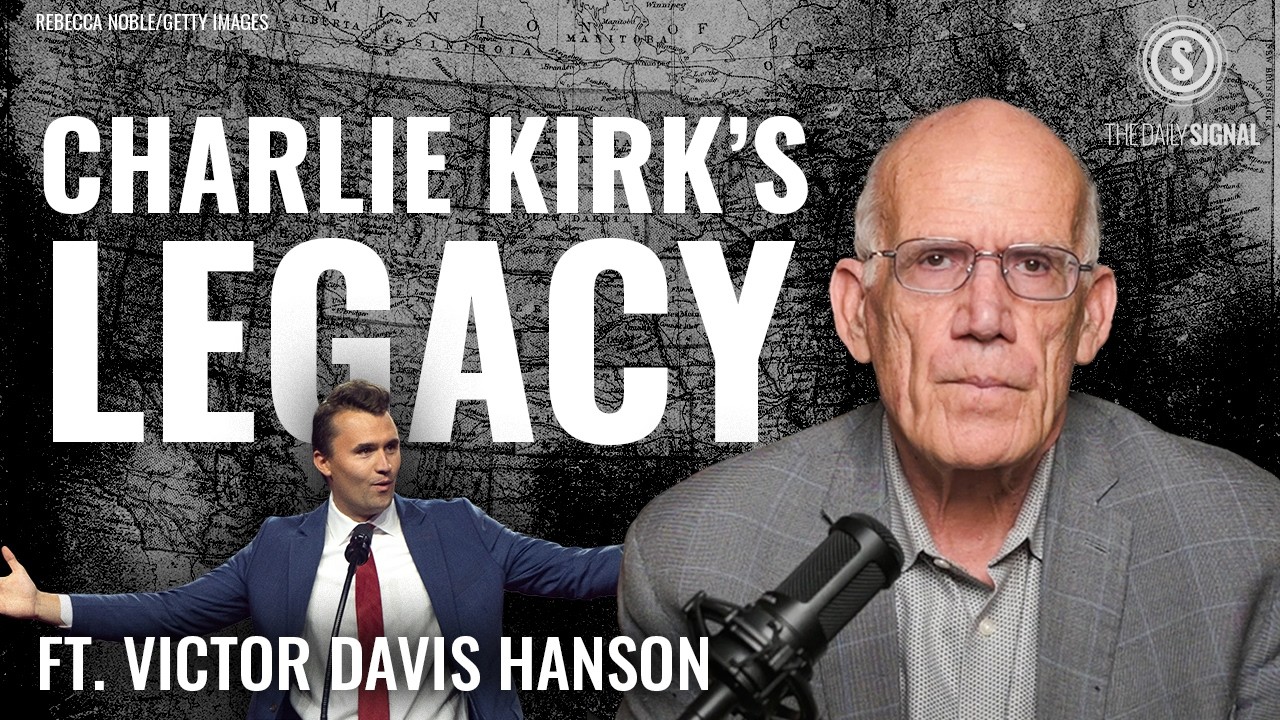
Victor Davis Hanson Reflects on Charlie Kirk's Legacy and Impact on American Youth Politics
7:28
Victor Davis Hanson on Cancel Culture, Charlie Kirk's Death, and the Double Standards in Public Discourse
Victor Davis Hanson examines the shifting landscape of cancel culture following Charlie Kirk's death. Media figures who criticized Kirk immediately after his assassination now face consequences, not from censorship, but from platforms deciding they no longer want to host certain voices. Hanson contrasts the empirical evidence surrounding discussions of crime statistics with the unsupported narratives that followed George Floyd's death, arguing that accuracy and a traditional grace period for the deceased should guide public discourse.
Victor Davis Hanson discusses the approximately five-year period of cancel culture, deplatforming, doxing, and blacklisting that has defined recent American discourse. This culture of suppression targeted anyone voicing views considered illiberal, often resulting in job loss and professional destruction. The phenomenon extended through various movements, including Me Too—which saw Hollywood figures and professors fired for statements or actions deemed sexist—and the aftermath of George Floyd's death, which prompted widespread cancellations over matters of race.
Elon Musk's acquisition of Twitter at an exorbitant price represented one response to this climate, an effort to restore free speech on at least one major platform. But the landscape has shifted following Charlie Kirk's death.
The Turning Point: Charlie Kirk's Assassination
Charlie Kirk's death has turned the tables on cancel culture in unexpected ways. Media figures who used his death to criticize him before he was even buried now face consequences—not censorship per se, but platforms simply deciding they no longer want these voices on their properties.
Hanson references the "Joy Reid treatment" as an example of this phenomenon. Reid, a cable news commentator whose ratings declined as she repeatedly focused on white people in nearly every segment, was eventually let go. This wasn't presented as silencing her—she was free to start her own podcast, which she did. Hanson notes he watched one of these podcasts and understood why she was fired: the singular focus on race that audiences no longer wanted to hear.
High-Profile Cases: Karen Attiah and Media Consequences
Karen Attiah, a columnist for the Washington Post, exemplifies the current shift. In the wake of Kirk's assassination, she described him as a "racist white man," and owner Jeff Bezos and the publication decided they had enough of such commentary. Similar patterns emerged with Don Lemon and Al Sharpton—audiences are simply tired of the constant racial focus.
Hanson points out that Kirk himself had made specific criticisms, not collective statements about Black women generally. Kirk questioned whether figures like Justice Ketanji Brown Jackson and Joy Reid met meritocratic standards, suggesting that DEI considerations played a role in their elevation. Kirk also asked why Melania Trump never appeared on Vogue while Michelle Obama did, suggesting this might relate to left-wing politics rather than race alone. Whether these assessments were accurate is debatable, but they were specific criticisms, not blanket statements.
The Grace Period and Traditional Standards
Those now facing professional consequences feel that Kirk's assassination has opened the gates of censorship. Hanson argues this is incorrect. Instead, what's being enforced is a traditional standard: when someone dies, there should be a grace period. The ancient principle of not speaking ill of the dead exists across Judeo-Christian society for good reason.
If someone chooses to violate this traditional cannon, they must at minimum be accurate and support their claims with evidence. This distinction becomes crucial when comparing recent events.
George Floyd Versus Laken Riley: Evidence and Narrative
The murder of Laken Riley (referred to in the transcript as "Arania Zarutska") has prompted concerns about what critics see as the collectivizing and stereotyping of Black crime. Some argue the right wants a "George Floyd movement" in reverse. But Hanson identifies a critical difference: the presence or absence of supporting evidence.
When George Floyd died in police custody, the left used his death to advance an agenda based on a specific premise: that Floyd's death represented a normal event in America where police systematically killed unarmed Black males. This premise was not supported by data.
The Washington Post found that of all people who come in contact with police, Black suspects who are unarmed are killed at rates no higher than their demographic percentage. Harvard economist Roland Fryer conducted research confirming this finding, facing criticism for publishing results that contradicted the prevailing narrative. Despite knowing the data contradicted their claims, activists proceeded with defund-the-police movements and cashless bail reforms based on the false premise.
Crime Statistics and Uncomfortable Truths
The case of D'Carlos Brown and the discussions Charlie Kirk promoted present a different situation because the underlying data tells a different story. African-American males between ages 15 and 40 compose approximately 3% of the general population but account for roughly half of all violent crimes.
In rare interracial crimes—such as the light rail incident in North Carolina—this demographic is six to ten times more likely (depending on the specific type of violent crime) to attack a white victim than white perpetrators are to attack Black victims. These are empirical facts that many find uncomfortable to discuss.
The death on the light rail brought attention to this reality in a way conservatives wanted to highlight as a national crisis. The contrast with the George Floyd situation is stark: in Floyd's case, liberals demanded national attention for a crisis unsupported by empirical information, data, or research. In Riley's case, conservatives pointed to a phenomenon abundantly supported by statistical evidence.
Two Standards for Public Discourse
Hanson concludes by identifying two standards that should govern commentary on deaths like Charlie Kirk's. First, Judeo-Christian society traditionally observes a grace period during which we do not attack the recently deceased. This is not merely custom but reflects deeper values about human dignity and respect.
Second, if someone chooses to violate this traditional standard and speak ill of the dead, they must be accurate and support their position with evidence. The George Floyd case involved no evidence of police over-representation of Black suspects as victims. The Ukrainian immigrant Laken Riley's murder involved substantial evidence that D'Carlos Brown represented a demographic inordinately responsible for violent crime and, in cases of interracial violence, disproportionately represented as perpetrators.
When Charlie Kirk pointed out these uncomfortable facts, he was not wrong to do so. And when media figures criticized him as a "white man" in the immediate wake of his death, they violated both standards—the traditional grace period and the requirement for accuracy. Those who lost their positions lost them accordingly, not through censorship but through platforms and employers making business decisions about who represents their brand.