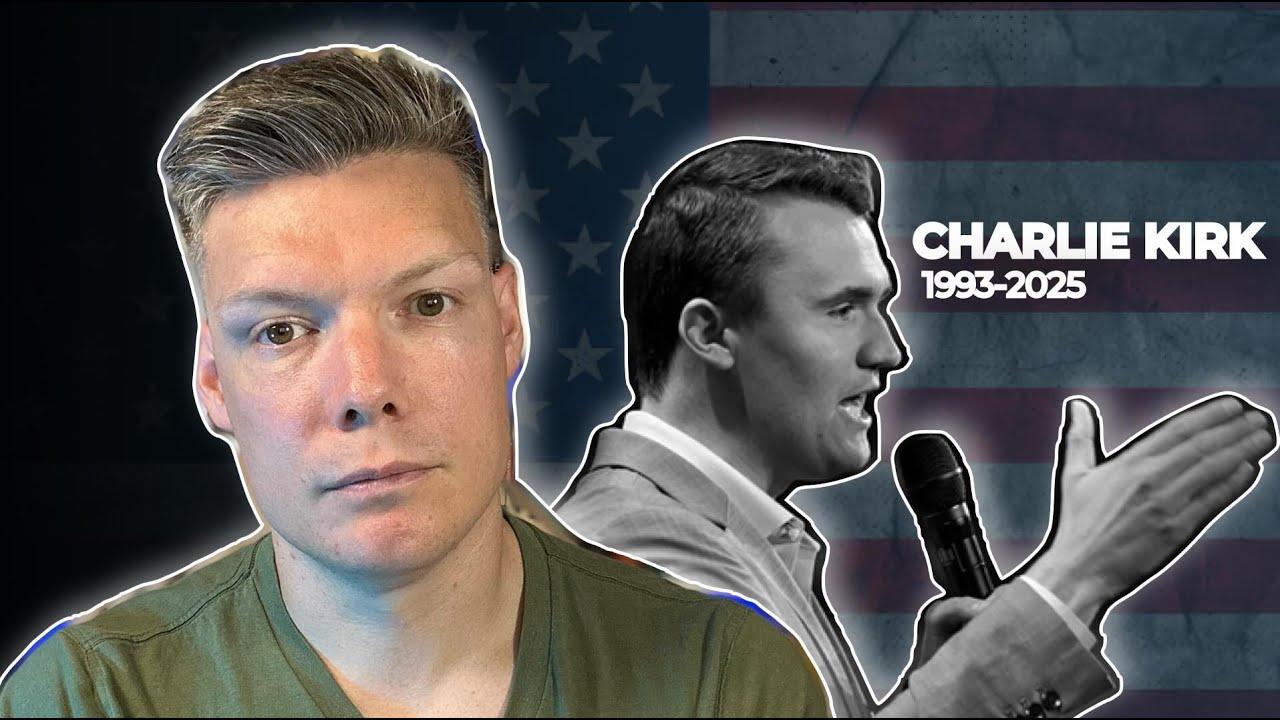
Megyn Kelly on Courage After Charlie Kirk's Assassination and Standing Up for Forgotten Boys and Men
Enjoying this? Share it with someone who needs to see it.
Up Next
Frank Turek Addresses Charlie Kirk's Martyrdom and Why the Church Was Asleep While a 31-Year-Old Led Revival
1:07:39
Tucker Carlson and JD Vance Remember Charlie Kirk's Legacy of Civil Discourse and Faith
9:07
Brandon Tatum Reveals the Leaked Discord Messages From Tyler Robinson, Charlie Kirk's Accused Killer
11:04
Megyn Kelly on Courage After Charlie Kirk's Assassination and Standing Up for Forgotten Boys and Men
Megyn Kelly opens up about the harrowing decision to continue her college tour after Charlie Kirk's assassination, revealing the raw emotions she faced stepping on stage at Virginia Tech where Kirk was supposed to join her. Kelly discusses how Governor Glenn Youngkin's security detail protected her, why she refused to let fear silence her message, and how losing her father at 15 shaped her fearless approach to risk-taking. She also addresses how raising sons transformed her perspective on the injustices facing boys and men in modern America, from campus kangaroo courts to society's complete indifference to male suicide rates. Kelly explains why mothers of sons have a unique obligation to speak truth about gender politics and why courage, once demonstrated, becomes contagious.
The realization hit hard. Megyn Kelly had been scheduled to appear with Charlie Kirk on his college tour at Virginia Tech, and Kirk was set to join her tour shortly after. When Kirk was assassinated, the immediate response was clear: pull the promotional materials. Kirk was featured prominently in them, and continuing seemed impossible. The question quickly shifted from whether to continue to how to make it safe.
Kelly faced serious discussions with her team and her husband about the risks. Should she proceed with Kirk's campus tour at the very type of venue where he was killed? Should her own tour, announced just two days before Kirk's assassination, move forward? The answer, for Kelly, was never really in doubt. There was zero part of her that could walk away. The only real question became how to ensure safety—not just for herself, but for everyone attending, especially the Virginia Tech students.
Security Measures and Glenn Youngkin's Support
Making the events safe required significant resources. Kelly invested in hiring top-tier security and implementing rigorous safety procedures. She expressed complete confidence that her tour would be secure. The Virginia Tech event presented unique emotional challenges, as it was her first time addressing an audience after Kirk's death, at a venue where she was supposed to appear alongside him.
Kelly admitted feeling exposed during the first couple of minutes on stage, a sensation she doesn't normally experience during public speaking events. But the feeling passed quickly. Virginia Governor Glenn Youngkin, who was also present at the event, helped set an excellent tone. Youngkin opened the event and demonstrated what Kelly described as an in-depth knowledge of the Christian faith that both she and Kirk admired.
In an act of extraordinary kindness, Youngkin left his security detail behind to protect Kelly, even though he departed before she did. His security personnel—serious, heavily armed professionals—stayed to ensure her safety throughout the Q&A session. Kelly characterized this gesture as a complete class act from the outgoing governor.
Courage is Contagious
Far from dampening public interest, the events surrounding Kirk's assassination seemed to galvanize support. Ticket sales for Kelly's tour surged, with multiple venues selling out quickly. Kelly interpreted this response as audiences wanting to give the middle finger to those who would use violence to silence voices. People wanted to stand up for the same principles that drove Kirk, that drive Kelly, and that motivate so many others to speak truth regardless of the risks.
The message was clear: an assassin's bullet would not silence anyone from standing up for these principles. Courage, Kelly emphasized, is contagious. When one person demonstrates bravery, it inspires others to do the same.
The Origins of Courage and Resilience
When asked about the source of her courage, Kelly pointed to a formative tragedy in her life. At age 15, she lost her beloved father suddenly. While she doesn't believe this loss gave her resilience exactly, it fundamentally changed how she makes decisions.
The experience taught her at a gut level what most people only know intellectually: no tomorrow is promised. This understanding drove many of the major decisions in her life. It gave her the strength to leave her first marriage early, before having children. It empowered her to leave the legal profession just as she was about to make partner at a prestigious white-shoe law firm because she wasn't happy. It led her to take a journalism job paying just $17,000 annually despite having earned significantly more as a lawyer.
Kelly reflected on Kirk's life in this context, noting that he died doing exactly what he wanted to be doing. While she believed he was owed many more years, Kirk didn't waste a single day he had. Few people can say that about their lives. Kelly said the same about her father.
The Power of Risk-Taking
Kelly's approach to resilience centers on continuous risk-taking. She advocates for taking risks even for those who don't consider themselves courageous, because each risk makes the next one easier. Risks either work out, and you realize it wasn't so bad, or they fail, and you only have to do one thing: keep going.
According to Kelly, you don't have to keep going with courage, with a sense of humor, or even happily. You just have to keep going. That's the only requirement when you fail. Time passes, and you realize failure wasn't so devastating after all. You learn about yourself. You're still standing. You develop immunity against attacks and become less vulnerable to those who try to hurt you. You gain better perspective on your life and your place in the world.
How Motherhood Changed Her Perspective on Gender
Kelly has three children—two boys and a girl. Being asked whether having boys made her less feminist and more understanding of how boys and men were being crushed by dominant culture, Kelly responded with an emphatic yes.
She drew a parallel to interracial marriages producing mixed-race children as a solution to some of America's race issues. She cited Sage Steele, who has a white mother and black father, as someone with a uniquely sensible perspective on race because she loves both parents and understands both experiences without buying into divisive narratives.
The same principle applies to mothers of sons and daughters, or even just mothers of sons. A mother has experienced life as a woman but now has the acute experience of needing to protect a boy. Kelly considers this perspective a gift because it creates a strong reaction to excesses like some aspects of the #MeToo Movement. It reminds people that due process matters, that men's rights matter.
Half of Kelly's speech for President Trump the night before the election focused on forgotten boys and what the left has done to them, as well as the treatment of forgotten men. This has been a main focus of her coverage for approximately 20 years—examining what is being done to boys and men in the name of progress, which Kelly considers anything but progressive.
The Injustices Facing American Men
Kelly's concern for these issues stems from her sons, her husband, and her training as a lawyer to examine both sides of any issue. When you look at both sides, she argues, you can clearly see significant injustice done to American men.
Nobody cares how high their suicide rate is. Nobody cares when they get thrown off college campuses with zero due process and almost no chance for appeal. Even when they win their appeals, they're often not allowed back on campus. All of society's ills get blamed on men, yet they receive none of the advantages. They don't benefit from affirmative action. They don't belong in DEI initiatives. They don't even get the quiet preference of being chosen over equally qualified candidates anymore. They receive all the blame and none of the advantages.
If they happen to be white as well, Kelly notes, the situation becomes even worse. And then they're told to simply buck up and deal with it. Media figures like Joy Reid dismiss their struggles entirely, offering absolutely no empathy for their humanity. Kelly suggests the appropriate response to such callousness is simply to laugh at those who have proven themselves fools.