Terry Schappert Tells Americans to Stop Talking Civil War and Start Taking Real Action
Enjoying this? Share it with someone who needs to see it.
Up Next
JD Vance Honors Charlie Kirk at AmFest 2025: Christianity, Unity, and the Fight for America's Soul
31:32
Candace Owens Responds to New York Times Hit Piece Calling Her Alt-Right Puppet and Dangerous
4:33
Miranda Devine Reveals How Hunter Biden Laptop Whistleblower John Paul Mac Isaac Faces Bankruptcy After Government Retaliation
3:41
Terry Schappert Tells Americans to Stop Talking Civil War and Start Taking Real Action
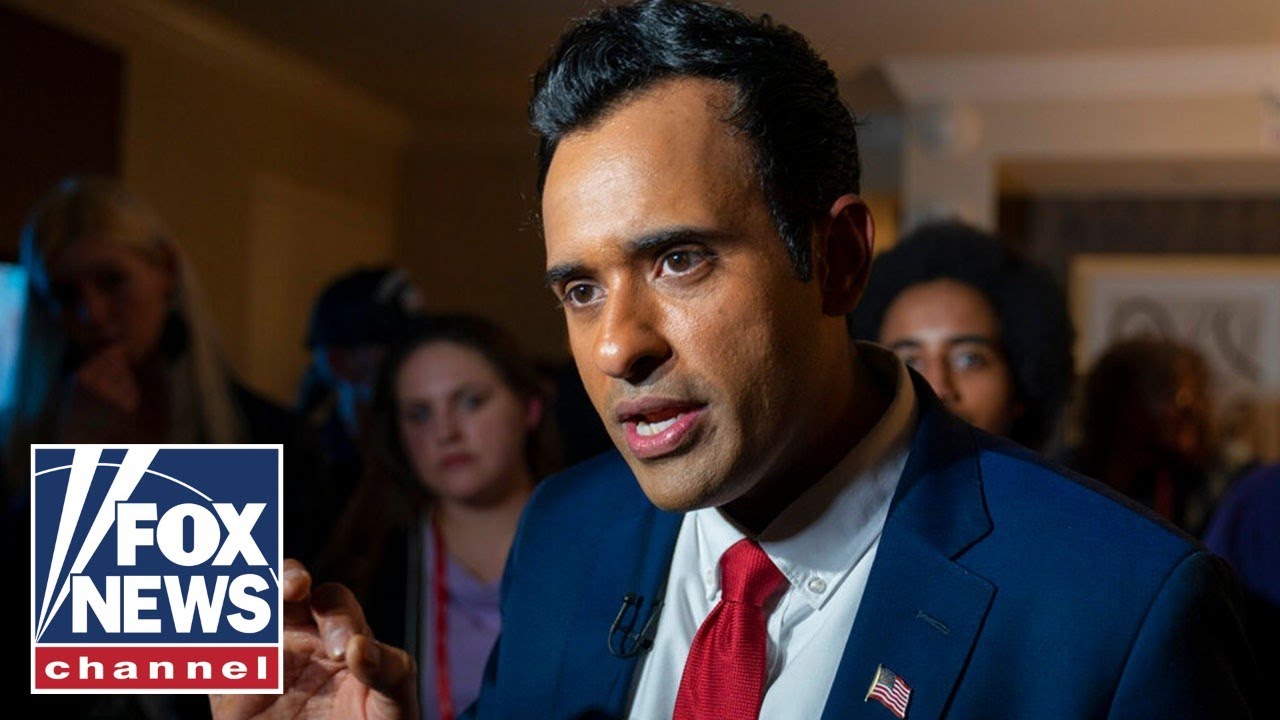
Retired Green Beret Master Sergeant Terry Schappert delivers a pointed message to Americans discussing civil conflict: those who've actually witnessed war are the ones warning against it. On Greg Gutfeld's show, Schappert issues a challenge to viewers who've never voted in primaries or know their local officials yet speak of extreme measures. His solution? Stop funding organizations that work against your values, hold corporations accountable for their positions, and engage in local governance. The conversation shifts from hypothetical conflict to practical civic engagement, with panelists examining how Americans can make meaningful change through economic and political action rather than violence.
Retired Green Beret Master Sergeant Terry Schappert appeared on Gutfeld! with a direct message for Americans casually discussing civil conflict. As someone who has witnessed the devastation of war firsthand, Schappert emphasized that combat veterans are the ones most strongly warning against such rhetoric.
"The guys who are calling for no civil war are my tribe—the combat guys, infantry, special forces, armed artillery, everybody on the ground and overseas who saw the results of civil war," Schappert said. "You do not want that."
He challenged viewers to examine their own civic engagement before escalating their language: "Don't talk about a civil war when you never voted in a primary. Don't talk about a civil war when you don't know who your county sheriffs are. Don't talk about a civil war if you don't know who the teachers are and what they're teaching your kids."
Stop Funding Organizations That Oppose Your Values
Schappert's central message focused on practical action over inflammatory rhetoric. He urged Americans to reconsider where they direct their time, money, and attention.
"Stop giving your time, money, and attention to people and organizations that hate you," he stated emphatically. "Stop giving your time and attention to organizations that have capitulated to the people that hate you."
Using the NFL as a specific example, Schappert pointed to the league's decision to play a Black national anthem and require players to wear Jacob Blake's name on their helmets. He noted that Blake was a convicted violent sex offender whose girlfriend called the police on him, and who pulled a knife on officers before being shot—leading to the burning of Kenosha, Wisconsin.
"Senator Kamala Harris flew out to Wisconsin to get a photo op and said on film 'I'm proud of you,'" Schappert recalled. "You're still watching the NFL? Really? You want to talk about having a civil war?"
His point was clear: if consumers withdrew their support for even one year, major organizations would change their approach. "If you would stop watching the NFL for a year they would have said 'You know what? We are done,'" he argued.
Economic and Political Action Over Violence
Schappert made it clear that he and his fellow combat veterans have spent their lives dealing with what he called "high-quality violence," and they're the ones most opposed to bringing it to American streets.
"I'm not coming for your life," he said. "We are the guys you don't want on you and we are the ones telling you we don't want to do violence. So just economically, politically smash them, push them to the sides of society, live your life, say what you want, but no longer put any juice in running our lives."
He acknowledged that most people will never have the same level of talent or drive as figures like Charlie Kirk, but emphasized that everyone has the capacity to make a difference through local engagement, careful consumer choices, and participation in elections.
"Stop being a domesticated animal," Schappert urged. "You don't have to support these people. What has to happen is with our enemies they need to be politically and economically smashed."
Finding Common Ground on Free Speech
Fox News correspondent Madison Alworth offered a more optimistic perspective, noting that some people who disagreed with Charlie Kirk are now expressing regret over his death because of what he represented.
"What I'm seeing online is there are people—and it is terrible—there are people who are excited about this. Also a lot of people on the same left who hated Charlie Kirk, hate that he is dead. Because what he stood for was free speech and to have conversations, because when you stop talking is when we have problems," Alworth said.
She expressed hope that understanding the value of conversation could lead to a better country: "If we can understand that conversations make us better, then we're a better country."
A Generation Radicalized Online
Comedian Dave Landau pointed to the role of internet culture in creating division, particularly among younger generations.
"This is a sect that has been poisoned for six years by the internet," Landau observed. "You look at their age—they went from 12 to 18, all they have been raised on is online and Reddit, being told what to do. Not an original thought."
He described a generation of carbon copies with identical beliefs, haircuts, and tattoos, calling it "the death of art and the death of culture."
The TMZ Controversy
The panel also discussed a TMZ controversy where Harvey Levin reported on Charlie Kirk's death while his staff appeared to erupt in cheers in the background. TMZ later claimed the cheers were for a car chase being watched in another room, but the panel expressed skepticism.
"I don't believe that because living in Southern California, a lot of car chases end badly," Kennedy said. "Somebody gets out, they get their head blown off on live TV. It's not like there's a car chase to a gender reveal."
The group noted that internet sleuths had examined the timelines and concluded TMZ's explanation didn't match up with when the car chase actually occurred.
The Danger of Dehumanization
Kennedy expanded on the broader cultural problem of dehumanization across political lines.
"You have a group of people who have been radicalized to the point where they are sociopathic. They no longer have empathy for other people, especially when they see them on the other tribe," she said. "We are so dug in with this cultural trench warfare that we have completely dehumanized people."
She noted that even people who might feel badly for Kirk's widow and two children in private feel compelled to maintain their tribal stance in public by saying things like "F Charlie Kirk" just to make the other side angry.
"I don't want to live in a world like that," Kennedy concluded. "I don't want to have murderous thoughts about people I disagree with in this world."
Schappert ended by praising Erika Kirk for her strength in appearing publicly just days after her husband was murdered in front of the world, noting that "out of all the things that Charlie Kirk did, can we agree that he married well?"