The Candace Owens Grift Versus Tucker Carlson's Political Project: Understanding the New Right's Vision
Enjoying this? Share it with someone who needs to see it.
Up Next
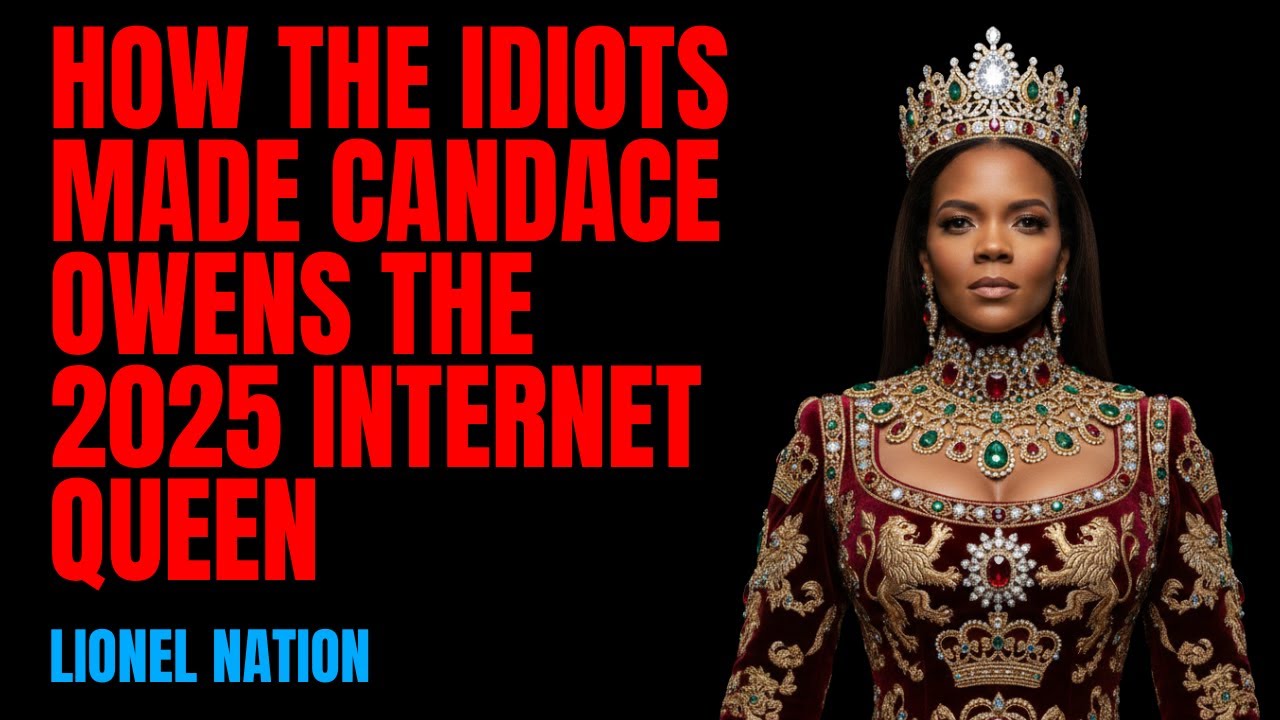
Lionel Declares Candace Owens Queen of the Internet After Critics Accidentally Crown Her in 2025
24:20
Graham Allen Exposes the Truth About Candace Owens After Pedophilia Accusations and Erika Kirk Attacks
1:01:44
Jeremy Boreing Warns About Anti-Israel Social Contagion and How Influencers Manipulate Your Perception of Reality
35:01
The Candace Owens Grift Versus Tucker Carlson's Political Project: Understanding the New Right's Vision
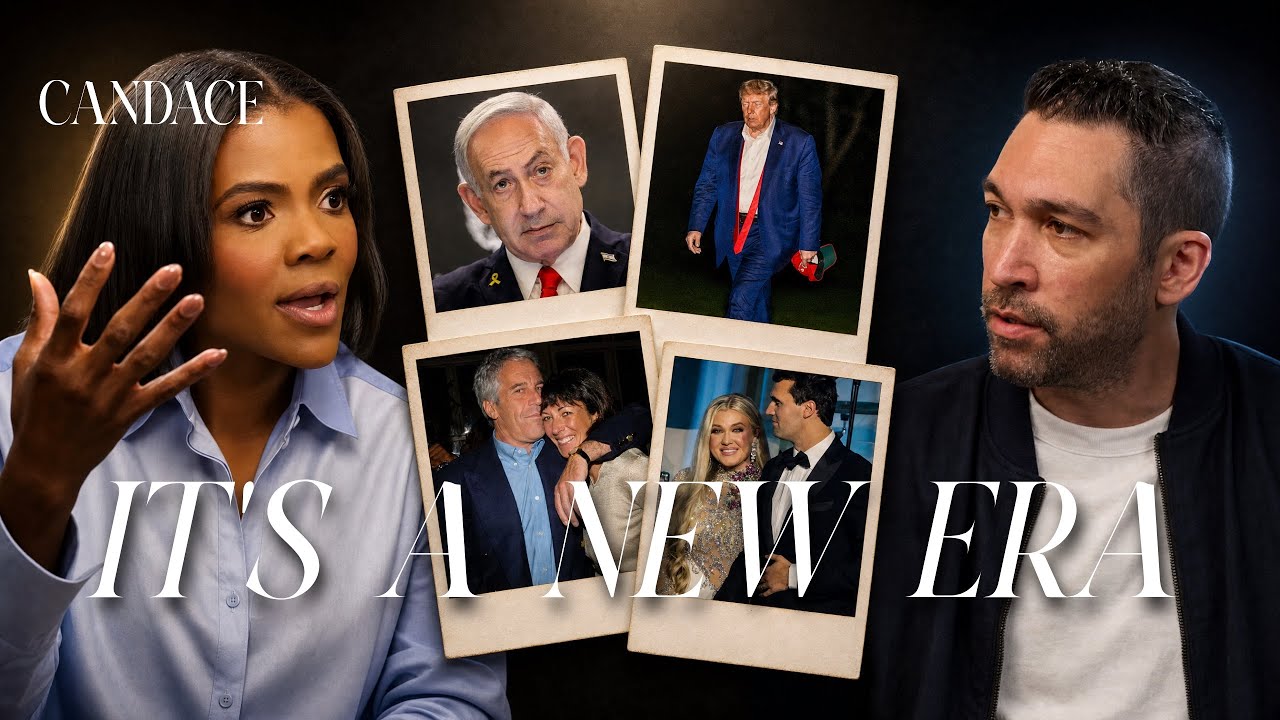
A sharp analysis distinguishes between media personalities chasing audience engagement and those pursuing genuine political transformation. The discussion examines Candace Owens' self-proclaimed role as "the voice of the people" against Tucker Carlson's calculated effort to build a new American majority through left-wing economic populism and right-wing social conservatism. This emerging coalition, including figures like Marjorie Taylor Greene and Steve Bannon, represents a post-liberal vision that challenges the postwar consensus. The conversation explores JD Vance's uncertain position within this movement, questioning whether his proximity to Tucker Carlson reflects genuine alignment, political calculation, or simple loyalty to someone who championed his career.
January 30, 2026
Audience Capture Versus Political Strategy
When asked directly what she believes, Candace Owens responded on two separate occasions with a revealing statement: "I believe what the people believe. I am the voice of the people." This response, described as completely amoral, exposes a fundamental truth about certain media personalities. Owens isn't articulating a coherent political philosophy but rather engaging in what amounts to audience capture as a virtue. She has essentially admitted to saying whatever generates the most reward, whether she fully recognizes this about herself or not.
Tucker Carlson operates differently. He belongs to a small cohort of people, including Marjorie Taylor Greene, Steve Bannon, and even Nick Fuentes (though they don't share identical views), who are engaged in an actual political project. These individuals are working to create a new American majority premised on left-wing economic populism combined with right-wing social populism. Whether this vision is good or bad remains debatable, but it represents a genuine political enterprise aimed at seizing power and reshaping the country's ruling class. This coalition has never been as positioned to capture actual political power as it is right now.
The Economic and Social Components
The economic populism component includes protectionism at home, redistribution of wealth, and protection of ordinary citizens against corporate powers. On the social side, the vision embraces a nativist, identitarian worldview combined with conservative social policy. Tucker Carlson has openly discussed leaders like Maduro, noting that regardless of his communist economics, he outlawed gay marriage and abortion in his country.
Carlson has recognized that right-wing social policy tends to be very popular among working people. He has also recognized that redistribution of wealth appeals to many, as people generally appreciate receiving checks from the government. In the wake of COVID and other failures of the elite class, it has become particularly easy to stir people up economically against the ruling class, even when that group is necessarily small. Envy and resentment are very real parts of human nature, making it easy to mobilize anger against those with more power and agency.
Interestingly, many tech billionaires actually agree with Tucker's political project, yet he still finds it effective to direct popular anger toward elite groups. The anger extends to legitimate concerns: unchecked immigration, excesses of left social policy over the last 50 years, divorce rates, illegitimacy rates, the fatherhood crisis, and the collapse of masculinity in the West. Each of these represents a real problem. By marrying these issues together, there may indeed be a majority ready for a new kind of politics.
Tucker's Explicit Goals
When Tucker Carlson says that he, JD Vance, and Marjorie Taylor Greene can change the foreign policy of this country, he should be taken at his word. He is openly declaring his project: attempting to change the historic politics of the country. This stands in stark contrast to Candace Owens, who is not engaged in any comparable political project but rather in self-aggrandizement through media engagement.
Anger as Productive or Destructive Force
The frustration with open border immigration policies and the destruction of masculinity as a positive force represents majority opinion, not just in America but across the Western world. These concerns transcend traditional left-right divisions. The critical question becomes whether being angry about these issues becomes a productive force or remains merely destructive.
If anger doesn't convert into forward-looking solutions, it simply stirs people up without purpose. In the media game, the incentive structure creates a perverse dynamic: whatever is bad for the world is good for engagement, subscriber counts, and bottom lines. Stirring people up to be angry while offering no practical solutions serves as a perfectly viable business model for those seeking to build platforms and audiences. The grift industrial complex thrives on this dynamic, with its participants caring little about actual political outcomes.
A Constructive Vision or Destructive Force?
The people engaged in the political project Tucker represents do have a constructive vision, though "constructive" here is definitional rather than qualitative. It is a vision to seize power and remake the world order, to end the postwar consensus, and to create a post-liberal West. At the fringes, proponents talk openly about post-liberalism and a reduction in human freedom, which they blame for the excesses of the West over the last generation or two.
This explains the alignment between Antifa thugs physically tearing down statues of Christopher Columbus, George Washington, and Thomas Jefferson, and people on the so-called new right making claims that Churchill was the chief villain of the Second World War, that America shouldn't have used the atomic bomb to end that war, that America didn't walk on the moon, or that 9/11 was an inside job. These represent rhetorical statue-toppling that mirrors Antifa's physical destruction.
Both approaches say that the narrative structure on which the country is premised, the shared legacy of the West, was either a lie told by evil men to gain power or fundamentally immoral. The message becomes clear: there is nothing to conserve. This represents a fundamentally anti-conservative proposition, a radical and reactionary stance claiming that everything great about the country was wrong and that all of America's greatest achievements were actually immoral.
National Identity as Immune System
National identity functions as an immune system against tyranny. To bring about a tyrannical, post-liberal, authoritarian order, that underlying narrative must be destroyed. The story people tell themselves that allows them to see themselves as free, on the side of freedom, and on the side of human advancement and human flourishing must be dismantled. While the movement is constructive insofar as it constructs a new governing philosophy and implements it, it remains destructive in that everything good and true about America's role in the world becomes the first casualty of this new political project.
JD Vance's Uncertain Position
The Trump administration's foreign policy thus far has been an utter repudiation of the post-liberal worldview, yet questions remain about JD Vance's role in this emerging movement. Vance represents a unique figure in American politics because he plays his cards incredibly close to his chest. Very few people know what his actual political north star is.
Tucker Carlson claims Vance when he says "Marjorie Taylor Greene, JD Vance and I will change the foreign policy of this country." But does Tucker actually have a legitimate claim on JD Vance? The answer remains unclear. Vance apparently maintains a very close relationship with Tucker and has not repudiated him as Tucker's rhetoric has moved increasingly outside traditional American conservatism. The question becomes: why does JD remain so close to Tucker?
It may be premature to conclude that Vance is part of Tucker's new political project. An equally likely explanation is loyalty. JD owes much of his political career to Tucker, who took a bet on him when few others would, both in his Senate run and in helping point Donald Trump toward selecting JD as his running mate. Friendship, gratitude, and loyalty are important values. While some argue that friendship shouldn't prevent public accountability for problematic statements, friendship should provide considerable latitude and rope to deal with things privately before going public.
Political Calculation and Coalition Building
There's also political reality to consider. JD Vance must keep the Trump coalition together to have any chance of becoming president in three years. That means he probably needs all the people who listen to Tucker just as much as those who listen to Ben Shapiro. Donald Trump did an excellent job building this coalition in 2020 and 2024. However, Tucker may be doing enormous damage to the Trump coalition, which could become a political liability for JD Vance if left unchecked.
From Vance's perspective, it makes political sense not to engage in dividing the coalition and drawing lines that would make it harder to become the next president. Three possibilities exist: Vance maintains his relationship with Tucker out of loyalty, out of political calculation to preserve the coalition, or because he is actually part of Tucker's political project. Only time will reveal which is true. It would be cynical to assume that just because JD Vance is friends with Tucker Carlson and Tucker claims JD Vance (which is politically advantageous for Tucker to do) that Vance is automatically part of Tucker's political project.
Trump's Agency and Judgment
It's easy but misguided to say "poor Donald Trump, what a buffoon that he chose JD Vance" and claim JD is actually part of a project to dismantle Trump's coalition and that Trump only picked him because Tucker told him to. That's similar to saying George W. Bush only invaded Iraq because certain groups told him to. People don't become president of the United States without having their own judgment and opinions. Donald Trump isn't some puppet that can be wielded by other political actors. He chose JD Vance in the end. Maybe he did so on Tucker's recommendation, but he chose him. Trump presumably believes that JD Vance can be a good steward of the coalition Trump built.