TMZ Staff Caught Cheering During Charlie Kirk Death Announcement, Investigation Exposes Timing Discrepancies
Enjoying this? Share it with someone who needs to see it.
Up Next
Jesús Enrique Rosas Analyzes New Discord Leaks About Tyler Robinson and Lance Twiggs Relationship Before Charlie Kirk Shooting
16:57
Joe Rogan and Media Figures React to MSNBC Coverage of Charlie Kirk Shooting Incident at Utah Valley University
17:31
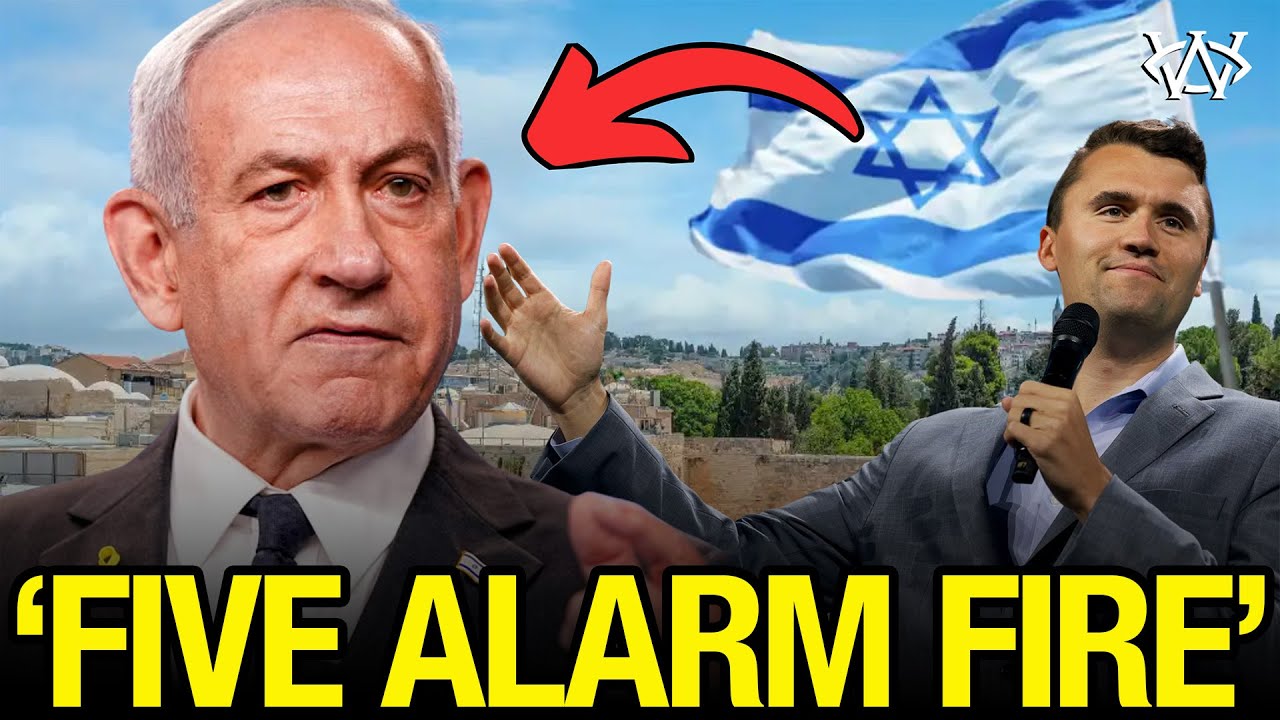
Charlie Kirk's Final Letter to Benjamin Netanyahu Reveals Deep Concerns About Israel Losing Conservative Support
26:18
TMZ Staff Caught Cheering During Charlie Kirk Death Announcement, Investigation Exposes Timing Discrepancies
When TMZ aired its live stream on September 10 and the announcement of Charlie Kirk's death was made, background cheering and laughter erupted. TMZ quickly claimed their staff was reacting to an unrelated car chase, but independent investigator Peggy Bolton analyzed timestamps, office clocks, and video footage to challenge that explanation. The breakdown reveals a 35-minute gap between the supposed car chase excitement and the actual cheering, raising serious questions about what TMZ employees were really celebrating. Despite TMZ's denial and half-apology for 'horrible timing,' the evidence suggests something far more disturbing about the reaction in their newsroom.
The controversy began during TMZ's live stream on September 10, when news broke that Charlie Kirk had died. As the announcement was made on air, viewers could clearly hear cheering, laughter, and celebration in the background of the broadcast. The timing seemed unmistakable—staff members appeared to be celebrating the death of the conservative commentator.
TMZ immediately pushed back against accusations, claiming the background noise had nothing to do with Charlie Kirk's death. According to their explanation, staff members in a back room were watching an exciting car chase and their reactions were completely unrelated to the breaking news being reported just feet away.
Peggy Bolton's Investigation
Independent investigator Peggy Bolton, active on TikTok and YouTube, conducted a detailed analysis of the footage that would challenge TMZ's narrative. Her investigation focused on timestamps, visible office clocks, and the precise timing of events captured during the live stream.
Bolton identified several key pieces of evidence. First, she located the moment when TMZ staff mentioned the alleged car chase—a chase that started in Temple City. She then examined the giant clocks visible around the TMZ office in the footage. By carefully tracking timestamps throughout the video, she was able to establish an exact timeline of events.
The Timeline Doesn't Add Up
According to Bolton's analysis, the timestamp at 3 hours, 42 minutes, and 5 seconds into the video showed it was 1:07 and 15 seconds in the afternoon (2:07 PM Pacific time). The cheering and celebration occurred at the 4 hours, 17 minutes, and 15 seconds mark—a difference of 35 minutes and 10 seconds.
When Bolton added those 35 minutes to the established time of 1:07 PM, the actual time of the cheering was approximately 1:43 PM. This timeline directly contradicts TMZ's explanation that staff were reacting to a car chase, as the timing doesn't align with when such a chase would have been happening or when it was mentioned on air.
Bolton's key question remained unanswered: if the staff were technically watching a car chase video, why did the celebration occur at that specific moment coinciding with the Charlie Kirk announcement?
TMZ's Non-Apology Explanation
TMZ released a statement addressing the controversy, though notably they offered an explanation rather than a genuine apology. In their video response, TMZ hosts claimed that people in a back room—carefully avoiding calling them 'employees' or 'colleagues'—were watching a car chase and reacting to that.
The language used in their statement was telling. One host said there were 'some people in the back room away from our news' before correcting to 'I know these people.' This apparent attempt to distance the organization from the individuals involved raised additional questions.
The hosts insisted: 'They were not laughing. They were not reacting that way about Charlie Kirk's assassination. They were not. They would not work here if they did.' Yet they also acknowledged 'horrible timing' and apologized for how it sounded, creating a contradiction—why apologize if nothing inappropriate occurred?
Missing Evidence
Critics pointed out that TMZ could have easily resolved the controversy by showing footage of the car chase their staff was allegedly watching. If the chase was exciting enough to prompt cheering and laughter, it presumably would have been newsworthy enough to cover or at least document. However, no such footage was provided.
The absence of this evidence left observers with only TMZ's word that the explanation was legitimate. One host stated, 'We assure you it was not about that,' but provided no supporting documentation beyond verbal assurances.
The Host's Reaction in Real Time
Perhaps most damning was examining the live reaction of the TMZ host during the original broadcast. When the cheering erupted in the background, his facial expression and body language suggested immediate concern. He appeared to recognize that something inappropriate was happening.
During TMZ's explanation video, the host acknowledged: 'I get it too. And he gets it because we listened as we were talking. You can go back and look on the stream. I actually walked off camera to go back and find out what the hell was going on because it was inappropriate for the laughter at that time.'
This admission confirms that even in the moment, the host recognized the reaction was inappropriate given the context. The fact that it was a live broadcast meant there was no opportunity to edit out the damaging audio, leaving TMZ to manage the fallout after the fact.
The Deeper Problem
Beyond the specific incident, the controversy raised questions about the culture within media organizations and the attitudes of those working in them. The suggestion that TMZ might employ people who would celebrate a political figure's death—regardless of that person's ideology—speaks to a broader concern about polarization and dehumanization in modern discourse.
Some observers noted that TMZ might be reluctant to take stronger action, such as firing those involved, because doing so would require acknowledging the real nature of what occurred. Additionally, such action might create internal conflict with other staff members who share similar views but didn't express them as openly.
Public Reaction
The incident and subsequent investigation by Peggy Bolton gained significant attention on social media platforms, particularly TikTok and YouTube. Many viewers found TMZ's explanation unconvincing, especially given the timeline discrepancies identified by Bolton's analysis.
The controversy serves as a reminder of the permanence of live broadcasts and the impossibility of controlling every element in a newsroom environment. It also highlights the power of independent investigators using publicly available footage to fact-check official narratives.
The TMZ incident remains a flashpoint in discussions about media bias, professional conduct in journalism, and the appropriate response to political figures' deaths, regardless of one's personal views about their work or ideology.
Video Transcript
I think by this point, everybody
knows that
the dudes at the TMZ lied when
they were saying
that no, it didn't happen.
You know that people were cheering and
laughing during their live stream
on September 10.
And simultaneously when Tom had announced
that Charlie Kirk had died.
So they were saying that no, you can hear
that in the background about it.
It was not about that.
It was about a car chase.
So I'm going to recommend that you well,
maybe follow Peggy Bolton on
TikTok and YouTube
because she is the one who did them.
Let's say the research and the homework
to expose the timing of each event.
I'm going to show you first.
I'm going to show you first the original
footage of the live stream so
you can well listen
to the screaming on the background.
I'm going to fix my sound as usual.
Oh my God.
Why does this happen all the time?
Here we go.
Or three o'clock in Utah time, which is two
o'clock Pacific, five o'clock Eastern.
Janet, go.
Go to have somebody look at the Fox Trump
just posted that Charlie Kirk is dead.
Yeah.
I'm pretty sure that you
heard the screams
and the laughter and the celebration
everything.
And how how odd timing, right?
Go back to Peggy Bolton.
Let's watch her clip.
Oh, I don't need TMZ's cameras.
There's nothing I love more than
a good investigation.
And I'm coming to you guys
with the receipts.
Exhibit A, the alleged car chase
that they were watching.
He mentions the car chase because that is the
justification from the TMZ guys that,
oh yeah, our team was looking
at a car chase
and they were cheering and
clapping and laughing
and well, it's what was so
exciting that car
chase was that an OJ Simpson
grade car chase
right there on the banner below.
You can see it started in Temple
City and we saw that.
Go ahead, Philip.
Well, I wanted to let you know that President
Trump has said Charlie Kirk has died.
So that is the breaking news that we are
likely about to have with ABC News.
Exhibit B, the giant clocks
around their office.
Exhibit C, don't worry, you won't have to do
the math because I've done it for you.
Time stamp time.
It is 107 and 15 seconds in the afternoon
with the time stamp on their
video of three
hours, 42 minutes and five seconds.
For three o'clock and Utah time, which
is two o'clock Pacific.
Exhibit D, we have the cheering
starting at
exactly four hours, 17 minutes
and 15 second
mark, which is a difference of 35
minutes and 10 seconds.
So if you take the time stamp
plus the clock
saying it was 107 and 15 seconds,
add 35 minutes
and 15 seconds, what time would you have?
One forty three.
So they technically were watching
a car chase video.
What do you think they were cheering for?
Amazing, just amazing.
Make sure that you follow Pei on
both TikTok and YouTube.
So here's the explanation.
It's not an apology.
They're not apologizing.
They are absolutely denying.
Oh, that never happened.
They would never cheer.
Charlie is dead or anything.
So let's watch this with the knowledge
that they are going to lie.
That is interesting, right?
That makes my job so much easier.
I don't have to analyze much.
You just have to say, see this and oh,
I already know that you're lying.
So we were live streaming all day
during this this tragedy.
When something happened in
our office, as we
were reporting the assassination
of Charlie
Kirk, there were some people in the
back room away from our news.
There were some people.
Notice how it's people in the back room
should be employees, right?
He is employees.
So I think that people in the background
is trying to distance themselves
from them.
It's not our employees or our colleagues
and none of the sort.
Some people notice that the language that
he uses here who were watching
a car chase
and they were laughing.
They were clapping and you could
hear it out here.
Notice how he just says they were looking
at a car chase, but and
they were laughing
and they were clapping, but he doesn't
provide further explanation.
The car chase was very exciting.
It was I'm pretty sure that if it was that
exciting, it would have made the news.
They're right.
And maybe if you want to be extra clear
about what happened, you clip
the part of the way
they were laughing at and cheering at.
But you can't because that essentially essentially
was a very boring car chase.
And we want to make a couple
of things clear.
One is that I know these people and
I know these people first.
There was some people and now
I know these people.
He knows that he cannot completely
distance
himself from them because
they are the office
and they must be workers and police of
TMZ and they were not laughing.
They were not reacting that way about
Charlie Kirk's assassination.
They were not.
They would not work here.
Notice how his partner tries
to interrupt.
Does Mark Carney in his nation?
They were not.
They would not work here if they did.
And that being said, we acknowledge
that it was horrible timing.
And for that we are sorry.
We apologize.
We OK.
They're apologizing.
Horrible timing.
Why would you apologize if there's
nothing to apologize apparently?
I am a bit confused.
My head hurts.
Guys, we apologize.
I get it.
You have to hear that.
And I get why if you're watching
the stream
you may have felt that that's
what the laughter
was about.
We assure you it was not about that.
OK.
Again, it would have been
so much easy if you
show what they were watching
because essentially
you can have that on tape, right?
The car chase.
But you can't.
We assure you you have to take
our word for it.
It's just so too.
You see their facial expressions.
I don't know.
Maybe they are just tired.
Maybe that is I'm pretty sure that is a
really demanding job every day.
I'm not going to.
I am not going to criticize them
for them for that.
I'm pretty sure that is a tough job.
But again, man, man, let's let's let's be
just a bit just a bit more
honest, a bit more
honesty would go a long way.
We are surrounded by our souls here who are
cheering for the death of Charlie Kirk.
No, really, they cannot say say that because
then they would have to fire them.
That would be escalated.
They would have to fire them.
And if they fire the freaks were cheering
for Charlie Kirk's death.
I'm pretty sure that there would
be other freaks.
Maybe we're not cheering, but we'll
be upset at the same time.
You know that we have noticed that
we are surrounded by freaks.
We'll be happy if we die just because
of the things that we say.
But it's it's terrifying when
you think about it.
But it was horrible timing.
And by the way, I get it too.
And he gets it because we listened
as we were talking.
You can go back and look on the stream.
Yeah, you can see his face.
Oh, my God.
Stop laughing.
Why are you laughing?
He knew.
I think that that is the moment we should
go back to that that moment.
Let's go back to that moment
when we finish this.
He knows that he knows that
something happened.
But let's finish watching this.
I actually walked off camera to go back and
find out what the hell was going on
because it was inappropriate for
the laughter at that time.
But no one was laughing about the
Charlie Kirk tragedy.
Nevertheless, we apologize for
the way it sounded.
Yeah, let's go.
Let's go back to the moment
that he he was here.
Let's play this clip again.
I want to see something.
Or three o'clock in Utah time, which
is two, two o'clock Pacific.
I'm pretty sure that it is not that usual
that he hears cheering and laughing like
that.
It's like people are working right.
And it's something that is this
grind day in day out.
Celebrities, celebrities, celebrities.
I don't know.
It's like what can be exciting about that could
be exciting, but not to be cheering
and screaming and etc.
I think that he he he already says
that something was afoot.
Five o'clock Eastern.
Janet.
Go.
Yeah, that's a gesture I've seen.
Oh my God.
How Janet, Janet, Janet, can you
make some noise, please?
Can you can you?
But this this guy was desperate already.
He knew in in in his brain something
was clicking.
I'm going to get into trouble
because these
people go to have somebody
look at the Fox.
Trump.
Yeah, he already knew he already
knew Charlie Kirk is dead.
He's going to tell me at any any moment
those bastards in the background
were screaming
this this is going to sound really bad.
We are live.
It was live.
So there was no way of editing
editing that out.
So tough luck, buddy.
Everybody know you're working
with a series
of goals and demons as so
many people in so
many places.
This is a sad really sad.
But this is fun to watch.
Make just so watching them trying to make
up excuse a very bad excuse
and especially
see his reaction at the moment.
But again, I would love to know what you
think about this in the comments.