Up Next

Tucker Carlson Defends Joe Kent's Resignation Over Israel's Role in Pushing America Into War
9:16

Tucker Carlson on Joe Kent's Claims About Butler Shooting and Israel's Control Over US Government
9:43

Tucker Carlson and Cenk Uygur Discuss American Sovereignty, Foreign Influence, and Money in Politics
2:24:42
Tucker Carlson Breaks With Trump Over Iran War and Israel Policy
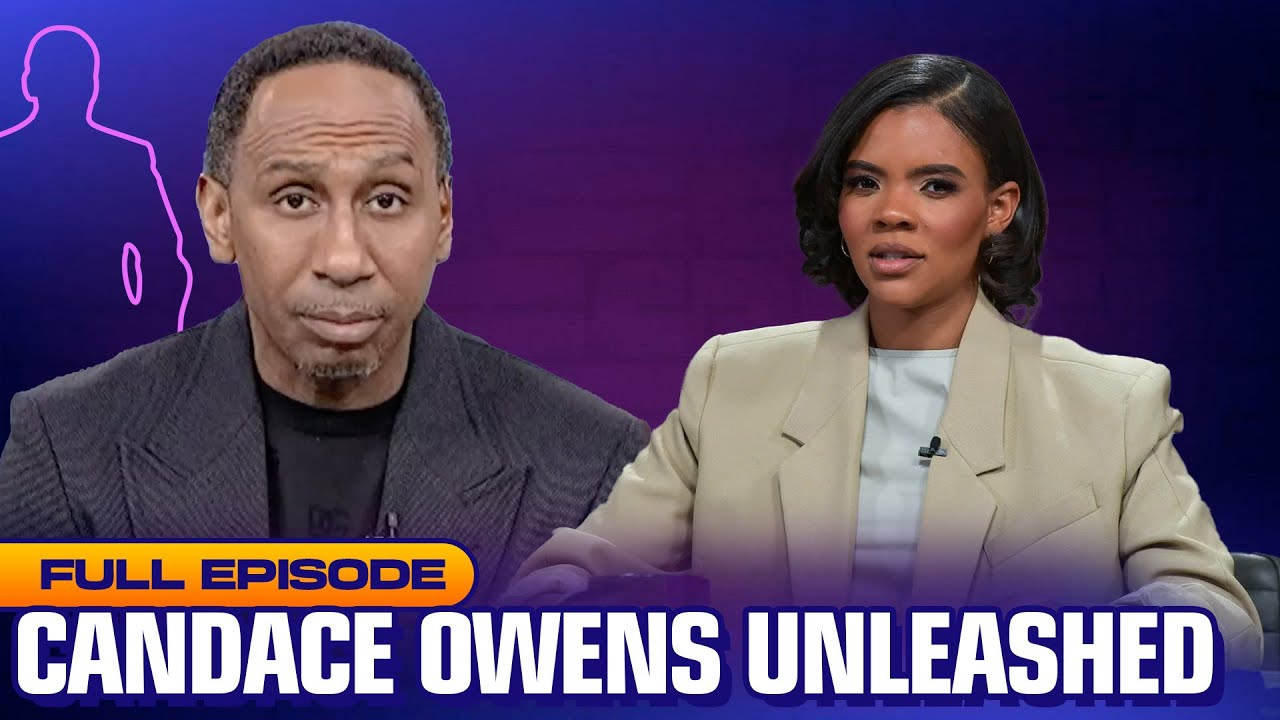
Tucker Carlson sits down with Stephen A. Smith to explain his dramatic break from President Trump and the Republican Party. The former Fox News host pulls no punches as he details why Trump's February 28th regime change war on Iran, launched at Israel's behest, represents "the most disastrous decision any American president has made in my lifetime." Carlson argues Trump is being controlled by a foreign power, discusses the Butler shooting investigation shutdown, calls out senators by name for supporting what he terms genocide in Gaza, and reveals private conversations where he confronted Trump directly. This wide-ranging conversation tackles Israel's influence on U.S. politics, the military-industrial complex, racial politics, economic inequality, and whether any political figure can actually save America. Carlson ultimately concludes that personal relationships and individual actions matter more than waiting for political salvation.
Why Tucker Carlson Broke With Trump
Tucker Carlson explains his dramatic departure from supporting President Trump, pointing to a specific date: February 28th, when Trump launched what Carlson describes as a regime change war against Iran on behalf of Israel. Carlson, who campaigned with Trump, spoke at the Republican National Convention, and defended him throughout his time at Fox News, says this decision fundamentally changed his view of the president.
"I told him that repeatedly before he did it," Carlson says of warning Trump against the war. "And it wasn't from my perspective just a mistake. It was like the end of an entire moment in world history where the United States has enough power to influence events. That's all done, I think, because of this."
Carlson argues Trump wasn't able to make an independent decision and is "controlled by another country." When pressed on why it couldn't simply be Trump's genuine belief, Carlson insists it's a fact that Trump followed Israel into this war, citing Trump's own statements and those of his Secretary of State.
The Butler Shooting and Trump's Transformation
Carlson pinpoints the assassination attempt at Butler, Pennsylvania in July 2024 as a turning point. He notes that after the shooting, Trump "changed like 180 degrees and started doing things that he ran against doing."
More concerning to Carlson is that Trump shut down the investigation into the shooting. "I can't think of a non-sinister reason for Trump to shut down an investigation into his own attempted murder," he states. The FBI gathered material on shooter Thomas Crooks—who he was talking to on his burner phone, who he was talking to online, who he trained with at the range—but none of it has been released.
When Carlson pushed FBI leadership on why the information couldn't be made public, they wouldn't answer. "Turns out Trump told them not to release it, to shut down the investigation. He's a lone gunman. He's dead. We don't need to know anymore."
Joe Kent, who ran the National Counterterrorism Center, publicly stated when he resigned that he believed the Butler shooting was connected to Trump's move against Iran—a claim Carlson says no American news organization has investigated.
Israel's Control of American Politics
Carlson doesn't mince words about what he sees as Israel's outsized influence on U.S. policy. He points to Congress currently voting to merge the U.S. military with the IDF (Israeli Defense Force) and calls it "totally bonkers."
"I'll tell you why we're not doing it is because the overwhelming majority of Americans want it. They don't. Who would want that? What's the upside for us? We're doing it because Israel wants it. And Israel controls our politics through campaign donations at least."
He describes APAC as an "unregistered foreign lobby" that gives money to approximately 90% of Congress. "If this were Lichtenstein or Congo bribing 90% of our lawmakers to tow the Lichtenstein or Congo line, I'd be totally opposed to it. Doesn't make me anti-Congolese or anti-Lichtensteinian. I'm not a racist for thinking that. I'm an American who wants my lawmakers to vote on behalf of my country."
Carlson recounts directly confronting Trump during the 12-day war last June: "I said, you are being led around by the nose by Netanyahu and everyone can see it." Trump's response was to deflect, say everything would be fine, and later have someone else call to say he was offended.
Gaza, Genocide, and Moral Consistency
Carlson uses the term "genocide" repeatedly to describe Israel's actions in Gaza, citing the international definition: "the systematic effort by a government to eliminate a people." He points to Israeli cabinet ministers and Prime Minister Netanyahu describing Palestinians as "Amalek"—a biblical reference to a group God commanded the ancient Hebrews to completely destroy, including children and livestock.
"The prime minister Benjamin Netanyahu has used this phrase multiple times, not just randomly once again and again and again in speeches and so have his cabinet ministers, the finance minister, the defense minister. They've all said the point is we have to kill all these people and drive them out. Well, that is the definition of genocide."
Carlson argues that Israeli human rights groups are calling it genocide, the rest of the world is calling it genocide, and the prime minister has been indicted in international court for genocide. "There's no debate about whether it's genocide. The debate is why are we going along with this and allowing people who are committing genocide to give us moral lectures."
He challenges the notion that criticizing these actions makes someone anti-Semitic: "The lessons that I learned as I'm 57 as a child growing up in America were really clear. Genocide is always wrong. The Nazis did it. That's why we don't like the Nazis... I'm against it when it was aimed at Jews. I'm against it when BB Netanyahu does it."
Carlson also rejects the idea that Netanyahu speaks for all Jews: "The idea that the government of Benjamin Netanyahu speaks for all Jews on planet Earth is a lie. It's a lie that's going to do grave damage to Jews."
The Iran War's Consequences
Carlson predicts devastating consequences from the Iran conflict. He argues that by killing "the 87-year-old religious leader of their religion," the U.S. has "ensured that there is a generational conflict that our grandkids are going to have to deal with."
"We haven't had a lot of terror attacks in the United States, despite what the liars tell you. We haven't. We're separated by an ocean. We've done a pretty good job of not having those. We're going to have them now. And they are a result of what the Trump administration just did at the behest of Israel."
He also points to economic consequences: "Trump said that last month. We're weeks away from draining the SPR. We have no cushion on oil." Once supply and demand reality sets in, oil prices will rise, driving inflation and impoverishing Americans.
On the claim that the war prevents Iran from obtaining nuclear weapons, Carlson is dismissive: "If there was ever a time when Iran has to get a nuclear weapon is now." He points to North Korea as proof—countries with nuclear weapons don't get invaded or regime-changed.
Both Parties Serve the Same Masters
Carlson argues that despite superficial differences, both parties agree on the issues that actually matter: "They're in agreement on the big issues. And the big issues, just to restate, are the economy and foreign policy. That's where all the money is spent."
"Chuck Schumer agrees with Donald Trump and Trump with Schumer on the tax code. Whatever they say, they agree on the tax code and they agree on the Iran war."
This is why there have been no mass protests against the Iran war despite massive demonstrations against the Iraq war. "Where are those demonstrations now? They're none because both parties are in favor of this."
Carlson notes he would never be impeached for the Iran war because Democrats support it just as much as Republicans. "Both parties supported regime change in Iran because both parties have the same paymasters and the same donors who are demanding loyalty to a foreign country."
The Real Extremists
When asked about platforming Nick Fuentes and normalizing extremism, Carlson turns the question around. He identifies Lindsey Graham and Ted Cruz as "maybe the two most extreme human beings I've ever met."
"These are people who have called for murdering innocents at scale. Bombing people who did nothing wrong, killing kids, and have done that for decades. Who have openly called for the US government and American citizens to be more loyal to a foreign country than to their own."
Unlike a podcaster with controversial views, these senators actually vote for policies and appropriate money. "That guy has blood on his hands. The blood of countless innocents, but it's totally cool to sit with him."
Carlson argues the media has things backward: "We should get back in the media into the habit of criticizing the powerful. And I know everyone's upset about some 27-year-old gay kid, Nick Fuentes. Oh, he says naughty things. Yeah, I agree. Whatever. But who cares? What we should care about is when powerful people misuse their power to hurt the innocent."
Race, Economics, and Manufactured Divisions
On racial issues, Carlson argues that focusing on race serves as a distraction from economic inequality. "There has been this concerted effort to convince non-whites that whites are the problem. Whites are bad. Whiteness is bad. We hate whites. And to foment hatred between the races... because when you're busy hating your neighbor on the basis of his race, they're busy looting your country, which they have done."
He acknowledges historical injustices: "I think that people whose ancestors were dragged here against their will in slavery are at a disadvantage. However, I think it's a lot more complicated than you're saying. I think that that does hurt people generationally. Clearly, it does."
But he points to economic data showing Nigerian Americans earn more than the average white American, and notes that whites rank "fifth or sixth for income in the United States." The diversity of modern America complicates simple racial narratives.
Carlson argues the real issue is economic structure: "The real problems stem from the way our tax code is structured and most people don't even think about it because no one in the media ever talks about it." He highlights how investment income is taxed at half the rate of wage income: "Are we saying that it's twice as virtuous to invest or to get inherited money as it is to have a job?"
What Carlson Wants From Leaders
When asked what he wants from political leaders, Carlson's answer is simple: "I'd want what everyone wants from his or her leaders, what kids want from their dads, what employees want from their bosses, what soldiers want from officers, which is love, concern. That's it."
"If you're having wars with Iran or letting 100,000 Americans die of drug ODs and doing nothing about the drug cartels, it's pretty obvious you don't care about Americans... We need people who have a sincere love not of the country but of the people who live in the country, the citizenry, the Americans. And we don't have that."
He expresses frustration that basic problems go unaddressed: "Education in America is a joke. You can't send your kids to a public school in a big city or even in a small city. They're terrible and only people have no choice do it. Is there an effort to fix that? No. None. Zero."
Hope Beyond Politics
Despite his grim assessment of the political landscape, Carlson ultimately argues for finding meaning outside politics. Looking at potential candidates from both parties, he's unimpressed: "It's just a waltz of the pygmies... it's such a collection of mediocrities."
"I'm not sure that there are political solutions right now. We could have better politics, people who care about us. But the truth is our problems are really significant, but it doesn't mean that our lives have to be barren or bleak because really your life is not about who's in office."
The disappointment with Trump forced this realization: "I convinced myself that Trump was really going to make a huge difference... But he was never going to fix all the problems because that's kind of not how it works. Like the president doesn't have the power to do that."
Carlson's advice: "I don't have to wait for the perfect guy or even a great guy to get elected to make my own life better, to make the lives of people around me better... Love your wife more. Be kinder to the people who work for you. Give a 100% tip at dinner."
On mortality and perspective, he reflects: "We're not in control. And you think you have forever, you don't. You have a certain time. You can't control that. And so every day, this sounds like a bumper sticker, but it's real. Every day really is a gift... Stop worrying all the time about stuff you can't control. And instead focus as intently as you can on loving the people around you, telling the truth, trying to do the right thing."
Personal Safety and Living With Conviction
When asked if he fears for his safety given his controversial positions, Carlson puts it in perspective: "All of, you know, if you live to a certain age... you see people you love die and you know people who were totally fine one day and they're gone the next and it's incredibly sad. It's the saddest thing, but it's also a reminder that we're not in charge of our lives."
"The idea that like, oh, I'm in under threat. Well, we're all under threat all the time because we don't know what the future is. So just stop worrying about that, you can't control it."
Video Transcript
It's been a long time coming. He's
wanted me on his show. I wanted him on
my show and finally I got him, which
means I'm in danger because I owe him a
guest appearance myself. Uh, but he's a
former Fox News host, a prominent
far-right pundit, and once a staunch
supporter of President Donald Trump, but
no longer. Since leaving Fox News in
2023, he's launched an opponent talk
show and just recently announced his
departure from the Republican party.
Please welcome for the first time the
straight shooter with yours truly, the
one and only Tucker Carlson. Tucker
Carlson, how you doing, man? How's
everything?
>> Well, I'm as far right as ever. Who
writes this crap far right? What is far
right anyway?
>> Well, you tell me. You tell me. What
What [laughter] What would have been I
have no idea what would have been the
appropriate What would have been the
appropriate introduction for Tucker?
cultivated, handsome, aryodite,
irresistibly appealing to women and men
in a platonic way. Just stuff like that,
normal stuff.
>> So, you really expect [laughter] you
really expect a dude to introduce you
like this? Stop that. Stop that. Well,
>> no, no, but without look making it clear
that you're not attracted to me
physically, but you see the appeal that
others are so obviously
>> taken by. I We'll go with that for now.
We'll go with that for now. Let's Let's
Let's get Let's get right to it. Tucker
Carlson, I mean, you you spoken out.
>> Um, you know, once upon a time you
supported the president. That is no
longer the case. Uh, not to be
redundant, but remind our audience why
you uh don't seem to be as supportive of
President Trump as you once were.
>> Well, I supported him. Not only
supported him, I campaigned with him and
for him and spoke at the Republican
National Convention and knew him for 20
years and I defended him at Fox, you
know, for my entire time there. Um, and
I got along with him really well until
about 20 minutes ago, actually until
February 28th when he launched a regime
change war on behalf of Israel with
Israel on Iran. A war that every person
who was paying attention knew could not
be won and that would only damage the
United States. And I told him that
repeatedly before he did it. And it
wasn't from my perspective just a
mistake. It was like the end of an
entire moment in world history where the
United States, you know, has enough
power to influence events. That's all
done, I think, because of this. And I
think it's going to dramatically affect
the standard of living in the United
States and in Western Europe, which I
care about. I think it's the most
disastrous decision any American
president has made in my lifetime. And
nothing comes close. So, you know, it's
not that I hate Trump as a person. I
feel sorry for Trump. He wasn't able to
make an independent decision. He's
controlled by another country, but I
disapprove of it and I'm outraged on
behalf of my country, which is the
United States.
>> Well, Tucker, why does it have to be
that he's controlled by another country?
Why can't it?
>> Well, it doesn't have to be that way. It
shouldn't be Let me explain. He should
ever be controlled by another country.
>> Just let me ask a question. Just let me
ask a question.
>> Yeah. Why does it have to be that as
opposed to he genuinely feels this way
and this is the decision that he made
and it's just something that you don't
agree with as opposed to him being
controlled by another country.
Well, I would like that to be true. It's
not true. And there are a lot of people
demanding that I claim that's true, but
I was there and that's not true. It's a
fact that he followed Israel into this
war. He said it himself and so did his
Secretary of State. And there's this
frantic effort to by agents of Israel to
rewrite history and make us forget what
what what just happened in February,
which was the United States following
the lead of Israel into a war that
gravely harms the United States. That
just that's what happened. Trump was not
for this. I talked to him a lot about
it. He made no case to the American
public demonstrating that he was for it.
He said, "Well, I don't want Iran to
have a nuclear program." Okay, that's
fair, I guess. I don't really care. But
he cared. And then in June, last June,
he said he eliminated the nuclear
program. And then six months later, he's
like, "We have to go to war.
>> We have to kill the leader of Shia Islam
because of the nuclear." It didn't make
any sense. He followed Israel into this.
He did this under pressure from Israel.
They chose when it started. They chose
the parameters of the war. And
critically, they were our partner in the
war. Like literally went into this war
with Israel. I'm not saying that because
I'm a bigot or an anti-semite or a Nazi.
I'm saying this because that's what the
US government told us. So, there has
been this effort to lie about what just
happened. And I've seen this a lot. I
saw it with 9/11. I saw it with the Iraq
war. And I'm just not going to play
along again because I was there. I know
what happened.
>> So, my question would be this. He's the
leader of the free world. Why does he
need to follow anybody? Why is another
country leading us as opposed to it
being the other way around? How do you
explain that?
>> Dude, you tell me. I don't have the
answer. I said this to him directly. I
said, I said this to him during the
12-day war in last June, you know, which
Israel started and we didn't benefit
from it. Obviously, we went to war
again. That was the beginning of the
regime change war that they planned and
wanted for their own reasons. It had
nothing to do with our strategic goals
or our interests at all. It only hurt
the United States. It killed a bunch of
Americans. It's going to drive us out of
the region, destroyed all of our bases
on the Gulf. It's a disaster. So I told
him at the time, you are being led
around by the nose by Netanyahu and
everyone can see it and you know he
didn't like to hear that but it was a
fact and it remains.
>> What did he say to you when you told him
that
>> when you said that to him? When you said
those words that you just said, what did
he say to you? What did you say to him?
What what did he say to you in response?
>> I think I think you know Trump so you
can picture the scene.
>> Trump hates confrontation. Direct
confrontation. Hates it. Can't deal with
it at all. He likes everyone to get
along. He likes to tell jokes. And I
like this about him. I'm not criticizing
it at all. He said, "Oh, no. It's gonna
be totally fine. That's not true." And
it's fine. It's gonna be great. It's
gonna be great. And then he had someone
else call and say that he was offended
by it, [clears throat] which I
understand. You know, I shouldn't have
said that. I was I snapped. I was so
frustrated. This is embarrassing. I'm an
American. Whatever you think of this
country, which has treated me very well,
and you know, my family's been here
forever. I like America. I live here. My
kids live here. This hurts America. And
I don't like to see the United States
humiliated because it's my country and
that's humiliating. Why are you taking
orders from a country of nine million
people with no resources and I'm not
even attacking Israel. I'm attacking our
leaders who today in the US Congress
right now as we're talking are voting to
merge the US military with the IDF, the
Israeli Defense Force, the group
committing genocide in the Middle East.
Like
>> and why would we be doing that? Why
would we be merging with the IDF? Why
would the what would be the reason?
>> It's totally bonkers. I'll tell you why
we're not doing it is because like the
overwhelming majority of Americans want
it. They don't. Who would want that?
What's the upside for us? We're doing it
because Israel wants it. And Israel
controls our politics through campaign
donations at least. And maybe there are
other ways that it controls our
politics, but there's no debate about
it. Now, this is not an anti-mitic
conspiracy theory. They My whole life
I've watched this. My whole life I've
said nothing about it. And in a lot of
ways, I was intimidated by the claim
that anyone who notices an is an
anti-semite. Well, I'm not an
anti-semite. I'm never going to be an
anti-semite. I abhore anti-semitism and
all forms of racism, no matter what they
say. I just I'm not for it. So, I'm
that's not my motive. My motive is it's
true. And trying to bully me into saying
it's not true, is not going to work. Why
is it happening? I don't know. I and
I've said this a million times in public
and I I really think we need a national
conversation about why the president of
the United States not just hurt his
country but hurt himself and his legacy
and his party and everything that he
worked all these years to build trying
to stay out of prison and almost
murdered by a gunman and butler. All the
drama that he went through all thrown
away because now he's the president that
led us into a war that we cannot win. We
cannot win the war. And by the way, if
we can win the war, tell me how. Is
there a military means by which we open
the trade affirm? No. And if there was,
we would
>> What about the What about the notion
What about the notion that you're
keeping Iran from capturing a nuclear
weapon? That would be their argument.
That's what they would say. That's what
he's been saying. That's what his
supporters have been saying. Iran,
remember, he told us, you're absolutely
right. Initially, they bombed him last
June and they talked about we've
obliterated them. We're good. And then a
few months later, he bombs him again
because supposedly they're a month away
from having a nuclear weapon. And we
have to stop that at all costs. Even now
they'll say you don't want Iran to
capture a nuclear weapon. There's plenty
of conservatives walking around
throughout the country that don't know
things nearly as intimately as you do.
And that's the excuse that they use.
Well, we've got to keep Iran from
capturing a nuclear weapon. That's why
Trump is doing what he's doing. What do
you say to that?
>> I mean, it's sad and insulting and no
one who thinks about it for more than 3
minutes believes it. If there was ever a
time when Iran has to get a nuclear
weapon is now. Cuz we've just proved
what happens when you don't have a
nuclear weapon. When you have a nuclear
weapon and you're North Korea, a
Stalinist slave state, we leave you
alone. No one's arguing for an invasion
of North Korea on the basis of human
right. You know, they're mean to their
people. They throw them in concentration
camps. They don't have free speech. They
don't have democracy. We need to invade.
No one's saying that because Iran
because North Korea, unlike Iran, has
nuclear weapons. So, you can't be messed
with when you have nuclear weapons. So,
what's the incentive for every nation on
the freaking planet is to get nuclear
weapons as soon as possible or else get
regime change by the United States?
Nuclear weapons means other countries
have to respect you. Therefore, we have
just set in motion an irresistible
incentive to get nuclear weapons and
Iran will have them at some point.
They'll buy them from Pakistan, which is
what North Korea did, or they'll create
them on their own. They have the
technological know-how obviously. But
once you kill the 87year-old religious
leader of their religion once you murder
the Shiite Pope, which we did, you
ensure that there is a generational
conflict that our grandkids are going to
have to deal with. We haven't had a lot
of terror attacks in the United States,
despite what the liars tell you. We
haven't. We're separated by an ocean.
We've done a pretty good job of not
having those. We're going to have them
now. And they are a result of what the
Trump administration just did at the
behest of Israel. So this doesn't make
us safer. hurt. Anyone who thinks it
does, I feel sorry for. You've lost your
capacity for thinking independently.
>> But any normal person of any party is
like, "Wait, how does this make us
safer?" No, this imperils us. It
impoverishes us. It diminishes our
power. Makes us more vulnerable,
obviously. And I said this to Trump and
he didn't disagree, but he did it
anyway. He didn't disagree, but he did
it anyway. You know, I'm going to get
back to that. I'm going to get back to
the Islamic contingent about it, but I
want to go back to the Jewish contingent
in this regard. I want to because you
you you made a made it a point to point
out you're you you don't engage in
anti-semitism. You don't support it. You
don't believe it. You don't believe
you're a part of it, etc., etc. When
people talk about some of the things
that you said, I want to some
controversial comments that you've made
in regards to the Gaza war. You called
Israel's actions genocide, ethnic
cleansing, murder of thousands of
children, and a land grab. You described
it as losing morality, treating Arabs,
quote, like animals or subhumans, end
quote, and incompatible with Western
civilization values. You visited Gaza
refugees and highlighted child
casualties. There's absolutely nothing
wrong with that, by the way. But I would
ask you,
>> no, that sounds like Nazi behavior, like
worrying about children who are injured.
I mean, first of all, everything say,
what are y'all talking about? I'm sorry.
Go ahead. Go ahead. I apologize.
>> It's a slander. Look, if you're
committing genocide, which Israel
currently is in Gaza, and genocide is,
you know, we have an international
definition of it, which everyone signed
on to up until about 20 minutes until
Israel started committing it. And it is
the systematic effort by a government to
eliminate a people. And I don't have to
guess about this because Israeli cabinet
ministers and the prime minister of
Israel repeatedly have said that's their
goal. They describe the Palestinians as
Amalcch. I'll refer you to the Old
Testament or Hebrew scriptures, whatever
you want to call it. our Bible and
theirs in which Amalcch is the
Amalachites and that's the group that
God tells the ancient Hebrews to kill
all of them including their children,
their babies and their livestock. And
the prime minister Benjamin Netanyahu
has used this phrase multiple times, not
just randomly once again and again and
again in speeches and so have his
cabinet ministers, the finance minister,
the defense minister.
>> They've all said the point is we have to
kill all these people and drive them
out. Well, that is the definition of
genocide. Don't take my word for it.
Israeli human rights groups are calling
it genocide. The rest of the world is
calling it genocide. The prime minister
has been indicted in international court
for genocide. There's no debate about
whether it's genocide. The debate is why
are we going along with this and
allowing people who are committing
genocide to give us moral lectures. Like
I'm not the criminal for noticing what
you're doing. And I'm not going to take
a moral lecture from Adolf Ikeman. Why
would I? This is crazy. And by the way,
future generations will realize that
it's crazy. So crazy it's going to be
hard to believe it happened. So what was
what how would you answer the question
if somebody were to have asked Tucker
Carlson is your issue with the Jewish
community? Is it with Israel? Is it
specifically with Benjamin Netanyahu? I
mean who's the issue with because that's
somebody that you you've described.
>> It's not a mystery. I've said it out
loud. By the way, you know, I have I I
hate even to go there because it's so
low. It's playing their game. But it's
also a fact that I have a lot of Jewish
friends and Jewish guests on the show
making exactly the same points. The idea
that the government of Benjamin
Netanyahu speaks for all Jews on planet
Earth is a lie. It's a lie that's going
to do grave damage to Jews. I don't know
why people go along with this. If some
lunatic stood up, some lunatic white
person said, "I speak for all whites." I
would say, "You don't speak for me." If
Lewis Farrakhan stands up and says, "I
speak for all black people." I hope
you're like, "No, not for me." Like this
idea that some politician in a foreign
country gets to speak for global jewelry
is insane. I'm not playing along with
it. But here's the point. They are
committing genocide. The lessons that I
learned as I'm 57 as a child growing up
in America were really clear. Genocide
is always wrong. The Nazis did it.
That's why we don't like the Nazis. The
the the Hoous in Rwanda did it. I mean,
the Turks did it. The Ottoman Turks did
it against the Armenians. It's always
wrong. And the person committing
genocide doesn't get to attack me on
moral grounds for pointing it out. This
is crazy. And everyone else sees it.
Only in the United States are we like,
"Well, are you an anti-semite because
you don't like genocide?" No, I'm a
human being. I'm against it when it was
aimed at Jews. I'm against it when BB
Netanyahu does it. I'm against it when
the hoous do it. I'm just against it
because it's immoral. And if we can't
say that genocide's immoral, where does
that leave us? And why are we paying for
this? That's the other thing. It's not
just some academic like, are you for
genocide? Well, obviously I'm opposed
I'm opposed to killing innocents always,
including bombing girls schools in Iran,
>> as most decent people should be against
killing innocent without
>> all decent people. But if you're doing
that, again, I'm not taking a moral
lecture from someone who's committing
genocide, and none of us should. And
through aggression and intimidation,
they've scared the living crap out of
everyone in the American media,
apparently, including you, into this
place where it's like,
>> what apparently including me? Why is it
including me? I'll tell you why. I'll
tell you why. Because because the fact
you're asking it when the facts about
what the Israeli government have done in
Gaza are transparent, widely known,
provable. You can use only Israeli
sources for those facts and still arrive
at the same conclusion Israelis have
arrived at.
>> Let me put let me put you on pause for a
second or for one second. When it comes
to me, sir, most people in my audience
most people in my audience may not have
heard what you had to say. I want them
to hear from you. So, I'm just asking.
Oh, no. No. Nobody's got me
hoodwinkedked. I'm literally asking
because I literally want to hear like
there there's several things that you
may have brought up that I may not have
heard I may be hearing you say for the
first time cuz I don't get a chance to
watch you all the time. That's all it
is. I want you to know
>> it crazy. No, but it's not just me. I
mean, by the way, I should say I spent
like 35 years never saying anything
about Israel. Okay? So, it's not like
I'm some courageous voice who's bringing
this to the world's attention. This has
been going on for a very long time since
1948 to varying degrees. And for the
last three years, it's been going on at
a pace that's impossible to ignore. And
only in the United States, I just want
to say it again, only in the United
States and Israel. Is this not a
majority view widely known by everybody.
They've killed tens of thousands of
children. They have killed scores of
journalists, over a hundred journalists.
They bombed churches and hospitals. They
bombed and destroyed all civilian
infrastructure. And they're driving
people out and they're saying it.
They're saying it out loud. What? And
because of YouTube, we can actually
watch this now. And it's like, oh,
there's an Israeli official saying we're
going to put them in concentration
camps. And it's like, the United States
could stop this. It's the only country
on the planet that could stop it because
we're paying for it. And it's I'm not
even mad at the Israelis. I think
they've gone insane. I think they will
be punished for what they're doing in
the same way the Germans were punished
for what they did. In exactly the same
way because
>> Are you talking about the government or
you talking about the people? Are you
talking about the government? Are you
talking about the people? I'm talking
about I'm I'll be specific. I'm talking
about okay
>> the government ministers who ordered
this. I'm talking about the people who
carried it out, the good Israelis who
were committing genocide. And in some
sense, their victims as well. And I feel
sorry for all of them because you can't
lie your way out of 75,000 dead bodies.
Okay? You just can't. There's no getting
around that. You did it. Everyone saw
you do it. So, they're going to be
punished. I'm outraged at American
officials for paying for this and for
attacking anybody who says, "Wait a
second. Why are we paying for genocide?
I thought we were against genocide. We
have got a Holocaust museum in my town
that says genocide is bad. Is it not bad
now?" And they're like, "Shut up, Nazi."
It's like, "No, no, I'm against the
Nazis because I'm against genocide, but
here you're committing it. So, I'm
against what you're doing. This is it
doesn't
>> is yeah is this about just Trump or is
it about specific individuals within
administration that has an alarming
level of influence that we need to know
about as well.
So that's like a question I've thought
so much about. In other words, who was
pushing Trump to do something insane?
>> There you go.
>> Right.
>> And you know, obviously Rubio, the
Secretary of State is for it. Obviously
I I don't think he was pushing that. I
mean, I you know, I don't work there, so
I was there a lot, but I'm certainly not
an employee and never have been. So,
there's a lot I miss. I don't I can't
really answer the question, but my sense
is
>> that no one inside the White House was
like,
>> you know, pushing Trump's arm behind his
back and saying, "You've got to regime
change Iran." I think it came from the
outside. I think it came from outside
advisers and donors. Miriam Adlesen, the
widow of Sheldon Adlesen, the gambling
magnet. I think it came from Rupert
Murdoch, the owner of Fox and the Wall
Street Journal and New York Post, who
called all the time demanding this. I
think it was people out. That's what I
think. And I think there might also be
other reasons that he did this. Joe
Kent, who ran the National
Counterterrorism Center, said out loud
when he resigned, and he would know that
he believed the Butler shooting was
connected to Trump's move against Iran.
Now, look, I can't prove that, but
here's one of our top intel officials
making that claim. Where's the New York
Times following up on that? Not one
American news organization has made any
attempt to find out what the hell this
was, because they all support it. They
all support it. They support this war.
And that's why there has been no mass
movement against it. People like, "Oh,
I'm against the war." Really? Well,
where are the protests? I I remember the
Iraq war. I was there both in Washington
and Iraq. There were massive protests.
Now, at the time, I was shilling for the
Trump administ I mean, for the Bush
administration, be like, "No, it's a
good idea to invade Iraq." I was
completely wrong. And I've been
humiliated ever since. But I did notice
that the other side had demonstrations.
Where are those demonstrations now?
They're none because both parties are in
favor of this. That's why.
>> Do you believe that this has been an
impeachable offense by the president of
the United States? And if so, what do
you believe should happen to him in
regards to these actions that he has
taken in?
>> This is the one thing that Trump has
done that he will never be impeached for
because Democrats support it. Both
parties supported regime change in Iran
because both parties have the same pay
masters and the same donors who are
demanding loyalty to a foreign country.
the same Apac donations that like think
like 90% of the entire Congress takes
money from a foreign lobby, unregistered
foreign lobby. That's bonkers. If this
were Likenstein or Congo bribing 90% of
our lawmakers to tow the Likenstein or
Congo line, I'd be totally opposed to
it. Doesn't make me anti-Congalles or
anti- Likensteinian. I'm not a racist
for thinking that. I'm an American who
wants my lawmakers to vote on behalf of
my country. Like, it's that simple. It's
literally that simple. and everybody
sees it except the American media which
lies because it's controlled and
American lawmakers, politicians
who are paid to lie. But like now the
consequences of it are getting so crazy.
We're running out of oil. Trump said
that last month. We're weeks away from
draining the SPR. We have no cushion on
oil.
>> And so at some point they're man
manipulating markets now. Obviously the
markets are totally manipulated. But at
some point supply and demand does become
real. And if you don't have enough oil,
the price goes up. And when the price
goes up, so does the price of
everything. And you get inflation and
people get really poor. And that's going
to happen.
Tucker Carlson right here with Stephen
A. Straight shooter with yours truly.
I'm wondering right now you're a life I
mean you you've you've stated, correct
me if I'm wrong, that you voted
Republican pretty much all your life. Um
that you've disassociated disconnected
from the Republican party, but it's not
like you're about to vote for the
Democrats either. I'm wondering how you
feel right now as somebody who's
confessed to being so wrong about the
president. And more specifically, what
I'm really wondering about with what
Trump is doing, that's not something
Obama did. It's not something that that
that uh that uh George W. Bush did. I'm
wondering this president decided to take
this action. Where are you now in terms
of viewing him compared to the Democrats
in light of the fact this is not
something that they've done, but yet
it's something that he has done? Well,
it's something to some extent all
American presidents have done since John
F. Kennedy was murdered, which is follow
the lead of a foreign country, Israel.
So, George W. Bush did do it. He took us
into a regime change war against Iraq at
the urging of Benjamin Netanyahu. I was
there. So, that's why we did that.
>> That's true. Joe Biden funded the
genocide of Gaza. And by the way, there
to his credit, you know, there were a
lot of people in the Democratic party
who were very mad about that and
attacked Biden for that. Good for them.
I didn't say a word. I was kind of not
even aware it was happening, but that
was happening and they deserve credit
for being honest and decent enough to
oppose genocide. So, every president has
been bossed around by this tiny country.
Bill Clinton got blackmailed by Israel
over Monica Lewinsky. did a tape of him
having phone sex on Air Force One with
Monik Lewinsky and they told him they
had it and said they were going to
release it unless he took their side in
the Y River negotiation. So like this
has been going on a long time but Trump
just did something that's like quantum
levels crazier and more destructive to
the US which is this war. How do you get
out of this war? I I don't see and no
one I know including people who work at
the White House and at the Pentagon if
you ask that question like how do we get
out of this? They have no idea. So, it's
I'm really worried about it. I know I'm
hated and called a Nazi for being
against it, but it's it's bad enough
that it's worth it to say it, I think.
>> Tucker Carlson, in 2021, you probably
wrote that you hated Trump passionately.
You later supported him in 2024. So,
here's the question. Why should
listeners see this latest break as
principle rather than another pivot on
your side on your part? How do you or
how do you answer that? Well, I've had
many many pivots and I've already
explained two of them. You know, I was
wrong. Yes, you have because I'm wrong a
lot. You know, I guess I mean I I
flatter myself and say I'm not wrong a
lot, but I certainly am wrong sometimes
and wrong on big things. I was wrong on
Trump and I was wrong on the Iraq war.
Um, and I'm sure a million other things.
But anyway, I mean, I don't know what to
say.
People can judge whether I'm sincere or
not. I don't really know what I'm
getting out of this. Actually, I've
gotten really nothing out of any of it.
And um I'm not going to whine and say
I've lost a lot, but some including
friendships. So I don't really know what
my motive would be, but I if I can't
convince people I can't, but I'm just
telling you I happen to be there and
pretty close and saw a lot of stuff that
is like so bad for this country. It's
such a total betrayal. Now, I would just
say quickly that yeah, I got mad at
Trump in a private text message which
Fox stole from me and sent to the New
York Times. Like that's a whole another
story. Kind of crazy. Uh, but I wrote
that to one of my producers because
Trump had made me mad in 2001 right
after the election. Okay, I get, you
know, I've been mad at people I love.
But I decided that Trump was the option
to the Republican leadership and the
Democratic leadership. He wasn't a
Republican. He was a challenge to the
Republicans. He came from outside the
system. This was how I thought of it.
And as they tried to put him in jail and
shoot him and all this stuff, I was
like, "See, it's totally real." You
know, it's not a fake thing. I mean,
they're trying to put him in jail.
That's what I thought. And I still kind
of think that. But somewhere along the
line after that Butler shooting in
Pennsylvania in July of 2024, he changed
like 180 degrees and started doing
things that he ran against doing. And so
like you tell me what that is. I don't
know. I don't think Trump's a great
actor. I don't think he was lying
before. I think he something changed
him.
>> Something changed for him after the
Butler shooting. And you just think it's
just that simple.
>> You and you don't have no idea what
>> it's that simple.
>> Okay. But you have
>> I don't know if anything's simple. Well,
let me tell you what I do know. No, I
don't. I just to be clear, I don't know.
And if I did, I would say it instantly.
I know that Trump shut down the
investigation into the Butler shooting.
It doesn't make any sense. There's a lot
of material that the FBI gathered into
Thomas Krooks, who he was talking to on
his burner phone, who he was talking to
online, who he trained with at the
range. They have tape of that. They've
not released any of it. And I pushed
them really hard. The FBI director, the
deputy director, the guy in charge of
the investigation. I talked to them all.
Why can't we see this information? And
they wouldn't answer the question. Turns
out Trump told them not to release it,
to shut down the investigation. He's a
lone gunman. He's dead. We don't need to
know anymore. Okay, then why can't I see
the information that you gathered? Did
he have contact with law enforcement
before the shooting? Why can't you
answer that question? And instead, they
yelled at me and called me names. The
Trump people did. And I was like, if
that's your response, then I think like
I've got a bunch of kids and if I say,
hey, what are you doing? And they're
like, shut up, racist. I'm like, I'm
pretty sure you're doing something wrong
then if you're attacking me for asking.
Like, that's just a tell. And I So,
that's all I know, but I can't think of
a non-sinister reason for Trump to shut
down an investigation into his own
attempted murder. Maybe you can, but I
can't. I think it's very I think it's
one of the weirdest things I've ever
seen in my life. And I know that at that
moment he started assembling right after
that, he started assembling his
transition team. And I was really close
to that. I knew everyone on it. And all
of a sudden these people are like, "Wait
a second. Would this guy Why would we
appoint John Ratcliffe to CIA when he's
the opposite of what you're running on?
Like John Ratcliffe is the opposite of
what you're promising voters. Why would
you do that?" And I noticed this stuff
and I was like, "This is very odd." But
I didn't kind of put it together cuz I'm
not a genius. And then by the time we
got to Iraq, Iran, I was like, "Oh, wait
a second. I think this whole thing's
been in progress for a long time." And
the point is not to eliminate Iran's
nuclear program. Nobody cares. M
>> the point is to reshuffle the deck
globally and to diminish the Gulf
States, to get the United States out of
the Middle East, I think to end the
petro dollar to crush Europe. Like there
are big things going on and the rest of
us are so caught up in whatever BS crap
the media is putting on here. We don't
see it. But I'm just telling you in 5
years it's going to be a different
world. I hope a better world, but it's
going to be a different world.
>> You've got a lot of people connected
with Israel. You got a lot of people who
are, you know, who who look at Benjamin
Netanyahu and let's just say they don't
view him the way that you do. They point
to your relationships in the Middle
East. They talk about Qatar. They talk
about you having a home in Doha, stuff
like that. Talk about that for a second.
Whatever level of legitimacy may come
attached to those who
>> I mean, I hate defending myself. I mean
it's just there I mean these are people
who are taking money and direction from
a foreign government accusing me of the
same and the truth is I don't have a
home in Doha. I don't own anything in
Doha. I've never taken money from the
Qataris or any other government. I don't
even have a bank loan. I have no
investors. I have no debt.
>> You know my opinions. You may not like
them but they're mine because I have no
control over me at all and I own my
company with my college roommate. So
that's the extent of my financial life.
It's I you know whatever. But you know
what I would say this Qatar I love Qar.
I really like Qar and the Israelis like
Qatar too which is why Benjamin
Netanyahu asked the Qatari government to
send money to Hamas.
>> I'm not guessing. This is you can look
it up.
>> So it was actually Netanyahu who asked
Qatar to send money to Hamas. Now
they're like attacking the Qataris for
being a tool of Hamas. The whole thing
is so dishonest I can't deal with it.
But even if I were like being bribed by
Qatar to I don't know what Qatar bribes
people to do. Even if that were true,
you'd still have to contend with like,
well, I don't know. Is what he's saying
true? Is the Iran war going well? Is it
in America's interest? Did the
administration say we're following
Israel? They did. Is genocide being
committed in Gaza? Of course,
objectively, the numbers are there. Go
on Wikipedia. And so, it's like it
doesn't even matter. Yeah. They attack
me as a person. I'm a bad person. I'm a
Nazi. Okay. Well, I'm not at all, but
even if I were, it wouldn't change the
fact that you're committing genocide and
this war is hurting my country. Like,
right. So, since the country is so hurt
and we've got a two-party or binary
system, Democrats, Republicans, you are
not for either side. Obviously, you've
been talking about a third party, but
your thoughts about that at this
particular moment in time. Is that even
remotely plausible? And if so, I mean,
where do we go from here, Tucker
Carlson, based on everything you're
telling us about the state of this
country right now and how both parties
are a bit shady to say the least? Where
do we go from here?
Well, it's not even that there. Yeah,
they're totally shady of course, but
they're in agreement on the big issues.
And the big issues, just to restate, are
the economy and foreign policy. That's
where all the money is spent. How do we
aortion the spoils in our system? like
who gets rich in America? That's the
economy. And foreign policy is who do we
bomb? Where do we send money? We we have
a military that consumes like 80% of our
discretionary budget. Okay? It's $1.5
trillion a year in funding. So what we
do with the military really really
matters. The trans stuff, I think it's
meaningful. It's crazy, but that's not
the pressing issue. The parties disagree
on trans. I'm for trans. You're against
trans. Okay, great. But on the big
questions, they're aligned. They are on
the same page. Chuck Schumer agrees with
Donald Trump and Trump with Schumer on
the tax code. Whatever they say, they
agree on the tax code and they agree on
the Iran war. So all I'm saying is it
would be nice to have an option like
someone should have a party for like the
rest of us because most Americans don't
agree with the tax code and don't agree
with the Iran war. So where's their
representation now? What am I going to
do about it? I was waiting for you to
run. So a lot of us are just kind of
sitting here being like, where's Stephen
A? Is he getting in the race? But if you
don't get in, it's like there just
should be an a real option cuz otherwise
it's not democracy. It's an oligarchy
posing like painted. It's actually like
a trans oligarchy. It's like an
oligarchy pretending. No, I'm really I'm
a democracy. It's got like big red
lipstick misapplied in a wig. It's like
it's too fake. I can't deal with it.
>> So, let's play the game. Tucker Carlson.
If not me, somebody else or me. If I'm
running for president or somebody like
me is running for president, what does
Tucker Carlson want from the candidate
himself that could end up in the
presidency? What would you want from us
that you haven't gotten from either
party?
>> I'd want what everyone wants from his or
her leaders, what kids want from their
dads, what employees want from their
bosses, what soldiers want from
officers, which is love, concern. That's
it. I mean, a lot of these problems are
complicated, but you're never going to
fix them unless you begin with a desire
to help and uplift the people you're in
charge of. It's that simple. And if
you're having wars with Iran or letting
a 100,000 Americans die of drug ODS and
doing nothing about the drug cartels,
it's pretty obvious you don't care about
Americans. And so, there are lots of
potential solutions to these problems.
And I'm happy to debate them. But we
can't even get there until we get
leaders who sincerely care about their
people. And we don't have that. It's
obvious. It couldn't be more obvious.
Oh, we're going to let the Epstein files
become public. No, we're not. Shut up.
Stop asking. Shut up, conspiracy
theorist. It's like, what? You obviously
hate me. You have contempt for me. And
they do. And I would know since I spent
my life around them. Not I'm just
talking about Trump. I mean, our
leadership class. So, we can't have
that. We need people who have a sincere
love not of the country but of the
people who live in the country, the
citizenry, the Americans. And we don't
have that. And so that's really the
first thing I'm looking for. It's not
some magic. How do you fix social
security? I don't even know, you know? I
don't know. It's too complicated. How do
you fix schools? I have some ideas, but
no one is even trying. Education in
America is a freaking joke. Like, it's a
joke. You can't send your kids to a
public school in a big city or even in a
small city. They're terrible and only
people have no choice to it. Is there an
effort to fix that? No. None. Zero. So
like all I want is to see that someone
cares. And most people I know feel that
way. Like they're sort of post ideology.
I don't know the right answer, but I
know you don't care at all about finding
it. And so up yours. Get out of here.
Leave. That's how I feel. Listen, I
can't deny what you're saying, but the
flip side to it is that you're
simplifying it. One would easily argue.
You know, when people have heard you
talk in the past, whether it's about
immigration, whether it's about races,
about demographics in this country or
whatever, they may not share your point
of view. A matter of fact, some people
may be put off by some of the things.
They may have that have been put out
there about you. But again, we don't
know how accurate it is. I guess what
I'm asking you is when you think about
this country, what's your ideal of a
perfect America? Because a lot of times,
I got to tell you, I'm not going to say
you because I haven't seen much of you,
even though I used to w try to watch you
on Fox News a lot more than I see you
right now on YouTube and stuff like
that. I'm just a busy guy talking. What
can I say? But I I when people talk
about you, they they feel like, listen,
nationalist point of view, America
first, last, and only for the most part
until the latest stuff with Israel has
come about. And there's a lot of folks
demographically in this country that
wonder whether or not you vibe and your
thinking, your vision for this country
vibes with what they would like for this
country. Talk about that for a second
here. I would I would say um nationalist
America first. I mean, there's literally
no other acceptable way to run a
country. So, if I've got kids and I'm
like I like the neighbors kids more than
my own, I'm a bad father. Okay. Um, so
the only justifiable position in a
democracy is put the country first. Like
what's the point? Who owns the country?
Well, its citizens own the country.
Therefore, this whole enterprise, this
whole thing is being done on their
behalf. So, if I don't put my own
country first, I put another country
first. By definition, I'm committing
treason, which they are. So, it's not
about Israel. It can't. Once again, it
could be Uruguay. It doesn't matter. You
have to protect your people. Nobody
disagrees with that. By the way, as for
the race stuff, there has been this
concerted effort to convince non-whites
that whites are the problem. Whites are
bad. Whiteness is bad. We hate whites.
And to ferment to ferment hatred between
the races. Now, why have they tried to
do that? Why would you ever do that?
Which they have definitely done at, you
know, kind of scale for 60 years. Well,
because when you're busy hating your
neighbor on the basis of his race,
they're busy looting your country, which
they have done.
>> So, it's a diversion tactic. And the
truth is,
>> if you if you say what I just said to
the majority of Americans of any color,
they're like, "Well, of course that's
right." Like, "What's the purpose of
having government if it's not there to
help you?" Like, what? Then why do we
have it? It's to help BB. Like, what are
you even talking about? Of course you're
a nationalist. Of course, you're an
America first and only. Doesn't mean you
hate other countries. Like, I'm not for
bombing other countries most of the
time, unless they're going to unless
they're bombing us. So, like, I'm not
against other countries. And by the way,
I've been to almost every country in the
planet and I like them all. So, it's not
that. It's like, why do you have a
government? It's to look out for you and
your interest. That's why you pay taxes.
This whole conversation is like bonkers.
But the race stuff is the most
upsetting. And what you see when you
really drill down because it divides
people permanently. They've spent the
Democratic party has spent 60 years
telling non-white voters that whites are
the problem and that whites hate them
because they're not white. That's a
freaking lie, dude. That's a lie. But
what about a lot of black people believe
it? But but but Tucker but Tucker as a
black man, what about from what about
from an historical perspective? Looking
at slavery, looking at Jim Crow laws,
looking at the iniquitous acts of a
white populace that existed in this
country, and simply acknowledging, look,
that happened, that existed, and we
could never come close to letting
something like that happen again, policy
or otherwise. What's wrong with doing
that? Is that
>> No, no, no. What I mean is, is it
divisive?
If
>> yeah, Jim Crow is happening again at a
larger scale. We have more racial quotas
now against whites than we ever had
against blacks in the south and in
federal contracting, in college
admissions, in hiring, in private
companies and public companies. It's
like, how about the government treats
everybody the same? That's the lesson of
the civil rights movement.
>> Let's treat everyone the same.
>> Stay right there. What if I said to you,
Tucker, you got a 50-yard head start and
guess what? You've been operating at a
50-yard head start for a lengthy period
of time. And in order to equal the
playing field, I've got to get a head
start to be able to catch up to you
because essentially that's what you have
a black populace or a minority populist
in this country articulating to some
degree. Anyway, I understand
that two wrongs don't make a right. I'm
>> right. Okay.
>> I'm saying two wrongs don't make a
right. I get that part. But if you're
talking about see there's a lot of folks
within our within this country that are
of that mindset and I respectfully
disagree but the key word is
respectfully because I understand where
you're coming from. I'm just simply
saying if you've been operating as a
society as a community with a head start
for a lengthy period of time. How is the
playing field ever supposed to be
equaled if we were never given a come
up? I mean that at some point in time
that premise has to be addressed does it
not?
>> Right. I mean, look, I would say I think
it's really important to articulate why
racial discrimination is bad.
>> And because it's bad, it's always bad,
no matter who commits it. Period.
>> Okay.
>> Period. It's inherently bad to judge
people and to punish people on the basis
of their skin color. Is that Do you
agree with that?
>> I agree with that. I agree with that.
>> Oh, you do agree with that. What I'm
saying to I totally agree. I'm not No,
I'm not I'm not disagreeing. I'm simply
pointing out that again, if the
objective is to have a fair and
equitable society for all, how is that
supposed to be accomplished if folks are
operating from behind the eightball
because of years of policies and things
of that that subjugated a community in
this country? How is that supposed to
happen?
>> I think that people whose ancestors were
dragged here against their will in
slavery are at a disadvantage.
However, I think it's a lot more
complicated than you're saying. I think
that that does
>> hurt people generationally. Clearly, it
does. However, the idea that it's all
whites are racist. Then you tell me why
whites, and you can check the Department
of Labor stats on this if you want.
They're on the internet. Whites are
like, I don't know, fifth or sixth for
for income in the United States. It's
not white people, not the rich people.
Nigerians, your average Nigerian in the
United States makes more than your
average white. So tell me if there's
this like system. So I guess what I'm
also saying is that like this country
has become so genuinely diverse. Like
when I was a kid, it was black people,
white people, some Hispanics, very few
Asians, and really no one else.
>> And the black people, their families
have been here as long as mine, hundreds
of years. I mean, their families were
dragged here in colonial times, some of
them.
>> So that was a different picture than
what we're looking at now. Now we're
going to get to a place by the if in a
couple more decades where the majority
of black people in the United States are
not the descendant of American slaves.
So then it's like it's so do we owe
affirmative action to anatrian when he
arrives on a visa program? I don't think
so. So like this whole thing is nuts
actually. So the only solution is to say
>> slavery is always wrong. Discrimination
on the basis of race is always wrong and
so let's stop doing it because it's
wrong. It's it'd be like saying and they
do say it. Well, you know a lot of
people who survived the Nazi genocide
moved to Israel and their grandchildren,
you know, have a right to be upset about
that. Okay, got it. But those same
people are committing genocide. So it
was wrong when it happened to
grandparents. It's wrong when they're
doing it. It because it's just wrong.
There are universal principles that if
we don't defend, we will wind up in the
world that we left when we started this
country, which is the powerful people
get to do whatever they want and
everyone else has to just deal with it.
And I don't want to live in that
country.
>> I agree with you when you say there's
universal principles that we should just
uphold and that obviously, you know,
there are things that iniquitous acts
that we should absolutely speak against
no matter who it's for or against.
Absolutely. I'm totally with you. The
flip side to it, the the flip side to
it, however, is that one could easily
also argue that that lets off the hook
those who have benefited and have
positioned themselves to be in positions
of power and influence where they can
subjugate a vast majority of folks in
our society as we've witnessed people
doing for decades upon decades. You can
make the argument that they're already
at an advantage and they're getting left
off the hook by doing exactly what
Tucker Carlson suggests because what you
want to do is start with a clean slate
and just erase all that has happened. I
don't mean literally erase it from the
mind's eye. I'm just talking about
starting from scratch and going forward
when we can never start from scratch
going forward. Tucker Carson, you know
that.
>> But but yeah, I mean look, this has been
going on for over 60 years. I don't
think it's actually helped that much.
It's made people hate each other, but
it's also obscuring the true crisis in
the country, which has nothing to do
with race and has to do with economics
and the people benefiting from the
private equity scams and the crypto
scams and all the other scams underway
in the American economy. We don't really
produce anything. We just lend money at
high interest, sell real estate again
and again. Those people are getting
richer than everyone else, the
billionaire class, and they don't want
to deal with questions about how exactly
this works. Why are they paying half the
taxes that you're paying as a wage
earner? Like, I don't really get that.
And they don't want to have to defend
it. So instead, they're like, the real
problem is race and these whites are
just bad and they've taken all the
stuff. Well, actually, if you look at
the numbers, that's insane. One of the
biggest groups of poor people in this
country is white. Are they privileged? I
don't think they are. So, like, it's not
about race. We should treat all American
citizens equally. That's the whole point
of the civil rights movement. That's the
whole point of the Constitution. and
we're not and we should and then just
say look it's not about ignoring the
crimes of the past which we should not
do. We should never lie about anything.
It's just about being honest about
what's actually happening and the real
problems stem from the way our tax code
is structured and most people don't even
think about it because no one in the
media ever talks about it.
>> It's like really so if I invest money I
pay half the tax rate as if I go to
work. So, are we saying that it's twice
as virtuous to invest or to get
inherited money as it is to have a job?
That's what we are saying because we tax
things we want to discourage. That's why
cigarettes are expensive. So, like, are
you really going to say with a straight
face that you're like twice as good a
person because you inherited money as I
am because I go to work every day?
Because that's what we're saying,
>> right?
>> And so, in a normal country, you just
like have a revolution. People like, I'm
not putting up with this. But in our
country, because our every conversation
is controlled by the media filter, we
don't even know what's happening. And so
people are like, well, my life sucks. It
must be the whites or and some whites
are like, it must be the blacks or
whatever. It's like this is racial
fment. This is racial conflict which is
created by the people who are taking all
the money.
>> Any whether anyone agrees or disagrees
with you, I think especially me sitting
here talking to you, I really really
appreciate the fact that you're willing
to tackle any issue and I'm thankful for
that. So, thank you for the
conversation. Let me let let me ask you
this just a few more questions before I
let you go.
>> I I'm I'm thinking about the Nick
Fuentes interview, for example. And I
wanted to transition a little bit to
this because, you know, I'm wondering
about where the line uh is between
exposing extremism and normalizing it
when you have somebody like him that you
had on your show. I remember people were
criticizing you. I I didn't watch the
interview. I saw, you know, clips of it,
but I didn't watch the whole interview
in its entirety. And I remember people
accusing you of being quite soft on him,
even though I can't imagine you being
that guy, but that's what they were
accusing you of. And they were saying
stuff like that, but we know some of the
things that people have felt he said and
some of the positions that he has taken.
From a generic perspective, extremism
compared to normalization.
Where does Tucker Carlson draw that line
in the sand, particularly considering
the position that you're in now and the
kind of influence you wield?
I think it's really important not to
normalize extremism and to call it out
by name and to say to just frame this
correctly like what you're saying is
crazy and extreme. I think it's super
important to say that because otherwise
it's like no, this is normal. And I
think one of the most extreme human
beings I've ever met in my entire life
was Lindsey Graham. And I would say
maybe the second most extreme I've ever
met is Ted Cruz. Both US senators.
Lindsey Graham unfortunately passed away
recently. Ted Cruz still represents
Texas. These are people who have called
for murdering innocents at scale.
Bombing people who did nothing wrong
killing kids and have done that for like
decades. Who have openly called for the
US government and American citizens to
be more loyal to a foreign country than
to their own. who have called for
banning Americans right to criticize a
foreign country, eliminating free speech
on behalf of a foreign nation. You can
criticize your own country, totally
fine. You're allowed to criticize a
foreign country. That's so crazy that I
can hardly believe it's happening and
nobody says it. So you'll go and you'll
interview Lindsey Graham or interview I
interviewed Ted Cruz last year and
people are like, "Oh, no one is like, I
can't believe you're sitting with that
wacko extremist Ted Cruz who's literally
called for murdering people and by the
way has helped murder people. He's a
United States senator. He's not a
podcaster. He votes for things. He
appropriates money. That guy has blood
on his hands. The blood of of countless
innocents, but it's totally cool to sit
with him. How does that work? I don't
understand. Not one person has ever
said, "I can't believe you sat across
from Ted Cruz. He's a murderer." Which
it's true, but we because we're so
>> You're calling the You're calling a
senator.
Hold on. Hold on. Hold on. Tuck. These
are these are political officials you
have known just like you've known Trump.
You've known a lot of guys on Capitol
Hill. You've interviewed a lot of them.
You've talked to a lot of them. You used
to be on Fox News with your top rated
show at 800 PM after you succeeded Bill
O'Reilly. You used to talk to these
folks all the time. And now here you are
on this show. You're calling you're
calling them a mur you're calling
Senator a guy like Senator Ted Cruz a
murderer.
>> Well, it's true. Ted Cruz is calling for
the killing of innocents and funding it.
And so what what I'm actually calling
for is not calling out poor Ted Cruz
who's suffering is already living in
hell. And I'm not even mad at Ted Cruz.
I'm I I want to awaken people to a real
moral framework. So you have people who
say ugly things and great, you know,
that happens everywhere. I'm against
saying ugly things. I try not to. I
have. I try not to do that. But
>> you just did. That's a very ugly thing
to say, Tucker. I mean, to call a
senator. It is. It's an ugly thing to
say, Tucker. for first of all that first
of all I don't I don't because he is a
senator it actually matters. It's not
ugly. It's a fact. Ted Cruz has called
for killing innocents. He's done it to
me many many many times. Well, just bomb
them. Just bomb the whole city. Just
blow them up. What? There are people,
thousands, millions of people who live
there who did nothing wrong. They have
no role in this. They have no role in a
nuclear program. They're just going to
work. They're little kids. That's crazy.
That is extremist behavior. And he has
the power to make it happen. He's a US
senator. So, by the way, we should get
back in the media into the habit of
criticizing the powerful. And I know
everyone's upset about some 27year-old
gay kid, Nick Fuentes. Oh, he says
naughty things. Yeah, I agree. Whatever.
But who cares? What we should care about
is when powerful people misuse their
power to hurt the innocent. And Ted Cruz
is doing that. And so are a lot of other
senators. So, I'm just waiting for
someone to call me and be like, I can't
believe you platform Ted Cruz.
>> I can't believe how how do you live with
your Do you sleep at night? Mhm.
>> I mean, did you shake his hand? The hand
of someone who called for the murder of
innocents. I can't believe you can live
with yourself. I'm waiting for that
moment. It'll never come because
everyone's so freaking brainwashed that
they think that whatever that little gay
kid is the is the threat.
>> I've seen you talking to Megan Kelly.
I've heard Candace Owens position and
she talked about fearing for her life.
Where are you right now? I'm talking
about psychologically. Are do you find
yourself sitting back concerned for your
well-being considering the positions
that you've taken and the dare I say
enemies you may have provoked?
>> Well, I mean, where am I right now? I'm
in a bunker hundreds of feet.
>> I don't mean I don't mean where. I'm not
asking where cuz I don't want I don't
want you to tell your location. I don't
want you to tell your I'm just talking
psychologically. I'm saying where are
you right now? Candace Owens has been on
the record talking about she thinks they
they may try to take her out. Who knows
what others like Megan Kelly are
thinking. Where are what is your
thinking? Where are you right now in
light of the things that you said, the
conversations and the dialogues you've
provoked and how you've incited enemies
against you?
Well, I from my perspective, I told the
truth and some people didn't like it
because it was inconvenient to them. But
I would say all of, you know, if you
live to a certain age, and you have, I
think we're like the same age,
>> you, you know, you see people you love
die and you know, people who were
totally fine one day and they're gone
the next and it's incredibly sad. It's
the saddest thing, but it's also a
reminder that we're not in charge of our
lives. We're not in control. And you
think you have forever, you don't. You
have a certain time. You can't control
that. And so every day, this is sounds
like a bumper sticker, but it's real.
Every day really is a gift. We don't
treat it that way. It's just like, oh,
it's another day. No, no, it's a gift.
And we don't know how many days we have
left. None not one of us does. It
doesn't matter how old or young you are.
Not one of us knows how many we have
left. And so I've just lived long enough
to really believe that because I've seen
it. I mean, Charlie Kirk was sitting at
the table I'm sitting at now not long
before he was killed. And then he's
gone. Never thought that would happen. I
still feel so sad about it as I do for
all the people I've lost over the years.
I'm sure you feel the same way. So yes,
>> the idea that like, oh, I'm in, you
know, in under threat. Well, we're all
under threat all the time because we
don't know what the future is. So, just
like stop worrying about that you can't
control it. This is I really believe
this. Stop worrying all the time about
stuff you can't control. And instead
focus as intently as you can on loving
the people around you, telling the
truth, trying to do the right thing,
knowing you're going to make a ton of
mistakes doing it. Like that's that's
the business of life, I think.
>> Tucker Tucker, the word love comes
associated with hope in the eyes of a
lot of people, and you've used that word
a lot in this conversation that you and
I have just had. I'm wondering when we
think about hope,
is there a light at the end of the
tunnel? Is there some hope? When I look
at the Democratic party, I look at
Governor Josh Shapiro out of
Pennsylvania. I look at Governor West
Moore out of Maryland. I see Governor
Gavin Newsome out of California trying
to gain traction. We've heard about
Bashier out of Kentucky. We know Rubio
and Vance are in the mix with the GOP.
We've seen Governor DeSantis and his
leadership in Florida, even though I
might have a couple of issues with him.
Where are you in terms of candidates
that exist on either side of the aisle?
Is there a ray of hope anywhere that you
see it based on what you've observed
over the last 18 months or so?
>> Boy, I mean, it's just Waltz of the
Pygmies. As you were reading those
names, I know a lot of those guys. I
just I just had this image in my mind of
the Wizard of Oz and all the dwarves
like we represent the Lollipop Guild.
Like it's such a collection of
mediocrities. I'm sure they're not all
bad people. Um I'm guessing, but I'm
sure they're not. But none of those
people is going to save this country or
make your life bad. I mean, honestly,
let's be real. I'm not sure that there
are political solutions right now. We
could have better politics, people who
care about us. But the truth is our
problems are are really significant, but
it doesn't mean that our lives have to
be barren or bleak because really your
life is not about who's in office. This
is what I've learned recent. I've
thought a lot of this recently because I
was so disappointed in Trump and I'm
like, "Oh my gosh, what do we do?" And
it's like, I don't know, love your wife
more. Be kinder to the people who work
for you. Give a 100% tip at dinner. I
mean, I don't know. Like you don't have
to wait for some savior to come and make
everything perfect because like Josh
Shapiro or Dantis, I mean come on these
guys. I'm not saying they're evil or
anything. I'm sure they're fine, but
like they have no freaking idea what
they're doing. They have no power. The
president doesn't have as much power as
we thought. That's another thing I
learned. He can't fix all these
problems. He doesn't have He can't even
He can't even do Well, then why the hell
do you want me or somebody else to run
for office? I mean, what hope would we
have based on what
>> Well, you would have no hope, but how
hilarious would that be? Stephen A.
Smith, ladies and gentlemen. Go Stephen
A. Smith. And you'd be like,
>> you know, I think I couldn't get
anything done. [laughter] I'd lose my
damn mind dealing with them on Capitol
Hill. I couldn't get anything done.
>> But we don't have to wait for that. I
guess that's the point. I mean, I've
really had to brood on this recently cuz
I convinced myself that Trump was really
going to make a huge difference. And by
the way, it didn't have to be this bad.
Obviously, it was his fault. But he was
never going to fix all the problems
because that's kind of not how it works.
Like the president doesn't have the
power to do that. I don't have to wait
for the perfect guy or even a great guy
to get elected to make my own life
better, to make the lives of people
around me better. And I shouldn't wait.
And I shouldn't also think that my
happiness
it, you know, is dependent on who's in
the White House. Like that's just not
true. It's like part of the op.
You know, you can create beautiful
things and a beautiful life and love
other people no matter who is. I mean,
there are happy people in North Korea.
I'm sorry. I've been there. It's true.
>> Very last question. Is that something
you've all you've always known or is it
something you've learned since you
departed from Fox News? Since you built
your own company, since you're doing
what you're doing now?
>> I mean, I've learned it. I mean, if
you'd asked me 30 years ago, do I think
any man can save humanity? No, I mean,
I've never really believed it, but I've
sort of talked myself into it. Look, you
spend enough time around politics,
you've had this experience, and you're
like, it's so important that so and so
win or more more commonly, it's so
important that person lose. Like, Kla
Harris is going to destroy everything.
And like, I wouldn't vote for Kla
Harris. It's kind of a joke, but but
that's not really true. She's not going
to like destroy the love between me and
my wife. You know what I mean? Like,
there are some things that just politics
doesn't touch and and will never touch.
and those things like what happens after
you die. I don't think Donald Trump is
in charge of that. And so the tragedy of
this war and the sadness and the
betrayal and the shock that I felt being
close to it and close to Trump was an
occasion for me to think through some of
these things and like be honest with
myself. Like I think I was putting a
little bit too much on Trump. Did I
really think that electing Trump over
Kamla was going to make all the
difference forever? Like if I thought
that I'm an idiot. I mean, it probably
be better, I guess, but it's not. If I
think that's like salvation, that's on
me.
>> Tucker Carlson, appreciate the time,
man. Gave me a lot of time. Thank you so
much. I owe you I owe you an interview.
Uh,
>> dude, I'm going to see you on the debate
stage. I'll be in the front with a press
badge cheering you on. Good luck.
>> You just Listen, nobody has dissuaded me
more so than you. You already told me
you ain't gonna [laughter] get anything
done anyway. Why bother? There we go.
Oh,
>> Tucker Carlson, appreciate your time,
man. Thank you so much. See you. Thank
you.
Related Books
Browse Conservative Books