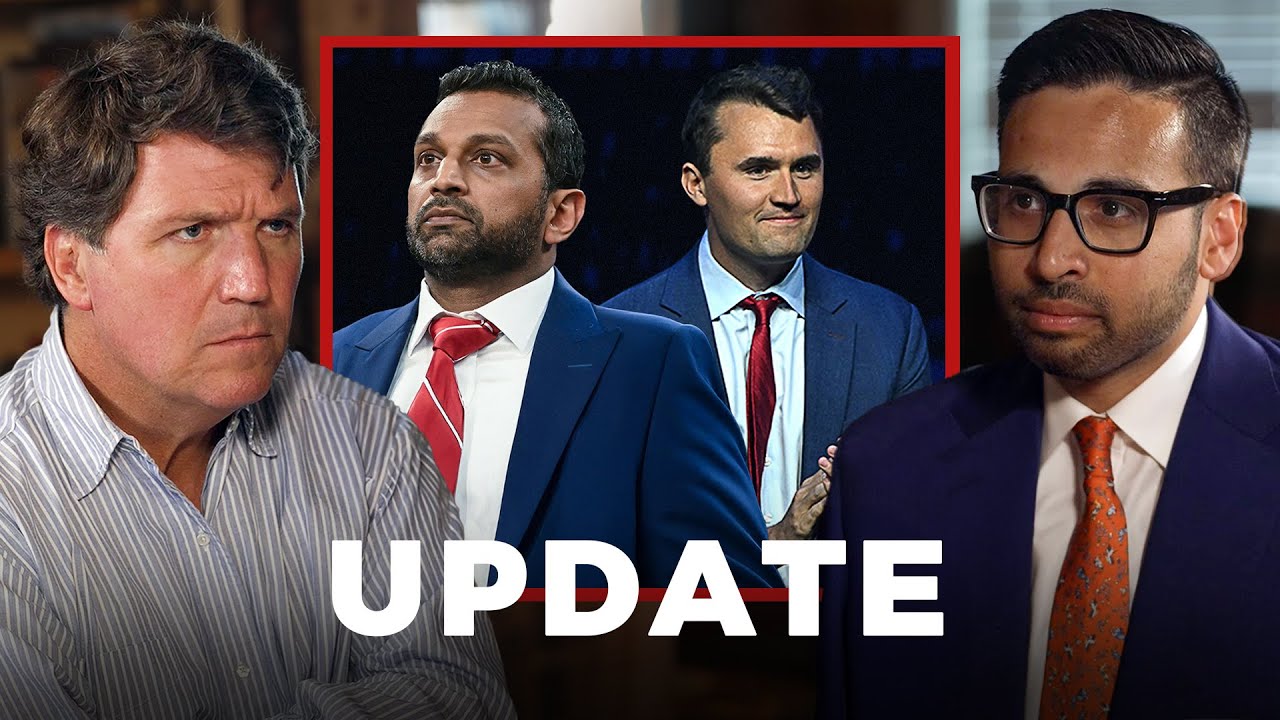
Tucker Carlson Explains Why He Left the Republican Party Over Foreign Allegiance Concerns
Enjoying this? Share it with someone who needs to see it.
Up Next
Matt Walsh Responds to Charlie Kirk's Private Messages About Jewish Donors and Pro-Israel Movement
15:17
Dave Smith Reflects on His Debate with Douglas Murray and the Collapse of Neoconservative Credibility
2:19:14
Tucker Carlson Demands Truth About Charlie Kirk's Death and Condemns Foreign Leaders Exploiting His Memory
10:48
Tucker Carlson Explains Why He Left the Republican Party Over Foreign Allegiance Concerns
Tucker Carlson opens up about the threats he faces, his firing from Fox News, and why he can no longer support the Republican Party. The former cable news host discusses his evolving stance on foreign policy, explaining that he cannot back a political party that prioritizes another nation's interests over American citizens. Carlson addresses accusations of anti-semitism, defends his Christian worldview against racial judgments, and reveals his conviction to continue speaking what he believes is true regardless of personal consequences. After voting Republican his entire life and defending the party for 35 years, Carlson explains what changed his mind and why he believes many Americans share his concerns about political loyalty.
When asked about threats he's received, Tucker Carlson doesn't hesitate to acknowledge them. However, he's quick to clarify that he entered this arena voluntarily and understood the potential costs. Carlson points to his termination after 15 years hosting the highest-rated show on American cable television as evidence that he knew what he was getting into.
"I'm so grateful that I got fired," Carlson states, emphasizing that he's not complaining about the consequences of expressing his opinions. He notes that while threats exist, he views them as part of the territory for someone who speaks publicly on controversial issues.
Carlson references Charlie Kirk, stating his belief that Kirk "was most likely murdered for his evolving views on Israel," not for his positions on other social issues. He acknowledges the high stakes involved: "The world is at stake."
A Duty to Speak the Truth
Despite the risks, Carlson maintains that he has a fundamental obligation to express what he believes is true. He's transparent about his fallibility, acknowledging that he has been wrong many times in the past and may be wrong in the present. However, his sincerity remains unwavering.
"I am sincere. I'm saying what I believe is true and I'm going to continue doing that no matter what," he declares.
The conversation inevitably turns to how his outspokenness affects his family. Carlson reveals that these discussions have been ongoing internally within his large family for more than a decade. While acknowledging that there have been "small and in some a few cases very large problems" because of his public positions, he expresses gratitude for maintaining close relationships with all his children and extended family.
Rejecting Victimhood Culture
Carlson draws a sharp distinction between himself and those who attack him while claiming victimhood. He explicitly states that unlike people calling him an anti-semite or racist, he does not see himself as a victim and doesn't believe victimhood is inherently virtuous.
"I find that whole way of communicating and of covering up crimes disgusting. I don't respect it at all. I think it's feline and really kind of beneath contempt," Carlson explains. He describes the phenomenon of someone threatening another person while simultaneously claiming to be the victim of bias as dishonorable and contrary to American values and the way he was raised.
Breaking With the Republican Party
When discussing the political landscape and upcoming midterm elections, Carlson makes a definitive statement about his political allegiance: he will not support the Republican Party. Equally clear is his position that he won't support the Democratic Party either, leaving him uncertain about his future political involvement.
His reasoning centers on what he sees as a fundamental betrayal of American interests. "How could I or any American voter support a political party that's not loyal to the United States that puts the interest of a foreign country above those of its own citizens?" he asks.
This represents a significant shift for someone who has voted Republican his entire life, worked at Fox News, and spent 35 years as what he describes as a "consistent defender" of the Republican party. He explains that there's no defending the current direction because it's "immoral" and represents the opposite of what a political party in a democracy should do—representing its own voters, citizens, and nation.
"I'm out," Carlson states plainly, adding that if he's out, many other people likely are too. He notes that Marjorie Taylor Greene has also distanced herself from supporting certain party positions.
Redefining America First
Reflecting on the MAGA movement, Carlson admits he never fully understood it. He acknowledges there was a genuine desire among Americans to improve the country, which he still shares. However, he views the phrase "Make America Great Again" as imprecise by design.
In contrast, Carlson champions the phrase "America First," which he notes has been largely retired from political discourse. He finds this concept much more precise: "Just put your own country first as you make decisions as a leader of your country."
Carlson draws a parallel to how a father makes decisions based on what's best for his family, arguing that national leaders should operate on the same principle. He suggests the phrase has been abandoned because decision-makers are now using different criteria—what's best for corporations, foreign countries, or donors.
"That's not just like they're off in the wrong direction. Like that is unacceptable. That's treasonous. It's immoral. It can't continue," Carlson insists, emphasizing that a government calling itself a Democratic Republic cannot legitimately represent interests outside the country.
Addressing Anti-Semitism Accusations
When confronted with claims that his positions amount to anti-semitism and questions about his responsibility for how his audience interprets his statements, Carlson offers a detailed defense rooted in his Christian faith.
"I'm a Christian. I think it is immoral. It's against my religion to judge people on the basis of their blood," he explains. He describes the New Testament gospel as the story of each individual's relationship with God—not a group, but an individual. This forms the essence of his worldview and religious faith.
Carlson states clearly that he opposes anti-semitism as he opposes all forms of racism. However, he rejects the notion that he should apologize for crimes he didn't commit. Instead, he places the burden on policymakers, advocates, and media members who he believes are more loyal to a foreign country than to the United States.
He characterizes accusations of racism or anti-semitism as deliberate attempts to redirect attention from the guilty to the innocent. "I'm just I'm over it. I'm not intimidated in the slightest," Carlson declares.
Speaking Without Fear
Carlson emphasizes his independence, noting that he doesn't work for anybody, has no personal debt, and isn't beholden to anyone. This financial and professional freedom allows him to continue saying what he believes is true and what he thinks the majority of Americans know in their hearts.
He describes the dynamic of being accused of wrongdoing by those who are themselves engaged in questionable behavior as a "classic maneuver"—attacking the accuser rather than admitting fault or apologizing. Drawing on his experience as a parent, he notes that children employ this tactic, but he's not fooled by it.
"I'm not afraid of it. And I'm certainly not going to be intimidated into shutting up because of it ever," Carlson concludes, making clear his intention to continue speaking his mind regardless of the consequences.








Comments
Be the first to comment on this video.