Up Next

Megyn Kelly on Mark Levin's Attacks, Charlie Kirk's Legacy, and Rising Anti-Christian Hostility in Conservative Media
10:46
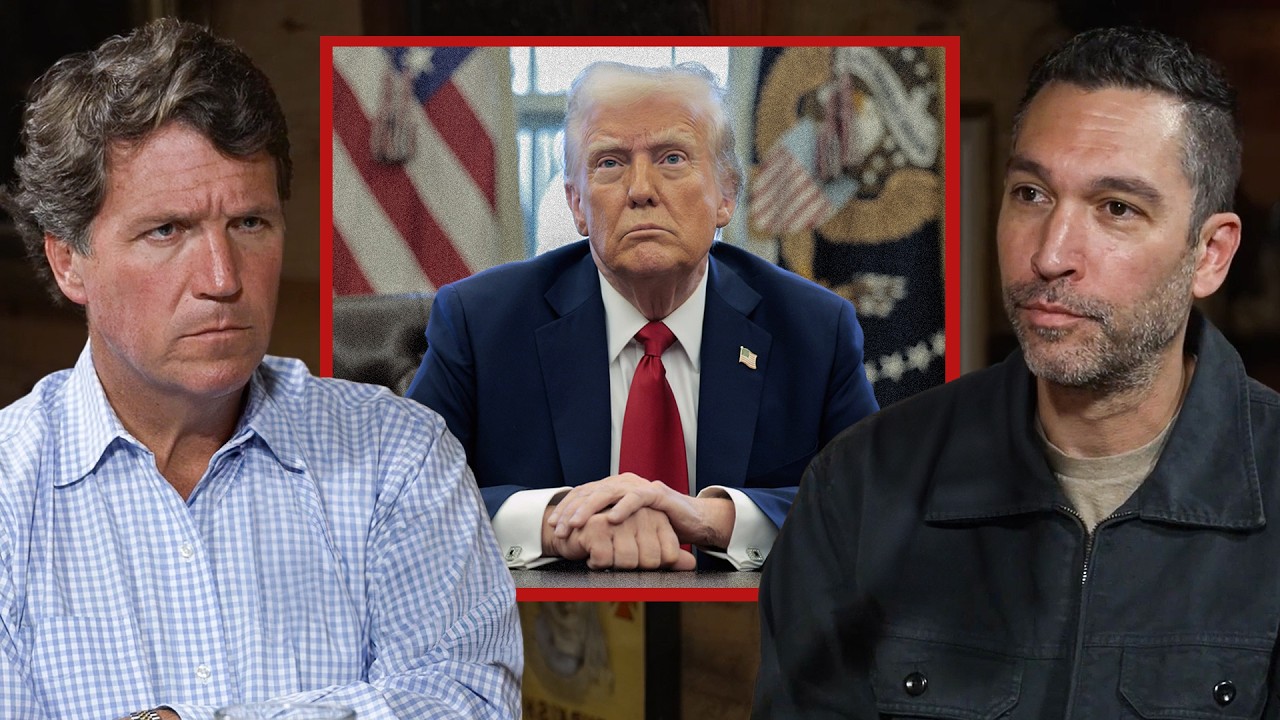
Tucker Carlson on Why Iran War Could Destroy America and Lead to Domestic Terrorism
11:07

Candace Owens and Chris Cuomo Clash Over Putin Intelligence, Biden Leadership, and American Propaganda
9:28
Dave Smith Reflects on His Debate with Douglas Murray and the Collapse of Neoconservative Credibility
Dave Smith sits down to discuss his widely-viewed debate with Douglas Murray on Joe Rogan's podcast, examining what went wrong for Murray and why the confrontation exposed deeper issues within elite expert culture. Smith dissects Murray's opening strategy of dismissing podcasters as unqualified, his inability to counter substantive arguments about Ukraine and Libya, and his resort to accusations of anti-Semitism when challenged on neoconservative foreign policy. The conversation explores how the decentralization of media has shattered the controlled narrative once maintained by corporate outlets, why figures like Murray and Sam Harris respond with such emotion when their worldviews are questioned, and the danger of weaponizing accusations of bigotry to shut down legitimate policy debates about foreign governments and endless wars.
Looking Back at the Murray Debate
Reflecting on his debate with Douglas Murray that took place about a month prior, Dave Smith describes his real-time assessment of the encounter. During the first half hour of the debate, Smith felt that Murray had embarrassed himself in front of the world. Murray opened by chastising podcasters as unqualified to discuss serious foreign policy subjects, arguing that the expert class ought to be the ones consulted on these matters. Smith found this approach ridiculous, especially given that Murray chose to deliver this message on the Joe Rogan Experience, of all places, guaranteed to turn the entire audience against him.
Coming off the COVID years, Smith argues, the idea that anyone would try to convince people they ought to trust the expert class was absurd. Smith knows Murray personally and has always gotten along with him, describing Murray as clever, but clever in a boarding school way. Murray went to boarding school, as did Smith, and Smith instantly recognizes the debate style that involves dropping references suggesting deep erudition that doesn't actually exist. The idea that Murray is an expert, Smith contends, is absurd. Murray is a journalist like the rest of them who has been taken on PR tours in various countries by their governments trying to win his support.
The UFC Fighter Analogy
Smith uses an analogy to illustrate the strangeness of Murray's approach. If two UFC fighters sign a contract, complete their training camps, and show up at Madison Square Garden to fight, but one of them puts his hands down and says he's such a better fighter that the match is ridiculous, it defeats the purpose. They both accepted the debate. They're both there. If Murray truly had such advantages, he should have been able to demonstrate that by destroying Smith on the arguments. Instead, Murray's opening style turned everyone off and set the bar impossibly high for himself. Once they started getting into the actual debate, Murray had no answer for the points Smith was making.
Key Moments in the Debate
Two points in the debate stood out most to Smith. The first came during the Ukraine portion. Murray argued that the real question was why all these countries wanted to join NATO, suggesting they weren't incorporated by force. Smith countered that of course governments would want their defense subsidized and guaranteed by the most powerful government in history, but that wasn't the argument. The argument was why would the United States do this.
Smith presented two pieces of evidence. First, the Nyet Means Nyet memo, in which Bill Burns, later CIA director but then ambassador to Russia in 2008, wrote a private cable to Condoleezza Rice stating that talk about Ukrainian entry to NATO would lead to war. Burns specifically said this was the brightest of all red lines for the Russians and could result in civil war, forcing Russia to intervene, a choice the Russians did not want to have to make. This cable was only known because Julian Assange released it.
Second, Smith cited Jens Stoltenberg, the head of NATO, who said that Vladimir Putin in late 2021 put in writing and sent a draft treaty to NATO saying if they would just guarantee in writing that Ukraine would not be brought into NATO, he would not invade the country. Smith argued that all the powerful people involved were admitting the war was about Ukrainian entry into NATO. Murray's response was simply that the war was not about Ukrainian entry into NATO but about Putin's desires to reconstitute the Soviet Union. Smith felt this was not a response to his evidence, just an assertion without argument.
The Libya Question and Neoconservative Plans
The second key moment came during the discussion of Libya. Murray claimed he was iffy about the war in Libya, though Smith had read Murray's columns at the time and found this claim dishonest. Murray argued the war in Libya was fought because there was tremendous fear that Gaddafi was about to go genocidal, making it a humanitarian intervention. Smith pointed out that now there are slave markets in Tripoli.
More importantly, Smith asked how it could be a humanitarian intervention when four-star General Wesley Clark had said ten years prior that plans had already been made to overthrow Gaddafi. Clark told Amy Goodman on Democracy Now that in 2001 he had seen Pentagon plans to overthrow seven countries in five years. More recently, on Piers Morgan's show, Clark clarified that the plans actually went back to 1991 when he first saw them from Paul Wolfowitz's office, and that they were later revived by Richard Perle in a study paid for by the Israelis.
When Smith brought this up, Murray's response involved a joke about Wolfowitz's name sounding Jewish and a warning that Smith should be careful what he's wading into because bringing up Wolfowitz's name could lead people to hate Jews. Smith was stunned. Murray had no substantive response to the argument. He didn't address why plans to overthrow Gaddafi existed many years before the supposed humanitarian crisis. Instead, he resorted to suggesting that mentioning a government official with a Jewish name was somehow promoting anti-Semitism, even though Murray himself has talked about Wolfowitz as a hero to the Kurds in Iraq.
The Woke Tactic
Smith saw Murray's response as a pure woke tactic, the same kind Murray has built his career opposing. It's the approach of saying that even if something is true, you shouldn't say it because it might lead to bad outcomes. Smith pointed out that this same logic could be applied to everything Murray stands for, like his views on Muslim immigration to the UK. Someone could argue that expressing those views might lead to hatred of Muslim people, but that's not a counterargument. It's an attempt to shut down discussion.
Smith believes the boarding school debate style is all about creating the illusion of knowledge. You drop an Aeschylus quote, cite titles of D.H. Lawrence novels you haven't read, make references that suggest deep understanding you don't actually possess. It's sleight of hand, and that's what Smith saw throughout the debate.
Douglas Murray's Response
A day or two after the debate, as someone who has always liked Murray and known him for a while, Smith's first instinct was that Murray had destroyed his career. No smart person would take him seriously again. It seemed clear that Murray realized this himself. Rather than admitting what he'd done wrong, Murray doubled down and attacked Smith in a New York Post column.
In the column, Murray wrote that Smith, claiming some Jewish ancestry, has spent the last eighteen months since October 7th being very unfunny. The phrase "claiming some Jewish ancestry" particularly stood out. It suggested Smith was a fake Jew hiding behind a cloak of ersatz Judaism. Smith's response is straightforward: his mom and dad are Jewish, he's about 86% Ashkenazi on his DNA test, and he does indeed claim some Jewish ancestry.
But the larger point, Smith emphasizes, is that it shouldn't matter. He's talking about the behavior of nations, countries with militaries and parliaments. The American taxpayer is forced to pay for these things. But even if Americans weren't paying for it, any human being has a right to have an opinion on any issue. This is what the left did during COVID, claiming that questioning the wet market origin story meant you hated Asians, using accusations of racism to shut down inquiry. Now Smith sees supposedly right-wing figures like Murray doing the same thing, saying you can't express an opinion about where your tax dollars go or about people dying or else you're a bigot.
The Danger of Calling Out Neoconservatives
Murray's argument, Smith explains, is that if you call out Paul Wolfowitz or the neoconservatives more broadly, if you point out how they hijacked American foreign policy with Israel's interests in mind, you're creating fertile ground for Jew hatred to rise. Smith reads this directly from the neoconservatives themselves, from their own words, not from critics. Murray's position is that mentioning a deputy defense secretary because his last name is Jewish leads to anti-Semitism.
Smith argues the opposite: what actually leads to people disliking Jews is telling them they're not allowed to call out a government official because his name sounds Jewish. Facts don't care about your feelings, Smith jokes, suggesting someone should run with that phrase. The core question, the only one that matters, is whether something is true.
The Attack on Daryl Cooper
Another revealing moment in the debate was when Murray went after Daryl Cooper, the historian, without even knowing his name. Murray basically called Cooper a Nazi or something similar. Daryl Cooper is one of the kindest, most reasonable, most fundamentally liberal people around, someone you could give your routing number to who would never steal money, someone who if he had absolute power would kill nobody, a truly decent Christian man.
Smith finds it remarkable that Murray was smearing people whose names he didn't know and whose work he admitted he'd never listened to, and doing so right in the middle of an appeal to expertise. If you're going to claim people need to know what they're talking about to have opinions, maybe don't attack someone you know nothing about in the same breath.
Daryl Cooper is brilliant, his work is phenomenal, and he operates according to a simple template. First, he reads everything available on a subject. Second, whenever discussing history, he remembers that everyone involved is a human being who was once a three-year-old child, totally innocent. They grew up in real circumstances with real things happening to them. If you're going to do history, you have to constantly put yourself in different people's shoes, on different sides of conflicts. It's pure empathy.
Cooper's series "Fear and Loathing in the New Jerusalem" covers the period from the 1890s to 1947, from the creation of Zionism to the creation of the state of Israel. Most people only know the history from 1947 forward. Cooper's series actually made Smith much more sympathetic to the Zionists. It puts you in their position, helps you understand these were real men reacting to the circumstances of their day, and it's amazing they pulled off what they did.
Yet here's one guy who says you have to completely educate yourself on a subject and have empathy toward all sides, and everyone calls him a Nazi. Dehumanizing people is supposed to be bad, one of the core lessons of World War II and a foundation of Christianity and any decent society. That's what Cooper is trying to avoid. But no one tries to take apart his factual analysis. It always immediately goes to motive, to calling him a Holocaust denier or claiming he said something he didn't say.
Why the Emotional Overreaction
Smith notices a pattern. He describes things with a certain lightness, even when discussing passionate views. But Murray seemed emotionally overwrought. Sam Harris seems emotionally overwrought. They seem very emotional about all this. Smith suspects one fundamental flaw in atheism is that it doesn't really exist. Atheists think the flaw in believing in God is that God doesn't exist, but actually God does exist and atheists don't. There's no such thing as an atheist. They all have their religion, and whatever your highest thing is becomes your religion.
Almost no one is actually an atheist. When Smith attacks their religion, according to them that makes him guilty of blasphemy. But it's interesting that they're so brittle about it. If you're an atheist, you'd think the stakes would be zero. There's no right or wrong without an authority to determine it. You just cease to exist in the end. So what are you so mad about? Sam Harris doesn't even believe in free will. So what is he upset with Smith about? Smith has no choice but to be a misinformation artist if he's wired that way. And Harris isn't even making the choice to say that.
The bottom line with people like Harris and Murray is that what they've worked their entire career on has been completely rejected, and that's a tough position to be in. Very few people are able to admit their foundational views were wrong and adapt. There's a difference between making some mistakes and having your entire foundation built on hypocrisy and having that hypocrisy exposed.
The Hypocrisy of Identity Politics
Ben Shapiro built a career opposing identity politics as a proud Zionist. Feel however you want about Zionism, but it's identity politics by definition. You could not find a better example of politics built on an identity. Yet Shapiro is out there saying facts don't care about your feelings and identity politics is wrong while his number one priority is this manifestation of identity politics. You can only keep that charade going for so long before someone sees through it.
Smith recalls Bill Kristol, who he worked for for years and really liked and was grateful to. Kristol was a great boss in the 1990s. But Kristol came out against Smith and called him a Nazi without even calling him to talk about it. When Smith called and asked Kristol to lunch, Kristol refused. One of Kristol's criticisms was accusing Smith of advocating for an ethnostate. Of all the possible criticisms, this one is unbelievable. One of them is for an ethnostate, and it's not Smith. You almost can't even respond. People can't hear themselves.
The Media Revolution
We're living through something profound, a revolution in information technology that has led to mass decentralization of media. There are so many shows and different voices now. Smith constantly finds people he's never heard of before who turn out to have seven million followers, bigger than anyone on cable news. The corporate media apparatus of big newspapers and big cable news shows was very controlled. The range of allowable opinion was very narrow, what Tom Woods called the three-by-five card of allowable opinion.
That's been shattered into a million pieces. Now there are voices from all over, some good, some great, some bad, some really bad. But it's much harder to maintain control. The old system allowed them to say things like "even the right-winger John McCain agrees" or "even the far-left activist Nancy Pelosi." Sean Hannity calling Nancy Pelosi far-left is absurd if you've actually talked to or read actual leftists. These different tools of corporations are presented as left and right, but that's over now. It's much tougher to keep the charade going, and it seems to be collapsing fast.
You could be honest about it and maintain some respect, but when they accuse someone of dual loyalty and call that an anti-Semitic trope, it rings hollow. Ben Shapiro has said in his own words that his favorite thing about the United States is that it protects Israel. So he's already saying he has loyalty to both countries, and Smith is not sure about one of those loyalties but very sure about the other. That's not a statement against Jewish people. Smith is Jewish and loves Jewish people. He gets called a self-hating Jew on Twitter, but it could not be further from the truth. He loves Jewish people and many things about Jewish culture have had a huge impact on him and made him a better person. But this is about a foreign government, and Americans are allowed to talk about that.
Glenn Beck and the Crying
Smith saw Glenn Beck have Douglas Murray on recently. Beck wasn't mean to Smith personally, which he appreciated, but the conversation was ridiculous. They were having a conversation about a foreign government, and Beck had previously cried on his show talking about that foreign government. That's weird. We should not be doing that. You shouldn't even cry about our own government, but if you're going to cry about one, it should be ours. No one would even think to cry about our own government. We need to have a real conversation about this.
If you're concerned about young men getting too radical and too obsessed with or against Jews, which is a legitimate concern, it's not good for them, not good for the conflict, not good for the country, then the first thing you have to do is tell the truth. You can't keep lying to people. You can't keep refusing to allow the word "neoconservative." Mark Levin just accused the Trump administration of anti-Semitism for calling someone a neocon. Levin accused Steve Witkoff of anti-Semitism.
The Attack on Steve Witkoff
Steve Witkoff is someone who seems to have the hand of God on him, a thoroughly decent man running around the world trying to bring peace. Witkoff single-handedly helped save twenty Jewish hostages, or at least most of them were Jewish, in phase one of the ceasefire he worked out. Then Israel violated the ceasefire and they didn't get the other hostages back, although thankfully the American was just released. Witkoff has done more to help those hostages than anyone.
Mark Levin, who works at Fox, wrote on Twitter that "neocon is a pejorative for Jew." This was in response to Witkoff saying the neocon element believes that war is the only way to solve things. Levin called Witkoff an anti-Semite. Witkoff is likely Jewish himself, but again, it shouldn't matter. He's American and on the side of peace.
During the debate with Murray, Smith mentioned the neoconservatives and Murray made a play on calling it the n-word. Interestingly, Douglas Murray wrote a book called "Neoconservatism: Why We Need It." For people who don't know the history, neoconservative was their term for themselves. It wasn't a pejorative until the neoconservatives got control of foreign policy and ruined everything. Then it became a term used for any war hawk. Sometimes it's used when strictly speaking the person wasn't a self-identified neoconservative, but it's become shorthand for someone trying to get us into stupid wars.
The original neoconservatives used this name for themselves. They had no problem with the term until everybody started to hate them. Then they said you can't call us this. But it was their own term. You can read their own documents from the Project for a New American Century. You can read the Clean Break memo. They laid out what they wanted their foreign policy to be. There was a quote that many of them loved sharing about how every ten years we have to throw a small puny country up against the wall and show them who's boss. This was their foreign policy: multiple theaters of war in the Middle East to ensure the new century is an American century.
The Clean Break Memo
Anyone can read the Clean Break memo written by Richard Perle and David Wurmser to Benjamin Netanyahu. The break was from the peace process, from Oslo. The memo laid out a plan. Instead of the approach of Yitzhak Rabin and liberal Jews who said we have to make peace with the Palestinians so we can make peace with the broader Arab world, the new plan was different. Break with all that. No land swap. No Palestinian state. Have America overthrow all these other governments. That way Israel never has to make peace with the Palestinians and can enjoy domination over the region.
From Smith's reading, it seems many of them believed it. They thought overthrowing Saddam Hussein would bring democracy sweeping the region, then they'd overthrow Gaddafi, then the Mullahs in Iran, and the region would be better. Except every time they did it, it resulted in nothing but disaster, which could have been easily predicted and was predicted by wiser people. All these years later, you either have to apologize for your role in this catastrophe or defend it and talk about how you still believe it was the right thing to do. But you can't say critics aren't experts and are Jew haters for saying the word neoconservative. That's not an appropriate response.
The Beginning of Something New
If Mark Levin is calling the Trump administration anti-Semitic, calling Steve Witkoff anti-Semitic, we're at the end of something and the beginning of something new. Smith almost called Levin when he saw it because he knows him, but he really loves Steve Witkoff and thinks Witkoff's decency is palpable. His concern for people, his reasonableness, just comes through. The effects of what he's done have been great for America and great for the world.
Smith was offended but thought calling Mark Levin to scold him would solve nothing and would probably result in being screamed at. But Levin isn't stupid. If you're calling Steve Witkoff an anti-Semite on Twitter, you know you're losing. It's such a reckless thing to do. These people lecture Smith about not understanding the gravity of anti-Semitism, but actually he does understand it, which is why he's very hesitant to ever call anyone a bigot or Jew hater or racist. Those accusations intentionally try to dehumanize people on the accusation that they're dehumanizing others.
It scares people. Smith gets texts from people he really loves personally who aren't paying a lot of attention. They just hear there's anti-Semitism and Smith is part of it, and it hurts their feelings. They're confused and upset. It has such a divisive effect. The weaponization of these accusations to shut down legitimate policy debates about foreign governments and endless wars is dangerous, and the facade is crumbling as more people recognize the tactic for what it is.
Video Transcript
Dave, I'm really glad to see you. I know you've been here before, but it's nice to have you back. I am an expert in all things Tucker Carlson. So, um I know you've been asked this a million times, but I I'm coming to this late. Uh like how do you assess um the debate that you had with Douglas Murray? Now, it's been a month. How long's it been? Something like that. Something like a month, right? So, few weeks. Looking back, what was that? [Music] [Applause] [Music] [Music] [Applause] [Music] It's an interesting question. I mean, I think I think essentially it was what everyone saw. It was ex it's it's like my first impression of it. My impression during it during the first half hour of the debate I was like well Douglas just embarrassed himself in front of the world and you felt that in real time. Oh yeah yeah yeah. Well I mean it was you know look it was he was ridiculous and it was uh it was kind of strange to witness as it was happening. I go, "So, you decided to open the debate by just chastising everyone as not being as good as you, that the expert class ought to be the ones consulted, that you I mean, you know, you could argue what he exactly he was saying, but he was clearly saying that you you guys on podcasts are simply not qualified to talk about these subjects." Now, you're saying this on the Joe Rogan Experience. Of all places to go and deliver this message, this is the place guaranteed to turn the entire audience against you. And of course, I just think that um I think it's a it's a ridiculous non-argument that never would have made sense. But coming off of the COVID years, the idea that you're going to convince people that you ought to kind of um they they ought to trust your opinions, they ought to that your class ought to be trusted was a ridiculous, you know, attend that class. I mean, he's not I know Douglas and I think that um always gotten along with him and I think that he's clever, but he's clever in a boarding school way. He went to boarding school um as I did and you instantly recognize it in the way that he debates which is by dropping references that suggest deep air addition that doesn't actually exist. I think he's clever. He's got a kind of bullshitty boarding school vibe to him. Again, that I recognize that I have sometimes, so I'm not, you know, not trying to be holier than now, but like the idea that he's an expert is absurd. He's a journalist like the rest of us who's been taken on PR tours in various countries by their governments trying to win his support. Got it. I've done that, too. Um, but he's hardly an expert on anything. Well, what? Well, also it doesn't look all of this in so the the analogy that I I've used about it is that like uh if you had two UFC fighters that are going to fight, so they've signed the contract, they've done their training camps, they show up to Madison Square Garden, they both get in the octagon and like one of them puts up his hands and then the other one puts his hands down and goes, "You know, I'm such a better fighter than you." And this is ridiculous that me and you are even fighting. It's like okay but we are but we are we're here for it right we both accepted we're both here. So if you are such a better fighter if you have trained so much more if you have all these advantages against me well then you can't just you have to demonstrate that take on the argument you should be able to then destroy me. And so he weirdly opened with this thing where he was going to turn everybody off, turn everyone against it because the style is [ __ ] Even if you're, and I've had lots of people who are pro-Israel reach out to me since then and be like, "Listen, I disagree with you on the issue, but that was ridiculous the way he attempted to argue." Um, because weirdly, number one, you're turning everyone against you. And number two, you're just setting the bar so much higher for yourself. Because now once we start actually getting into the debate, you've already explained that you should be dominating me on every facet of this and yet you're not. And yet actually when it comes down to it, you have no answer for the points that I'm making. And that was the theme of of the entire knowledge either. Yes, that's right. But no, but there was there were two points in the debate that actually stuck out to me the most. Um, and it wasn't the have you been, which is, you know, was the funniest thing that everyone's making that you know, Douglas will be mocked for eternity for, but you know, he made his own bed. Um, but the two points to me that really stuck out in the debate because this is the way my mind works is that I'm like, oh, if you like, give me something g give me something to challenge me on that will actually keep me up at night. By the way, if you were to be like, no, Dave, you got this completely wrong and you need to read these three books to understand why you're missing all this information. Can I interrupt and say I knowing you pretty well I think I mean this I believe I would take a lie detector test and pass. I believe that if you read those books and found that you were wrong that you would admit it. Oh yeah. And I've done this lots of times before. I have I have views from a decade ago that are quite embarrassing. Uh in heights I was at one I was an atheist at one point. I was pro-life. I excuse me. I was pro-choice at one point. Um I've oh god this I was up for open borders at one point. I've been I've had all of those views. had some really bad views over the years and I've changed my mind all the time. You think Douglas would admit if he was wrong? Well, of course not. I mean, that's that's obvious. No, but that's kind of the Look, if you can't if you can get Iraq, Afghanistan, Syria, Libya, Ukraine, and COVID wrong and then with certainty say you're right about the next one and then also tell also arguing that the other person should have some humility. I mean, come on. Like, what is this? So good. It's just too You couldn't write if I just scripted this for you and wrote it on a script, you'd be like, "Take it down and this is too ridiculous. No one would believe this." But regardless of that, so there were two moments that actually really stood out to me in the debate. Um were Okay, so number one was in the Ukraine portion. Number two was in the the Israel portion. So in the Ukraine portion at one point I said to him we were talking about the um you know what led up to the war and so he said something like he goes you know the real question is why all these countries wanted to join NATO I mean we didn't incorporate them in NATO through force and I was like well yes obviously that's the argument isn't that we force the governments willingly wanted to join NATO. I was like, that's pretty obvious why you'd want to be sub you have your defense subsidized and want to have the most powerful government in the history of the world guaranteeing your defense. Sure. And also because they're concerned about the former Soviet Union, which is still Russia and Okay. But I was like, but that wasn't the argument. You know, the argument is why would we do this? And so I I was like, let me just give you two bullet points, right? Two quick arguments. And the two uh quick points that I made were number one uh the net means net memo which of course as you know well you've talked about this a lot you talked about this back on your Fox News show was that uh uh Bill Burns later director of the CIA. Yes. Yes. The the CIA director through Joe Biden's four years who was the CIA director through this entire war up until Trump to turn back over but then the ambassador to Russ in 2008. He was the ambassador to Russia. He wrote a private uh cable to Conda Rice. This was not for the public. This was a private cable that later the heroic Julian Assange released. It's the only reason we know it exists. And he lays out in there that all this talk about Ukrainian entry to NATO is going to lead to a war. And he specifically says that this is the brightest of all red lines for the Russians. And if we keep moving forward, they fear this could result in civil war and and then they might have to intervene. In his words, quote, a choice the Russians do not want to have to make. So, I was like, "Hey, there's a pretty compelling piece of evidence." And then number two, I said, "Uh, uh, Stro Stlenberg, I always say this name wrong, but the head of NATO, Stolenberg, the head of NATO, he said that Vladimir Putin in late 2001 put in writing, sent a draft treaty to NATO and said, "If you just put into writing that you will not bring Ukraine into NATO, I will not invade the country." This is the head of NATO. So, I give him these two points. Okay, there's I could talk a lot more about this, but I was like, let's focus on these two. Seems to me that all the powerful people involved are admitting that this war was about Ukrainian entry into NATO. And his response was, the war was not about Ukrainian entry into NATO. It was about Vladimir Putin's desires to reconstitute the Soviet Union. And I was like, yeah, but what's the response? Like, what's the response to my point? Like, I made a point. You made nothing. You just made an assertion. So there was this one where it's like once you actually get down to it, once you remove all this like you're an expert, you're not an expert, you've never been, what are you watering, what are the you've got no actual argument here because you're not an expert yourself, right? But even that it's like that again just the way I work that doesn't do anything for me. Then you got to have an actual argument otherwise you're not going to persuade me. And I think for most of the the viewers knowledge too and I just refer back to the boarding school thing. It's like the whole point of that style in debating is to create the illusion of knowledge. Like you have an escalus quote sort of, you know what I mean? Or you can cite the titles of three DH Lawrence novels, but you haven't read the novels. You haven't read Escalus. You don't you don't actually have you don't have an original thought that's actually yours. You don't even have the material. You haven't even you haven't even read the books. It's just it's a slight of hand. And uh that's what they teach you in boarding school. Well, the Okay, so then the other one, which some people did pick up on this, but this to me was like actually the biggest moment of the debate, I thought. Um, and and it was sad in a way cuz Douglas Murray is someone who I have some degree of respect for as a smart person. It was kind of sad that he was reduced to this, but so he made the argument. He said um first off he was dishonest where he and I didn't call him I know this but I I let it slide but he goes you know I was very iffy about the war in Libya. It's like I've read your columns at the time. No you [ __ ] warrants. Okay. Anyway, but he goes I was very iffy about the war in Libya but the war in Libya was fought because there was this tremendous fear that Gaddafi was about to go genocidal and it was a humanitarian intervention. And so then I said okay now they have slave markets in Tripoli. is humanitarian. But even but forget even the point that okay, maybe maybe their argument is they thought he was going to go genocidal and they didn't realize it would be so much worse without him. Like what? But I said, "Okay, Douglas, so riddle me this then. If it was a humanitarian intervention, how come I have fourstar general Wesley Clark telling me 10 years prior that we had already made the plans to go overthrow Gaddafi?" Because he said this very clearly to Amy Goodman on Democracy Now. And then I I mentioned that he later uh actually very recently on on Pierce Morgan he clarified uh this is really interesting if people go watch it. Scott Horton uh who is amazing by the way his book provoked is the best book on uh Russia US post collapse of the Soviet Union relations. His book uh enough already is the best book that's been written on the terror wars. So Scott Horton is debating Wesley Clark on Pierce Morgan. And this gets brought up, you know, the fact that you said in 2001 you had already seen in the Pentagon that we were going to overthrow seven countries in 5 years. And okay, so he says he goes, "Well, actually the plans go back to 1991 and I saw them first from Paul Wolawitz's office and then basically the plans got killed and then they were revived uh by Richard Pearl and a study paid for by the Israelis." This was fortar Wesley Clark's comments on it. So, I brought that up and I go, "Well, look, you're going to say that this is a um you know, a humanitarian intervention, but that seems strange because the plans to overthrow Gaddafi were already written many years earlier and then they had their opportunity and they did it. I think it was more than just a humanitarian intervention." And then his response is this thing about how Paul Wolfitz's name starts with an animal and ends Jewish. And it was kind of funny the way you said it, but then he just he went be careful what you're watering there because you can't, you know, there a lot of people are going to hate Jews if you just start bringing up Paul Wolfwitz's name. And I just could not believe, by the way, the end result of that is he had no response to what I was saying. He didn't have a response to why this Wolfwitz has an identifiably Jewish name. you're abetting anti-semitism by bringing it up even though he's a government official who helped get us into this war that killed a million people. Yeah. He's also in other places talked about how Paul Wolfwitz is like a hero in the in uh the Kurds in Iraq consider him a hero because he was the architect of the war that overthrew Saddam Hussein. But like I'm not allowed to mention him because that which is first of all it's just beside the point like forget what this will lead to. What's the truth? That's that's what matters. So, he's of course a very pro Kurdish, I would imagine. Yes. Yes. I'm sure. Yeah. Well, I actually have been there. Oh, have you? Yes, I have been there. And uh and I can say firsthand the most brutal people I've ever met in my life were Kurds. Like, actually, I saw it firsthand. So, I'm not against the Kurds or whatever, but I I it's just interesting. Everyone in Washington, no one's ever met a Kurd. Can't define what a Kurd is, but everyone reflexively loves the Kurds. And I' I've never had strong views about the Kurds, but again, I just want to say I've seen it in action in Iraq, and I was shocked by the Kurdish behavior personally. Yeah. Well, also, you know, it's uh it was all the people who are, you know, were were knocking Donald Trump in his first term when he wanted to pull out of Syria and they were like, "What about the Kurds? We can't betray the Kurds." And then those same people will tell you what a great President George HW Bush was, but we can't betray the Kurds, right? The guy who really betrayed the Kurds. I mean, told them to rise up against Saddam Hussein and overthrow him and then decided, "Ah, we're going to back off that and just allowed them allowed them to get slaughtered, you know, but and look, I mean, it was just kind of blatant. It's like I'm presenting an argument and you're responding with a pure woke tactic." Exactly. A pure woke tactic to say, which I, as I mentioned to him, I go, "But wouldn't this apply to everything you stand for?" I mean, everything you stand for about how we shouldn't have so much Muslim immigration into the UK. Okay. Well, someone could take that and that might lead to a rise in hatred of of Muslim people. But that's not a counterargument. That's not an argument. That's like, well, okay. Well, then maybe you could say you should also add in there, I don't mean all Jewish people are guilty of some conspiracy, but that first of Jewish and he's not. So, like, what the hell are you talking about? You said you're Jewish. So that gets me to I mean I don't think you've convinced Douglas that you're Jewish. So um true I saw that and read the commentary after and as someone who's always liked Douglas um and known him for a while. My first instinct was wow he just destroyed his career like he's done. Um no smart person will ever take Douglas seriously again. And I don't I don't know if he felt that way but it was clear by a day or two after he realized he destroyed his career. And in response, rather than admitting that and admitting what he'd done wrong, he attacked you. Really kind of doubled down in the New York Post. I want to read this cuz I was offended by this. Um, he goes, "The whole column is an attack on you." And I'm quoting, "Claiming some Jewish ancestry, Smith has spent the last 18 months since October 7th being very unfunny indeed, claiming some Jewish ancestry." Now, I'm not really sure. Well, I'm just going to I don't know why that just Oh, well. So, what do you claim some Jewish ancestry? I uh my mom and dad are probably the big ones. Uh but I do I do claim some Jewish ancestry. Um, but yeah, it's it's I mean it was so well first of all I joke which I'm not even the f cuz everyone made this joke already about the art, but he says I haven't been funny and I just Douglas has never been to one of my comedy shows so he should come and check it out and then he could tell me what he thinks. I think I'm pretty damn funny in my shows and the audience seems to think so. But I guess you're Jewish ancestry. You claim first of all he suggests that you're like a fake Jew. Yeah. Yeah. Claiming some Jewish ancestry. It's like you're hiding behind a cloak of Ursat's Judaism, which is in a way um you know, one of the things that I thought was so interesting about the piece uh was that and I couldn't imagine, man, I hope I'm never this person. Um because even now, right, like there's so there's so many shots I could take at Douglas, but even when you ask me about the debate, like my first instinct is to go like, well, look, here are the points I made that he didn't have counters to, cuz I'm about the argument, you like that's what actually matters and it's it's tough for all of us because there is as as you know well you've talked a lot about this right but it's like in this kind of show business news world where we're talking about events and things that matter but also there's a camera on us and we're talking on a microphone and we're we're public people and so it's kind of impossible to completely remove your ego and your own narcissistic tendencies from that but like you got to keep reminding yourself like yeah but there's a [ __ ] war going on like that's what actually matters. All of this is much less important than like the actual policy. So you try to focus on that. But I could not imagine writing an article about a debate that I had just been in where the reaction was so unfavorable toward me. And in the piece, what you might notice is he does not take on a single one of my arguments. He does not point out something that I got wrong. He does not say Dave argued this but this is so clearly a reflection of his lack of knowledge on this subject because he didn't account for X Y and Z. It's just once just like the actual debate. He would only debate me. He wouldn't debate the topic. We're always looking for cool companies that make products that make you feel better. And that's how we ran into Bond Charge. Bon Charge offers a wide range of products that improve your physical condition, help you sleep better, perform better, and center your mind, recover faster, maintain energy, etc., etc. They make blue light glasses, red light therapy, a lot of different products like this, and they help you address the trials of modern life effortlessly and naturally. Now, one of the things they make is a sauna. We could go on and be boring about sauna. Take one every single day. Bunchar makes a sleek infrared sauna blanket. It's got a similar effect to a finished sauna, but without the intense heat. It's an easy and comfortable 30-inut session you can enjoy while relaxing with your family, talking to people, reading, and it leaves you feeling refreshed and slightly euphoric, but in a good, healthy way. It's a great addition to your wellness routine. You may even drop a few pounds doing it. Bon Charge ships worldwide. Bond Charge is B O N C H A R G- E offers free shipping and allows for easy returns and exchanges. So go to bondcharge.com/tucker. Use the coupon code Tucker to save 15%. So why do you think he did it? I mean, he was basically It felt to me like he was sent on a kamicazi mission. That's the way it looked here. The guy just flies into your aircraft carrier, doesn't sink it, but it destroys his his plane, his career. I don't get it in a sense. I don't know. I don't think Douglas Murray destroyed his career. I think he destroyed his reputation. And so his reputation amongst the people, but his career is actually going to be fine. Much like Camala Harris's career is actually going to be fine. And I don't know, you know, I'm I'm speculating a little bit uh with this cuz there there really there was not almost any interaction off the podcast. Like Douglas Murray showed up five minutes later we were recording. He left immediately afterward and me and Rogan hung out for a so like there's nothing more that the viewer didn't see that I saw really hellos and goodbyes. Um but I think number one of my my guesses I'm speculating here is that he just didn't uh wasn't really prepared for me and it was like oh some a comedian will be on there and maybe he came in kind of confident that like he'll be able to handle me. I've had that happen a few times in in my career. I think it's happening less. I can't imagine he didn't like look into me before the debate, but maybe that's possible. But the feeling that I got as it was going on was kind of okay. I do you remember you I'm sure you do. You remember very well when Camala Harris was running for president. I know that seems like a long time ago, but that actually happened which is really crazy. It's like a dream sequence. Now, it's not just that Dick Cheney and Liz Cheney endorsed her, but she started bringing Liz Cheney out to campaign events and campaigning with Liz Cheney. Now, if you were just looking at this on paper, you'd go, "Okay, what demographic of voters is this for?" And you'd very quickly realize that that demographic doesn't exist. No. Are the leftists? They still remember her last name as Cheney. And especially with the the year that had preceded that, like they're kind of anti-war again and they're not really into like the idea of we've got a Cheney on our side. It's not going to win you. It's not going to get out your base. And then on the other side, I mean, she lost by like 50 points in her congressional run. I mean, she's it's not like you're bringing Republicans in. And so, I think the only thing you could conclude is that, oh, this isn't actually for the voters. There's somebody else who Camala Harris is talking to here. There's a power source that may be a little concerned about her and she's trying to let them know. Don't worry, I'm good for business. I've got Liz Cheney right here. That's kind of my assumption. It seemed to me with the Douglas Murray thing, he wasn't playing to the audience. He certainly wasn't trying to persuade Joe. No, he perhaps was talking to a different audience, which will make sure that his career is just fine going forward. That's the sense I got. If you want to make people paranoid and hateful, act like that. Well, again, look, there two things that I I really want to make sure I express. number one with the thing where he's this this claim some Jewish ancestry thing which by the way would be I think if you were to ever do this to say like a Jewish person who was on your side you would be like well that's a pretty anti-semitic thing to do right to like challenge their Jewishness because they disagree with a policy but what does your Jewishness have to do with it anyway well right that's the whole [ __ ] point and that you know it does I think it's basically like this I think that particularly when it comes to the Israel stuff, a lot of these guys don't know what to do with me. Because typically, as every American who's ever criticized Israel knows, you get labeled as being a Jew hater. Oh, you must be anti-Semitic. That's why you would say something like that. Like remember that horrible uh anti-semite Pat Buchanan who said that the Israel lobby wanted a war in Iraq? She just hates Jewish people. Like even though we all know that's true, when you say it, they go, "You're an anti-semite." That's like the game that they play. That's much tougher to do when you're talking to someone who's Jewish. And so in a in a sense that ends up being kind of a shield against the accusation. And so they want to remove that shield so that you don't have But the bottom line is that no one should have that shield. And I am Jewish. My mother and father are both Jewish. I am I think I was 86% Ashkanazi Jew on my DNA test. I think that's enough. But uh the point is it shouldn't matter. It shouldn't matter at all. You should anybody I'm talking about the behavior of nations by the way. Nations with militaries and parliaments, congresses, like these are countries and I what does this have to do? I mean well first of all and this isn't even the most important point but the American taxpayer is forced to pay for this stuff. So, but even if he wasn't, even if you didn't have to pay for it, if you're a human being, forget even an American. If you're a human being, you have a right to have an opinion on any issue you want to have an opinion on. This is what the left did during co. It was like, wait a second, it seems like this came, you're telling me it came from a penglin in a wet market, a fish market, a mammal sold in a fish market somehow, you know, was the genesis of this virus. But there was this level three bolab like a mile away. Maybe that was a source and they're like, "Ah, you hate Asians." It's like, and they claimed racism, so you couldn't pursue that line of inquiry. I see people like Douglas Murray, supposedly on the right, and there are a lot of others like Douglas Murray saying the same thing, like you can't you can't express an opinion about where your tax dollars go or about people dying or else you're a bigot. How is that different, right? Well, no, it's not. It's the same thing. It's the same kind of pathetic um tactic where if you can't if you can't argue against someone's ideas, you just say, "Oh, you're a bad person and that's why you have these ideas to begin with." It's it's a a very it's a very lowgrade like social psychology attempt to shame someone out of having the the views that they have. Um and yeah, it's exactly it's it's what the woke did on everything. It's no matter what it was. If anytime is a I don't I can't remember who coined the term but uh is a racist is anybody winning an argument against a progressive. Exactly. You know, it's that's it. And so he's doing the same thing. But then the other thing which is is really separate and secondary from that. But the argument that Douglas Murray is making is that if I call out Paul Wolawitz or even, you know, more broadly speaking, if I call out the neoonservatives, um, and how they hijacked American foreign policy and how they very much had Israel's interest in mind, which I I get from reading the neoconservatives. I don't get this from reading critics of them. It's from their in their own words, right? He'll he's saying me calling that out is fertile ground for Jew hatred to rise. And it's like, no, what you're doing is fertile ground. What you telling me I'm not allowed to call out the deputy defense secretary because his last name is Jewish. That's that's actually what leads to a rise in people not liking Jews. Couldn't agree more. And I do think Douglas, though he's not an expert or a genius, is smart enough to understand that, but he did it anyway. Yeah. And I don't know his motive, but in the moment that I think made me actually turn it off, I had to stop watching. Um, but it was most revealing of all is when he goes after Daryl Cooper, the historian, really one of the great historians of the United States, Daryl Cooper. Um, and doesn't know his name. Yeah. And but goes after him personally as like a Nazi or something. And let me just parathetically, and I'll shut up after this, but Dale Cooper is one of the kindest, most reasonable, most fundamentally liberal people I know. anti-Nazi people, you know, a guy who you could give your routing number to would never steal money. Yeah. A guy who, if he had absolute power, would kill nobody, like a truly decent Christian man. Basically called him a monster and didn't even know his name. And so that suggested to me that he was like briefed by somebody before, make sure you get in this Holocaust, which he's not, Daryl Cooper. Like what is that? Well, it's also, you know, if you're if you're smearing people who, which and Daryl wasn't the only one, but if you're smearing people whose like names you don't know and who you admit you've never listened to any of their their work, maybe don't put that right in the middle of an appeal to expertise, you know, like like maybe don't maybe have that in a different section than in the section where you're going, you really have to know what you're talking about in order to have an opinion on these things. And so that didn't that didn't work out very well. Dude, Daryl is a is an amazing guy. He is brilliant. His work is phenomenal. Um I know him personally and he's like genuinely a great person. He's a humane man. Yes. And it's it is something it's a comment on our time and on our society that the guy who essentially if you if you actually consume any of Daryl's work as I have consumed a lot of it basically Daryl's whole kind of um his template the way he operates is he's uh there's basically only like a couple rules and like number one is he has to read everything that's available on the subject. So he reads everything. The guy's a machine. His his depth of knowledge is like second to none. He just knows everything. And then number two is whenever you talk about history, basically his rule is that you have to understand that everyone involved is a human being, every one of them was a three-year-old at one point. So like totally innocent, like good little boy, like my three-year-old that I have at home. And that they grew up in real circumstances and real things happen to them. And if you're going to do history, you have to constantly be doing your absolute best to put yourself in this person's shoes and then put yourself in this person's shoes and then put yourself on this side of the conflict and then put yourself on this side of the conflict. That's basically it. He It's pure empathy. Like all and actually um as I've mentioned to you personally and I've told Daryl this personally, he is probably the best shot people have at dradicalizing people in in the worst form of being radicalized. He's the guy, listen, for me personally, and I thought I was pretty well read on the history of of Israel Palestine. And he has this this incredibly long series, like a 30-hour series called Fear and Loathing in the New Jerusalem. And like the thing is, I knew most of what I knew, not all of it, but most of what I had read about with the Israeli Palestine conflict, like most people, was like starts in 1947, 1948, and then goes up to today. his series is about it's like from the 1890s until 1947. So he's talking about the creation of the state from Zionism being created to the state being created and going rehearsal to Bengurian. Right. Right. Exactly. That's that's basically the the whole, you know, he has a little bit where he's talking about the pgrams that preceded, you know, the Zionists, but that's really the the story. And it actually made me much more sympathetic to the Zionists. You know, as somebody who grew up kind of in that propaganda, in the pro-Israel propaganda, then ultimately turned on it and became a critic of Israel. Listening to his series, you understand. It just puts you in the position and you do understand like, oh, okay, these were real men who were reacting to the circumstances of their day. you can kind of understand why a lot of them wanted to do this. By the way, it's pretty amazing that they pulled it off. However you feel about however you feel about what the government of Israel is doing, it's amazing that they did this. And yet, look, and of course, for the one, this is why I say it's a comment on our time. So, there's one guy here who's going like, "Listen, you got to like really completely educate yourself on a subject and then you have to have empathy toward all sides." And then everyone goes, "Nazi? That guy's a Nazi." I mean, that's what it is to be a Nazi in 2025. It's just so funny. I'm too old for a lot of this stuff. And so, I thought, you know, among the many lessons, great lessons of the Second World War that I I mean, I grew up marinating in, you dehumanizing people is bad. Treating them like treating human beings like they're not human is bad. And I I still believe that. I think it's the core of Christianity. And but it's also just the core of any civil society, any decent society. And that's what Daryl is trying to do. Yeah. And I don't know that I've ever heard anybody try and take apart his his, you know, factual analysis. It's always it always immediately goes to motive. You're a Nazi. Shut up. You're a Holocaust den or just claim, right? Or claiming he said something that isn't at all what he said. Like he downplayed the atrocities the No, he didn't. It's also um but but why why should Daryl Cooper um and by the way a number of my friends, people I really like have been involved in this like their authority has been marshaled to destroy Daryl Cooper and I grieve to see it cuz it's you know they're paid to do it and it's so degrading to them and dishonest and sad. But why? Daryl Cooper's like this one guy living in the Pacific Northwest. Why spend all this time and energy to destroy him? Well, I love uh you said this um I forget a few years ago. I can't remember what it was where you said this, but it was you and I this really hit home with me. And this isn't like and you weren't suggesting that this is like a proof. This isn't like a like a a irrefutable logical argument. It's kind of like a guide, but you know, you said the thing about you could tell when something's infected because you touch it and you recoil and you go, "Something's going on there." Now, what exactly is it? Now, it's that doesn't prove what's going on, but look, you can't. The fact that Daryl's moment on on your podcast sitting right here where I'm sitting got such a reaction Yes. really demonstrates something like something and and you see that it's like, oh, you touched on like a third rail. Oh, hurt dog barks. Yes. Well, and and in the same way when you uh had first uh questioned the morality of dropping nuclear weapons on on cities and then there's this big freak out over that and now nobody here has said, "Hey, the Nazis were the good guys. The Nazis didn't commit any atrocities." No one's even downplaying no one even made the argument that I remain anti-Nazi for the work for the record. But I'm saying like no one even made the argument that like it was 5.9 million, not six, you know, like there's nothing this this topic hasn't even been broached. No, but what what you are attacking is really the underpinning of the origin story of the American Empire. Exactly. And that's what you're not allowed to question because and you see it the way every every defender of every war, including the current one, if you can call it a war going on in Gaza, I'm not sure war is exactly the right term to describe it. destruction of of a captive people. Um, but every single person who defends it will always invoke World War II at one point. Not even arguing that like not even making an argument that this is why it was justified in World War II. Just like we did it in World War II. We did it in World War II and we're the good guys. So good guys are allowed to slaughter entire peoples. You know, it's like it is the and and look, even if you even if you accept the official World War II story as being completely correct, it's still something that's used to justify all of these other indefensible wars. Every war of my lifetime, and I doubt too many people really want to defend the ones in between World War II and when I was born, you know, like I I don't think anyone's going like, "Look at Vietnam. It did such a great such a good thing that we did that." and those who are attempting to defend it are pathetic. But, you know, Iraq and Libya and Syria and Afghanistan and um even the ones when I was a little kid, you know, Serbia, every one of these guys they always said was Adolf Hitler. Mallich is Adolf Hitler. Saddam Hussein is Adolf Hitler. Gaddafi is Adolf Hitler. Noriega is Adolf Hitler. Every bad guy has always been It's like they use this model to justify. You're only ever allowed to learn the lesson in history that's like Chamberlain was an appeaser, appeasing bad. Exactly. Confrontation good. As if that's as if the lessons of history are that aggression is always correct. Trying to work out a deal is always wrong. Yes. And that's why I think it's so important to attack that narrative. Yeah. And from my perspective, it's like not even about principle as much as it is effect. If what we're doing was working, then I I guess I wouldn't be interested in, you know, analyzing it so critically. But it's not working. It hasn't worked for the West, which I love. It's where my ancestors are from. It's where my children live. So, it's like, I don't know. I think it's fair to ask like, how did we get here? It's all falling apart. Why? And maybe the assumptions were bad. And what are those assumptions? Well, they're rooted in that war. As you said, it's just interesting that anyone would want to defend that. Like, I don't really I still don't get the motive. Maybe I never will. Like, why would you want to defend any of that? Why would you want to defend Dresden or Gaza or any things that America did? By the way, it's not attacking not it's not attacking Israel. It's I'm attacking the US government, which I pay for, which my ancestors helped build. Like, yeah. Why Why would you ever want to defend bad things? Well, it is um you know there there is a tendency by people who if you're if you're pulling away like the underpinnings in someone's entire worldview, they usually get very defensive. You're right. You're totally right. I've been there, by the way. I've been there. So that I have felt defensive when I first heard Alex Jones question 9/11. I was outraged by I was totally outraged by it. And so I in a in a reflexive stupid way. Well, I remember um just because I was like very um on I was very on board with the Ron Paul presidential campaigns. This was my like radicalizing moment was was Ron Paul running for president and I remember that you were hosting the uh the event that he had. I can't remember what it was called but very well. It was the Rally for the Republic. The Rally for the Republic. I should have 2008. I was the MC of that. Yes. So at the time it was a really big deal for us that we had you mcing it and because it was like Ron Paul was getting blacked out in all the the you know mainstream media as we used to call it at the time. Uh, and but we had Tucker Carlson. We had like one of the big players in that world hosting the event and I remember um when you walked out well you it I saw like an interview with you where someone was like hey why did you walk out of that event and you were like I don't know man the the saying 911 wasn't inside job stuff was just a bridge too far for me and honestly I totally understood that at the time I was just pissed off at um Jesse Ventura cuz I was like come on dude we actually got like a chance here to make a mark and then you're going to go you know start spouting out with these conspiracies He believed it. I mean, I think Jess, even just a whole rabbit hole I won't even go down, but I think I don't know what happened to that guy. Sure is a very flawed guy. Um, for sure. We're all flawed people. I'm a little less judgmental than I used to be. Um, now that I know the depth of my own shittiness, but which I think is important. Yeah. Meditate every day on your death and your own flaws and you'll be a happy person with better perspective. But, um, I I shouldn't have done that. I don't I don't know why, you know, was so my views are so different. But anyway, the point is I understand what you're saying. Well, it's also that you you know, it's not even it's not even necessarily that you would have to like all these years later be convinced that he was right. It's just I think after so many years of seeing how evil the our government actually can be that you go like, "Okay, I'm listening. All right, fine. I I dismissed that out of hound, but now I'm more or how about the only question that matters is whether or not something is true." Yeah. And another way to put it, a phrase that I've coined in and make copyright is facts don't care about your feelings. That's a good one. You like that? Someone should really run with that. You could get a long way. You could get like a special deal with Facebook on that on the basis of that. Um but uh but but I actually agree with I agree with that, right? And I agree. I don't think you should hurt people's feelings on purpose, but I think the the core question, the only one that matters is is something true. And I know that you share that. And that's why and I I hate to beat up on poor Douglas who's like a sad a sad character, but he had this line in here. Oh, this isn't Sorry, I never go to my notes, but I'm No, I This is from a guy called Sam Harris. I'm loosely familiar. So, one of the easiest decisions you're going to make this week is to make your home secure with Simply Safe. The moment you arm your system, your family, and everything you work for is protected, and you can focus on what matters. You can leave the house without worrying that someone is going to break in and steal your stuff, violate your sanctuary because the best security system in the country is watching. Millions of Americans use Simply Safe and enjoy the peace of mind it creates. Now, a traditional burglar alarm only goes off when someone breaks into your house. That's not good enough. Smashed a window, was already in your basement. Simply Safe prevents burglaries before they happen. It's got AI powered cameras and live professional monitoring agents, so it leaves nothing to chance. Plans start at about a dollar per day, plus a 60-day satisfaction guarantee, or you get your money back. Check it out at simplysafe.com/tucker. Go to simplysafe.com/tucker to get 50% off a new system with professional monitoring and your first month free. That's simplysafe.com/tucker. There is no safe like Simplysafe. So Sam Harris, um, wow, he doesn't care for you at all. or it looks like me either, but whatever. I'll ignore the stuff about me. I'm not even exactly sure who Sam Harris is, but um a sad atheist guy, but he describes you as a pure misinformation artist who lies as freely as he breathes. And I just thought as I read this, you can say, you know, Dave Smith, I don't know, whatever. But I I feel like that's the opposite of the truth. I feel like maybe you lie under duress, but in general you you are like very focused on what you think is true. Well, I mean, again, I just feel like it's a I I benefit in a way from us having this conversation like after co and after kind of all of these insane things that Okay, so Sam Harris, what did I get wrong? Like I don't think that if you're gonna if you're gonna smear me as I'm being a misinformation art, which I you know I'll take that to I should make t-shirt t-shirts about misinformation artist. I'll take that. Pure misinformation. Pure misinformation. Everything you say is a lie. It's like breathing to you. Dude, I got I got called that throughout all of CO and I was right about everything I was saying. So keep calling me this. Okay, fine. Make an argument. What have I said that's wrong? Why does he Why is he so mad at you? Oh, he Well, Sam, he's a rationalist, right? Oh, yeah. Yeah. He's the guy who uh defended the war in Iraq and torture and uh fell for the Russia gate [ __ ] Thought Trump was a Russian spy, fell for lockdowns and vaccine mandates and all this stuff. So, I'll put my misinformation track record up against Sam Harris's, you know, whatever. I mean, I know he's got a meditation app or something like that, but did you see the Tim Dylan thing the other day? Oh, so dude, it's so great. That was like I texted him. I saw that funny. He Tim Dylan the brilliant comedian. Think about how Sam Harris is a meditation app. I didn't even know that. So by day he's a he's a meditation guru and by night he's encouraging like carpet bombing of children. I mean it's just on it's just too ridiculous. and you know all you know all of these guys it's it's sad in a way because they're it's you just you can't contradict yourself on what your entire like purpose was for your entire career without some people noticing and that's kind of what's going on with all these why the emotion so I notice it even now in our conversation you are there's a lightness to the way you describe things um you obviously have passionate views But you don't seem emotionally overroought. Douglas seemed emotionally overroought. This guy Harris seems emotionally overroought. They seem very emotional. What is that? Well, I mean, I would say that um kind of ironically, although not really actually ironic, and this kind of goes to, you know, the conversation that you and Brett Weinstein were having the other day, who I really love Brett. I think he's he's great. Um, I'm on your side of that debate. But I think one of one of the fundamental flaws in atheism is that it doesn't really exist. Yes. They think that's the flaw in believing in God. No, they see they think they think the flaw in believing in God is that God really doesn't exist. God does exist. What doesn't exist are atheists. There's no such thing. So true. And you could even get into an like maybe if there was such thing as atheists, it would be a good thing to be one. But there aren't. They don't exist. They all have their religion. And it's it's almost it it's almost by definition that whatever your highest thing is becomes your religion. Um I don't know if it's quite by definition. And I suppose it is it is theoretically possible to be an atheist, but almost no one ever is. And so what you're seeing is just that, you know, I'm attacking their religion and according to them that makes me guilty of blasphemy. But it's just so interesting that they're so brittle about it. You'd think if you're an atheist, you'd be like, does it really matter? I mean, there's no right or wrong obviously cuz how can the authority on that? Well, there is no authority. So it's all just a matter of preference and in the end you just cease to exist. And so the stakes are zero. So what are you so mad about? Like why do you care? You'd think everyone would be like, "Well, how I'll take it a step further. Sam Harris does not believe in free will. So what is he upset with me about? I have no choice. I have to be a misinformation artist. This is what I'm I'm wired to be a misinformation artist. Right. So what are you upset with? And he's not even making the choice to say that. listen anytime and this was one of I again I really really like Brett but I think one of the the areas where he failed kind of in that uh conversation with you in that you know very friendly debate is that he had to say several times throughout it yes I live as if what you're saying is correct but I view things this way so yes I'd much rather live but if your if your like thesis involves you having to engage engage in a performative contradiction, then something's not right with your theory. And so Sam Harris will sit here and say, "None of us have free will, but I'm still going to act as if all of us have free will." You've got a major flaw in your theory that like this is just too much. This is this is too f you can't do that. That's not right. And so yes, again, with all of them, the the bottom line, I think, with a lot of these people like and some have adapted better than others. I think Brett's one of the ones who's really adapted well from like the old academia world to this new podcast world that we're in now. But I think the problem with a lot of them like uh like Sam Harris and and I think Douglas Murray too is that what they've worked their entire career on has been completely rejected and that's a tough position to be in. Um but it's not really I mean I spent my whole life in cable news. It you know obviously is in terminal decline. And I had all kinds of views that I argued for passionately that were totally wrong. I admitted it. I gained perspective and humility humility in admitting it. You're just a human being. Yeah, but that listen, you that may have happened kind of naturally for you. I'm just saying when you run it on scale, very few people are able to do that. It's not hard. It's it's it's the only act of liberation that's really possible in this life is freeing yourself from like the lies. And the number one lie is I'm God. Yeah. And like I'm omnisient or the, you know, was perfectly wise person, whatever. It's like, you know, you make mistakes. You're you're a ridiculous primate. It's a little fur. Like, just admit it. There's just there. Look, you got some things wrong. Yeah. But there's a difference between that and your entire foundation being built on hypocrisy and that hypocrisy being shown. You know, look, I mean, you can't make this stuff up, right? Ben Shapiro built a career opposing identity politics as a proud Zionist. Yeah. You listen, feel however you feel about Zionism. It's identity politics. Like, like that is the definition of you could not find a better example of a politics built on an identity. And yet you're out here saying facts don't care about your feelings. Identity politics is wrong. And then while you're saying that, your number one priority, I know, is this this manifestation of identity politics. You can only keep that charade going for so long. No, it's totally true. before someone sees through it. There's something in people that the the lowest part of people that instinctively accuses others of doing what they're doing. And I've never really I man I don't that's the one thing I don't want to be is a guy who does that but I remember Bill Crystal who I worked for for years and really liked and was grateful to and he was a great boss in the 90s um and came out against me and called me a Nazi and all this stuff like without calling me by the way I called him and asked him to lunch he refused he wouldn't go to lunch with me end of our relationship but one of the criticisms against me I'll never forget it when I realized this phenomenon was real was when he accused me of advocating and I'm quoting for an ethnostate Now, I have a lot of flaws. They're all in display. I've never wanted an ethnostate. And it's like, wait, one of us is for an ethnostate, and it's not me. But you just said that like of all the possible criticisms. It's just too unbelievable. I mean, it's like unbelievable. You're crystal accusing me of wanting an ethnostate, but you like you just like you almost like don't even you can't even respond. You just have to go like, "Hey." It's like I I didn't say anything. I was like, "Okay, right." Yes. You know, I people can't hear themselves. I mean, you know, when people get old, they you know, they tell the same stories and you just, you know, when you love them, you're indulgent. But I I just hope that doesn't happen to me. I hope I don't lose all self-awareness to the point where I've got like lunch on my chin and like accuse other people of doing exactly what I'm doing. Exactly what I'm doing. Well, you're going you have lunch on your chin. Like you, you know. Yeah. That's you don't want to be there. I don't want to be that guy. Um, and I think that there's like look, obviously like we're we're living through something, you know, we're probably living through several things that are very profound, but one of the most profound things has been this revolution in in um information and the technology and this it's led to this like kind of mass decentralization of media and where there's now like there's so many things and shows and different voices, you know, we I find people all the time who have never heard of before. You know, I'm sure you've had this experience, too. You'll find someone you'll be like, "Oh, that guy's actually really smart. People should know about this guy. How many followers? 7 million. Oh, he's got 7 million. Oh, he's huge. Like, I just found some guy who is bigger than anyone on cable news. And I didn't even know he existed, you know." And so now it's just because of this dynamic there aren't you know as you know the the corporate media apparatus like big newspapers and big cable news shows and was very controlled very controlled the range of allowable opinion was very narrow it's what uh my uh my good friend and brilliant historian Tom Woods uh always called the uh was it the the 3x6 card of allowable opinion you know you get this area of allowable opinion and then that's where the conversation takes place. That's been shattered into a million pieces and now there's voices from all over the place and some good and some great and some bad and really bad. But it's just much harder for people to you know that control existed so that you don't get exposed so that you don't get expos so that you could go like look even the right-winger John McCain agrees or even the far-left activist Nancy Pelosi I mean it's like dude have to hear Sean Hannity goes the far left Nancy Pelosi it's like how many leftists have you actually talked to in your life how many leftists have you ever read you think Nancy Pelosi is a far-left it like really they got her vineyard in Napa. All these different, you know, these different tools of corporations are left and right. But so that's over now. And now I think it's just much it's much tougher to keep this charade going. And it seems to be collapsing so fast. Yes. Yes. And it's not again, you could you could be honest about it and and kind of maintain some of your respect, but the the truth is that like look, even when they'll say these things like if you if you accuse Ben Shapiro of having dual loyalty, they go, "Well, that's an anti-semitic trope. That means you hate the Jews." But then he'll sit there in his own words and say, I forget his exact quote, but it was something like, "My favorite thing about the United States of America is that it protects Israel." And so, you're already saying you have loyalty to both of these countries. In fact, I'm not so sure about the one of the loyalties, but I'm very sure about the other one. And that is not I'm sorry, that's not a statement against Jewish people. I'm Jewish. I love Jewish people. You know, it's like I I get called a self-hating Jew on Twitter or whatever. It could not be further from the truth. I actually really love Jewish people. There's many things about Jewish culture that have, you know, had a huge impact on me, made me the person I am, made me a better person uh for their their impact on me. But this is a foreign government. Like I'm I'm sorry. That's we're we're allowed to talk about that if you you know, I saw Glenn Beck the other day had uh Douglas Murray on and he wasn't like Glenn Beck wasn't like mean to me personally, but which I appreciated. Um, but he was just going I mean it was just so ridiculous. But it's like you were sitting here. We're going to we're having a conversation about a foreign government. You started crying on your show talking about this foreign government. That's [ __ ] weird. That's weird. We We should not be doing that. What the hell is going on here? Like I don't even think you should cry about our own government, you know? But if you're going to cry about one, it should be ours. And no, but no one would even think to cry about our own, right? I mean, like, come on. like let let's have a real conversation about this and if you don't especially and by the way this is not my primary goal. My primary goal is to tell the truth and to advocate for what's good for our country. Um but if you're concerned about like the young men getting a little bit too radical and and you know being too obsessed with the Jews or too against the Jews which I do think is a legit concern. It definitely is. You know that's not good for you and it's it's not good for you. It's not good for the conflict. It's not good for the country. I just don't think any of racial collectivism always leads to bad places. You don't want to you don't want to embrace that stuff. But if you're concerned about that, well then the first thing you have to do is tell the truth. You can't keep lying to people and you can't you can't keep sitting here and going like, "Oh, no. The neoconservative." You can't say neoconservative, right? Wasn't that Mark uh Levin? Didn't he uh just say if the neo concern Mark Levin who's a who I also know I mean I've been in right-wing world my whole life I know everybody I work with Mark always got along with Mark always been nice to me but yeah he just accused Trump the Trump administration of anti-semitism for calling someone a neocon well what he what he did was he accused Steve Witoff of anti-semitism right and I just want to say I think Steve Wickoff is if there's anyone who is you know has the hand of odd on him. It seems to me, I sort of overstate it, but I feel that way. It's Wickoff who's like a thoroughly decent man and who was running around the world trying to bring peace. And also, by the way, nations who single-handedly saved 20 Jewish hostages. Well, exactly. I mean, I don't know if they were all Jewish. I think most of them were. I think almost all of them were, but I think they got 20 hostages released in the phase one of the ceasefire that he worked out. Then Israel violated the ceasefire and so they didn't get the other hostages back, although thankfully the the American was just released. But this guy, Wickoff, has actually done more to help those hostages. So, here's what I mean, here's what he said. I actually wrote this down cuz I was I was really bothered by it. Um, this is Levin on Twitter, Mark Levin, who works at Fox, which is like basically seems to have turned his programming over to advocating for a war with Iran. Um, neocon is a pjorative for Jew. Unbelievable. And this is in response to Wickoff saying, quote, "The neocon element believes that war is the only way to solve things." So you have Mark Levin calling Steve Witoff an anti-semite. Right. Right. And again, we've reached Pete Crate. I mean, I think Wickoff is Jewish. Right. Again, but it's I I don't even know, but again, it shouldn't matter. It shouldn't really matter. It doesn't matter. He's American and he's on the side of peace and so I'm for that guy. Um, but you know the crazy thing, so I also I I at one point in the debate with Douglas Murray, I said something about the neoconservatives and he went, "Ah, the n-word, you know, the," you know, making a play on the n-word or whatever. And it's it's interesting. I mean, Doug Murray wrote the book called Neoconservatism, Why We Need It. It was his book. And so what happened was for people who don't like know you know a lot about this it's there there was a this was their term neoonservative was not a porative term until the neoonservatives got control of our foreign policy and ruined everything and then it became a term that we'll we'll call every war hawk we'll be like oh another neocon now a lot of times we will use the term when strictly speaking this person may not have been a self-identified neoconservative it's just become a pard a porative for someone trying to get us into stupid war. But the neoconservatives themselves, the original group, this was their name for themselves. And you, right, you were there. You worked alongside them. I worked for them. I worked for Bill Crystal for 5 and a half years. I was a neocon. Yes. It wasn't in. And they had no Episcopalian neocon. But look, they had no problem using the term until everybody started to hate them. And then they went, you can't call us this. But it's like, no, you guys, like this was your own term that you used for yourself. You can read their own documents and the project for a new American century. You read the clean break memo. They laid out what they wanted their foreign policy to be. I mean, literally, right? Wasn't it um oh god, I can't remember whose quote it was. I know that um a bunch of them loved sharing it, but what is it that every 10 years we got to throw a small puny little country up against the wall and show them who's boss? This was their foreign policy. We need multiple theaters of war in the Middle East in order to ensure the new century is an American century. So immoral and disgusting. Yes. And also that and look as anybody can read, I think we talked about this last time I was on, but anybody can read for themselves the clean break memo. It was written by Richard Pearl and David Worms to Benjamin Netanyahu that was like, "Look, here is our plan." And the break was from the peace process. The break was from Oslo. And they go, "Look, here's the plan." And you know how Yeetszak Rabin and all these liberal uh Jews are saying we have to make peace with the Palestinians so that we can then make peace with the broader Arab world? Well, no. We got a new plan. We're going to break with all of that. We're not doing this land swap thing. We're not giving the Palestinians a state. What we'll do is we'll have America overthrow all of these other governments. That way you never have to make peace with the Palestinians and you can just enjoy domination over the region. And I from my reading of it, it does seem to me that a lot of them believed it. You know, I think a lot of them hubris and you know, yeah. Yeah. We overthrow Saddam Hussein, this will democracy will sweep the region, then we'll overthrow Gaddafi, then we'll overthrow the Mullers in Iran, and then the region will be way better. Except every time they actually did it, it resulted in nothing but disaster, which really could have been very easily predicted and was predicted by wiser people than the neocons. But all these years later, you either have to like apologize for your role in this catastrophe or defend your role in this catastrophe and talk about how you still really believe it was the right thing to do. But you can't sit here and say you're not an expert and you're a Jew hater if you say the word neoconservative. That's not an appropriate response. But if if Mark Levin is calling the Trump administration anti-semitic, Steve Wickoff, we're at the end of something and the beginning of something new. I mean, that's right. Right. I mean, I that's so I almost called Mark when I saw it cuz I I really I know him, but I really love Steve Wickoff and I think his decency I don't agree with him on everything at all, but his decency is just palpable. I mean, it just comes through. his concern for people, his reasonableness, uh, is just so obvious and the effects of what he's done have been so great. Great for America, great for the world. So, I almost I was so offended and then I thought, I'm not going to solve anything by calling Mark Levin and scolding him, probably scream at me. But, but I did think like he's not stupid. If you're saying if you're calling Steve Wickoff an anti-semite on Twitter, like you know you're losing, right? Is that what that is? And it's such a um you know in the what's what's weird is that at the same time because I know all of these these people will they'll be lecturing me about how I don't understand like the gravity of anti-semitism and it's like no actually I kind of do and I would never just throw the accusation around like that. I'm very hesitant to ever call any person a bigot or a Jew hater or or racist or any of these things because it's like you're you're intentionally trying to to dehumanize them on the accusation that they're dehumanizing others. Scaring the crap out of people. I'm getting texts from people I really love personally who are very very, you know, who aren't paying a lot of attention. and they just hear that there's anti-semitism and I'm part of it and hurts their feelings and they're confused and upset and it's like it it has such a divisive effect. Yeah. Like for real and it's I'm a little bit concerned. Okay, so it's time for an intervention. All your loved ones are here and we're here to tell you it is time to stop overpaying for your phone. Verizon, AT&T, T-Mobile, there's a way better way to do this. It's called Pure Talk. Pure Talk is a wireless company created by Americans for Americans. It offers reliable coverage, excellent service, and it's the smart way to cut
Related Books
Browse Conservative Books