Up Next

How Barack Obama Fundamentally Transformed America Through Race Relations, Healthcare, and Foreign Policy

How Barack Obama Fundamentally Transformed America Through Race Relations, Healthcare, and Foreign Policy

5:57

Tucker Carlson Warns Donald Trump Against War With Iran Despite Media Pressure and Netanyahu Push

Tucker Carlson Warns Donald Trump Against War With Iran Despite Media Pressure and Netanyahu Push

1:46:46

Megyn Kelly on Mark Levin's Attacks, Charlie Kirk's Legacy, and Rising Anti-Christian Hostility in Conservative Media

Megyn Kelly on Mark Levin's Attacks, Charlie Kirk's Legacy, and Rising Anti-Christian Hostility in Conservative Media

10:46

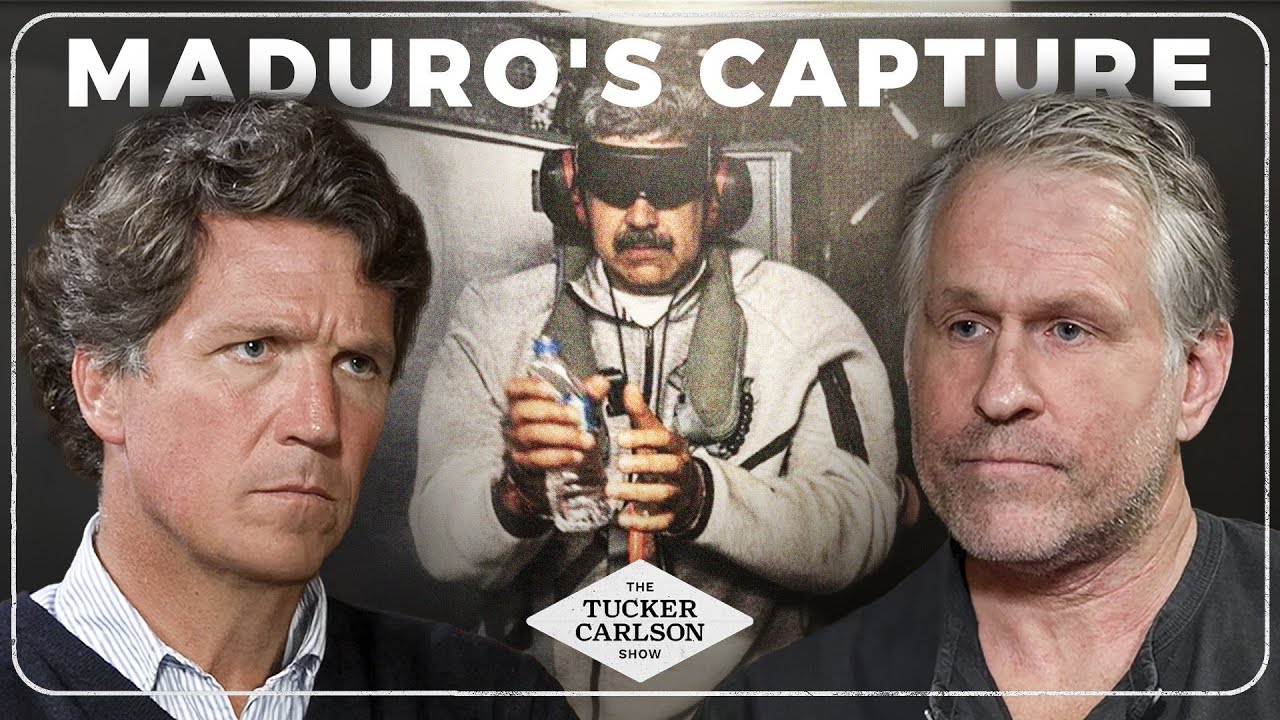
Tucker Carlson on Why Iran War Could Destroy America and Lead to Domestic Terrorism

April 1, 2026

Tucker Carlson examines the potential consequences of military conflict with Iran, warning that America cannot survive another prolonged Middle East war. He challenges the prevailing narratives about Iranian hostility, questions why mainstream commentators ignore the reasons behind anti-American sentiment in the region, and expresses concern about the risk of Shiite-inspired terrorism on American soil. Carlson argues that unlike Iraq and Afghanistan, the United States entering a catastrophic ground invasion would bankrupt the country culturally and economically, fundamentally changing what remains of American society.

The Impossibility of Victory in Iran

Tucker Carlson engages in a sobering discussion about the potential consequences of military conflict with Iran, questioning what victory would even look like in such a scenario. He points out that every previous regime change operation in the Middle East has resulted in migrant crises, terrorism, and widespread death. The conversation highlights a fundamental problem: you cannot topple a regime in the Persian Gulf without creating chaos that would disrupt the world's energy supply.

As one speaker notes, the Persian Gulf is essential for extracting, refining, and transporting energy resources and fertilizers. A controlling authority and strong governments are necessary to prevent rebel groups like the Houthis from shutting down critical supply chains. Chaos in Iran would mean no energy or fertilizer from the Persian Gulf, period. The alternative to chaos is keeping an Iranian regime in place, which means Iran becomes more powerful than when the war started.

Carlson acknowledges that unless nuclear weapons are used—which would trigger the worst imaginable chain reaction—there's no way to see this as a win. He prays for a different outcome but struggles to envision one.

Lessons from Defeat and Historical Perspective

The conversation turns to whether defeats can sometimes lead to unexpected positive outcomes. Carlson reflects on how people often learn more from losses than victories, and how personal setbacks like getting sick or fired have made him understand the world better and become stronger. He draws a parallel to veterans of Normandy who would be shocked by the condition of the United States and Great Britain 80 years later, describing modern self-abasement as an insult to their sacrifice.

However, Carlson emphasizes that the current situation is exceptionally dangerous, and the stakes are too high to simply hope that good will emerge from disaster. The immediate concern is the human cost and the long-term consequences for America.

The Moral Cost of Warfare

Carlson expresses deep concern about what the American government is doing to people in the Middle East, using taxpayer money to fund military operations that kill civilians in poor countries. He invokes a principle he describes as physics: what you do to others will be done to you. Using a stark analogy, he argues that allowing government officials who would harm children overseas to have power over American families is fundamentally dangerous.

He specifically references an investigation that concluded a Tomahawk missile strike, almost certainly American, hit a school killing approximately 165 to 170 little girls. Carlson points out that the U.S. government hasn't denied this and conducted an investigation that confirmed the likelihood. Whether the targeting was intentional or accidental, he argues that anyone who would do such a thing and not apologize is dangerous. The lack of accountability troubles him deeply because anyone capable of such actions abroad poses a threat to American children at home.

The Difference Between This War and Previous Conflicts

Carlson distinguishes the potential Iran conflict from Iraq and Afghanistan, noting that Iran has capabilities those countries lacked. He believes this would more closely resemble the Libya or Syria model, where the United States supported extremist groups rather than deploying massive ground forces. He notes with dark irony that America put "head chopping jihadists" in power in both Libya and Syria.

Critically, Carlson warns that America would not survive another Iraq or Afghanistan-style war. The country doesn't have another 20-year catastrophic ground invasion in it. Such a conflict would bankrupt the country and destroy it culturally. He emphasizes that America in the 2020s is fundamentally different from America in the 1990s—different people, different culture, different economic realities, different military capabilities.

The Threat of Shiite Jihad

One of Carlson's most serious concerns is that America has never dealt with a full Shiite jihad war against the West. The global war on terrorism focused on Sunni radicals like al-Qaeda and ISIS, which were significant problems that resulted in numerous terrorist attacks in America and Europe. Now, the dynamics have changed.

Carlson calls out what he describes as "pretend intellectuals" like Sam Harris and Gad Saad, who he says have spent their careers demonizing Muslims and portraying them as irrational and violent. While acknowledging he agrees with some points—such as that drawing cartoons of Muhammad shouldn't result in death threats in Western societies that value free speech—he challenges their current silence on the implications of assassinating an Ayatollah and his entire family.

The murder of an Ayatollah is not simply the killing of a political figure, Carlson explains. He points to what appears to be retaliatory terrorism already occurring, such as a shooting in Austin, Texas that happened shortly after the war launched, where the perpetrator wore an "Allah Akbar" t-shirt.

Why They Hate America

Carlson criticizes mainstream conservative media figures like Mark Levin for constantly telling their audiences that Iran chants "death to America" without ever attempting to explain why. While he acknowledges that he would prefer Iran stop chanting death to America, he argues that understanding the reasons behind Iranian hostility is essential.

He mocks the post-9/11 explanation that "they hate us for our freedoms," implying that American foreign policy actions in the region provide ample explanation for anti-American sentiment. The conversation ends on this unfinished thought, leaving the implication that decades of American intervention have created the very hostility that now threatens American security.

Comments

Be the first to comment on this video.

Video Transcript

[00:00] this loss and I unfortunately I think we

[00:02] can say already it's hard to imagine

[00:04] getting out of this without being

[00:05] diminished.

[00:06] >> Yeah. I mean what is what is a victory

[00:08] here? I mean you know it's it's also a

[00:10] terrible situation where victory might

[00:14] victory might be the worst case

[00:16] scenario. I mean like you know like

[00:18] victory like if the whole goal is to

[00:19] topple the regime you're like okay but

[00:22] every other time we've toppled the

[00:24] regime in this neck of the woods it's

[00:26] led to migrant crisis and death and

[00:30] terrorism

[00:31] >> you can't topple a regime in the Persian

[00:33] Gulf because the world's energy supply

[00:35] needs to move through it you have to

[00:37] extract it refine it make it into

[00:39] petrochemicals do whatever you

[00:40] fertilizer do whatever you want in the

[00:41] Persian Gulf then you have to get it out

[00:42] of the Persian Gulf so that means you

[00:44] have to have a controlling authority you

[00:46] have to strong governments there or else

[00:48] some rebel group Houthies with drones

[00:53] will shut the whole thing down. You have

[00:55] to have You can't have chaos in Iran.

[00:57] >> Yeah. They call it the Persian Gulf for

[00:59] a reason.

[01:00] >> Exactly. Even if you call it the Arabian

[01:01] Gulf, the other half is Persian. It

[01:03] doesn't m chaos in the Persian Gulf

[01:04] means no energy or fertilizer from the

[01:06] Persian Gulf. Period.

[01:07] >> So you're going to piracy there. So I

[01:10] just So the option to that is keeping an

[01:12] Iranian regime in place. And that means

[01:14] that Iran is more powerful than it was

[01:15] when the war started.

[01:18] >> This is also obvious unless you nuke

[01:20] them, which is, I think, an option. And

[01:23] and then you set off a chain reaction

[01:25] that, you know, is the worst thing

[01:27] imaginable. So anyway, I think there's

[01:30] no way to see this as a win. I pray it

[01:32] is, but I don't see it. If it is a loss,

[01:36] maybe that is not all bad for the US.

[01:40] Well, there is uh I think sometimes

[01:43] things need to get really bad before

[01:44] they get better, you know, that things

[01:46] need to get bad so that people wake up

[01:48] even more. Um there's no question people

[01:51] have woken up a lot, but maybe people

[01:53] just need to get angrier, you know, and

[01:55] and I I don't know. I don't know what

[01:58] >> I'm trying to see this in the fullness

[02:00] of history and God's plan, but I just

[02:02] because it feels like such a disaster.

[02:04] It's affecting my sleep.

[02:05] >> I love America. I have kids. I don't

[02:07] want this to happen. I'm not in control

[02:08] obviously. So, but I do think that like

[02:12] you're often surprised by the downstream

[02:14] results of things. I think people who

[02:16] return from Normandy would be shocked by

[02:18] the condition of the United States and

[02:20] Great Britain 80 years later. They I

[02:22] mean, they are shocked whenever you see

[02:23] them interviewed. Some hundred-year-old

[02:24] guys like we died for this.

[02:26] >> Yeah. No, it's And it's totally I mean,

[02:29] like talk about just disgracing their

[02:31] sacrifice, you know?

[02:32] >> It's the greatest disgrace. our

[02:34] self-abasement is an insult to their to

[02:37] their sacrifice on our behalf. But I

[02:39] wonder if the opposite isn't also true

[02:42] that maybe in your defeat there are

[02:44] things that I know this is true for me.

[02:47] Every time I've gotten sick or gotten

[02:48] fired like I just I understand the world

[02:52] better and I become more joyful and

[02:54] stronger. Do you feel that?

[02:56] >> Yeah. No, I know for sure. I mean many

[02:58] times in my life and yeah, you lose you

[03:00] learn a lot more from your losses.

[03:02] >> Yeah. defeats are actually your

[03:03] victories in respect. That's right. And

[03:05] but the you know the problem is just

[03:07] this is man we're just playing with fire

[03:10] with this thing because it's so

[03:12] dangerous you know it's um

[03:14] >> what worries you most?

[03:16] >> Well um I guess I'd say number one um I

[03:22] what we're doing to those people over

[03:24] there I I mean I think is just like

[03:26] horrible. And I don't say this as like

[03:30] I'm not trying to like virtue signal

[03:32] that I care so much more than other

[03:34] people, but like when your government

[03:36] takes your money and just starts

[03:38] slaughtering people in in poor countries

[03:41] compared to us, you know, there just so

[03:43] profoundly

[03:44] >> what you do to others will be done to

[03:46] you. That's a physics principle. You

[03:48] can't get away from that. So that's just

[03:49] true. Well, imagine imagine like a there

[03:52] was a a guy who was a like a convicted

[03:54] pedophile and he had molested a bunch of

[03:58] like Iraqi children or a bunch of

[03:59] Iranian children and then you were like

[04:01] well I'm going to have him babysit my

[04:03] kids. He only does it over there. You

[04:05] know what I mean? Like he only he only

[04:06] you're like what? No, dude. He's hurt

[04:08] children. You can't let him anywhere

[04:09] near your children. Okay. Well, these

[04:11] these same monsters in government are

[04:12] the ones who are ruling over me and my

[04:14] family and my country. And the idea that

[04:18] you just go kill like, you know, uh I

[04:20] know I said this on on Rogan's show the

[04:22] other day about the the school that we

[04:24] hit where he killed like 165 or 170 uh

[04:27] little girls and then people, you know,

[04:29] give me those numbers haven't been

[04:31] verified. That's just the claim of the

[04:32] Iranian government goes, "Well, our

[04:34] government's not denying it." And in

[04:36] fact, they did an investigation and

[04:37] concluded it was almost certainly us. It

[04:39] was a tomahawk missile. What's the

[04:41] question here? We know where this came

[04:43] from. The only question left is like who

[04:44] gave it that coordinates or or did it

[04:46] miss or was that intentional, whatever.

[04:49] >> But like

[04:50] >> kill a whole bunch of eight-year-old

[04:51] girls. I mean, Jesus, man. Is there

[04:54] anything more evil you could do than

[04:56] that? So, just on a on a basic human

[04:58] level, you know, there's like this

[05:00] >> anyone who would do that, I think it was

[05:02] clearly accidental, but I also think

[05:05] having done a lot of accidental things,

[05:07] it's essential to apologize for it.

[05:09] Yeah.

[05:09] >> And anyone who doesn't apologize for it

[05:10] is a dangerous person. Well, also even

[05:12] >> if you do that to them, you'll do it to

[05:14] my kids.

[05:14] >> Yes. And and it also it stretches the

[05:17] definition of accidental a little bit

[05:19] because even if very specifically like

[05:21] we were trying to hit this building but

[05:22] instead we hit this building and this is

[05:24] a point I've been making largely through

[05:26] the um Israel's destruction of Gaza

[05:28] which is was not that at all. They were

[05:31] just leveling the place. But you go look

[05:33] man like you start you start dropping

[05:36] bombs on people. you start blowing

[05:38] things up and you know innocent people

[05:40] are going to end up dying in that. So in

[05:42] that sense it is intentional and maybe

[05:44] you didn't mean to hit that exact you

[05:46] know target or kill that many people but

[05:48] like if I'm just saying if you if you

[05:50] you know if you blew up a building you

[05:54] know that you you suspected somebody

[05:57] else was in but then it turned out that

[06:00] there were a bunch of little kids there

[06:01] that's still a pretty profound crime.

[06:03] Um, but then of course on on top of that

[06:07] I I really worry about getting trapped

[06:10] into a a broader war, a wider war. There

[06:13] is not I and I don't I'm not saying that

[06:16] I think this is going to be like Iraq or

[06:18] Afghanistan. I think already this is

[06:19] very different than Iraq and

[06:21] Afghanistan. Iraq and Afghanistan did

[06:22] not have the ability to do what Iran is

[06:24] doing right now for one. Number two, I

[06:27] just don't I don't think it's going to

[06:29] be that. I I don't think I I think it

[06:32] would be more the Libya or Syria model

[06:34] than than the Iraq or Afghanistan model,

[06:36] which did require a small amount of

[06:39] ground forces. So, we used head chopping

[06:41] bin Laden in both of those cases. Um,

[06:44] and put the bin Laden in power in Syria.

[06:47] Um, but just to be clear, our country

[06:52] would not survive another Iraq or

[06:54] Afghanistan. There's no United States of

[06:56] America coming out of that. We don't

[06:58] have a 20-year catastrophic ground

[07:00] invasion in us. Like it will it will

[07:02] bankrupt the country. It will destroy

[07:04] the cult the the country culturally. So

[07:07] like so that's a very scary thing. We

[07:09] don't have you know in in the launch of

[07:12] the global war on terrorism. We were

[07:14] coming out of the 1990s. This was a

[07:16] different country in the 1990s you know

[07:18] and and anyone who was alive then knows

[07:20] this people lived here.

[07:21] >> Yes. Yes. different people, different

[07:23] culture, different economic realities,

[07:25] different military realities. Um, now

[07:28] then the other thing that I really

[07:30] really worry about with all of this is

[07:32] that we've never really had we've never

[07:36] dealt with a full like Shiite jihad war

[07:40] against the West. You know, our beef was

[07:42] always with the Sunni radicals. Um,

[07:45] those were the terrorists we had to

[07:46] worry about, the al-Qaeda and and ISIS

[07:48] and stuff like that. And that was quite

[07:50] a big problem. Um, you know, we we had

[07:53] uh um m a lot of terrorist attacks in

[07:56] America and in in Europe, uh

[07:59] particularly ISIS inspired attacks,

[08:01] al-Qaeda as well. And you know, so I've

[08:04] I've kind of called out some of these

[08:06] some of these people. I'll do it again

[08:07] here because they're they're like some

[08:08] of the biggest frauds in the country.

[08:10] These like pretend intellectuals like

[08:13] Sam Harris and Gad Sad and guys like

[08:16] this who have spent a career uh uh

[08:19] demonizing Muslims. Their entire career

[08:21] has been talking about what irrational

[08:24] violent people Muslims are, how awful

[08:26] the religion is, and and you know, and

[08:28] look, there's been some points that I

[08:30] agree with them on. You know, if

[08:32] someone, you know, writes a cartoon

[08:34] about Muhammad, you don't have the right

[08:36] to kill them. Sorry. You want to be in

[08:38] the West. These are our rules here. We

[08:40] value free speech, and I can make a

[08:41] cartoon about whatever the hell I want

[08:42] to make a cartoon about. Okay. But if

[08:44] you spent your whole career arguing how

[08:47] violent and irrational the Muslims are,

[08:50] >> what what is killing an Ayatollah mean?

[08:54] You know, you know, that's not just a

[08:55] political figure. You know, you you

[08:57] murder an Ayatollah and his entire

[09:00] family. And we've already had a couple

[09:02] terrorist attacks over here that at

[09:03] least seem like there was the shooting

[09:05] in uh Austin, Texas that came like the

[09:08] day after we launched the war and the

[09:09] guy was wearing like an Allah Akbar

[09:11] t-sh. I'm assuming that might be

[09:13] related. And so, you know, then you have

[09:16] this real issue of like there's

[09:20] unfortunately in um in the old like

[09:23] controlled American media and all the,

[09:25] you know, the the all the people like uh

[09:28] um Mark Levin and and all these guys

[09:30] when they talk to their audience,

[09:31] whatever audience they got left, and

[09:33] they always love to talk about how Iran

[09:35] chants death to America, you know, which

[09:37] they do, and I'd like it if they stopped

[09:39] doing that. It's not the nicest chant.

[09:41] Um, but none of them ever even try to

[09:44] say to a even approach the question of

[09:48] why

[09:49] why do they chant death to America? Why

[09:51] do they hate us so much? And this was

[09:53] >> they hate us for our freedoms.

[09:54] >> Yes. Right.

[09:55] >> So, the weather is warming which means

[09:57] grilling is here and you're probably

[09:59] already thinking about your first

[10:01] backyard barbecue of the year. What

[10:03] should you put on the barbecue? We

[10:05] recommend Good Ranchers. We've been

[10:07] using Good Ranchers for a while and the

[10:08] difference is obvious. They partner with

[10:10] local American farmers and ranchers to

[10:12] deliver 100% American meat right to your

[10:14] door. Pasture-raised, no antibiotics, no

[10:17] added hormones, and excellent quality

[10:20] and taste. Good Ranchers also just

[10:22] launched their new custom boxes. So

[10:24] instead of choosing a predetermined list

[10:25] of meat choices, you can build your own

[10:27] box with the cuts that you want. Steaks

[10:30] for grilling, chicken for weekn night

[10:31] dinner, whatever you decide. You start

[10:34] your plan. You get to choose a free meat

[10:36] that included with every order at no

[10:38] additional cost. Plus, with the code

[10:40] Tucker, you get $25 off your first

[10:42] order. That's free meat with every order

[10:44] and 25 bucks off your first order. Use

[10:46] the code Tucker to get that.

[10:48] Goodranchers.com.

[10:49] AmericanMat delivered and it's

[10:51] excellent.

[10:56] Thanks for watching our YouTube channel.

[10:57] We hope you'll subscribe to it. And by

[10:59] the way, you can hit the little bell on

[11:01] there and get notifications every time

[11:03] we produce a video. Yeah, we hope you'll

[11:05] do that also.

Link copied to clipboard!