Up Next
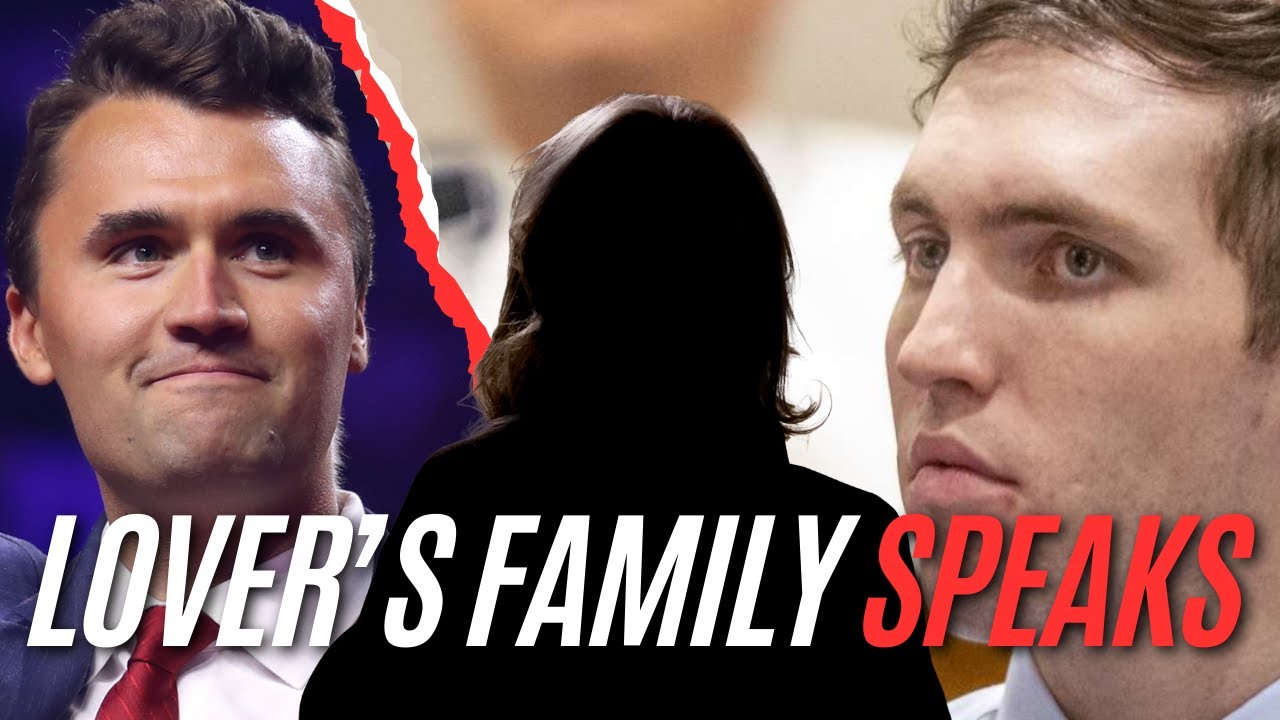
Inside the Charlie Kirk Investigation: Exclusive Interview with Lance Twiggs Family Member and New Details from Utah Valley University
30:43
Dr. Grande Re-Examines the Ammunition Inscriptions and the Possible Motive Behind Charlie Kirk's Killing
13:49
Jesse Weber and Elie Honig Break Down the Charlie Kirk Assassination Legal Case and Prosecution Strategy
33:35
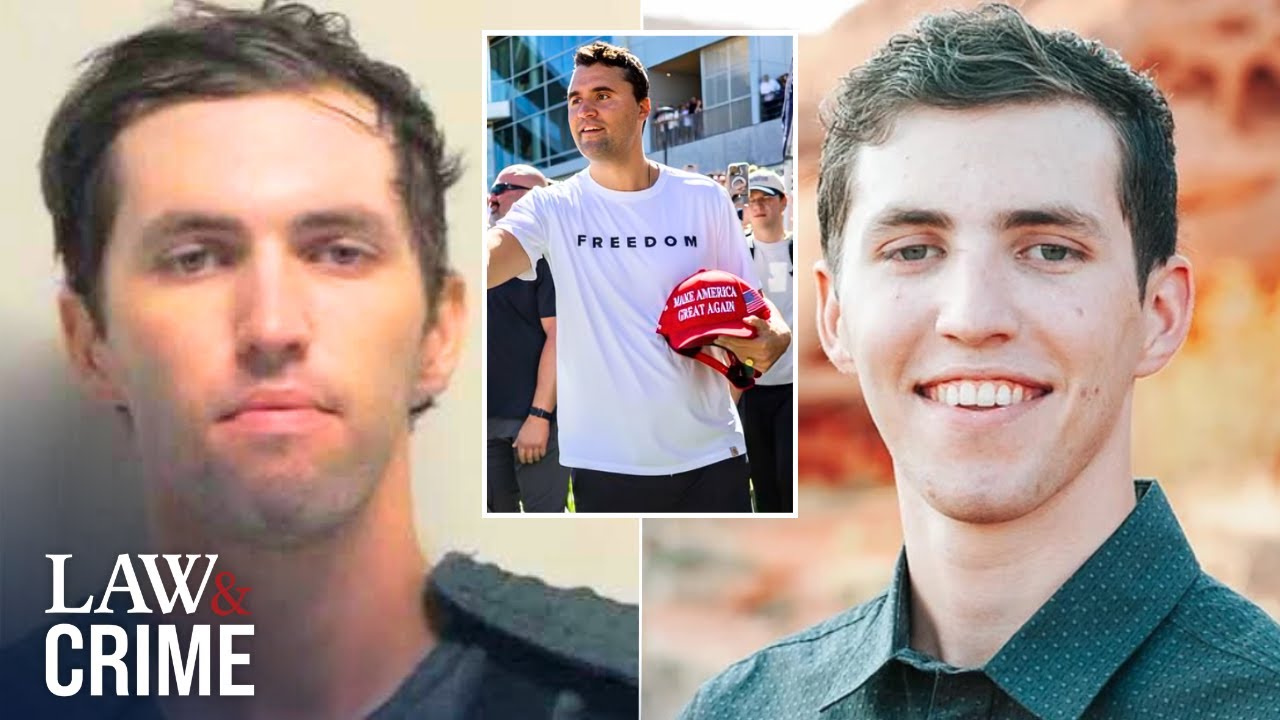
Tyler Robinson Arrested for Alleged Politically Motivated Killing of Conservative Influencer Charlie Kirk at Utah Valley University
22-year-old Tyler Robinson is in custody after allegedly shooting and killing conservative influencer Charlie Kirk at Utah Valley University. His family turned him in after recognizing him in FBI images, ending a 33-hour manhunt. Investigators discovered inscriptions on bullet casings revealing internet culture references and anti-fascist messaging, painting a portrait of a young man radicalized through deep internet engagement. Retired homicide sergeant Troy Hillman analyzes the case, exploring how Robinson allegedly planned the attack, the significance of the engraved casings, and the disturbing trend of young people becoming radicalized through online activity.
The Arrest of Tyler Robinson
An alleged killer motivated by his own political beliefs took the life of someone voicing theirs. 22-year-old Tyler Robinson is now in custody in Utah after his time on the run lasted 33 hours. Law enforcement says it was his family who turned him in. He allegedly left behind key pieces of evidence, including inscriptions on bullet casings that allegedly show his motivation and also that he was someone who spent a lot of time in some twisted corners of the internet.
Tyler Robinson lived with his family in southwestern Utah, more than 3 hours away from the campus of Utah Valley University where the shooting took place. Video from outside his family home shows the gray Dodge Challenger that authorities say he drove to the shooting and escaped with still parked outside. Police say it was his parents who saw the person of interest images that the FBI put out and they realized that Tyler Robinson, their son, may be the killer.
His family confronted him and turned him over to law enforcement. According to Spencer Cox, the governor of Utah, Tyler Robinson in some ways confessed or at least inferred that he was the person responsible when speaking to his dad. His dad also then called a youth pastor who helped take Tyler to a police station so he could face charges for what he allegedly did.
Timeline of the Alleged Attack
Law enforcement says that Robinson arrived on the campus of Utah Valley University before noon on September 10th. He then fired one shot from the top of a building roughly 200 yards away from Charlie Kirk about a half hour later. After the shooting, he escaped by jumping off of a building, running to a wooded area, leaving behind the rifle he allegedly used in the attack, and driving in that Dodge Challenger back to southwestern Utah.
Video was released showing the person now believed to be Robinson jumping from that building and running away. The rifle that was found was a bolt-action, high-powered rifle with a scope, wrapped in a towel and left in a bush.
The Inscriptions on Bullet Casings
Investigators say inscriptions were engraved on the casings found with the rifle. Governor Spencer Cox described what was discovered: The rifle was determined to be a Mauser Model 98 in .306 caliber with a scope mounted on top of it. Investigators noted inscriptions that had been engraved on casings found with the rifle.
The inscriptions on a fired casing read: "Notices bulge OwO. What's this?" Inscriptions on the three unfired casings included various messages. One read: "Hey, fascist! Catch!" followed by an up arrow symbol, a right arrow, and three down arrow symbols. A second unfired casing read: "O Bella Ciao, Bella Ciao, Bella Ciao, Ciao, Ciao." And a third unfired casing read: "If you read this, you are gay. LMAO."
Decoding the Internet References
The first inscription, "notices bulge OwO. What's this?" is a reference to a meme on the internet. The account Know Your Meme explained that it is used online to troll people and make fun of people, part of the furry and anime community. This shows that Robinson was into the deep corners of the internet and spent a lot of time online.
The casing that allegedly read "Hey fascist, catch this" followed with arrow symbols could be associated with a video game. Those arrows are reportedly what you would use for some sort of combination in a game called Helldivers 2, which is a third-person shooter video game that was released last year. Again, this is another example that Tyler Robinson spent a lot of time online and glued to screens.
Another unfired casing reportedly said something that plays into the politics potentially behind this motivation: "O Bella Ciao, Bella Ciao, Bella Ciao, Ciao, Ciao." Those are lyrics to a song that was sung by members of the Italian resistance who fought against occupying Nazi forces during World War II. In the United States, it's become a rallying cry for anti-fascist groups which often sing that song during protests.
These casings are key pieces of evidence in proving that this was an alleged politically motivated attack beyond the fact that Charlie Kirk was a political figure speaking at a political event.
Digital Evidence and Discord Messages
Investigators also say during this investigation, they found Robinson's roommate who said that Tyler made a joke on the platform Discord and showed the messages to members of law enforcement. The affidavit reads that Tyler allegedly stated that he needed to "retrieve a rifle from drop point," leaving the rifle in a bush, messages related to visually watching the area where a rifle was left, and a message referring to having left the rifle wrapped in a towel. The messages also refer to engraving bullets and a mention of a scope and the rifle being unique. Messages from the contact Tyler also mentioned that he had changed outfits.
How Investigators Tracked Him Down
Governor Spencer Cox explained how they tracked Tyler Robinson down: "On the evening of September 11th, a family member of Tyler Robinson reached out to a family friend who contacted the Washington County Sheriff's Office with information that Robinson had confessed to them or implied that he had committed the incident. This information was relayed to the Utah County Sheriff's Office and scene investigators at Utah Valley University. This information was also conveyed to the FBI."
Investigators reviewed additional video footage from UVU surveillance and identified Robinson arriving on UVU campus in a gray Dodge Challenger at approximately 8:29 a.m. on September 10th in which he is observed on video in a plain maroon t-shirt, light colored shorts, a black hat with a white logo, and light colored shoes. When encountered in person by investigators in Washington County on September 12th in the early morning hours, Robinson was observed in consistent clothing with those surveillance images.
Family Members Describe Political Radicalization
Investigators interviewed a family member of Robinson who stated that Robinson had become more political in recent years. The family member referenced an incident in which Robinson came to dinner prior to September 10th. In conversation with another family member, Robinson mentioned Charlie Kirk was coming to UVU. They talked about why they didn't like him and the viewpoints that he had. The family member stated Kirk was "full of hate and spreading hate." The family member also confirmed Robinson had a gray Dodge Challenger.
Expert Analysis: Profiling the Suspect
Retired homicide sergeant Troy Hillman provided analysis of the case. When asked what stands out about Tyler Robinson, Hillman said: "I think somebody obviously with a political agenda and obviously not concerned about getting caught. And it seemed like he definitely wanted to send a message."
Regarding the engravings, Hillman noted: "There were some references to the subculture, the furries, and there was a reference to video game, I believe it was Helldivers. And it spoke of a younger person to me when I first saw those things."
When asked what makes the type of person who would do this and not seem afraid of getting caught, Hillman explained: "Somebody like this I think is just so driven in their mind and justified that I guess the word radicalized comes to mind. They don't really worry about getting caught. They just want to send a message."
Planning and Execution of the Attack
Regarding how Robinson was able to be at large for 33 hours and make it back to southwestern Utah, Hillman observed: "In these large groups, in these kind of large venues, especially outdoor venues, security is a tough assignment. Somebody can very easily blend in. People are so focused on kind of the event and what's going on, and maybe even their phones and technology these days, that they're not going to pay attention or report suspicious behavior."
Hillman added: "It sounds like he was into video games. There's a lot of things that you can absorb off those video games about engaging in combat. It gets in the mindset, I think. I think it was an organized attack, and I think he was very much radicalized and was going to do this."
From Political Interest to Violent Extremism
On the question of how someone goes from being interested in politics to allegedly committing this type of attack, Hillman explained the investigative process: "I think you use some old-fashioned police work. You put boots on the ground and you start interviewing family, friends, schoolmates, colleagues, and you really dig into their background and try to flush out what they're thinking. I think also you look at the social media, you look at what's on his cell phone, what's on his computers, and you kind of get an idea of what sites he was going to and what kind of was going on in his mind at that time."
Regarding the amount of work involved, Hillman noted: "It's a massive undertaking of a lot of different types of investigators being involved and looking at the hard drives, looking at the cell phone data, looking at the interviewing side. It definitely will take years."
The Role of Discord and Social Media Platforms
When asked about Discord, which seems to come up frequently in cases of extremism, Hillman observed: "It just seems like there's a lot more social media-driven hate kind of rhetoric and conversations that are going on in our society. And it's alarming."
On the broader trend of young people and internet radicalization, Hillman said: "It is disturbing to see how captivated these generations are by their phones and they almost live in a world inside of their phone. We as human beings need that social interaction. And I think that also contributes to the radicalization of these, in particular, these younger males. It is disturbing."
The Family's Difficult Decision
Regarding the family's decision to turn Robinson in after he apparently confessed to them, Hillman explained that families in this situation could go several ways: "The parents could rally around their son to protect him, or they could go another direction, which would be, hey, let's do the right thing and let's cooperate with authorities and give over information and do what we can and kind of take the high road and say, 'Hey, yeah, our boy did this and it appears that he did it and let's work.' It's a difficult situation because the parents aren't the ones who pulled the trigger, but they know a lot and have been around this individual for the majority of his life."
The 33 hours from the moment that Kirk was killed to the arrest being made represents quick investigative work under tremendous pressure, with investigators having to process massive amounts of information coming in while the public demanded answers.
Video Transcript
An alleged killer motivated by his own
political beliefs took the life of
someone who is voicing theirs.
22-year-old Tyler Robinson is now in
custody in Utah. His time on the run
lasted 33 hours. Law enforcement says it
was his family who turned him in. He
allegedly left behind key pieces of
evidence, including inscriptions on
bullet casings that allegedly show his
motivation and also that he was someone
who spent a lot of time in some twisted
corners of the internet. Let's break
down what those inscriptions mean and
how they could impact his legal case.
We're on the case presented by Law and
Crime. I'm Chris Stewart.
[Music]
Now that we know that law enforcement
say 22-year-old Tyler Robinson is the
person responsible for shooting and
killing conservative influencer Charlie
Kirk, we are learning a lot about
Robinson's background and specifically
that he is a young man who spent a lot
of time on the internet. So here are
some of the other things we know about
Robinson before I get into those
inscriptions and what they mean.
Robinson lived with his family in
southwestern Utah, more than 3 hours
away from the campus of Utah Valley
University where the shooting took
place. We have video from outside his
family home and the gray Dodge
Challenger that authorities say he drove
to the shooting and escaped with still
parked outside. Police say it was his
parents who saw the person of interest
images that the FBI put out and they
realized that Tyler Robinson, their son,
may be the killer. His family confronted
him and turned him over to law
enforcement. According to Spencer Cox,
the governor of Utah, Tyler Robinson in
some ways confessed or at least inferred
that he was the person responsible when
speaking to his dad. His dad also then
called a youth pastor who helped take
Tyler to a police station so he could
face charges for what he allegedly did.
Now, let's get to the case against Tyler
Robinson. Law enforcement says that he
arrived on the campus of UVU before noon
September 10th. Then he fired one shot
from the top of a building roughly 200
yards away from Charlie Kirk about a
half hour later. Then he escaped,
jumping off of a building, running to a
wooded area, leaving behind the rifle he
allegedly used in the attack and driving
in that Dodge Challenger back to
southwestern Utah. This is the video
that was released of now who we believed
to be Robinson jumping from that
building and running away. The rifle
that was found, this boltaction,
high-powered rifle that had a scope, was
wrapped in a towel left in a bush.
Investigators say inscriptions were
engraved on the casings found with the
rifle. Here's how they were described by
Utah Governor Spencer Cox. So, the area
north of Campus Drive Road where the
suspect crossed over, you saw some of
that in the video that we released last
night, consists of a grassy area with
trees on the edge of the UVU campus.
Investigators discovered a bolt-action
rifle wrapped in a dark colored towel.
The rifle was determined to be a Mouser
model 9830 6 caliber 306 caliber
bolt-action rifle. The rifle had a scope
mounted on top of it. Investigators
noted inscriptions that had been
engraved on casings found with the
rifle. Inscriptions on a fired casing
read, "Notices bulges capital O. What's
this question mark? Inscriptions on the
three unfired casings read, "Hey,
fascist exclamation point, catch
exclamation point." Up arrow symbol,
right arrow, and uh symbol, and three
down arrow symbols. A second unfired
casing read, "O Bella Chow, Bella Chow,
Bellachchow, Chow Chow." And a third
unfired casing read, "If you read this,
you are gay." L M A O. This is a lot to
take in and understand, but let me try
to break it down for you because for me
it was a lot to take in as well. So the
first one is noticees bulge ow. What's
this? Now this is a reference to a meme
on the internet and the account know
your meme on X put this out saying that
this was the original post that this
reference is known for that then went
viral and this group know your meme
explained what it actually means. Now
for our purposes I'll say this. It is
used on the internet to troll people and
make fun of people. Part of the furry
and anime community and also for our
purposes. This just really shows that
Robinson was into the deep corners of
the internet and spent a lot of time
online. Now, the next casing allegedly
read, "Hey fascist, catch this." And it
was followed with an up arrow symbol, a
right arrow symbol, and three down arrow
symbols. Now, those arrows could be
associated to a video game. It's what
you would reportedly use to have some
sort of combination in a game that's
called Hell Divers 2, which is a
thirdperson shooter video game that was
released last year. And again, this is
another example that Tyler Robinson just
spent a lot of time online and glued to
screens. Another unfired casing
reportedly said something that plays
into the politics potentially behind
this motivation. Oh, Bella Chow,
Bellachow, Bella Chow, Chow Chow. Those
are lyrics to a song that was sung by
members of the Italian resistance who
fought against occupying Nazi forces
during World War II. In the United
States, it's become a rallying cry for
anti-fascist groups which often sing
that song during protests. Now, the last
unfired casing allegedly read, "If you
read this, you are gay. L M AO." These
casings are key pieces of evidence in
proving that this was an alleged
politically motivated attack beyond the
fact that Charlie Kirk was a political
figure speaking at a political event.
Now, speaking of internet activity,
investigators also say during this
investigation, they found Robinson's
roommate who said that Tyler made a joke
on the platform Discord and he showed
the messages to members of law
enforcement. The affidavit reads that
Tyler allegedly stated that he needed to
quote retrieve a rifle from drop point,
leaving the rifle in a bush, messages
related to visually watching the area
where a rifle was left, and a message
referring to having left the rifle
wrapped in a towel. The messages also
refer to engraving bullets and a mention
of a scope and the rifle being unique.
Messages from the contact Tyler also
mentioned that he had changed outfits.
Here's what the governor said about how
they tracked Tyler Robinson down.
>> On the evening of September 11th, a
family member of Tyler Robinson reached
out to a family friend who contacted the
Washington County Sheriff's Office with
information that Robinson had confessed
to them or implied that he had committed
the incident. This information was
relayed to the Utah County Sheriff's
Office and scene investigators at Utah
Valley University. This information was
also conveyed to the FBI. Investigators
reviewed additional f video footage from
UVU surveillance and identified Robinson
arriving on UVU campus in a gray Dodge
Challenger at approximately 8:29 a.m. on
September 10th in which he is observed
on video in a plain maroon t-shirt,
light colored shorts, a black hat with a
white logo, and light colored shoes.
When encountered in person by
investigators in Washington County on
September 12th in the early morning
hours, Robinson was observed in
consistent clothing with those
surveillance images. Investigators
interviewed a family member of Robinson
who stated that Robinson had become more
political in recent years. The family
member referenced a recent incident in
which Robinson came to dinner prior to
September 10th. And in the conversation
with another family member, Robinson
mentioned Charlie Kirk was coming to
UVU. They talked about why they didn't
like him and the viewpoints that he had.
The family member also stated Kirk was
full of hate and spreading hate. The
family member also confirmed Robinson
had a gray Dodge Challenger.
>> All right, joining us now is retired
homicide sergeant Troy Hillman. Thank
you for taking the time to be with us on
Law and Crime. Uh, as we're we're
learning more now about Tyler Robinson,
the suspect accused of killing Charlie
Kirk. You have profiled killers in your
career. What stands out to you about
Tyler Robinson?
>> Um, I think somebody obviously uh with a
political agenda um and obviously not
concerned about uh getting caught. Um
and they it seemed like he definitely
wanted to send a message.
>> Yeah. especially let's let's go over
some of the the engravings. Um because I
I was able to, you know, kind of
comprehend the Bella Chow references,
you know, related to World War II and
then that's something that we've heard a
little bit more of um in recent years
during protests. Um but some of the
other like these are seem like very deep
internet references. What stands out to
you?
Yeah, I mean it definitely there were
some references to uh the subculture,
the the furries. Um and there was a
reference to uh video game uh I believe
it was it was Hell Diver.
>> Um and then it spoke of of a younger a
younger person to me when I first saw
those things. Um and to include the
although Bella Bellachow was a little
bit uh of a timeless reference.
>> Yeah. And you know, I I think there's
there's a comparison people are are
drawing to Luigi Manion because you have
the engravings on bullets and and he
allegedly engraved bullets with his
motive um in in that case very somewhat
different situation. But as a profiler,
when you see someone, I mean, what makes
the type of person who not only would do
this, but didn't seem to be afraid that
they would get caught and and face the
consequences for this? I think uh this
person was so uh and again I'm I'm not a
profiler. Um I spent uh 24 years in
investigations. Um and we did work
closely with profilers uh chasing serial
killers and and homicide suspects. Um
but some somebody like this I I think is
just so driven in their mind and
justified that uh I guess the word
radicalized comes to mind. Uh they they
don't really worry about I don't think
of getting caught. Um, so they're they
just want to send a message. Um, but I'm
always uh cautious to say, hey, let's
not this this could be uh these clues
left by, you know, said person could
could let's not jump on them and and
jump to conclusions because they could
be uh throwing us off, trying to steer
us in another direction. So, it's always
uh it's you need to keep an open mind.
Um but subsequently they've arrested
this individual and uh information is is
starting to come out on on his
background.
>> When you look at how this played out and
he was able to for 33 hours be at large
and and made it to southwestern Utah
back to his family's house. um what type
of planning
does it take to put together this type
of attack where then also he has the
engravings on the bullets um he leaves
the rifle and you know still is able to
get away. What sticks out to you about
how he allegedly went about this? Well,
I I think in these uh large groups, in
these kind of uh large venues, um it's
it's especially outdoor venues, it's
very uh security is uh is is a tough
assignment. Um and if if uh there's not
uh enough planning and and that kind of
thing that goes into it on the front
end. So, I'm not saying it's easy for a
person to get in there, but uh somebody
can very easily blend in. Um people are
so focused on kind of the event and
what's going on. Um, and then maybe even
their phones and technology these days,
they're so focused on that um that
they're not going to pay attention or
report suspicious behavior. So, he he
obviously it sounds like he was into
video games. Um, there's a a lot of
things that uh you can absorb off those
video games about engaging in combat,
that kind of thing. I'm not I'm not
saying it it's it's training of it
sorts, but um it gets in the in the
mindset, I think. And I'm not saying,
you know, I don't know enough about him
to say it was he was a gamer. Um, but
certainly the clue that was left on one
of the casings indicated that he may
have been into gaming. Um, so, and I'm
not demig uh putting down gamers, but
I'm just saying there could be stuff
that uh they learn on there and he could
have used some of that. I think it was
an organized attack. Uh, and I think he
he was very much again radicalized and
was going to do this. Um, and the fact
that he was able to get away, it's it's
chaos in those moments of a of this,
like I said, this large venue and people
running, people screaming, um, and first
responders kind of rushing to the scene
to aid the victim and then to make sure
there are no other victims. um they're
not always uh looking for the suspect,
>> you know, and I know that just from
reading the the police affidavit today
and and how the the governor of Utah
mentioned it, they said, you know, he
really became political in recent years
and it seems like there's a lot of work
still to be done to figure out because
there's such a difference between, oh,
they were really into politics and they
went to protest and and maybe they even
said some really mean stuff online to
being allegedly on a building, firing a
shot, and killing somebody like like he
allegedly did. How do you go about now
figuring out like where it goes from,
okay, he's really passionate about his
politics to this is someone who has been
radicalized to an extremist level that
we do see not just in in a case like
this, but you know, in a lot of cases,
we see people get radicalized for a lot
of different beliefs. How do you figure
out how this happens? I
>> I think you you use some oldfashioned
police work. you put boots on the ground
and you start interviewing family,
friends, uh, schoolmates, uh,
colleagues, and you really dig into
their background and try to flush out,
um, what they're thinking and what
they're what they're getting at. Um, I
think also you look at the social media,
uh, you look at what's what's on his
cell phone, what's on his computers, um,
and you kind of get an idea of what
sites he was going to and what kind of
was going on in his mind um, at that
time. So, I think that would paint a
much uh broader picture of of what's
going on. The arrest is just kind of the
the start and then there's a whole bunch
of work that goes on uh before it
actually goes to trial.
>> I also think of, you know, we probably
take for granted when it's, hey, we're
analyzing someone's social media and and
police say that and they're able to pull
information maybe from Meta or some of
these other companies. I know he was on
Discord, which seems to come up a lot in
these situations. How much work does it
take? What does that work really like if
we're talking years trying to figure out
exactly how he found the motivation to
allegedly do this? It
>> it's a it's a massive undertaking um and
of a lot of different uh types of
investigators um being involved and and
looking at the the the drive the hard
drives, looking at the cell phone data,
looking at uh again the interviewing
side. Um it it definitely will take uh
years.
>> Yeah. Because you think of every single
post someone said across every single
platform for however many years that
they feel like he became political.
That's just such a big question. Discord
um which is is very popular with young
people. They use it a lot. Uh but it
also seems to come up in cases of
extremism on every side of the the
political aisle. um what stands out to
you just a as someone who has
investigated cases um about that
particular platform
>> and I I don't know a lot about that that
has emerged since uh so I retired and in
about 3 or four years ago but it it has
become a a big platform um so all I
would say is um it just seems like
there's a lot more uh social mediadriven
um hate kind of rhetoric and
conversations um that are going on in
our society. And it's it's kind of
alarming. You see the the the narrative
that's been laid out that his family saw
the picture that everybody has seen of
the man with the hat on and the
sunglasses and they have this moment
where they realize that their son may be
the person who did this and then he
apparently confessed in some way to them
that he committed this crime. From the
investigator's standpoint,
knowing that he has confessed to his
parents, how does that factor into this
investigation? The interviews you do
with this suspect, what what does that
mean to how this could go forward?
>> Uh, it it could go several ways. Um, the
parents could um which might be natural
to rally around their their son to
protect him. Um, and then or they could
go another direction, which would be,
hey, let's do the right thing. um and
let's cooperate with authorities and and
give over information and do what we can
um and kind of take, for lack of a
better word, to kind of take the high
road and say, "Hey, yeah, our our boy
did this and where it appears that he
did it and let's let's uh let's work."
So, it could go both ways. Um and it
does make it difficult for the
investigators to try to um it's it's a
difficult situation because the parents
aren't the ones who pulled the trigger.
Um but they know a lot um and have uh
been around this individual for uh the
majority of his life,
>> right? And and I think too, I mean, what
you know, the the pain certainly on
Charlie Kirk's family, but you think of
of of this young man's family and and
what it took to make the decision to
say, "Hey, we're going to make sure that
he goes to the police station and he is
going to be um at least investigated for
this, but but now at this point going to
face charges and and repercussions for
for what he allegedly did to Charlie
Kirk." Uh, I think it was 33 hours from
the moment that Kirk was killed to this
arrest being made. Um, that's probably
another thing that we often take for
granted is is what it takes to actually,
you know, have this type of situation
and find a suspect. What stands out to
you about how they were able to track
this person down? I I think there's a
tremendous amount, and you alluded to
it, of pressure on um investigators to
there's all this information that's
blasted out. Um and there's a lot of
information coming in. Um so I I think
uh like yeah, they they go through this
massive pressure to try to find this
individual. Um, and and to be honest,
that's that's all I know about uh I
don't I don't know all the details about
the exact apprehension
>> in general when you look at these cases
because, you know, for me, like there's
there's a political motivation allegedly
behind all this, but then it's it's
these young people and it's and it's the
internet activity that that also seems
to factor into this. Um, has that been
something throughout your career where
you just see um kind of this age group
in in a place that maybe previous
generations hadn't had it where it just
seems like very often we're talking
about and I may be wrong just people who
are 22 years old very much online and
you know they end up being responsible
for something like this. Yeah, it
definitely emerged as kind of I I I
walked through my career. Uh I saw
technology really uh blooming. Um but it
is disturbing to see how captivated the
these these generations are by their
phones and they almost live in a world
inside of their phone so to speak. Um
and and that is uh problematic um
because we as as human beings I think
need that social interaction. Um, and
also I think that also contributes and
again I'm not a psychologist but the the
radicalization of these uh in particular
these younger males. Um it it is it is
disturbing.
>> Yeah. Incredibly disturbing and and
fortunately in this case they they have
the person they say is responsible.
We'll see how the legal process plays
out. Um Troy, I know you have a new book
out that um really important read for
people. What what what do people need to
know?
>> It's called uh Chasing Down the Zombie
Hunter. Uh my team and I spent about
three and a half years uh looking for a
serial killer. Uh he also left clues at
the scene and we became kind of
captivated by that. Um and ultimately in
2014 we used a genealogologist who uh
helped us uh really unravel the case and
and find the killer. And he was known as
the zombie hunter. He was hiding in
plain sight. Um, and it's uh uh I think
it it speaks to why cold cases matter.
Um, and why we need dedicated
individuals uh sticking on those cases.
>> Yeah, that's that's a very very
important read. You know, fortunately,
as we continue to talk about this this
Charlie Kirk case, this isn't one that
went cold. Um, but obviously for so many
other, you know, families, you know,
cases do go cold. So, it's really
important that that work is done. Troy
Hillman, it's always great to have you
on Law and Crime. I know it's been a
very busy week, a tough week for a lot
of people. Thanks for helping us kind of
get some context on this investigation,
how it all went down.
>> Yeah, thank you, Chris. I appreciate
you.
>> That will do it for On the Case
presented by Law and Crime. Subscribe to
us on YouTube and Spotify. I'm Chris
Stewart. We'll see you next time.
[Music]
Comments
Be the first to comment on this video.