Why America Is a Constitutional Republic with Democratic Representation, Not a Pure Democracy
Enjoying this? Share it with someone who needs to see it.
Up Next
Charlie Kirk Defends Electoral College and Constitutional Republic Against Democracy Claims at College Campus Event
8:32
Margaret Thatcher Explains Why British Socialism Failed and What It Means for Free Societies
2:20
Charlie Kirk Explains Why America Is Not a Democracy and the Electoral College Protects Against Mob Rule
8:02
Why America Is a Constitutional Republic with Democratic Representation, Not a Pure Democracy
When critics claim America's political system is undemocratic because it doesn't always reflect popular opinion, they misunderstand what the Founding Fathers created. The United States is not a pure democracy, it's a constitutional republic with democratic representation, designed with mechanisms like the Electoral College, the filibuster, and the judicial branch to protect against the tyranny of the majority. This exploration examines why pure majoritarianism leads to chaos and abuse, how representative democracy differs from direct democracy, and why the Constitution's framework ensures stability while preserving fundamental rights. The genius of America's system lies in balancing popular opinion with protection for minorities, creating the longest-standing and most successful constitutional republic in history.
Claims about threats to democracy have become commonplace in American political discourse. Critics on the left frequently argue that certain aspects and outcomes of the political system are undemocratic. This tends to happen when a new law or judicial ruling isn't supported by popular opinion, or when a politician wins the Electoral College but not the popular vote. The basis of these claims is essentially that a democracy should reflect popular opinion in almost every respect.
But it's worth asking: is that what a democracy is designed to do?
What Democracy Actually Means
A democracy is a political system in which the people have an electoral say in legislation. By that definition, giving the people an electoral say is what a democracy is designed to do, and that electoral say means popular opinion is an important factor in the governance of a democracy.
However, if popular opinion was the only factor that mattered, that wouldn't be democracy—that would be pure majoritarianism.
The Dangers of Pure Majoritarianism
With pure majoritarianism, popular opinion dictates that whatever the majority wants, they get. That might sound fair unless you happen to be familiar with history, which is replete with instances of majorities bulldozing the rights of minorities on the basis of race, religion, ideology, and geography. Man's capacity for abusing his fellow man knows almost no bounds.
Perhaps you're not familiar with history and still think pure majoritarianism sounds like a good idea. After all, what could be bad about a political system governed solely by popular opinion? Popular is right there in the name.
But the problem is, so is opinion. If you've ever met anyone with opinions, you know that opinions can get messy. They change—sometimes rapidly and significantly. Sometimes they change and then change back. Sometimes they are based on misinformation, lies, or even malicious propaganda.
If pure majoritarianism somehow avoids becoming a weapon with which to commit gross human rights violations, it's still an engine for chaos, generating cycles of debate that never actually settle on anything. Worse yet, it becomes a tool to be manipulated by malicious forces—a flimsy raft tossed around the sea by the winds of popular opinion and waves of treachery.
Building a More Seaworthy Vessel
To be fair, it's hard to imagine that critics on the left are actually advocating for pure majoritarianism. It's not difficult to understand its perils and to appreciate that in order to avoid being tossed around by popular opinion, a democracy must be fashioned into a more seaworthy vessel.
But what kind of vessel is it? That's where the real disagreements take place.
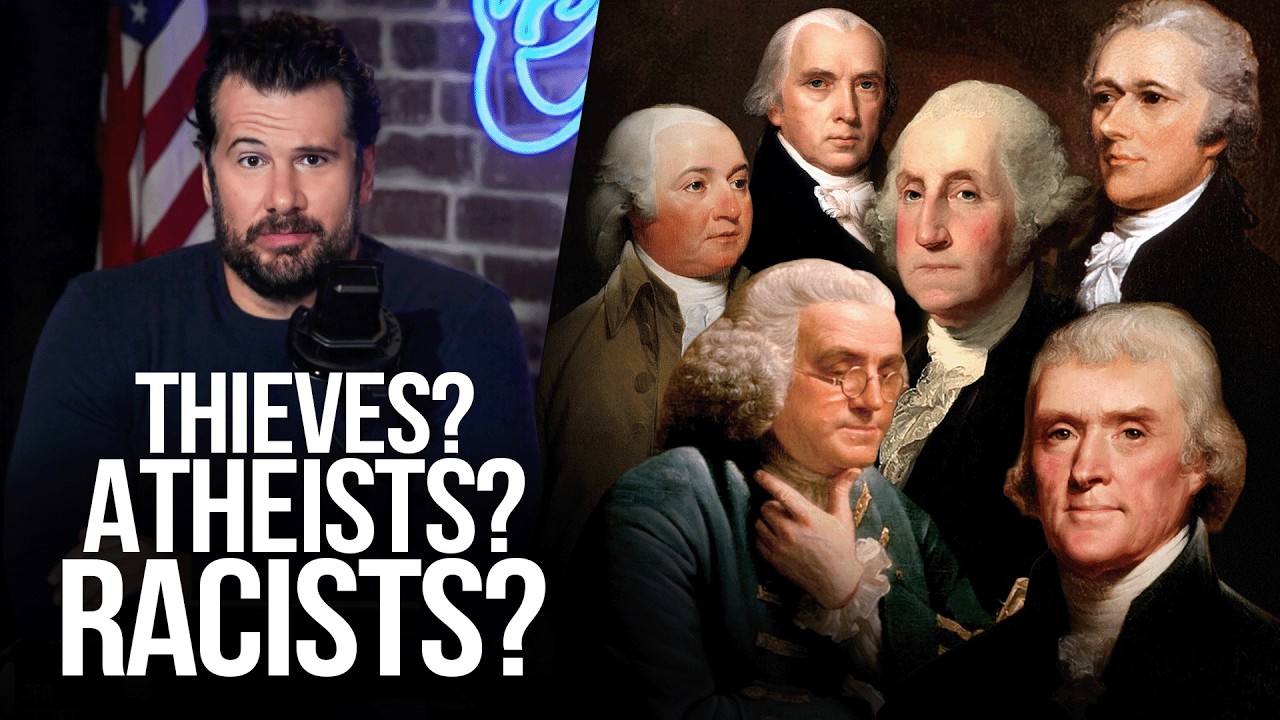
The ship known as the United States was fashioned by the Founding Fathers, who started from a historically rare place. They weren't taking over an existing government—they were creating one from scratch. They could choose any political system, and what they chose was certainly a democracy, but with all the rudders and armaments the Founding Fathers put in place, our political system might be more fully described as a constitutional republic with democratic representation.
Breaking Down the System
We'll start with republic, from the Latin respublica meaning "public affair." A republic is basically the type of government we have—one that is by and for the people. The alternative would be a country that is privately held or the property of its rulers.
We've already discussed the democratic part. By virtue of the fact that we the American people are given an electoral say in our legislation, the United States is a democracy. But when we say democratic representation, we are specifying that the United States is a representative democracy as opposed to a direct democracy.
That's because our electoral say comes from the fact that we vote on who represents us in both the legislative and executive branches, where laws are made and enacted. This is one of the many mechanisms the Founding Fathers put in place to protect us from being tossed around by popular opinion, in that upon being elected, our representatives have the autonomy to make their own decisions.
We get to choose who is making decisions, and we have recourse if we don't like their decisions because our representatives must regularly run for re-election. But at the federal level, we the American people are not making decisions about legislation.
Federal, State, and Local Balance
Of course, at the state and local levels, there are instances in which we engage in direct democracy by voting on various referendums. The Founding Fathers designed our political system to be more adaptable to popular opinion as we move from the federal to the local level. Smaller populations can get more specific in crafting laws to meet their needs.
If a local government begins to become something we find disagreeable, we have the option to move. That's true of state governments too, as evidenced by tens of thousands of Californians seeking out new places to live in Texas due to home prices and other factors.
It's a brilliant application of the free market concept, allowing state and local governments to compete for businesses and populations. But because there is only one federal government, anything done at that level will affect every American. That is why if local governments are designed for quickness and maneuverability like a speedboat, the federal government is designed to be slow and heavy. Changing its course is difficult, taking tremendous time, energy, and willpower.
The Filibuster: A Hedge Against Majoritarianism
One example of this is the filibuster. Critics on the left love to point to the filibuster as an example of our political system being undemocratic, pretending like it's unconscionable that there would be a procedure specifically designed to delay and prevent the legislative process.
But truly it's only pretending, as evidenced by the untold number of times the left has used and defended the filibuster. This opportunity to talk a bill to death gives those with a minority viewpoint a voice in the Senate—perhaps the most straightforward hedge against pure majoritarianism.
But there is also a hedge against the minority cajoling the majority, because with 60 votes a filibuster can be broken. In other words, if there is overwhelming support—a super majority—the USS U.S. can be turned. But thanks to procedures like the filibuster, our political system doesn't flip-flop legislation every four years, undoing and redoing the same things in a perpetual cycle of pettiness.
The Constitutional Foundation
It's important to understand that just because state and local governments have more flexibility, there are limits on what they can do. That's where the constitutional part of constitutional republic with democratic representation comes in.
The idea of republics and even democracy overseas predates our political system, but the Constitution of the United States marks an innovation of thought. It's the Founding Fathers' most important contribution to societal evolution, laying out the ideals that exist at the foundation of this nation—fundamental rights that precede the formation of any government and that cannot be taken away.
Federal legislators as well as state and local governments aren't working on a blank page. The Constitution hands them a coloring book, and if they color outside the lines, it's the role of the judicial branch to correct their work.
The Supreme Court and Dobbs Decision
This is why all of the complaining that the Supreme Court's recent decision in Dobbs v. Jackson Women's Health Organization is unconstitutional is totally incorrect. The Supreme Court Justices are never supposed to be guided by public opinion, which is why they are appointed, immune from the concerns about having to run for re-election. Their job is to uphold the Constitution regardless of public opinion.
In the case of Dobbs, the Supreme Court found that the courts that ruled on Roe v. Wade and Planned Parenthood v. Casey overstepped, acting as legislators and writing law. They corrected that error by returning the issue of abortion to the state level.
If Americans truly believe that abortion is a right, there's recourse for that. A super majority of representatives in Congress could pass a constitutional amendment making abortion the law of the land. Such a notion certainly did not belong to the Founding Fathers—it would have been unthinkable. But they had the humility and foresight to understand that the morals of their day might not be the values of tomorrow.
Trade-Offs and Wisdom
The political system they designed is made to moderate between the countervailing concerns of stability and popular opinion while always protecting our fundamental rights. Thomas Sowell said there are no solutions, there are only trade-offs.
Critics on the left should exercise some humility and foresight of their own by trying to understand the wisdom behind the trade-offs the Founding Fathers made when fashioning this ship. It seems they recognize that wisdom when the filibuster, Supreme Court, Electoral College, or our system of checks and balances work in their favor.
But it's worth a reminder that it is the functions of our political system that make it democratic, not the outcomes.
What's the Alternative?
If they still want to claim that our political system is undemocratic, the question becomes: what is the superior alternative? Clearly it's not a monarchy or a dictatorship or pure majoritarianism. And if you think pure majoritarianism is bad, a European parliamentary system where a political party with a quarter of the popular vote makes decisions for the entire country is no better.
Our federalism ensures that people in New York don't have to live under the laws that work for Wyoming, and the people in Wyoming don't have to live under the laws that work for New York. That's certainly preferable to Canada's system, in which the country is governed by three cities.
If nothing else, the proof of the Founding Fathers' wisdom can be found in the fact that the United States isn't just the longest-standing constitutional republic in the world—it's the most badass battleship the seas have ever seen.