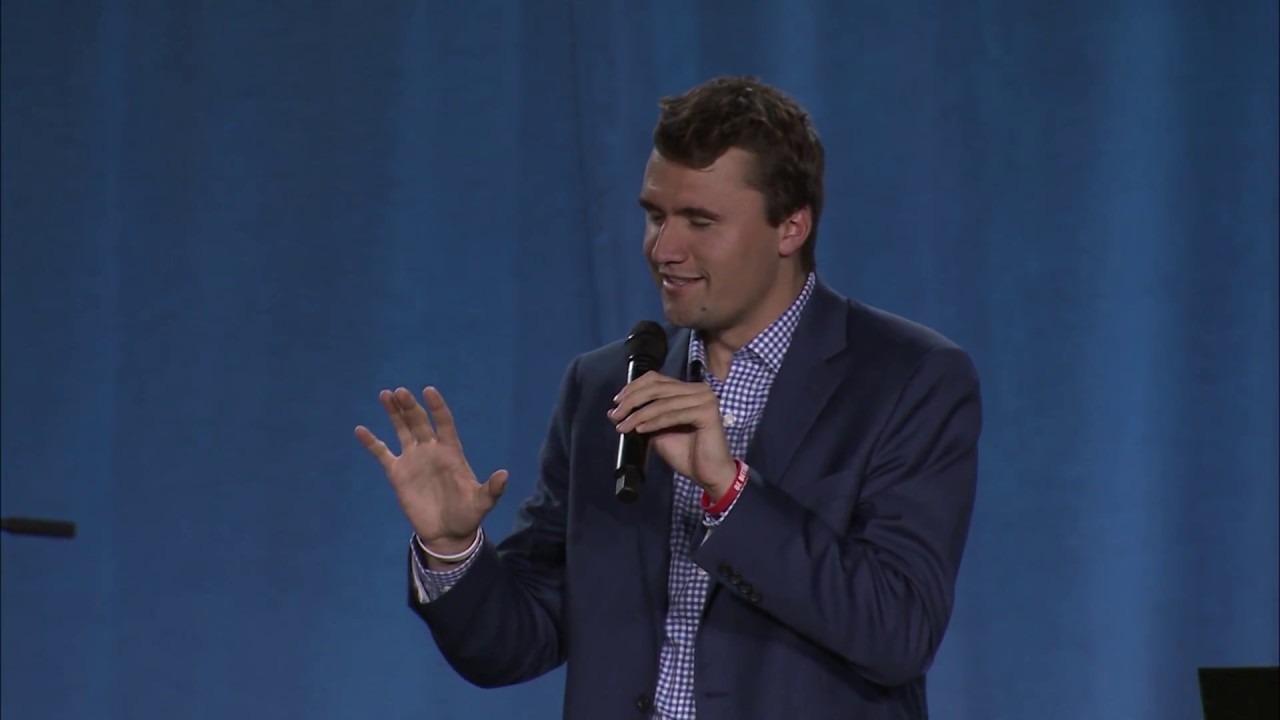
Charlie Kirk on the Most Important Question in Politics: Are People Inherently Good?
Enjoying this? Share it with someone who needs to see it.
Up Next
Charlie Kirk Warns Generation Drowning in Ocean of Debt With $600,000 Invoice Per Graduate
2:17
Charlie Kirk: The Greatest Threat to Western Civilization Isn't What You Think It Is
1:25
Charlie Kirk Explains Why the Constitution Is the Greatest Political Document Ever Written Despite Its Flawed Founders
3:42
Charlie Kirk on the Most Important Question in Politics: Are People Inherently Good?
Charlie Kirk addresses what he considers the most fundamental question in politics and philosophy: whether people are inherently good. This question, Kirk argues, immediately divides people into distinct political camps and shapes entire worldviews. Kirk contends that people are not inherently good, pointing to how we must teach goodness to infants and children. He explores the implications of this belief for the role of government, arguing that if people are imperfect, government, which is merely a collection of imperfect people, cannot be trusted with the power to socially engineer citizens. Kirk explains why the Founders built separation of powers into the Constitution, recognizing government as the greatest historical threat to human freedom. This philosophical framework, he suggests, forms the foundation of conservative political thought and distinguishes it from collectivist approaches.
Charlie Kirk presents what he considers the most important question in politics and philosophy: Are people inherently good? This fundamental question, Kirk argues, will immediately separate people into different political camps and worldviews. His answer is unequivocal: people are not inherently good.
Kirk supports this position by pointing to everyday observations of human behavior. We must teach goodness to our infants, he notes. We have to tell our babies to stop crying and our three-year-olds to stop hitting each other. In our normative natural state, Kirk argues, we are broken. This understanding of human nature, he explains, immediately places someone in a very different camp from those who believe people are inherently good, and it forms a core distinction between conservative and other worldviews.
The Question of Human Perfectibility
Kirk then poses a second critical question: Can the human condition be perfected? Do we believe that with the right influences—governmental or non-governmental—we can actually reach a place where human action can be perfected? Can greed, racism, and sexism eventually be completely removed from our society?
If you believe people are bad and you believe people are not perfectable, Kirk reasons, then a reasonable goal would be to try to make people better—to get them as close to perfection as possible. This leads to what Kirk calls the killer question: Should government do it?
Government as the Greatest Threat to Freedom
Kirk's answer is absolute: government has no place in socially engineering its citizens. Government's role, he argues, is first and foremost to make sure that government doesn't come after us. The number one abuser of human freedom in the history of the world, Kirk emphasizes, is not capitalists, not millionaires and billionaires—it's government.
The Founders understood this reality, Kirk explains. What has preserved most of Western culture is that there are checks and balances against bad people getting too much power to exert it over other people. This is why we have separation of powers—because people are inherently bad, and the system must prevent them from accumulating unchecked authority.
The Logical Flaw in Trusting Government
Kirk then addresses those who might disagree with his position. Even if someone believes people are bad and thinks we should try to perfect individuals, and even if they believe government should be the vehicle for that perfection—believing in a collective approach—Kirk poses one final question: Do you really trust the government?
He challenges the audience directly: You can't possibly trust this government. Government, Kirk reminds his listeners, is just comprised of people. Government does not inherently become good because you have a bunch of people in a room and slap a sticker on it. It's still broken people that are imperfect in a room that will use unlimited power against the citizens.
This philosophical framework forms the foundation of Kirk's political worldview and, he argues, the conservative understanding of the proper role of government in society.