Charlie Kirk on Bill Maher Interview and Why the Death of Christianity Fuels Wokeism in America
Enjoying this? Share it with someone who needs to see it.
Up Next
Charlie Kirk Rallies Young Conservatives at Historic Turning Point USA Student Action Summit in Tampa
20:51
Charlie Kirk Tells University of Washington Students Why American Values Are Under Attack from Within
8:50
Charlie Kirk Unveils Bold Vision for Conservative Movement at Turning Point USA Event
17:08
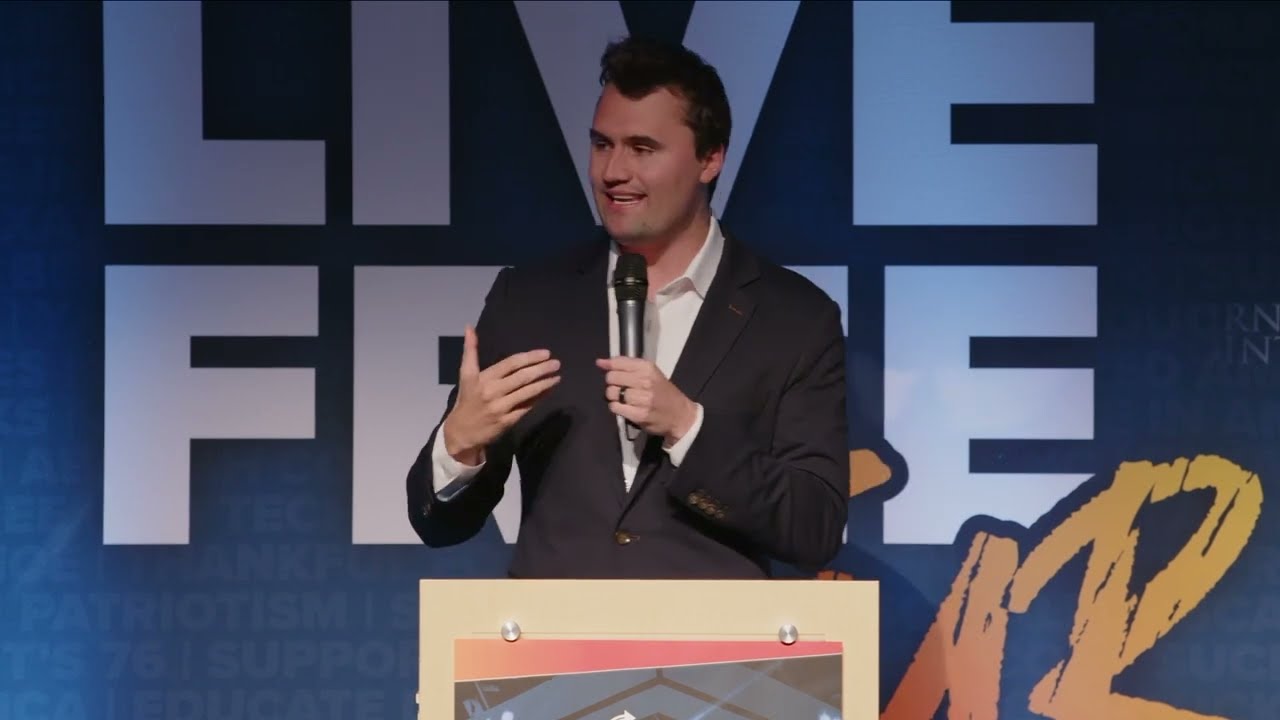
Charlie Kirk on Bill Maher Interview and Why the Death of Christianity Fuels Wokeism in America
Charlie Kirk reflects on his conversation with atheist Bill Maher and explains how the decline of Christianity in America has created a moral vacuum that wokeism now fills. Kirk argues that Gen Z's departure from traditional faith hasn't made them less religious, it's simply redirected their worship toward secular ideologies. From transgender athletes to the cult of scientism, Kirk connects cultural chaos to the absence of an agreed-upon moral structure rooted in biblical truth. He makes the case that Western principles like universal human equality and constitutional rights cannot exist without acknowledging a divine moral standard above humanity.
The Bill Maher Conversation and Secondhand Concerns
Charlie Kirk sat down with Bill Maher for what turned out to be an engaging and respectful conversation, despite their fundamental differences in worldview. Maher, a well-known atheist, treated Kirk well throughout their dialogue. However, the interview came with an unexpected challenge—Maher smoked marijuana throughout the entire conversation. Kirk clarified that he has never used marijuana in his life and actively discourages its use, citing concerns about mental sharpness. Though he joked about the potential effects of secondhand exposure, his opposition to marijuana use remains steadfast. Kirk has consistently maintained that pot use diminishes cognitive ability, something he believes is completely accurate.
The Missing Conversation About Moral Structure
While Kirk and Maher discussed Christianity and various other topics, Kirk expressed regret that they didn't spend more time exploring the importance of an agreed-upon moral structure for society. Kirk's central argument is straightforward: if a society doesn't have a religious foundation—specifically a Christian one—something else will inevitably replace it. This is where the political, spiritual, and religious dimensions intersect. As Gen Z becomes increasingly less religious than previous generations, Kirk warns of a gaping hole in the collective heart of society that must be filled by something.
According to Kirk, the decline of Christianity is directly responsible for the rise of wokeism. The seemingly absurd ideas that dominate contemporary progressive discourse—such as the notion that men can give birth—aren't random cultural developments. They represent the moral confusion that emerges when a society abandons its foundational moral framework.
Separation of Church and State Versus Morality and State
Kirk acknowledged the common refrain about separation of church and state, conceding that some distinction is appropriate. However, he posed a more challenging question: can we have separation of morality and state? When a society no longer has a bedrock moral structure that everyone agrees upon, people inevitably fall into moral confusion. This confusion manifests in policies and cultural shifts that would have been unthinkable in previous generations—widespread promotion of transgenderism among youth and biological men competing in women's sports being prime examples.
Kirk pointed to a stark statistic: 890 medals have been stolen from women because biological men have been allowed to compete in women's sports. This injustice, in his view, is a direct outgrowth of the death of Christianity. Without an agreed-upon understanding of what is right and wrong, good and evil, just and unjust, holy and profane, society loses its ability to make sensible distinctions about reality itself.
What Happens When Society Becomes Too Secular
Kirk warned that increasing secularization isn't just an abstract concern—it has real consequences for everyone, including their children and grandchildren. When society becomes less religious, less Christian, and less grounded in foundational principles, it opens the door for dangerous replacements. Young people who claim to have no religious affiliation are, according to Kirk, lying—or at least mistaken. They don't lack religious affiliation; they simply reject traditional religious affiliation. Everyone worships something, and worship is defined by what you aim at, what you orient your life toward.
For those who claim to be non-religious and insist they just want to aim at whatever they want, Kirk offered a stark warning. This approach often leads to worship of the flesh—pursuing drunkenness, immediate gratification, and whatever impulse arises. He cautioned that this is a miserable way to live, an endless downward spiral that traps people in destructive cycles. Many people are already caught in this pattern, doing whatever their flesh tells them to do whenever they want to do it.
A Better Way: Glorifying God in Everything
Kirk presented an alternative: conservatives and Christians believe in a better way to live, one focused on glorifying God in everything they do. This includes political matters. Kirk explained how this worldview informs his politics through commitment to the Western tradition, which recognizes universal human equality. This recognition is fundamental and cannot be achieved without belief in the divine.
Kirk made a philosophical argument that has significant implications: if you rely only on reason and embrace atheism, you cannot objectively and resolutely say that murder is wrong. You might say murder hurts people or doesn't feel good, but you cannot say it is morally wrong without appealing to a moral standard above humanity itself. Without that transcendent standard, morality becomes merely subjective preference.
The Consequences of Abandoning Christian Foundations
Kirk called on Christians, center-right individuals, and conservatives to understand where the current trajectory leads. It begins with wokeism and secularism—the embrace of increasingly absurd ideas. The woke movement, whatever it might call itself in the future, mimics religious structures and maxims. It manifests as worship of nature, earth worship, the cult of anti-racism, or the religion of scientism. Kirk referenced the recent cultural moment when society was told to trust the experts and trust the scientists at all costs, revealing how secular ideologies adopt the certainty and authority once reserved for religious institutions.
At a fundamental level, human beings desire connection to something greater than themselves. Kirk's contention is simple: there is nothing greater than being connected to what built this civilization in the first place. He challenged liberals, leftists, and atheists to articulate what ultimate authority should guide society if not God.
Constitutional Authority Rooted in Biblical Truth
Politically, Kirk affirmed that conservatives believe the Constitution should be the ultimate authority. However, he emphasized that the Constitution itself emerges from biblical truths. The ideas enshrined in America's founding documents—that all men are created equal, that individuals have rights to free expression and to worship their creator, that faith cannot be compelled by force but must be chosen through personal agency—all grew out of a biblical worldview. These principles, which many people take for granted, cannot be sustained without the religious foundation that generated them in the first place.