Well, today we're going to be doing a
ballistics gel block test. But before we
get started, I just wanted to talk a
little bit about the 306 round.
Now, the 300 6 round, many people don't
realize how powerful it is. So, I have
some other rounds here that I'm going to
use to compare it to. So, I'm just going
to go through each one. I'm going to
give you muzzle velocity and muzzle
energy. so you can get an idea of the
difference in power with all these
rounds.
Now, we're going to start off small.
Now, keep in mind that in order for a
round to be lethal,
you need somewhere around at least 59
foot-lbs of energy.
We'll start with this little guy. This
is a 22 long rifle, 40 grain. Muzzle
velocity is about 1,200 FPS. Muzzle
energy 128 foot-lbs. I'll move up to the
10 mm. Now, don't be fooled by
relatively small size. People use this
for bear defense. That is a 10 mm 180
grain. Muzzle velocity is about 1,030.
Muzzle energy 424T-lbs.
Now we'll move up to the 5.56.
That's a 55 grain bullet. Muzzle
velocity is about 3180.
and energy footpounds is somewhere
between 1,200 to,300.
Now we'll move up to the 308.
That's 150 grain FMJ
about 2,625
FPS with a muzzle energy of about 2,289.
So now we're really moving up in energy.
So finally we come to the 30 6.
This is a 150 grain bullet. Muzzle
velocity 2,910
with energy footpounds at the muzzle
about 2,820.
So that's a powerhouse. Now this is also
a 300 6, but it's a different bullet
design.
That's a full metal jacket.
Now, when this round is fired, it has
more of a tendency for penetration than
it does expansion. So, depending on what
it hits, it if it hits soft tissue, it
could zip right through.
Now, this is a soft point expanding
round. Usually used for hunting, deer
hunting, whatnot. that lead soft nose
there. When that hits something, that'll
start to expand at a high speed. We'll
come back to the different bullet
designs here in a bit. So, I want to
show you this. This is, I believe, a 3/8
AR-500 steel, and this is what a 30 six
can do to it at about 50 yards. So, you
got to be real careful even shooting
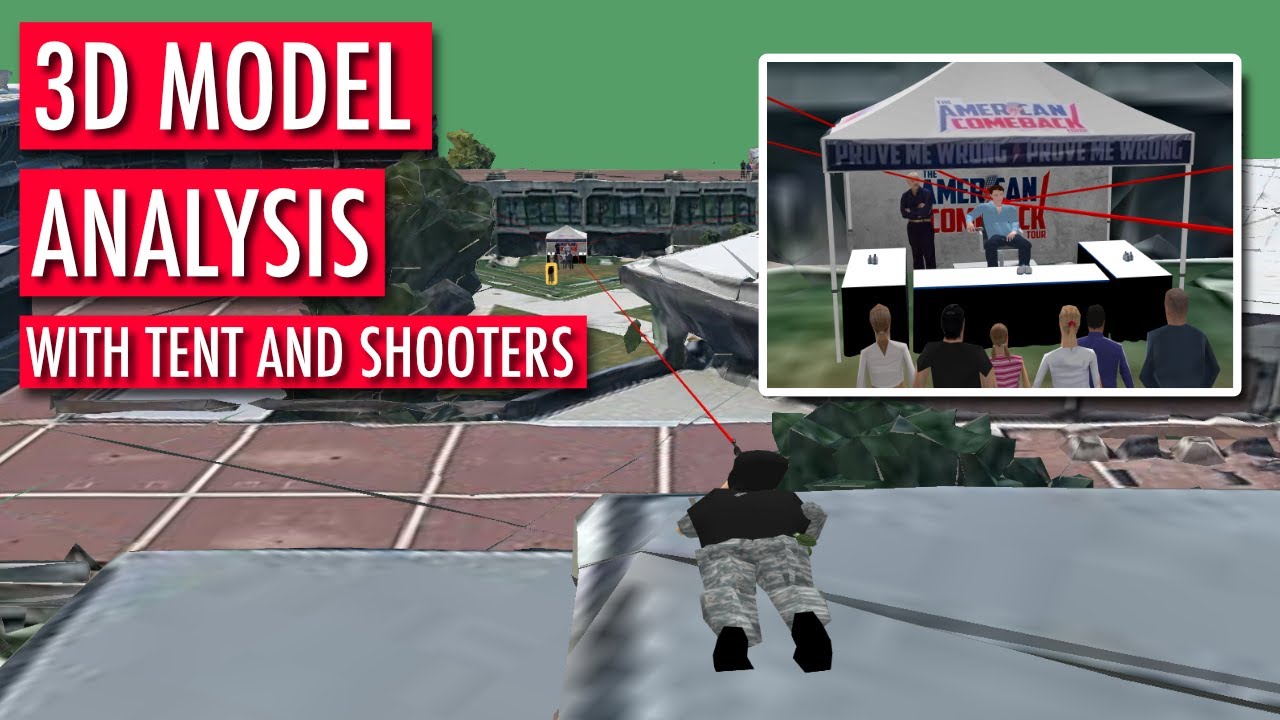
these plates. So, let's talk a little
bit about the theories and the narrative
surrounding the tragic shooting Charlie
Kirk. Everybody knows the official
story, which is there was a shooter on
the roof at 200 yards with a 30 six
and around straight to the neck, but for
some reason, no exit wound. Now, a lot
of people have questioned that narrative
and rightfully so. Now, another
narrative going around at the time was
there were people saying only a
professional could make this shot. So, I
simply challenged that. I knew that was
false right away cuz any deer hunter
knows that a 200 yard shot with that a
flat shooting of a round, that's not a
difficult shot. But, as I said in a
previous video, that's not to say that
it was or wasn't a professional. I've
heard some say, some theorize that the
reason why there was no exit wound is
because
the bullet came in and I'm going to use
this
I'm going to use this arrow
kind of a pointer.
So, the shot came in and I wish I had
more neck to work with, but this is kind
of the best I could do at short notice.
shot comes down at an angle and it hits
his spine and bounces off his spine.
Now,
bullets do crazy things at high
velocities, but with something with the
power of 30 six,
I don't think that's going to ricochet
or bounce off of a spine. Now
fragmentation and ricochets may happen
say on a bear or an elk
but very unlikely on a human being.
Now I think a little more plausible
explanation might be he was wearing body
armor and I know some people say no he
wasn't wearing body armor but some say
that he was. Let's say he was wearing
body armor. Let's say the shot comes
down.
it hits the top edge of the plate of his
body armor and then ricochets into his
neck. That is possible, I believe. Now,
I'm not an expert on body armor, so
someone might say, "No, it can't
ricochet." But again,
um high-speed bullets can do some crazy
things. Now, I think an even more
plausible theory,
see if I can get this guy turned around,
was that it was another shooter from the
back.
and that the angle of the shot
was here
and then came out here.
Now, on the last video, I disassembled
and reassembled my rifle.
Okay, there you go. I put the time
sample there. So, now I'm going to have
to test my zero. See if I'm still on.
So, please bear with me while I take
some test shots.
[Applause]
[Music]
[Music]
So, what we have here is a four shot
group at 142 yards. Yes, I amended my
shooting distance from 200 to 142.
And the shots go like this. One, two,
three, four.
Shots one and four were pretty much
right on top of each other. Now, this
one is excluded.
That was just another shot, another
quick shot I took after I cut the camera
to just kind of confirm didn't aim quite
as carefully. So now you might say,
"Well, it looks like you're hitting high
and to the left." Well, exactly. That's
the way this rifle was shooting with
this ammo, which is Federal Blue Box 150
grain. That's not the ammo that I used
to sight this in. The ammo that I used
to sight this in was this ammo here.
So, there's two things I could do in
order to get us more dead center for our
experiment. I could either recalibrate
my scope or just simply use the ammo
that was used to zero this rifle.
Long story short, my rifle did not lose
its zero.
So, I'm going to move back to the 142
yds and I'm just going to take a test
shot or two with the actual ammo used to
sight this in. And we should head a
little closer to dead center.
[Music]
Okay.
Well, so as it turns out, there's the
new impact. It did not hit dead center
like I thought. So that tells me that
it's shooting high to the left for both
rounds. So,
um, all I have to do now is recalibrate
my scope to hit a little more dead
center.
Now, just to be clear, this doesn't mean
that it
wrecked my zero when I disassembled and
reassembled.
Okay, it was always shooting high and to
the left apparently for both rounds.
Just goes to show you how often I shoot
this thing. Hardly ever. It was like
three years ago. But now I'm going to
quickly recalibrate my scope to hit a
little more dead center so that we're on
for our little test.
Okay, so I just took a shot off camera
pretty much dead center to where we need
to be. I didn't do any math
calculations. I just went over right 20
clicks and down 10. And that's pretty
much where we need to be there. So now
it's ballistic dummy test time.
So, I have my ballistics gel head set
up. And the first thing that happened
was it flopped to the ground. This thing
isn't very stable. So, I had to make
some brackets for it. So, rather than
wasting a round on the neck, which I
don't have much to work with. And we all
know it's going to go right through. I
think I'm just going to go down Main
Street. At least then we can see the
effect of a not six round on the human
skull. Heat. Heat.
[Music]
[Music]
Yeah, my little brackets didn't even
survive even though they probably
weren't direct. directly hit just from
the shock.
Now, there's one other test that we can
do with what we have left here. Some
people theorize that it was 22 long
rifle. Now, I'm just exploring the
theories here. I don't think that would
be my go-to round,
but some people think that. So, I do not
have a 22 rifle, but I do have a 22
revolver.
But even if I had the rifle, I wouldn't
be able to replicate the downward angle.
But if I just stand right here and shoot
with my revolver, I'll be able to. Now,
you're going to get a lot less velocity
and power out of revolver than you will
a rifle. You got the cylinder gap, and
you got the shorter barrel with the
revolver.
But I'll just take a shot and see if
that is more consistent with what we've
seen in the footage.
Is that more consistent with what we
saw?
And there we go.
Now, the moment of truth.
Do I believe that it was a 300 6 used in
this crime?
I'll answer that for you. No.
First of all, doesn't have the right
sound. It almost sounds like the rifle
used or the firearm used was
somehow suppressed or maybe subsonic
ammo,
but I believe it was a much smaller
caliber. And I've heard anything from 22
long rifle to 5.56.
The only way it could have been in six,
I believe, is if it would have
ricocheted, hit something hard, and then
went to the the uh wounded area. Now,
let me just say this in closing, and
that is I realize how sensitive of a
subject matter this is,
but at the end of the day, what's really
important is that the person who
actually perpetrated this needs to be
brought to justice.
Let's hope that
our government will be transparent, the
FBI will be transparent.
We can only hope.
And uh let's hope that whoever
perpetrated this will in fact be brought
to justice. Thanks for watching.