Up Next

Candace Owens Releases Charlie Kirk Text Messages Proving Israel Stance Shift Before His Death
1:05:09

Josh Petersen Exposes Turning Point USA: Underage Drinking, Israeli Operatives, and Charlie Kirk's Assassination
2:07:22
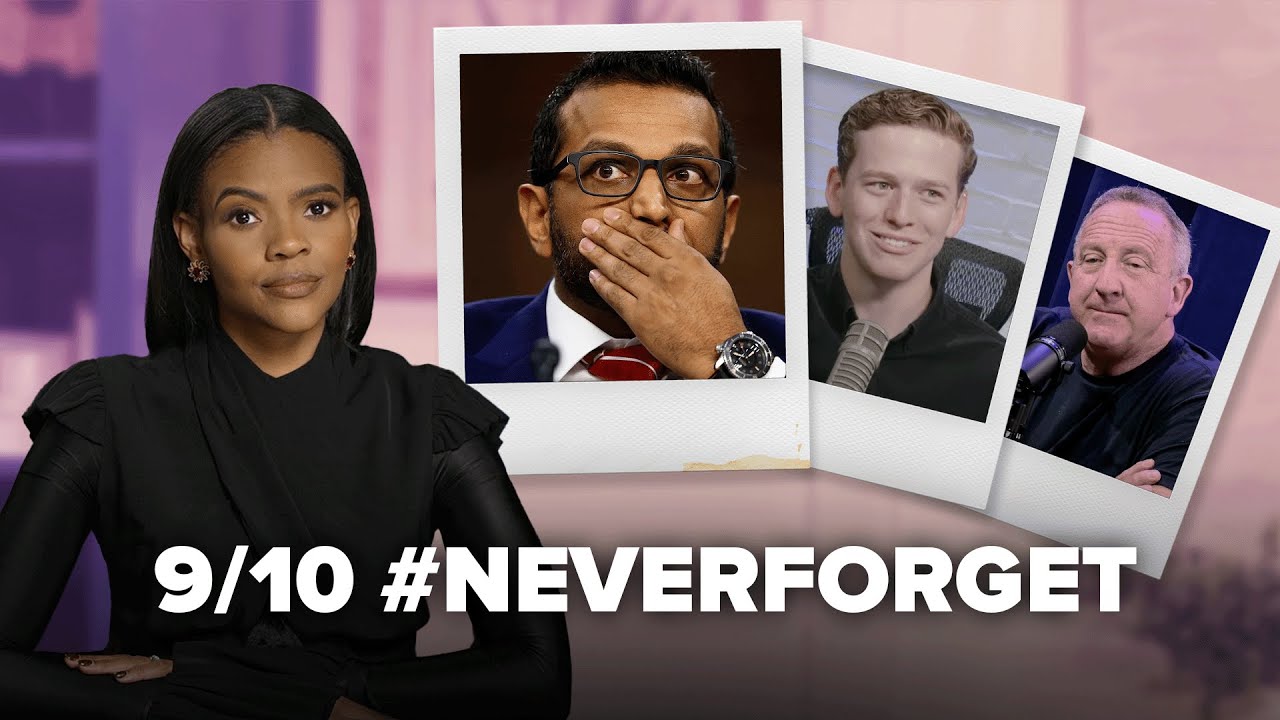
Candace Owens Reveals Twelve Israeli Cell Phones Detected at Charlie Kirk Assassination Site
51:06
Blake Neff on Candace Owens, Tucker Carlson, and the Assassination of Charlie Kirk
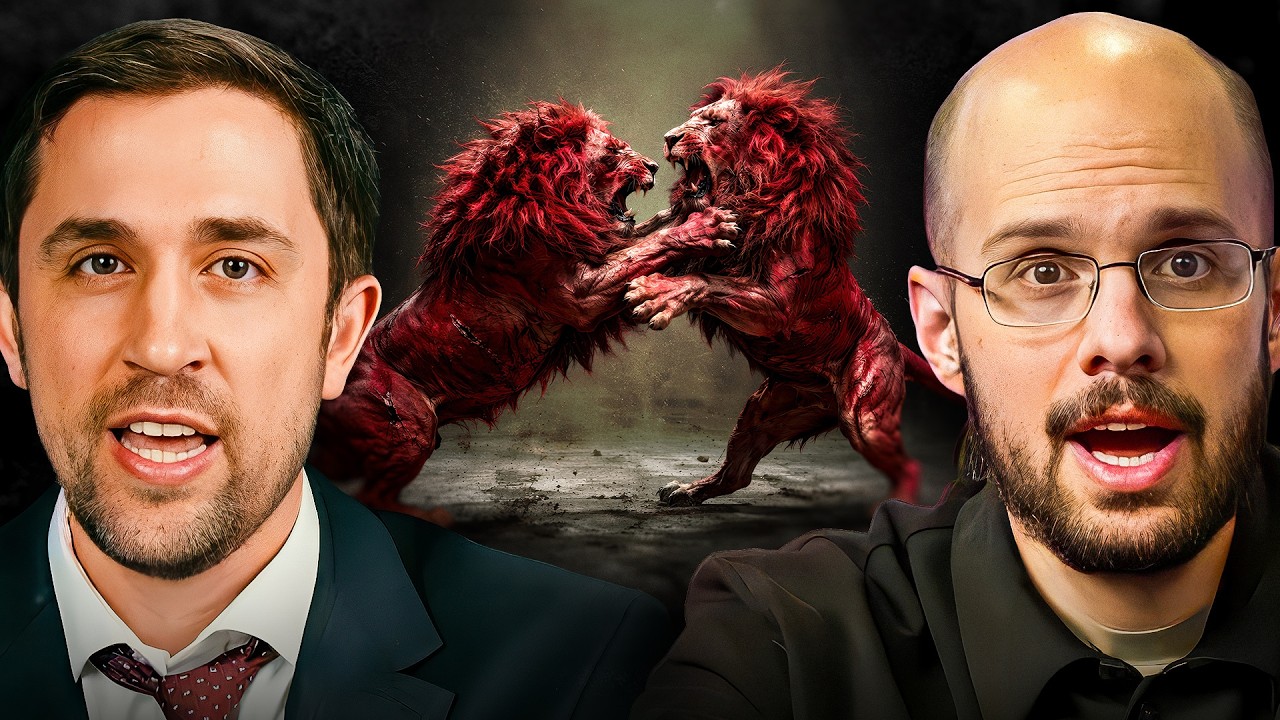
Blake Neff stood 20 feet from Charlie Kirk when he was assassinated at UVU. As Kirk's producer and the former head writer for Tucker Carlson, Neff now leads the Charlie Kirk Show alongside Andrew Kolvet. In this conversation, Neff exposes what he calls the "most evil" conspiracy campaign in modern conservative media, one he says Candace Owens knows is a lie. He walks through the overwhelming evidence against Tyler Robinson, the private rabbi call twisted into proof of a cover-up, the "Daddy's Home" Shabbat tradition Candace mocked, and why he believes Tucker Carlson has enabled some of the worst voices on the right. Neff also opens up about his own 2020 cancellation from Fox News, the moral obligation conservative leaders have to call out lies within their own coalition, and the painful cost of watching former allies weaponize Charlie's legacy.
Standing 20 Feet from History
Blake Neff was standing 20 feet from Charlie Kirk at the University of Utah Valley (UVU) on September 10, 2025, when Kirk was assassinated. In the weeks that followed, Neff, along with Andrew Kolvet—Kirk's longtime friend, spokesperson, and producer—emerged as the voices continuing the Charlie Kirk Show. Though they reject the title of "host," insisting there was only one host, they recognize that millions of listeners still want to hear what Kirk cared about most.
"We don't use that title. We're still producers of that show. There's only one host, but a lot of people want—they still want to hear Charlie's voice. They still want to have something that's speaking to what Charlie spoke about," Neff explained. "Andrew and I and everyone else would admit we are not Charlie remotely, even us combined. But I think there's a lot of people who take comfort from the show continuing, at least for the time being, and trying to give voice to the things that he cared about."
Neff acknowledged the challenge of speaking for someone who can no longer speak for himself. "One thing that's great about Charlie is because he was a good leader, because he was a responsible thinker, he had good habits. You can learn a lot from just how Charlie approached different issues. The fact that he talked to a variety of people, the fact he didn't lose his head if something upset him. There's ways he went about it. So one, we can look to that and two, we just try to be frank about it."
The Inner Circle Question
Since Kirk's death, claiming to speak for him has become a national pastime on the right. Neff was careful to define his role. "I don't think I've ever described myself as Charlie's best friend. And if I did, that was a mistake because I wasn't. First of all, Charlie's best friend was Erika, his wife, and that's how he was."
Neff described his relationship with Kirk as one of daily collaboration. "I was a person who worked with Charlie every day. I was a person who spoke with Charlie every day except for Shabbat where he was incommunicado." He only started working with Kirk in October 2022 and moved to Arizona in May 2023, meaning he didn't know Kirk nearly as long as many others.
"Charlie was one of those guys who thought no publicity is bad publicity if you're handling it the right way," Neff said. "He worked with Tyler Bowyer who runs Turning Point Action. That's the guy who got Charlie to move Turning Point down to Arizona. He worked with him very closely on a ton of stuff. Andrew created the Charlie Kirk show with him. Worked with him every single day. Worked with him very extensively."
Kirk's ability to build coalitions meant that many people felt they were part of his inner circle. "Charlie was a person who spoke to a lot of people and there were conversations I myself was not a part of. So I don't want to say who he was talking to the last day of his life because he was often a private person who had private communications."
Diagnosing Candace Owens
Neff believes Candace Owens is "basically the most profoundly narcissistic person I have ever seen in my entire life." He argued that after Kirk's death, she expected to be asked to take over Turning Point USA. "I think she was narcissistic enough that she could in her head convince herself, I did events on par with Charlie. I was Charlie's equal, his second in command really within the organization. I think she actually psychologically convinced herself that what the next thing that was going to happen was Turning Point was going to get on the phone and say, 'Candice, we need you. Can you take over Turning Point now?'"
When that didn't happen, Neff said, "she experienced it as a huge ego injury. And the only way she can cope with that is Turning Point is completely taken over. It is the enemy and I will destroy it."
Neff pushed back hard against the claim that Owens showed "nothing but Christian love" toward Erika Kirk. "Not even 3 weeks after Charlie's death, she does a segment on her show where she says the evidence points towards this being signs this is a regicide, which is the removal of a king to put in a new leader that that king wouldn't have wanted. Well, who is the leader of Turning Point? At that point it has been announced that Erika Kirk is the CEO of Turning Point. So you are saying Charlie was killed to install his wife whom he would have never wanted in that position. That is an attack on Erika."
He described Owens as "a canny actor, a mean girl if you will. And one of those things mean girls are good at doing is being I'm totally on your side person that I hate. I'm 100% behind you, person I despise with every fiber of my being."
The Evidence Against Tyler Robinson
Neff laid out what he considers overwhelming evidence against Tyler Robinson, the man arrested for Kirk's murder. "We have Lance Twiggs on camera saying, 'Yeah, this person looks like Tyler Robinson. Tyler Robinson sent me this text message where he says, I did it. He came to me in person and said, I did it. I wish I hadn't done it.' All these things. So, we have Lance Twiggs says these things. We have DNA evidence. We have a rifle that is owned by Tyler Robinson that is found at the scene and it has these engraved bullets. We found the engraving machine that would be able to make those engravings in his home. And here's footage of him walking around. There's his car. We can identify it because we can see the rims on the tires are rather uncommon. And on and on and on."
Conspiracy theorists, he said, dismiss all of this. "They basically say they've produced almost no evidence. They can't conclusively show xyz. I have challenged people. Is there a person—is there a murder case where you believe someone was guilty where they were not caught at the scene where you think someone—where there's more evidence than in this case?"
Neff believes Owens knows Robinson is guilty. "I strongly believe Candace Owens deep down knows, for example, that Tyler Robinson pulled the trigger and killed Charlie. She wants the person who killed Charlie to get away with it because maybe deep down she hated Charlie himself. She clearly deeply hates Erika and she knows it will hurt Erika if Charlie's killer is not punished."
The Rabbi Pesach Call
Much has been made of a phone call Kirk had with Rabbi Pesach shortly before his death. Neff was on that call and described it as entirely routine preparation for Kirk's campus tour. "Charlie is preparing for his biggest campus tour ever. There's going to be the most people there. He has the highest profile ever. There's going to be more people than ever trying to make a name for themselves just by dunking on him with a question, just by trying to get the better of him."
On the call were Rabbi Pesach, another friend of Charlie's, Neff, Michael McCoy (Kirk's assistant), and possibly Josh Hammer and Frank Turek. "The call and one reason I don't remember every single facet of this call is this call was just a discussion of okay if I get asked questions about XYZ on our relationship with Israel how can I how can I frame this? How can I not put my foot in my mouth by saying the wrong thing?"
Kirk was trying to navigate a difficult issue. "Charlie was trying to chart out that it's okay for you guys to say you don't like Benjamin Netanyahu. It's okay for you guys to say you don't like how Israel's conducted the war in Gaza. He didn't like it when he saw reports that this Christian church got damaged or destroyed or that these Christians were killed. He did complain about that certainly in private."
There were no threats on the call. "There was no there was no threats. Oh Charlie, you'd better do this or XYZ will happen to you. That is fabrications from people."
Donor Conflicts and Moral Blackmail
Kirk did face pressure from donors over his relationships with Candace Owens and Tucker Carlson. But Neff said Kirk hated what he called "moral blackmail." "Charlie would disinvite. Charlie would have people he'd cut off and say, 'I'm not inviting the speaker anymore.' But probably the worst way to ever have that happen is to say, 'Charlie, you'd better disinvite this person or else.' Because then he's like, 'I can't give in because then I'll look like I'm giving in to people and then they'll never stop trying to do it.'"
In leaked text messages, Kirk expressed frustration about losing a donor who demanded he uninvite Tucker, then joked about inviting Candace. "What he clearly means is I'm, you know, annoyed that people are doing this that they're demanding that I cancel people. So, haha, it'd be funny if I responded by bringing in someone who I would be even more extreme. But he did not literally mean that. This is clearly his way of expressing exasperation."
Owens has used this message to claim Kirk was about to invite her back to Turning Point, and that this is why he was killed. Neff called this interpretation "despicable."
From Dartmouth to Fox News
Neff's path to Kirk began with a book recommendation. Growing up in South Dakota as a Teenage Republican, he attended an event where then-House member John Thune recommended "Letters to a Young Conservative" by Dinesh D'Souza. The book described D'Souza's time at the Dartmouth Review, the conservative campus paper. "I read this and I think I want to go to Dartmouth College and write for the Dartmouth Review because that sounds really awesome. And 110% that is the reason I end up going to Dartmouth."
He wrote for the Review, planned to be a lawyer, took the LSAT, but deferred law school for a journalism fellowship at The Hill sponsored by the Collegiate Network. That led to a position at the Daily Caller, where he met Tucker Carlson. When Carlson got his Fox show, he asked Neff to be the writer. Neff was 26 years old.
"Tucker is a better writer than I am and I learned a lot from him working under him," Neff said. "Sometimes I would write something and Tucker would go oh this is great and you know it would run one or two words would change sometimes he'd change it a bit sometimes he'd say botch the job rip it all up and there's a totally new thing."
The show aired live at 8 p.m., and Neff usually knew the topic by 1 p.m. The pressure wasn't the time crunch, but the stakes. "The biggest source of pressure wasn't so much the time pressure of how long it had to be. The biggest pressure was the very real awareness that the show actually mattered. Donald Trump was the president. Donald Trump watches a lot of TV news. He did and always has. He's gotten cues from what the media is saying about things. And so we had a pretty good chance that if we said something that the president would see it."
Neff believes the show influenced Trump's decision to ban transgender troops from the military. "We did it. And in my head, I thought it was the next day, but it turns out I talked to the reporter. It was I think we did it twice and it happened a few weeks later. But basically then President Trump does abruptly announce one morning on I think on Twitter that he is changing the policy and we're not going to have transgender troops anymore. And apparently the Pentagon is caught off guard by this."
The 2020 Cancellation
In July 2020, CNN revealed that Neff had made anonymous posts on an unmoderated internet forum for lawyers and law students. The forum had "become right-wing and it just had a lot of chaotic humor on it." The worst CNN found was that Neff posted in threads where someone else used a racial slur. "It was July 2020. It was a very superheated time in the country. It was the beginning of peak cancel culture."
He was fired from Fox. "It was humiliating. It was a big story. It was hugely stressful. It was the worst thing that's ever happened in my entire life. Not even close. I think I had like the legit like when you get depressed, you kind of have this void in your stomach that feels awful. And it was there for a good 6 months."
He couldn't read for months. "I would open it. I would read one page and I couldn't think straight and I would just give up on it and put it away."
But the experience prepared him for what came after Kirk's death. "It toughened me up for this sort of thing. So now these ghouls, they'll attack me. They'll make weird accusations about me, weird implications. Candace will do I think she did a whole show about me last week and someone asked what I thought of it and I said, 'I didn't watch it. It didn't bother me.'"
Pushing the Envelope
Politico claimed Neff was "instrumental in pushing the envelope of what was acceptable to say on the right." Neff agreed, but with an important caveat. "One of the things that we did with the Fox show is there were things you were essentially not allowed to say on the right. And one thing I think people don't appreciate is how dramatic that change has been."
He gave examples. "There is a ton of stuff in American life that was premised on explicitly discriminating against men, against white people, against straight people, and of course specifically straight white men. And it was all over the place. And when it was happening in that period, you kind of couldn't say it. You couldn't say that this is—they are being racist against white people."
Fox wouldn't let them say Maxine Waters hates white people. "So instead, we had to work out a vocabulary to how do we say this without making everyone flip out? So one of the things we had to say a lot of is they're attacking people based on skin color. They are discriminating based on skin color."
They also had to articulate a conservative vision for avoiding wars. "A lot of wars are not nearly as in America's interest as people will claim. They're more in the interest of any number of specific lobbies. And we were able to give some put some meat on the bone of being able to articulate why that was the case."
Free Speech and Its Limits
Neff describes himself as a "free speech absolutist." "Freedom of speech is you can say anything unless it is actively fermenting a crime. Unless you are really specifically inciting a crime or of course engaged in criminal conspiracy or libeling, defaming someone, you can be sued for that. But other than that, we just should not have restrictions on speech."
But freedom of speech creates a responsibility. "If we are genuinely free speech absolutists, that means people are going to say totally unhinged and hateful and conspiratorial things because if you're a free speech absolutist, they have the right to do that. But that actually makes it more important for us as political actors to try to set boundaries of okay, if we're in this coalition, what is it okay for someone to say and still be a member in good standing of this coalition."
Kirk tried to create that boundary. "We reject Jew hate in all of its forms. If we're going to have a movement that is a big tent, that doesn't mean literally anyone can get into it."
Neff has never called for Owens to be censored. "I have never once said YouTube should ban Candace. I've never said Rumble should ban Candace. I don't even think I've ever said they should demonetize her. And I've never said she should get arrested for these things, that we should change our laws, that she's unable to do this. I've just said the stuff she's saying is a lie."
Tucker's Response
Tucker Carlson accused Neff of making his "peace with censorship," which he likened to making peace with genocide. Neff was deeply hurt. "The Politico article explicitly—I say we can either decide this was a mistake and we embrace censorship or we confront this in some other way so that we can preserve freedom of speech. And as I clearly say I would prefer to have freedom of speech greatly and the article itself says I support maximal free speech."
Carlson, Neff said, "deliberately presents it to conceal the fact that I make it clear I support maximal free speech."
Neff had asked Carlson to ask his brother Buckley to stop promoting conspiracy theories about Kirk's murder. Carlson refused. "The last communication I had with Tucker was Tucker just privately, can you ask your brother to just stop pushing this Candace stuff? And he wouldn't. Not 'I will ask, but I don't think he'll do it.' He refused to ask."
Neff believes Carlson has changed. "I think he's indulged negative traits within him more and more. And so they've taken over more and more of what his behavior is." He pointed to Carlson's fixation on Iran. "He has always been passionately against us going to war with Iran. He was paranoid that we would go to war with Iran. The fact that it finally happened, it was just profoundly super upsetting to him. And this has made him so angry. Israel clearly fought in favor of this regime change attempt happening. He has a huge gripe with them. He's really angry at them. And because of that he'll believe anything negative."
Carlson has suggested Israel murdered Kirk and President Kennedy. "He'll start to believe that. And then that transitions into, let's be frank, carrying water for people who are pushing the most hateful and deranged conspiracy theory."
The "Daddy's Home" Shabbat Story
One of the most painful attacks for Neff involves Kirk's Shabbat tradition. Kirk adopted an "eccentric Christian evangelical Shabbat" from Dennis Prager. Every Friday night, he'd send a message to the team: "Shabbat shalom." Then he'd turn off his phone and spend the day with his family. "He would come home, he'd say, 'Daddy's home,' send the Shabbat show message, turn it off, put it in the drawer, and he wouldn't look at it."
Owens and others ridiculed this. "You can go buy a 'Daddy's Home' shirt on Candace's site. She suggested initially that it was made up. She thought she could get away with just lying. She suggested that Charlie's book, 'Stop in the Name of God,' which is his thing, why you should honor the Sabbath, that this was slapped together after he died."
This is trivially false. "Charlie talked about working on this book on his show. They just thought they could get away with lying about that."
Even after the lie was exposed, they continued to mock it. "It's so minor compared to you murdered Charlie or any of these grand conspiracies, but it's so integral to the deeper truth, which is that this is so hateful at heart. To take one of the favorite things of the widow of Charlie where she says, 'This is one of the most important things in our life together, in our romance together,' and 'it was a lie. We're going to make fun of it. We're going to ridicule you about it.' It shows how malicious this is."
Growth Mindset vs. Destruction Mindset
Neff contrasted Kirk's "growth mindset" with the "destruction mindset" of his attackers. "Charlie was such a growth mindset person. He always believed find the good, emphasize the good, encourage more of the good things to happen. 100% how he handled anything with the Trump administration."
Even when Kirk disagreed with Trump, he focused on what was working. "What he would do is he would focus on the good things because he wanted more of them to happen. The best way to get things that you want from Trump is to say that thing you did that I like that's so amazing do more of that."
This is what the show still does. "We try to tout things that are good because a lot of good things have happened in this country, including in the year since Charlie died." He pointed to the DOJ's prosecution of Antifa members who targeted an ICE facility. "They didn't just go after the person who pulled the trigger or whatever. They went after the people who were secondarily involved, who were helping run the order, who helped destroy documents. And they went after them as full accessories to terrorist activities and they got convictions and they got strong sentences on those people."
The conspiracy theorists, by contrast, are driven by a "destruction mindset. It is I want to be number one regardless of who I destroy to get there. I will be king of the ashes."
The State of Turning Point USA
Despite the attacks, Turning Point continues to grow. "We have far more chapters than we had a year ago. We have more college chapters, more high school chapters." The chapter leader summit in DC was the largest ever, with thousands attending instead of the usual few hundred.
New initiatives include a Young Men's Leadership Retreat to complement the Women's Leadership Summit, and "Pick Up the Mic," where student leaders do campus debates in Kirk's style. "This both carries on his legacy and let's be frank, it's a talent cultivation program. If you have 50 people do these, maybe a few of them will be naturally really good at it or they'll develop to be good at it. And then those are people who can be carrying on Charlie's legacy when we need to be having campus debates 5 years from now, 10 years from now into the future."
The work continues because the team is focused on what Kirk cared about. "What's helped keep things focused is that the work always is continuing. We have we're still doing the campus events with big names. All of that's happening. All of that is continuing."
Charlie Kirk's Legacy
Neff believes Kirk was a rare and exceptional leader. "Charlie in everything he did was thinking what is my duty to God and my duty to my country and what will enable that to happen. And that made him—that's what drove the growth mindset stuff that Charlie was always so happy to see other people around him succeed."
Kirk wanted others to win, even rivals. "He could easily have said, for example, Matt Walsh does 'What is a Woman?' and he could be like, well, Matt Walsh, he's over at Daily Wire. That's like a rival thing or whatever. I'm going to be butthurt about that. But he didn't. He's like, Matt Walsh did a huge win for the country because he made 'What is a woman?' a stock question that you can ask everyone and they can't answer it."
The loss of Kirk is a national tragedy. "I feel ill, not just because Charlie's dead and he was my friend, but because I know it will be so bad for the country to have lost him. Charlie was a true leader. His moral center was so good. It's so rare to have people like that. And that one was taken away from us because some loser fixated on him while with his furry boyfriend in a small town in Utah and thought, 'I'm going to go shoot that guy dead.'"
As for how long the show will continue, Neff deferred to Erika Kirk. "It will continue as long as Erika wants us to do it because she is in charge." He sees his role as serving Kirk's legacy. "My mindset is to be a good servant. Erika wants the show to continue and I think a lot of the audience want the show to continue. We get a lot of emails from them where they say, 'Thank you for doing this. Thank you for trying to continue Charlie's voice' and I want to be there for those people."
"This idea that we want to replace them, absolutely not. I've worked for two incredibly talented people, two worldclass talents at being charismatic voices in politics. And the thing that comes out when you do that is you realize the difference between yourself and those people. I am aware they have talents I don't have. The best role I've been able to have is trying to improve the words, improve the messaging of people who can have a massive impact on the direction of the country. I want to be able to improve the effectiveness of people who are better than I am."
Video Transcript
You were sort of instrumental in pushing
the envelope of what was acceptable to
[music] say on the right.
>> I support maximal free speech. I have
never once said YouTube should ban
Candace.
>> Aren't we dealing with actual
defamation?
>> She is a malicious, [music] hateful,
dishonest, destructive actor in American
life.
>> Is it just fame, clicks, likes, money?
>> She wants the person who killed Charlie
to get away with it. Tucker has extended
[music]
maximum grace to Candace Owens. Tucker
was a benefactor to me, but Charlie was
a benefactor to me, [music] too. Tucker
has done things that are indefensible.
>> He is siding with some of the worst
voices in the country right now.
>> The last communication I had with Tucker
was Tucker just [music] privately, can
you ask your brother to just stop
pushing this Candace stuff?
>> Is all of this the result of the effort
to bring more speech [music] to the
public square?
Mike Nef.
>> Yes.
>> Thank you for being on the show. No,
>> thank you for inviting me.
>> You were standing 20 feet from Charlie
Kirk when he was assassinated at UVU. In
the weeks that followed, you along with
Andrew Kulvet, Charlie's longtime friend
and spokesperson and producer, emerged
as the host of the Charlie Kirk show.
>> Well, we don't use that title. We're
still producers of that show. There's
only one host, but a lot of people want
they still want to hear Charlie's voice.
They still want to have something that's
speaking to what Charlie spoke about.
And Andrew and I and everyone else would
admit we are not Charlie remotely, even
us combined. But I think there's a lot
of people who uh they they take comfort
from the show continuing, at least for
the time being, and trying trying to
give voice to the things that he cared
about. and we do our best in that
regard.
>> How do you
the news continues you know things are
happening today that weren't happening
when Charlie was here or things have are
happening today that are an evolution of
the things that happened with when
Charlie was here and therefore your
perspective on it if Charlie were with
us today even his perspective on it may
be different than what his perspective
was uh before his murder. How do you
decide on a day-to-day basis what is
sort of Charlie's perspective on history
as it unfolds?
>> Well, one thing you'll see a lot of a
lot of people will claim extremely
aggressively this is what Charlie would
do here. And I think one part of being
honest is we try to be frank about some
degree of uncertainty that we one thing
that's great about Charlie is because he
was a good leader because he was a good
uh
because he was a responsible thinker be
he had good habits. He you can learn a
lot from just how Charlie approached
different issues. The fact that he
talked to a variety of people the fact
he didn't lose his head if something
upset him. There there's ways he went
about it. So one, we can look to that
and two, we we just try to be frank
about it. So as an example of one that's
been a tough issue, uh the Iran war,
Charlie was very vocally against regime
change in Iran. He was definitely even
against the bombings that we did a few
months before his death. And I can say
pretty confidently that he would have
been arguing strongly against President
Trump doing the intervention he's since
done. And we've been frank about all of
that. What we've also said is Charlie
was never a person who would, for lack
of a better term, crash out if something
happened that he didn't care for. And so
we've tried to use as an example the
bombings last uh a year ago as an
example to look towards where Charlie
argued against escalation and when
President Trump did the one bombing
strike and then sought an off-ramp, he
praised it. He didn't aggressively pout
that certain things he didn't want
happened anyway. He tried to praise a
path that he liked. And so we've said
that is the most recent evidence we have
of how Charlie would behave. We know
that he didn't like regime change. We
also know he liked the Trump
administration and wanted it to succeed.
What might he do? And we've speculated
on that that he would probably be urging
some way to get a peaceful resolution to
this. He would be arguing against
additional escalation. But we're always
frank that this is our best guess about
what Charlie would do because as time
passes, we do it further away from the
living memor of what Charlie did. And
one of his strengths was that he was a
person who tried to learn and evolve and
react to things. He was not just cast in
amber at age 18 and he would be the
exact same in his response to
everything. And so we just tried to be
frank about that. And then we we try to
play as clips when we're able to as
well. And
we we do our best. And I think that
that's our moral obligation to the
memory of Charlie. And
it's not always what some people want to
hear because some people want a above
all just a useful tool to use against
other people in their own beefs more or
less.
>> Yeah. claiming Charlie um as the sort of
avatar for any person's perspective at
any given moment has become something of
a national pastime on the right and a
lot of people are claiming uh Charlie or
invoking Charlie as a way of attacking
Charlie's organization, Charlie's
family, Charlie's inner circle. You
found yourself in the in the latter days
of Charlie's life being firmly part of
that inner circle. I mean, you were
there at UVU because Char at Charlie's
invitation, you traveled with Charlie to
be there uh and to support him in that
moment.
Who is the inner circle? Who are the
people who can credibly claim uh to have
had Charlie's ear or to or to have um
had access to Charlie's perspective in
those last days? Well, so even even
inner circle
it's not necessarily a term I would like
I want to answer this very carefully.
Charlie was a person who spoke to a lot
of people and there were conversations I
myself was not a part of. So I don't
want to say who he was talking to the
last day of his life cuz he was often a
private person who had private
communications. What I have said and
sometimes people will say they'll attack
me. They'll say, "Uh, Blake comes out
here and says he was Charlie's best
friend." I don't think I've ever
described myself as Charlie's best
friend. And if I did, that was a mistake
because I wasn't. First of all,
Charlie's best friend was Erica's wife,
and that's how he was. And also, I tried
to just be frank about what my role was.
I was a person who worked with Charlie
every day. I was a person who spoke with
Charlie every day except for Shabbat
where he was in communicado.
>> How How dare you? That's [clears throat]
>> exactly. So I I worked with him
extensively. I saw how he approached a
lot of issues and I was a person that he
put some trust in on important stuff and
I think that gives me a good amount of
insight into what his character was,
what his values were, how he thought.
Even though I didn't know him nearly as
long as a lot of people, which I've been
frank about. I only started working with
him October 2022. So I didn't even know
him for three years. I've only lived in
Arizona since May of 23. So I only lived
in the same city as him for a little
over two years. So I didn't work with
him as long as a lot of people. So what
I would say when you if you want to use
the term inner circle, I would look to
who are the people that Charlie was
around for the longest time or the most
time. And he worked with Tyler Ber who
runs Turning Point Action. That's the
guy who got Charlie to move Turning
Point down to Arizona. He worked with
him very closely on a ton of stuff. He
helped lead Turning Point USA before he
went to action. Andrew created the
Charlie Kirk show with him. Worked with
him every single day. Worked with him
very extensively.
Uh I think of other people like Justin
Strife was at Turning Point a very long
time. Andrew Cipher was at Turning Point
a very long time. One of Charlie's
talents is that so many people found him
such a great leader, they wanted to keep
working for him and he would cultivate
them. And so there are a lot of people
who were around Charlie for a long time
and whom he trusted. There were but a
world that I want to speak to that I
don't know as well. He had donors who
supported him for a very long time and
he spoke with those people and sought
advice from them and that wasn't a world
that I was as involved in. And so I
don't want to say I can define who
Charlie's inner circle was because I was
in a part of his life. And I think I
played a very important role in his
work, but I didn't have this panopticon
view of everything that was happening in
it. After Andrew Breitbart died on the
one-year anniversary,
some of his pals wrote commemorative
pieces to sort of memorialize him. And I
wrote a piece for Breitbart.com that
year. And and that's one of the things
that I said. It's like I I was close
enough to Andrew Breitbart to know how
close I wasn't to Andrew Breitbart. Like
I I know exactly where I fit in the in
the Breitbart community, you know, and
>> uh and like Charlie, Andrew was
coalitional.
>> Andrew, if Andrew met a person on an
airplane, I found this about a lot of
celebrities, by the way. If you sat next
to Andrew Breitbart on on an airplane
flying from Los Angeles to uh Washington
DC, at the end of the flight, you would
be like the president of the United
States on the last day of his term. You
know, the the morning security briefing
comes in and they're like, "Mr.
President, the we've traced the file
material in the back of a Subaru
crossing the border from Oh, look at the
time, Mr. President. It's time uh it's
been a pleasure serving with you, sir."
And you'd be like, "No, no, no. What
what's going to happen to the file
material?" I said, "Oh, Mr. president,
we got to get you on Air Force One and
send you back to Texas. You know, uh
that's how it would be if you got off a
pl a conversation with somebody like
Charlie or Andrew Breitbart or one of
these uh one of these sort of coalition
larger than-l life guys. You feel like
you're instantly inner circle because
they they make you feel that you're part
of their inner circle. That's part of
their gift. Their gift is to build
coalition. Their their gift is to give
people access. And it's actually very
difficult with that kind of person
because if with a normal person you
start at one and you've reached inner
circlehood when you get to seven with
those sorts of guys you start at six
>> and you may not be inner circle true
inner circle until you're at like nine.
>> The inner circle is going to be
somebody's wife. The inner circle is
going to be someone's closest and
longest. Right. It just it speaks to
what a immense life he lived that it
seemed that first of all the sheer
number of people who not just knew him
but were specifically thankful to him
for something he'd done on their behalf.
That there are lawmakers who would say
Charlie he didn't just endorse me but he
he fought for me and he you know when my
campaign was was struggling he he he
delivered something for me. He fought
for this piece of legislation I cared
about. He spoke up when this needed to
happen. There there's so many or people
in the admin, people who came forward
and say, "I think I got this job in the
admin because Charlie fought for me to
get in get an appointment." And those
are not people who are cabinet level.
There are there are subc cabinet level
people. There's people whose resumes I
sent to Charlie and he met them and was
really impressed and said, "Oh, we need
to get this person in." And he was
always he was he was a very hard worker
and especially a very disciplined
worker. And so there's just so many
people he had a positive impact on. And
getting back to your inner circle thing
that there's so many people he
sought advice from that he worked with
that he valued their perspective on. And
you might say maybe a normal person had
maybe you you could say maybe he had 25
people that he could go to on a level of
trust that most of us might assign to
three people.
>> And that's just part of what a big life
he lived. What a tremendous person he
was.
>> There there is a criticism here though.
You know I I've observed before most
people's great strength and their great
weakness are found in the same quality.
Right. It's the very fact of Charlie's
co coalitional
nature that he wanted to bring people
together that he wanted to invest in
people that he he wanted to make a
strong movement that could actually
achieve political ends uh and that to
that end he embraced
people who would may disagree with one
another. He embraced uh and and he he
would find a thing with which he agreed
with you and he would and he would pull
you in. And when he found someone in the
movement trying to pull away, he would
make a a personal effort to intercede to
go find that person to again find those
points of agreement and bring them back.
That is Charlie's great strength. That's
what made him. And yet on the other
side, Charlie did die defending a lot of
people uh who ended up subsequent to
Charlie's murder revealing themselves to
be far worse than I think maybe Charlie
believed them to be. And I would even
say far worse than people tried to show
Charlie that some of them may have been.
>> Yes. And
>> at the time
>> uh Tyler Berer who runs Turning Point
Action, he had a very good uh a tweet he
did around the time of the one-year
anniversary. And he he basically spoke
to that that Charlie was a a very
generous and giving kind person building
that coalition and that there were
people who would take advantage of that.
And sometimes it's just take advantage
of try to get yourself more famous. the
mundane one. But the darker version of
that is people who may have, I guess,
secretly envied Charlie or hated Charlie
or really not liked what he was doing,
but they saw that he was a formidable
figure and so it was better to have a
fake alliance with him or something.
>> Uh those are aspects that come into play
and it could even be the case that as
long as Charlie was alive, it was never
going to be a problem. But once Charlie
was gone and was not useful to them
alive, it was more useful to them to
attack and tear apart his legacy and
exploit it. And sadly, yeah, we've seen
some people do that. And
it's honestly one of the most evil
things I have ever seen in my entire
life. And I don't I don't use that
lightly. There's so many political
debates we have that are morally
inflicted. And you have to try very hard
to remember this other person has a
point of view and like they think
they're doing the right thing on this,
but they maybe have very disordered
thoughts on what is right and wrong.
Like the life issue, for example, I'm
very pro-life. And even those people,
you try to think there must be some
reason they think this is right when at
least if they're being weak on it, which
a lot of people are. But the stuff where
people just aggressively
lie and harass and especially the way
they bully people who were close to
Charlie, people who were present when
Charlie was murdered
>> is
I really can't believe that at least the
people leading this don't know exactly
what they are doing.
>> Ordinary people they can get a lot of
weird ideas in their head and believe
strange stuff. But I I have said
repeatedly that I I I strongly believe
Candace Owens deep down knows, for
example, that Tyler Robinson pulled the
trigger and killed Charlie.
>> Well, certainly did.
>> She
wants the person who killed Charlie to
get away with it because
maybe deep down she hated Charlie
himself. She clearly deeply hates Erica
and she knows it will hurt Erica if
Charlie's killer is not punished.
And I think on on a deep level she must
know that at a minimum she has to know
that a lot of the other people she has
harassed are entirely innocent and she
does it anyway. And you can actually
tell from the way they behave because
think about what is alleged in a
conspiracy theory. the conspiracy
theory, if you're going after our camera
guy or Charlie's chief of staff or
anyone else, is that they have the
ability to have someone murdered and
cover it up and get away with it
scot-free. And your reaction to that is
not to be this is a powerfully evil
person and a terrifying person, very
ominous. No, they bully them like
they're a loser in high school.
>> They they make fun of them. They give
them goofy nicknames. They know that
this person did nothing wrong, but they
think it's fun to poke at a weak person
who isn't able to fight back. Maybe
because they have more to lose if they
do it, because they don't have the
platform that you do, because you just
think they won't. It It's so obvious to
me that on a on a psychological level,
they know the people they're going at
after did nothing wrong.
or to the extent they did anything
wrong, just disagree with them on some
political issue and they want to
target them as a result.
>> Do you think that it's we're speaking
about a fairly broad cohort of people
now because it's become something of a
cottage industry to
>> I think I think there was an NBC news
piece that suggested like 30 people have
ma make a full-time living off of this
and that's maybe just the people on air.
If you think about how many people might
make a living supporting a an operation
like Candace's, even more then. But
yeah, because there's the big shows, but
then there's random Tik Tok influencers
you and I have never heard of who
actually still are making a full-time
living because any random reel about
this can get millions of views.
>> So, is it as simple as selfserving
cynicism? Uh, is it just, in other
words, is it just fame, clicks, likes,
money you think that's driving this, or
is it something deeper?
>> I I don't think it's just that. I think
it's a lot of it is that. Maybe even the
primary thing for some, but
I don't think it's the only thing. So
again, to use Candace because I' I've
certainly spoken explicitly about her
before that I think
I think there I think she's basically
the most profoundly narcissistic person
I have ever seen in my entire life. And
I think this manifests in a few ways.
First, I think
recall that Candace did events for
Turning Point in the past. Even after
she left Turning Point as an employee,
for example, when Charlie did events,
uh, he would do those campus events in
23, early 24, you know, the whatever
tour they were calling it. And he would
do events about west of the Mississippi
that were a close flight from Phoenix.
And she would do events east of the
Mississippi. And that was the branding
of the tours. You'd see Charlie events
and you'd see Candace events. And
eventually she stopped doing those. But
I think after Charlie died, I think she
was narcissistic enough that she could
in her head convince herself, I did
events on par with Charlie. I was
Charlie's equal, his his second in
command really within the organization.
I think she I think she actually
psychologically convinced herself that
what the next thing that was going to
happen was Turning Point was going to
get on the phone and say, "Candice, we
need you. Can you take over Turning
Point now?"
>> Yeah.
>> I think on some level that is what she
thought. And when that didn't happen,
she experienced it as a huge ego injury.
And the only way she can cope with that
is Turning Point is completely taken
over. It is the enemy and I will destroy
it. I think she clearly despises Erica
on a personal level.
>> Well, not according to John Mappen, who
says that she's showing nothing but
Christian love.
>> Nothing but Christian love. Uh I would
strongly dispute that on a few levels.
She's and this is actually I want to
push back on that on more detail cuz
sometimes and this is a thing she does.
She'll they'll try to rewrite the past.
She will or her followers will and
she'll kind of put her stamp of approval
on it. So, as an example, one thing I've
seen people say a lot is that Candace
was entirely pro Erica until until Erica
lied to her. What whatever she claims
some misruth was that she was totally on
her side until they met in December, for
example. Well, that's obviously not
true. As an example, in I think
September 30th of 25, so not even 3
weeks after Charlie's death, she does a
segment on her show where she says the
evidence points towards this being there
signs this is a reicside, which is the
removal of a she finds it this way. The
removal of a king to put in a new leader
that that king wouldn't have wanted.
Well, who is the leader of Turning
Point? At that point it has been
announced that Erica Kirk is the CEO of
Turning Point. So you are saying Charlie
was killed to install his wife whom he
would have never wanted in that
position. That is an attack on Erica.
And she would do those needling indirect
ones all of the time. And it was very
obvious what she meant by this. But she
is a cany actor, a mean girl if you
will. And one of those things mean girls
are good at doing is being I'm totally
on your side person that I hate. I'm
100% behind you. person I despise with
every fiber of my being. And if you're
looking for this, it's it's not hard to
see,
>> but some people do not want to see it.
And it was very obvious from that point
it was going to steadily escalate in
hostility towards Erica. Or when she
says things, they all betrayed him.
Who's they all? Who's included under all
if not his wife who is now the head of
the organization you are attacking?
That sort of thing. People they
they misrepresent what she did and she
very much takes advantage of that in
order to target people and hurt people
and then try to rewrite the past later
and she's done that over and over. Yeah.
So, and then John Matthys says nothing
but Christian love. She made a somewhat
abortive it was eight parts or nine
parts that bride of Charlie series that
it was very funny cuz she presents it as
a documentary series and then it's
totally just normal episodes of her show
and structure. It doesn't reach any
terminating point at there's no buildup
to anything. It's just, oh, let's put
her on the cover of the episode and do
really salacious going nowhere stuff
suggesting she's a human trafficker,
suggesting she's a child groomer. She
does all of that and she's continuing to
do all of that. So, they recently went
after her event in Idaho where she spoke
to a Christian high school about
Christian stuff, about her husband's
legacy, and it was a great event. and
she's trying to plant all these weird
seeds. So, she's she they're speaking to
an underage audience.
The only reason to use a line like that
is you want to suggest that she's like a
sexual predator. That is a hateful thing
to do to Erica because there is zero
basis for it. It is a lie. It is an
absolutely foul thing to do. And on top
of that, Charlie did events for high
schoolers all of the time. That's why we
have Club America. That's what we had.
Before that, it was TPU USA, but high
school chapters. And there's Charlie
tweets bragging about the growth of high
school chapters. There's Charlie tweets
bragging about events that we've done at
high schools. He would talk about, oh,
we're going to win the youth by winning
high school campuses.
But you, they will just throw all of
that out for a lie. that that can only
be explained by a hateful desire to
destroy specific people who were close
with Charlie and a specific desire to
destroy Charlie's legacy. And like
that's the only way to explain it.
>> Period.
>> You know, you talk about the narcissism.
It's obviously on display. One of the
things that I've heard Candace say is
that she thought that after Charlie's
murder, she would get a call from the
FBI saying, "We want to join you in your
investigation into your friend's murder.
To think that federal law enforcement is
going to join a podcaster in the
podcasters's investigation of a murder
is to suggest that the podcasters
investigation is the actual
investigation.
>> Yeah. Which I will note it it's just
it's just not. So, let's say you wanted
I'll flag as an example that after the
shooting happened, I talked to someone
on our team who said before this
happened, there was a lot of weird stuff
that I saw on social media and they sent
us a Tik Tok and you've probably seen
it. It's this it's playing very ominous
music and it says like something's going
to h I can't remember exactly what it
said, but something's going to happen at
UVU and it's this sort of
>> uh I I want to say hermaphroditic
looking person. And so they might have
been trans adjacent and it's playing
ominous music and it's them looking to
the side like, "Oh, I know something's
happening." And that is an incredibly
creepy video to watch after the
assassination. So we had that sent to
the FBI
>> and and other stuff.
>> You didn't have them sent to Candace
though.
>> No, we didn't have to investigation. I
would I what I would follow up on that
is so we had that sent to the FBI and
we've now seen some people have
publicized that they actually did do
some search warrants related to some of
these things and in truth I would love
to see more I I think it would help
people a lot if the FBI bothered to come
out and say here is our 60page report we
looked at we found we identified the
people who posted these things figure
out who they were interviewed them
checked their social media files and
even if it's just these people marinated
in transgender friendly forums that said
it'd be great if Charlie got shot. It'd
be great if something happened to him,
but we have no evidence they knew a
shooting was going to happen. I think
that would help people. And it does seem
they looked at this. I would love it if
they looked at it more. That's all
>> it would help a small subset of people.
>> It would, but that's all set up to say
I don't think Candace has ever talked
about any of these videos. So, it's like
Candace, if you really are this great
investigator, why you love this? She
loves to post, hey, identify who this
person was at UVU. Oh, this guy in a
maroon shirt. This guy in this hat. This
guy who's cracking his wrist or
something and I think it was a a signal.
She's never said, "Hey, can you identify
who these people were who were posting
creepy videos on social media?" Never
once. Never once. And there's never been
any payoff to a single thing. her
investigation has been going a year. Has
a literal single thing come out in that
span that has changed anyone's thoughts
on anything? I don't think so.
>> Well, this is one of my concerns. You
you say that transparency would change
some people's minds if the FBI, for
example, uh released some of those
findings. It would change some people's
minds, and it's a and it's a net
positive whether it changes anyone's
minds or not. Transparency, generally
speaking, is a good thing.
The the problem is you can't change the
minds of the conspiracy theorist. Their
mind is not available to be changed.
>> I think maybe not change its mind, but I
think it might,
>> as the saying goes, nature abhores the
vacuum.
>> I think a lot of the conspiracy energy.
I've mentioned this before. It's come
from that Tyler Robinson gets arrested
and then it's taken over a year and in
that span we had a preliminary hearing
that lasted about a week. We had an
additional hearing uh on early September
and we aren't at a trial. We haven't set
the trial date yet. According to a legal
expert we talked to that trial date
might not be until 2028.
And
I think if he had been going on trial in
December,
I think a lot of the people basically
have this nervous energy. They need to
see things happen. They need to see the
wheel of justice turn. And our wheel of
justice turns so slowly that the nervous
energy goes somewhere else and they end
up on watching podcasts that say, "It's
all a lie. It's a cover up." And that
kind of latches onto their brain and
implants stuff. So, I don't want to say
it would change people's minds, but I do
think there's a sense that people can be
vulnerable to this and liars are able to
take advantage of that vulnerability due
to the lack of a clear of of a quick
progress towards real justice.
>> Yeah. One of the things that I fear is
that when the time actually does arrive
for this trial to happen, Tyler Robinson
will be offered and will and will accept
a plea deal. that he hasn't accepted a
plea here to four because his attorneys
felt that they might be able to get the
death penalty dismissed as being an
option and and other sort of legal
considerations. But that when push comes
to shove, he will take a plea deal. And
by in taking a plea, the public will
never get to see the case against Tyler
Robinson that we would get to see if
there were a trial. And that will only
further exacerbate the problem of the
conspiracy.
>> Yeah. And it's so easy for these people
to just make up lies. Yeah,
>> they can they'll say, "Oh, who who did
they threaten? Who did they pay off?"
And there's never any evidence for this
sort of thing. Or they just make up
evidence. They they recklessly and
aggressively lie. And they would do
that. Of course, as you say, just like
transparency wouldn't change people's
minds, a full trial also wouldn't change
people's minds. And
>> and we saw this with a preliminary
hearing. They have Lance Twigs on camera
saying, "Yeah, this person looks like
Tyler Robinson. Tyler Robinson sent me
this text message where he says, "I did
it. He came to me in person and said, "I
did it. I wish I hadn't done it." All
these things. So, we have Lance Twig
says these things. We have DNA evidence.
We have a rifle that is owned by Tyler
Robinson that is found at the scene and
it has these engraved bullets. We found
the engraving machine that would be able
to make those engravings in his home.
And here's footage of him walking
around. There's his car. We can identify
it because we can see the uh rims on the
tires are rather uncommon. And on and on
and on and people will say they
basically produc they'll just say they
they've produced almost no evidence.
They can't conclusively show xyz. I have
challenged people. Is there a person is
there a murder case where you believe
someone was guilty where they were not
caught at the scene where you think
someone where there's more evidence than
in this case?
>> Have weapon, have footage, have DNA,
have confession, have confession number
two, have confession number three, have
roommate. Person was turned in turned
themselves in before they were known as
a suspect to law enforcement.
There's
quite literally I think there almost
every type of evidence that could exist
here does exist in this case.
>> All conspiracy theories end up being
this way that the that the proponent of
the conspiracy theory has to start by
setting aside all of the existing
evidence.
>> Yes. And start in in many cases starting
with a conclusion they're going to have
no matter what. that Charlie
conspiracies start with Ian Carol the
day of the shooting or either the day I
don't want him to speak so either the
day of or the following morning before
even an arrest has been made saying
clearly Israel was involved in this
>> right
>> and if you start from a conclusion that
you were going to have no matter what
that that's what so much modern
conspiracy stuff starts with
>> so back to your role in Charlie's life
you know for those who don't know that
role included you wrote for Charlie, you
helped Charlie explore issues as a
producer on his show. Uh your your
background before coming to Charlie's
show is being the headwriter of the
Tucker Carlson show on Fox News
>> for a number of years.
>> Um which we can explore in more detail
later, but to the extent that your job
and you worked every day with Charlie
was to help Charlie explore issues and
develop language to help him communicate
about those issues to the public. You
obviously you don't know every
conversation Charlie was having. You
don't know every relationship that
Charlie had, but you have a lot above
average insight into how Charlie was
thinking about issues at the time of his
death.
>> Sure.
>> So many of these conspiracy theories as
with so many conspiracy theories more
broadly in Western history uh are about
the Jews or about Israel in in modern
times. Um, and obviously Charlie was
engaged in uh some political evolution
around uh his posture toward the state
of Israel. Uh, Charlie was engaged in
conflict
with donors, some Christian, some Jewish
around
his relationship with Candace and his
relationship with Tucker, who had both
become uh, by the time of Charlie's
death, I think fair to say, very
skeptical uh, of America's relationship
with Israel. I I think subsequent to
that you can very fairly say that they
both pedal in overt anti-semitism. You
you don't you may or may not accept that
um uh accept that assessment but you
know I I don't think that there's
>> I don't think that uh one can say as
many things as Candace has said which
are not all about the state of Israel. I
mean all the way into blood labels Jews.
Yeah. Yeah.
and not, you know, if if the term
anti-semitism doesn't apply to what
Candace pedals in, then it has no
meaning whatsoever. Um,
and so Charlie was obviously engaged in
this conflict. He was obviously engaged
in this reassessment of his uh
perspective on the USIsrael alliance.
You were helping him uh build language
around those issues and and explore
those issues. You were even on, if I'm
not mistaken, the phone call that
Charlie had that much ado has been made
about this phone call uh in which he
spoke to uh
>> who who there was a uh there was a rabbi
he was friends with uh Rabbi Pesak I
think his name was uh I don't want to
get the name wrong um but that was a
friend of his I think yeah I remember
right now because I think that rabbi did
an interview where he said I should
speak about it and I have spoken about
it a bit I canow elaborate on it. Of
course,
>> you were on the call.
>> Oh, yes, I was on this call. So, uh I'll
answer the the sort of big picture
things. So, uh and then get to that
call. So, yeah, Charlie, first of all,
he wasn't evangelical. He spoke about
this a lot that he'd been to the state
of Israel and he so he said, "I really
appreciated that I could go to the Holy
Land. I could visit Christian holy sites
and they were safe. They were cared for.
they were not ruled by radical Islamists
and
he appreciated that a lot and then he
also appreciated that Israel was a
relatively free prosperous western
country in contrast to a lot of that he
spoke about this as reasons that he
liked it. Now, as you say, where he had
concerns was is Charlie,
he did see he concerning signs he said
that our foreign policy was too often
maybe what you might say is like
centered on stuff that would help Israel
or that that basically that the
relationship was asymmetrical, that we
gave Israel more than we got out of it.
And he was concerned about that and he
but on the same time he was also very
concerned and he saw this coming for
years that there was a faction in
America and a faction on the right that
is conspiratorial about Israel and the
Jews that is obsessed with them. So they
just kind of fixate on that to the
exclusion of everything else and they're
they're just often outright hateful
about it. And so what Charlie was very
concerned about is he wanted it to be
possible to
criticize the nature of our relationship
with Israel to say that relationship
should the nature of it should change
without hurtling off into
everyone is a Zionist puppet. There's a
Zionist conspiracy behind everything.
The Jews control the entire planet. And
he he would always call it not
anti-semitism. He call it Jew hate, tamp
down on Jew hate. And he would try he
was trying to make that manageable. And
one of the ways Charlie would do that is
he would reach out to both sides. He
would try to find common ground. He was
also a guy who would try to
stake out the way he would like things
to go. So for example, at Student Action
Summit in um 25, he has this panel with
some students where he asks them how
they feel about Israel and he tried to
have a variety of perspectives. And some
of those kids on that panel were pretty
anti-Israel. And you can see Charlie
trying to maybe you could say like build
a helicopter pad that they could land on
where he's saying so what we can agree
on. And when he said when Charlie would
sometimes say what we can all agree on,
it's not necessarily that everyone 100%
agrees on it, but he's sometimes hoping
by articulating this and by making this
such a reasonable common ground, I can
get people to congregate towards it.
>> It's aspirational.
>> It's aspirational. And so he would say
like we sometimes he would lay out for
example that it's okay to criticize
Benjamin Netanyahu. It's okay to
criticize the Israeli government uh but
it's not okay to just bash the Jewish
people as a whole. He would say uh that
we have agreement like oh maybe we you
know we should change he would say like
we agree like we you know maybe we
should change our relationship with
Israel. Maybe we shouldn't give them
direct monetary funding anymore only
moral support from now on. uh but we
reject Jew hate. He would often say like
our common ground like we reject Jew
hatred in all of its forms and again
it's aspirational to do that because
there are clearly some people on the
right who do not reject that in all its
forms and there are some people who
want to enable that and further that.
And so that's what he was doing big
picture and he was trying to learn more
about it. Uh I remember one of the
funnier messages I ever got from Charlie
and this was well before he died. He he
just asked me in this very funny way,
Blake, why do people hate Jews? And he
literally meant like, what are the
anti-semitic tropes that they go to? And
so I I I think I literally responded
where to begin cuz there's so many of
them out there, of course. But he also
wanted to learn more about the conflict
as an example. So when he died, I was
reading this 600 700page book by Benny
Morris called Righteous Victims, which
is a history of the Arab uh Israeli
conflict from all the way back when the
Zionist movement starts in the 1800s to
when the book was written about 2000.
And I was reading it basically because
one uh it appears that both uh Arabs and
Israeli conservatives have criticized
it. So I thought it was probably likely
to have facts that would make both sides
a little upset. And so it was probably
at least a good approximation of a
neutral point of view such as it was.
And I just wanted to know more about it
so I could educate Charlie if he had
questions about it. And
so that's the the the background that
I'm learning more about this so I can
teach Charlie more about it. He's trying
to create this helicopter pad that the
party so that the party doesn't just get
ripped into because people are too
angry ultimately about our relationship
with a foreign nation state on the other
side of the world. Uh the call you speak
to that's just it's depressing that
people have made so much of it because
it's just a testament to how Charlie
approached things that he took
seriously. So Charlie is preparing for
his biggest campus tour ever. There's
going to be the most people there. He
has the highest profile ever. There's
going to be more people than ever trying
to make a name for themselves just by
dunking on him with a question, just by
trying to get the better of him. There
was that UNF America tour of libs who
were talking about following him from
event to event to try to get him on
questions. And he thinks, well, what are
we what are our most challenging
questions going to be? And he would talk
to them about me. So, one of the things
he was always worried about was people
would ask him, "Why won't you debate
Nick Fuentes? What's the way I should
answer that?" He was going back and
forth with about how to answer that. And
he'd been asked that question on every
campus tour, yet it was still something
he wanted to refine to have the best
possible answer. So this call which I
think uh that Rabbi Pesak was on it. Um
there was uh another individual I won't
name just because he's he's a private
person but he was on this call. Uh like
a friend of Charlie's. Uh I was on it. I
believe uh Michael McCoy his assistant
was in the call and I think Josh Hammer
who was a friend of his was on that
call. Uh I don't have a recording but he
certainly talked to Josh Hammer a lot
about that sort of thing. So, I think
those
>> Turk on the call.
>> I'm not I I genuinely am not sure. Frank
Turk was helping Charlie prepare.
>> Um, [clears throat] so he was in Phoenix
that day. We definitely prepared on some
stuff with him that evening and I got
dinner with him and then he also was uh
on the flight with us to Oram, Utah. I
don't remember specifically if he was on
that call and that's just passage of
time. That's uh but the call and one
reason I don't remember every single
facet of this call is this call was just
a discussion of okay if I get asked
questions about XYZ on our relationship
with Israel how can I how can I frame
this? How can I not put my foot in my
mouth by saying the wrong thing? And
that was the nature of this call. like
how can and Charlie was a guy who I
think it speaks to Charlie's uh
leadership in coalition building that
Charlie is the rare person who got
attacked quite venomously and
aggressively for both being a Zionist
Jew shell whatever and as some people
sometimes attacked him as an anti-semite
and he got attacked from both ends and
it's a testament to him among other
things that he didn't crack into a
thousand pieces under attacks that were
in in incredibly bad faith from both
sides because he
absolutely was just not a hater. He was
a patriot who wanted the best for
America, the best for the conservative
movement. And that was what guided
everything he did. And that's what was
going on in that call is that we're
going to get a lot of questions about
Israel. People are really worked up
about it. They're really worked up about
the Iran strikes. How should we talk
about it? and he was always trying to
chart out that it's okay for you guys to
say you don't like Benjamin Netanyahu.
It's okay for you guys to say you don't
like how Israel's conducted the war in
Gaza. And he he would talk about he
didn't like it when he saw reports that
this Christian church got damaged or
destroyed or that these Christians were
killed. He did complain about that
certainly in private. I can't remember
everything he said on the show, but he
certainly would message people and say
like this is a problem. And as it came
out after the assassination, he'd sent a
letter to Benjamin Netanyahu saying,
"You guys have a severe PR problem in
the US. I care about Israel and the
Jewish people. I think you should make
these adjustments to try to handle
that." That was a private letter that he
sent. This was not a public
grandstanding thing that he did.
>> Yeah. But it it was
it was just Charlie in his element of
trying to handle a difficult issue, not
in an influencer way of how do I become
maximally famous off of this? How do I
get the most clicks off of this? It was
in the I am a leader capacity. I am a
really a statesman. This is what a
statesman would do of how can I
recognizing this problem try to resolve
this problem get us through these the
these rapids as it were without
breaking our movement without breaking
uh an administration that we want to
succeed without breaking my principles
those are those are kind of the three
guiding things and I don't strongly
remember specific things said on that
call other than that that's what he was
endeavoring to do that. We're going to
get questions about actually as I as I
talk I I some of more of it's coming
back to me like I remember I think I was
giving him advice and trying to remind
him that like one of the like when if
people were going to complain about Gaza
an argument I would often give to
Charlie is one of the things that's most
important to remember and is often
obscured is the situation in Gaza was
getting better over time. It that
doesn't you don't have to think it was
ideal. you might want a very different
thing, but that for example, Israel had
a guest worker program for uh
Palestinians in Gaza where they could go
into Israel and do guest work. And they
were expanding that program over time
and you could make a lot of money doing
that. It was like a good lifeline. It
was kind of like letting in guest
workers into America who send
remittances home. That was expanding.
The situation was getting better. And
what happened is Hamas chose to go and
heinously [snorts]
smash that to pieces with this Pearl
Harbor style atrocity out of nowhere.
And I remember laying that out as is a
good way to remind people of how that
entire debate started. That one group
took a situation that was gradually
getting better and smashed it to pieces
because they decided war is better. Us
getting bombed is better. They had to
know all those things would happen. Us
taking a bunch of hostages and making
people lose their minds. that would be
better than the situation being peaceful
and gradually getting better. I remember
talking to him about that on the call
now that I because I I'd mentioned it at
other times, but I definitely reiterated
it on that call. So that's what Charlie
was doing in that call. He was trying to
handle a difficult issue. There was no
there was no threats. Oh Charlie, you'd
better do this or
>> XYZ will happen to you. That is
fabrications from people. Now, speaking
to the donation part or or when you talk
with donors, because that stuff came
out, I was not in those group texts that
came out. Uh, but it reflected
interactions I'd have with Charlie,
which as I knew, he would take heat
that, oh, you can't have this person
speak at your events. Uh, you should
disavow this person. And, uh, Charlie,
as his name uh, reveals, Kirk is
Scottish for church. He had that sort of
Scotsman energy. one, he was he was
ready to kind of get in a scuffle with
people. And what he really hated was, as
he would call it, moral blackmail.
Charlie would disinvite. Charlie would
have people he'd cut off and say, "I'm
not inviting the speaker anymore." But
probably the worst way to ever have that
happen is to say, "Charlie, you'd better
disinvite this person or else." Because
then he's like, "I can't give in because
then I'll look like I'm giving in to
people and then they'll never stop
trying to do it." It's sort of a we, you
know, we don't negotiate with terrorists
sort of sort of attitude. And I
shouldn't say that. I should actually I
should I I'll draw that back because
these were donors who'd supported us and
they have absolutely the right to
support or not support whatever they
like and he would be frank about that.
But that Charlie he is not going to be
intimidated from his mission. One of his
amazing talents is he had so many
supporters, donors, investors as he
called them. He would call them
investors. And one thing that reflects
is not just that he had that
businessman's instinct of, you know,
let's view it as investment, but that
Charlie had a vision and he would
present that vision. And if you wanted
to participate in that vision, great. If
that vision didn't appeal to you, that's
fine. And that that's always the the
perspective he would take that he would
never be controlled by a donor. He would
never be ordered by a donor. And
as you said, he he he despised moral
blackmail. And so that's that's all that
that reflects is that there were some
people who were more aggressive than him
and saying this person should be uh
booted out or publicly disinvited. And
that's just not generally how Charlie
rolled. Now an unfortunate side effect
of that as we have seen since his death
is some people are taking advantage of
this good aspect of Charlie's character
to do hateful and destructive things. So
as an example in those text messages
there's an exchange where he says you
know lost a donor who is angry that I
won't uninvite Tucker I think is what it
was and then then he says I'm thinking
of inviting Candace.
>> Yeah. What he clearly means is I'm, you
know, annoyed that people are doing this
that they're where they're demanding
that I cancel people. So, haha, it'd be
funny if I responded by bringing in
someone who I would be even more
extreme.
>> But he did not literally mean that. This
is clearly his way of expressing
exasperation. This is his way of you've
been in a conversation,
>> being a human being.
>> Yeah. It's a way of being a human being.
>> Yeah. And it's quite gling for Candace
and her sports to come out and one take
that literally. Oh, he was clearly about
to uninvite me. I'm talking maybe that's
why they killed him cuz he was about to
invite me back. And
then also to have that then in turn
serve as their justification for Candace
was Charlie's best friend and all of the
people in his organization,
including his wife, are the enemy and
evil.
And that I I want to circle back to that
as the really
despicable element in all of this that
Charlie because he wanted to try to hold
the coalition together because he didn't
want to be booting people out without
very good reason that people he was
giving a lot of grace to that people he
was frankly defending who had done a lot
of stuff that I thought was pretty
appalling.
that they are turning around after his
death and saying, "Thank you. We're
going to do it 10 times worse than we
ever were doing it before, and we're
going to make very personal attacks on
people incredibly close to Charlie."
>> And
it's been hugely upsetting to me to see
that happen.
>> Yeah.
>> How did you come to be in this position
that you find yourself in? You you're
born in South Dakota and today you sit
as you know the producer of one of the
top shows in the country as the uh you
know sort of um consigary to one of the
most powerful men in the country present
at his assassination which is the most
consequential assassination of the last
half century in this country. What what
does the journey look like that brings
us a Blake Nef?
It all starts with
>> a man loves a woman very much.
>> No, it all starts with Desh Duza if you
can believe that actually.
>> Really?
>> It's a very funny story. Uh so I was I
grew up in South Dakota of course and
actually I shouldn't say it starts with
Desh Duza. This will really appall
people. It starts with John Thoon. Uh,
but so I was in my family, a lot of
people have a story where I was a
liberal and then I got mugged by reality
by the George Zimmerman trial or by
Floyd Palooa or any number of things and
I moved to the right. No, my family is
rockolid conservative. Great people. I
love them.
>> Yeah.
>> Great patriots. And so growing up, I'm
in middle school and I'm a part of the
South Dakota Teenage Republicans and we
do an event.
>> Did you have a navy blue blazer with
gold buttons by
>> I did not. I did. We're not that type of
I think that's more of an East Coast
College Republican thing. This or
Teenage Republican.
>> All College Republicans aspire.
>> I shouldn't say college. Teenage. Yeah,
Teenage Republicans. And we do an event
at Thunder Road, which is a uh go-kart
and mini golf facility. I remember. And
John Thun, who I believe wasn't even a
senator at this time. This was between
when he was in the house. He ran and
failed in 2002. So I think he is a
private citizen at this time, but he was
going to run against Tom Dashel. He
shows up and speaks briefly. Can
teenagers, you're the future of our
country, all of that. And he actually
makes a book recommendation and he
recommends Letters to a Young
Conservative by Desh Duza.
>> And I'm, you know, a good little
aspiring Republican and think I'm going
to go get that book. So I go in and rent
the book from the library. And what Desh
talks about in that book is he talks
about uh he go he he went to Dartmouth
College and he was an early figure in
the Dartmouth Review which the Dartmouth
Review was is the conservative campus
paper at Dartmouth and it was one of I
think the first dedicated conservative
papers at least in the modern era on
college campuses and the way he
describes it is highly entertaining. The
early history of the Dartmouth review is
quite the tale. They're getting in beefs
with professors. The college
administration is denouncing and
organizing rallies against them. They're
getting sued by people. It It's a highly
entertaining story from start to finish.
And I read this and I think I want to go
to Dartmouth College and write for the
Dartmouth Review because that sounds
really awesome. And 110% that is the
reason I end up going to Dartmouth is
that I read the story and think it
sounds awesome. and I found other
reasons to like it, but it would not
have implanted in my brain so hard as a
thing I would want to do uh if I hadn't
read that. So, I did that. I applied to
went to Dartmouth, wrote for the
Dartmouth Review. People can probably go
dig up those articles. They're probably
not very good. I was in college.
Probably used the passive voice way too
much. And did all of that, but that gave
me writing experience in college. I
always thought I would be a lawyer. I
did everything you could do except go to
law school. took the LSAT, sent the
applications, did all of that, had good
offers. But this was especially at the
peak of a lot of people saying,
"Actually, being a lawyer is uh not fun
in a lot of ways, and once you're a
lawyer, what they really said is once
you're a lawyer, it's very difficult to
stop being one. It's hard to get out."
And that spooked me a little and I
thought, do I really really want to do
this? And so probably the most shocking
decision of my life was I decided to
defer law school for at least a year and
I took a position or I took a fellowship
at The Hill, which the newspaper in DC
doing stuff for them, which was
sponsored by the Collegiate Network,
which would get year-long fellowships
for people who did conservative
journalism in undergrad. So that
Dartmouth review thing that I did
because of the Desh Souza book that John
recommended, did that for a year that
led to me getting a position. and I
didn't hate it, so I stayed in it. I did
a position at the Daily Caller where I
wrote about education. I met Tucker
there. When Tucker got his Fox show, he
asked me to be the writer for it. Did
that for three and a half years. And
>> well, we can't we can't move too quickly
from this. I mean, you were writing the
most important monologue that existed in
conservative media.
>> Yeah. Well, it it's not a place I ever
expected to be at uh I guess it started
when I was 26 years old. So it it was
>> a very interesting place to be and there
was a lot of learning that came from it.
Uh one thing I've always said Tucker is
a better writer than I am and I learned
a lot from him working under him and
another thing that I've said is that
even at Fox it's not I've always
rejected this. Sometimes they'll say oh
he was just this guy you know
controlling things or whatever. It's no
I was I was a person who worked with
Tucker that Tucker
had a vision and I I was like a labor
saving device for him. I think uh I I
did an interview with Politico lately
and I think they included this in the
article that uh I told them you know
sometimes I would write something and
Tucker would go oh this is great and you
know it would run one or two words would
change sometimes he'd change it a bit
sometimes he'd say uh botch the job play
rip it all up and there's a totally new
thing and that that's the kind of thing
it was. So, I only want to say that
where they're saying, "Oh, you know, I I
I wrote it. I contributed to writing for
it."
>> So, what kind of pressure are we talking
about? Because, as I understand it,
Tucker would shoot you an idea midday.
And you're going to shoot this show at
what, 5:00?
>> Uh, we we shot it live. It was a live
show.
>> The show was live.
>> Yeah, it was live. And it would
fluctuate, but I think the most common
time we were out was 8:00 p.m.
>> Yeah, it was a later show. I didn't
realize it was live.
>> Yeah. Yeah. You would pick what we
wanted at I think it's one of those
things where it started off earlier and
then it went later kind of as we got all
used to it. But usually you'd know by
one. Yeah. You'd get your videos and you
>> So you're talking about like a 20 minute
monologue that you guys are cranking out
every
>> only a few of them were truly 20
minutes. So most of the time it was
seven or eight minutes and often it was
about the so I should I but yeah
sometimes it was long on you.
>> Yeah. 100%. Yeah. I
>> that's just how I am. But yes. No, I
would say the biggest source of pressure
wasn't so much the time pressure of how
long it had to be. The biggest pressure
was the very real awareness that the
show actually mattered. That Donald
Trump was the president.
>> Donald Trump watches a lot of TV news.
He does. He did and always has. He's
gotten cues from what the media is
saying about things. And so
we had a pretty good chance that if we
said something that the president would
see it. And that doesn't necessarily
mean he would follow it, but he would
think about it. And
sometimes there were big dramatic events
happening uh where we were considering
bombing Syria after one of those red
line incidents where Assad allegedly
gassed people or after that drone got
shot down by Iran and there was this
scare that President Trump was going to
have to respond. how harshly would he
respond? Uh,
and especially during one of those big
inflection points, there was that
awareness, the stuff we're saying could
impact how the president reacts to this.
And so, we have to be very responsible
about what we are doing. And I'd say
that was the biggest source of,
you know, nervous nerves out of it is
will this stuff matter? are we saying
the right thing to get what we think
will be good for the country and I think
mostly we did a very good job of that
and sometimes we also generated good
change for the country. I remember a
conversation we once had, this was early
in the Trump administration, and one of
the guys in our team was complaining,
"Hey, Obama really liberalized things
for transgender." He he let transgender
soldiers join the military. And
President Trump hasn't undone that yet,
and he should be able to because he's
the president. And so we mentioned this
to Tucker, and Tucker's like, "Yeah,
you're right. We should we should do
something on this." And so we did. And
in my head, I thought it was uh it was
like the next day, but it turns out I
talked to the reporter. It was I think
we did it twice and it happened a few
weeks later. But basically then
President Trump does abruptly announce
one morning on I think on Twitter that
he is changing the policy and we're not
going to have transgender troops
anymore. And apparently the Pentagon is
caught off guard by this. And I don't
know for sure, but it seems pretty clear
to me that us deciding to remind
President Trump about that helped make
that happen. That, hey, this was a
campaign promise. This is something
Obama did. You don't like what Obama
did. You have the power to change this.
Let's go make it happen. And I think
that was good for the country that we
did that. And there's other cases like
that throughout. And I think we I think
we accomplished a lot with that program.
>> It ended poorly for you at Fox. you you
I I don't understand all that there is
here, but you had anonymously
contributed to some
>> I I had made a I made anonymous posts on
a actually a for an internet forum that
I'd started posting on uh because of the
law school thing. It was it was
dedicated to lawyers and law students is
what it began as, but it was sort of it
was an unmodderated internet forum. And
so, as all unmodderated internet forums
do, it became right-wing and it just and
it had a lot of chaotic humor on it. And
so basically they just doxed that I
posted there. And I will note that they
they it was a very mean-spirited thing
from CNN because like the worst thing
they had was there would be a thread
where someone would use a racial slur
and I would be in that thread. Not and
usually just like I would I would post
something else or or post a a blank
thing or whatever. Considering how much
offensive stuff was on there, that's
incredibly mild and but it was July
2020. It was a very superheated time in
the country. Yeah.
>> And so
>> it was the beginning of peak cancel
culture.
>> It honestly I think more than one person
has observed that probably that exact
moment was the peak of it. M
>> you could argue either way, but in terms
of what it actually was versus like how
hysterical the reaction was that it was
the lead story for a weekend
essentially. It was very much uh only in
2020 sort of thing.
>> Three years on the show with Tucker.
>> Uh yeah, three and a half. I started
right at the start of the Trump
administration, I think two weeks before
inauguration, and then I left in July
2020, and then I joined Charlie in
October of 22.
>> So, three years writing with Tucker, who
you give credit to Tucker as being a
better writer than you. Nevertheless, a
similar position in that you're helping
to shape the language of at the time the
most prominent conservative commentator
uh the most powerful conservative
commentator because you add his
prominence to the fact that the
president of the United States is
engaging with the content directly and
you have real influence which isn't
always true. Uh and then after this sort
of painful and abrupt cancellation
a few years in the wilderness, you
emerge in a similar position with kind
of the next guy, the next most powerful,
most prominent person in conservative
media. a guy who has the president of
the United States, you know, on speed
dial on his cell phone, who's
contributed to his uh electoral uh
victory in in 2024 in particular, has
one of the pre-minent conservative
podcasts at the time. So, you've now
occupied two uh roles for two different
highly influential, highly uh trafficked
conservative common commentators.
Politico says in in the piece that they
wrote of you here of late that you were
sort of instrumental in pushing the
envelope of what was acceptable to say
on the right. that you broke down many
of the barriers that perhaps
curtailed the worst ideas from having
common expression on the right that you
took ideas that were only possible in
sort of anonymous uh you know
unmodderated
4chan style online message boards and
brought them to the mainstream of
conservative thought and they say that
now you're trying to rebuild those
barriers that you're uh now concerned
concerned that perhaps you helped to
unleash sort of spirits beyond your own
control or beyond our own control. Is
that a fair criticism?
>> It it's it's really not even a fair.
>> Well, it's certainly in that framing
it's inaccurate. It is true 100%. One of
the things that we did with the Fox show
is there were things you were
essentially not allowed to say on the
right. And one thing I think people
don't appreciate is how dramatic that
change has been. that it is now so
routine for Republicans in America to
say stuff that was once verboten or at
least considered very impolite to bring
up that they've practically forgotten
that the suffocate the cens suffocating
control was there. And so one of the
examples that was pretty important is
there is a ton of stuff in American life
that was premised on explicitly
discriminating against men, against
white people, against straight people,
and of course specifically straight
white men. Uh and it was all over the
place. There was that great article in
uh Compact uh I think late last year uh
or maybe it was early this year. I can't
remember exactly when it came out, but
it was that guy who was trying to be a
writer in Hollywood. And it talked about
the way white men during the peak woke
era of late Obama, the late 20110s,
where it was just there's too many white
people in this industry. Stop hiring
white men. And that was happening all
over the place. And when it was
happening in that period, you kind of
couldn't say it. You couldn't say that
this is motiv like they are being racist
against white people. If you did try to
say it, they would a sometimes they'd
aggressively freak out, sometimes they
would try to censor you, sometimes they
would try to ban you from things. Uh
there was other stuff going on. The
transgender mania had this sort of
unstoppable nature to it where it was
becoming more and more entrenched. They
were getting medical societies to say
actually the science has settled that
transgenderism is real and the best way
to treat it is to transition kids, young
kids. all of this stuff was happening
and if you pushed back on it on Twitter,
you you actually could get banned for
some of the stuff that you would say and
it really was bad and you had to be
careful how you worded it to avoid
>> even at Fox.
>> Even at Fox, uh I think I one of the
stories I told was Fox actually didn't
really heavily police what we did, but
one of the only times they did and I was
not directly involved in this. I was
told about this by Tucker later was that
Fox didn't want they they said you
aren't allowed to say that Maxine Waters
hates white people. And maybe that's a
strong way of putting it, but Maxine
Waters has said some truly deranged
stuff about white people and she's egged
on she she's celebrated
violent riots. I think she's described
the the LA riots of the 90s as the LA
uprising something like that where they
you know they give it this moral cast
that it was a good thing and
we wanted we wanted to say that and we
weren't allowed to. So instead, we had
to work out a vocabulary to how do we
say this without making everyone flip
out? And it's not even just would we get
censored, but Fox is a for-profit
business that has advertisers. And so
how do you make it so they don't do a
gigantic ad boycott of us for saying
something true? So one of the things we
had to say a lot of is they're attacking
people based on skin color. They are
discriminating based on skin color. And
that's sort of easing in the fact that
in America it is it had absolutely
become the case that it was acceptable
to racially discriminate against white
people in a way we would not tolerate
for any other group remotely and and in
a way that we cast as incredibly morally
indefensible in other contexts. Like if
we're talking about segregation in the
50s, if we were to say, "Yeah, in this
place they would, you know, they had a
standing order, don't hire any black
men." We would consider that hatefully
discriminatory. Yet, it's totally normal
for every Fortune 500 company to have
that as an implicit and sometimes
explicit policy in their hiring. And we
had to get people to be able to say
that. They were not able to say that for
a very long time. It and it was also
just being able to another thing that
was our role was just being able to
articulate things that were relatively
new. So, for example, that President
Trump when he was running for president,
one of the things that helped him get
energy was he just came out and said the
Iraq war was dumb and shouldn't have
happened and it was it was bad. And this
is something probably about half the
Republican party had been thinking for
years at that point, but you weren't
really saying it. And he finally said it
and a lot of people felt a lot of relief
that he did. But you have to convert
that from bashing a specific war that
was dumb to here's a conservative vision
for why we should generally
be more in favor of avoiding wars and
not getting as involved in many as many
things. And that is pointing out that
wars can be really unpredictable. They
last longer than you expect. They're
very expensive. And a lot of wars are
not nearly as in America's interest as
people will claim. they're more in the
interest of
any number of specific lobbies or and so
on. And we were able to give some put
some meat on the bone of being able to
articulate why that was the case. And
that's a big thing we accomplished with
that show. And it's a big thing that
also Charlie was accomplishing when I
was working with him.
>> But did that, you know,
>> even if we grant that it's a net
positive.
>> Yeah. So, oh yeah. So, getting back to
the censorship more speech is better.
So, getting to the censorship part in
specifically that I've always been a
free speech absolutist that I think I
think America's approach to freedom of
speech that we've had uh thanks to some
earlier Supreme Court decisions is the
best one in the world that freedom of
speech is you can say anything unless it
is actively fermenting
a crime. So, you know, the classic
standard, I think, is uh like imminent,
you know, if you're imminently inciting
a crime, I think the common one is if
you need two out of three of like
specific persons, specific time,
specific method. I might be getting that
a little wrong. I'm not a lawyer, but
that unless you are really specifically
inciting a crime or of course engaged in
criminal conspiracy or lieling, defaming
someone, you can be sued for that. But
other than that, we just should not have
restrictions on speech. certainly not
hate speech laws that those everywhere
they have existed have always just
become a tool to suppress politically
unpopular views and to marginalize
things. We see that happening in Europe
all the time where the population is
screaming for immigration restriction
and they use their all these places will
claim to have freedom of speech but then
they'll have hate speech laws where any
politician who tries to run on this
super popular issue is in legal hot
water. And
so I am yeah I'm a free speech
absolutist. But one thing we have to
confront is if we are genuinely free
speech absolutists, that means people
are going to say totally unhinged and
hateful and conspiratorial things
because if you're a free speech
absolutist, they have the right to do
that. But that actually makes it more
important for us as political actors to
try to set boundaries of okay, if we're
in this coalition, what is it okay for
someone to say and still be a member in
good standing of this coalition. And
that's something that Charlie was doing
when we talked about him trying to
create that helicopter pad for people to
land on that we reject Jew hate in all
of its forms. Guys, if we're going to
have a movement that is a big tent, you
still that doesn't mean literally anyone
can get into it. As an example, I don't
think Charlie would want someone in the
movement who would say, "Actually,
transgenderism is great. You should it
should be totally fine to mutilate
5-year-olds." We would be a gasast at
that and we would say that is not
something that is part of our coalition
to argue for that. And I think a similar
thing would be for the absolute most
unhinged conspiracy theories. Period.
That is not it is not just asking
questions to say that Erica Kirk either
murdered her husband, conspired to
murder her husband, or is taking part in
a conspiracy to cover up that murder.
That is not just asking questions. That
is not within the space of valid debate.
That is a lunatic thing to say that can
only be driven by deep mental imbalance
or a malicious hateful agenda.
>> Should be legal.
>> It should be legal. Well, I mean, if
they defame you, someone should be able
to sue you. But I don't think the
government should come in and say
they're engaged in hate speech against
Erica Kirk and you're going to jail.
>> Yeah.
like but we have to be able to say this
is not an acceptable behavior to engage
in
>> within the conservative coalition
>> conservative coalition.
So
Tucker has reacted to your political
piece by saying that you're that you've
completely lost the plot that you've
completely uh given into censorship
yourself and that you are calling for uh
the policing of speech not only perhaps
within the coalition but the policing of
speech more broadly and legally. Fair
characterization of what you said?
>> No. No, it's not. And it it truly
troubled me that it it troubled me that
he reacted in that way because
I guess as an example,
Tucker has extended maximum grace to
Candace Owens. For example, in uh about
December of last year, he said, you
know, I he said something like, "I
haven't really followed what she said
except for one thing about Egyptian
planes." And that's absolutely true that
Egyptian planes are following Eric
Kakirk around the country, which is not
true, but he believed it for some
reason. And he had another interview
where he said something along the lines
of, you know, I still talk to Candace
and I still talk to Erica and I'm
friends with both of them. And it's so
unfortunate that people try to drive you
apart from your friends over
disagreements.
It kind of has this tone, if only, you
know, if only if only Erica and Candace
could agree to disagree on whether Erica
murdered her husband.
And so it it was painful for me to see
him extend that amount of grace and then
when I just say what what I said in the
article was okay we got what we wanted
on speech. We have vastly more free
speech now than we did 10 years ago and
it's because Elon Musk bought X or
bought Twitter and made it X. Uh because
Trump won a lot of the other platforms
dialed it back. So Elon or uh
>> you mean because he literally made all
the tech giants sit behind him in the
rotunda when he he intimidated the tech
giants. Mark Zuckerberg says, "Oh,
Facebook is not getting as involved in
political stuff. We're going to dial it
back. There's more platforms you can go
on like Rumble that won't censor you."
It's just a much better environment for
speech. The stuff you can say on trans,
on DEI, on any number of issues,
frankly, including on Israel stuff if
that's if that's your hobby horse. It's
all a much better environment in terms
of having freedom of speech. But there
is a side effect of this, which is if
Candace Owens was doing the sort of
thing she did 8 years ago, I think she
would have a harder time making as much
money as she clearly has off it today.
She would have a harder time having the
reach she has. And that is a side effect
of us getting what we wanted from
freedom of speech. In the same way,
there is a side effect, there is a
trade-off to anything that you do. And I
said that and if you read the article it
explicitly I say we can either decide
this was a mistake and we embrace
censorship or we confront this in some
other way so that we can preserve
freedom of speech. And as I clearly say
I would prefer to have freedom of speech
greatly and the article itself says that
he frames that you know I the political
asked Blake if he was you know so
confident in his position of maximal
free speech. They frame it something
like that. And for in Tucker's response
where he accuses me of making my peace
with censorship, which he he then likens
to making your peace with genocide,
he deliberately presents it to conceal
the fact that I make it clear I support
maximal free speech. And it should be
clear that that's what I support because
among other things, we've had this
friction with Candace for the past year.
And I have never once said YouTube
should ban Candace. I've never said
Rumble should ban Candace. I don't even
think I've ever said they should
demonetize her. And
I've never said she should get arrested
for these things, that we should change
our laws, that she's unable to do this.
I've just said the stuff she's saying is
a lie, and that when people defend it,
they are defending really disgusting
lies. I have only ever engaged with this
on the level of is what she is saying
true? Is what she is saying morally
right or wrong. Never once have I had a
response of I want censorship over this.
And
he should be aware of that. He also
should have seen it right in the article
making it clear how I feel. And I feel
it was
dishonest and incredibly unfair to
present that as Blake Nef has become the
rot at the heart of the conservative
movement who is fighting for censorship,
>> who's essentially the uh
>> who has betrayed Charlie's legacy in in
effect by doing this. And I think that
was
dishonest and very hurtful. And there's
really no other way to describe it. And
it's upsetting because I have seen we've
seen the amount of grace he can give to
other people. And
I kind of wish you would have considered
extending that same grace to here where
if even if you think there's multiple
interpretations of it, one could pause
and think what's the more reasonable
interpretation of this.
>> I don't know Tucker. I mean, I've I've
met Tucker, of course, and exchanged uh
messages with Tucker and and was a guest
once on Tucker's show, which was a very
gracious thing of him to afford me that
opportunity.
Tucker is famously in the movement uh
considered to be a very gracious uh and
affable person. He's given he used his
platform at Fox to give opportunities to
an enormous number of people within the
movement.
Um,
>> he gave a huge opportunity to me. I I
owe
>> my entire career to the fact that Tucker
like plucked me out and said, "Would you
like to be the writer for my show at
Fox? I did not apply for that. He asked
me to do it." And I owe him a tremendous
amount. As you say, he's incredibly
affable and gracious. Uh so many people
have had
incredible experiences with him,
including just, you know, a member of
our staff met him very briefly for the
first time at Amfest and she had just
gotten married and then a year later
he's there again. He remembers her and
asks her how she likes married life. She
have is she pregnant yet? Any any of
those things? And she loved it. She
loved that interaction with him. So many
people have had that. people would go
have I assumed probably still do go to
Tucker for advice about things. I called
and asked Tucker for advice about
whether I should work for Charlie versus
another job opportunity I had. And he
said, "You should do Charlie. I think
you'll like that he is a Christian who
fights for Christian things, that he's
pro-life and all of those things, and
that'll be important to you." And that
was good advice. A lot of people have
done that. And
>> I read a piece by Tucker years ago.
And when I say years ago, I mean maybe
20 years ago. So I will get some of the
exact details of this wrong. But if I'm
remembering correctly, he was traveling
on Air Force One with President Bush W.
Bush.
And as they flew over
some part of the the vast interior of
the country, uh the pilot said, "You
know, we're now flying over
De Moine."
And President Bush rattled off from
memory the precinct, the Republican
precinct uh captains in that wherever
that wherever it was. It wouldn't be De
Moines if they had
and Tucker observed in this piece that
he wrote that it the only other person
he had ever seen who was capable of
doing that
>> was President Clinton who also had this
unbelievable
ability to remember every individual
that he encountered. So, supposedly FDR
had a party trick where he'd have he had
a map of all the US's counties and that
he'd have someone draw a line across it
and he would name the Democrat county
chair for every county it went through.
I don't know if that's true. I've only
heard it, but fits into that.
>> Tucker in this piece was making clear
that he was no fan of George W. Bush nor
of Bill Clinton obviously, but that this
aspect, their ability to function as
retail politicians, their ability to
know people was actually their great in
his estimation their great superpower.
And he clearly cultivated that
superpower in himself. He's he's got an
amaz to your point, he he remembers the
gal that he met at Amfest and that she
had just got me. remembers the these
details about her life uh and has helped
many many people and yet
he is siding with some of the worst
voices in the country right now. He's
advancing some of the worst ideas in the
country right now. He's advancing Jew
hatred. He's advancing uh he he's a
complete opponent of the administration
by almost any uh definition. He
is all but endorsing Democrat socialists
uh in races now. Not quite endorsing but
all but endorsing. He's being
uncharitable in his interpretation of
things to the to the point that I would
say he's being dishonest. Not only I
think it was a complete dishonest
framing of your remarks in Politico, but
I think that he's been dishonest in in
his framing of many issues uh of late.
Are you surprised given the time that
you spent with him to find him in the
place uh that history finds him today?
Is this cons is is this a consistent
path from where Tucker was to where
Tucker is or does it strike you that
something has happened that's changed
Tucker's trajectory?
>> It's a it it's a challenging one to
answer and not merely because there's so
many factors that go into it, but
because of what I just said.
It's painful to
speak about someone who
has greatly benefited your life, who
has done tremendous things for you, as
Tucker has for me many a time over,
and yet things have happened that
I feel have I feel he's done things that
are indefensible. And
I've tried to navigate that. I don't So,
as an example, when I was doing that
Politico piece, that guy clearly wanted
me to say way nastier things about
Tucker
>> than I was willing to. And I was
pointing out that I owe him a lot. I am
not looking for a fight with a person
who's been a patron. The the bottom the
bottom level of of hell in in Dante's
Inferno is for people who have betrayed
masters and benefactors. And Tucker was
a benefactor to me. But Charlie was a
benefactor to me too. And Erica's been a
benefactor. Bene benefactors. Erica has
done great things for me, too. And I
have so many friends in
Turning Point in Charlie's orbit that
have had horrible things happen to them
because of the lies that have been
pushed for the last year. And
so I've largely not tried to not respond
to every individual thing he does. But
for example, in a few months ago, he
said the people who are closest to char
who were closest to Charlie believe that
his death was over his evolving position
on Israel. Well, he knows I was close to
Charlie and don't believe that. He knows
Erica is close to Charlie and as far as
I know, she doesn't believe that. and
and so on. Others are like that that
they we don't believe that. And so for
him to say that was something he knew
was untrue.
Now
what's driving this
what I would say is I think this
conversation has highlighted that Tucker
is a person who has some powerfully good
things about him. And I don't think it's
just that Bill Clinton, you know, he's
he's good the gift of gab. He would know
people's names. Tucker has done he's
been personally generous with people
like he'll he he's given money to people
who have needed it at times but all of
us have bad traits as well. None of us
is perfect and to a large extent how we
evolve over time is
whether we most cultivate our good
traits or most cultivate our bad traits.
And what I think has driven a lot of
what Tucker has done in the last year or
so is he's indulged
negative traits within him more and
more. And so they've taken over more and
more of what his behavior is. And
I should caveat this that I have not
worked with him on a daily basis in six
years at this point. uh I haven't
corresponded with him super regularly in
several years as well. So I'm only
speaking as someone who worked with him
for a large chunk of time and thus has a
pretty
broad understanding of how he thinks and
acts. What I worry is happening is he
has
some like grievances that he has fixed
upon. So, for example, that he has
always been passionately against us
going to war with Iran. He was paranoid
that we would go to war with Iran way
back when I was at the Daily Caller that
people are fighting. They want regime
change in Iran. And he thought that
would be a calamity. And repeatedly we
had those false starts towards higher
conflict with Iran in the first Trump
administration. And then we had the
bombing strike a year ago. And then
finally now they got far enough that
they seem that they were attempting to
to knock out the Ayatollah's regime.
That's something he's been
worried about for a very long time. He's
fixated on it. And I think the fact that
it finally happened, it was just
profoundly super upsetting to him. And
also the fact that I think he's spoken
about it himself that he felt a little
powerless to stop it. And this has made
him so angry.
So for example, Israel clearly fought in
favor of this regime change attempt
happening.
He has a huge gripe with them. He's
really angry at them. And this is it's
like he's fixated on it. And so he
because of that he'll believe anything
negative. It's it's turned into him
believing anything negative about them
because he's so hostile to them that
Israel did this war that I powerfully
hate. So why wouldn't they have why
wouldn't they have murdered Charlie? Why
wouldn't they have murdered President
Kennedy, which he's also suggested is
something they did any number of things.
And going beyond that, why wouldn't they
do that? So he'll start to believe that.
And then that then transitions into,
let's be frank, carrying water for
people who are pushing the most hateful
and deranged conspiracy theory.
I I would say it's at least on par with
people who say like Sandy Hook was faked
and the parents those their children
never existed and they were all faking
that. It's it's on par with that, but
much more sustained, far more people
getting into it. And it's like he's got
that grievance that he's fixated on and
he just refuses to see
the huge damage that he's doing to
individual people as a result of this
and
by extension kind of the damage he's
doing to
the movement the damage he's doing you
could say to the country that Turning
Point USA is obviously a movement that
is for the good of America that it is
promoting faith revival it's promoting
marriage for young people. It's
promoting try to get GOP. We need more.
We need a better platform for young
people to make housing more affordable,
family formation more affordable. We
need to get better economic
opportunities for young people. That is
what Turning Point action and Turnpoint
USA fights for. And even on, you know,
on foreign policy stuff, Charlie was
saying like non-intervention, non
non-invention on the show, we've said we
didn't like the war when it was before.
We said we don't think we should do
something to Iran before it happened.
after it happened, we said Charlie would
have fought against this and he would
want an off-ramp as soon as possible.
That's what we've said. And
he's been it's that all that's going on,
but then Tucker is so fixated on his
personal beef with Israel that he's
going to enable people who are going to
lie about this good organization, lie
about the good people at it, and try to
rip it to smitherreens.
And I just I think it's that he's let
this
this personal well I don't want to say
this this real grievance of his take
over everything and has consumed
everything and
after a while you just have to throw up
your hands and say what am I supposed to
do here like I've as one of the
conflicts that I've had is
his brother has gone after a lot of
people, not just me, but he's gone after
our camera guy, our tech guy, who is not
a public figure, who has never wanted to
be a public figure, and who, because
he's not a public figure, is not as
equipped to deal with a bunch of people
hating on you online or harassing you or
sending you bad messages.
It's not something he's ever wanted in
his life, and it's painful to him, and
it causes fear and distress for him. and
he's gone after Charlie's former chief
of staff. Same way he's done things like
that. And
I
the last communication I had with Tucker
was Tucker just privately, can you
can you ask your brother to just stop
pushing this Candace stuff?
And he wouldn't. Not Not I will ask, but
I don't think he'll do it. He refused to
ask.
And
I just I feel that I don't think Tucker
in 2018 would have had that response to
someone he has a close relationship with
spreading incredibly hateful lies about
innocent people.
>> And I think it came out of
I just think it it came out of him
nursing something that has made him
behave worse.
Now to this fundamental question,
is all of this the result of
the effort to bring more speech to the
public square?
>> And obviously the answer to some degree
is yes.
>> More speech equals more bad speech.
>> Yeah. Um, and
in all of life and particularly in all
of public policy, as you as you have
said, we made trade-offs. We have to be
willing to live with the downside burden
of freedom.
>> Yeah.
>> If we're going to have the upside.
>> Charlie Charlie spoke about this very
well on the Second Amendment as an
example that and they people would try
to dunk on him after his death that
Charlie said, "America has more
shootings than we would have if we were
a totalitarian state where the populace
was disarmed. Britain has a lower murder
rate than the United States. But guess
what? Britain is also a less free
country. It is an unfree country
compared to the United States. You can't
speak freely there. You can't arm
yourself freely. You can't do any number
of things. America is a free country,
which free people have the right to arm
themselves and protect themselves. But
there are downsides to that. That people
commit murder. Sometimes they commit
heinous shootings that wouldn't happen
otherwise. That is the downside of
freedom. And the way we fight against
that is we find other ways to check the
harms of that. So with guns that might
be well we should make sure that people
who are violent criminals who shouldn't
have guns anyway are not able to get
them. We should make sure people who are
have literally been institutionalized
for how mentally unwell they are. They
probably should not have guns either.
That's how you handle or we can harden
our institutions. We can have more good
people with weapons at schools or
campuses or anywhere else to protect
against what evildoers would do. Charlie
talked about this.
>> What do we do in free speech?
>> In free speech,
>> what do we do about Candace Owens?
I think one of the responsibilities we
have is we have to say a burden of
leadership on the right is you actually
have to be ready to
reject and if necessary
denounce and call out
hateful lies. And I don't think this is
a hard burden to meet because this isn't
even like this genuinely isn't even a
political issue. These people want to
make the number one topic in America,
whether
like like like a trashy a trashy murder
mystery subplot made into reality that
Erica Kirk and Charlie's co-founders
at Turning Point and the people he
worked with for a decade plus that they
all came together and conspired with
Israel to have him murdered because he
sent a text message saying he was
annoyed that Jewish donor meet
stereotypes and they thought, "Oh,
Charlie said Jewish donors are
fulfilling stereotypes." Well, luckily
we have a kill squad in Utah. We can
just take them out there like that. That
is what they are saying. A completely
ridiculous and unhinged thing. And it is
a burden to if you want to be a leader
in the conservative movement. And one of
our things is we actually allow people
who are podcast hosts, TV hosts,
pundits to be leaders in our movement.
You have to be able to call that out.
And that's not a call for censorship.
That's a call for judgment.
>> Yeah.
>> And that's what I tried to communicate
in the Politico thing. He he would try
to get me that. He says, "Well, you you
pushed for ideas that people wanted to
censor and now you're pushing now you're
you're mad about these other views." And
I said, "Well, it's pretty simple. The
views that I was fighting for were
correct. They were discriminating
against white people and lying about it.
they were doing this transgender lunacy
and they were hurting innocent children
and it was evil and
that like it was true and we had to push
back against that and if they tried to
censor us they were evil to do it cuz
censorship itself is bad but also they
were censoring something that was true
and
if we're going to have freedom of speech
we should at least be able to call out
I'm not saying to call out something
that's debatable not saying to even call
out a political position I dislike we
have to be able to call out something
that is a total lie. And the stuff that
has emanated from Candace and Baron
Coleman and Ian Carroll and uh Jimmy
Door are total lies.
>> Isn't it already covered by the law? I
mean, aren't we dealing with actual
defamation? I I I don't think there's
been a greater act of public defamation
maybe in the history of the country.
>> I' I'd agree with that. I think I think
a great deal of it is very defamatory.
Um, I I'm not going to say anything that
would commit any person to a lawsuit
because that that there's so much that
goes into that. Do you want to spend a
ton of time in court? Do you want to
spend the money on it? Are you going to
get anything out of it? Do they just
become more famous? Any number of
things. But yeah, I think uh
>> you can't make Candace more famous. He
has the biggest podcast in the world.
Well,
>> Joe Rogan's back at number one, I think,
but Candace had the biggest podcast in
the world.
>> First, I just I just throw that out
there to say I can't commit. I don't
want to commit anyone. I think a lot of
it has been very defamatory and
certainly certainly the people who are
non-public figures
>> that our camera guy whose only sin is
that he worked with Charlie for a decade
longer than Candace did. He took
Candace's headsh shot when she joined
Turning Point and to then micro police
every action that he took an SD card out
of a camera. That's a crime. Why haven't
they arrested him for this crime? I
don't know. Have you called the police
and asked them are they going to arrest
him?
Yeah.
>> To just and they or to go after
Charlie's chief of staff, Mikey McCoy.
They go after him and they say, "Oh,
well, he why did he why did he have his
hands on his ears after the gunshot went
off? Why did why did he have his phone
in his hand to to bully and they do this
over and over and over and over again.
They want to hurt these people and
herang them."
>> And also, everything's nothing from it.
>> And everything's premised on that
there's a correct way to behave.
>> Yes. in a terrible crisis.
>> The correct way to behave when someone
you know and love has been shot right in
front of you and you don't know if
they'll shoot again. So people they'll
they'll call me Blake Nefspeed because I
ran away. Yeah. You know why I ran away?
Cuz I thought there would be more
shooting and I didn't want to be one of
the ones who was shot
and I had nothing. I'm not on Charlie's
security detail. I have no value to add
by running up to Charlie and getting in
the way of his security team and people
getting him out of there. I have no
value to add at this point other than
try not to become a victim. Try not to
add to the death toll of this.
And they'll they'll go after me for
that. They'll they'll they'll bully
someone for how they reacted during a
shooting, during a murder,
not not for how they handled evidence,
not how they handled anything else.
They'll they'll go after someone for
not walking the right way, not moving
their hands the right way. It's
self-evidently
incredibly evil behavior. And a friend
of mine had a had a had a good thing
that she pointed out that we can't see
inside anyone's mind. We can't see
inside Vladimir Putin's mind. We can't
see inside Candace Owens's mind. can't
see inside the mind of one of those
people who tried to attack Kyle
Writtenhouse. We can't. We can only
infer things based on what they say and
what their behavior is. And every single
thing that Candace Owens has done for
the past year has been a giant,
screaming signal that she is a
malicious, hateful, dishonest,
destructive
actor in American life who is recklessly
hurting innocent people, who is
recklessly damaging
the conservative movement, recklessly
damaging the Christian church broadly.
Yeah.
>> In order to enhance her own fame and
wealth and status and whatever else and
that others are doing the same thing. It
is incredibly clearly obvious that that
is the case from her words and behavior.
And it is a test of someone's
good sense, a test of someone's own
goodwill and whether they're malicious
or or charitable, and a test of
someone's leadership, whether they can
see that fact, identify it, and if
necessary, call it out.
And it saddens me that a lot of people,
people who I think should know better,
are failing that test. That a lot of
them, some of them have just said,
"Seems like some weird podcast dispute.
I'm just I'm just going to not get
involved in it." Or, "We're a big tent.
We have a lot of different points of
view." People have tried to articulate
this, and I think they're wrong. I think
this is actually something of real
importance to the conservative movement.
Is this a movement that is going to
pretend that we're okay with a year-long
insane campaign of dishonesty against
one of our important people and
important institutions and organizations
because if we're okay with that, we are
going to fail as a movement. We'll fail
because it's a moral failure, so we
won't deserve support. and will fail
because then you're going to empower all
of these people to blow up and derail
important work because of their
self-interested obsessions. And that's
one of the things that's when people go
after our show for not talking about
whatever thing they want to talk about.
One of the things Charlie cared most
about is he was such a he was a growth
mindset person. He always believed find
the good, emphasize the good, encourage
more of the good things to happen. 100%
how he handled anything with the Trump
administration. Did he like everything
the Trump administration did? No, he
didn't like them bombing Iran that
summer before. Uh there were other stuff
he he I don't I don't want to speak at
real things, but he he was he didn't
think every single thing was good, but
what he would do is he would focus on
the good things because he wanted more
of them to happen. And if anyone I I
can't believe people haven't noticed
this because we've had him as the number
one guy in American politics for a
decade. the best way to get things that
you want from Trump is to say that thing
you did that I like that that's so
amazing do more of that. So I go we go
on X and you see people say President
Trump has betrayed us on deportations
cuz they've only deported a million
people and we need to get rid of 10
million people and when actually you
have to go we have record high numbers
of arrests record high numbers of
deportations in the border secure.
That's so awesome President Trump you're
setting records. Set more records. You
are so awesome. if you get 10 million
out, we'll build a giant gold statue of
you on the border and it will be really
cool looking. Like that's how one if you
want good things to happen, that's how
you do it. And it's also just the good
thing to do to re to praise things that
are worthy of praise.
And
we've always tried to do that on that on
our show to tout things that are good
because a lot of good things have
happened in this country, including in
the year since Charlie died. I've heard
people say we could have had a huge
crackdown on Antifa and there should
have been this huge one. Would I have
liked a bigger one? Yes. But here's
something that also happened in the
months after Charlie died. The DOJ
brought a criminal case against a bunch
of Antifa members who targeted an ICE
facility. And they didn't just go after
the person who, you know, pulled the
trigger or whatever. Uh they went after
the people who were secondarily
involved, who were helping run the
order, who helped destroy documents. and
they went after them as full accessories
to terrorist activities and they got
convictions and they got strong
sentences on those people. And I'll tell
you who's flipping out about that, the
left. They freak out about that. They
talk about their political prisoners
from Antifa who are in jail because they
fought against the fascist Trump
administration by trying to do terrorist
stuff against ICE. They freak out about
it. Our side does not brag about it
nearly enough. I don't know that any
show talked about it besides ours,
>> right? And we try to flag that on
deportations, on the border, on DEI
stuff. There's so many wins there.
There's so many good things to tout in
this administration that would have
never happened
if Kla Harris was president. And
instead,
when we don't react to what Candace
World is doing, it's not merely that
we're enabling conspiracy theories. It's
that we're
seeding the field to people whose
fundamental impulse is not growth
mindset, it's a destruction mindset. It
is I want to be number one regardless of
who I destroy to get there. I will be
king of the ashes.
>> Yeah. I don't even think with Candace
that it's regardless of who I destroy. I
think that stand
>> might be part of the point.
>> Stand standing on the bones of her
enemies is how she wants to do it.
>> Yeah. And and so these these things are
linked. These things are very much
linked that
one of the one of the worst things about
losing Charlie beside I mean everything
about it was horrible. But when I spoke
to people in the immediate aftermath,
people I didn't have much to do that day
besides take text messages from people
saying how are you doing? And what I
would say over and over is I said I felt
I felt ill. I I genuinely felt sick in
my stomach the way you would after well
it it felt like I was going to kind of
throw up. And what I said is, I feel
ill, not just because
Charlie's dead and he was my friend, but
because I know it will be so bad for the
country to have lost him. And the reason
I knew that would be the case is Charlie
was such a he he was a he was a true
leader. He focused on achieving good
things for the country. That's not even
to say Charlie was a perfect person or
always made the right call. But that his
moral center was so good that Charlie in
everything he did was thinking what is
my duty to God and my duty to my country
and what will enable that to happen. And
that made him that's what drove the
growth mindset stuff that Charlie was
always so happy to see other people
around him succeed. He wanted to see
people in the administration succeed
because that was related to what he
cared about. He wanted to see other
people at Turning Point succeed. He
wanted to see people that he had
mentored get into Congress or get their
own shows or be successful that way. He
wanted to see even people who you might
say as rivals succeed as long as they
were if they were if they were doing the
same things he cared about. He wanted to
get wins. Like he could easily have
said, for example, Matt Walsh does what
is a woman? And he could be like, well,
Matt Walsh, he's over at Daily Wire.
That's like a rival thing or whatever.
I'm going to be buttthard about that.
But he didn't. He's like, Matt Walsh did
a huge win for the country because he
made what is a woman a stock question
that you can ask everyone and they can't
answer it. And he totally turned the
tide on the transgender stuff. Huge win
for that country.
Again and again, that's how Charlie was
approaching things. And it was so good
for the country and the movement that
this person who was also a charismatic
figure because there's people who do
that and they're just not as talented as
Charlie. that Charlie was immensely
talented and could get people to love
and follow him and that that was his
agenda is what made him this tremendous
arguably historically important figure
was that he had that combination. It's
so rare to have people like that. And
that one was taken away from us because
some loser fixated on him while with his
furry boyfriend in a small town in Utah
and thought, "I'm going to go shoot that
guy dead.
and the contrast between
and we just see it in everything that's
happened since then that so many people
who Charlie's example and leadership
could have kept them was keeping them in
check before have just been unleashed
and
hell and all of its evils have poured
out as a result.
You know, I know that there's I know
that there's a obvious absurdity in what
I'm about to say, but
I'm more offended by this notion that
[snorts] Erica didn't love her husband
than I am by the notion that Erica
murdered her husband
because it's more plausible because it's
smaller. You know, this argument that
Candace has taken to making lately,
which is Charlie, I'm so sorry you
wanted loves. you wanted to be loved so
badly and you never got to experience
love. Uh the the the
benality of evil, you know, the the the
plausibility, the the smallalness of
that accusation compared to the Egyptian
airplane.
>> There there's a similar one for me
that's repeatedly bothered me and it's
still happening. And uh there was one um
Tucker's brother the other day made a
joke tweet the other day where I think
it was Laura Loomer or someone said
who's attending this Shabbat dinner at
the vice president's place and he
replies like Shabbat shalom but no
daddy's home something like that. And
that's in reference to Erica said one of
the great things in her week is Charlie
he did his eccentric Christian
evangelical Shabbat that he got from
Dennis Prager. I I'd always tease him
about this cuz I thought it was pretty
it was but it was so important to him so
important to his life that Charlie he
Friday night he would send a message to
our telegram chat. Shabbat shalom.
That's what he would say. He would also
sign off his show on Friday with it. And
but when he sent that message Charlie
was gone. I would not hear from him
again until
Sunday, usually midday Sunday or so that
Charlie actually this incredibly
talented, this incredibly important,
this incredibly effective and like
wanted person that people are always
trying to talk to that he cut himself
off from the world to have a day with
his wife, with his kids, with his
family.
>> And that was incredibly important to
him. And she said, he would come home,
he'd say, "Daddy's home. send the
Shabbat show message, turn it off, put
it in the drawer, and he wouldn't look
at it. And that Candace and others, they
have ridiculed this. They have you can
go buy uh I think you can buy a Daddy's
Home shirt on Candace's site.
Uh she suggested she suggested initially
that it was made up. She thought she
could get away with just lying. That she
suggested that Charlie's book, Stop in
the Name of God, which is his thing, why
you should honor the Sabbath, that this
was slapped together after he died, to
push the idea that Charlie was pro, he
was Zionist or pro-Jew or whatever when
this is trivially easy to debunk because
Charlie talked about working on this
book on his show. They just thought they
could get away with lying about that,
that they could lie, that this this
whole habit was made up. And then even
after that lie is exposed, they still
make fun of it. I think in at one point
Candace tried to claim it was her idea
for Charlie to do that. No, Charlie
never gave you credit for it. He gennis
Pger credit for it.
>> Just it's so minor compared to the other
things. It's so minor compared to you
murdered Charlie or any of these grand
conspiracies,
>> but it's
>> so integral to the deeper truth, which
is that this is so hateful at heart.
Yeah.
>> To take one of the favorite things of
the widow of Charlie where she says,
"This is one of the most important
things in our life together, in our
romance together, and
it was a lie. We're going to make we'll
say it was a lie. We're going to make
fun of it. We're going to ridicule you
about it. We're going to bring it up in
a hateful context over and over again.
It shows how malicious this is. And it
gets back to what I said. If you can
look at that repeatedly and have people
tell you about it repeatedly
and say, "I don't see it."
Something is wrong with you. And
I'm not a person who likes to bother
people all the time. So, for example, I
have Tucker's number, but I've never
made a habit of just sending him text
messages, but I know a lot of people
have. I know that Tucker is aware of
what people have said about Erica, and
for that matter, he's platformed it at
times. He had Jimmy Door come on his
show, and Jimmy Door is making fun of
Erica for, oh, we had pyrochnics at an
event because Charlie had loved having
pyrochnics at events.
And oh, and she's not she's she's not
grieving the right way. She's grieving
the wrong way and and she's totally
they're all totally in on it. Charlie
was really killed for this reason. He he
just spiels off this twominute hate
against Erica Kirk and against people
Charlie knew at the end of it.
Tucker just he he kind of has that like
laugh like that suppressed laugh he's
doing and he kind of says you we better
end it at that. And I think the his
episode ended there. And to me, that's
like looking at it's like looking at one
of those subway vagrants
who's terrorizing someone in New York
and, you know, screaming in their face
and maybe even like pulling out a knife
and menacing them and just standing
there and thinking, "Not my problem."
>> Yeah,
>> that's how it feels like to me. And
>> yeah, Buckley Carlson is obviously a
malicious lunatic and you can't I I
would be reluctant to
blame Tucker for the behavior of his
brother.
Tucker's but Tucker's own behavior in
having Buckley on the show even after he
said these things having Dor on the show
and letting Exactly platform that's his
>> no I and I will say I have never called
for Tucker to denounce his brother. I've
never made some grandiose thing disavow
your brother cuz that's an ugly thing to
do. You don't you don't do that with
people's family members. But I have
asked him in privately if if he could do
something and I would say if my younger
brother whom I love if he was publicly
beefing with and trashing and defaming
somebody, I would go to my brother and
say, "You need to you need to die. You
need to cut this out." And I don't know
if it would work. Maybe he'd refuse, but
it would at least
it would damage our relationship if he
refused to do that. It would have an
effect on it. If someone in my family,
if I were to say, "It's important to me
that you stop hurting this person who I
know. It is important to me that you
stop doing that. You can think whatever
you want. I can't control what you
think, but I would like you to stop
doing it publicly."
I would make that ask. And if they
didn't do it, there'd be some there it
would matter to me.
>> Yeah.
>> And that that's as you as you get at
it's that he can say whatever he want. I
can't control he does. He no one has to
dis Tucker does not have to disavow him.
But he's he's he's done the opposite. He
has avowed him very aggressively. He's
had him on his show. He said he's
someone people should listen to and he's
great. And that troubles me because I
see and I get sent these things where he
is ridiculing the Shabbat shalom thing
where he's going after our camera guy
where he's doing things that are that
are indefensible.
>> So you go to work at TPUSA HQ every day.
>> This is where I always have to be
weirdly technical. I don't work for
TPUSA. I work for the Charlie Kirk show.
I only I I just have to do that because
for example I say political things and I
can because I'm work at a private
company and TP USA can't endorse
candidates and all of that. Um and then
there's there's this TP action which is
the 501c turning point USA which is
let's start you know chapters on campus
let's talk about faith revival all of
that and then Resolute Media makes the
Charlie Kirk show.
>> TP USA Faith.
>> Yeah. TP USA Faith. Yeah. Exactly.
>> But the but Resolute Media is the
for-profit Yes. Charlie Kirk show.
>> Yeah.
>> Nevertheless,
>> but yes, IQ.
It's all it's all in one
>> compound as it were.
>> And so you on a daily basis interact
with many of the people who've been
implicated by all of these horrible
conspiracies. And beyond that, you
interact with people who continue to
carry forward Charlie's legacy, who
continue to do the work for which in
many cases Charlie personally hired
them, uh, or which the organization has
gone on to hire in the in the promotion
of Charlie's vision. Um, you work uh you
see Erica Kirk as she leads that
organization and tries to, I think, do
one of the most honorable things I've
ever seen a widow do, which is with with
her hands and her feet push forward her
her husband's vision and uh and make
real his legacy in the world. Um, which
is a true act of love, by the way, and a
true act of sacrifice uh on her behalf.
and you've watched them navigate this
year of
unimaginable unimaginable tragedy and
grief, unimaginable crisis, unimaginable
attack, uh unimaginable defamation and
accusation.
What's the temperature over there? How
how are people
how are people weathering all of these
storms that have descended on TPUSA and
its sunundry manifestations over the
last 12 months? I think what's helpful
is
the extent to which one thing I point
out a lot of the people who target us
Candace for example they build nothing
they Candace I I like to have a small
team what that's a reflection of is all
you are is your show and yourself and
Charlie was not his show himself Charlie
was building a he he wanted to build a
movement
>> and so he wanted it to be doing things
and turning point is doing things. So,
we have far more chapters than we had a
year ago. So, we have more college
chapters, more high school chapters. We
want those to be nurtured and we want
them to grow. We have Turning Point
Action has the political stuff that we
do chase the vote, try to, you know,
improve turnout among low propensity
voters uh who lean right and that is
always ongoing. Uh we have our events.
We want those to be bigger and more
ambitious. So they started a young men's
leadership retreat cuz we had the young
women's leadership summit and then just
the women's leadership summit. Uh now
they're doing a men's one and we'll see
if that grows. That could be very
interesting and I don't know
interesting. It could create a lot of
good. Uh we had our student or not
student our chapter leader summit was
this summer in DC and it was the largest
one ever. We'd previously done them and
there'd be a few hundred. This time
there are thousands there. We make it
bigger. The goal is always
I think what's helped keep things
focused is that there the work always is
continuing. We have we're still doing
the campus events with big names. We're
also doing pick up the mic which is
people who are just student leaders,
chapter leaders, maybe upand cominging
lower level podcasters go on campus, do
the debates the way Charlie did. And
this both carries on his legacy and
let's be frank, it's a it's a talent
cultivation program. If you have 50
people do these, maybe a few of them
will be naturally really good at it or
they'll develop to be good at it. And
then those are people who can be
carrying on Charlie's legacy when we
need to be having campus debates 5 years
from now, 10 years from now into the
future. You can set a template that
other conservatives are able to look up
to. And all of that's happening. All of
that is continuing. And so the attacks
from from others, they matter a lot and
they they really affect me because that
I see it a lot. And I think one thing is
I am a public facing person and I'm not
at turning point. So I'm able to get
into
some some clashes more easily and if
they're fixated on me, I can handle it a
lot better. I think a lot of people they
don't they don't want attention on them.
I don't really want attention on me
either, but I I will say,
>> but you've got it.
>> Well, so I went a weird blessing is what
I went through in 2020. I got doxed. I
got fired. It was humiliating. It was a
big story. It was hugely stressful. It
was the worst thing that's ever happened
in my entire life. Not even close. Like
I I think I had like the legit like when
you get depressed, you kind of have this
void in your stomach that feels awful.
And it was there for a good 6 months.
like I I I have to assume it's what it's
like if someone if if your spouse dies
or some similar level of extreme tragedy
happens. Uh that's what it felt like
just acutely terrible and it messed with
my headsp space. Uh the thing I remember
I read a lot. I once read 100 books in a
year. I could not read a book for
several months. I would open it. I I
would read one page and I I couldn't
think straight and I would just give up
on it and put it away. And all of that
was awful, but it toughened me up for
this sort of thing. So now these ghouls,
they'll attack me. They'll make weird
make up weird accusations about me,
weird implications. Candace will do I
think she did a whole show about me last
week and someone asked what I thought of
it and I said, "I didn't watch it. It
didn't bother me." Yeah.
>> And
I I try to do some of that fighting both
because I think it these lies need to be
fought against, but also because I think
I have some moral obligation to speak up
for people who don't have a platform or
who
are terrified of doing it. They're
terrified of getting a bunch of people
fixated on them. and
I want to be able to stand up for them.
And let those people in turn are usually
more involved with everything else that
matters. They're more involved with
let's do the faith revive. Let's do the
faith revival. Make heaven crowded
events. Let's do let's make Afest the
biggest ever. Let's make this the
biggest chapter leader summit ever.
Let's start this men's thing. Let's make
sure we try to win these elections in
Arizona because that's what Charlie
wanted. They're doing the work on that.
people are lying about them and I can be
one of the ones who's going around
saying that is an insane lie and you
should be disgusted with yourself.
>> I can really relate to this because
obviously I went through the the worst
thing I've ever gone through uh in 2025
>> and it was humiliating and and
so deeply tragic and painful
and the same kinds of like um even like
biological reactions that you're
describing. But also during that time,
Candace did a couple of shows about me,
as did Ian, Carol and all these other
guys, and I never watched any of them.
>> I I have no I I mean, I don't I can't
say I have no idea what they said. I
know what they I know damn well what
they said.
>> I didn't have to watch in order to know,
but I I've never needed to go like delve
into every moment that someone's saying
my name and subject myself.
>> So So true story. I did I did that
political interview. I have not read the
whole article. [laughter] I'm I'm very
self-conscious about myself. I don't
like doing the center of attention. It's
very bizarre even that I agreed to get
profiled. And I kind of I literally just
thought to myself,
what would Charlie do? Charlie Charlie
was one of those guys who thought no
publicity is bad publicity if you're if
you're handling it the right way. And
that's that's kind of what I thought to
myself. And
>> you and I very much have this in common.
I don't read reviews of my work. I don't
read the articles about me.
>> Yeah. It's another one of those hateful
things where they they'll come out and
they'll say Andrew and Blake are trying
to replace Charlie. No, we're definitely
not. We are trying to continue Charlie's
work. And one of the things Charlie
built is a show called the Charlie Kirk
Show that carried his message to people
and has an audience and Erica wanted
that to continue. That's why that's why
Charlie's social media still exists.
Doesn't doesn't tweet new stuff as if
it's Charlie. That would be ghoulish.
that should exist because she says, "My
husband dedicated his life to building a
platform to building a message to push
these things and the man who murdered
him wanted to silence that and we have
to fight against letting that happen."
>> How long do you think you guys can carry
the show forward? I mean, you you will
you alluded to it at the beginning, but
there will come a time where you're now
talking about
>> a world that Charlie never occupied.
>> Yeah. I
>> a new administration, a new
>> My my easy copout is it will continue as
long as Erica wants us to do it because
she is in charge and if she if she wants
it to be that way. Now I know Andrew and
I have both speculated about this like
for example during the preliminary
hearing for Tyler Robinson. I think it
was deeply meaningful to people that we
could say this is the Charlie Kirk show.
We are covering the pursuit of justice
for what happened to Charlie. So, I
think that would apply even more so to
the trial itself whenever that comes.
But would it still make sense to call it
that after that years ago? I don't want
to speculate to that. I I am overall my
my mindset is to be a a good a good
servant of someone. And Erica wants the
show to continue and I think a lot of
the audience want the show to continue.
We get a lot of emails from them where
they say, "Thank you for doing this.
Thank you for trying to continue
Charlie's voice and I want to be there
for those people. But this idea that we
want to replace them, absolutely not. I
my I I've worked for two incredibly
talented people,
>> two worldclass talents at being
charismatic voices in politics. And the
thing that comes out when you do that is
you realize the difference between
yourself and those people. And that's
even accounting that they're themselves
very different people. But I am aware
they have talents I don't have. And I
have talents far more limited that they
didn't have. And the the best role I've
been able to have is trying to improve
the
words, improve the messaging of people
who can have a massive impact on
the direction of the country. I want to
be able to improve the effectiveness of
people who are better than I am. And an
unfortunate thing is thanks to a variety
of circumstances, including a hateful
furry lover in Utah that there are not
that many people who are like that who I
can have that effect for.
And it just it pains me immensely. I
you'd get those questions, where do you
want to be in 5 years? They love to ask
that question. And every time someone
asked me about that while I was with
Charlie, I would say Charlie is clearly
a person who is on a rocket ship ever
flying upwards. And he's only getting
better. He's getting better as a
debater. He's getting better as a
thinker. He's getting better as a
political organizer. He's getting better
as a Christian. He's getting better and
better and better. And he's getting more
famous. and I play some role in helping
him become better like that and it will
be good for the country. Why would I
leave that?
>> And that's the only answer I would ever
give. People would say, "Do you want
your own show?" And I would say, "Why
would I want to have be the 60th best
show on the right named the Blake Show
when I could be an integral person on
the most important voice on the right?
Not even a question for me where I'd
want to be." And
It's in God's hands whether that
continues or not. And
God called Charlie home to him. And
since then, the best thing I can do is
especially because so many people want
to lie about it and misrepresent it is
to do my best to share with the world
what Charlie believed in, what his
message was, what he still has to offer
it. because what he was it was so rare
and exceptional
and
I'll continue doing that while I think
that's the best course.
>> God bless you for it. Thank you, Blake.
>> Thank you very much.
Related Books
Browse Conservative Books