2,422 videos 1,389,747,653 views US Joined Aug 30, 2018
Charlie Kirk is the Founder and President of Turning Point USA, the largest and fastest growing conservative youth activist organization in the country with over 250,000 student members, over 150 full-time staff, and a presence on over 2,000 high school and college campuses nationwide. Charlie is also the Chairman of Students for Trump, which aims to activate one million new college voters on campuses in battleground states in the lead up to the 2020 presidential election. His social media reaches over 100 million people per month and according to Axios, he is one of the "top 10 most engaged" Twitter handles in the world. He is also the host of “The Charlie Kirk Show,” which regularly ranks among the top news shows on Apple podcast charts.
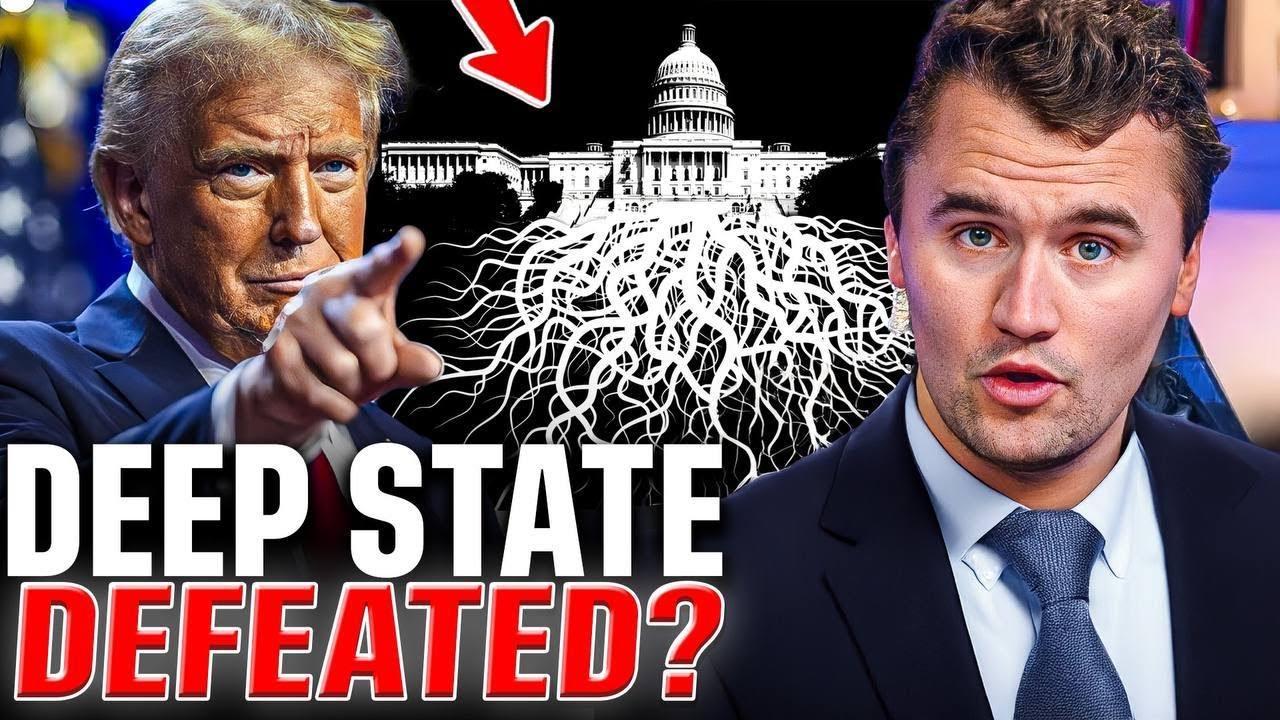
Charlie Kirk and Professor John Yoo Break Down Trump's Constitutional Battle Against Federal District Courts
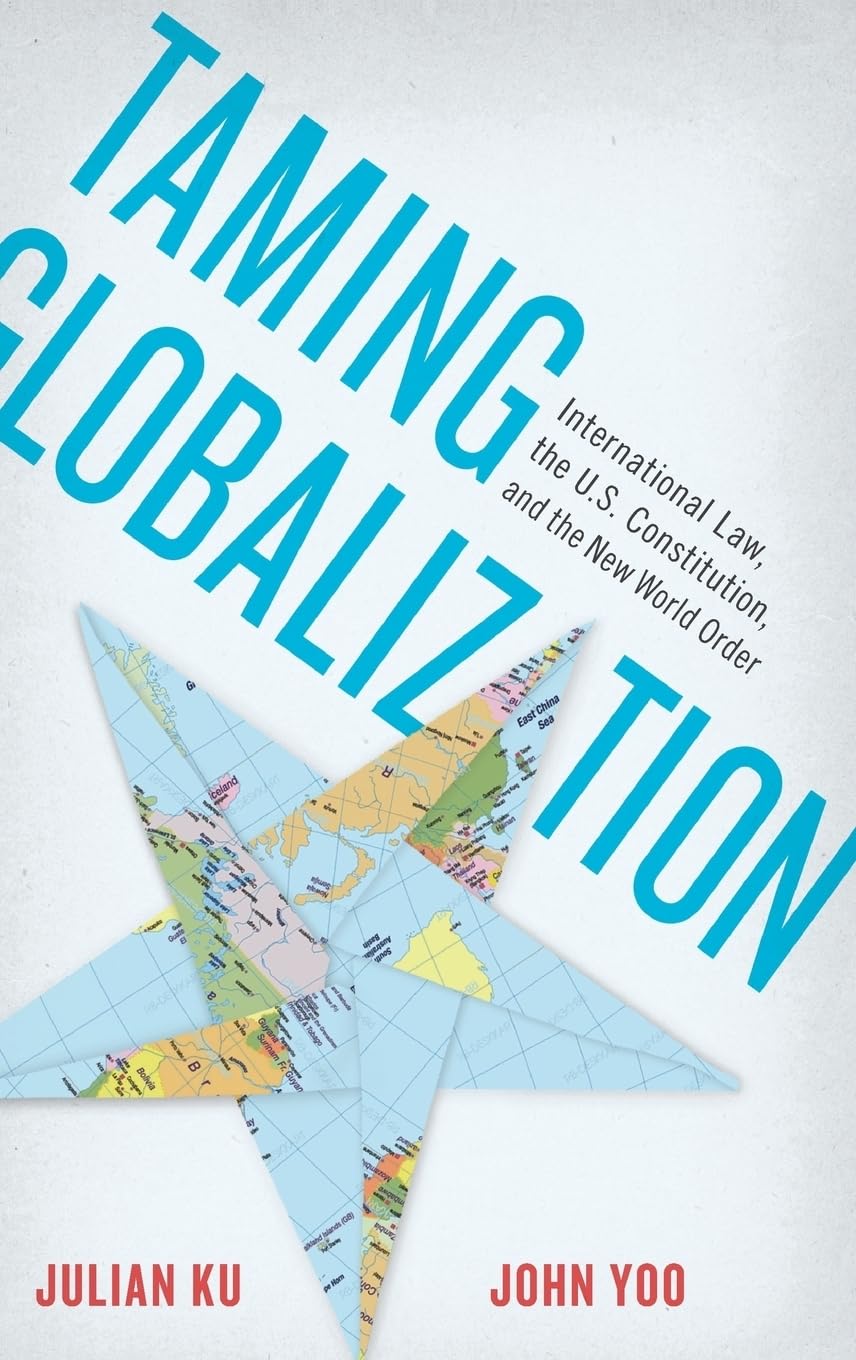
Charlie Kirk sits down with UC Berkeley law professor John Yoo to examine the constitutional showdown between President Trump and federal district courts attempting to block executive action. Yoo explains why the Founders concentrated all executive power in a single person, how district judges are overstepping their authority with nationwide injunctions, and why the impoundment Control Act may be unconstitutional. The conversation covers everything from at-will termination of federal employees to birthright citizenship, revealing how progressive reformers deliberately built a bureaucracy insulated from democratic accountability. Yoo argues that Trump is restoring the constitutional vision of an energetic executive that Alexander Hamilton described in the Federalist Papers.
Energy in the Executive: Understanding Article II Power
Professor John Yoo opens the discussion by addressing why Americans are witnessing unprecedented conflict between the Trump administration and federal district courts. The answer lies in what Alexander Hamilton called "energy in the executive." After four years of what Yoo describes as a chaotic executive branch, the nation is being reminded of what the Founders intended when they vested all executive power in a single person.
According to Yoo, the Constitution's Article II is remarkably clear: "The executive power of the United States is vested in the president." That's it. No other personnel are mentioned because everyone else in the executive branch is constitutionally just an assistant who helps the president. The Founders structured government this way so it could act with speed, energy, decisiveness, and sometimes secrecy—which Hamilton said was the very definition of good government.
President Trump won a decisive electoral victory on a clear agenda to cut spending and reduce bureaucratic waste. But instead of fighting in Congress where they lost, opponents are cherry-picking sympathetic federal district judges in places like Boston, Rhode Island, and Washington State to halt the president's agenda. Yoo predicts these cases will accelerate to the Supreme Court, where Trump will fare much better than before individual trial judges.
The Unitary Executive and Supreme Court Precedent
When Kirk asks whether all power under the executive branch is truly concentrated in a single human being, Yoo's answer is unequivocal: yes. This isn't just his opinion—it's the constitutional text, the argument George Washington made, the argument Alexander Hamilton made, and even the position Thomas Jefferson took despite being no fan of the first two.
The Supreme Court confirmed this view just two years ago in a case called Seila Law. Congress doesn't like this arrangement because an energetic executive reduces congressional power. Over the years, Congress has tried to prevent presidents from firing people in the executive branch. But the Supreme Court ruled that the president must be able to fire anyone with authority in the executive branch because they only derive that authority from him under the Constitution.
Yoo argues that no district court judge should have veto power over presidential action. While a district judge is king or queen of their courtroom for individual cases, they cannot issue what are called "universal injunctions" that stop the entire government nationwide. Justice Clarence Thomas made this exact point during the initial travel ban cases in 2017, questioning how a single trial judge from anywhere in the country can bring the whole government to a halt.
The Post-Watergate Distortion of Executive Power
Kirk presses Yoo on why this issue needs to return to the Supreme Court when America has had 47 presidents. Shouldn't it be settled that the president is in charge of Article II? Yoo agrees it should be, but explains that everything changed after Watergate. Until President Nixon's resignation, presidents exercised these powers and courts recognized them. But after Watergate, Congress passed a series of laws to tie down the presidency.
One way to understand Trump's larger mission is that he's trying to free the presidency for the benefit of all future presidents and the country from what Yoo considers unconstitutional efforts by Congress to limit executive authority. President Trump is finding billions of dollars in excess wasteful spending and hundreds if not thousands of employees who aren't doing anything useful for the country. He's returning to the tradition of earlier presidents who believed in running government efficiently and saving money rather than wasting it.
Congress is claiming he must spend every single dollar appropriated, citing a law passed right after Nixon resigned called the Impoundment Control Act. This law has never been examined by the Supreme Court. Yoo poses a compelling question: if the executive branch can fulfill its duties for less money, why must it spend all the money Congress appropriates? If Congress says build a bridge for $100 million but engineers say it can be done for $50 million, does Trump really have to burn $50 million in cash on the ground to satisfy Congress's mandate?
Equal Branches, Not Subservient Branches
Kirk raises a critical constitutional question: do we have equal branches or subservient branches? If the executive is subservient, then it must spend whatever Congress says. But if it's an equal branch, then the tension isn't just healthy—it's necessary. Yoo agrees completely, pointing out this returns us to how the Founders thought separation of powers would work. They wanted healthy tension between the president and Congress. They expected them to fight.
But Yoo notes something important that people are missing: this isn't really a fight about separation of powers because Congress currently agrees with President Trump. Congress is not doing anything to stop him—in fact, Congress is the same party as the president. There is no real conflict between Congress and the president. That's why the weak parties, the ones losing in the system—Democrats and progressives—are going to court as their last stand. The separation of powers is actually working right now, with the president and Congress agreeing it's time to cut wasteful spending and close agencies that aren't doing any good for the country.
At-Will Termination and the Administrative State
Kirk turns to what he considers a major constitutional issue: at-will termination. Why can't the president just fire who he wants whenever he wants? Why does it have to be this complicated process with career employee protections and administrative leave? Why can't President Trump right now say to 50,000 employees "you're fired"?
Yoo explains that if you look at the Constitution's text and structure, you would think the president could fire everyone in the executive branch because all of them are supposed to be his assistants helping him carry out the law, protect the country, and conduct foreign affairs. Interestingly, the Constitution doesn't actually say anywhere that the president has the power to order people to do anything. From George Washington onward, we've understood that presidents must have the ability to fire anyone in the executive branch because that's the only way to get them to follow orders: either carry out my view or you're relieved of duty.
Again, the same pattern emerges. Congress has tried to shield as many people as it can from being fired by the president to expand its own control over the administrative state. President Trump is making decisions that prosecutors in New York City, employees at the National Labor Relations Board, and workers at other agencies like the CFPB are not helpful to him in carrying out his constitutional duties. All these people are going to court claiming they can't be fired because Congress gave them something like tenure.
This time, Trump is playing on home court. The Supreme Court has made clear in a series of decisions over the last ten years that the president is chief executive, carries out the law, everyone who carries out the law must be accountable to the president, and is subject to being fired. Yoo believes Trump will win these cases, though it won't prevent opponents from slowing things down by rushing to court.
The CFPB and the Progressive Vision of Government
Yoo highlights the Consumer Financial Protection Bureau as particularly egregious—it's not even funded by Congress and not controlled directly by the president. It's like its own branch of government. Part of what's happening is a constitutional realignment. The progressive mission was exactly this: to create a world where every agency was independent. They would hand over power to professionals they thought would be immune and unaccountable to anyone in politics.
The poster child for the progressive vision of government would be Dr. Anthony Fauci. All power over everything Americans did in life for two years was up to Fauci. He couldn't be fired, couldn't be controlled by any president. That's the progressive vision of government. If President Trump succeeds and the courts uphold what he's doing, Americans will see the return of government to the control of people who are accountable to citizens—people we elect like the president and Congress—rather than a huge mass of unaccountable, irresponsible bureaucrats.
Birthright Citizenship and Constitutional Interpretation
In the final moments, Kirk asks about birthright citizenship, noting that even the New York Times agrees Trump might have a case. Yoo explains the argument centers on the 14th Amendment, which says you're a citizen if you're born in the United States "and subject to the jurisdiction thereof." What does that phrase mean? Does it mean your parents have to be citizens too, or does it traditionally apply to a narrow category including Native Americans and diplomats?
Yoo admits he's not sure President Trump will win this one. He has a hard time seeing Chief Justice John Roberts, who has become more moderate over the years, agreeing with Trump. But Yoo emphasizes that President Trump has every right as head of the executive branch to interpret the Constitution, push a case to the Supreme Court, and try to persuade the Court to change its mind. He's doing nothing more than that, and it's well within his constitutional powers.