2,422 videos 1,389,747,653 views US Joined Aug 30, 2018
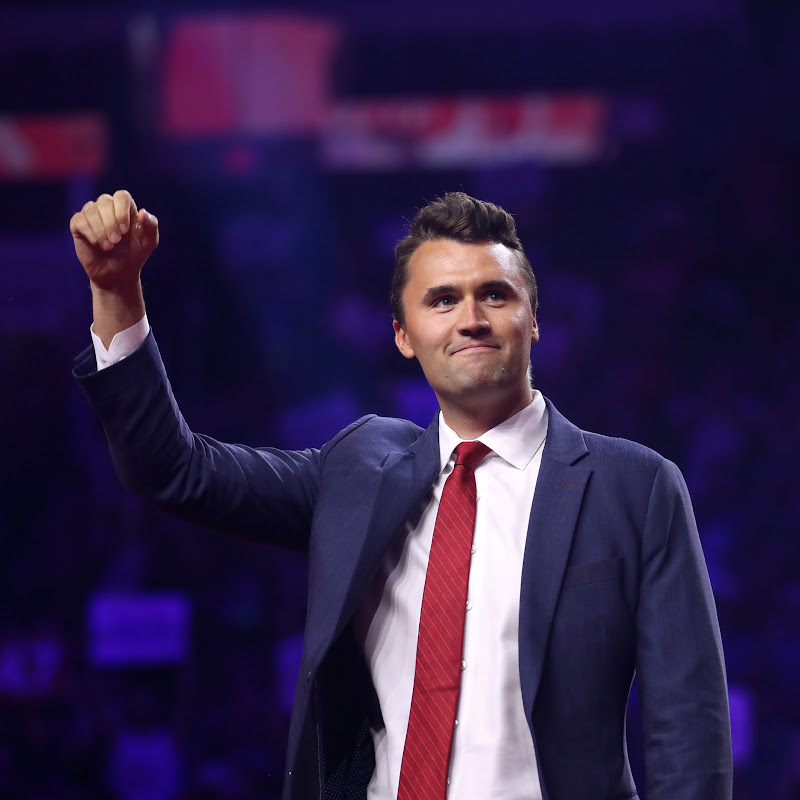
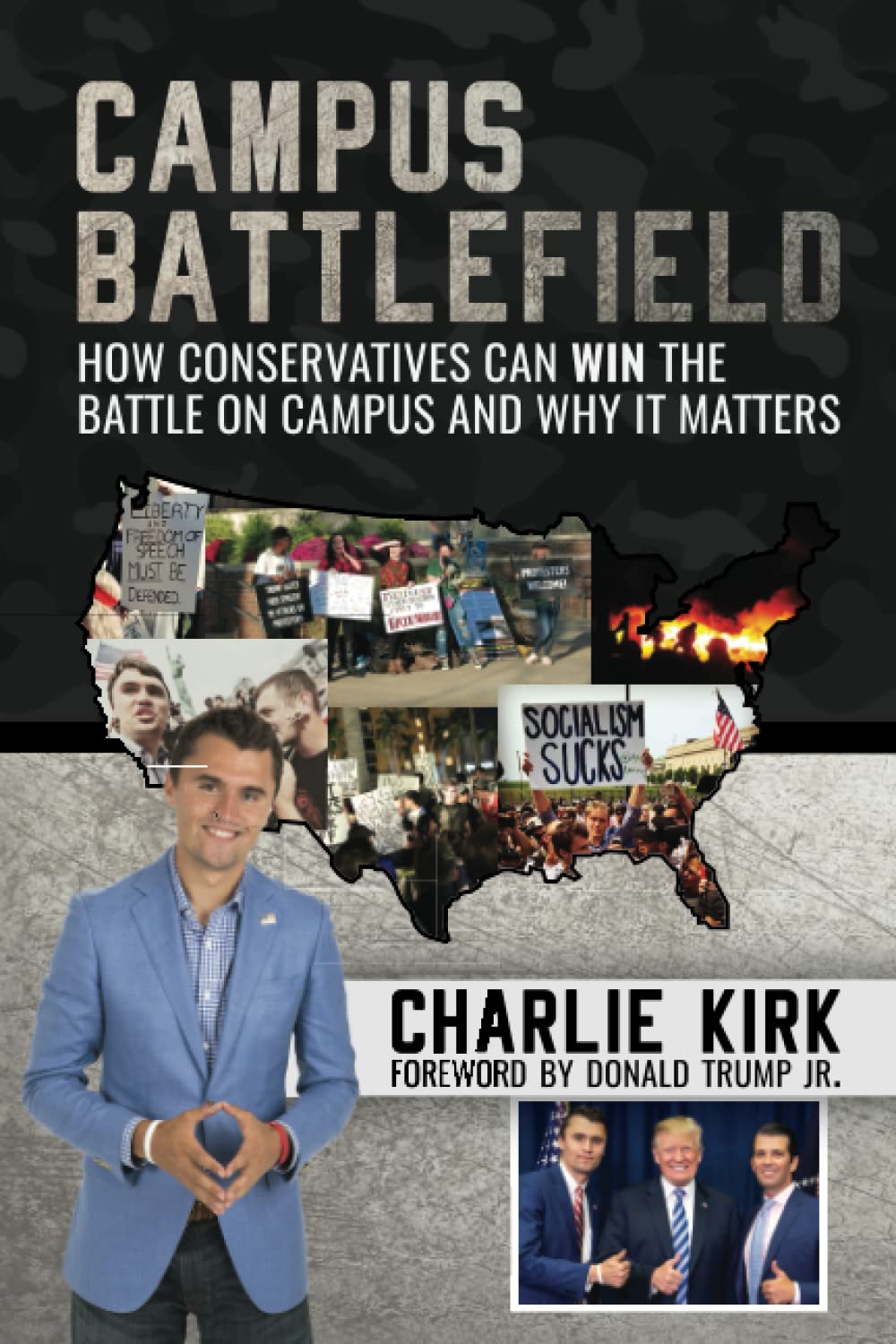
Charlie Kirk is the Founder and President of Turning Point USA, the largest and fastest growing conservative youth activist organization in the country with over 250,000 student members, over 150 full-time staff, and a presence on over 2,000 high school and college campuses nationwide. Charlie is also the Chairman of Students for Trump, which aims to activate one million new college voters on campuses in battleground states in the lead up to the 2020 presidential election. His social media reaches over 100 million people per month and according to Axios, he is one of the "top 10 most engaged" Twitter handles in the world. He is also the host of “The Charlie Kirk Show,” which regularly ranks among the top news shows on Apple podcast charts.
Charlie Kirk Debates Education Major on Second Amendment Rights and Gun Control Statistics
Charlie Kirk engages in a substantive debate with an education major who supports gun control, presenting UK and US gun violence statistics. The conversation explores whether firearm ownership is a right or privilege, the Founders' intent behind the Second Amendment, and how constitutional principles transcend technology. Kirk argues that liberty comes with risks society must accept, while his opponent questions whether 18th-century constitutional framers could have envisioned modern weapons. The exchange touches on suicide statistics, the role of morality in governance, and concludes with a discussion about the Biden-Harris administration's accomplishments.
The exchange begins with an education major wearing a Harris-Walz sticker acknowledging agreement with Charlie Kirk on classroom neutrality. After some lighthearted banter about school rivalries, the student pivots to present carefully researched statistics on gun violence, setting up a fundamental disagreement about the nature of Second Amendment rights.
The Gun Control Statistics: UK vs. US
The student presents compelling data: Following the Dunblane massacre on March 13, 1996, which killed 17 people and injured 15, the United Kingdom banned all handguns. Since that ban, the UK has experienced zero school shootings and averages just 28 firearm homicides annually. In contrast, the United States saw 39,977 gun deaths in 2019 alone—averaging one gun-related death every 11 minutes. The year 2023 witnessed 346 school shooting incidents, and 2024 has already recorded 385 mass shootings, defined as incidents injuring or killing four or more people.
The Fundamental Question: Right or Privilege?
Kirk immediately establishes the core philosophical divide by asking whether firearm ownership is a right or privilege. When the student answers it's a privilege and advocates for gun bans, Kirk identifies their fundamental disagreement. Kirk argues that protecting oneself and family against tyrannical government or home invaders is an inalienable right that no one can take away. This clarity allows both participants to understand they're operating from entirely different constitutional frameworks.
Reframing the Statistics
Kirk acknowledges the accuracy of most statistics presented but challenges their framing. He points out that of approximately 30,000 annual gun deaths, two-thirds are suicides. Both participants agree that suicide involves underlying issues where the firearm is secondary. This reduces gun homicides to roughly 10,000 annually, with the vast majority being gang-related in about ten cities across the country. Kirk emphasizes he's not excusing these deaths but highlighting other underlying factors.
The Price of Liberty
Kirk presents what he calls the mature viewpoint on freedom: in a free society, people will do bad and dumb things, and there is a price to liberty. He draws a parallel to automobile fatalities, noting that 50,000 people die annually in auto accidents, yet no reasonable person would ban driving. Kirk argues that during COVID, America temporarily abandoned this principle, choosing safety over liberty with lockdowns that most people wanted to end after two weeks. Regarding firearms, he argues that Second Amendment enthusiasts acknowledge unnecessary deaths will occur and want to limit suffering, but accept they cannot eliminate it completely in a culture where firearm ownership is a right, not a privilege.
The Intent of Firearms
When the student argues the primary intention of a firearm is to kill, Kirk disagrees, stating the primary intention is to protect what you love. He frames firearms as intention-neutral technology—a tool that can be used for sport shooting or violence, just as a kitchen knife can prepare meals or harm people. The technology makes certain actions easier but is not inherently good or evil.
Constitutional Intent and Technological Change
The student challenges Kirk with the technology argument: the Constitution was written in 1787, the Bill of Rights in 1791, when experienced shooters could fire three musket shots per minute. Modern AR-15s can empty a 30-round magazine in five seconds. Kirk counters with a parallel question: if the Second Amendment only covers muskets, does the First Amendment only cover letter writing, not Twitter? He argues that constitutional principles transcend technology. Whether exercising free speech on parchment or the internet, or bearing arms with muskets or AR-15s, the underlying principle remains constant and eternal.
The Constitution as Living Document
The student uses Kirk's logic against him, noting that the Constitution evolved to abolish slavery and grant women voting rights. Why can't the Second Amendment change? Kirk responds that the First and Second Amendments have never changed, which is noteworthy. America has a ratification process—prohibition was added and quickly repealed because the country didn't want it. The question is why certain amendments endure. Kirk explains that conservatives believe the Constitution wasn't written for the times but to stand the test of time because it analyzes human nature, which conservatives view as consistent over time. In contrast, leftists view people as creatures of their environment whose nature changes with circumstances.
Separation of Church and State
The conversation shifts when the student questions how there can be separation of church and state when Supreme Court Justice Clarence Thomas makes decisions based on Catholic beliefs. Kirk clarifies that "separation of church and state" doesn't appear in the First Amendment—it comes from an 1803 letter Thomas Jefferson wrote to the Danbury Baptist Convention assuring Baptists the government wouldn't persecute them. The Warren Court later resurrected this phrase. Kirk asks whether there can ever be separation of conscience or morality from state. When the student agrees that office holders' values will be reflected in their decisions, Kirk points out this applies equally to Clarence Thomas's Catholic values and Joe Biden's Catholic values informing his open border policies. You cannot separate morality from governance—only ensure government doesn't establish state-run religion.
Harris's Greatest Accomplishment
Kirk asks the student to name Kamala Harris's greatest accomplishment. The student notes the Biden-Harris administration inherited a difficult situation at the height of COVID and that inflation has decreased since its peak. When Kirk asks the audience if they feel inflation has come down, the response is negative. Kirk observes this demonstrates the problem with relying solely on what economists say—the American people don't accept these claims because they feel the pain daily. The student admits there aren't many incredible policies Harris has implemented as vice president but explains support for her presidential candidacy based on promises like the child tax credit and efforts to support mothers who, following the Roe v. Wade overturn, are forced to give birth to children they cannot support, aren't ready for, or don't want. The student references Georgia's total abortion ban until the Amber Thurman case and asks what can be done to support mothers if abortion is banned.