2,387 videos 1,376,944,188 views US Joined Aug 30, 2018
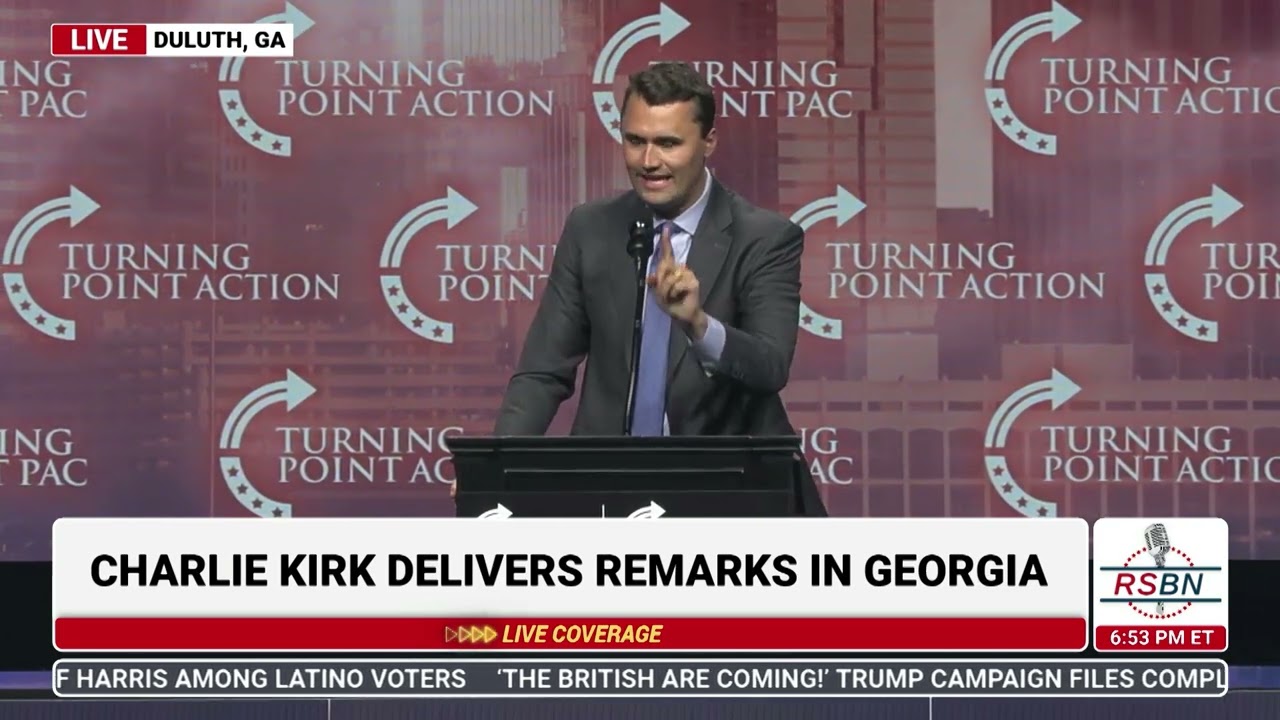
Charlie Kirk is the Founder and President of Turning Point USA, the largest and fastest growing conservative youth activist organization in the country with over 250,000 student members, over 150 full-time staff, and a presence on over 2,000 high school and college campuses nationwide. Charlie is also the Chairman of Students for Trump, which aims to activate one million new college voters on campuses in battleground states in the lead up to the 2020 presidential election. His social media reaches over 100 million people per month and according to Axios, he is one of the "top 10 most engaged" Twitter handles in the world. He is also the host of “The Charlie Kirk Show,” which regularly ranks among the top news shows on Apple podcast charts.
Charlie Kirk Answers Questions on January 6th, Civil Rights Act, Healthcare Costs, and Animal Agriculture
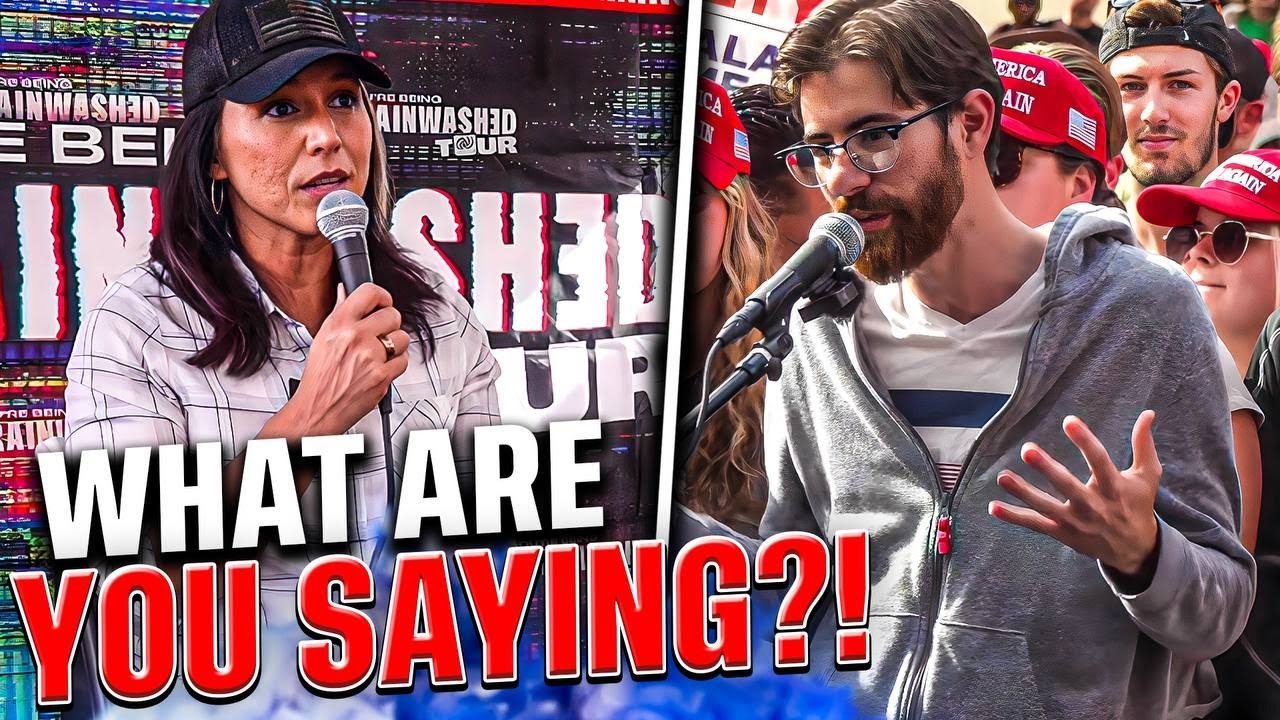
Charlie Kirk fields questions from students on some of the most contentious issues in American politics. From debating the timeline of January 6th and the complexities of the Civil Rights Act to discussing the fatherlessness crisis, rising healthcare costs, and government agricultural subsidies, Kirk offers conservative perspectives that challenge mainstream narratives. He addresses gay conservatives in the movement, advocates for Robert F. Kennedy Jr.'s health mission, and explains why he believes factory farming raises concerns, not primarily for animal welfare, but for human health outcomes.
Debating January 6th: Incitement, Timing, and Context
When asked about January 6th, Charlie Kirk was confronted with three questions. The first: did Trump incite violence? Kirk's answer was a clear no. He emphasized that Trump's instructions were to "peacefully and patriotically march."
The questioner then raised the issue of Trump waiting 187 minutes before addressing the protesters. Kirk disputed this characterization, noting it's debated. When pressed on Trump's phrase "fight like hell," Kirk drew a comparison to Kamala Harris, whose current phrase is "when we fight, we win." He argued that "fight" is an open-ended term used across the political spectrum, pointing out that the DNC featured this slogan prominently.
The final question asked whether Kirk acknowledges that many of Trump's staffers, including Donald Trump Jr., were begging him during those three hours to stop the protest or call off the riot. Kirk responded that he doesn't believe that narrative will hold up as more information comes out.
The Civil Rights Act: Necessary Intent, Problematic Execution
A student confronted Kirk about a video where he suggested the Civil Rights Act was a mistake. Kirk clarified his position: he chose not to debate the 12-year-old who asked him about it at the DNC because the child was sweet and he didn't want to engage in that kind of exchange.
Kirk explained that while ending segregation was absolutely necessary, the Civil Rights Act went far beyond that single goal. It created what he believes is the foundation for what we now call "woke" culture. He cited specific examples of how the law is being used today in ways never originally intended.
According to Kirk, Attorney General Merrick Garland recently argued that North Carolina and Georgia cannot have voter ID laws because they violate the Civil Rights Act, claiming such requirements disproportionately impact black Americans. The problem, Kirk argued, is that the Act doesn't just address intentional racial discrimination—it also targets policies based on their disparate impact on certain groups.
Kirk stated he believes one provision of the Civil Rights Act should have been passed—the provision making racial segregation illegal—but the rest of the massive bill has been used to justify outcomes its original supporters never intended, including affirmative action policies.
The Fatherlessness Crisis and the Failure of the Great Society
When asked about underlying socioeconomic disparities between different groups in America, Kirk pointed to what he considers the biggest issue: the lack of fathers. He noted that 75% of black youth grow up without a father, which he believes is the root cause of cycles of violence, poverty, and despair.
Kirk argued that this is not a material problem that can be solved by government spending. The United States has spent tens of trillions of dollars on social welfare programs since the Great Society of the 1960s—including welfare, Housing and Urban Development, and Medicaid. Despite this spending of approximately $25 trillion to eradicate poverty, Kirk contends we have more poverty now than when we started.
The reason, according to Kirk, is that these programs subsidized single motherhood and drove fathers out of homes. He argues this is a values problem, not a resources problem. Without strong fathers to teach discipline and say no, especially to young men, negative outcomes become far more likely.
Kirk cited the Brookings Institution studies showing that children raised by both a mother and a father are far less likely to go to jail, far more likely to graduate from high school, and have higher wages throughout their lives. Every desirable outcome improves dramatically with two-parent households.
A Message to Gay Conservatives
A self-identified gay conservative asked Kirk what he would say to other gay people who need to realize they have a choice politically. Kirk welcomed the student to the conservative movement but made his position clear: he doesn't agree with that lifestyle and doesn't think people should introduce themselves based on their sexual attraction.
Kirk argued that a person is far more interesting than their sexual tendencies and that we should move away from the idea that identity is based on bedroom behavior. He suggested the student should say "I'm a conservative" rather than "I'm a gay conservative," adding that same-sex attraction is just one aspect of being a complete human being.
From his perspective as a Christian and conservative, Kirk stated he doesn't agree with that lifestyle, but emphasized that politics is about addition and multiplication. He acknowledged that the student likely agrees with conservative positions on borders, national strength, and other key issues, and for that reason, welcomed him into the conservative movement.
Healthcare Costs and the Make America Healthy Again Mission
When asked about the best way to lower healthcare costs for families, Kirk outlined a multi-pronged approach. First, he said, we must lower inflation broadly. Second, we need to go after the hospital lobby that is gouging prices significantly.
But Kirk's third point was what he considers most important: addressing the root cause of why healthcare costs are exploding. He pointed to his "Make America Healthy Again" shirt, explaining that we're not addressing the real problems—the food we're feeding ourselves and our children, and the fact that we've become an increasingly sedentary country.
Kirk highlighted what he calls a chronic disease epidemic: half of all American children are chronically obese or overweight. In Japan, that number is only 3%. He argued this isn't because American kids are lazier, but because we are actively poisoning our children with food from Big Agriculture that's sprayed with pesticides and chemicals.
Looking at the ingredient list of a Lunchables box, Kirk said, reveals we're giving kids the worst possible foods for their metabolism and endocrinology. He expressed concern that pediatric Ozempic is now being given to 12 and 13-year-olds, with obesity being treated as a genetic disorder rather than something that can be prevented through better nutrition.
This is why Kirk supports Robert F. Kennedy Jr. joining forces with Donald Trump. Kennedy's life mission is to make America healthier, and Kirk believes we need a real conversation about banning pesticides in our food and removing ultra-processed foods from the FDA recommended food pyramid.
Kirk's personal crusade is to blow up the current food pyramid, which he believes has way too many carbohydrates and not enough healthy fats and protein. He suspects it was created under the influence of Big Agriculture companies. His advice: avoid high fructose corn syrup and processed sugars, and if you can't pronounce an ingredient, resist it. The ideal approach is to ask every day: "Did God make it or did man make it?" and choose more foods that God made.
Animal Rights, Agricultural Subsidies, and Human Primacy
A student wearing a shirt on campus asked Kirk about animal rights, noting that the government subsidizes animal agriculture far more than fruits and vegetables, which inhibits the free market and results in slaughtering lots of animals. The student noted that animals are sentient beings like the unborn.
Kirk first established that animals are not humans and therefore don't have the same rights. Dogs don't get First Amendment protections or the right to own firearms. However, as a Christian, Kirk said we're not allowed to torture or slaughter animals inhumanely—this is established in the Noahic Covenant and repeatedly throughout Scripture.
Kirk acknowledged there's a push to say we should no longer eat meat because it's bad for animals, but he argued we should always do what's best for human beings first. It's good for humans to eat meat rather than the synthetic fake meat Bill Gates wants to produce. At the same time, no living being should be tortured or treated cruelly.
When environmental questions arise, Kirk believes the first consideration should be what's best for the human species, not what's best for trees or snakes. Those things matter, but humans matter more.
The student pressed Kirk on whether animals should have negative rights—the right not to be harmed or killed. Kirk pointed out we already kill dogs in shelters, and we kill dogs that bite their owners or have rabies. When humans get rabies, we treat them; when dogs get rabies, we typically euthanize them. This demonstrates we don't treat dogs and cats at the same moral level because humans have souls, reason, and the ability to make sense of the natural world in ways dogs do not.
When the student revealed this argument leads to opposition to eating meat, Kirk noted that position would be very unpopular at University of Wisconsin-Madison—getting rid of bacon wouldn't go over well.
The student explained that animals killed on factory farms—pigs in gas chambers, male chicks ground up alive for the egg industry—suffer because we view them as not having enough rights to protect their livelihood. Kirk responded that he thinks factory farming has problems, but primarily because of the health impact on humans who eat the meat, not because of concerns about the animals.
When asked about Republican support for billions of dollars in agricultural subsidies, Kirk said he's not a huge fan of subsidies for things that make people fat and unhealthy. While he's not in a voting position, he would advocate against most current agricultural subsidies.