2,387 videos 1,376,944,188 views US Joined Aug 30, 2018
Charlie Kirk is the Founder and President of Turning Point USA, the largest and fastest growing conservative youth activist organization in the country with over 250,000 student members, over 150 full-time staff, and a presence on over 2,000 high school and college campuses nationwide. Charlie is also the Chairman of Students for Trump, which aims to activate one million new college voters on campuses in battleground states in the lead up to the 2020 presidential election. His social media reaches over 100 million people per month and according to Axios, he is one of the "top 10 most engaged" Twitter handles in the world. He is also the host of “The Charlie Kirk Show,” which regularly ranks among the top news shows on Apple podcast charts.
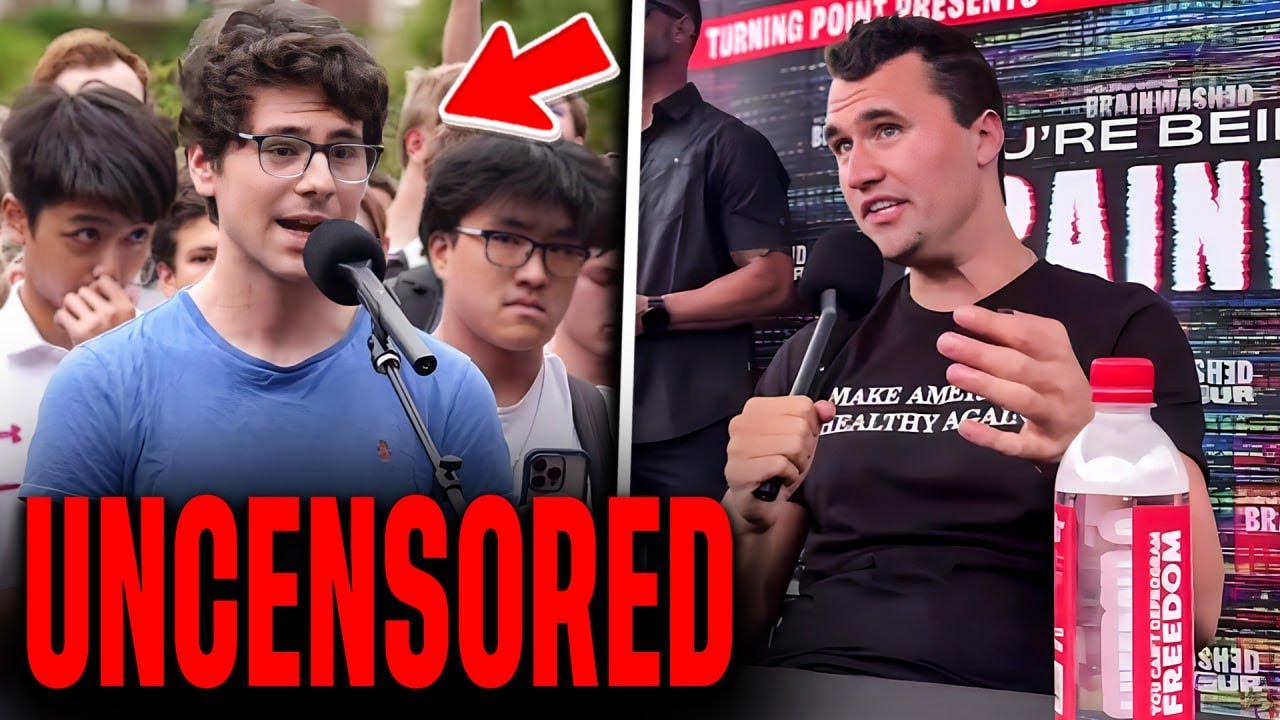
Charlie Kirk Defends Civil Rights Act Critique and Electoral College in Campus Debate with Students
Charlie Kirk addresses student concerns about his position on the Civil Rights Act, explaining his distinction between disparate treatment and disparate impact provisions. The conversation spans multiple hot-button issues including protest movements, the 2024 presidential race between Trump and Kamala Harris, abortion rights, affirmative action, and the Electoral College. Kirk engages with students at University of Wisconsin-Madison on topics ranging from economic policy and border security to gender differences in engineering and medical fields, defending meritocracy over diversity quotas while fielding questions about voting rights, women's liberation, and what he sees as the proper role of protest in society.
Charlie Kirk begins by addressing a student's characterization of him as "notoriously anti-Civil Rights Act." He clarifies his nuanced position: "The part of the Civil Rights Act that disallowed businesses from administering services based on race, that was a good part. The other parts that created this ridiculously overreaching anti-racist bureaucracy was ridiculous."
Kirk focuses his criticism on the disparate impact provisions of the Act, explaining how they differ from disparate treatment. He provides an example involving Walgreens: "If you go to a Walgreens and someone says black shall not come in, that should obviously be illegal. But if it says that at Walgreens, Black customers are stopped more for shoplifting than white customers, they have come into stores and big settlements have been paid because it's a violation of the Civil Rights Act, even though it turns out that the black shoplifters were actually shoplifting more on average than white shoplifters."
Kirk argues that disparate impact enforcement has extended beyond reasonable bounds, citing Attorney General Merrick Garland's position that voter ID laws violate the Civil Rights Act. "That's insane because the Civil Rights Act went as far to say not just disparate encounter but disparate impact," he explains.
Protest Rights and Responsibilities
When questioned about his stance on various protest movements including Black Lives Matter, Palestinian encampments, and COVID restriction protests, Kirk offers a consistent framework. "To be clear, they all should be legal," he states, while distinguishing between lawful protest and illegal activity.
He draws clear lines: "Unless you're occupying a campus illegally, which was happening, or harassing kids on the way to class, you don't have a right to do that. In BLM you have a right to march for that, but you don't have a right to loot stores."
Addressing the argument that violence in civil rights movements was necessary for progress, Kirk pushes back: "I think looting is wrong and destruction of property is wrong, period. I don't care what you're doing it in the name of. It was wrong when they were smashing windows on January 6th, it's wrong when you're burning a Wendy's in the name of George Floyd."
The conversation turns philosophical when a student suggests that widespread societal change requires collective protest action. Kirk offers a conservative counterpoint: "That's what makes conservatives different than leftists, is that we think the true Revolution should happen at home. The true Revolution is you being a better citizen, getting loyally married to your spouse, having children, raising them well, going to church, having a job, being a good citizen—not going on the streets complaining."
He challenges the student's priorities: "Instead of protesting against systemic racism, why don't you go protest to put dads back in the home? Instead of going into the street and screaming about some sort of injustice, go improve your life."
The Case Against Kamala Harris
Kirk engages with a student who plans to vote for Kamala Harris based on the child tax credit. When the student suggests Harris would manage the economy well, Kirk challenges this assessment based on her record as Vice President.
"How many illegals have come in under her watch?" Kirk asks. "10 million people. Is that a success?" He criticizes Harris's handling of the border issue: "Kamala Harris has overseen the border, she failed. She oversaw the Russian-Ukrainian dispute, went to the Munich Security Conference, and hundreds of thousands of Ukrainians died. She was the deciding vote on the inflation explosion act that makes everyone have to pay more in goods and services."
Kirk contrasts the Trump presidency with the Biden-Harris administration on economic grounds: "When Trump was president, you required $75,000 a year to be able to own a home. It now requires $120,000 a year to buy a home under Harris and Biden—$50,000 more a year."
He presses the student repeatedly for positive accomplishments: "What has she done that has given you confidence she'll do a good job as president? What has this woman done to earn anybody's vote? She won't take questions from the press. She didn't get a single vote from Democrat primary voters. She was installed by some sort of Zoom conference vote. Who is this person?"
When the student cites abortion as a major issue, Kirk notes that Trump's position is to leave the matter to the states, with Wisconsin having the issue on the ballot. He expresses concern that the student's main argument centers on judicial appointments rather than policy achievements.
Defending the Electoral College
A student questions why the Electoral College shouldn't be replaced with ranked-choice voting, citing suppression of third-party candidates like RFK Jr. and the overrepresentation of small states like Wyoming relative to California.
Kirk responds by first addressing ranked-choice voting: "Where we've seen ranked-choice voting employed is usually by liberals and Democrats in very red states, and they end up basically eliminating the Republican Party."
On the Electoral College itself, Kirk offers a passionate defense: "I love the fact that Wisconsin is now one of the most important states in this election and that Wisconsin values and Wisconsin voters are going to have to be heard by both candidates, and that it's not just the race in Los Angeles and New York City."
He explains the system's underlying philosophy: "The beauty of the Electoral College is that it recognizes that America's system is different than Europe, it's different than most of the world. We are states first and then we are a national project, and therefore the states need to have some form of representation in how we tabulate our votes."
Kirk argues that without the Electoral College, campaigns would focus exclusively on major population centers: "If it was a pure popular vote, it would all be about Seattle, Chicago, San Francisco, LA, New York. The population of the metroplex areas are more than half the American population."
He emphasizes the diversity of swing states: "Think of how diverse these states are—Nevada, Arizona, Georgia, North Carolina, Pennsylvania, Michigan, Wisconsin. I think it's a good thing that Wisconsin farmers have a say on this election. It gives Wisconsin a seat at the table."
Abortion and Bodily Autonomy
When confronted about supporting vaccine choice while opposing abortion rights, Kirk draws a DNA-based distinction. "If it's not your DNA, it's not your choice. Do you agree with that?" he asks. "You have sovereignty over your DNA. When there's another DNA inside of you, do you have sovereignty over that DNA?"
The student argues that a fetus is "like a parasite" attached to the woman's body. Kirk pushes back: "You're using dehumanizing language, clump of cells. This is typical abortion language which is to try to make the baby seem that it's not a baby, because the word baby gets people animated. But it is a baby by every characteristic."
He continues: "With the vaccine question, you have sovereignty over your DNA. As soon as there's new DNA that is not your own deoxyribonucleic acid, you do not have sovereignty over that DNA. It is a temporary visitor in your own DNA, but it's not your DNA. It's its own human being."
On the question of the mother's life being at risk, Kirk argues that abortion is rarely medically necessary: "In what circumstance? Incredibly rare, unusual—try to perform a cesarean section. Abortion is not medically necessary in 99.9% of those cases. A cesarean section is where they'll cut you right below the belly button and they'll try to deliver the baby via cesarean, not euthanize the baby and break its neck and spine and put poison in its brain."
Addressing rape and incest cases, Kirk acknowledges they represent less than 1% of abortions but defends his position: "Babies conceived in rape get the same human rights as babies conceived in a loving relationship. Your human rights don't disappear just based on how you were conceived. Doing an evil after an evil is never correct. I of course have sympathy for rape victims—it's not diminishing it—but saying that all of a sudden we're now going to murder an unborn baby because you got horrendously morally violated, that sort of formula never applies to anything else in life."
Affirmative Action and Merit-Based Systems
A computer engineering student at University of Wisconsin-Madison challenges Kirk on affirmative action, arguing that diversity in fields like engineering and medicine produces better outcomes. She cites examples such as endometriosis being understudied due to lack of women in medical research, and seatbelts being designed only for male bodies, putting women at higher risk in car crashes.
Kirk responds by framing the issue as one of meritocracy: "Just have a meritocracy, right? If one supports affirmative action, it would mean that you would be okay turning to those three men and saying I deserve the position more than you based on something that doesn't matter, based on my skin color."
He points to the academic performance gap: "The Harvard case showed that it was nearly 40% lower test scores for people of color versus their white male counterparts and Asian counterparts."
When the student asks about the causes of these disparities, Kirk acknowledges socioeconomic factors: "People of color come from lower socioeconomic backgrounds that don't prioritize education." However, he argues this shouldn't justify lowering standards: "That's an interesting point—not should we try to penalize white males that are competent to go run our systems and our institutions. What we're doing is our institutions are now becoming less excellent, our country is not working like it used to."
Kirk provides the Secret Service as an example: "The Secret Service has said that we want to have 30% of all our agents be women, which by the way they have lower fitness criteria—less pull-ups, less push-ups, slower mile time."
Gender Differences and Professional Fields
The conversation evolves into a broader discussion about innate gender differences. Kirk argues: "Men will never be as good at counseling or psychology sessions as women. Men will never be as good at nursing or elementary school education as women. We have certain gifting. Women are far better gifted at micro topics—individual connection, empathetic type conversations, healing people that are past trauma and wound. Men are much better at macro topics—trying to build a building, put a skyscraper up, trying to talk geopolitics."
The engineering student pushes back, suggesting these differences are socially constructed rather than biological. Kirk counters: "You think that men are more likely to like contact sports, more likely to enjoy football, UFC, hunting—you don't think that's because of societal norms? Come on, you're smarter than that. That's not true."
He continues pressing the point: "You think there's nothing within the female brain in its constitution that makes young ladies more likely to—I mean, being that I'm an engineer, I don't think so. You think if you pick a random lady here that they'd be just as comfortable sitting and watching a four-hour football game than they were to go get their hair done with their best girlfriend?"
When the student mentions women being held to higher standards of appearance, Kirk explores this further: "Women will take a lot longer getting ready for the day than men. Why? Because we're held to higher standards to look pretty. Your hair, how short is your hair? Super short. Mine, it's going to take longer to dry. Do you wear makeup? Yeah. Why? Because you want to look pretty. That's not important to me because I'm a man."
He connects this to evolutionary biology: "At some point you wear makeup because there's something within your wiring that says I want to be presentable to the world, and that wiring honestly is I want to find a mate to have children."
On the question of gender parity in fields like obstetrics and gynecology, where 85% of practitioners are female, Kirk challenges the consistency of diversity advocates: "Should we have parity so that men—should we try to have the same amount of female to male OB-GYN? Women studying in the OB-GYN field will be actively discriminated against so a man can get in because we must have parity."
Women's Liberation and Happiness
Kirk makes a controversial argument about women's satisfaction in modern society: "Do you think women are happier in America today than they were 30 years ago? Women are the most depressed group in the history of the species. Women are the most miserable they've ever been."
When the student expresses skepticism, Kirk points to antidepressant use data and argues that despite increased liberation, college degrees, birth control access, and less marriage, women report higher levels of stress and depression. "Maybe it's because they're not doing the one thing that they want to do, which is to get married and have children," he suggests.
On research priorities like endometriosis and safety issues like seatbelt design, Kirk offers a market-based explanation: "Research will go where the money is. If there was money in endometriosis research—not much, because that's why. Maybe it wasn't sexism, maybe it was a monetary explanation."
He concludes his position on diversity versus excellence: "I want the country we once had, which was the greatest country ever, where we put excellence and we put superior intellect above sensitive racial politics. Not interesting to me. When we used to have a country that was based on merit, we were more successful and we were a better-run country, and we're objectively not now."
Video Transcript
hey Charlie um how are you I'm good how about you um so you're notoriously anti- Civil Rights Act well I explained that earlier there's parts of it that were good okay um I want to know what your idea for like not only black liberation but like Liberation for any type of minority that was protected through the Civil Rights act like what your idea for that would be if it wasn't there yeah again I I said it earlier that the part of the Civil Rights Act that disallowed businesses from um from administering Services based on race that was a good part the other parts that created this um this ridiculously overreaching anti-racist bureaucracy was ridiculous and now it's being like what parts well for example um the parts that give us the enforcement on the Voting Rights Act uh which says that you so I'll give you an example meric Garland recently said that we uh States cannot have voter ID because it's a violation of the Civil Rights Act so that's insane because because the Civil Rights Act went as far to say not just disperate um encounter but disperate impact yeah does that make sense so get that so so impact goes too far for me now for example if you go to a Walgreens and someone says black shall not come in that should obviously be illegal but if it says that hey at Walgreens um Black customers are stopped more uh for shoplifting than white customers than that they have come into stores by the way and big settlements have been paid because it's a violation of the Civil Rights Act even though it turns out that the black shoplifters were like actually shoplifting more on average than white shop leaders so disperate impact is very very dangerous okay um and that's where the Civil Rights Act allowed us to go okay I get that but um I also have another question about like student protests um regarding any you've been notoriously against like you know like the black Liv matters protest the Palestinian encampment that was a year last year a little less but yeah yeah um but then like if I'm not mistaken you're pretty Pro like like anti anti like anti-restriction for covid protesters like protests just to be clear I'm Pro like any sort of protest like I'm Pro any they have a right um but like when protest has been shown to like voice the opinion of the people and create change in a very like in a in a way that could be systemic in the future why do you pick and choose certain protests and certain Gatherings to like to go against to be clear they all should be legal I mean unless you're occupying a campus illegally yeah which was happening or harassing kids on the way to class you don't have a right to do that but there was also some of that other way around but I'm sorry what then just keep on going get or or in BLM you have a right to March for that uh but you don't have a right to loot stores right yeah but then there's also like a lot of like black liberation movements like like like used violence as a way yes I agree and that was wrong yeah but then there wouldn't be would there wouldn't be equal rights like there are there hold on a second I'm against the Civil Rights Act in its current writing so I mean I'm very consistent in that so I don't think there's a good chance that there wouldn't be like an option for like businesses to discriminate black against black people if there weren't protests that actuallya first of all I think looting is wrong and destruction of property is wrong period I don't care what you're doing it in the name of it was wrong when they were smashing windows on January 6th it's wrong when you're burning a Wendy's in the name of George Floyd okay secondly what was exactly being protested with the BLM like the the the death of George Floyd I mean no it's just um police brutality and defunding well not only defunding but like allocating those resources to different so so outrageous there's not enough police in Black American neighborhoods I disagree I live in New York there's police there's police crime is way up in New York man I know but it's not do but that's a that's a test police no no no the head count has gone down there's like four policemen every corner let me ask you was the city was the city safer under Giuliani or Bloomberg or under deblasi or Adams um it's what part of New York are you from I'm from like close to Harlem okay so you would know this intimately then yes you know that it was safer under Bloomberg than it was under DeBlasio yeah I I'm I'm not very Pro deasio or Adams okay so but just to be clear that you're asking me like what protest type pick and choose like I also will see what they're protest again they all have a right to protest be clear but if you're protesting something stupid I'm going to criticize you like how about this instead of protesting against systemic racism why don't you go protest to put dad's back in the home I think that's a pretty stupid stupid to go put dad's back on the home yes um why no tell me that's because that's not like I feel like to protest it has to be something more systemic the whole this is interesting so so instead of actually improving your life you should go protest and scam back in the home is a pretty individual issue in exactly that's what makes us different so instead of going into the street and screaming about some sort of Injustice go improve your life yeah but that's a that's not how you create change in a widespread audience Bingo that that's what makes that's what makes conservatives different than leftists is that we think the true Revolution should happen at home the true Revolution is you being a better citizen getting loyally married to your spouse having children raising them well going to church having a job being a good citizen not going on the streets complaining about well what I the what I'm against that because I think I'm not against that but I'm just if whatever you to do with your life is like what you decide to do but I think Revolution comes through the Gathering of people with like minded views and that can come most effectively through protest sure but I think be careful what Revolution you try to invite of course yeah well that's the point people can choose if they want to or don't want to yeah I just again I think that it's so interesting instead of trying to like create this massive revolutionary change use that energy to look yourself in the mirror and saying I have a lot of problems and I'm going to fix those PR societ problem but that only affects you exactly cuz that's what you can control what we have turned into is a country that worries far more about other people's problems than their own problems yeah but what if there are a lot of societal issues like what are we supposed to just like not care about of course you should care about them but these are what where has the emphasis been on stop doing certain behaviors that are obviously bad for you and therefore bad for society yeah okay right that makes sense yeah thank you appreciate it appr I'm voting for comma because of the child tax credit and because of uh really you know the one that Trump had in his tax cut no they I know it's a good thing though I agree with they both yeah so and do you think that KL would manag the economy well yeah why isn't she done it the last three and a half years she's the Vice President are we okay are we going to are we act like the vice president is managing the economy do you think Joe Biden's running the economy right now I think I think the White House senior staff hold on a second if if KLA Harris wanted to run the country she could how did KL Harris do with running the Border again she how many illegals have come in under her watch can you guess [Applause] million look I obviously don't know the number of top my head 10 million people is that a success I don't think the border wall would be any more of a success well hold on under Trump border crossings were on all-time low K haris 10 million people illegally come to this country which is more than the population of New Jersey why do she deserve to be a president when she can't even manage the Border why okay so yeah I know um the the bill that Biden and Harris put in to increase the B one second pleas it's not not about not about the bill you could do this all by executive order remain in Mexico they've decided to empower the foreign KL Harris has overseen the Border she failed she oversaw the Russian Ukrainian dispute went to the Munich security conference and hundreds of thousand ukrainians died she was the deciding vote on the inflation explosion act that makes everyone have to pay more in goods and services her first day was 3 and a half years ago as VP what has she done that has given you confidence she'll do a good job as president I mean she inherited a bad Co economy and it's gotten better it has like it co Yeah it's gotten better since Co yes it the economy is better since the end of Co prices are higher people can't afford homes 1.5 million people lost their jobs in the last year you ask anybody in the economy the American people don't agree with you by way 75% of Americans disapprove the economy right now but if she was so Good by the way so she says I'm going to do no tax on tips stole it from Trump why doesn't she just tell the IRS to do that right now right she been in she been in her years I don't honestly know much about tax on tips and the IRS thing let's just let's just put all this aside would you would you not agree that Trump's presidency was objectively better than Joe Biden's I would not agree on that what did that you like really border Crossing's All Time Low no new Wars you agree with that right no new Wars pull out of Afghanistan which he promised to do hold on a second war he continued a war though which which war the war in Afghanistan how many Americans died in Afghanistan under TR pull out troops though he promised yes he did he was winding it down no no new Wars under Trump guys let me talk please guys but let me just so the economy under Donald Trump if you guys want to buy a home in your life when Trump was president please let me talk man geez when Trump was President you required $775,000 a year to be able to own a home it now requires $120,000 year to buy a home under Harris and Biden 50,00 more a year so if you guys want to buy a home you have to make $120,000 a year now thanks to KLA Harris guys how much did it cost the last day of Trump's presidency though $75,000 D presidency during the height of Co cost 75,000 by home yes all right and gas was $2 she's a millionaire and so I I just I'm getting at this outside of Vibes and Trump hatred what has this woman done to earn anybody's vote she won't take questions from the Press she didn't get a single vote from Democrat primary voters she was installed by some s of Zoom conference vote like who is this person can you tell me KLA Harris who is she like why like did she earn any votes like how did she get here um I mean she the vice president she was the vice president he dropped out and she was on the ticket I that's my best guess of why she is just do you looking at this does that give you confidence that this person should be president I'm fine with her experience I think she has a lot of experience for the office yeah I don't think you can argue that she doesn't I mean we already went to the Border but just like you got to give me something or the audience like make the case like we're here in a Battleground state Wisconsin like show me the case I'll give you the case Trump was President for four years people were richer world was safer border was Secure things were going really really well we respect K Harris like what's the thing what's the sales pitch outside of Vibes and brat summer like what is the pitch I mean abortion is a big one we're going to disagree on it but I think it should be okay let's say let's say let's say you're right on abortion yeah okay where is like is that the most important civilizational issue while we're on like it's pretty it's pretty important to a lot of people so so so just let me understand so Donald Trump says leave it to the states how would that impact Wisconsin so Wisconsin is this extremely gerrymandered State most of our Statewide elected officials are Democrats and our state legislature is almost a super majority of Republicans it's not reflective of what the state actually wants and the law we're defaulting to is from 1849 I think so it's left to the States but we're not going to pass any new we're going to default to 1849 isn't there a ballot referendum around it it's on the ballot right yeah yeah I was going to say Wisconsin is legalized abortion so how would Trump even interfere with your abortion plans I would well I don't think he I think it's by appointing pro-life judges to circuit courts and things like that that's the main way okay so the case for comml is that Donald Trump might appoint circuit Judo worst judges that's of the most important parts of the presidency so you you you I just I'm just being clearing judges like the most I to I think his judges were amazing and upheld the Constitution and the rule of law and all that but it's just it's remarkable to me that like the lack of the the case for Kamala does it not does it bother you we can talk in a second does it bother you that she does not take questions from the Press I've been here for 3 hours she will not take five minutes of questions does that bother you for a president not a Senator a president I haven't watched her on the press a lot so because you wouldn't be able to watch her on the Press cuz she doesn't talk to the Press yeah like she a few weeks if she's not yeah if she's not talking to the Press I think she should talk to him more it's not going to change my vote but I think she talk to him more okay last question I'm sorry to keep you here is there anything that she could do that would make you not vote for her uh yeah I think if she reversed a lot of her positions from the Democratic party and move more to the C saying that she's for fracking when she was against fracking fracking I saying that she was like against the electric vehicle mandate when she was for the electric vehicle mandate talking about issues that I care about more than fracking like like abortion and like gun control okay got it so this is so interesting and I'm glad we have Clarity that agreement I think preventing World War III and making sure Americans can own homes and having a robust economy not being invaded is far more important than the ability to unborn children but we'll agree to disagree thank you that's where we end it sure thank you yeah all right yes sir all right sweet make sure you make sure you talk right into the mic yeah of course sorry can I uh raise it a little bit yeah sure okay um I don't know all right how about how's this perfect great all right hello Charlie can you guys give him a little bit more space thank you thank you thank you thank you yeah uh I'd like to ask you um how do you feel about replacing the Electoral College with uh rank Choice voting I I'm not a fan of rank Choice voting at all yeah um you want to explain what rank Choice voting is or yeah so like yeah okay so um like RFK for example uh he dropped all the race uh I thought he was a pretty good candidate he hadot good policies but um under the two-party system that we have uh he is suppressed and uh I think VTO college has a lot of flaws uh territories they can't vote uh conservatives in uh big red big blue cities uh I mean big blue states are suppressed they're ignored because of uh The Winner Takes all system and uh the Distortion of the votes like Wyoming is four times the uh voting power of California uh I think there's a lot of flaws and rank Choice voting would uh make our votes more uh specified got it so first uh you were RFK fan are you voting for Trump now uh I don't want to say you know okay but I'll put you down as a probably yeah okay right put I'm down as a probably right all right um but no you're talking about two different things the Electoral College is different than rank rank trinks voting is a way of saying that basically the first Loser ends up advancing as the candidate right so are are you in favor of a popular vote for president or I I thought the r chice voting meant like uh like you you to vote your favorite candidate is number one correct yeah second so like I think that's good because people could uh like give their overall thoughts and people would be more like researched about their yeah I mean where we've seen rank Choice voting employed is usually by liberals and Democrats in very very red States and they end up basically elim a the Republican Party um that's a little bit more nuanced but as far as the Electoral College goes I love the fact that Wisconsin is now one of the most important States in this election and that Wisconsin values and Wisconsin voters are going to have to be heard by both candidates and that it's not just the race in Los Angeles and New York City uh Now understand yes Wyoming has a lot of power but so does Rhode Island and Hawaii which are two blue states that are not as big right so the the beauty of the Electoral College is that it recognizes that America's system is different than Europe it's different than most of the world we are States first and then we are a national project and therefore the states need to have some form of representation in how we tabulate our votes and the the Brilliance of the Electoral College is they they uh we're going to try to turn it up guys I'll try to really annunciate okay um the beauty of the Electoral College is that the swing States think of how diverse these states are Nevada Arizona Georgia North Carolina Pennsylvania Michigan Wisconsin if it was a pure popular vote which I know you're not advocating for it would all be about Seattle Chicago San Francisco LA New York but uh the top like 10 cities is like around 10% of the total uh population that would not be nearly enough to win the election even the top 50 cities wouldn't get you close enough to win election well so yes and no I mean the population of the Metroplex areas are more than half the American population so you're right uh who anyone from Chicago I'm from Chicago I'm sure we got a lot of Chicago right so we all know the difference between Chicago and Chicago land right so Chicago land is nearly I think seven or eight million people where Chicago's three million people but I think you can agree at least we can agree the beauty of the Electoral College and it does have some flaws the beauty though is that it requires candidates to have to go to many different parts of the country and to earn support not just go to the coastal cities and the way it works in a lot of European elections in the United Kingdom or in French election united king that is a good example they have a parliamentarian system but like France they just run up the score in Paris and they say you know forget it you know to the rules I think it's a good thing that Wisconsin Farmers have a say on this election uh it gives Wisconsin a seat at the table so thank you man appreciate it thank you absolutely thank you okay yes okay I just want to start with um I Heard earlier in this section that you were um talking about um how fiser and madna push the vaccines on people am I correct okay okay um so I wanted to talk about how your big advocate for having a choice As Americans to get the vaccine which I completely agree with but also at the same time you also Advocate like for women not to have the freedom to choose what they do with their bodies as well as the lgbtq people like they they shouldn't have like freedom to do what they want or like what they're fighting for like for equal rights okay so if it's not your DNA it's not your choice do you agree with that I would I would partially agree I mean I do agree but you have sovereignty over your DNA yes absolutely okay so when there's another DNA inside of you do you have sovereignty over that DNA it is a part of the woman that well it's also part of the man so it's new DNA though it's yeah but it's it's attached to the woman that's what I'm saying it's attached but it's not her yeah absolutely but like if you think about it like it's it's um like it's like theoretically It's Like A Parasite it's attached to your body a baby's a parasite it's a fetus it's a lump of cells in in the in the woman's we're all lumps of cells yeah absolutely absolutely but that but what you're trying to do is you're using dehumanizing language clump of that's what I'm trying but you are no it's okay just this this is typical abortion language which is try to make the baby seem that it's not a baby because the word baby gets people animated because if we called it a baby all of a sudden we wouldn't abort it but it is a baby by every characteristic it's a baby so the the I guess the question in front of us is with the vaccine question you have sovereignty over your DNA yeah absolutely as soon as there's new DNA that is not your own deoxy ribonucleic acid you do not have sovereignty over that DNA it is a temporary visitor in your own DNA but it's not your DNA it's its own human being okay like I don't have sovereignty over you you don't have sovereignty over me and your mom right now is not allowed to come back to campus and kill you yeah yeah that that's not the point though no but think about it because you guys are different so we choice of but your mom doesn't in control of you for the rest of your life abely because you're separate DNA and it just so happens that it's it's temporarily housed within not that it is you okay so no one's contesting that women do not have autonomy over their own being the point is what about the being that also has autonomy that you are forsaking in the in the woman because that baby has rights too well you can't like ask them ask the fetus the question right it's it it should come down to the woman that's carrying I can't ask my six-month-old the question so being to reason with not mean dos what about when it comes to the safety of the mother that's caring the child so in what circumstance so you're saying so if the if the mom's life is at risk is that what you're saying incredibly rare unusual try to perform a cesarian section so abortion is not medically necessary in 99.9% of those cases a cesarian section is where they they'll cut you right below the uh belly button and they'll try to deliver the baby via cesarian not so it's better to do that to give the baby a chance to live than try to euthanize the baby and break its neck and Spine and put poison in its brain right so cesarian section is a much better option okay so there are options available other than abortion but the abortion Lobby would never tell you that yeah yeah but what about like like the common cases of rich and in yeah so that's not as common it's less than 1% but I will defend it so that's less than 1% of all abortions so let's just say hypothetically somebody in this audience is conce who is it I can't point exactly because babies conceived in get the same human rights as babies conceived in a loving relationship so your human rights don't disappear just based on how you were conceived okay right yeah and secondly doing an evil after an evil is never correct no I am and I of course I have sympathy for rap victims it's not diminishing it but saying that all of a sudden we're now going to murder an unborn baby because you got horrendously morally that sort of formula never applies anything else in life okay but I guess more of what I'm getting at and I I'm sure you covered it but it's the purpose of having a choice in this free country that we that should be available you have a choice for you but not choice for others and that's the point with abortion is that there's another being involved so when it comes to the vaccine you cannot be forced to do something against your Sovereign being that you don't want but the same as soon as another DNA is introduced as soon as another being is there that being has rights as much as you do because I respect your rights and you got to respect those babies rights that make sense absolutely absolutely okay hi Charlie you are um I will one sec yes ma'am yeah I just have a question kind of based on affirmative action um I'm a computer engineer here at W Madison about to graduate and there's a lot that I have found through research and just general um I guess my studies um not only does affirmative action like help you know minorities people of color but also women in general and there's a lot of facets of engineering the medical system and other factors that because of affirmative action have helped um I'll just go into something for example um let's say like in the medical field endometriosis something like that has not been studied in women due to so little women being in the medical field um also for example like cars um the seat Bel is made specifically for the male body they're only tested with male mannequins so lot of women are in risk of dying in car crashes at a higher rate um there's a lot of things that benefit from a diverse group of people both in engineering and medical fields and education and other facets of the systems um and I was just wondering without affirmative action how do you think uh we can bring these people in to bring a variety of opinions yeah no I mean just have a meritocracy right so you have three white men around you you can see one two three so if one supports no it's okay if one supports affirmative action right it would mean that you would be okay turning to those three men and saying I deserve the position more than you based on something that doesn't matter more than I feel like that's one facet of it that we're not also paying attention to is that people that are graduating are graduating from the same Schools they're graduating with the same degre with lower test scores though much lower every study affirmative action for example the Harvard case showed that it was nearly 40% lower test scores for people of color versus their white male counterparts and Asian counterparts and so is that is that like uh like why would that happen do you think yeah why what causes that do you think it's just because like people of color are more like stupid of course not me people of color come from lower socioeconomic backgrounds that don't prioritize education how do we fix those socioeconomic statuses that's that's an interesting point not should we try to penalize white males that are competent to go run our systems and our institutions so those are two different things so what we're doing is our institutions are now becoming less excellent our country is not working like it used to because we basically told people that are very qualified and very competent that sorry we're not going to put a position for you here for example the US Secret Service let me just give you one example okay we can all agree that protecting a president whether it's Donald Trump or KLA Harris is super important right but now the secret service has said that we want to have 30% of all our agents be women which by the way they have lower Fitness criteria so they have less pull-ups less push-ups slower mile time by oh yeah that's something that's due to like your hold on exactly yeah no no but that's this is this is affirmative action right and so therefore when well there's like Fields like for I don't think that's a good um one second one second I just don't think that's a good example because like women will never be as strong as men at least gentically I think it should be something that's womic bed will women be as good at engineering as men person for person uh not necessarily but okay well then it's how is that different than the Secret Service example well the problem is that because the male mind is wired different than the female Mind by the way men will never be as good hold on I'll prove it to you men will never be as good at counseling or psychology sessions as women men will never be good as at nursing or elementary school education as women we have certain gifting say our brain is wider a certain way women are far better gifted at micro topics so individual connection empathetic type conversations healing uh people that are past trauma and wound men are much better at macro topics right trying to build a building put a skyscraper up trying to talk geopolitics and I'll prove it to you when you go and you see five women eating lunch they're probably talking about microt topics conversations they had relationships friendships men they're talking about politics sports or the stock market that's not necessarily true oh yes you guys all agree right I mean there's a reason no no these are these are these are bodal General truths right of course there's exceptions but it's not a general truth though I feel like women have the the capability of having political conversation of course they do but it's not their it's not the general wiring or nature of women it's not there's no wiring for your brain to like Donald Trump like that's not a real thing I feel but wait a second but you do you think that men and women are made different in our brains and our our uh certain things but not necessarily it doesn't like Channel you to be a specific thing like what things well like there's like specific wirings to you know like produce certain types of hormones and that's like differences that are genetically so you you don't think that men are more likely to like contact Sports more likely to enjoy football UFC hunting I think that's because of a societal Norm in general like over well I'll over time no come on you're smarter than that that's not true hold on so why is it there's women that play football so like you you can't just say that Course and there are drag but those are the those are not the the the general truth of it so let me just be clear you think that there's nothing within the female brain in its Constitution that makes young ladies more likely I mean being that I'm an engineer I don't think so no yeah really yeah I don't I mean I feel like there's so you think if you pick a random lady here that they'd be just as comfortable sitting and watching a 4our football game than they were to go get their hair done with their best girlfriend well I feel like that's kind of diminishing to say oh because you're a woman you will not be able to sit through a 4H hour football field is it diminishing to say a man wouldn't want to go get his hair done no no I'm sure you get your hair done right not really it's like 10 minutes in and out like Barber Shop you still do it it's but the point again there are certain things that women will take more Ser for example women will take a lot longer getting ready for the day than men yeah right why because we're held to higher standards to look pretty for example your hair how short is your hair super short mine it takes it's going to take longer to dry do you wear makeup yeah why because you want to look pretty and it takes yeah that's not important to me cuz I'm a man oh right but who made you feel there's something in your feel comfortable not wearing makeup because of a certain reason well but you wouldn't feel comfortable wearing makeup I can not wear makeup but why do you do it I mean like right now I'm not wearing like anything really no I know but that's the point is that at some point you wear makeup because there's something within your WI ing that says I want to be presentable to the world and that wiring honestly is I want to find a mate to have children mean this question was a v affirmative action I think we're no it's not it's actually really important because I don't think there's any differences between races but I think that when it comes to affirmative action we're saying that there are differences right that we're trying to say that things that don't matter should matter so I don't think Race Matters affirm action says race like like women also in fields like that like what I explain I think that's even more dangerous to be honest with you if like we're going to say that women should be Secret Service agents protecting Trump not Secret Service I'm talking about medicine engineering that type well hold on okay so should we try to have the same amount of female to male OBG YN I think it should be similar to the amount of like OBG like the general population hold on 85% of all OBG WIS are are female yeah so now should we have parity so that men I have an obgy that's a man that's not a problem that's not the point the point is should we have parity I think it should be similar to like whatever the got okay so you're consistent so women studying in the OBGYN field will be actively discriminated against so a man can because we must have par it's not about people in the obgy specifically it's about people in general men were like for example women were not able to vote until like less than like 100 years ago basically right what does that to do with one second um so because of that a lot of the laws a lot of everything that's set in place was made by men was excluding women was creating like like like reforms and U like certain legislations that would specifically you know support men rather than women because women don't have that support Society I don't think it was always about suppor for example like like what about like what I what I brought up endometriosis so like the seat Bill accident like all those stuff is due because we Tain to favor men and specific so I for I just don't believe that first of all because research will go where the money is and so if there was there money in endometriosis research not much because that's why so maybe it wasn't sexism maybe it was a monetary explanation well who has the like who has the money in a societ actually women control more money than men in the country weren't a like women weren't able to have bank accounts until like less than 100 years ago so they can't really like you know build that generational wealth do you think it's been a better thing with women's Liberation the last 20 30 years yeah I would do you think that's interesting do you think women are happier in America today than they were 30 years ago yeah then why are why are they the most depressed group in the history of the species women are the most miserable they've ever been like why is that I don't think that's gen I don't think that's because we're allowed to have money no I'm asking I'm asking the but it's like more Liberation more College agrees more birth control less marage I would argue otherwise I don't know where you you got that data everybody agrees that women are super miserable like as far as versus 30 years ago well it could be the fact that because women weren't able to go to psych like a psychologists or like or maybe it's because they're not doing the one thing that they want to do which is to get married and have children yeah she said she's saying that no it's actually opposite it's saying that women actually says women Around the World Report High higher levels of Life satisfaction than men but at the same time report more daily stress so we're just type in women anti-depressant use 2024 it is the highest it has ever been but there's like more layers to it than that it can't just be that you have to look at why are women more likely to go and talk to a psyches there's there's the differences in that so but I I just I'm I'm just curious so do you think women are generally happier in 2024 than they were in 1964 okay thank you very much I just had the question of how would you want to fix that just like there's there's no problem to fix pure meritto no I'm just saying like how how do you bring people with diverse opinions oh yeah I mean like I don't care that much about I care about Excellence so like women like you be stud about being a strong no I'm talking about like being able to like look into those type of things like an material is like all this stuff how do we make that safer for other people without bringing people that care about it not that important to me I want the country once had which was the greatest country ever where we put excellence and we put Superior intellect above like sensitive racial politics not interesting to me I know because it was a bunch of white men that were like running the country and all of a sudden we decided I'm not saying that's a bad thing I'm just saying good like that's fine I mean but when we used to have a country that was based on Merit we were more successful and we were a better-run country and we're objectively not now we're country saying that in engineering protect the president from getting shot yeah there's a lot of there's a lot of parts in engineering that because we don't have a diverse look of opinions then we are putting them like we're putting certain people into more danger like women in cars that's like one example okay thank you that's okay all right thanks you're voting for Trump no yeah I was going to say I can't yeah well you lied to get a hat that shows your character I don't lie I said I would wear it you said if you wear it I said only if you vote but that's fine all right next question