Charlie Kirk Challenges 'He Gets Us' Super Bowl Ad: Jamie Bambrick Creates Transformational Gospel Alternative
Enjoying this? Share it with someone who needs to see it.
Up Next
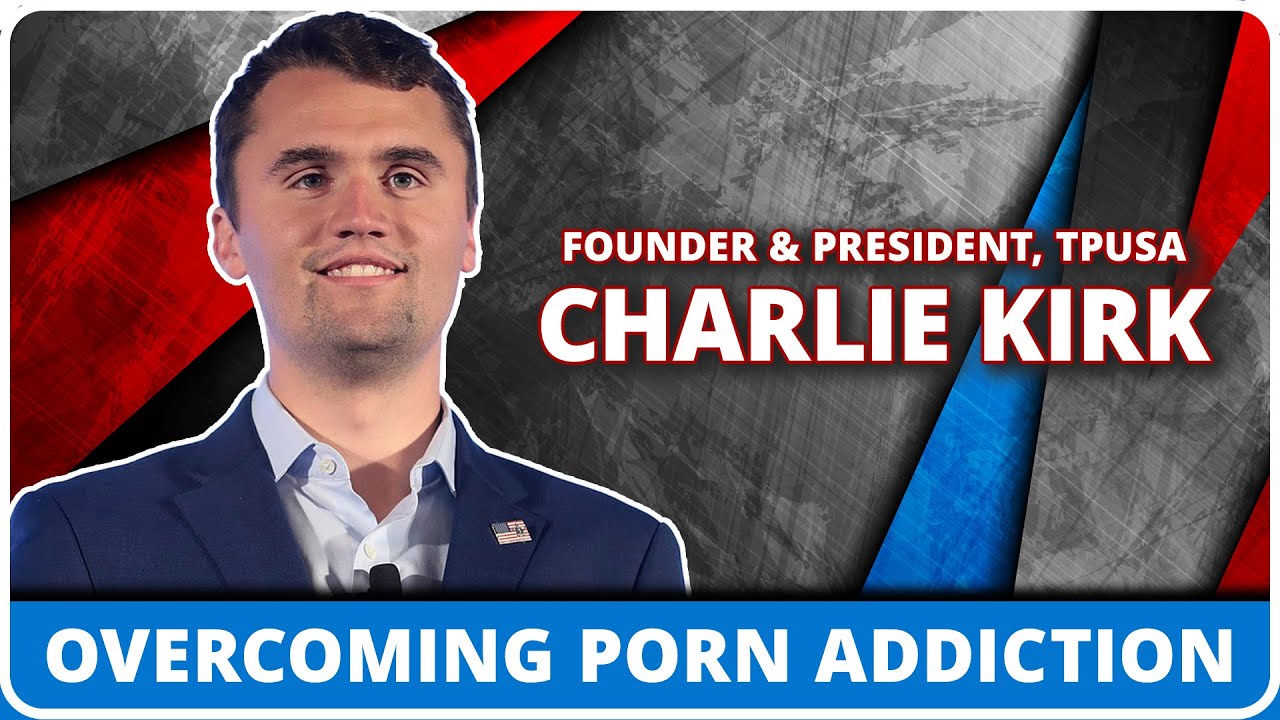
Charlie Kirk Opens Up About His Pornography Struggle and Why Victory Is Possible for Every Man
20:56
Charlie Kirk Confronts Pastors Who Refuse to Talk About Politics from the Pulpit
1:27
Charlie Kirk Challenges Women to Step Up: The Conversation Nobody Wants to Have About Accountability
1:40
Charlie Kirk Challenges 'He Gets Us' Super Bowl Ad: Jamie Bambrick Creates Transformational Gospel Alternative
Charlie Kirk dissects the controversial 'He Gets Us' Super Bowl advertisement, funded by the Green family and viewed over 200 million times, arguing it misrepresents the Gospel by affirming sin rather than calling for transformation. Kirk welcomes Jamie Bambrick, a Northern Irish creator who produced an alternative advertisement showcasing the power of Christ to transform broken lives rather than simply affirm them. The discussion explores the difference between a 'bro theology' that says Jesus accepts you as you are versus the biblical call to repentance and renewal. Kirk demonstrates this approach through his viral Whatever podcast appearance, where he lovingly but truthfully challenged a pornography performer.
The 'He Gets Us' Super Bowl advertisement has become one of the most discussed religious topics in modern media, reaching well over 200 million viewers. The campaign, primarily funded by certain members of the Green family and associated with Russell Moore, promotes what Charlie Kirk describes as a fundamentally flawed theological approach. According to Kirk, the message presents Jesus as 'your bro'—someone who affirms you in your sin rather than calling you to transformation.
Kirk explains that the Green family members behind this initiative believe Christianity has become too confrontational and off-putting to modern audiences. Their solution is a softer approach that essentially tells people Jesus understands and accepts their lifestyle without calling them to change. The advertisement culminates with the message 'Jesus didn't preach hate, he washed feet,' implying that any Christian who calls sin what it is must be preaching hate.
Jamie Bambrick's Powerful Alternative
After seeing the original advertisement, Jamie Bambrick, a Northern Irish content creator and NFL fan, felt compelled to create an alternative that would present the true Gospel message. Bambrick describes his initial reaction to the 'He Gets Us' ad as frustrated, noting that all Bible-believing Christians should be concerned about its misrepresentation of the Gospel.
'It's a misportrayal of the Gospel where it is as you said, it's like Jesus all he wants to do is put his arm around us and functionally support us in our sin, which is not the gospel,' Bambrick explained. He also pointed out the subtle slander against Bible-believing Christians embedded in the advertisement's messaging—the implication that preaching anything other than unconditional affirmation constitutes hate.
After prayer and a conversation with a friend who wished someone would create a better version, Bambrick produced an alternative advertisement that has since been viewed over 2.5 million times. His version showcases the transformational power of Jesus Christ, featuring images of people before and after encountering the Gospel—from broken and addicted to joyful and restored.
The Contrast Between Two Gospels
Kirk identifies a crucial difference between the two advertisements: 'He Gets Us' essentially criticizes Christians rather than reaching the lost, while Bambrick's version offers genuine hope for transformation. The original ad presents a heavy, guilt-laden message that seems to say Jesus affirms you in your brokenness. Bambrick's alternative presents an optimistic message: you are not all you could be, but through Christ you can become a new person.
'He gets you, dude? I don't—first of all, Jesus doesn't get me, he saves me. Big difference,' Kirk emphasized. The distinction is between a God who comes down to your broken state to affirm you there versus a God who calls you to something higher and better.
Bambrick explained his creative approach: 'What I wanted to do was I wanted to make it close to the original in terms of the concept because I wanted to show what you actually said there, which is this is what could have been, this is what should have been, and this is the message that Christians should be getting out there in place of the one that they did.'
The Power of Creating an Alternative
Kirk notes that creating an alternative advertisement proved more powerful than simply criticizing the original. It demonstrated that the issue isn't with running ads during the Super Bowl or trying to bring people to Jesus—it's that 'He Gets Us' fundamentally misses the mark. According to Kirk, the organization behind 'He Gets Us' has been unwilling to receive criticism, claiming their approach is working and dismissing critics as hard-hearted.
Bambrick acknowledges that God can work through imperfect vehicles and bring good out of anything, referencing Romans 8:28. However, he argues that doesn't mean the 'He Gets Us' approach represents wise stewardship or sound theology. 'The gospel of the original advert is not the saving gospel. It is a different gospel,' he stated. While God might redirect some people's lives despite the flawed message, far more fruit could have been produced by conveying the true Gospel from the beginning.
The Origin of 'Bro Theology'
Kirk and Bambrick explored where this affirmation-focused, non-confrontational approach to Christianity originates. Bambrick explained the cultural shift from what he calls the 'neutral world' to the 'negative world.' In the neutral world that existed from the late 1990s through about a decade ago, Christianity was seen through a postmodern lens—good for some people but not necessarily for others. In that environment, the strategy of simply being nice and showing Christianity 'works for us' made some sense.
However, Western society has shifted to the negative world, where being Christian is actively viewed as a negative thing. In this new reality, Bambrick argues, 'being well received is not the most important thing. Jesus was not well received in his message. The apostles were not well received in their message. Jesus Christ was crucified, his Apostles all but one of them were murdered for their Faith.'
The idea that being nice enough will draw people to faith was always incorrect, Bambrick contends, but it certainly isn't working anymore. Even the political left hasn't particularly appreciated the 'He Gets Us' campaign because 'they know they're being pandered to. They know that this is not a true portrayal of what we actually believe. They know that this is sucking up.'
Transformation Over Affirmation
Both Kirk and Bambrick emphasized the biblical principle found in Romans 12:2: 'Do not conform to the ways of this world but instead be transformed by the renewing of your mind.' This transformation, not mere affirmation, represents the true Gospel message.
Kirk illustrated this distinction with an example from his appearance on the Whatever podcast, where he sat next to a woman who performs in pornography. The 'He Gets Us' approach would have Kirk telling her that Jesus understands and accepts her filming herself having sex on camera, that Jesus stands with a thumbs up of approval. Instead, Kirk chose a different path—one that was both loving and truthful.
In the clip, Kirk tells the performer: 'I have sympathy for you. I do. You're trying to cope with the suppression of your soul, and filming yourself having sex with other men and filming it is not the highest and best use of the talents that God gave you. It's not.' When she claimed this was her talent, Kirk responded: 'It's not the highest and best use, and it's not a talent because as I said, in my belief, that should be saved in a sacred domain. We're not going to agree on that, but I hope you change course. I think you'll be happier and more joyful, and I pray you don't have to suffer too much to realize that.'
The Heart of True Christian Love
Bambrick praised Kirk's approach as embodying what the heart of Christians should be toward those living in sin. He explained that the Bible describes living in sin as slavery—something destructive to the human soul. While the woman Kirk spoke to might believe she's happy and might experience temporary happiness from fame and popularity, long-term that lifestyle will take a toll on her soul.
'That is the very thing that we as Believers want to see people rescued from in this life, and then obviously eternal salvation as part of that as well,' Bambrick said. He affirmed Kirk's approach as conveying to someone who doesn't believe and may not be interested in believing that Christians care enough to say the difficult thing—that people need to lay down their sin to receive something better.
The fundamental issue with the 'He Gets Us' campaign is that it omits the second part of John 8, which the 'wokey Christian people' love to quote. They emphasize Jesus saying 'let the first among you cast the first stone,' but conveniently forget that after saving the woman, Jesus tells her 'sin no more.' That call to transformation—to stop sinning—is the essential kicker that makes the Gospel truly good news.
Kirk's anger upon seeing Bambrick's alternative advertisement stemmed from recognizing what could have been. If the Green family had invested their millions in a message showing people they are not all they could be yet, but can become new through Christ—showcasing transformation rather than affirmation—the impact could have been exponentially greater. The difference between saying 'Jesus gets that you're a meth addict' and 'Jesus can free you from meth addiction and make you new' is the difference between a false gospel and the true Gospel of transformation.