Charlie Kirk Opens Up About His Pornography Struggle and Why Victory Is Possible for Every Man
Enjoying this? Share it with someone who needs to see it.
Up Next
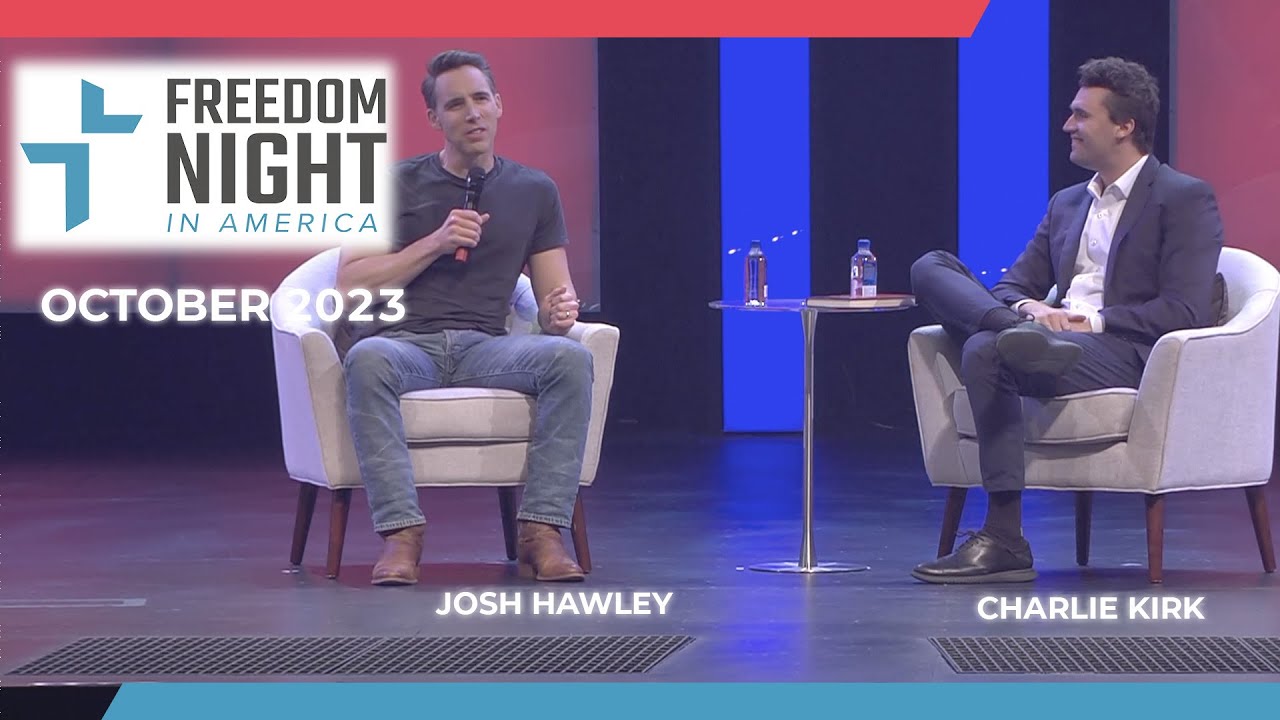
Charlie Kirk and Senator Josh Hawley Discuss the Crisis of American Masculinity and the Path Forward
50:46
Charlie Kirk Tells Adult Content Creators God Has a Better Plan for Their Lives
0:58
Charlie Kirk Challenges the Church to Save America Before the 2024 Election
1:09:17
Charlie Kirk Opens Up About His Pornography Struggle and Why Victory Is Possible for Every Man
Charlie Kirk shares his personal journey of overcoming pornography addiction and explains why he believes this is the most prevalent, widespread, and least talked about addiction in modern America. In a candid conversation on the Covenant Eyes Podcast, Kirk discusses how pornography impacts young men and women, the role technology plays in both addiction and recovery, and why the church must lead the conversation. He challenges pastors to address this crisis openly, encourages wives to understand their husbands' struggles, and calls parents to protect their children in an increasingly pornified culture. Kirk's message is clear: breaking free from pornography addiction is possible through surrender to Jesus Christ, and there is a better tomorrow for anyone willing to fight for freedom.
Charlie Kirk does not shy away from discussing his past struggles with pornography. Like many young men growing up in the technological age, Kirk found himself surrounded by ubiquitous access to pornographic content during his high school and college years. Even in a Christian environment where he knew it was wrong, the temptation remained difficult to resist. Smartphones and constant internet access made pornography easily accessible, creating a challenge that Kirk openly admits affected him deeply.
In his mid-twenties, Kirk made the decision to pursue victory over this addiction. He read extensively about overcoming pornography but ultimately discovered that the solution was less about following a to-do list and more about surrendering to Jesus Christ. Kirk emphasizes that Christ has already won the victory, and believers need only to accept that truth and walk in it.
The turning point came when Kirk began dating his now-wife. He realized that pornography was a toxin poisoning his soul and affecting his attitudes and relationships. This recognition motivated him to break free completely. Kirk credits both his faith in Jesus Christ and the accountability technology provided by Covenant Eyes as instrumental in his recovery. He stresses that while technology helps, it is not a complete solution on its own—it works best as an amplifier for someone who truly wants to change.
The Most Prevalent Addiction No One Talks About
Kirk describes pornography as the most prevalent, most widespread, and least talked about addiction of the modern era. He points out the irony that nearly half of men in churches actively watch pornography, yet almost none of them talk about it openly. This silence creates shame and prevents people from seeking help and accountability.
The recovery process was not easy for Kirk. He spent months and years rewiring broken dopamine pathways that had been established during his teenage years. He understands the struggle that many young Christian men face and prays for their victory over this addiction. Kirk emphasizes that while it is important to acknowledge that many men struggle with pornography, it should never be normalized or accepted as inevitable.
The Call to Fight Evil
Kirk's passion for addressing pornography stems from his broader calling to fight evil in all its forms. Drawing from Psalm 97:10, which states that those who love God must hate evil, Kirk has dedicated his life and work at Turning Point USA to confronting cultural, sexual, and spiritual evil in America. He sees the normalization of pornographic culture as one of the most significant threats facing the nation today.
According to Kirk, the entire society has become pornified. This extends beyond explicit websites to include mainstream media, Hollywood productions, and streaming services like HBO and Hulu, which Kirk describes as soft pornography. The porn industrial complex, which he connects to the abortion industry and entertainment media, has a vested interest in downplaying the connection between pornography and mental health issues like depression and anxiety.
Senator Josh Hawley Speaks Out at AmericaFest
At AmericaFest in Phoenix, Arizona, Kirk invited Senator Josh Hawley to speak specifically about pornography. This moment represented a significant step forward in bringing this issue into public discourse. Kirk believes that we need more courage to speak openly about pornography while simultaneously refusing to normalize it as acceptable behavior.
The challenge, according to Kirk, is finding the balance between creating a safe space for people to admit their struggles without making them feel condemned, while also being clear that pornography is a serious sin. He notes that lusting in your heart and directing your desires toward artificial images—often involving trafficked women or those coerced into the industry—is contrary to God's design and natural law.
The Consequences of a Pornified Culture
Kirk connects pornography addiction to broader societal problems. He observes that the current generation is the least likely to get married, the least likely to have children, and experiences higher rates of suicide and depression than previous generations. While pornography is not the sole cause of these issues, Kirk argues it plays a significant role in deteriorating the natural reward pathways in the brain.
When people artificially stimulate their dopamine response through pornography, they become let down by real-world experiences. This neuroscientific reality, supported by extensive research, explains why so many people feel disconnected, anxious, and depressed. The natural world cannot compete with the artificially heightened stimulation provided by pornographic content.
Kirk also points out that pornography does not serve as a harmless release, as the industry claims. Instead, it leads to greater and more violent levels of sin, contributing to domestic abuse, broken marriages, and adultery. The industry's attempt to normalize pornography through encouraging people to publicly celebrate their consumption is a strategy to remove shame and prevent recovery.
What Can Be Done to Fight Back
Kirk believes that repentance is the prerequisite to revival, referencing First Chronicles. For individuals actively engaged in patterns of pornography use, the first step is to acknowledge that they are denying God's plan for their life and not acting obediently. Repentance means recognizing that you are not being all that God wants you to be.
For wives whose husbands struggle with pornography, Kirk emphasizes the importance of understanding how men are wired. While this is not an excuse for pornography use, recognizing that men are far more visually oriented than women can help wives become better partners, counselors, and healers in the relationship. Many wives do not fully comprehend the nature of male temptation in this area, which can create barriers to open communication and recovery.
Kirk encourages men to have the courage to admit their struggles to their wives early, before the addiction metastasizes and manifests in wandering eyes, adultery, and broken marriages. Children raised in split households due to pornography-related divorces face their own challenges, perpetuating a cycle of brokenness.
The Church Must Lead the Conversation
Kirk believes the church has a critical role to play in addressing pornography addiction. Every pastor in America needs to speak about this modern addiction that is impacting youth groups, young married couples, and even couples married for decades. Pastors should actively promote accountability tools like Covenant Eyes as technologies that can help those who are willing to change.
However, Kirk is clear that technology alone cannot solve the problem for someone who is unwilling to change. A person with a wandering eye will simply buy another phone and lie about their use. The technology works best for individuals who have truly repented and are committed to breaking free from addiction.
Kirk calls on pastors to deliver sermon series on this topic—not to condemn their congregations or act holier-than-thou, but to acknowledge the reality that if you are a man in America under the age of 30, you have almost certainly struggled with pornography to some degree. Kirk finds it hard to believe anyone who claims otherwise. The goal is not to shame but to offer hope that everyone can break free and have a better tomorrow.
Statistics reveal that approximately 50 percent of pastors actively watch pornography. Kirk views this as Satan infiltrating the church. This epidemic is not something that existed a century ago—it is a modern phenomenon made possible by technology and is in many ways more addictive than substances like heroin.
Pornography Addiction Compared to Drug Addiction
Kirk references the work of Gary Wilson, a secular atheist who wrote "Your Brain on Porn," which Kirk considers the gold standard of neuroscientific research on pornography addiction. Wilson's research demonstrates that pornography addiction can be harder to break than heroin addiction for some individuals. The book explores how pornography affects libido, relationships, and attachment patterns.
Wilson also documents that people who attempt to quit pornography cold turkey can experience cold shakes, anxiety spells, and anxiety attacks similar to those experienced by people withdrawing from methamphetamine. This physical and psychological withdrawal is rarely discussed in society, where pornography is largely accepted as just being there without serious examination of the damage it causes.
There have been numerous congressional panels on fentanyl addiction, sex trafficking, and drug overdoses, yet Kirk asks whether anyone has the moral courage to acknowledge that pornography addiction is even more widespread. Pornography leads to domestic abuse, broken marriages, and adultery, yet it receives far less attention than other addictions.
Protecting Children in a Digital Age
Kirk advocates strongly for parents to delay giving their children smartphones until they are 18 or 20 years old. He grew up in an earlier era and still struggled with pornography; he cannot imagine what 16-year-olds today face with a supercomputer in their pocket at all times.
Part of the challenge is that the current generation of parents understands the issue better because they may have struggled with pornography themselves. However, the previous generation—those now in their 60s and older—often think of pornography in terms of buying a magazine like Playboy off the street. While not morally acceptable, magazine pornography is nowhere near as damaging as modern pornography websites.
Older parents may dismiss concerns with phrases like "boys will be boys," not realizing that their child could spend five hours constantly seeking dopamine hits on pornography websites. By the time these children reach 20 years old, they may be a shell of what they used to be, completely depleted by their addiction. In some cases, young people turn to physical drugs like meth, cocaine, or high-THC marijuana to satisfy the same need for intense stimulation.
Parents must be vigilant in guarding their children's hearts. It has never been harder to protect children from a pornified society. Beyond protection, parents must also train their young men to respond when they inevitably face temptation in the world. When children turn 18 or 20 and have access to unregulated devices, they need to be prepared for temptation. They need to understand what pornography does to them and how to resist it.
A Message of Hope and Freedom
Kirk's message is not intended to make people feel guilty or condemned. He acknowledges that all people are sinners who fall short of the glory of God. His hope is that at least one person will hear his story and recognize that there is a better tomorrow available. Breaking free from addiction is possible and worthwhile.
Kirk encourages anyone struggling with pornography to start on the path to freedom today. He personally endorses Covenant Eyes as a valuable tool in the recovery process, emphasizing that it works best for people who are truly committed to change. The technology creates accountability and makes it harder to continue destructive behavioral patterns, acting as a nudge on the shoulder that asks, "Are you sure you want to be doing that?"
Ultimately, Kirk believes that victory over pornography addiction is possible through surrender to Jesus Christ. He has experienced a deeper and better spiritual journey since overcoming his addiction. His life is happier and healthier, and he no longer allows the toxin of pornography to poison his soul or affect his attitudes and relationships.
Why America Must Address This Crisis
Kirk loves America and its history and traditions. While acknowledging the nation is far from perfect, he believes America is excellent and worth fighting for. The widespread evil of pornography threatens the foundation of American society by destroying marriages and families. Without strong marriages and families, churches cannot thrive, communities cannot flourish, and the future of the nation is at risk.
The pornography industry wants people to celebrate their sin and post online about watching porn as if it is acceptable. Kirk advocates for the opposite approach: being open about struggles while being clear that pornography is not okay. He points to the success of Alcoholics Anonymous and the cultural acceptance of people who admit they struggle with alcohol as a model. Society has developed systems to help people with alcohol problems, and similar openness and support systems are needed for pornography addiction.
Kirk believes that pornography should be outlawed if possible, or at minimum, that age verification requirements should be implemented. He sees zero redeeming qualities in pornography—it is not speech, it does not make society better, and it has no virtuous or redemptive value whatsoever. Society must be morally clear about this reality while acknowledging that almost everyone has had struggles with pornography at some point.
The Path Forward
Kirk's work at Turning Point USA Faith and his speaking engagements at events like the Pastor Summit represent his commitment to addressing this crisis head-on. He believes that every Christian is called to a different mission field. Some are called to help the poor, some to mission work with the lost, some to fighting sexual addiction. His calling is to fight evil, reveal darkness for what it is, and be salt and light in a broken culture.
The fight against pornography is part of this broader mission. Kirk refuses to sit idly by while something wretched and inexplicable happens in the country. He speaks truth, exposes cultural evil, and challenges both the church and society to confront issues that are often ignored or minimized.
For Kirk, the battle against pornography is personal, spiritual, and cultural. It requires courage, honesty, and a willingness to have uncomfortable conversations. But the reward—freedom, restored relationships, and alignment with God's design—is worth every bit of the struggle.
Video Transcript
Everybody, welcome to the Covenant Eyes
Podcast.
I'm Karen, joined by Brandon Clark
and we are in our Owosso studios
and we have got an amazing guest
joining us today.
We're super excited about it. Yeah.
So we were recently at a pastors summit
and who do we run into?
But Charlie Kirk And we're very excited
because he's not only doing amazing things
and working with the church
across the nation,
but he's also very passionate about what
we do and fighting against pornography.
So, Charlie, so much for being on with us
for a few minutes today.
Oh, yeah.
I love the product.
I use the product Covenant Eyes.
It's incredible.
And I've been very open
about my previous struggles
with pornography,
as most young men have in America.
You know,
and trying to have young people
talk about that I think is healthy.
And thankfully,
our victory over that large in part
thanks to Covenant Eyes,
but most importantly, Jesus Christ.
So, yeah, I found Covenant Eyes
just through some digital advertisements
and and great product,
great tech and really good philosophy
because you have somebody kind of check
in on you and kind of have that
check and balance, but really enthusiastic
about the product guys
and want to try to get more young men
and young women
because pornography is also impacting
young women as well, but especially
young men get victory over
what is the most prevalent,
most widespread and least
talked about addiction of the modern era.
Oh, you're speaking our language.
Yeah, that's.
But Charlie, do you mind just going
into a little bit of your own struggle
for our listeners
because we all have our journey.
Yeah.
I mean, when you're in high school
or college, it's you.
pornography is ubiquitous, right?
And I always knew it was wrong,
but it was still so difficult to resist
and, you know,
growing up in a technological era,
you know, you have these smartphones and,
you know, growing up even in a Christian
environment and knowing it's wrong,
I totally sympathize with young men
that are still,
you know, lured into that temptation
because I was one of them.
And, you know,
kind of in my mid twenties, I was like,
I want to get victory over this.
And started to read a lot of different
books about how that is.
And honestly,
it's less about the to do list
and it's more about just surrendering it
to Jesus Christ because he's already
won that victory for you.
And I could tell you that I'm happier,
healthier And really what got it in line
was as I started to date my now wife,
I was like, This is a toxin.
It's a poison.
I want nothing to do with it.
I don't like what it's doing to my soul.
I don't like what's doing to my attitude.
And yeah, without going
into too many of the details of it, it's
what almost every man in America
is dealing with, including the church.
And instead of trying to say that every
man is dealing with it and normalizing it,
I'm just trying to say that, look, it's
okay.
It's not necessarily it's okay.
You have it. I'm not trying
make you feel bad.
You should try to find victory over
it, though, right?
Don't accept that as a given.
Don't accept it as a given.
I have a deeper and
better life and better spiritual journey
now that I have overcome that.
And your technology has helped that,
like the technology's
not going to solve the problem
100% for you. Right?
And I think
and you guys are clear about that
because some people that use
your technology will still, you know,
get another device or their lie about it.
It's best when someone really
wants to make the commitment.
Right.
It's an amplifier
for someone who has the intent.
Right.
Because it kind of creates that
little nudge on the shoulder, a little tap
that says,
Are you sure you want to be doing that?
It makes it harder to continue
in that destructive behavioral pattern.
But look, I mean,
it took months and years of rewiring
really broken dopamine pathways
that started when I was a teenager.
And a lot of young Christian men struggle
with the same.
And my prayer for them is victory.
Wow, that's great, Charlie.
What?
You know, it's really amazing watching
the work that you do at Turning Point.
I mean, you are on fire.
You're out there
talking to the young people
and getting them motivated, engaged in
so many ways spiritually, politically,
and in just a lot of different ways.
What drives you?
What is what is driving you to stay
so active and involved in this way?
Well, thank you.
Look, I am far from from perfect.
I am fighting fun characters every day.
I love Psalm 97:10, right.
And everyone has their calling
and the mission field.
Some people are called to help the poor.
Some people are called strictly to mission
work to the lost.
Some people are called
to fighting sexual addiction.
My call is to fight evil.
So in Psalm 97:10
if you love God, you must hate evil.
That is not the easiest call.
But I, I, I find my gifting
is to be in alignment to that.
I find great fulfillment in that.
And there is widespread evil
in this country right now.
There is cultural, evil, sexual evil.
We are seeing secularism
go wild and rampant in this country.
The normalization
of a pornographic culture,
the whole society has really become
personified.
That's even a word, right.
And we are seeing it happen
with young kids and the trans agenda,
not to mention all the other stuff.
And so that's that's really
what drives me.
And what bothers me is when people sit
idly by and there's something
wretched and inexplicable
happening in the country.
And I love America.
America is a beautiful country.
I love our history.
We love our traditions far from perfect,
but we are excellent.
And that's what drives me
every single day.
That's what we do at TPUSA Faith That's
what we were doing at our Pastor Summit.
And every single Christian is called
to a certain different mission field.
Some people are called to build
a big business, employ
a lot of people and give that money back.
My my calling is to try to speak truth,
reveal darkness for what it is,
and be salt and light in a broken culture.
I absolutely love that.
You mentioned America.
Speaking of America, at AmFest last year
in Phoenix, Arizona, you had Senator
Josh Hawley give up and talk
specifically about pornography.
Now, I was deeply encouraged by this.
That was amazing.
But what do you think it says about
what we are facing
when it comes to battles with sexual sin?
Yeah, I mean, it's it we
should be more open to talking about it.
There is a lot of shame around this,
and understandably there's shame
because it is a sin. Right.
And so but you should understand
that you are forgiven in Christ Jesus.
You should be feel comfortable
to speak openly
if you are struggling with something.
Because, look, it's
the worst kept secret in the church
that nearly half the men
there are actively watching pornography,
but almost none of them talk about it
and none of them admit it.
And I think we need
have the courage to speak about it.
But we also need to not normalize it.
And I'm going to keep on saying
that it's not normal.
It's not in God's design.
It is against the natural law.
And I'm not a legal
that's not my theology.
I'm not here to try to say
that you should have your head down.
At the same time,
I don't want to minimize it
because it is a very serious sin.
It's a serious sin to lust with your heart
and to artificially
put your desires towards.
Honestly, most times
the video is an abuse of a young lady,
not even something that is real right?
Someone that is sex trafficked
and someone that is
put in that situation
against their consent.
And so
I'm glad Josh Hawley talks about it.
But we're seeing and Josh is a great
friend. He wrote a whole book about it.
We're seeing the results of what happens
when we don't speak openly about it.
We don't have the tools or the recovery,
the recovery plans in place
for young people.
We are seeing a generation
that is least likely to get married,
that is less likely to have children.
They are more suicidal and more depressed.
And the porn industrial complex,
which involves the abortion industry,
it involves even Hollywood,
which is basically soft pornography now,
and HBO and Hulu, you know,
those are forms of pornography, too.
They are all invested, right?
They're all invested in trying
to pour money into the media to make
you seem as if depression and anxiety
are not related with pornography.
They 100% are.
And I will go to bat.
It's not the only reason
why people are depressed and anxious.
But if you are artificially deteriorating,
the reward pathways of doping,
dopaminergic response, the neural pathways
of what is real and artificial,
then all of a sudden you are going to be
let down by the natural world.
We know this in the most simple
neuroscientific studies,
and so we have a generation
that is completely chaotic and lost.
And look,
you're never going to completely solve it.
But there have been entire congressional
panels on fentanyl addiction.
Big problem, entire congressional panels
on sex trafficking, big problem.
You know, we talk about drug overdoses.
Does anyone have the moral courage
to say that we have an even greater
pornography addiction?
Right.
Which does result in domestic abuse
and broken marriages and adultery?
And the way the porn industry tries
to spin it is like, well, it's a release
for men to not do those things. It's
the opposite, right?
It leads to greater and more violent
and vile levels of sin.
And so I get I mean, I hate to be like
the left winger that's like
I speak my own truth from existence.
I can tell you that it's you are in a bad
place if you are using this
this poison in your
life and God has a greater plan for you.
And so I'm glad Josh
Hawley is talking about it.
I think we should outlaw pornography
if we even have that.
Even if that's not possible,
we should do our best to do it.
The age
verification is like a very minor step.
There is nothing redemptive over it.
There's nothing
virtuous over it. It's not speech.
It doesn't make society better.
It doesn't make there.
There is zero
redeeming qualities in pornography.
And I think we need to be morally clear
about that, while also acknowledging
almost every one of us
have had our struggles with it.
Yeah, absolutely.
I mean, Charlie, you are
you are speaking our language,
you are talking to our listeners.
This is exactly why we're all
in this battle, because we see the damage.
We hear about it every day.
Here is from wives calling in, you know,
children that are caught in this trap.
It be just seven, eight, nine years old
that as a mother, that breaks my heart.
So, Charlie,
what can we do as a as a country,
as a people, as a Christian family
to fight back against this?
So there's a verse in First Chronicles
that I love.
I'm at paraphrase that repentance really
is the prerequisite to revival, right?
When my people will repent.
And if you are actively in this
pattern of sin, then you need to repent.
You need to acknowledge that you are
denying God's plan for your life
and that you are not acting obediently
and in alignment with His wishes.
You are not being all that
God wants you to be.
Boy seven, eight and nine years old.
Praise God.
That wasn't my my life. I mean.
I mean, it was still I was young, but that
at least I had some form of a childhood.
I mean, look, for wives, you have to speak
openly with your husbands.
And I will say this.
Wives need to understand
how men are wired.
It's not a matter of making excuses
for any sort of pornography habits,
but they must understand
that men are far more likely
to struggle with this than women are.
And a lot of wives
do not quite understand.
I know this because I get thousands
of emails, Charlie.
I don't understand how my husband
could be strong with this.
I have no such desires to look.
Men are far more visually oriented.
It's the way God made men
That's not an excuse for men to do it.
But I think it could offer a window
for women and wives
to be an even better partner
and counselor and healer
in that relationship
because it does destroy marriages.
And then men out there, you need to be
the man and be courageous enough
to admit to your wife and confide
into your wife
that you might be struggling
with sexual sin early because it does
manifest eventually into a wandering eye
and then into adultery,
broken marriages, divorce,
and then kids are raised
in split households
and a double mindedness and porn.
In a lot of ways,
an unregulated pornography
habit will manifest itself
like a tumor and metastasize
and take over anything that is beautiful
and that is good.
And so I think we have to speak
more openly about it.
And you know what the bad guys do that
the pornography industry does
is they want to make it
they want to celebrate your sin, Right?
So they want you to post online
that you watch porn and that you know that
it's okay.
I'm actually saying the opposite.
I'm saying that we should be open.
If you're struggling with that
and say that it's not okay,
It looks like a lot of people
we have a really built
I think we've actually done,
I think, one of the most promising parts
of American culture
the last 30 years is we do have systems
that have been proven to work
to help people with alcohol problems.
We haven't solved alcoholism,
but we've Alcoholics Anonymous Right.
And we're pretty welcoming as a society of
people that say, I struggle with alcohol
and like, wow, like, you know, perfectly
fine, here's a Diet Coke, right?
Like,
you're not going to push beer on you.
Right.
Do we have that same sort of culture
for pornography?
Not really at all.
It's like, don't speak it, don't say it.
We all kind of know it's here
or the opposite is you artificially
celebrate it, right, where you just
hypersexualized the entire culture.
So, look, God made sex between a husband
and a wife wholly in that domain.
And the more we have introduced
the sexual into the society,
the less holy that has become.
And the more we profane it
and the less that it matters.
And quite honestly,
it desecrates the entire society.
Well, yeah, because if you don't
have marriages, you don't have families.
And families are the future of our culture
right there,
the future of our communities
to the future of our church.
Let's be real.
Without marriages and families,
our church ceases to exist.
So, Charlie, we were all together
in San Diego at that pastor's summit.
You had a roomful of a thousand pastors
where you can deliver a powerful message.
There's pastors and ministry leaders
listening.
Now, what role does the church play in
this topic that we're talking about today?
Every single pastor in America
needs to be speaking about the modern day
addiction that is impacting youth groups,
impacting your young married couples,
and even impacting the couples
that have been married for 30 years.
That's number one.
Number two,
they need to be actively advertising
or whatever, pushing Covenant Eyes
as a technology that can help the willing.
But it's not going to help
if you're unwilling.
Right.
A wandering.
I will just go buy another phone
and they'll lie about it.
But for a husband that has truly repented,
that is struggling with this Covenant
Eyes can be the can be the technology
and the tool to allow you to break free,
because that's really
what you guys are all about, right?
Helping people break free from addiction.
And it works hard.
But then like, look, pastors
need to give a series of sermons
not to condemn their congregation.
Right.
Not to act as if you're holier than now,
because, again,
if you are a man in America
and you're trying to tell me
you've never struggled with pornography,
I really don't believe you.
I just I'll be honest, like from my age
downward
from 30 below,
I find that very, very hard to believe.
Right.
And it could be a little bit or a lot.
With that being said,
we all can break free
and we can have a better tomorrow.
The church has to be
the bedrock of it, though.
You guys know the stats better than I do,
but it's something
like one out of four pastors are actively
watching pornography or something.
I mean, I'm just pulling these numbers
from memory here.
We're like 50%.
Yeah. I mean, yeah.
Wow, that's insane, right?
And so this is
this is Satan infiltrating the church.
And I'm happy to go as deep
as you guys want to
that this was not a phenomenon
that existed 100 years ago.
It wasn't.
This is so much more addictive,
far more graphic,
far harder
to break free of than even heroin is.
There have been study after study
that you could take heroin addiction
and pornography addiction.
And for some people, pornography
addictions are harder to break.
In fact,
there's a great book written by a secular
atheist, Gary Wilson, Your Brain on Porn.
I'm sure you guys are familiar
with it. Yes.
Which I think is the gold standard
of neuroscientific research.
And it talks about libido issues and
relationship issues and attachment issues.
And he even talks about in part of his
book, Your Brain on Porn, that some people
that have that try to go cold turkey
breaking porn, they have cold shakes,
they have anxiety spells, anxiety attacks
no different
if all of a sudden somebody gets off meth
and they haven't tapered the drug.
That's not that's not talked about enough.
Right.
We actors, I don't even know
how society talks about porn largely.
It's just kind of accepted.
It's there, you know,
and we don't realize the damage
that it is doing actively to all
that is beautiful in our world.
Yeah,
I don't think I could have said it better
because we're looking at this decay
continuing to happen.
And you know, you mentioned it earlier.
Our younger generations are growing up
with one of these in their hand from,
you know, sometimes they're even three
or four years old
walking around with a phone.
And a lot of things
are just not intentional.
So what would you say to parents listening
about being parents and making sure
they are aware of how they can protect
and guard the hearts of their children?
Yeah, I mean, I don't think kids
get smartphones until they're 18 or 20.
I don't I grew up without one.
And even though I did,
I still I grew up in a different era
and I still struggled with this.
I mean, I can't imagine what 16 year
olds now.
I mean, to have the supercomputer
in your right hand pocket.
I just I don't think parents here's
my struggle is that
I think the new generation of parents
right now get it more
because they might have
similarly struggled.
But my parents generation,
which is 60 years old
plus they would think of pornography
as like buying a magazine off the street
and looking at Playboy.
Not acceptable, not morally good,
but it is nowhere even close
as as damaging
as a pornography website is.
And because the pornography website is,
you will spend 5 hours constantly seeking
another dopamine hit and another one
and another one and another one.
And so they think of it as like, oh,
an innocent terms.
You know, boys will be boys.
They have no idea what they're
talking about. Right.
And the kid turns 20
and he's all of a sudden
a kind of a puddle of what he used to be
because he's so doled out.
And he's and by the way,
sometimes they will go to other
physical world drugs to satisfy the high.
Right.
If it's not some porn website,
then they'll go get meth or cocaine
or, you know, very strong
THC laced marijuana.
And so, yeah, look, it's for parents
that need to guard the hearts.
You have to be vigilant.
It has never been harder to protect
your child from a pornified society.
Right.
And then you also need
to train your young men that
if they go out into the world, how do they
then react when they are tempted?
Because you can only guard them so
much, right?
What are you going
to empower them and train them
that, hey, when they're 18,
when they're 20, and all of a sudden
something pops up on their computer
or they have an unregulated device?
Are they prepared for that temptation?
Do they know what it does to them? Right.
And that's I don't know
if parents are having those conversations.
I sure hope they are right, but
I don't see it enough
because we're seeing the consequences
and the damage
of what this does to our society.
Well, well, Charlie,
I know your time is limited and we want to
thank you for joining us today to have
this conversation about pornography.
And thank you for being on the front lines
and really talking about this issue.
We want to get this message out.
Companies are serious about helping people
find freedom.
We thank you for your part
in this in this war against pornography,
in the pornified culture,
if that is a word.
Well we're making a word.
And look, I just want to reiterate,
you know, I'm not doing this as illegal
as they're trying to make people feel bad
or guilt people or condemn people.
We're all sinners.
We all fall short of the glory of God,
but hopefully, if just one person hears
this and resonates with my story
and what I'm saying is
that there's a better tomorrow for you,
breaking free of addiction
is a really great thing.
And today you could start on that path
and I encourage Covenant
Eyes it's a great product.
Hey, Charlie. Charlie, thanks again.
Thank you guys for your time.
And to all our listeners, you heard it.
We have a link in our show notes
to go and try to cover nine days
free for 30 days using the promo code.
So be sure to give it a try
if it's something that you haven't done
before, and especially if you're a parent,
consider it looking into that
so you can protect your homes.
If you're a pastor or ministry leader,
we highly encourage you to look into it
not just for yourself,
but also in being able to share the
powerful message that you've heard today
with your congregation.
This is a battle that we really have
to win.
Absolutely.
Covenant Eyes family,
thanks for joining us for this podcast.