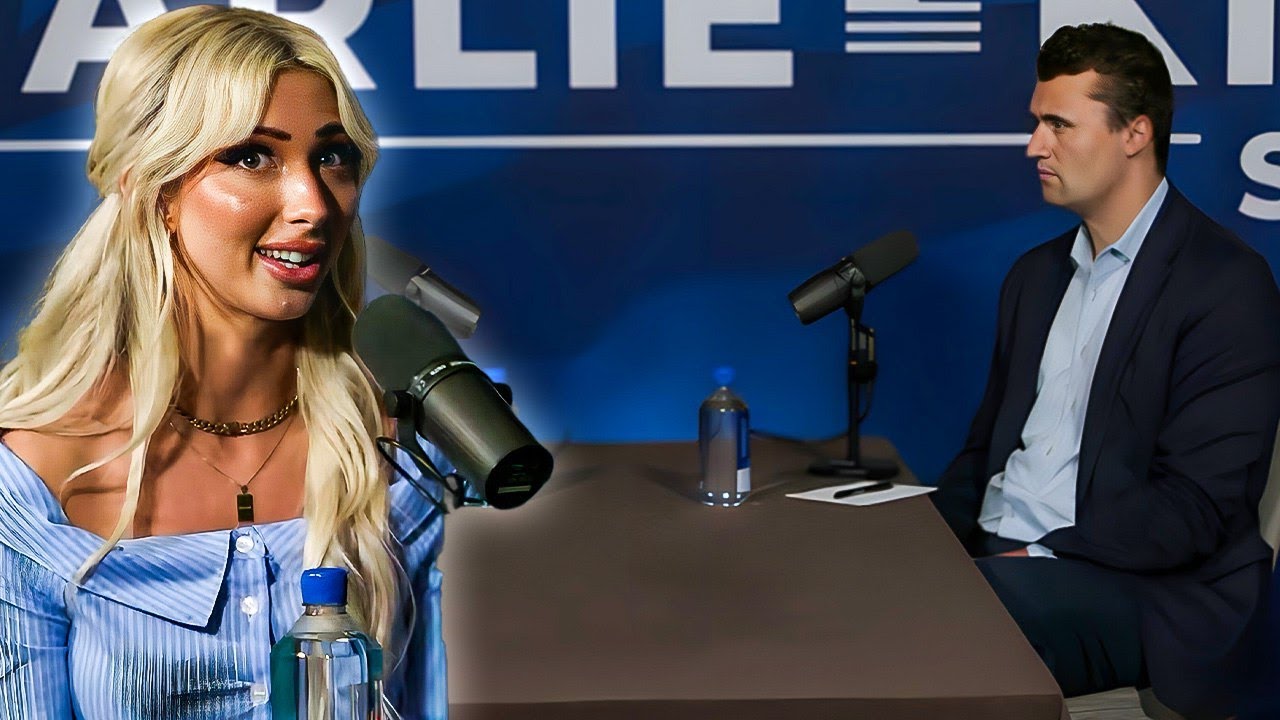
Charlie Kirk and Senator Josh Hawley Discuss the Crisis of American Masculinity and the Path Forward
Enjoying this? Share it with someone who needs to see it.
Up Next
Charlie Kirk Reveals the Five Fake Religions Seeking to Replace Christianity in America
1:01:45
Charlie Kirk and Erika Kirk on Sabbath Rest, Biblical Marriage, and Raising Children in a Screen-Addicted World
38:00
Charlie Kirk Reveals Why Young Men Are Leading a Right-Wing Revolution Across America's College Campuses
1:36:16
Charlie Kirk and Senator Josh Hawley Discuss the Crisis of American Masculinity and the Path Forward
Charlie Kirk sits down with Senator Josh Hawley to discuss his new book on manhood and the systematic dismantling of masculinity in America. Hawley argues that the Left's assault on traditional manhood, combined with decades of job-destroying policies, has created a crisis among young men facing record depression, suicide, and purposelessness. Drawing from Biblical figures like King David and American heroes like Theodore Roosevelt, Hawley makes the case that strong, responsible men are essential to family stability and America's future. The conversation tackles controversial topics from pornography addiction to gender ideology in schools, offering a roadmap for fathers raising sons in a culture hostile to masculinity.
Senator Josh Hawley didn't write a typical political book. As a sitting U.S. Senator, he could have penned policy prescriptions or a campaign memoir. Instead, he wrote every word of a book about masculinity—and he's taking heat for it. As Charlie Kirk notes at the outset, this is "one of the most important issues happening in America," yet it's become a third rail topic that few dare to touch.
Hawley's motivation is deeply personal. With three young children at home, including two boys ages ten and eight, he found himself wrestling with a fundamental question: What is his obligation as a father to help his sons become the men God made them to be? The book emerged as an open letter to his sons, exploring what it means to be a man of integrity, strength, and character in a culture increasingly hostile to those very concepts.
The Epicurean Trap: Pleasure as God
Hawley identifies modern liberalism as fundamentally Epicurean in philosophy. "The self is God, pleasure is God, self-indulgence is God," he explains. The modern Left doesn't believe in eternity, heaven, hell, or even the categories of male and female. Their message reduces to: the universe is meaningless, so make yourself happy and don't interfere with others doing the same.
For men specifically, this translates to a simple directive: sit in front of a screen, consume entertainment, order products, and be an androgynous consumer. When men aspire to be more than passive consumers, they're told they're contributing to systemic injustice. It's the ancient formula of bread and circuses—keep the masses entertained while elites run society.
Hawley contrasts this with the Biblical creation account in Genesis. Unlike other ancient creation stories that begin with chaos from which gods emerge, Genesis presents God creating order from chaos—establishing distinctions, purpose, and meaning. This foundational difference matters profoundly. If you believe Genesis 1:1, everything you do has purpose. Without it, purpose becomes arbitrary at best.
The Perfect Storm Against Men
When asked why masculinity has declined so dramatically, Hawley points to a convergence of cultural and economic forces. The cultural assault began in earnest in the 1960s when cultural Marxism took root in universities. This ideology attacks everything permanent, true, and connected to God—including traditional notions of manhood and womanhood.
From early childhood, boys are told that masculinity is inherently toxic, that being a man makes them contributors to civilization's destruction. This messaging saturates schools, entertainment, media, and even sports. Simultaneously, policymakers spent 30-40 years shipping good-paying blue-collar jobs overseas, destroying the industrial base that once allowed men to support families on a single income.
"Washington has absolutely no idea what its 30, 40, and 50-year-long policy of destroying the working class in this country has done," Hawley observes. "They don't have any idea how to fix it. They still want to keep doing the same old things—keep sending the jobs away."
Why Strong Men Threaten the Elite
Charlie Kirk poses a pointed question: If you were a leftist seeking totalitarian control, why would you need to remove men? What about masculinity conflicts with a Marxist agenda?
Hawley's answer is direct: "Men stand in the way." An independent man who says "I'm not just going to do what I'm told" but instead follows his sense of duty and obligation—defending his family, neighborhood, and church—poses a threat to elite control. For decades, the message from America's ruling class has been: let us experts run the country while you buy cheap stuff from China and stay quiet.
A man who is economically, morally, and spiritually independent represents a challenge to this system. He insists on self-governance and having a voice in his government. Strong women don't want another child in the house to care for—they want partners who contribute. The statistics bear this out: addressing childhood poverty and youth violence in America requires putting fathers back in homes.
Biblical and Historical Models of Manhood
Hawley offers King David as a Biblical example worth emulating. David was arguably Israel's greatest king, yet far from perfect. What made him great was his willingness to give his life for God, serve as a warrior for others, and use his authority for good rather than self-interest. His flaws didn't disqualify him—God used him despite them.
From American history, Hawley points to Theodore Roosevelt. "Not a perfect guy at all," Hawley acknowledges, noting disagreements with some of Roosevelt's policies. But Roosevelt loved his country, his family, and his faith. His life embodied service and sacrifice. He challenged the men of his generation to answer the call, changing his generation through his example of character.
The journey to manhood isn't about perfection—it's about character development. It's a lifetime pursuit of becoming a husband, father, builder, warrior, priest, and king in the Biblical sense. These aren't just roles but virtues to acquire through dedicated effort.
The Crisis in Numbers
Young men today face record levels of depression, drug abuse, and suicide. The rates are terrible for all men but especially devastating for young men. They're receiving contradictory messages: traits like aggressiveness, adventurousness, and boisterousness—characteristics associated with masculinity for millennia—now supposedly lead to oppression, bigotry, and even climate change.
This creates profound disorientation. Young men wonder what they're supposed to do if traditional masculine traits are evil. Many default to the passive consumer role, sitting in their parents' basements in front of screens. But the data shows these men don't feel good about their lives. They lack purpose because they've been given none.
Layered on top is a fear of failure driven by our supposed meritocracy. Young men are told they're defined by SAT scores, GPAs, and diplomas from the right schools. Previous generations understood that failure is part of being a man—you take risks, you fall, you get back up. Today's young men are afraid to even ask women on dates, fearing accusations or rejection.
The Pornography Epidemic
Hawley spoke at a Turning Point USA event against pornography, and predictably, the Left melted down. Charlie Kirk notes that nearly every young man, himself included, has struggled with pornography at some point. It's not a matter of moral superiority but of recognizing the damage.
"Pornography is one of the great arsenics of American manhood," Hawley states. The research is extensive and clear—the correlation between massive pornography consumption and delayed marriage and family formation is well-documented. The more time men spend on screens consuming porn, the less time they spend forming real relationships, asking women on dates, getting married, and starting families.
This isn't moralistic judgment but practical warning based on evidence. As outlined in books like "Your Brain on Porn" by Gary Wilson, pornography is chemically addictive and profoundly damaging to the brain, soul, psyche, and confidence. The solution is straightforward: turn off the porn and ask a real woman on a date.
Reclaiming Education for Boys
The American education system has become feminized in ways that harm boys. School curricula from kindergarten onward interrupt boys' play far more than girls'. Boys are diagnosed with ADD and ADHD at rates far exceeding both girls and boys in other countries. The entire system seems designed to medicate normal boyhood behavior.
Hawley shares that his own sons struggle to sit still for more than 20-30 minutes—not because they're bad boys but because they're boys. Schools need more physical education and recess, not less. There's nothing wrong with being a boy who needs to run and play.
The content matters too. The education system emphasizes conversational and relationship-focused literature when young men respond better to biography, adventure, and action. This isn't about one approach being superior but about recognizing that boys and girls have different needs and learning styles.
Senator Hawley's Daily Discipline
When asked about his routine, Hawley emphasizes that disciplines reflect values. He wakes early and gives the "first fruits" of his day to God, spending time in Bible reading and prayer before the day spirals out of control. He exercises before work, allowing him to focus on the rest of his day.
Evenings are reserved for family. Hawley goes home for dinner with his wife and three children, saying no to most evening events. "I'm a husband and a father first," he explains. He puts his boys to bed, typically reading them a story and praying together. This usually gives him and his wife 45 minutes together in the evening.
The physical discipline matters because disciplining your body helps discipline your mind and character. Hawley notes the correlation between different forms of discipline—strength in one area makes it easier to maintain focus in others. He also finds that morning exercise gives him more energy and focus throughout the day.
The Gender Ideology Assault
Hawley recounts a now-famous exchange with a Berkeley law professor during a Senate hearing on women's rights. The professor refused to use the word "woman," instead saying "persons with capacity for pregnancy." When Hawley pressed her on whether she meant women, she accused him of transphobia and claimed his question led to violence.
This ideology is being pushed on children from kindergarten, creating profound disorientation. Kids are asked every five minutes if they still want to be a boy or girl, told gender is a spectrum with 100 different options. The only way to fix this is to return control of education to parents.
The attack on gender distinctions is part of the broader assault on masculinity and femininity. The Left views these categories as inherently oppressive. Meanwhile, biological men compete in women's sports, use girls' locker rooms, and invade safe spaces for women—all based on the premise that anyone can be a woman simply by declaring it.
A Message of Hope and Purpose
Despite cataloging the crisis, Hawley's message is fundamentally hopeful. "We need you," he tells men directly. "Your families need you, your country needs you, the world needs you. You can be a tremendous force for good."
Men shouldn't believe the lie that traditional masculinity makes them evil. They shouldn't accept the role of androgynous consumer. Instead, they can change destinies—their own, their families', and their nation's—by giving of themselves, taking on responsibility, and living sacrificially.
For fathers, simply being involved makes all the difference. You don't have to be perfect—just be there, care about your children, give them a sense of why they matter. Your presence will change their health outcomes, educational outcomes, sense of self, and future families. Every day offers a chance to get better, to try again.
The Call to Action
Hawley sees this moment as critical but full of possibility. The storm can be reversed. Men can be called to a higher vision, and destructive policies can be changed. The most important thing a man can do is get married and have a family. There, in the home with spouse and children, a legacy is built that touches many more lives.
These conversations need to happen at home first, then in schools where parents have regained control. Boys need to hear it's okay to be boys, that there's nothing wrong with running and playing, that discipline and self-sacrifice lead to fulfillment.
Young men today want more than entertainment and consumption. They want purpose, meaning, and a vision for their lives. That vision exists in the faith of our fathers, in Scripture, and in the good stories of American history. It's found in the journey toward character—becoming husbands, fathers, builders, warriors, priests, and kings in service to something greater than self.
As Hawley concludes: "If ever there was a time where we needed strong men and good men in this country, this is it right now. That's one of the reasons I'm excited to be alive in this time and excited to see what the men of this generation are going to do."
Video Transcript
[Music] foreign [Music] honored to be here and we got a real special night in store for you super thrilled to be here with my friend and his awesome new book manhood Senator Josh Hawley let me just say something here before I uh hand it to the senator this is one of the most important issues happening in America uh well it's not it's not happening enough which is the development of young male leaders in fact we have a men's Summit now at Turning Point USA and this really is in some ways kind of like the third rail you're not allowed to say that you know masculinity is not what it used to be so I'm honored to be included here tonight we're gonna have a great conversation also take your questions I'm going to read the back of the book because I think this is beautiful all is not well with men in America and that spells trouble for the American Republic these are troubled times but trouble may lead to Renewal the possibility of something better for men for America awaits us I think that there's a very special opportunity for us to talk about it and do something about it and raise men of this next generation and Senator Hawley is with US senator how you doing I'm doing great thank you so much Charlie thanks for being here thanks for doing this so congratulations on the book how's it going so far any adversarial media any uh of course there is there's got to be right if you're not making them angry then you're not doing something right so absolutely because you you hit the nail in the head we're not supposed to talk about masculinity I mean that's like the absolutely forbidden no absolutely do not mention that so uh the left is totally melting down every time we mention it on social media they completely lose their minds it is wonderful it's wonderful yeah so I can't wait I really hope you can get on Morning Joe and have a debate about masculinity with Joe Scarborough I think that would be amazing or how about Chris Hayes Chris Hayes is not exactly the pale of them face of American masculinity it's not based to something else and androgynous metrosexualism all right so let's talk about the book and then we're going to get to some questions here Senator I'm going to re-ask the question I asked on our show our podcast which is you're a senator you know you're trying to reign in big Tech close our border why masculinity I mean usually when Senators write books it's either kind of ghost written books to run for the presidency or about some policy idea you you decided to go a different way why this topic well and I I wrote Every Word here so I just say to people like if you're offended it's me it's all me so and if you're offended maybe you need to read it again you know I mean so and if you're offended by all of the Bible content in here then maybe you should go and read the Bible too um no listen the real reason that I did this Charlie and I talk about this in the book some is that I've got three little kids at home as you know you've met my boys and my two oldest are ten and eight they're both boys and for me it was really thinking about what my obligation is to them as a dad as a father how do I help them grow to be the men that God made them to be to be the men that this country needs them to be and so the book really came out of that and I even say at the end of the book that it's really an open letter to my sons you know and I I hope that I hope that when they read it one day uh that it will mean something to them but it's really me as a father thinking through what does it mean to be a man of integrity what's it mean to be a strong man a good man and so I wrote it for my sons with that in mind so you know in the book you talk about the problem and then some solution but I want Solutions I want to ask it's definitely gotten worse over the last 20 or 30 years it getting worse being the decline of kind of the masculine archetype you know that's where where have the men gone why do you think that is what is it is it our industrial policy is it something in pop culture media is it all is it just kind of a really mess of a combination of events is it so is it left-wing social pressures that through activist groups like what why has this happened because it's it's beyond troubling it's civilizational ending it yeah it is and I think and you think you're exactly right it has gotten worse I think a couple things I think the pressure from the left the social pressure from the left to talk about this in the book I mean the left now doesn't believe in manhood they don't believe in Womanhood they don't believe in gender at all and so we've seen an all-out assault that has been going on for years but really built to a crescendo in the last let's say five years and all out assault on the idea of anything permanent anything Eternal anything that connects us to God and so I think you see as part of that this Crusade against manhood and you see it taught in our schools from the time that our boys are little you see men relentlessly told that to be a man is a bad thing that if you are a man you are going to contribute to the destruction of civilization that masculinity is inherently toxic this has just become gospel on the left and they push it everywhere entertainment the media for sure it even sometimes even in sports messaging now we're getting this so I think that that has been building and building part of the less assault on again on things that are true and good and permanent and then you mentioned industrial policy that's a piece of it Charlie that people don't like to talk about especially not in Washington because nobody wants to take any responsibility but the truth is that for 30 40 years now the so-called experts in Washington have shipped away so many jobs good paying blue Dollar jobs that men used to perform and support a family on and today it's tougher and tougher to support a family on one income in this country especially Blue Collar income that is devastating this country and we need to reverse that I um I think there's a desire and an appetite to fix this and I think it it manifests in a lot of different ways for example the rise of stoic literature uh there's YouTube channels that are talking about this I want to read this because this definitely got my attention how many senators do you think can tell you what Epicurean philosophy is because I I happen to have read um epicureanism and I find it to be awful um in fact I think it's actually the root of a lot of self-indulgence and so you see two concepts of Liberty this is how this akirion concept works out in the end it is bread and circus so the people the working men and women of the country now rendered faceless and voiceless by liberal policies separated from family from work from church and from home and power for the elite who will busily continue to constructing American society to make the common person dependent on them that's beautifully written talk about I mean we don't we don't have to go too deep into the philosophy but I think it's interesting who what is epicureanism and how does it tie to kind of the modern view of the self yeah it's a great question I think that modern liberalism is basically Epicurean by which I just mean the self is God yes pleasure is God self-indulgence is God so they don't really believe in much of anything they don't believe in eternity they don't believe in heaven or hell they don't believe in God they don't believe in male or female the modern left what they do believe in is pleasure and so they say listen the universe is a meaningless place that's correct we're all just kind of stuck in it so what do we do do our best make yourself happy you know I mean just that's the most we can do make yourself happy and don't interfere with anybody else who's trying to make themselves happy then that's basically the message of the left today and the message to men if we want to distill that down a little bit more is why don't you go sit in front of a screen and watch whatever entertains you order a bunch of stuff you know be a consumer be an androgynous consumer that's basically the less message to men and if a man wants to be more than that they say oh no that's you are contributing to these systemic Injustice of America you know I mean that's America is a terrible place because of you men because of what you've done and so and then get this message constantly just it's bread and circuses as I say in the book and the quote that you read the last message to them is just be entertained we'll run the country you know we left this we'll run the country you may in you sit down shut up yes watch something on on your screen buy some stuff sit in your cubicle don't rock the boat and I think Charlie what we need to say to a generation of men who want more than that right you see this every day this is what you do you work with young people men and women want so much more than that and our message to them needs to be no turn off the screen get out of your parents basement go get a job go date a woman men go marry a woman even better go start a family and change the world that's how you change the world is by sacrificing self not making self your God yeah and and as we talked about on my our podcast going on the Journey of Genesis 12 which is to leave your father's home you're going to get beat up a little bit but so so let's talk about the word your the two words that I think are missing for most young men that I know you talk about in the book by the way everyone go get your book right now premiercollectibles.com manhood Senator it's obligation and Duty those are two words that if you ask most men what are you obligated to and to whom do you have a Duty or to what you know the Divine they'd say what are you talking about I I mean a Chipotle ubereats you know uh video game why why do those two words matter and how did we lose sight of them I think they matter because they tell us who we are you know we are defined by our duties and our obligations and as a man the ability to call on your life to sacrifice yourself for other people to sacrifice yourself for the woman you love to sacrifice yourself for the children you may father and whether you're a father a husband yet or not to sacrifice yourself for the good of other people around you who need you at a very fundamental level that call to sacrifice self is really what it means to be a man I think I mean the journey to man is a journey to character right and it's one that we never we never stop I mean we pursue it our whole life long trying to grow in character so you know to me Duty obligation defines a real core of what makes us men and also Charlie what gives us purpose in life right I think this is why so many men living in this culture don't feel a sense of purpose what purpose is there in entertainment and being entertained I mean what purpose is there and being an androgynous consumer there's no purpose in that no and and that's why we're seeing suicide rates and depression rates the way they are this is the most important part of the book in my opinion and I'm so I mean you independently are talking about stuff that I've made kind of core ethos you say you you quote Genesis 1 1 which is if you believe in Genesis 1 1 therefore everything you do has a purpose yes if you don't believe in Genesis 1 1 then it may or may not have a purpose you say this the world was a chaotic place at first no day and night no land in Sky no order so no distinctions right very very important that's why they need to get rid of the distinction of male and female just the deep and the ancient symbol of chaos ever churning the form and in darkness disorder itself there are many creation Stories the neariest most of them begin with chaos and darkness followed by an account for the first Gods emerge from it out of the deep not so in Genesis that is true it is a unique creation story but talk about you know as America has become more secular then people struggle to find purpose is it possible in a secular society to be able to have objective meaning and purpose I I struggle to believe so well I have to say that the experiment in that that the left has wanted to run for going on 50 years now which is basically to try to erase Faith from the public sphere to erase God and Eternity from the public sphere I don't think it's going so well you know I mean listen I believe in Liberty of conscience but that's because I am a Christian I mean as a Christian I believe in the right of conscience that that God speaks to the conscience and every person has to have the right to follow him as they see fit but it is it is grounded in faith right so your point if you take that out if you take out the god of the Bible if you take out any sense of Eternity and meaning then you know I think I think it's pretty hard to say well what is it I'm supposed to do with my life and that's why in the book what I do is is look back at the stories of the Bible and say well what does the Bible say what what guides does it give us about what it means to be a good man what it means to be a strong man what it means to have a sense of purpose in life and you nailed it right there when you were we were reading from Genesis 1. I mean it sets it out I mean what is what does God do he creates order he creates flourishing he then calls us to follow in his footsteps and do the same so there it is real simple for men what are you supposed to do with your life right there you're supposed to co-labor with God work with God to make the world what it could be to bring Beauty to bring order to bring Liberty right that's our mission as men so let's go through some examples if you were to say to your son or to a young man what would be an example of a man of a man worth worth emulating or a heroic man a Biblical or otherwise uh get give some examples yeah well I'll start with a Biblical one and uh and then I'll give one for American history so a Biblical one do I talk about in the book is uh King David you know I mean he arguably Israel's greatest King also a guy full of flaws you know this is the thing Charlie that I find so hopeful I mean every man out there knows this right none of us are perfect so let's just be clear about that if the journey to manhood is the journey to Perfection then I'm certainly not getting there none of us are getting there right what is hopeful about the stories of the Bible and the call to manhood as character is it's something we can get better at every day it's something that we can grow in so David not a perfect guy but yet he leaves an incredible Legacy why because he was willing to give his life for God he was willing to to give his life as a warrior for others he was willing to use his authority for good and to lay down his own interests to sacrifice his interest for the good of other people and it made him the greatest King of the Jewish scriptures of the Old Testament just amazing there's one example heroic I hope my boys you know I hope that they will want to be grow up and be like man I want to be like King David and yeah he had a lot of flaws but guess what God was able to use them despite those flaws it's amazing from American history you know I love this guy Charlie I love Theodore Roosevelt and I quote him in the book several times again not a perfect guy at all we could pick apart some of his policies I've done that in other settings but I think you look at Roosevelt and here's a guy who loved his country loved his family was committed to his faith and his whole life long he was about service he was about sacrifice and he was about challenging the men of his generation to step up and answer the call and Charlie he really he changed the generation with his example not an example Perfection but his example of encouragement and vision for people's lives and I just think he is a great American and we still remember him today because of his character and I he's somebody who I've I hope to emulate and I hope my boys will want to too so I want to ask you to speculate here and I know this is tough what what if you were a leftist why do you need to remove men what what is it about masculinity that is at odds with a totalitarian Marxist agenda is it is if you were to and I'm get I'm getting closer towards you know just being blunt about the question which is is this intentional is it not it's impossible to know but I certainly think part of it is but what is it about masculinity that is so disagreeable with the Tyrant men stand in the way I think you know I mean an independent man who says hold on no I'm not just going to do what I'm told I'm going to do what I believe is right I'm gonna we talked about Duty and obligation I'm going to put that first I'm not going to just do what what some guy in government or some Elite tells me to do I'm going to defend my family I'm going to defend my neighborhood I'm going to stand up for my church those kind of men I think are threatening to an elite regime that wants to call the shots that wants to run the country here's them in the message of our Elites Charlie for the last 30 40 50 years really since mid-century it has been hey let us run the country we're experts you know we should have a government of experts and who are the experts we are the Liberals are so we'll run the country you people go buy some stuff go buy some cheap stuff from China you know and otherwise shut up and let us run the country and I think a man who is independent economically morally spiritually is a threat to that because that kind of a man says hold on no this is uh this is a self-governing republic I I think maybe I'll run my own life thanks and I think maybe I want to have a voice in my government thank you those kind of men I think are a threat and so you see the left trying to placate them trying to get rid of them trying to turn us into androgynous consumers so the uh the population of people that seem to resonate with this the most are women and I don't know if you agree or not but we have a young women's Leadership Summit that we do and we have over 2 500 young ladies that attend and overwhelmingly they're telling us can't find men that have their act together all the men I know have you know no self-control no responsibility they act like women and you know I there's men that want this as well I mean like want this mantra for their life this commitment and we saw this with the rise of Jordan Peterson and you know his his beautiful work and his contribution to this I mean but what does it say when women are the ones that are receptive because you could you could probably not understanding the moment we're in you'd say oh well you know it's going to be women that are they're going to be the harshest critics of the book I mean I was flipping through some of the nastiest articles written about the book which are hilarious are by men not by women your thoughts senator well I think it's because strong women don't want to have another child in the house who they have to drag along and provide for right I was talking about this with my wife you know and she's like listen women aren't stupid they don't want to marry a guy who what is he going to contribute nothing you know what what's she going to do with him she's going to have to treat him like one of the babies they don't want that and so I think that you know strength strength plays off of strength right I mean the Bible says in a different context that that meant two strong men sharpen each other like iron on iron that's I can say from my own experience with with my wife and my marriage two strong people sharpen one another and so I think it's it's totally understandable that women are like listen guys I mean I I don't are you going to contribute or not you know I need you to be a contributor here I mean I need you to be part of what we're doing in this family and Charlie the stats bear this out like you want to address the problem of childhood poverty in America put a father back into the home you want to address the problem of Youth violence which is spiraling out of control in this country put a father into the lives of these young men so really it is it is men stepping up and doing what they're capable of doing and I think yeah women want that because they don't want to have to carry the burden by themselves and it's like hey man come on I mean we need you and listen I believe in the complementarity of of men and women I mean we're different that's wonderful there's distinctions that's beautiful you put them together it's powerful and I think that women women get that strong women get that and so I want to get to some questions here um some really important ones I I just I'm curious have any of your colleagues commented on on you writing this book yet I mean just legislatively or does this kind of just not are they more worried about sending money to zielinski or something well that is a passion of theirs um I I will say a couple people have mentioned it particularly uh folks who are who are fellow Believers oh good it's good like yeah you know I love the love the fact that you're wanting to talk about the Bible um and and talk about faith and its significance so so that's awesome but I will say this and this is not to comment on any of my colleagues but I just think of DC in general I mean listen I haven't been in DC for very long but it's long enough to figure out that this town has absolutely no idea what it's 30 and 40 and 50 year long policy of destroying the working class in this country destroying Blue Collar man they have no idea what they've done and they don't have any idea how to fix it I mean they still want to keep doing the same old things keep sending the jobs away you know I mean I can't tell you how many times a week I had people say oh well but it's good to have cheap stuff from overseas and if we lose some jobs in the process you know it's good for McKinsey I mean look strong men are a threat to neoliberalism right strong men you have robust industrial policy you don't need to have unlimited amounts of foreigners in your country and you have strong men that do not have to have this weird fetish to go invade every sovereign country every five years and then bankrupt our country in the process okay let's uh let's get to some questions here so Senator this is from Shea from new smyra beach I hope I said that right from Smyrna Beach Florida does the decline in masculinity in America increase gender confusion in kids it's a great question and does that lead to an increase in the likelihood of that individual trying to become trans your thoughts Senator you know that's a great question and I'm signing a book here as I as a I do this so tell me I've got it so here we go all right so yeah I mean I I think that the the the the the trans ideology I mean I think definitely what you see from the left and Charlie you and I have talked about this I had this hilarious exchange I write about it in the book A year ago with a professor from an elite law school you know highly regarded law school who came before the Senate and I start would not say the word woman yeah would not say woman you see Berkeley I think UC Berkeley is correct and so I'm sitting there and I'm listening to her and this is on a Committee hearing on women's rights may I may I add so finally I said to her got to be my turn I said you know you keep saying persons with capacity for pregnancy would that be women or what am I missing here and she lectured me about how that was transphobic and that question led to violence I mean literally people can go look this up on the web I mean don't take my word for it so I think what you see from the left is this ideology that is a religious ideology for them but they have totally swallowed Hook Line and Sinker that again gender there's no such thing as gender that in fact there's something inherently oppressive about masculinity and femininity and so that's one of the reasons I think that they they push to kids this idea that you know listen you shouldn't there is no such thing as gender and that you need to be asked every five minutes or do you still want to be a boy do you do you want to be a girl you know gender is a spectrum you could be 100 different things it is profoundly disorienting to children and I I think it's a huge huge problem in schools and some something that the only way to fix it is to get parents control again I think over their kids education yeah I think it's a huge issue go to premiercollectibles.com manhood to get your copy and I was just flipping through it it's incredibly deep it's terrific Trevor from California what made you want to come out and release this book now similar to my question but I think it's a good one like what what about this moment in time made you want to release this well I think we're at such a critical moment listen as as I talk to young men all around my state and around the country as I have the privilege to travel and then I've also I've taught young men and I talk about this some of the book I share some stories of young men that I taught uh before I was uh in in politics I was a lawyer a religious liberty lawyer constitutional lawyer and I also taught at law school for a while and I I taught a lot of young people there A lot of young men and my sense of it is is that we've really reached a crisis point with young men in particular and Charlie you've referenced some of the stats record high levels of depression record high levels of drug abuse record high levels of suicide it's bad for all men it's really terrible for young men and I just think that young men are saying I I need some I need some some vision of what my life can be and my view is like Hey listen I don't I don't have the vision personally but you know what I think I know where I can find it I think I can find it in the Faith of Our Fathers I think I can find it in what the scripture says I think you can find it in the good stories from American history and that's really why I wrote the book great uh so let's get to the next question here uh Shannon from Illinois Senator is there a main theme or takeaway you want your readers to gain uh yeah I would just say this that the message that I want to send to men is we need you your families need you your country needs you the world needs you and you can be a tremendous Force for good that's the bottom line of everything is that men don't don't believe that because you're a man if you if you want to if you want to be uh you know want to live like a traditional man traditional masculinity that somehow that makes you evil no and don't buy the left line that you need to be an androgynous consumer no you can be a tremendous Force for good by giving of yourself by taking on responsibility and by living in a sacrificial way you change the destiny of your life your family in this nation that's the bottom line for me another great question here from Luke in Michigan when do you think the decline in masculinity began in America it's a great question great question great question um oh it's hard to pinpoint I mean I really think the left really really ramped up their attack on on manhood and Womanhood frankly starting in the 60s I mean you really see it that's when cultural Marxism you know this this attack on everything that is permanent and true this attack on God and Faith this attack on American history cultural Marxism really took off in our universities in the 1960s and then it really became mainstream in the Democrat Party over the last 20 years so I think you can go back to the 60s and you start seeing the universities turn out this garbage about men being toxic men being inherently destructive and oppressive and then at the same time you had the policy makers doing the stuff we were talking about a second ago Charlie which is sending our jobs overseas hollowing out our industrial base destroying blue-collar jobs and communities in this country and those two things coincided and it became kind of a perfect storm and now we're in the midst of it but hey my message is we can reverse the storm you know I mean we shouldn't just say All Is Lost I mean there's nothing we can do dude no no no there are things we can do we can call men to a higher vision and we can change the stupid policies that have so severely hurt this country and we need to we need to get on it ASAP James from Arkansas great state said what led you to pursue a career in politics oh that's a that's a good question um you know while I was as I was saying a second ago my trainings as a lawyer I was a constitutional lawyer um and I ran it's been I guess six years ago now uh five six years ago I ran for the first time uh for office um had never been involved in politics before and it was really just a sense that we were at a crisis Point as a nation and that I wanted to I wanted to defend the Constitution and I wanted to defend the principles I thought this nation was built on and I was trying to do that as a constitutional lawyer that's actually why I became a constitutional lawyer I wanted to fight for the principles I believe the country was built on but I just came to a point my wife and I together we thought maybe we've been trying to do this in the courtroom we've been trying to do this through lawsuits maybe we could do this by serving I mean maybe we can do this by trying to go out there and and defend our laws to to have a voice in the public sphere to shape public policy so uh that's why we did it and I say we because it was my wife Aaron and I it was a it was a family decision you know we we prayed about it we thought about it and um here we are very good everyone get your book at premierecollectibles.com manhood Scott from Indiana says what challenge or charge do you give fathers specifically oh hey that's a that is a great one I would just say that fathers you being involved in your children's lives will make all the difference in their lives and don't take my word for it look at what the numbers tell you you being involved you don't have to be perfect you know just set that aside you don't have to be perfect just being there caring about your son or daughter telling them about giving them a sense of why they matter and why they're important that will change their health outcomes that will change their educational outcomes that will change their sense of self that will completely reshape their future in terms of who they marry and the families they have the presence of a father in their lives makes all the difference of the world and I tell stories in the book about my grandfather who is hugely significant in my life my own father so you know I I'm a personal example of this I've seen it I've seen that power of involvement of of loving presence and you know I can just again as a father myself like every day I try to get better as a father and every day I'm like uh I screwed that up you know I need to do that better it's never about that it's never about perfection it's always just about giving your best and being there and that you know what that's enough it really is that is enough and uh it it can make all the difference in a kid's life very good next question here Taylor from North Carolina what does our future look like if we continue to confuse the respective masculine and feminine roles and responsibilities Taylor from North Carolina well I think we're seeing it I think we're seeing it in the left's assault on on gender I mean and let's listen we talked about the manhood side of it look at the Womanhood side look what the left is trying to do with having biological men play women's sports I mean it's it's crazy five years ago could we have even had this discussion and the premise of that is there's no such thing as a woman anybody could be a woman a man wants to be a woman fine I decided today I am and then I can go use the girls locker room so what will happen is what we're seeing it's the acceleration of the destruction of places for women of safe places for women uh it's the destruction of responsible masculinity so I I think that we are we're in the early stages of what will happen we'll just see it accelerate and it will will lead to increasing social breakdown only the more youth crime of crime and violence especially among young men it'll lead to more violence against women which is what we're seeing now and that's why we've got to turn this around and we can uh by getting back to the fundamentals getting back to the truth so Rachel asks this question from Maryland Senator what does manhood specifically actually look like isn't it more than just stereotypical roles you see Senator this is a question that is rooted in uh it's a good question because on colleges they'll just say male and female is just archetypes anybody can assume it at any time you can wear Woman face or male face as you seek fit so the question is what does manhood actually look like that is a great question and I I try to I try to explore that in the book and here's the best way I I know to answer it number one is that that being a man is a journey of character and being a man involves acquiring the character of a husband and a father of a builder and a warrior of a priest and a king and to me that Journey towards those virtues and taking on those roles is what it looks like to be a man and that's a lifetime Journey a lifetime Journey one that by the way to to go back to that question about fatherhood one that a father can share with his sons and a grandfather can share with his son and grandsons I mean it becomes a a project across the generations where we share together this journey to try to be all that God made us to be but I think there are distinctively masculine there's a distinctively masculine call as husband father Builder and Warrior somebody should write and then probably has Charlie books on you know on Womanhood and and what the core of that looks like that's not that's out of my area of expertise like Far Far and Beyond maybe my wife will do that your wife yeah but um but I think for men you know the other piece of it is is that we want to we want to have things to do right like what is it that we can do as men and I think the answer is we grow in character into those roles into those responsibilities and ultimately into that way of service and it gives you fulfillment in your life something that is really missing Calvin from Texas says what advice would you give to a man a young man who struggles with his manhood well I think that this is where having Role Models I think is so critical and this is one of the things that the left's assault on masculinity and manhood has really really hurts is why it's been so destructive is they basically tried to destroy all the role models out there the less lies that American history is fundamentally racist and oppressive and bigoted that's part of that right trying to tear down all of the role models all of the Good Men of our history so I think that one of the best things that you can you can do as a man is say okay who who do I admire as a man what other good strong men are there out there and you try to emulate their virtues you try to say okay look at his character what kind of character did he have and this is why in the book I tell these different stories about people from the Bible I tell different stories about men from my own life coaches uh relatives uncles uh people who have had a significant influence on me but Charlie the core of it is they just modeled for me something about what it meant to be a man and every one of those stories I tell for me has been significant because I've said okay there's something to aim at there's a model to look for and I think young men especially today need those models very good okay let's go to uh Kenzie in Colorado what do you think these conversations are out what do you where do you think these conversations around gender need to take place to actually enact change well I mean number one they've got to take place at home and this is why fathers are so significant and then this is why you listen you want to change the world men um here's the most powerful thing you can do to change the world get married and have a family right I mean yeah I want you to get a great job too and be innovators and and scientists and and write great books and all that stuff that's wonderful but the most powerful thing you can do is to get married and have a family because it's there in the in the family with your own children with your spouse your wife who you will be able to leave a legacy that will touch many many many more lives so you know where does this have to begin it's got to begin at home this is why men need to be involved you know and dads I just say you know if you're out there and it's like ah well I've messed it up well there's still time you know I mean you can you can put it right you can try to make it right you can try to you can try to do better right I mean there's always tomorrow so I think it's a message of hope that men need to hear beyond that in school you know Charlie I'm just I'm worried about these School curriculum curricula I guess I should say that uh are shove down our kids throats from the time they're little starts in kindergarten where the boys and the data shows this the boys are interrupted in their play far more often than girls boys are diagnosed with ADD or ADHD at rates far far far far far beyond not only girls but boys in other countries yep so that kind of dedicated our young men exactly and that has got to stop and so I think the home is critical beyond that we've got to give parents some power again in these schools so that they can be advocates for their children men and women boys and girls but for the boys I think that looks like hey there's nothing wrong with being a boy you know and maybe we need to have some more phys Ed and some more recesses in school and bring back the idea that hey you know what it's okay to run and play I know my boys like if you make them sit still for more than 20 30 minutes like it's gonna be a challenge and that's not because they're bad boys it's because they're boys and so I think we've got to bring that back to our schools yeah no there's a great book I can't remember who wrote it uh it was one of the I'll think of it in a second she talked about how the entire education system is so feminine right from the books that we read like Little House on the Prairie and we've really feminized American Education right to how kids have to sit for a long period of time to everything being conversational based where young men are you know shorter attention spans much more into doing much more manual labor care more about stories that are rooted in biography or Adventure then um than stories on romance or on dialogue right yeah you know it's there was a great you'll love this Senator there's uh I'll never forget Dennis Prager told me this once so Harvard did a study where they they had 500 men and 500 women and they locked them in a room and they said just stare at the wall and think about whatever you want to think about okay and then they they come out and they say okay what do you think about for the last 30 minutes for an hour so the men thought about sports and sex those were the two things they thought about of course this is fascinating the women replayed conversations they had in their head isn't that fast right yeah where they were replaying previous conversations uh it just totally different right and the in a good way the distinctions are necessary yeah um but so so here's a question Senator and uh we're we have tons of questions these don't have any names on them but here's one that I I will ask which is you know young men are less confident you know they're afraid in this sense where for example I I had a young man once in an event saying Charlie I'm afraid to ask a woman on a date because I'm afraid of being accused of sexual harassment or whatever that might be an unfounded fear but it does say something senator don't we as the adults need to come in and really kind of get rid of this political correctness because yes there's clumsiness and nonsense but I mean for them to say that you know there's a campus rape problem they way over did that right and I think the the issue was this guilty until proven innocent we saw it with Kavanaugh and the overdoing of me too how much did all those movements Possibly play into kind of the the weakening of the American male well I think when you send I would put it this way I think when you relentlessly for decades now tell men that character traits like aggressiveness and adventurousness and boisterousness and everything that we associate not just not just we like right now everything for Millennia right we've associated with men when you tell them constantly that those traits lead to oppression and bigotry and Injustice and and climate change let's throw that one in there because they say that all the time too men are the drivers of climate change right the climate crisis when you say that stuff over and over I think that for young men in particular you you totally bewilder and disorient them where they're like well okay well wait a minute so I'm not supposed to do any of those things huh well then what what am I supposed to do you know what am I maybe and this is where they just like oh maybe I just I'm supposed to then I guess sit around and be entertained the problem is Charlie as we talked about earlier for those men who are living in Mom and Dad's basement and just sitting on the computer watching their screen they don't feel good about their lives you can see that in the data they don't feel good about it so on the one hand you disorient them in and you say no don't don't do what what men from time immemorial have been thought to do and encouraged to do don't go out there and take the initiative don't try to be a leader no don't do that but then if if you just do what the left wants you to do which is nothing then people feel terrible about their lives and they feel like they have no purpose and that's because they don't so I think you we put young men in this situation where culturally they're totally bewildered and confused and then you you layer on top of this and I thought what you were going to say about the young man who talked to you is that he was afraid to get rejected I think there's this also now that's also true oh yeah this also this powerful and profound fear of among young men and young people that they've got to be perfect you know in our so-called meritocracy on these University campuses feeds into that where we tell them you're defined by your SAT score you're defined by your GPA you're defined by what what diploma you get from the right school and if you can't have those things you're really not worth much in life we I say we the culture the elite culture sends that message and so I think that a lot of times young men are really they're afraid to fail they're afraid to take a risk because it's like oh what if it doesn't go well what if I fail whereas I think in Prior Generations it's like hey failure is part of being a man right you take a risk it's kind of you climb the tree you fall out of it you get back in it right and so I think for young men sending them the message that it's good to be a man it's it's good to pick good role models to show you what a strong responsible man is it's good to go after that and do and to do it hard to do it all your life that's the kind of thing we need that's a message we need so let's talk for a second and I know you talked about this in the book about delayed gratification right so you know you came out I think at one of our events and spoke negatively against pornography and the whole world lost their minds yes the left melted down because the left has some I I mean it's like Pro pornography or something I mean yeah and you know I spoke openly on the show almost every young man myself included had their struggle with it at some point praise God you can overcome it so it's not like some more or less thing from my perspective right it's something that's very real incredibly chemically addictive and should not be celebrated right so there's not like I'm a better than new type thing but I could say that it's unbelievably damaging to the brain to the soul to the psyche to confidence and so let's talk about that issue in particular yeah pornography I think it's one of the great arsenics of American manhood do you agree yeah oh totally 100 100 and it is it is really amazing Charlie that anytime you even bring it up the left automatically loses their minds I'm sure right now as we're talking someone on Twitter or mini someone's are just completely losing it because we've dared to be even somewhat critical so no I think this is part of the deadening effect I mean it's just again just look at the data you don't have to take our words for it go look at the numbers it's Jerry Wilson's book your brain on porn I mean I don't know if you know about it I'm starting to interrupt it's unbelievable exactly it's unbelievable yeah exactly and the the more time that men spend on their screens looking at porn being entertained the less time they spend with in real relationships and learning to ask real women out on dates forming relationships getting married you know and I mean the the correlation between delay in marriage and family formation and huge consumption of pornography is there in the literature there's been much studied it's not like this is like some new thing where oh I've never heard of it it's like this has been studied many times the data is out there and you're exactly right about this isn't about a moralistic like you know oh I'm better than you not at all I mean acknowledge I'm not at all I'm trying to warn you it's bad it's yeah it's all about like hey what can you do to be the person who you were created to be what can what steps can you take towards that I think we need to say to young men in particular like listen turn off the porn and go ask a real woman on a date I mean you know what's going to be better for your life yeah and it's just so that that's an interesting thing right so men men need to be intentional about about saying no to things that might give you immediate gratification that's right and it's not just pornography but it could be video games it could be the screens but also let's let's talk for a second Senator you know you're you're definitely one of the more athletic probably the most the fittest U.S senator I mean some sense I don't see any names you know the guy from Montana he's he's not exactly fit Steve Danes is the other guy John tester but I mean let's talk about it men should care about their bodies shouldn't they I mean is that part of this well I I do think that for I mean just for me um having some it's about about self-discipline and having a routine having a schedule tell me about your routine no because you're you're I mean look everywhere you go there's probably donuts and there's probably salt not me but you you're a very fast no but I just think that so some stories I tell in the book I I end up telling a couple stories about coaches that I had and it's funny Charlie I didn't like when I was thinking about the book I didn't like script out these stories and I did not intend to tell any personal stories I really didn't it's just that as I was writing and then trying to think about okay you know if I'm if I'm preaching this so to speak like how's this been real in my own life and as I went through that process and was writing about it I found myself you know telling stored personal stories from my life about how a particular thing had come home to me so on this point some of the biggest influences in my life were my coaches and early on you know it's starting in junior high and then certainly in high school and and just helping me they gave me a sense of vision for my life they believed that you know I could be a better athlete they could believe I could be a better man and they helped me learn self-discipline and for me playing sports was about yeah being on a team that was amazing being part of of something bigger than myself but also self-discipline and I love that aspect of it and I've tried to keep that up in my life you know to have the discipline to to get up you know in the morning and to for me I start my day I spend time in prayer and I read the Bible and then I try to exercise size and you know and so I'm with my own boys now you know I want them to see that hey a life of self-discipline they can look very different right it's different for every person yeah yeah go ahead no I just said interject I think this is great because tell us your routine because because your disciplines are a reflection of your values right if you make your routine the habits then point to your destiny so walk us through because people are fascinated by this I mean you're a U.S senator you're on committees all this but you have time to work out to walk us through that I think it's really interesting well I try to get up uh pretty early in the morning and then for me you know I I try to spend I try to give my first the first fruits of my day so to speak you know that that first quality time I I try to give that to God because for me my faith I'm a Christian my faith is at the center of what I do so that and I for me I got to do it immediately because if I say I'll try to do it later the day like I I just I lose control of my day Charlie and then also I you know my kids my wife so I get up I try this to and spend some time uh by myself reading in the Bible and praying I do that first then I try to exercise I try to do that before work if at all possible because again that that allows me then to focus on the whole rest of the day go to work do that hard go after it and then when I get home I try to Charlie when I get home and I try to get home in time to have dinner with my family which means I say no to most evening events so if I'm if you're out there and I've said no to your event don't take it personally it's because I've got little kids at home and my wife and to me I'm a husband and a father first and so most evening events I don't do those in DC I go home I go see my wife and my kids I try to eat dinner with them and then I put my boys to bed and I re I usually read them I talk about this the book I read them a story typically and we pray together and then that gives us usually if all goes according to plan which you know it rarely does but then my wife and I will have some time in the evening or I'll put our little baby down to bed and we'll have then you know 45 minutes or so to ourselves or we can catch up and spend that time together and so that's kind of the structure of mine day and um it just for me it's about trying to prioritize those things I think are most important um my faith my wife my kids and that to me allows me to do the job that I'm called to do so I mean I don't know how far you want to get into this or let me just want to focus on the physical aspect of it which you obviously take you know importance we are we are a body it's not the most important part of us the soul is the most important and we are a mind as well you know young men are more overweight less athletic and you talk about take you know turn off the screen but Teddy rozo he talked about he famously used to have cabinet officials come while he was hunting or doing two hours of exercise on the White House line the guy was a beast right I mean he was a super active person and men are more likely to want to be involved in physical activity doing things in their hands and so do you have any comments on that in general just like at least prioritizing the physical in some way it's not the most important thing it could become an idol 100 but your body as a temple as the scripture said yeah absolutely and I think there's a definite correlation between disciplining your body and disciplining your mind and your character right I mean that's why it's good if you have discipline in one part of your life it's easier to carry that over into other parts of your life so that's why you know I mean getting some exercise uh disciplining yourself with what you eat I mean everybody's got to do this according to their own goals but for me I just find that that is helpful in maintaining a focus and being goal oriented I also happen to enjoy it I mean for me like I get energy out of it it helps me focus more I have more energy throughout the day than having a gun with a discipline in the morning yeah and that's I mean disciplines become a dirty word but again it's a reflection of our of your values so Senator anything in closing here I there's other questions they're not attributed any names so I don't know I don't think I think we got through all the names to be signed but any other closing thoughts on this everyone you can get your book premierecollectals.com manhood any closing thoughts as we as we wrap this up I would just say that that to the men out there boy this is we need you America needs you your families need you and this is your time I mean this is your time to step up and to change the destiny of your life the destiny of your family and of this nation if ever there was a time where we needed strong men and good men in this country this is it right now and that's one of the reasons Charlie I'm excited to be alive in this time and excited to see what the men of this generation are going to do yeah amen we we need a new generation and everyone can check out the book manhood the masculine virtues America needs by Josh Hawley I highly recommend it Senator thank you so much and everybody thank you check out premierecollectibles.com manhood get your signed copy at the link above and thanks so much thank you Charlie thank you hey this is John acup New York Times best-selling author of seven books and someone who's done a live signing if you like the one you just watched make sure you check out our YouTube channel it's full of amazing authors having great conversations and signing books for viewers just like you so make sure you subscribe and thanks for watching