Charlie Kirk Challenges University of Washington Students on Democracy, Immigration, Feminism, and the Value of College Education
Enjoying this? Share it with someone who needs to see it.
Up Next
Charlie Kirk Defends Republic Over Democracy in Fiery Campus Debate on Education and American Values
5:49
Charlie Kirk Defends Why Democracy Is Not a Fundamental American Value in Fiery College Debate
5:04
Charlie Kirk Explains Why He Believes College Is a Scam for Half of All Students
4:15
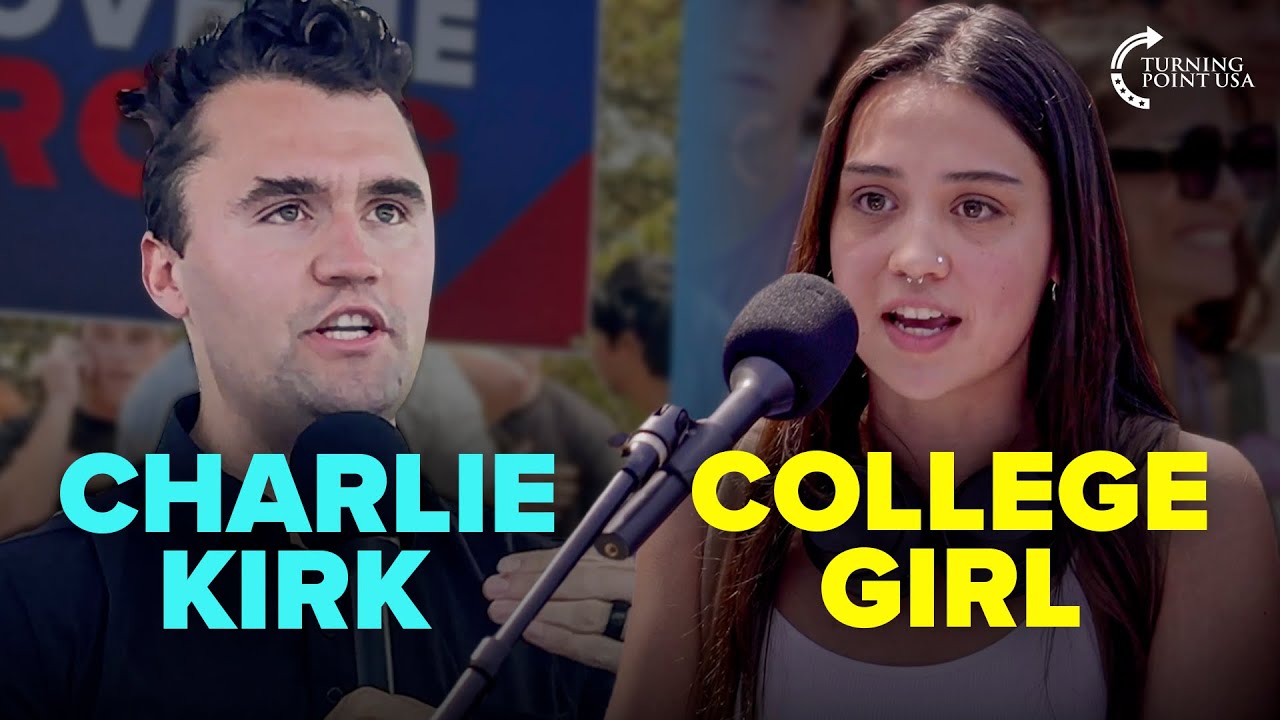
Charlie Kirk Challenges University of Washington Students on Democracy, Immigration, Feminism, and the Value of College Education
Charlie Kirk confronts University of Washington students in a series of heated exchanges about fundamental American principles. From debating whether democracy is truly an American value to defending his stance that every illegal immigrant should be deported, Kirk pushes back against progressive narratives on immigration, hookup culture, feminism, and the college system itself. Students challenge his views on education, relationships, and civil discourse, leading to tense but revealing conversations about the future of America and whether college is worth the investment. Kirk argues that the Constitution never mentions democracy, that illegal immigrants are criminals regardless of contributions, and that universities are scamming students while indoctrinating them with left-wing ideology.
When asked if democracy is an American value, Charlie Kirk emphatically says no. He challenges students to find the word "democracy" anywhere in the U.S. Constitution, The Federalist Papers, or the Declaration of Independence. Kirk points out that when democracy is mentioned in The Federalist Papers, it's discussed negatively as a problem to avoid.
"I am pro-representative government but I'm not pro-democracy. That's a big difference and that distinction is important," Kirk explains. He defines democracy as pure majority rule without provisions for checks and balances, inalienable rights, or separation of powers. Kirk advocates for the republic system the Founders established, where representative government protects minority rights against the tyranny of the majority.
Education Versus Wisdom
A student argues that in a representative system where citizens vote, shouldn't everyone be as educated as possible? Kirk responds that people should be "as wise as possible" and that education and wisdom are not the same thing. In fact, he believes college disincentivizes the cultivation of wisdom.
When accused of promoting anti-intellectualism, Kirk pushes back hard. He argues that the right's criticism of higher education isn't because they hate smart people, but because colleges have created "an ungrateful, unprepared generation that goes into the American body politic and does not share the core American values of freedom of speech, gratitude for our founding, consent of the governed."
Kirk defends his position by pointing to Hillsdale College as an example of rigorous education in pursuit of truth, beauty, and goodness. The problem isn't learning itself—Kirk says he learns every day from various sources—but rather that students are "learning largely trash and crap" without cultivating wisdom or good character.
The Immigration Debate Gets Personal
The conversation turns explosive when students of immigrant backgrounds challenge Kirk's immigration stance. Kirk maintains that anyone in the country illegally should be deported, regardless of their contributions to society. When a student mentions that illegal immigrants often flee devastating political situations, Kirk responds that having an unstable country doesn't give anyone the right to break into America.
"If you come into a country uninvited, definitionally you are a criminal," Kirk states bluntly. He compares illegal immigration to breaking into someone's home, arguing that even if the intruder does the dishes and laundry, they should still be removed because they trespassed.
One particularly tense exchange occurs with a student whose mother entered the country illegally from Mexico. Kirk tells the student directly: "Your mom's a criminal and every day she stayed here is no different than squatting." He argues that illegal immigrants take the place of legal immigrants from around the world who wait decades to enter America properly.
Kirk emphasizes that he has sympathy for people in difficult situations worldwide, but insists that America's first obligation is to its own citizens. With the current generation being the first in American history to be worse off than their parents—drowning in debt, unable to afford homes, and competing for jobs against foreigners—Kirk argues the government should say "time out" on immigration until Americans at least have it as good as their parents did.
Feminism and the Happiness Question
When asked about feminism and conservatism, Kirk distinguishes between three waves of feminism. He supports first-wave feminism (women's right to vote) and acknowledges some good aspects of second-wave feminism, but completely rejects third-wave feminism as "toxic modern-day feminism" that's more about hating men than respecting women.
Kirk presents data showing that American women today are more suicidal, depressed, and anxious than in previous generations. He points out that half of unmarried women in their 30s are on antidepressants—something never before seen in American society. Meanwhile, women with three or more children are the happiest and least suicidal women in America.
When a student argues that women should establish their careers before having children, Kirk flips the script: "I think you should have kids first then do your career because which one has a timetable on it?" He warns that waiting might result in infertility, difficulty conceiving, and the inability to find a mate, while careers can be pursued later in life.
Hookup Culture and OnlyFans
Kirk addresses the dating landscape and hookup culture, advocating for waiting until marriage to have sex—a practice he followed himself. When students express that this is unrealistic and uninteresting, Kirk asks if they wouldn't prefer a world where they only shared sexual experiences with their soulmate.
The conversation takes an unexpected turn when a student who creates OnlyFans content engages with Kirk. She claims that being in adult content has "strengthened" her relationship with her boyfriend through open communication about boundaries and jealousy. Kirk challenges this, arguing that sex involves more than physical connection—it's an "energy exchange" that should be reserved for one's soulmate.
When the student admits she wouldn't continue doing adult content if she could make a million dollars annually without it, Kirk presses further. After learning she doesn't have a good relationship with her father, Kirk suggests this might be connected to her choices, prompting frustration from the audience but illustrating his point about the deeper issues behind modern sexual behavior.
College Is a Scam
Multiple students challenge Kirk's assertion that college is a scam. Kirk presents several arguments: the vast majority of students graduate with jobs that don't require a college degree, students go tens of thousands of dollars into debt for credentials worth less in the marketplace, and 41% of students who enter college don't even graduate.
When an economics major challenges him, Kirk asks if the student has learned about Thomas Sowell, Milton Friedman, Ludwig von Mises, Murray Rothbard, Friedrich Hayek, or Frédéric Bastiat. The student hasn't been taught any of these free-market economists, though they have studied John Maynard Keynes. Kirk uses this as proof that students aren't getting an education but an indoctrination—they're learning only demand-side economics from one ideological perspective.
Kirk acknowledges there are 11 million job openings in America paying $80,000 or more that don't require a college degree. He argues that society treats young people as "dumb" if they don't attend a four-year university, when in reality they could learn valuable skills like coding in eight weeks or pursue trades that offer excellent careers.
A computer science student pushes back, arguing that in an oversaturated job market, employers want more than basic qualifications—they want college degrees from reputable programs. Kirk counters that employers are increasingly less interested in college graduates because they're entitled, work the least, and are quickest to complain to HR. After five years in the workforce, Kirk argues, nobody cares where someone went to college.
Defunding State Colleges
Kirk advocates for ending all federal grants and subsidies to colleges. He believes institutions should survive on their own merits rather than taxpayer support. When asked about the difference between state and private colleges, Kirk explains that state schools like University of Washington receive subsidized in-state tuition funded by taxes, while private schools must stand on their own.
Kirk argues that the college-educated generation is the most depressed, anxious, alcohol-addicted, drug-addicted, least married, and angriest generation in American history. He questions whether college has truly enriched society or whether the credential-obsessed system has failed young people while indoctrinating them with ideology rather than teaching practical skills and wisdom.
The Purpose of Civil Discourse
When accused of being divisive and using "clickbait" tactics, Kirk responds that he's actually promoting unity through open dialogue. He argues that America gets closer to civil war when people refuse to talk to those they disagree with and instead resort to yelling, protesting in masks, or worse.
"You heal the country when you allow disagreement and you allow a microphone with people that have differing views," Kirk states. He challenges his critics to come to the microphone and engage with him directly rather than urging others to stay away. Kirk calls them "intellectual cowards" for refusing to participate in open debate while criticizing him for creating division.
Throughout the event, Kirk maintains that his goal is to push the boundaries of discussion and help students realize they're being "ripped off" by their institutions. While many students leave unconvinced by his arguments, the conversations reveal deep fault lines in how young Americans think about democracy, immigration, relationships, education, and the future of the country.
Video Transcript
do you view democracy as an American value as something that's very important to the fabric of this country no where is democracy in the US Constitution oh okay so are you hold on where is the word democracy I don't think the word democracy is in the so where is the word democracy in any of the founding fathers a lot of the founding fathers had extremely elitist viewpoints around who should hold on hold on I just want you said the word democracy so I want to get back to Our Roots yes where is democracy mentioned I don't in The Federalist Papers the Constitution or the Declaration I think it's good that this country has moved away from things that were fedal papers and it's mentioned negatively as a problem so you ask me is democracy of fundamental American value I say no because I go back to our roots and do Hamilton Madison and Jay I know that Hamilton was anti-democracy like people that people should be owned as I want to be clear I am I am pro- representative government but I'm not pro democracy that's a big difference and that distinction is important but you ask very specifically about democracy which is not an American value it never has been and never should be cuz what is democracy democracy is majority rule no matter what that there's no provisions of checks and balances no inalienable rights no separation of powers pure if the majority gets it the majority wants it as quickly as possible I don't Advocate pure democracy I do understand that we live in a representative like we live in a republic representative government and you might say I'm splitting hairs on words but I'm not well that's coming from a place where on some level we have a level of democracy in this country and people vote and it's part of their Civ duty to vote Yes do you not think it is in the greater interest of this country at large that its citizens are as educated as possible to therefore be able to participate in that system I think they should be as wise as possible and I don't think that education and wisdom are the same thing fact I think I think college uh uh disincentivizes the cultivation of wisdom in the age where like there is such a hyper saturation of and we've seen this like extremely polarizing um different like like people are getting their new from wildly different sources people just don't interact with the other side at all do you think that being an autodidact in any sense of the term is going to give you a thorough and rigorous education if you are like so likely to end up sucked into these holes where you're never interacting my only form of learning I meet a lot of cool people I learned from people like you and others I mean I'm listening when you're talking it's not just a shtick um you haven't won me over on any of it but you had an opportunity to um but I'm I'm glad you you attempted to but yeah I mean you learn in other ways other than just sitting in a classroom listening to a professor drown on for 90 minutes and pretending to read his book and paying 20,000 a semester to cheat on the exam at the end of the semester I think college is what you make of it I think I agree people are selling themselves short on their education they don't you you can listen to as many podcast as you want you can meet interesting people and Academia does have like an actual level of like you you have to prove that you're worth your salt at least to have peer-reviewed papers publish you don't have to do to start a podcast if you get a PhD yes but hold on so is is your attention that I'm not informed or not worldly or not wise I want to be clear I'm not making any claims about your specific level of being informed I'm saying the general like rhetoric on the right against education against higher education specifically why do you think it is is it because you think we hate smart people or is it that there's something happening here that we really think is troubling I think it's it's much easier to control people who are less UC see now you're conspiracy theorist so no it's anti-intellectualism is a Hallmark of fascism you think we're against higher education CU it largely has created an ungrateful unprepared generation that goes into the American Body politic and does not share the core American values of freedom of speech gratitude for our founding consent of the governed in fact it's hyper radical and it's against it's against our Traditions our norms and our customs and it has it's created massive fissures we call that the woke mind virus if you will okay that makes it's not cuz people are easier to control in fact we love learning it's all I learn every day in fact that's why I'm Pro Hillsdale College where it's probably one of the hardest colleges in the country to get into and graduate from the problem is that when you are learning largely trash and crap and you're not going in the pursuit of truth beauty or or goodness and you're not trying to inculcate wisdom or good character there is there's no oversight on online political punditry to make sure that you're in pursuit of wisdom and goodness you directly profit from propagating viewpoints that are more polarizing and that into conspiratorial hold on what you're doing is you're actually insulting the audience not me because the vast majority of this audience actually enjoys watching my videos and they enjoy hearing from me I never I never said your audience didn't enjoy watching your videos you say I'm profiting the way you do profit like you you financially make a ton of money think rewards the audience rewards me because they find that I bring some value they learn something from me whatever gets on a speciic but it's easy to attack me as exploitation I say is actually very popular and resonates people thank you for your time I appreciate it thank you I was speaking with some people who are kind of against you comeing here today and they say that you come here you're media trained you've memorized all these talking points and I just kind of wanted to question like are are you truthfully like here to try to change people's minds or is there kind of a benefit to keeping people divided like I guess what what I'm trying to ask is are do you think it's better for the country to be divided IDE ideologically or is it like preventing a more Progressive debate well I guess how am I dividing people if I ask you if you disagree you come to the mic how is that divisive well no I'm just saying it's like you you you have these like click baity titles it says like prove me wrong you're trying do you try to like your critics are saying that you're trying to keep people divided they're urging people not to come talk to you cuz you're going to spin it what would you like to say to like your critics they're welcome to come to the microphone and say whatever they want to me but they're intellectual cowards and they won't do that yeah I I you know how we heal our divides by talking to people we disagree with I I would agree with that we get closer to a civil war if we act like that we just yell at people we don't like you dress with you know all you know I guess I'm Al and all black but um you know with masks on and just with stupid epitaphs okay like that's how you get closer to dividing the country you heal the country when you allow disagreement and you allow a microphone with people that have differing views but I but but I think when you come out and you like and you say like like Civil War and you use these like fear-mongering words I feel like you're definitely trying to like get people like riled up and that helps I mean it's 100% factual we're close to a Civil War in this country and I don't want that to happen and people that act like that are going to further radicalize both sides and you deradicalize a population through speech I I I I would say that conversation and medians like spreading the word definitely like like that's like how you bridge the gap but like when you're talking about the immigration debate you said if you were here illegally then you should get deported I feel like that is prohib like stopping moderate view by the way I I I feel like that's stopping like a more Progressive debate on how we could help solve the immigration crisis and you solve it by deporting the criminals AKA every single one that broke our laws to come here that's a very moderate position but I I'm just saying like there's there's like ideas out there that America is this free land and if you come here you make it rich like there's a false narrative that's like going out that's like causing people to come here illegally and like they try to cross the Rio Grand and they unfortunately like a lot of times like if border patrol can't save them then it stops them so I think there's there's a more Progressive conversation that I'm sure more Progressive way to look at it yeah no but I'm I'm not here to be Progressive okay well I want your take on immigration what do you feel about illegal immigration oh border hopping border patrol what do your take on that do you believe I mean obviously I know like somewhat what you it shouldn't be a mystery my obious but I want to like hear from you first uh yeah I mean if if you're in this country illegally you should be deported okay and uh we should also restrict the amount of legal immigrants coming into this country as well but the illegal problem is a much bigger problem right now it's it's it's a full out Invasion we have 15,000 people a day marching into our country we don't know who they are terrorist watch lists they're killing people every day lak and Riley another 16-year-old in Texas was just murdered over the weekend by an illegal so you believe that everyone no matter what you've done deserves to get deported if they're illegal what if they just do nothing in society contribute to societ well they didn't do hold on they didn't do they didn't do nothing they broke into our home okay but like so if you break into somebody's home you should be able to get kicked out of the home so they know what they did they trespassed they domiciled themselves illegally if that continues go back to your country of origin and go be a dreamer in Nicaragua but a lot of times it's because of Us's imperialistic past is what caused many of these nations to oh can you hear me US imperialism in the past yeah a lot of these countries have been de devastated by H by okay so there's over 120 different countries that are com ACR thean you know 155,000 people from China have come ACR the this year from China That's Not Like Us imperialism in Honduras so they should be kicked out and deported and it doesn't ma us imp I'm going to roll my eyes at the whole thing you still broke the law you came into our country illegally we have laws and customs you came here you knew you were breaking the law and you should be sent back to your country of origin any decent country would do that so you're taking a subset of Chinese citizens or Chinese people from China and saying grouping them with everyone else and because I think Hondurans Mexicans nicaraguans Els salvadorians panian Venezuelans Chileans they should all go home oh really if they're here illegally yes but like I said before these people have been devastated by in the past these countries are poor these count I don't care like go go fix your own country how do we screw up El Salvador no no tell me how did we screw up El Salvador can anyone tell me is that just a talking point what about for the kids go back to your country of origin so you would tell me to go back to my country right now well are you born here or not I'm born here well I think we should get rid of Birthright citizenship but technically we have it so you should stay but yes but I'm contributing Society I'm working okay good for you I mean again I would I think we should get rid of Birthright citizenship I'm done again I'm not like I'm not like King so we don't get R but Birthright citizenship is a misreading of the birthright cause in the US Constitution but we have it so you should you're going to stay okay don't worry okay you want me gone but you want me gone well no I don't want you I want the law to be enforced again I think you're a nice person but I don't allow my feelings to all of a sudden come in to the administration of justice I'm sorry what you were literally talking about how oh we didn't do anything get out of here this is what you just said I'm dumbing it down obviously well okay but did your parents come here illegally yeah okay they're criminals and they should go back to the country of origin but they contribute to society I don't Pi up I'm sure a lot of criminals okay they might rob a store and pay get your food okay but ask drive your kids to school when when they came not contri what's their country of origin my mom's from Mexico my dad's from Syria from Syria okay got it don't talk about that did he come here illegally too not him just my mom I only live with my mom so so that's that's fair so when she came here did she know she was breaking the law she was like I think 17 so yeah did she know she probably know okay therefore you should go back to your country of origin if you knew that you were invading somebody's home I don't have sympathy for you you're an Invader you broke into our country I don't care if you're contributing I don't care if you're this wonderful dreamer in this great story either you have the law or you don't and if your position is to repeal that law then make that case if you think it should be legal to be able to Walt into somebody's country then fine there should be no exceptions to the administration of Border law you know who you know who agrees is Mexico if I go into Mexico without papers they'll Deport me back to America try to try to land in Cabo without your passport they let you in no they won't really through no you I landed in Cabo 6 months ago without with somebody without passport they didn't let him into the country there are stricter borders to go into Mexico that is a lie I don't know what border you've been through but going to Mexico is literally you just walk in you drive in you drive too really fast you know the back you know where Cabo is on the southern tip of the Yucatan Peninsula how do you drive you're talking about all of Mexico you can't make the argument and talk with the southern border Southern border when you're talking about a part of Mexico if you take say that argument if I illegally domiciled myself in Mexico City and I announced I was illegal what would the Mexican Government do who's announcing they're illegal you just announced your mom is here illegally yeah because you asked no you you said you you you declared yourself I'm a dreamer I was born here my so I implied your mom was here illegally right and you might not like to hear it but your mom's a criminal and every day she stayed here is no different than squatting you're squatting in America you're you are you don't get squatters rights in this country just because you have a nice story and we feel sorry for you again your mom contributes a lot right then she can contribute back in Mexico she can go build a beautiful business and get a job or you know go to here she already is but the point is that she wasn't welcome here she wasn't invited she cut in line she took the place of other legal immigrants from across the world that have to wait decades to come into here she wanted it more so she cut in line under this Mass sympathy campaign and we're supposed to like feel sorry for her like go back to Monteray okay do you do you think we should get rid of the law that says you can't come into a country illegally should we just get rid of that law more honest opinion yeah I would say no no no we no we shouldn't get rid of it no okay I agree so then when should we enforce it what when should we enforce it I don't know okay and you know the reason and I I app I I respect the intellectual honesty because if you said we should enforce it all the time then you know it would apply to your mom but but uh look you're a winner of all this you get to be in the greatest country in the history of the world right I respect it I love being American yes and so great okay and we have Birthright citizenship you have a US passport I assume right you cannot have a sustainable country if you do not have control of who comes into your country with no sort of Standards no sort of process it's a big mystery secondly on top of that we have it on the books you shall not trespass across the US Southern border it is literally a felony they want to make it a misdemeanor so if we repeal that law that's a position of some people no no border policy whatsoever okay no thank you thank you appreciate it God bless next question thank you so I just had a question because you talk a lot about like protecting in heing our Southern borders um but as the granddaughter of immigrants I think that we get into a lot of complicated disputes with the idea that um immigrants are criminals or drug dealers and things like that so I just want to hear what your opinion is on those expectations or those um what do you call it those stereotypes that are put on Hispanic communities Latino communities and how they change the way people perceive immigration sure so um thank you for the question so you said you're the first generation student or first generation American I'm a first generation student cool great second generation American did I hear that right third generation American on my mom's side second on my dad when your uh your grandparents then is that right came to this country did they do so through the the legal process that was in front of them um so my father got married to my mother so he is a legal resident of the United States she's been here her entire life but did she did she enter leg my great she did she's she's born here yeah got it um my grandpa on my dad's side entered in illegally okay so um I'm not here to like insult your grandpa right but yeah yeah but I I I we must be very clear that the type of immigration that we support is when you follow our rules and you come on our terms and that you do not break into a country Uninvited and you try to cut can I add something to that the reason why he left and a lot of people in Mexico do is because of the political state especially in the 70s and ' 80s when they decided to move um they have a government that isn't supportive of their constituents and because of drug problems their their only choice was to move yeah I totally sympathize that's not true it's never the only choice to commit a crime and we should not put up with it and so it is a it is an insult to other immigrants from Vietnam and la and Pakistan that have to wait decades in line to morally equivalent people that come in and just break in oh I have an unstable country like half of the world's countries are unstable so we just have to be very clear with this is that if you come into the country Uninvited you have committed a crime and you are a criminal and we could decide that we're not going to enforce our laws or we can say that when you are a criminal you should then be punished for that crime AKA sent back to your country of origin because you were not invited and it is an insult again to the poles and to the czechoslovakians and from the sagales and people all across the world world that don't have the proximity to the luxury just to Walt into America you call it a luxury to leave a country that has political tyranny and come into a country with opportunity yes to live in Mexico to be able to go you know 100 miles north and break into America do you know how many people in Pakistan would kill to be on that border that's why we bring them in well we shouldn't right that's the point and secondly do you do you think that you have a right to immigrate to America I think that I didn't have a choice my grandparents made that decision for me I'm not trying to attack your grandparents but no one has a right to go to anybody else's country you are invited it is a privilege not a right to come into America so it's a privilege to live a life that requires you to have clean water clean food clean air yes of course it is and you have to fight for that yes it is not but we didn't hold on a sec well born here we didn't fight for that well my ancestors did fight for that actually and I'm a very thankful recipient of many generations of American that fought for the greatest nation ever to exist coming here well illegally what what what wait what did my ancestors do they they came over here in 1620 fought in the Revolutionary War fought in the Civil War fought in World because my grandpa didn't come here in 1620 it gives him no right to have a good life no he can fill out paperwork and wait in line like the rest of the world and then we can see we can see whether or not it's in our best interest to allow him to come in and so we have to weigh costs and benefits do you think that the American government should first have a obligation to Citizens before foreigners okay I think we have question here's the thing yeah we're obligated because we're citizens to have the rights that we have but that doesn't mean we can't open up our orders we have the process hold on so you being a younger American and everyone in the audience is the first generation in American history to have it be worse off than your parents so the social and you agree with that social contract poor more expensive so wouldn't it be rational for for the American government to say we're going to prioritize younger generation Americans that are American passport holders and citizens before those in another Nation I don't think I don't I don't want to say anything that offends people but you no said it right I've already said it whatever I think that the way we're going about it is wrong and that if we don't have a clear path to citizenship we won't open up those opportunities for people to come and seek a good life but I also think that yeah we are required to have those right seeking a good life is fine it's a nice added benefit our government does not exist to improve the life of foreign citizens we should be open to the idea of accepting that of course we are if we have our own house in order we are in chaos right now we have the most depressed suicidal anxious generation history our birth rate is collapsing kids can't afford homes you guys are are are drowning in debt you have to compete against job you have to compete for jobs against foreigners our country is a mess right now and so when your country is a mess and your home is in dis Ray and bedum your own government should say time out I have a heart for the people of Haiti I have a heart for the people of every country but you're not coming here until this generation at least has it as good as their parents and and that that is a very simple moral statement if when you bring people in they make the life worse for the people that were already here should we stop letting those people in do they though H yes they do illegals every day are doing DUI and kids are dying across the country but if Americans are doing this it's fine well it's not fine they should go to jail but this is this is the red herring is that Americans are invited guests foreigners are people that broke into the country that shouldn't be here and none of those crimes should be happening at all one of them is a crime of choice the other is just a crime because that's part of what happens when you have a society so when you have Americans that are murdered by illegals that is because we have decided and chosen we're okay with them being here and if they kill our people no big deal that's I'm just trying to I know we're not going to agree on that's why I came up here in the first place I knew you are you okay with deporting every illegal person that's here no why because there's some people here that are not represented well by the media there's a lot of illegal immigrants here that are working their butts off for the life that they want I I don't care if they're working hard but the point is what should the punishment be for breaking into a country depends on the crime you commit after you break into it okay that's it I'm not I'm talking about just the crime is breaking in what should the punishment be I break into somebody's home what should their punishment be do you can you repeat that oh so if you behave after you get here that's fine so to play that out if someone comes into your dorm room Uninvited and they do the dishes in laundry they can stay if I'm not going to do my own dishes heck yeah they're doing my dishes for me cool if they don't kill me I'm not dead it is what it is man well they they are killing a lot of Americans but you say they like they are like all illegal immigrants kill people crazy many illegals do actually no but it's this interesting the punishment for the crime of breaking into a nation should be what it is in Switzerland and Israel and Hungary every person who breaks into a nation Uninvited goes back to their country of origin period so there emphasis on the southern border because most people come illegally through the southern border the point I'm trying to make is that we categorize all illegal immigrants under the same thing sex traffickers drug dealers by you saying all illegal immigrants have to be deported you're implying that all of them are doing these terrible things and not a small percentage of them if you come into a country Uninvited definitionally you are a criminal we're just not going to agree it's fine then final question what is a criminal what is a criminal no no what what is it would you agree with the definition that a criminal is someone who breaks the law here's where I'm thinking I don't here's the thing I don't I know how he's going to turn it and I don't fully age it's not a matter of turning it it's a it's a very ABC sequence if they're not criminals then tell me what a criminal is and a criminal is obviously someone who breaks the law someone who comes across the southern border Broke Federal Law therefore they are a criminal I think a lot of people both men and women they're kind of frustrated with the current dating landscape do you have any thoughts on this what's your diagnosis and any solutions and we'll go we'll open it up sure yeah um yeah I think people need to date with the intent to marry yeah I I'm a big critic of hookup culture and its current form um I believe sex should be sacred and is sacred and it's it's really way thrown away way too generously in this society and culture um and I can tell you I'm super blessed I have the best life in the world we have an amazing life um building a family is the coolest thing ever and I my prayer for all of you is that you one day can do that it's that's so cute it's um it's honestly the most joyful thing and I you know I've had some pretty amazing experiences I've been very very blessed very lucky you could say but very blessed is the word I would use and the greatest joy I've ever had is coming home to my little daughter running up to my leg there's nothing that even comes close to it not flying on Air Force One not meeting with presidents that's all that pales in comparison to your little girl coming up and squeezing your leg oh okay got it uh does anybody else have any thoughts on that with uh you know yeah so I just wanted to Circle back because you said something that caught my attention and I disagree with it um because you said something like um I hope all of you can like experience that and like you said something like I hope all of you can experience that and I mean I don't disagree with that I hope we can all experience joy in life like that that's amazing but I just feel like I don't know why you said it that way like maybe we're not going to experience that because we don't have the same values as you is that what he said from that I thought it was I don't I don't think that's I don't know that's not the impression I got but I'll I'll if Charlie wants to answer well if I said it that way I didn't mean it that way maybe you can tell me more about your your line of work what would you like to know um do you think that it's going to create a a good happy family in the future um right now I'm working on it yeah me and my uh boyfriend are doing really well in our relationship and honestly I think contrary to what most people would believe I think um being in porn has strengthened us why why is that I I I've never heard that yeah what can you tell me why so basically like being important and having sort of like this open type of relationship where you can have sex with other people um obviously there are certain boundaries in the relationship but it really makes you think about um you know what's important why you love this person and you know you start to really hold things true that are deeper than just sex and I think that on top of that you can share sex with other people together and that's really bonding that's really fun are you ever worried that you do you ever get jealous of him if he has sex with other people yeah oh you do yeah so how does that strengthen your relationship um because we're able to talk about it and I think every time that I bring up a concern and he's able to soothe it and we're really able to like work on that Bond it just makes it stronger have you ever when you were having sex do you ever think it's more than physical that maybe there's emotional and spiritual connections you might be introducing no so it's a purely physical experience yeah see for me sex is more than physical it's actually that's the least part of sex for me because I get to share it with my soulmate it's my best friend it's definitely a big energy exchange yeah it's a big energy exchange and so Molly I would ask respectfully you know wouldn't you want to only share that energy exchange with the person that you love most and want to have children with um I think sex can exchange different types of energies so like you can exchange an intimate type of energy or you can exchange a really passionate like horny type of energy you can exchange dull energy during sex you can exchange manipulative energy during sex sex can be used for a wide variety of things and I think the biggest one is like marital spiritual connection but you can't deny that there's other benefits to it as well if you if you could never if you could be with your boyfriend currently and I waved a magic wand and I said you can make a million dollars a year and never do porn again would you no yeah okay period okay what are you making more than that a year Molly uh not yet oh well then I mean aren't you doing that that's your profession so I assume you're doing that to make money correct yeah 100% well also but Charlie just has a magical wand he's got that's not the wand um he's for the sake of argument he's used the wand you can make a a million dollars a year you don't have to do uh you know the adult content well the thing is I wouldn't have to do it that would be great but I would still want to do it I'm I mean personally like I'm an exhibitionist I love like putting my sexual self out there for other people to see for other people to like you know touch themselves too have fun with huh can I ask you a question since you're about presenting yourself to the world do you have a good relationship with your father okay here we go no I don't talk to him I I'm not surprised yeah how do you believe feminism should be defined and do you think it can be reconciled with conservatism well so yes and no uh it depends there's first second and third wave feminism first way feminism is that women should have a right to vote second way feminism had a lot of problems which is the female Liberation movement um that women should know not just be at home but they should get into the workforce Third Way feminism is complete garbage which is toxic modern day feminism um which is irreconcilable with any decent society which is far more about hating men than actually respecting women um and you guys all know the type of that kind of feminism um there are some good aspects of second W feminism but at the core of feminism you have to ask the question is has it made American women happier and it hasn't actually uh American American women are more suicidal more depressed more anxious uh than they were prior and I believe again we get in trouble for saying this is that you you know you should have the agency and Liberty to do whatever you want but many women a majority like 90 plus percent deep down have this urge to reproduce and to raise children and we are telling them to forsake that and go become a CEO of a shoe company and we're wondering why so many young ladies are miserable and angry because they're they're at war with something within them that they actually want to do which is to have a relationship have children and nurture um future humans into this world um I would like to propose an alternative perspective uh I'm conservative but I'm also a feminist and I think that a better way to propose feminism in the public media would be not to eliminate having children and tell women that they shouldn't have children but to figure out your career first before you decide to like settle down because you can't really undo that once you have kids I I think it's the exact opposite I think you should have kids first then do your career cuz wh which one has a timetable on it true but like once you have kids kids you're committed to that and you can't really have as more as much of a career so you should kind of Define your like I guess what I'm trying kids are way more important than being you know a data scientist at Dropbox but okay what if you don't want to have kids that's fine then go do it you're just you're you're you're you're risking that you might end up super miserable and that's what we're seeing is that we have seen a spike where half of women in their 30s that are unmarried are in anti-depressants half we've never seen a spike like this and again I'm not saying that's the only reason but we've never ever seen a generation or a group of people so angry so miserable so medicated and there's obviously something wrong we know who are the happiest women in America women with three or more kids are the happiest women in America least suicidal yes right and by the way it's not easy but it's super deep and so again if you want to go be a data scientist God bless you this is country free country go do that I just think that there's a part of the story that isn't being told which is that the opposite should be like have have kids as soon as possible and then you can go pursue your career in your late 30s once your kids are 18 years old and it's the opposite you know we tell people wait wait wait and by the way when you reach your 30s you might be infertile you might have trouble having kids you might need IVF you might need all these other very you know harsh treatments and you might not even find a mate okay thank you thank you very much enjoy class thank you what exactly do you mean by college is a scam um good question I wrote a whole book about it uh largely the value proposition that you are being offered offer is not worth the time or the money that many of you are forking over there's exceptions to that generally but uh for example the vast majority of students that graduate from four-year College uh they'll end up getting a job if they get a job at all in a in a career or a job that doesn't require a college degree so henceforth asking the question why do they go to college in the first place okay now what do you mean about uh jobs that don't require college degree like working at Starbucks as a barista okay uh so what exactly uh do you mean by uh the value proposition not being sufficient for the uh cost of going to college yeah so I mean going 3040 $50,000 into debt uh that's a significant thing and hopefully if you're going to do that uh you're going to be able to prove and have some value uh for that for that reason so for example there was a study that just came out in the last day the 16 lowest paying job majors um and the vast majority of those are actually what kids study in college right Communications liberal arts things of that nature and so the question is why even go to college at all if you're just basically getting a credential that is worth less and less money in the marketplace now if you study engineering if you study Finance terrific but the scam also is just beyond the financial value proposition it's um the ideological pollutant that are spread on college campuses and the uh let's just say some of the left-wing indoctrination that occurs here as well okay so moving aside from uh that red herring there uh I myself am a uh communication major and uh I am very well aware of the uh communication Majors who just take a 4-year degree and uh go into jobs that either don't require a degree or try to get as close to the mic as you can is that okay thank you it's okay but anyways uh I'm aware of the communication Majors who only get a bachelor's degree and if they're lucky they're only able to get research assistant jobs in communication or not even get a job that requires a uh degree at all but would not those who uh continue on to get Masters and doctorates in communication who get hundreds uh who get a $100,000 a year or $200,000 year uh research jobs would that not counteract uh the total economic uh socioeconomic value of those who just go into college and then end up Starbucks Baristas a potentially yeah I mean also master's degrees are expensive right phds are expensive so you're looking at least at $150 to $200,000 in debt minimum uh if you're going to do that and if that's if that's the path you want to take so be it but there are 11 million job openings in the country right now that pay $80,000 and more that don't require a college degree 11 million job openings and I don't think we're always telling our young people you know the Next Generation that these jobs are available to you it's it's an expectation that you go to forear college and in fact you're treated and almost considered to be dumb if you don't go to fouryear university and I think that's a big mistake and not to mention the vast majority 41% of kids that enter College do not graduate there there's something deeply wrong with the system so so from what you're telling me though final Point uh from what you're telling me though it sounds more like uh the problem lies not in uh College itself but rather the individual paths that people choose who look at a situation make the wrong decisions don't stay in school as long as they uh need to in order to get the career that they want or they drop out because they don't see the value they drop out because they don't think it's worth their time and again half of this audience after 10 years if they get a job they'll end up getting a job that didn't require them going to college in the first place half that sounds like a scam why are they here in the first place why are they borrowing all this money and spending four years on a university just to go get a job that never would have require them to get the degree or the debt or the four years being spent on campus thanks for the time I appreciate it thank you what how about this radical idea what if people waited to have sex when they got married that will never happen why because people want toli I'm being I did I waited for marriage I mean it's amazing that's I'm I'm that's amazing for you but you are not on I know it's not easy but but that's a good question let me get to this though do those of you that haven't I'm guessing You' all haven't waited till you got married do you wish you did no no no do any of you wish you so in the ideal if I could pain a world for you that you only shared your sexual experience with one person that was your soulmate that's not interesting to you no oh that's cool but wait you guys don't any of the men you've slept with I I may that I've slept with you don't believe in soulmates not NE how about best friend no per you don't believe in best friends I've had a lot of best friends in my life perfect match no I don't think that exists either you guys are so jaded I do think thex is better when you're many people through your at least we're consistent no you're very consistent have multiple soulmates you multiple soulmates I was saying like with as big as the world is you're not going to necessarily find exactly one person because you're going to grow throughout your life we're changing all the and sometimes people don't grow with you but if that person were to grow with you then that's so then if it's not a soulmate what I mean this not factiously then what is the purpose of marriage I don't agree I wouldn't do a legal marriage if you have as much sex as you want before and marriage really doesn't mean much does it no do you think America was a better country when people waited to have sex when they got married you think everyone did that in America no it was the vast majority of women in the 50s and 60s would not have premarital sex major do you think that's a good thing or a bad thing that people are having more premarital sex I personally don't like it I don't like cook p at all you don't like hookup culture but you're not regretting sleeping with a bunch of guys before a soulmate help me understand I I I okay hold on guys is crazy hold on and you don't like hookup culture but you also do only fans so help me understand all this let me okay so my my body count as six and two of those I was in a relationship with the third one I thought I was going to be in a relationship with and the three before that all of my friends were hooking up with guys so I thought like oh that's what I need to do cuz they're all hooking up so this is the normal thing I should be hooking up and I realized very quickly I don't like hooking up with random men I don't like do any of you think that women are being harmed by hookup culture yes I agree so you all agree with that but then you say that no you don't think men are being you don't think women are being harmed by hookup culture no okay wait what we'll get that in a second however so then why don't all of you make a commitment that you're going to save yourself for marriage you could do that Society might not have to because I I'm already past the point well well you can you can make a new you can always be a new version of yourself what's done is done but you could say I'm now going to save myself from this point forward I don't want to be a new version I want to be me and the accept me for me what is me what is that what whatever I've done in the past and up till this point so there's no improvement I don't need I don't need to improve necessarily it's that I don't need to improve okay yeah no problem I'm going to keep it short and sweet uh I'm just curious about your stance on College as a scam because I feel like according to the Hamilton Institute uh people who get Bachelor degrees over a total lifetime ear earnings earn over $1 million more than those who don't and also I feel like college is an important place for people to like go learn valuable life lessons and also it's good to have like a balanced Society because then you're going to get artists you're also going to get architectures you're going to get Engineers you're going to get all sorts of different people that we need in society cuz like what's the point in living if we don't have writers or artists you know so I just want to take get your take on there question is do the best writers learn to write in college probably not no the best writers are gifted writing and they learn to write by writing uh and I would just argue that this kind of holistic view you get for example what are you studying can I can I ask economics okay so what do you think of Thomas Soul um I actually really like him I bought his book basic economics he's one of the first economists do they teach it here uh not yet but also so now you're proving my point if you're studying economics and they're not teaching Thomas Soul you're not getting an education you're getting an indoctrination and you're being scammed okay Milton Freedman do they teach Milton Freedman here no but I'm aware of him okay lud Von misus I'm aware of him but no Marie rothbart hold on no fa Hayek no Frederick bastiat no you're not getting economics education you're getting an indoctrination you should know every sing it's not your fault but the what you're paying for or going into debt for is not a real economic education those are the people that theorized about free markets and which is a legitimate School of thinking monetarism private property rights and the fact that you and not I'm not criticizing you I'm criticizing the institution that's failing you that you don't know what these people believe and you're not being taught that rigorously proves my point that college is a scam yeah but again I've only been here like a semester and a half so but what do you know who John mayard kanes is heard of him actually we did read about him a little bit okay so you read about John Maynard kanes but you were kanes yeah in class I in class right so that's my point is that they'll teach you canes but they won't teach you one out of the seven people that I mentioned aasat Hayek Von misus rothbard Soul or fredman and that's that that proves my point which is that it's all demand side it's all one picture of an economic argument that is not the complete picture of what now maybe later on you'll get a supply side you know economics teacher here but this idea that you go to college to kind of get your worldview liberated yet you get your worldview altered to be perfectly honest secondly to your point of earnings over a period of time it matters completely and solely on what you study if you study the liberal arts even after 10 year 10 years study came out yesterday 16 lowest paid Majors happen to be some of the highest Majors that people actually go and which is liberal arts you know sociology God bless people that do that stuff I suppose um but you're also filled with all of the woke rubbish that is infecting our society you said that economics was not the best thing to study in your opinion like when I when I put my hand up the question I want to ask was like what do you actually think the best thing to study is best reason to come to college again if you're going to a super leftwing college and you're trying to just get the piece of paper and credential I mean you should go at what the college is it's if it's known for if it's best at um and so I don't know what w is known for what it's best at but I mean computer science right I would imagine the Paul Allen School is that right or am I correct this is top of my head is that right it's right here right yeah so um but yeah those fields in particular but sociology or the or the life sciences or soft social sciences typically do not have as much of an Roi on the time or the money spent and so economics is in the Middle Ground there and so you said uh that you would defund colleges state colleges on a national level yes um and so basically that would mean that there are no subsidies going out to students like instate students or anything like that I I would I mean you don't get to determine what the states do but yes ferally all federal grants should end completely yes okay make these institutions survive on their own if they're such if they're so wonderful and they're so great then make it work make your uh make your numbers work and so then what is the difference between a uh State College and a private privately owned College well a state so w gets subsidized in state tuition here right so if you go to um that's why that's why I'm paying only 12,000 no for sure but you're paying it back in taxes let's be clear right so taxes make that possible and your parents or you paid that in for 18 years so you get that back um but a private school uh I don't know is there University of Seattle is that a thing or okay which I'm guessing is private Seattle yeah okay that they do not get money from Olympia to subsidize the tuition so they have to stand on their own two feet right so they have higher tuition and they have to justify to donors how they're doing every single year but they still might get some federal money does that make sense yes and you're saying this on the grounds of uh required like diversity credits and I just think I mean look around has College enriched our society the young people are the most depressed they're the most anxious the most alcohol addicted drug addicted least married most angry generation American history is that all college where where does that where does it come from though I mean they're the most college educated most credential generation history where do these ideas come from I would argue I would argue that they come from the fact that there are too many people and not enough jobs and to stand out of the crowd to stand out of the masses you need to get yourself some credentials I totally agree so you want to stand out don't go to college then you're not going to get hired worked for me worked for you start your own business by the way that's not true half of employers no longer require a college degree requirement well okay I I'm I'm talking about more specialized that's that's fair as far as trades go okay that makes sense 11 million job openings for trades yeah you're using your muscles to uh get your daily wage well it's not it's not just muscles though like for advanced engineering is not easy that's not just picking up Lumber and putting on one side of the warehouse that's very specific very you know and by the way you can learn to code in 8 weeks and earn 100 Grand a year you can yeah yes uh maybe need to go to University of Washington the thing is though the thing is though that uh you are not going to get hired over somebody that has graduated from udub computer science degree you you've been sold a lie you've been surprised you'd be really surprised employers less and less likely actually want to hire kids from college CU they work the least they the most entitled and they're quickest to run to HR about problems and Mis pronoun people um you'd be you'd be surprised no it's true for like the big big firms like Microsoft Amazon Starbucks like they obviously want you to have a college degree but mid- major companies mid-level companies increasingly don't care they care about can you do the job like do you have any sort of skill do you have are you going to work really hard do you have good character that makes sense for like startups and such for sure um however and here's the thing just start to interrupt but after like 5 years nobody cares where you went to college just so we're clear start interrupt but yeah yeah uh all good I mean we we have we just have a disagreement here my my whole point is to try to push the boundaries of discussion to make you guys open your eyes and realize you guys are getting ripped off by the institution here and that's it so yeah so I do not believe that I'm getting ripped off because in my field it is very important especially with how oversaturated it is right now I'm studying CS computer science yes there's tons of jobs in I mean there might not be though I mean there aren't that's the point and I might take all your jobs away sometime to stand out the whole point is that here and elsewhere around the country we're doing a bunch of research on how um computer scientists and and like engineers in general are still going to be useful with the rise of AI other elsewhere you don't learn stuff like that you learn the basics of programming you've maybe heard about like the Harvard uh 8we course right that you were probably talking about just a second ago um however uh when you actually do uh take that course you don't get a lot of the reasoning skills a lot of the practical application skills and a lot of the things that I'm learning every day in my classes and so the fact that uh you can learn it in 8 weeks and get a job because you have the qualifications uh it's true maybe but in the market that we have right now where the job market is super oversaturated there are a ton of people getting computer science degrees these employers most of the like high level ones that are going to pay you a lot of money are not looking for somebody who has the base level qualifications they're looking for more than that and one more thing is that that to get these jobs coming straight out of college even with a degree in computer science from udub which udub is known for computer science you are going to have to have years and years of internship and job experience in most cases otherwise you're going to be doing the base of the base level fair enough so we we we just have a difference of a worldview um I say why not graduate from high school learn the code and go beg for an internship and bypass the college thing completely you'd be amazed at how willing people are to help with that again you guys have been largely sold a lie that you need to March through this place for four years and check the boxes and get the piece of paper and it's been dangled in front of you I'm here to tell you and I'm only 10 years older than you that the world doesn't really care you went before you went to college they care when you come out of college as your first job once you're in the door it really is rather irrelevant but we disagree