2,422 videos 1,389,747,653 views US Joined Aug 30, 2018
Charlie Kirk is the Founder and President of Turning Point USA, the largest and fastest growing conservative youth activist organization in the country with over 250,000 student members, over 150 full-time staff, and a presence on over 2,000 high school and college campuses nationwide. Charlie is also the Chairman of Students for Trump, which aims to activate one million new college voters on campuses in battleground states in the lead up to the 2020 presidential election. His social media reaches over 100 million people per month and according to Axios, he is one of the "top 10 most engaged" Twitter handles in the world. He is also the host of “The Charlie Kirk Show,” which regularly ranks among the top news shows on Apple podcast charts.
Charlie Kirk Debates a Retired Department of Agriculture Employee on Socialism, Government Efficiency, and the Reality of Free Markets
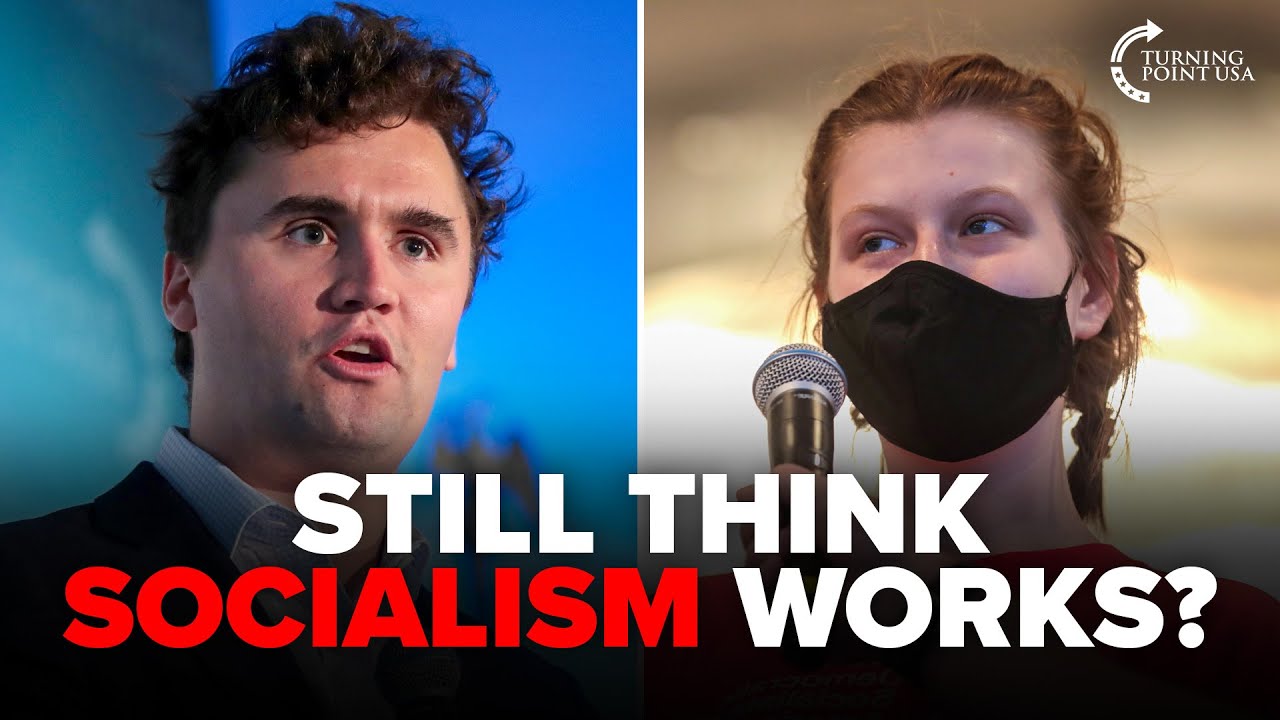
Charlie Kirk engages in a spirited debate with a retired Department of Agriculture employee at a college campus about socialism, government waste, and economic systems. The conversation ranges from income tax and federal bureaucracy to public schools versus Catholic education, healthcare systems, and the fundamental differences between voluntary charitable action and government-mandated wealth redistribution. Kirk challenges the student's definition of socialism while finding common ground on government inefficiency and the superiority of localized over federalized programs.
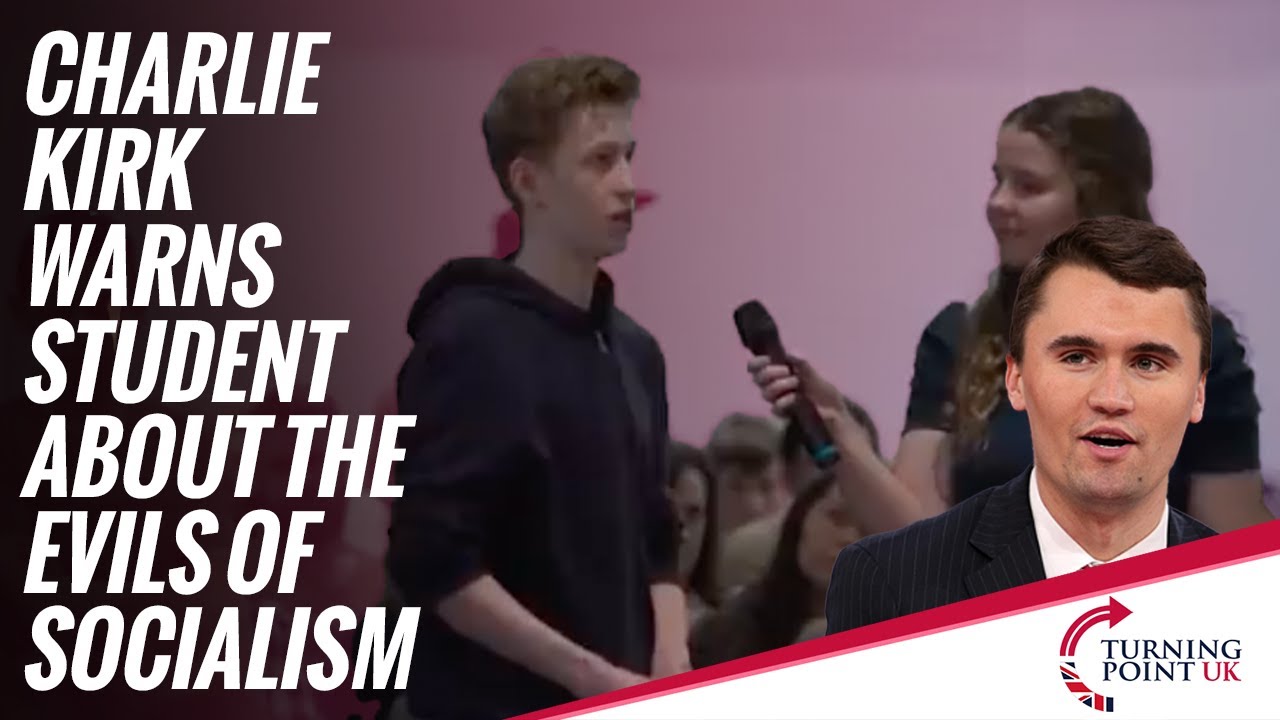
Charlie Kirk encounters a college student who argues that socialism works for everybody, citing income tax as an example of socialism in action. Kirk immediately pushes back, questioning where socialism has actually worked and clarifying that income tax is not inherently socialist. The conversation takes an interesting turn when the student reveals he is a retired federal employee from the Department of Agriculture who handled payroll for much of the government, writing 700,000 paychecks twice a month.
When Kirk presses him on government waste, the student admits there was definitely waste in the Department of Agriculture, particularly in the food stamp program. Kirk seizes on this admission, pointing out the contradiction in defending socialism while acknowledging the inefficiency of government bureaucracies. The student concedes that many government employees were not good at their jobs but reveals they weren't fired—instead, contractors were hired to do their work while the incompetent employees remained on payroll.
The Problem with Government Bureaucracy
Kirk highlights the difficulty of firing government employees under civil service protection, a fundamental problem with government bureaucracies. The student attempts to counter by mentioning the MSPB (Merit Systems Protection Board) has a 90% approval rate for dismissing people, but Kirk remains skeptical. Both parties find common ground when they agree that government is too big and plagued by inefficiency.
Kirk lists the parts of government he rejects: income tax, welfare, food stamps, Housing and Urban Development, and the Department of Education. When the student asks about Social Security, Kirk expresses concern that young people are forced to pay into a system they won't see benefits from, noting that Social Security's annualized growth rates are lackluster at best. He points out that the government takes 7% of the younger generation's earnings to subsidize older Americans.
Safety Nets Versus Hammocks
The conversation shifts to homelessness and social safety nets. Kirk clarifies his position: he believes there should be a safety net but not a hammock, a distinction the student seems to appreciate. Kirk then challenges the student to define what he means by socialism. The student describes it as a system where everybody pays in together for the common good.
Using the university as an example, the student argues that nobody could attend school without government funding. Kirk counters by pointing to private institutions that function quite well through donations and tuition. When the student suggests these private institutions also work on socialism because they rely on donations, Kirk rejects this characterization entirely.
The Catholic School Advantage
Kirk uses Catholic schools as a powerful example of private institutions outperforming government ones. He presents specific data from Louisiana, where Catholic schools educate students for approximately $8,900 per year compared to $14,000 per year in public schools. Despite the lower cost, Catholic school students have much higher college attendance rates and are far more likely to stay out of gangs.
The student attempts to attribute public school failures to incompetent administrators elected based on how much money they spend, rather than to the socialist structure itself. Kirk agrees but points out that administrators will always be incompetent in government systems because the incentive structure doesn't require competence to keep their job. In contrast, market-based systems reward good ideas and eliminate poor performance through natural consequences.
Volunteerism Is Not Socialism
When the student asks what should happen to incompetent people who can't work, Kirk advocates for churches and community members to provide care through voluntary action. The student incorrectly labels this as socialism, prompting Kirk to make a crucial distinction: giving money to a church, synagogue, or mosque for charitable purposes is volunteerism, not socialism. Socialism is the involuntary extraction of wealth to fund social utilities, whereas voluntary charitable transactions respect individual choice.
The student argues that people can leave the country if they don't like government taxation, just as they can leave a church. Kirk points out that in some socialist countries like Cuba, leaving can get you killed. There's a fundamental difference between voluntary association and government coercion.
Russia's Crony Fascist System
The conversation takes a detour into discussing Russia's political and economic system. Kirk categorizes modern Russia as a crony fascist dictatorship, not a republic as they claim. Putin effectively serves as president for life, their elections are shams, and the oil and natural gas reserves are controlled by an oligarchic bureaucratic class. This is far from a true market-based system.
Kirk emphasizes that a core component of capitalism is a neutral court system that allows for the fair adjudication of differences. Russia completely lacks this essential element, making their court system a joke. The student mentions Russia's socialized healthcare, which Kirk dismisses as ineffective, like socialized healthcare systems in general.
The Hypocratic Oath and Emergency Care
The discussion concludes with a debate about emergency medical care. The student claims that in America, if you walk into an emergency room without money, they have to take care of you under the Hypocratic Oath. Kirk expresses skepticism, and the student shares a personal anecdote about being turned away from an emergency room despite having a blood pH level of six—a potentially serious condition.
Kirk probes for more details about the diagnosis and treatment, but the student's story reveals the complexity of medical care. When no clear diagnosis can be determined, no treatment can be prescribed. Kirk points out that there are many contributing factors to medical conditions—genetics, diet, lifestyle—and not everything can be fixed through surgery or treatment. The student's attempt to suggest that Russia would provide better treatment for such a condition falls flat when Kirk reminds him that Russia's healthcare system is inferior to America's, even with all its flaws.