2,422 videos 1,389,747,653 views US Joined Aug 30, 2018
Charlie Kirk is the Founder and President of Turning Point USA, the largest and fastest growing conservative youth activist organization in the country with over 250,000 student members, over 150 full-time staff, and a presence on over 2,000 high school and college campuses nationwide. Charlie is also the Chairman of Students for Trump, which aims to activate one million new college voters on campuses in battleground states in the lead up to the 2020 presidential election. His social media reaches over 100 million people per month and according to Axios, he is one of the "top 10 most engaged" Twitter handles in the world. He is also the host of “The Charlie Kirk Show,” which regularly ranks among the top news shows on Apple podcast charts.
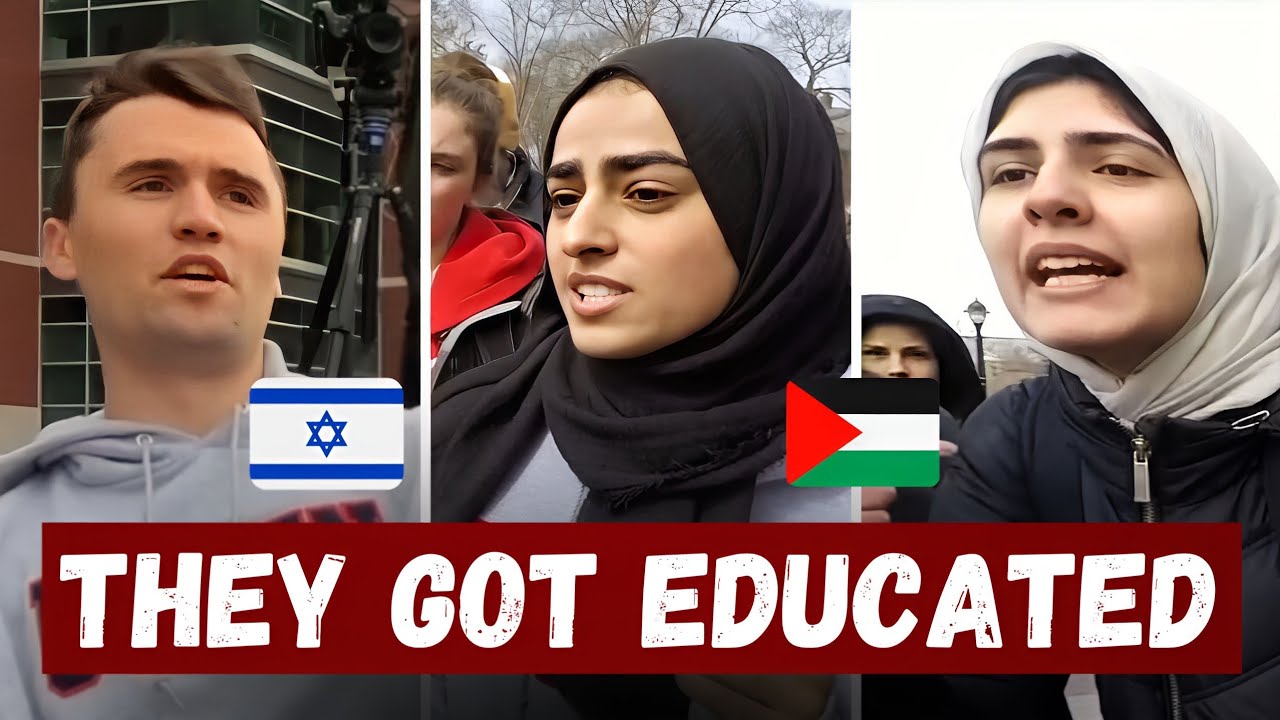
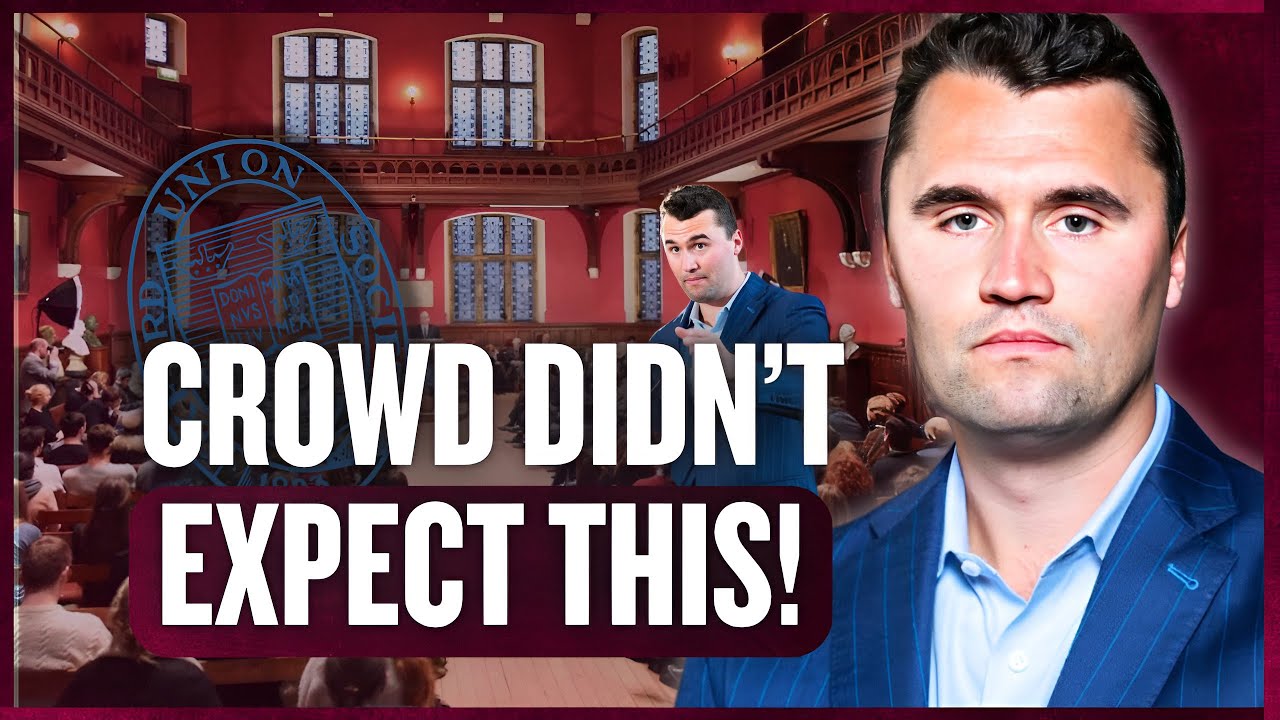
Charlie Kirk Debates College Student on Israel, Gaza Withdrawal, and Temple Mount Access
Charlie Kirk engages in a heated exchange with a college student over Israel's 2005 Gaza withdrawal, the Israeli-Palestinian conflict, and religious access to holy sites. The conversation covers Israel's decision to remove 10,000 Jewish settlers from Gaza in pursuit of peace, the subsequent Hamas takeover, and the complex reality of Palestinian governance under both the Palestinian Authority and Israeli control. Kirk challenges his opponent's claims about Israeli oppression while defending Israel's right to exist and questioning why Arabs under Israeli governance fare better than those under Palestinian Authority rule. The debate escalates into disagreements about the IDF, religious freedom, and who controls access to the Temple Mount.
Israel's 2005 Gaza Withdrawal: A Failed Pursuit of Peace
The debate begins with a fundamental question about Gaza's history. Israel occupied the Gaza Strip until 2005, when approximately 10,000 Jewish settlers left the territory and the IDF completely withdrew. This withdrawal was not unconditional—it was done in pursuit of a peace deal. Israel agreed to remove its citizens and military presence from Gaza with the expectation that peace would follow.
Instead, Hamas took control of Gaza, transforming it into what Charlie Kirk describes as "a hot tub for terrorists" where thousands of rockets are launched every month toward Israel. The promised peace never materialized. Israel signed a peace accord, but the Palestinian Authority violated it. This pattern mirrors Israel's earlier territorial concessions—in the 1967 war, Israel pushed Egypt back to its borders and later gave up the Sinai Desert in pursuit of peace with Egypt, which actually worked. However, the Gaza withdrawal tells a different story.
Gaza, with its factories, rolling hills, and vineyards, housed significant wealth and approximately 2 million people. The 10,000 Jews lived on the eastern edge of the territory. In the 2005 peace talks, Israel offered to withdraw completely on the condition that Palestinians would stop launching rockets, stop building terror tunnels, and stop targeting Israeli children. That condition was never honored.
Challenging Claims of Israeli Oppression
When the student accuses Kirk of being oppressive, Kirk challenges him to provide a single example. The student struggles to articulate specific instances, eventually claiming that Kirk is "telling people that they are wrong." Kirk responds by asking if the student can identify even one time Kirk has been factually incorrect in the discussion.
The conversation shifts to Lebanon, where the student claims Israel is waging offensive war. Kirk corrects this, explaining that Israel is attacking Hezbollah, which occupies Southern Lebanon and is funded by Iran. When the student expresses surprise at this Iranian connection, Kirk sarcastically thanks him for the opportunity to inform him, suggesting that perhaps if the student hadn't gone to college, he might have learned more—turning the student's earlier appeal to formal education against him.
The IDF and Terrorism: Defining Terms
The student makes the claim that the IDF is a terrorist organization, citing that "a lot of people" and "a lot of countries" consider it so. Kirk doesn't let this vague assertion stand unchallenged. Instead, he redirects to Gaza's current condition, asking why Hamas hasn't built a new school or hospital in the past five years despite hundreds of millions of dollars pouring into the territory.
The answer, Kirk argues, is that Hamas runs Gaza and is itself a terrorist organization. Since Israel's 2005 withdrawal, Gaza hasn't become safer or more prosperous—it has become more dangerous. Hamas spends its money on terror tunnels and rockets fired toward Tel Aviv. When the student mentions two rockets fired recently, Kirk asks where they came from. When the student confirms they came from Gaza, Kirk responds: "Two rockets? Oh what's the big deal? Yeah, who cares when Jews have rockets shot at them, right?"
This exchange highlights Kirk's argument that Israel is fighting a defensive war for its national sovereignty. All Israel has done since 1967, Kirk claims, is go backwards—making territorial concessions in pursuit of peace.
Democracy and Governance: Israel vs. Palestinian Authority
Kirk asserts that Israel is the only democracy in the Middle East where Muslims, Jews, and Christians can all vote in elections. The student challenges this, claiming Palestinians cannot vote. Kirk clarifies that many Palestinians in Palestinian Authority Zone B (not Zone A) can vote in elections, then turns the question around: Why hasn't the Palestinian Authority held an election in 12 years?
Mahmoud Abbas, Kirk argues, is a dictator of the PA who uses foreign aid to enrich himself, living in a 25,000 square foot mansion in Nablus. While Abbas was democratically elected 12 years ago, there have been no checks and measures against him since. Kirk asks a pointed question: Why do students organize against Israel but not against the Palestinian Authority?
Kirk's bottom line: Arabs are better served under an Israeli government than under Palestinian Authority governance. The student responds with a shocking claim: "Arabs are dead. That's where a majority of Palestinians end up—dead, in the ground."
Fact-Checking Palestinian Casualties
This leads to one of the most contentious exchanges in the debate. Kirk challenges the student's claim that a majority of Palestinians end up dead. The student initially claims 15.5 million people live in the Palestinian Authority, suggesting half end up dead. Kirk is incredulous: "You're trying to tell me that 7.5 million Palestinians have been killed? Is that what you're trying to say?"
The numbers are corrected—approximately 6 million in the Palestinian Authority and 9.5 million in Israel proper, totaling about 15 million combined. Even with corrected figures, the student's claim would suggest 3 million Palestinians have been killed. Kirk flatly rejects this: "That's not even close to being true."
Zionism, Anti-Semitism, and Identity Politics
The student attempts to distinguish between Zionism and anti-Semitism, claiming that not supporting the state of Israel doesn't mean being anti-Semitic. Kirk reframes this: "Let me get this straight—you don't hate Jews, you just hate the Jews' right to exist in their homeland?"
When the student objects that Kirk isn't even Jewish and can't speak to this, Kirk calls out the identity politics fallacy: "That's one of the worst identity politics arguments. Just because I'm not something doesn't make me wrong."
The student then claims that Israel isn't in line with conservative politics because there's no separation of church and state. Kirk responds with a concrete comparison: Why can Christians freely practice their religion in Israel, but Jews can't freely practice their religion in the Palestinian Authority?
The Temple Mount Access Debate
The conversation culminates in a debate about access to holy sites. Kirk asks what happens if an Israeli citizen goes into Bethlehem versus what happens if a Muslim goes into Jerusalem. A Muslim can go to a mosque in Jerusalem, but Kirk claims that if a Jew goes to Bethlehem, they face danger.
The student claims people are turned away from Al-Aqsa Mosque because they can't pray in their own place. Kirk counters that Muslims have full access to Al-Aqsa, noting he was there himself surrounded by 500 Muslims on the compound. The student claims that Jews' heads are cut off in Hebron if they enter. Kirk confirms he was in Hebron three weeks ago and that Jews and Israelis are not allowed in Palestinian Authority zones.
When discussion turns to the Temple Mount specifically, the student claims he was there praying when IDF soldiers threw tear gas. Kirk presses: Did they actually stop you from praying? The student says he shouldn't be in fear while praying, but doesn't confirm they stopped him.
Kirk then makes a crucial point: Jews are not allowed on the Temple Mount. The student says he was there at that moment, but Kirk clarifies the broader policy. Under Jordanian control of the Temple Mount—a situation that has existed since the time of Prophet Muhammad, according to the student—Muslims maintain control.
Kirk challenges whether the student even recognizes it as the Temple Mount, noting this is a significant point: Muslims do not recognize it as a Temple Mount but as their place of worship. Kirk asserts it has been the Temple Mount since King David. This recognition issue is one of the biggest obstacles to peace, Kirk argues.
Kirk's position: Jews, Muslims, and Christians should all be allowed to go to the Temple Mount. Currently, Muslims do not allow Jews to enter the Temple Mount—only one Rabbi is allowed in once a year under treaty. Kirk asks how this is fair, questioning why Jews are not allowed when Muslims clearly have access. The student's own experience of being allowed to pray there demonstrates that Muslims have access, which Kirk uses to make his point about the disparity in religious freedom.