2,387 videos 1,376,944,188 views US Joined Aug 30, 2018
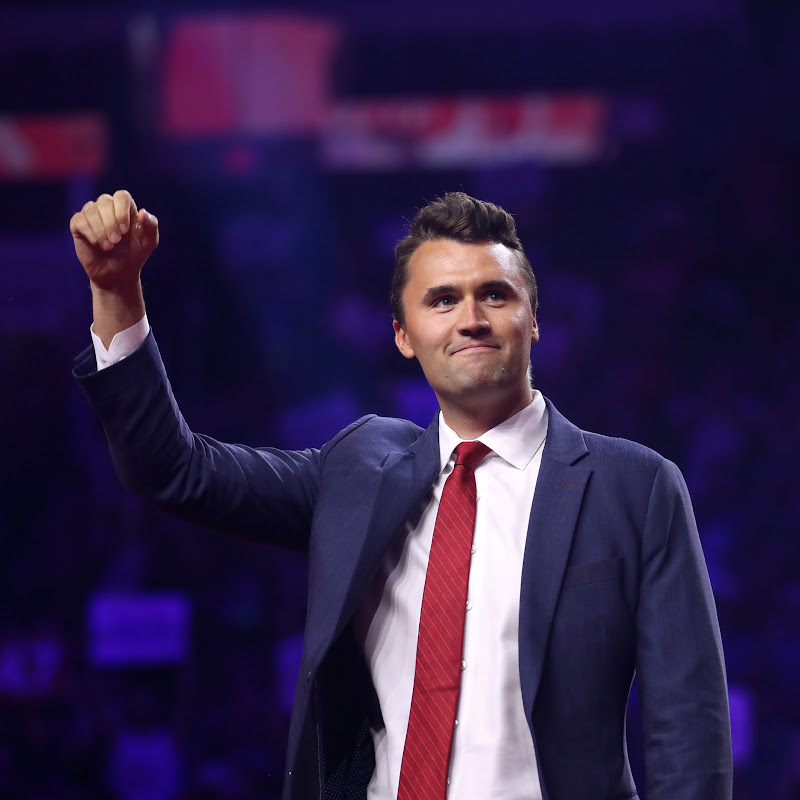
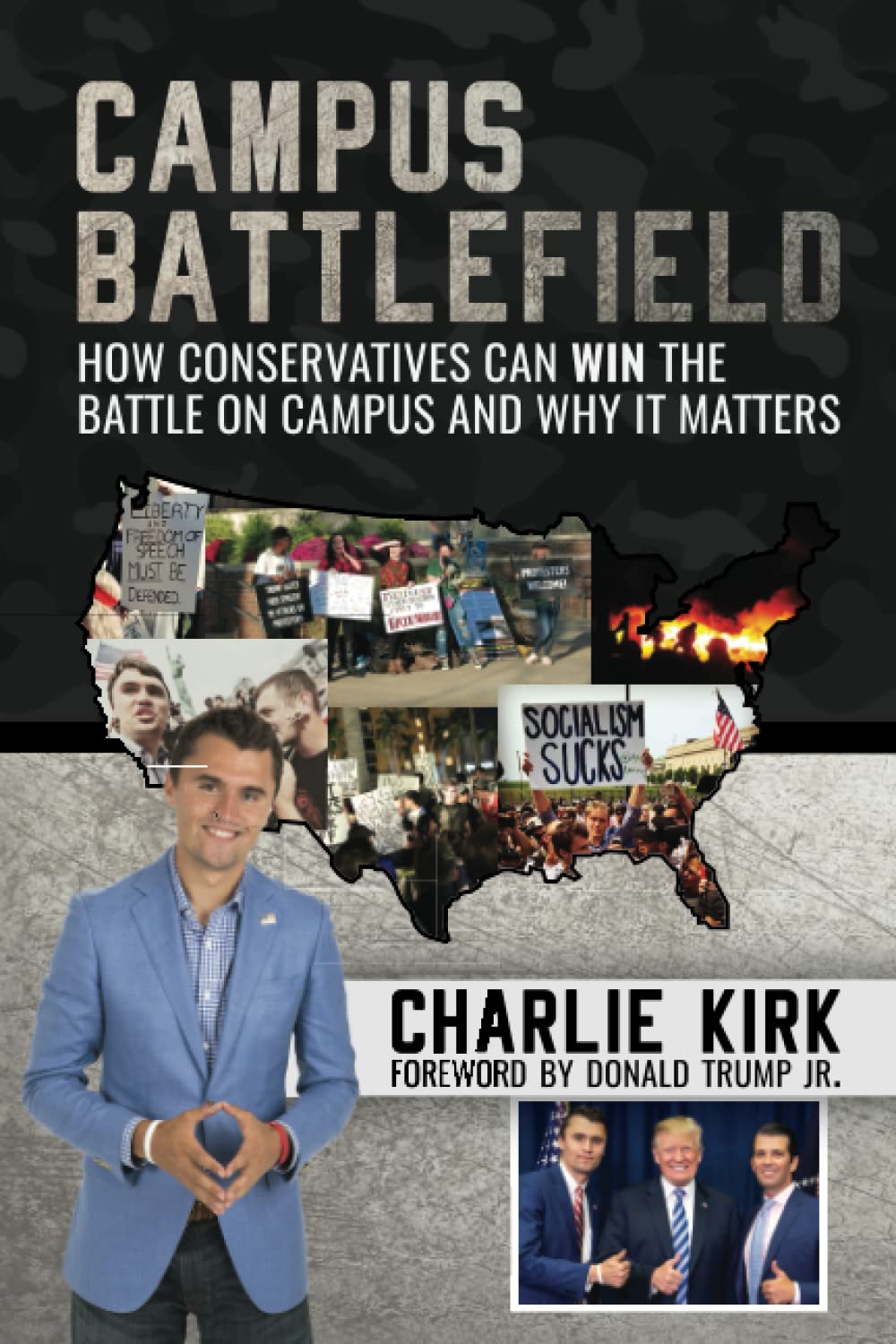
Charlie Kirk is the Founder and President of Turning Point USA, the largest and fastest growing conservative youth activist organization in the country with over 250,000 student members, over 150 full-time staff, and a presence on over 2,000 high school and college campuses nationwide. Charlie is also the Chairman of Students for Trump, which aims to activate one million new college voters on campuses in battleground states in the lead up to the 2020 presidential election. His social media reaches over 100 million people per month and according to Axios, he is one of the "top 10 most engaged" Twitter handles in the world. He is also the host of “The Charlie Kirk Show,” which regularly ranks among the top news shows on Apple podcast charts.
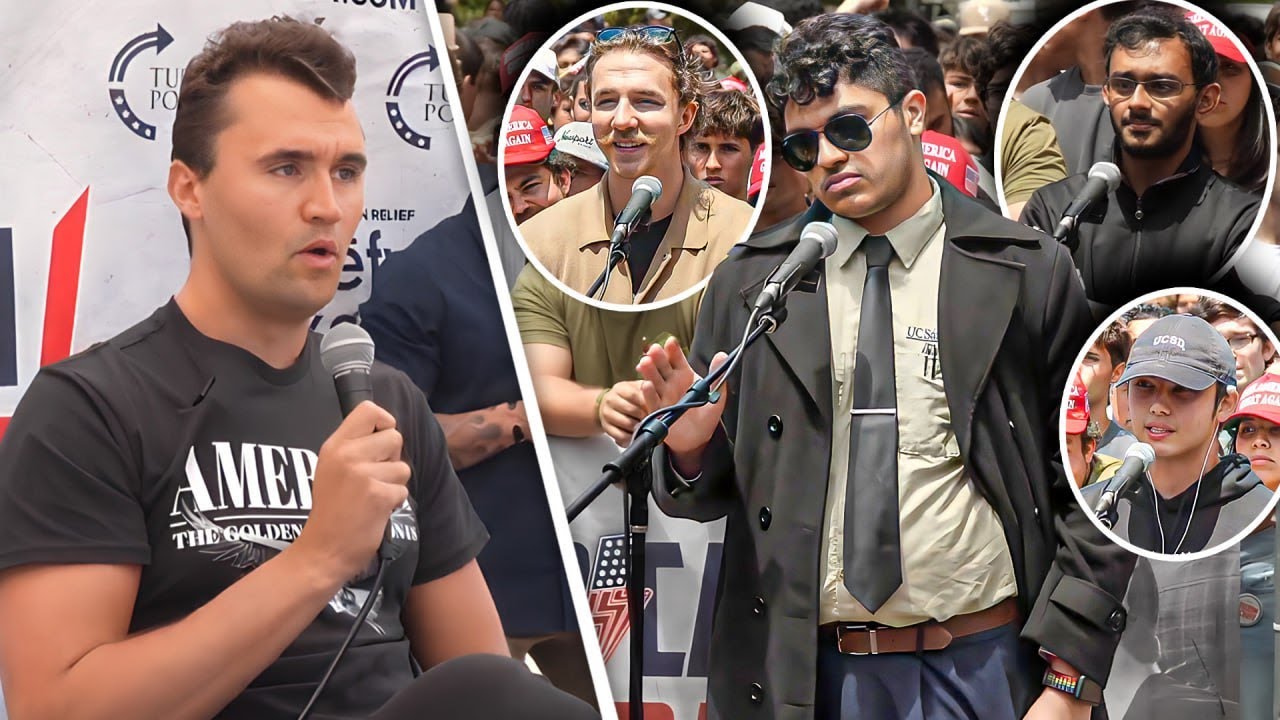
Charlie Kirk Debates College Student on Trump, Constitutional Authority, and Immigration Law
Charlie Kirk engages in a debate with college student Robert Matas about constitutional interpretation, presidential authority, and immigration law. The exchange covers whether supporting Trump is compatible with being a constitutionalist, the role of the Department of Justice within the executive branch, and the extent of due process rights for undocumented immigrants. Kirk challenges common misunderstandings about Article II powers, Supreme Court rulings on expedited removal, and specific U.S. Code violations related to illegal immigration. The student raises concerns about Trump's relationship with the Supreme Court and asylum seekers detained during legal proceedings, leading to a detailed discussion about the constitutional framework governing immigration enforcement.
A Constitutional Debate on Immigration and Presidential Power
Robert, a college student interested in politics, approached Charlie Kirk with a challenge: Can someone truly be a constitutionalist while supporting Donald Trump? Despite disagreeing with much of what Kirk advocates, Robert acknowledged appreciation for the opportunity to engage in dialogue and test his beliefs against someone who has debated high-profile figures like Governor Newsom.
The central question Robert posed centered on Trump's relationship with constitutional principles, specifically citing concerns that Trump had stated uncertainty about whether upholding the Constitution was part of his job as president. Kirk immediately disputed this characterization, setting the stage for a detailed back-and-forth about constitutional structure and legal authority.
The Department of Justice and Executive Power
A key point of contention emerged around the role of the Department of Justice. Robert suggested that the DOJ serves as a check on presidential power, including Trump's actions. Kirk corrected this misunderstanding by emphasizing that the DOJ exists within the executive branch and reports directly to the president.
Kirk asked Robert which branch houses the Department of Justice, and when Robert acknowledged it was the executive branch, Kirk pressed his point: The Attorney General works for the President of the United States, not as an independent check on presidential authority. That function, Kirk explained, belongs to the third branch—the judiciary, specifically the Supreme Court.
Kirk further explained Article II of the Constitution, which vests all executive power in the president. The DOJ operates under this constitutional authority, making it fundamentally different from an independent oversight body. This distinction proved central to understanding the constitutional framework governing presidential power.
Defying Versus Challenging Supreme Court Decisions
Robert raised concerns about Trump allegedly defying the Supreme Court. Kirk drew a sharp distinction between challenging a court decision and defying it. Challenging a ruling through appeals or legal processes represents legitimate engagement with the judicial system, while defying a final decision means refusing to comply with it.
Kirk pointed to President Joe Biden's handling of student loan forgiveness as an example of actually defying the Supreme Court. According to Kirk, Biden continued pursuing policies after the Supreme Court ruled against them, representing genuine defiance. In contrast, Trump's legal challenges to court decisions fall within the normal bounds of constitutional processes.
Regarding the specific case involving Abrego Garcia, Robert claimed the Supreme Court ordered Trump to facilitate a deportee's return. Kirk corrected this account, explaining that the Court found the Trump administration made an error requiring them to submit a request to El Salvador. When El Salvador denied the request, Trump's obligations were fulfilled. Kirk emphasized that the president cannot control the decisions of foreign governments like El Salvador.
Due Process Rights and Immigration Law
The debate shifted to constitutional protections for immigrants. Robert questioned whether Kirk believed certain constitutional amendments apply only to U.S. citizens. Kirk acknowledged that in limited scope, yes—particularly regarding the Fifth and Fourteenth Amendments as they relate to immigration enforcement.
Kirk cited a 2019 Supreme Court decision concerning expedited removal that clarified due process rights for undocumented immigrants. According to this ruling, individuals who crossed the border illegally within 100 miles of the southern border or within two weeks of entry receive no due process rights under expedited removal procedures. Kirk extended this principle to immigrants who have been in the country for less than two years.
When Robert referenced Supreme Court cases that recognized due process rights for non-citizens, Kirk made an important distinction. The Court has held that undocumented immigrants who commit crimes while in the interior of the country receive due process for those specific infractions. However, this differs from due process rights related to the initial illegal border crossing itself.
The Legal Status of Asylum Seekers
Robert raised the issue of immigrants detained while attempting to navigate legal asylum processes. He acknowledged that the Biden administration created a loophole allowing people to enter through asylum claims but argued this still represented a legal pathway.
Kirk challenged this characterization by referencing 8 USC 1312, which he described as making it a felony to fraudulently file asylum claims. He argued that many asylum seekers who entered during the Biden administration violated this statute, making their presence criminal regardless of the process they claimed to follow.
Kirk listed multiple U.S. Code violations applicable to undocumented immigrants:
8 USC 1305: Illegally crossing the southern border
8 USC 1312: Fraudulently filling out asylum claims
8 USC 1312: Harboring oneself illegally in the United States without notifying the government of one's presence, location, and purpose
According to Kirk, any undocumented immigrant who fails to inform the government of their whereabouts and activities commits a felony under 8 USC 1312. This applies even to those who have not committed additional crimes beyond the initial illegal entry.
Supreme Court Authority on Immigration Enforcement
Kirk insisted that recent Supreme Court decisions have granted President Trump full authority to deport undocumented immigrants without the same due process protections afforded to U.S. citizens. He referenced the 2018-2019 decisions around expedited removal as clarification that not every undocumented person receives a deportation hearing, particularly those within two years of entry.
When Robert asked for the specific case name, Kirk suggested using search tools to find the Supreme Court decision from 2018-2019 regarding expedited removal within 100 miles of the border and two years of residence. He emphasized that media coverage often ignores this clarification, leading to public confusion about immigrants' legal rights.
Robert concluded by referencing several Supreme Court cases: Yick Wo v. Hopkins, Wong Wing v. United States, and Yamataya v. Fisher—cases that have historically recognized certain constitutional protections for non-citizens.
Educational Exchange Despite Disagreement
Throughout the debate, Robert demonstrated willingness to acknowledge when Kirk corrected his understanding of constitutional structure and legal principles. He thanked Kirk for helping clarify points where his knowledge was incomplete, particularly regarding which branch houses the Department of Justice and the specific authorities granted under Article II.
Kirk encouraged Robert to research the specific U.S. Code sections cited during their exchange, emphasizing that many people lack detailed knowledge of immigration statutes and Supreme Court precedents. The conversation illustrated both the complexity of constitutional questions surrounding immigration and the importance of understanding the specific legal framework governing these issues.
The exchange demonstrated that productive dialogue can occur even between individuals with opposing viewpoints, provided both parties engage with constitutional text, legal precedent, and factual accuracy rather than rhetoric alone.