2,422 videos 1,389,747,653 views US Joined Aug 30, 2018
Charlie Kirk is the Founder and President of Turning Point USA, the largest and fastest growing conservative youth activist organization in the country with over 250,000 student members, over 150 full-time staff, and a presence on over 2,000 high school and college campuses nationwide. Charlie is also the Chairman of Students for Trump, which aims to activate one million new college voters on campuses in battleground states in the lead up to the 2020 presidential election. His social media reaches over 100 million people per month and according to Axios, he is one of the "top 10 most engaged" Twitter handles in the world. He is also the host of “The Charlie Kirk Show,” which regularly ranks among the top news shows on Apple podcast charts.
Charlie Kirk Defends Trump's Executive Order Ending Birthright Citizenship for Illegal Immigrants
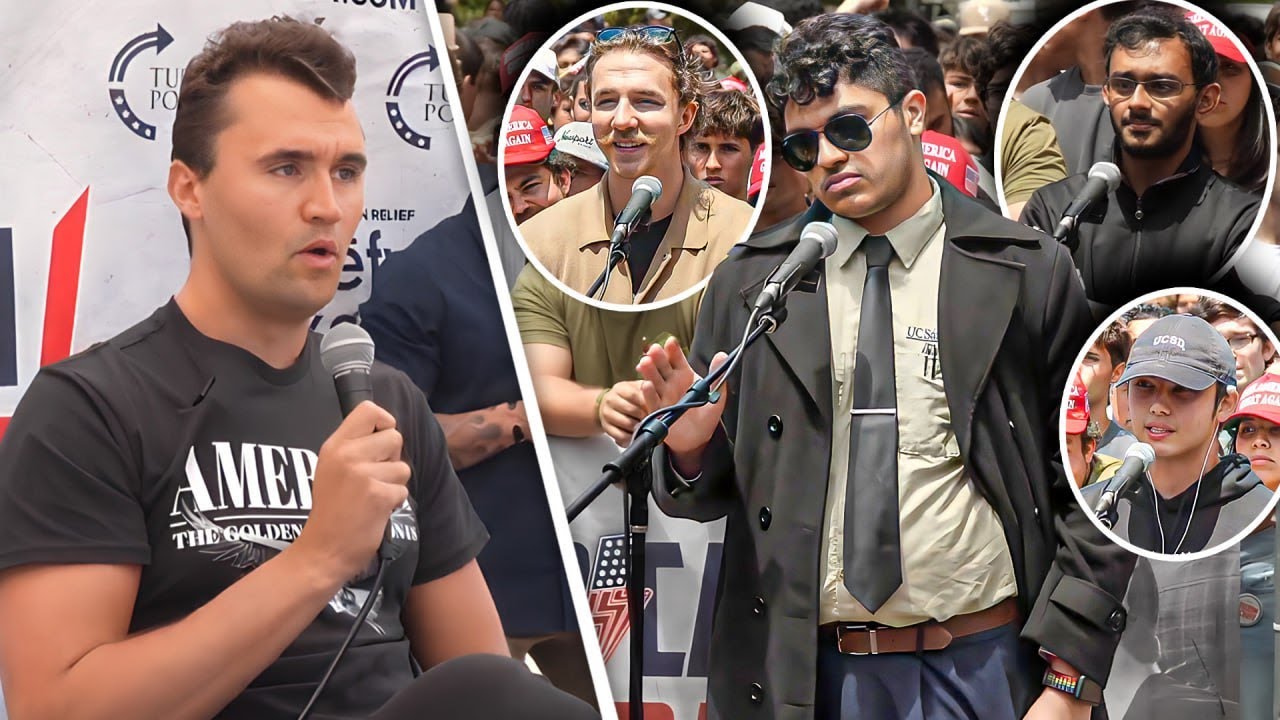
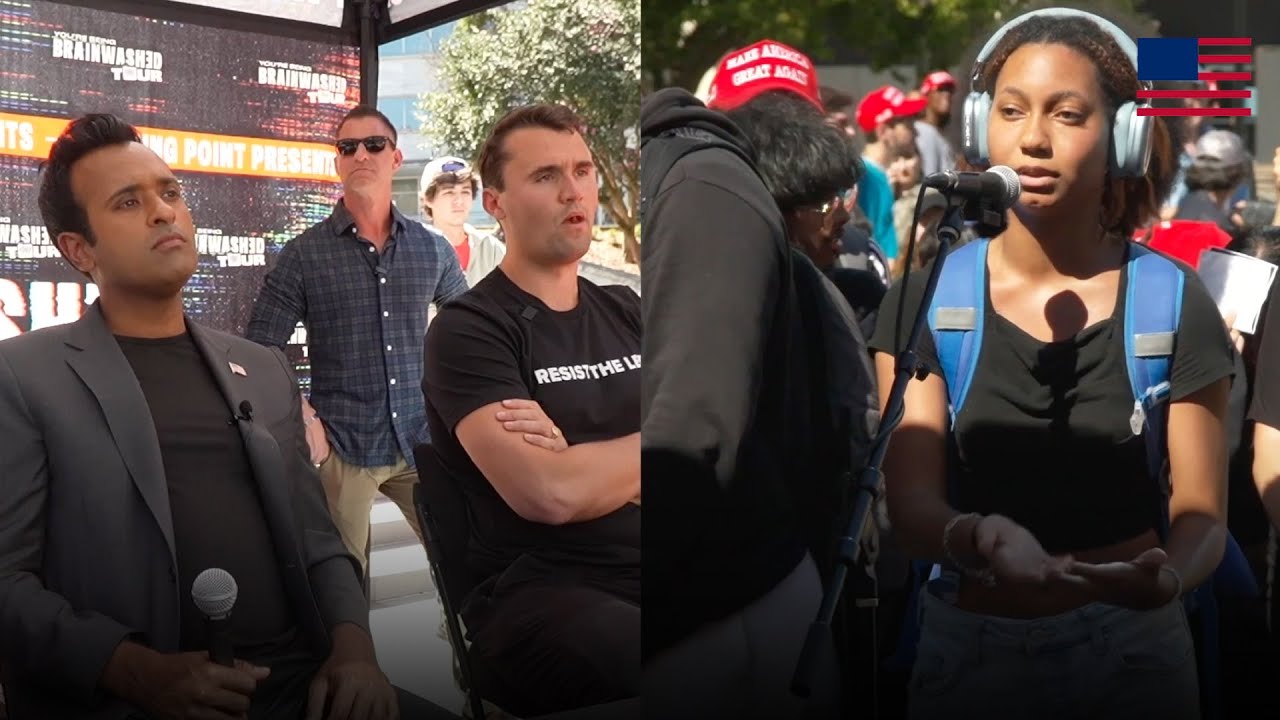
Charlie Kirk confronts a challenge to President Trump's executive order on birthright citizenship during a live event. The questioner argues the Supreme Court has established precedent protecting birthright citizenship under the 14th Amendment. Kirk counters that America is a nation of settlers, not immigrants, and that unlimited birthright citizenship devalues what it means to be an American citizen. The debate touches on the 14th Amendment's original intent, Supreme Court decisions, and whether children born to illegal immigrants or visitors should automatically receive citizenship.
The Challenge to Trump's Birthright Citizenship Order
During a live event, a self-identified conservative American approached Charlie Kirk to dispute his support for President Trump's executive order overturning birthright citizenship. The questioner referenced Kirk's post on X from two months prior claiming the Supreme Court has never properly reviewed the 14th Amendment regarding birthright citizenship. The questioner cited Wong v. United States as Supreme Court precedent establishing that children of immigrants, regardless of national origin, become US citizens.
Kirk acknowledged the Supreme Court decisions but argued they represent a wrong interpretation of the 14th Amendment, similar to how the Court got Roe v. Wade wrong before it was overturned. The debate centered on whether Supreme Court precedent should be considered settled law or whether it can and should be challenged when wrong.
America: A Nation of Settlers, Not Immigrants
Kirk pushed back forcefully against the common narrative that America is a nation of immigrants. He made a critical distinction between settlers and immigrants that he believes is fundamental to understanding American citizenship. Settlers, Kirk explained, are people who build a new country in barren land. Immigrants come to a country that has already been built. The people who built America went west to an unconquered, barren country and built a new society from scratch.
While Kirk acknowledged that immigrants helped enrich and grow America, he insisted the foundation of America consisted of settlers, not immigrants. This distinction matters because it establishes that American citizenship should be earned, not simply granted to anyone born on American soil. Kirk rejected the idea that America has no unifying religion, race, or national origin, arguing instead that what unifies Americans should be shared values and earned citizenship, not simply geographic birthplace.
The Birth Tourism Problem
Kirk illustrated what he sees as the absurdity of current birthright citizenship policy with a concrete example. A pregnant woman can leave China at eight months pregnant, obtain a 90-day visitor visa, arrive in America, give birth at a hospital, and her baby automatically becomes a US citizen with a US passport. This practice, often called birth tourism, exists because of how birthright citizenship is currently interpreted and implemented.
The questioner defended this as a feature of American generosity and openness, arguing that being born on American soil should grant an inherent birthright to the benefits of American citizenship. Kirk countered that this represents America's virtues being turned into vices. Generosity becomes overindulgence when the nation borrows money it doesn't have and grants citizenship in ways that dilute its meaning.
Children of Illegal Immigrants
The debate became particularly pointed when discussing children born to illegal immigrants. The questioner argued that children should not be held accountable for their parents' actions. These children did not choose to come to America or to be born here. The questioner raised concerns about creating a class of stateless individuals or second-class non-citizens, particularly citing the example of children born to Indian parents who would not be citizens of India either.
Kirk rejected this framing entirely. He argued that children born to Indian citizens are citizens of India through their parents, and Indian citizenship law follows parentage. Therefore, these children can return to their country of origin with their parents. When pressed on whether children should be deported as soon as they're born, Kirk answered affirmatively, stating the entire family should return together. He framed this not as punishment but as simply not rewarding illegal entry with citizenship.
The American Dream and Who It's For
When asked whether he believes in the American dream, Kirk responded that he absolutely does, but specifically for American citizens, not for every person around the planet. Both Kirk and the questioner agreed that America cannot open its borders to every sad story around the world. However, they disagreed fundamentally on how to treat children already born on American soil.
Kirk argued that extending citizenship to children of illegal immigrants or birth tourists dilutes what it means to be a US citizen. He wants American citizenship to represent something earned, reflecting the sacrifices parents made to allow their children to live here. This creates what he calls a social compact where every American citizen has a unique story of what their parents or ancestors did to gain entry to the country.
Legal Immigrants Are Being Insulted
One of Kirk's strongest arguments centered on legal immigrants who followed the proper process. When citizenship is granted automatically through birth tourism or to children of illegal immigrants, it dilutes the value of citizenship that legal immigrants had to earn as adults through a lengthy application process. Kirk sees this as fundamentally unfair to those who respected American law and went through proper channels.
Kirk also invoked the memory of the Greatest Generation from World War II. He argued that their sacrifices allowed Americans to live in a free society, and granting automatic citizenship to anyone born on American soil represents an insult to their legacy. The social compact that binds Americans together is rooted in shared sacrifice and earned membership in the national community, not simply the accident of geographic birth location.
The 14th Amendment's Original Intent
The questioner pointed out that the 14th Amendment, ratified in 1866, has been interpreted by the Supreme Court to extend birthright citizenship beyond its original purpose of granting citizenship to freed slaves. Kirk agreed this extension happened but maintained it was wrong. He emphasized that the 14th Amendment came long after the founding era, in 1866, and was primarily applicable to freed slaves.
Kirk's position is that the Supreme Court wrongly extended the 14th Amendment's citizenship clause to situations the drafters never intended. The founding fathers never envisioned a world where a pregnant woman could board an airplane, fly across an ocean, and have her baby automatically become a US citizen. While air travel didn't exist in 1787 or even 1866, Kirk argues the principle remains: automatic birthright citizenship for visitors and illegal immigrants was never the intent of American law.
What the Executive Order Accomplishes
Kirk praised President Trump's executive order as phenomenal, saying it returns America to a basic question: What does it mean to be a citizen? In Kirk's view, citizenship has been thrown around like frisbees, with everyone receiving it automatically. This dilutes the meaning and value of US citizenship. The executive order aims to establish that citizenship must be earned, not simply given based on location of birth.
Kirk believes the order will be challenged and ultimately reviewed by the Supreme Court, which is exactly what should happen. Just as the Supreme Court overturned Roe v. Wade after decades of precedent, Kirk expects the Court can and should correct its previous errors on birthright citizenship. He sees this as part of a larger effort to restore proper limits to American generosity and ensure that American values are not used against the nation itself.