2,422 videos 1,389,747,653 views US Joined Aug 30, 2018
Charlie Kirk is the Founder and President of Turning Point USA, the largest and fastest growing conservative youth activist organization in the country with over 250,000 student members, over 150 full-time staff, and a presence on over 2,000 high school and college campuses nationwide. Charlie is also the Chairman of Students for Trump, which aims to activate one million new college voters on campuses in battleground states in the lead up to the 2020 presidential election. His social media reaches over 100 million people per month and according to Axios, he is one of the "top 10 most engaged" Twitter handles in the world. He is also the host of “The Charlie Kirk Show,” which regularly ranks among the top news shows on Apple podcast charts.
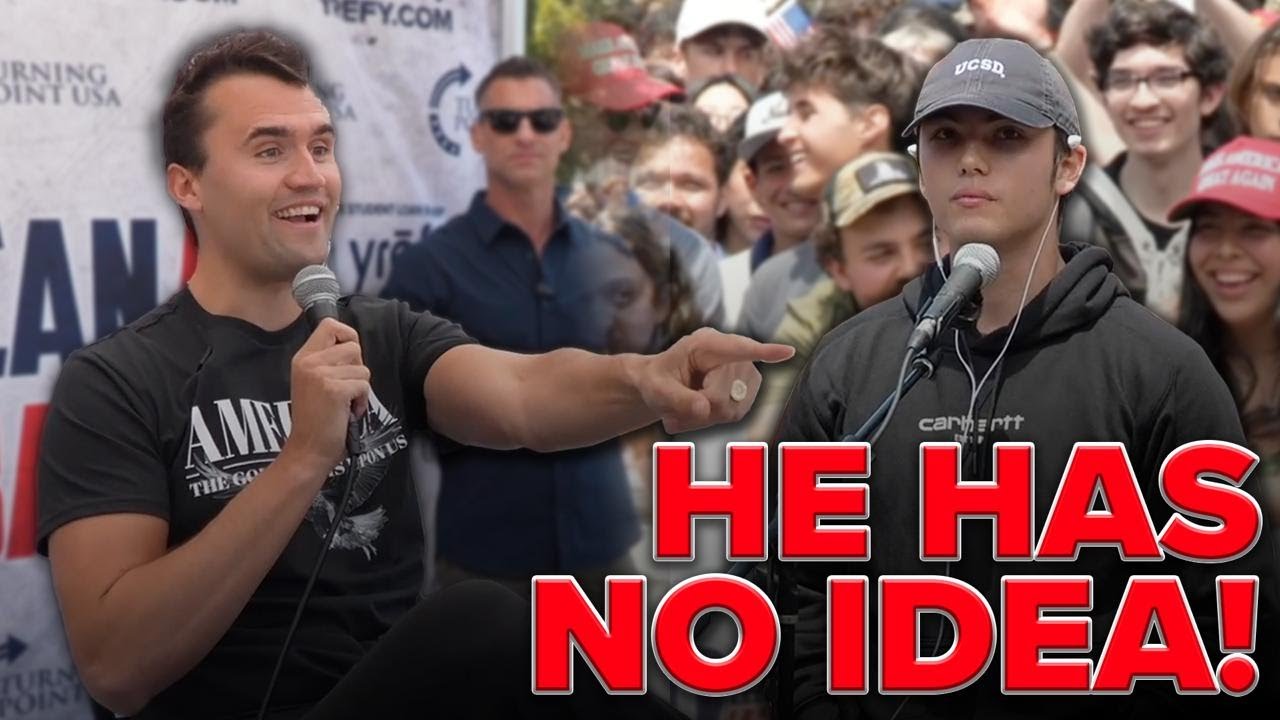
Charlie Kirk Debates Student on Immigration and the Kilmar Abrego Garcia Deportation Case
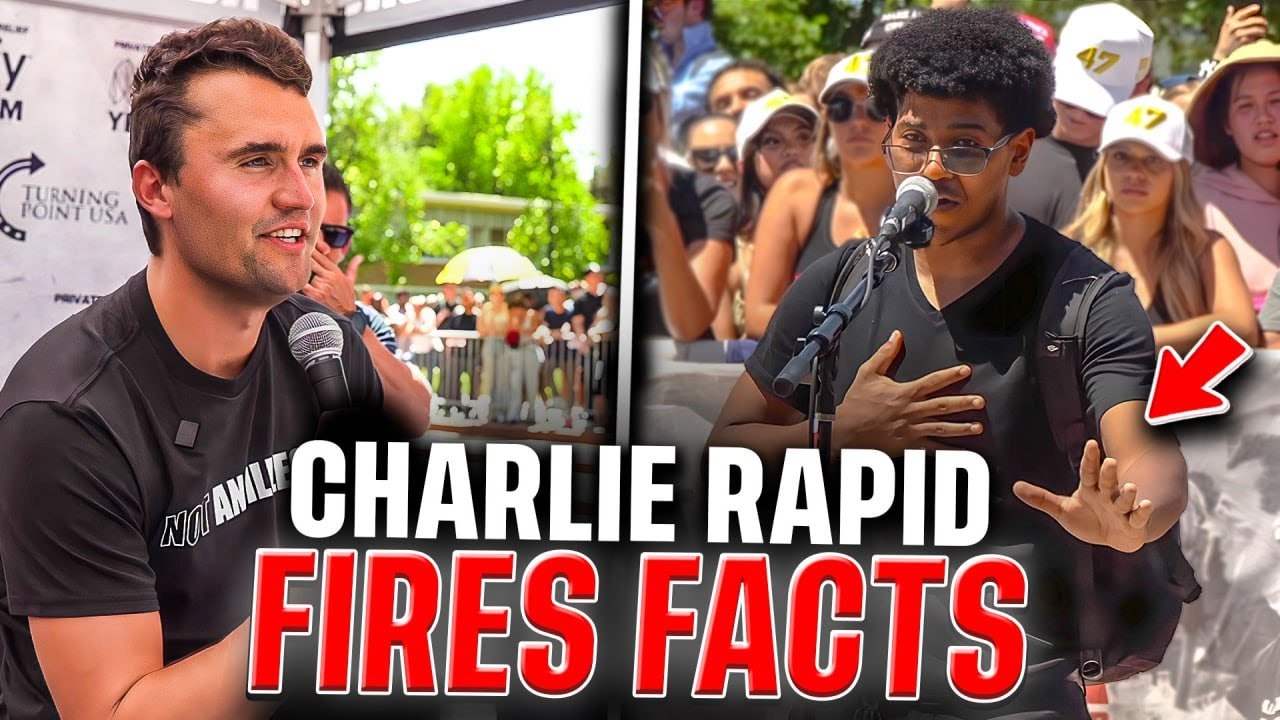
Charlie Kirk engages in a detailed debate with a second-generation Mexican-Guatemalan student about immigration policy, focusing on the controversial deportation of Kilmar Abrego Garcia. The student argues for protecting immigrants and questions enforcement methods, while Kirk presents evidence of gang affiliation, domestic abuse allegations, and prior deportation orders. The conversation covers stolen land arguments, birthright citizenship, racial profiling concerns, and fundamental questions about national sovereignty. Kirk challenges the student's premises about who has rights in America and what penalties should exist for illegal entry, culminating in a discussion about how other countries, including Mexico, handle their own immigration enforcement.
The debate begins with a second-generation Mexican-Guatemalan student expressing respect for Charlie Kirk while disagreeing on immigration issues. The student wants to discuss how immigrants are being persecuted, specifically mentioning Kilmar Abrego Garcia. Before allowing Kirk to respond, the student makes a point to acknowledge that they are "on stolen land," "indigenous land," and "original Mexican land," arguing that Latinos for Trump should not represent Latinos in the country.
Kirk immediately challenges the stolen land premise. When the student references the Alamo as an example of land theft from Mexicans, Kirk asks a pointed question: who did the Mexicans steal the land from? The student claims Mexicans were originally there as Aztecs and Mayans, but Kirk counters that Texas was not indigenously Mexican—there were Cherokee and many different Native American tribes there first. Kirk points out that Mexico was participating in manifest destiny at the behest of the Spanish crown, and that at some point, people have to believe in self-determination: if you can win the land, it's yours. That principle, he argues, is what built the West.
Kirk then offers an alternative to the student's "land acknowledgement." Instead of saying "we're on stolen land," Kirk suggests a "gratitude acknowledgement": "Praise God I live in America."
The Case of Kilmar Abrego Garcia
When the conversation turns to the specific case of Kilmar Abrego Garcia, the student argues that authorities were basing their MS-13 gang determination purely on tattoos and the fact that Garcia had eight men in his car going to a construction site. The student questions whether toothbrushes and toothpaste are sufficient evidence to identify someone as a human trafficker.
Kirk responds by calling the left's fixation on "a wife-beating, child-abusing MS-13 foreigner" morally disgusting given all the suffering happening elsewhere. He then systematically goes through what he presents as facts about Garcia. Kirk asks about Garcia's tattoos, specifically pointing to what he identifies as MS-13 gang tattoos: marijuana, M, smiley face, S, cross, one skull, three—which Kirk states is MS-13.
Kirk then raises the question of what jersey Garcia wore routinely and its significance in the Maryland jurisdiction's gang territory. The student acknowledges Garcia wore a Michael Jordan Bulls jersey. Kirk points out that MS-13 members wear Michael Jordan Bulls jerseys in the Maryland area, while other gangs like White Fence and the Crips wear Dodgers jerseys. The student tries to compare this to people wearing MAGA hats, asking if they could be called a gang, but Kirk insists this is about "accumulation effects."
Kirk presents additional evidence: the hand tattoos, the fact that Garcia told a judge in 2019 that he was afraid to go back to El Salvador because another gang would come after him, the Bulls jersey as gang affiliation in Maryland, and domestic abuse allegations. Kirk emphasizes that Garcia is not an American and therefore not afforded the same rights as Americans.
Due Process and Deportation Orders
The student claims Garcia had a green card, but Kirk flatly states this is incorrect. When asked if Garcia was married to an American citizen, Kirk says it doesn't matter—the judge told Garcia he could be deported at any time for any reason to any country except El Salvador. Kirk asks why the judge would exclude El Salvador specifically.
When the student argues that Garcia being deported was wrong because he didn't have due process, Kirk counters that Garcia "had the most due process of any illegal in the history of the country." Kirk states that in 2019 and 2020, Garcia had due process, and the judge literally signed an order saying that at any time ICE could come and get him as a final warning.
Domestic Abuse Allegations
Kirk asks if the student knows that Garcia beat his wife. The student responds by claiming that Donald Trump has raped multiple women and his wife. Kirk asks which wife Trump supposedly raped, and the student says Ivana, though admits believing so without providing evidence.
Kirk then presents what he describes as court documents showing that in 2021, Garcia's wife, Jennifer Vasquez Dura, filed a protective order against him alleging instances of physical abuse, including being punched repeatedly and scratched. She then filed a second order trying to protect the children from him abusing them on a nearly weekly basis. Kirk also mentions that in 2019, Garcia was arrested in Maryland alongside other individuals, with authorities claiming that experts identified traits of his behavior, iconography, and tattoos as MS-13, including specific clothing and tattoos, along with information from a confidential informant alleging gang membership.
When the student questions whether Garcia specifically stated his tattoos were MS-13 affiliation or if this is a narrative controlled by the Trump administration, Kirk asks why Garcia's girlfriend blurred out the tattoos on his hand in recent images they posted together. Kirk suggests that if there's nothing to hide, she should show the tattoos to the world.
Broader Immigration Enforcement Concerns
The student then transitions to broader immigration concerns, mentioning that Trump has floated the idea of deporting "homegrowns" for the most horrible and violent offenders. The student asks how Americans, especially those who are not of white color, can be protected from persecution, claiming that ICE has repeatedly persecuted Mexican-Americans and Latino Americans for having tattoos and dark skin.
Kirk challenges this claim, asking for evidence. The student cites "multiple articles" and "multiple news broadcasts" about ICE racially profiling people. The student mentions that their own father has multiple tattoos and is not white-skinned, asking how to ensure he won't be targeted.
Kirk asks if the father is a legal citizen. When the student confirms he is, Kirk states he has nothing to worry about—the enforcement is targeted at illegals who have broken into the country. The student asks what makes people who overstay their visas "inherently bad," arguing that they've simply cut in line. Kirk uses an analogy: if someone waits in line patiently to ask a question, is it right for someone to cut in line after they've waited? He applies this to legal immigrants who have waited to come to the United States.
The student admits their own family came in illegally, overstaying their visas, but did "the right process" afterward. The student asks why authorities are only persecuting those who come in illegally and want to live a normal life. Kirk responds that it doesn't matter what someone's intention is—everybody must follow the process.
Crime Statistics and Enforcement Philosophy
When the student brings up that 51% of all rape is committed by white men and asks why people are pinpointing Mexicans, Kirk asks what the penalty should be when someone breaks into the United States of America. The student responds that they personally think authorities should help immigrants get processed into the country and help them become citizens. Kirk says the only thing that should be done is to send them back home to Nicaragua, Guatemala, or Mexico.
The student argues that America should become home, especially for those in need. Kirk asks if the student invites random people into their home to squat on the floor and eat their food. The student says that's how you make friends. Kirk presses further, asking if the student would go to a random homeless guy shooting up under a bridge and invite him into their home. The student questions why Kirk is comparing a homeless man to somebody in need.
Kirk explains they both need government services and come into a domain without invitation. He then brings up a recent incident in Tucson, Arizona, where a Guatemalan woman was detained after giving birth. The student argues that since the child is now an American citizen, the mother should be allowed to stay to help her child grow.
Birthright Citizenship Debate
Kirk responds that both the mother and child could be sent back to Guatemala together. The student objects that this isn't true because the child was born in America. Kirk clarifies that the child can still be a US citizen and live in Guatemala. When the student invokes the Constitution regarding birthright citizenship, Kirk states this is highly debated and that he believes birthright citizenship is not constitutional. He expresses hope that it will be overturned.
The student points out the apparent inconsistency that people who came over initially were given birthright citizenship, so according to Kirk's logic, everybody here should not be citizens. Kirk tells the student they're talking very fast and not making a lot of sense, asking them to slow down.
The Final Moral Question
Kirk poses a final moral question: if he went into Mexico without proper documents or invitation, what would happen to him? The student says people do it all the time. Kirk presses: what would happen if he got caught? The student concedes that Mexico would deport him.
Kirk concludes: "We should do the same." The student protests that Mexicans do it and Americans do it, but Kirk thanks them for their time, ending the debate.