Up Next

Charlie Kirk Defends Capitalism and Western Civilization in Heated UK Street Debates with Socialist Students
28:47

Charlie Kirk Analyzes President Trump's State of the Union Address and Democrat Reactions to Historic Speech
15:14

Charlie Kirk and Kyle Kulinski Debate the Economy, Culture, and Foreign Policy at Politicon 2019
54:15
Charlie Kirk Debates Democratic Socialist Ben Burgis on Healthcare Unions Minimum Wage and Conservative Populism
Charlie Kirk faces off against College Professor Ben Burgis, a democratic socialist philosophy professor and Jacobin columnist, in a spirited exchange over economic systems, worker rights, and the role of government. The conversation ranges from Amazon warehouse conditions to Jeff Bezos's spaceship, from Scandinavian social programs to the U.S. Postal Service, and from minimum wage laws to family formation. Kirk defends conservative populism rooted in natural law and strong families, while Burgess argues for expanded social programs, union rights, and Medicare for All. Despite their differences, both find common ground on Jeff Bezos, the need to check corporate power, and protecting families from economic pressure. The debate reveals unexpected nuances in both positions, with Kirk conditionally supporting tax increases on billionaires and Burgess acknowledging the importance of family stability.
Democratic Socialism Meets Conservative Populism
Professor Ben Burgis opens the debate by defining his democratic socialist worldview: no one should have less power or dramatically worse lives because of factors outside their control. He points to Amazon warehouse workers skipping bathroom breaks while their boss owns a spaceship as evidence of systemic injustice. Burgess advocates for raising taxes on the wealthy, increasing the minimum wage, and making union organization easier for workers. He challenges Charlie Kirk directly, questioning why someone who claims to champion struggling heartland Americans doesn't support these worker-friendly policies.
Charlie Kirk responds by outlining his conservative populist framework, grounded in natural law and the principles found in the Declaration of Independence. He believes in limitations on both government and corporate power, emphasizing that America thrives when families flourish and middle-class work is respected. Kirk argues that conservative populism requires prudent action when core institutions like the family begin to disintegrate, attributing this breakdown to both aggressive welfare state expansion and neoliberal excess. He frames the debate around family formation and protection as the ultimate goals, with all policy decisions evaluated through that lens.
Finding Common Ground on Corporate Power
In a surprising turn, both debaters express willingness to criticize Jeff Bezos and corporate overreach. Kirk states he's happy to spend extended time bashing Bezos, calling out an "untouchable oligarchy" that includes corporate, governmental, scientific, and technological elites crushing everyday Americans. He argues that corporations forcing families to choose between overtime and weekends with their children represents a fundamental problem requiring policy intervention.
Burgess emphasizes that concentrated power without democratic accountability leads to abuses, whether in Stalinist Russia or at Amazon warehouses. He sees democratic socialism as the answer to distributing power more evenly. Both agree that financial pressures strain families and relationships, though they diverge on solutions. Burgess advocates for union organizing rights and labor law changes to give workers more stability and leverage. Kirk worries about unions becoming corrupt but agrees that workers deserve protection from exploitative corporate practices.
The Scandinavian Model Debate
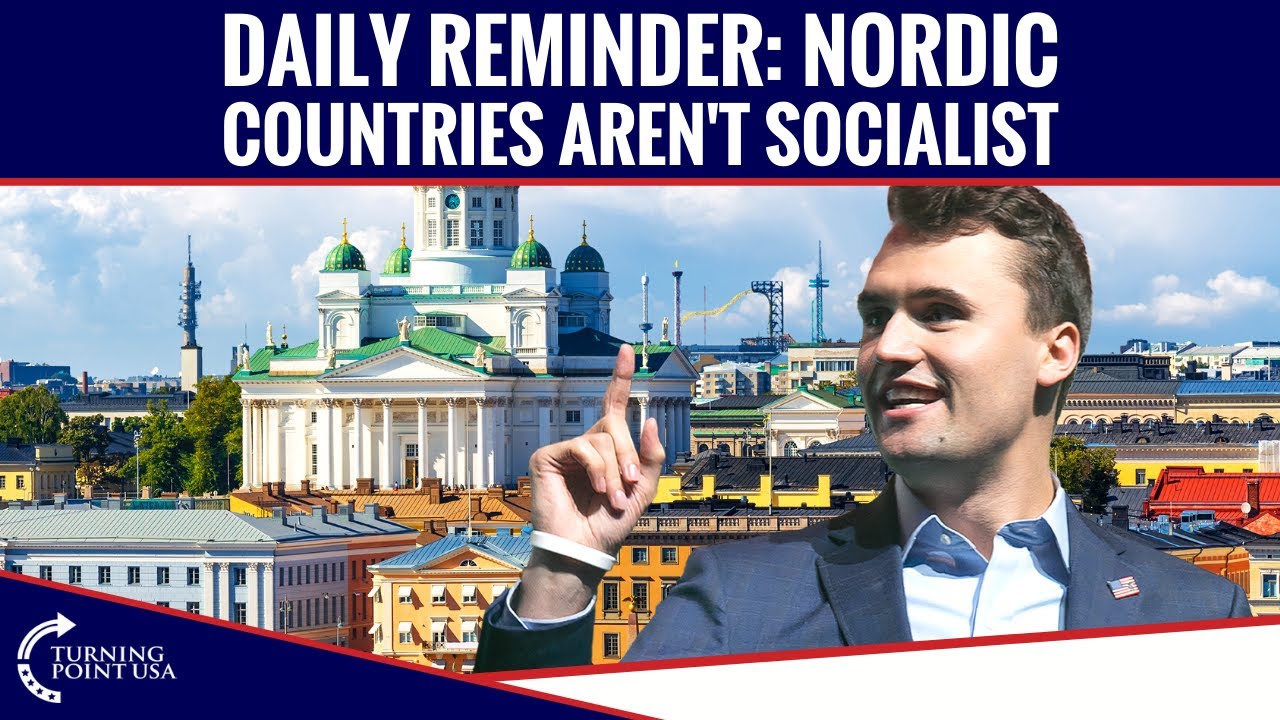
When Burgess points to Sweden, Finland, Denmark, and Norway as examples of successful social democratic policies, Kirk counters with specific facts about these nations. He notes that Denmark lacks a government-mandated minimum wage, relying instead on strong unions to enforce wage floors. Kirk highlights that most Scandinavian countries rank higher than the United States on economic freedom indices, and that Denmark specifically underwent massive deregulation in the 1980s. He points out that Danish officials have publicly stated their country is not socialist.
Burgess acknowledges these complexities but argues that socialist parties allied with strong unions brought about beneficial reforms in these countries. He compares dismissing the socialist origins of Scandinavian social programs to claiming Bernie Sanders and he represent all American viewpoints. The discussion turns to Norway's trillion-dollar sovereign wealth fund, built through nationalized oil resources. Kirk acknowledges this success but emphasizes that wealth must first be created before it can be redistributed, and that Norway's approach contradicts the keep-it-in-the-ground fossil fuel activism common among American progressives.
Immigration and National Cohesion
Kirk raises the issue of immigration policy in Scandinavian countries, noting that Norway historically maintained strict immigration controls, requiring language proficiency and extended residency for citizenship. He questions how Burgess can advocate for open borders while praising the Scandinavian model. Burgess responds that he doesn't support closed borders, citing economic data showing immigrants increase overall wealth and advocating for pathways to citizenship rather than deportation.
Burgess argues that giving immigrants full citizenship rights prevents them from being exploited as second-tier workers and allows them to join unions and defend their labor rights. He criticizes guest worker programs as resembling legalized slavery. Kirk counters that nations require shared language and culture to function as coherent communities rather than mere colonies for corporate profit. He frames immigration control as essential to national identity and social cohesion, while Burgess sees it as unnecessarily expanding state police power.
Minimum Wage Wars
The conversation shifts to minimum wage policy, with Kirk citing studies showing Seattle's $15 minimum wage led to cut hours and reduced employment. He references data indicating workers clocked nine percent fewer hours and earned $125 less per month after the increase. Burgess counters with UC Berkeley studies showing no negative employment effects in Seattle's restaurant industry and emphasizes the importance of meta-studies over cherry-picked individual research.
Burgess cites Congressional Budget Office projections that raising the minimum wage to $15 would lift 27 million people out of poverty while potentially costing 1.3 million jobs. He argues the net benefit clearly favors workers and suggests public works programs could employ those displaced. Kirk proposes an alternative: eliminating the FICA payroll tax contribution for workers, which would immediately increase take-home pay by seven percent without risking job losses. Burgess questions what services would be cut to pay for this tax reduction.
Kirk notes that under President Trump, the bottom ten percent of workers saw income grow faster than the top ten percent without minimum wage increases, attributing this to emphasis on entrepreneurship and energy development. Burgess responds that unemployment trends during the Trump years merely continued Obama-era improvements at a slower rate, declining from 4.7 to 3.5 percent compared to the drop from 10 to 4.7 percent during the previous administration.
Healthcare as a Right or a Reward
The healthcare debate reveals fundamental philosophical differences. Burgess argues that tying health insurance to employment makes Americans less free, keeping people in jobs they hate and even trapping some in abusive marriages due to fear of losing spousal coverage. He points to Canada and the UK as examples where citizens live longer, have lower infant mortality, and experience greater freedom because healthcare is guaranteed regardless of employment status.
Kirk questions whether the government can be trusted to run healthcare, pointing to agencies like the CDC, NIH, and HHS as examples of unaccountable bureaucracies. He argues that expanding social services necessarily expands the administrative state, creating more unelected officials with unchecked power. Burgess counters that universal programs actually reduce bureaucratic power because means-tested programs require bureaucrats to determine eligibility, while universal rights eliminate that gatekeeping function.
Kirk raises the moral question of personal responsibility: should someone who is 800 pounds overweight and makes poor health choices receive the same care as someone who saved money and maintained their health? Burgess responds that the current system already rewards the wealthy regardless of their lifestyle choices, with someone like Hunter Biden getting priority over a thrifty person who lost their job. He argues that most economic inequality stems from inheritance, stock ownership, and other unearned advantages rather than personal virtue.
The Postal Service Defense
In one of the debate's most unexpected moments, Burgess passionately defends the U.S. Postal Service as an amazing institution and engine of upward mobility and racial equality. He praises its ability to deliver letters from anywhere to Alaska for the same price and advocates for expanding it through postal banking, which he claims would eliminate predatory payday lenders while creating millions of good unionized jobs.
Kirk expresses skepticism, noting the Postal Service lost hundreds of thousands of packages and ran six months late. He questions whether this is the model for running healthcare. Burgess maintains that using fair metrics, the Postal Service performs well compared to private alternatives, and that the better comparison for Medicare for All would be examining countries like Canada and the UK where people already receive government healthcare with better health outcomes than Americans.
Government Trust and Bureaucracy
When Kirk asks whether Burgess trusts the government, Burgess admits he largely doesn't, pointing to excessive billionaire influence over policy. However, he distinguishes between what government can do to people (police, ICE, national security state expansion) versus what government has obligations to do for people (healthcare, education). Kirk presses on this point, arguing that every social program requires hundreds of thousands of bureaucrats to administer, referencing the French origin of the word bureaucrat.
Kirk articulates a vision of small yet strong government, effective at core functions like fire services, police, and border protection but limited in scope per constitutional boundaries. He traces administrative state philosophy to Woodrow Wilson and his Hegelian belief that the state could usher in utopia and remake human beings. Both debaters express mutual disdain for Woodrow Wilson, with Burgess noting Wilson re-segregated the federal bureaucracy and imprisoned Eugene V. Debs.
Fire Services and Healthcare Analogies
Burgess challenges Kirk with an analogy: if public fire services for everyone aren't government overreach, why is public healthcare? He argues that both involve life-and-limb emergencies where people shouldn't face bankruptcy or receive inferior service based on wealth. Kirk responds that fire and police services are primarily local and therefore more accountable, whereas federal healthcare would create an unaccountable Washington albatross.
Kirk also notes that emergency rooms already cannot legally deny service to anyone regardless of ability to pay. Burgess agrees this is good but points out it's equivalent to requiring fire departments to save everyone's house regardless of insurance status, then sending them a bankruptcy-inducing bill afterward. He questions why this system makes sense for healthcare but would be obviously unjust for fire protection.
The Jeff Bezos Tax Question
In a revealing exchange, Burgess references a 2019 debate where Kyle Kulinski asked Kirk if he'd raise Jeff Bezos's taxes by one percent to house every homeless veteran. Kirk's initial response favored voluntary action, but pressed during this debate, he conditionally agrees he would support such a tax increase if he were a representative, provided comparable legislation prioritized his values. He emphasizes this would be preferable to taxes funding the current system, which he views as wasteful.
Kirk explains his willingness to target Bezos specifically because Bezos games the postal service, exploits corporate tax loopholes, shows total disregard for the American way of life, and harbors a weird fascination with going into orbit. Kirk jokes that he hopes Bezos stays there. Burgess celebrates this as progress, while Kirk frames it as commitment to prudence—evaluating circumstances non-dogmatically rather than adhering to rigid ideology.
Family Formation as the Ultimate Goal
Throughout the debate, Kirk repeatedly returns to family formation and protection as the paramount objectives of public policy. He cites statistics showing that when families flourish and divorce rates remain low, crime decreases, literacy improves, and communities thrive. He worries that some activist organizations on the left view the family as oppressive and patriarchal, asking Burgess to clarify his position.
Burgess states that people who want traditional families should absolutely be able to have them, but in a pluralistic society, everyone should be free to pursue their vision of the good life. He points to organizations like the Working Families Party as evidence that the left has no problem with families. He argues that his policy proposals—union rights, higher minimum wages, guaranteed healthcare—would actually strengthen families by reducing financial stress and giving parents more time with children rather than forcing them to work multiple jobs or excessive hours at soulless corporations.
Video Transcript
welcome to debate night everybody my name is charlie kirk tonight's guest is a self-proclaimed democratic socialist a philosophy professor at georgia state university perimeter college and an adjunct professor at rutgers university he's a columnist for the jacobin magazine and has written four books including his most recent christopher hitchens what he got right how he went wrong and why he still matters in addition to all of that he hosts the podcast give them an argument which you can find on his patreon spotify apple podcast and youtube please join me in welcoming professor ben burgess to debate [Music] hey everybody welcome to this episode of debate night with us tonight is ben or dr burgess or ben burgess however you want to say it we're going to be debating and we'll see where it leads us uh democrat socialism versus conservative populism super thrilled that ben is here tonight to have this discussion it'll start with some opening statements and then we'll take it from there the two minutes is yours dr burgess thank you mr kirk and uh thank you to town circle for setting this up so i'm a democratic socialist because i don't think anybody deserves to have less power or a dramatically worse life because of factors that are outside of their control so that's the first part that's the philosophical basis concretely i think it's obscene that we have an economic system where workers at amazon warehouses skip bathroom breaks because they're worried about falling behind in their quotas and their boss literally owns his own spaceship now we can argue about what a fairer society would look like i can contrast what i would see as utopia with what you would and i'm always up for that kind of thing i'm sure we'll get into some of it later but what i really like to start out with is not so much that end point as the baby steps towards justice that we could take right now things like raising taxes on rich people to pay for social programs that would benefit the rest of us things like raising the minimum wage for the working poor things like making it easier for ordinary people to organize unions so they can have at least a little bit of a say at what happens in the workplaces where they spend half their waking lives and i gotta say what always confuses me about you charlie is that i've seen you say that you're not like an old-style kind of corp republican in the rigging bush william f buckley kind of mold and certainly the politicians you seem to be most enthusiastic about people like donald trump or jd vance now make a big deal saying they're they're populist they really want to help like struggling people in the heartland and if that's true i don't really get why you don't support any of those things that i just mentioned well very good it's almost exactly two minutes so uh i'll respond first of all thank you for being here and if we want to spend an extended period of time bashing jeff bezos i'm all for that i think it's actually going to be really fun um so let me just first kind of tell you what i believe and why we believe it it's kind of framed as conservative populism put simply we believe in the natural law we believe as the declaration of independence says the laws of nature and nature's god we believe in limitations on human beings and we should believe their limitations on power both government power and yes of course corporate power as barry goldwater said in the 1960s we also believe america is strongest when families are flourishing when there's a strong moral center when middle class work is respected and appreciated and the populist component to this is we need to be aware of what's happening around us see when core institutions are failing like the family which has been failing over the last 60 years in america which can be attributed to many different different things i would attribute it to the rise of an aggressive social welfare state and an overindulgence in neoliberalism that we must be willing to do something about it when the family starts to disintegrate when our nation starts to fall apart when our borders remain wide open and so we pair those two things together conservative populism and the kind of philosophical basis for a lot of this is the willingness to act with prudence and wisdom to try and fix things that matter things that objectively matter and i've been really looking forward to this discussion i think i hope it's more of a discussion than a debate because we will disagree on plenty but when you talk about a untouchable oligarchy i completely agree i think that there is an untouchable oligarchy in this country both corporate and governmental scientific and technological that is crushing the everyday common man where i think we're going to disagree is that i think the end goal the thing that we must strive to is family formation family protection and that strong moral center and conservative populism is a resurgence of focusing on these things and developing solutions to hope fix hopefully fix it all right well i guess what i would say is when you talk about limited power right i get that that makes sense to me i think that absolutely uh you know i think oftentimes actually people get the relationship between these things really wrong and they'll think well the more you think that human nature is good and cooperative you know the more you know you might think that a fairer society is possible and uh the more you think that human nature is flawed and selfish and cruel then the more you know you should think that hey we might as well just stick with free market capitalism but i think the opposite is true i think that the more you worry that given too much power over another you know one person over another that person is going to treat the other the way that walmart treats its employees the way that harvey weinstein treated aspirate actresses the more you're worried about that the more you should want power to be distributed as evenly as all possible and that's really why i'm a democratic socialist that i think whether you're talking about russia under stalin or amazon under our mutual friend jeff bezos not a friend uh then then any time you have one person having way too much power over another without democratic accountability i think you're going to get really bad abuses so i think that's helpful where i think we'll disagree though is the means of which we can represent individual people against oppressors or people that have power this is why i tend to defend markets and i want to be very clear markets are a tool something we set up to hopefully help human beings there are externalities there are jerks and dirt bags like jeff bezos that tend to con the system not pay taxes not treat their workers and one of the reasons why this has become an emphasis i think of conservatives is we're willing to use prudence in a non-dogmatic way and say wait a second if we're trying to conserve something that is eternal and beautiful and true is it a good thing that this kind of let's just use basis again 200 billion dollars of net worth while the average american family is struggling to pay off student loan debt or financial debt where i think we're going to explore i can't do this in the remaining 20 seconds i have though is true decentralization must happen in a way that is consistent with both reigning in the administrative state and reining in the technological and corporate power sources in our country and the ultimate form of decentralization is the family strong families strong households all right uh so i guess when you talk about the family sure absolutely if people you know social institutions are making it harder to keep families together that's a bad thing i think that um i you know i would point to the financial pressures that you know that people are often under as a huge source of problems within families as a huge reason for relationships and marriages uh failing and that's something that i think would be helped by doing things like changing labor laws to make it easier to organize unions so people would be getting better wages and have more job stability less of what employers like to call you know flexibility and everybody else calls precarity and so that might be one place to uh to start exploring this is i mean maybe maybe you'll surprise me here right but i do not think we disagree we agree on that so yeah just am i good to respond yeah okay good no i just wanna take any of your time please so i wanna get into the union argument i wanna get into the minimum wage argument i wanna get into the healthcare argument and i'm glad for you to to say and i really wanna zero in on this that family formation is a good thing because that is something that is debated amongst some democrat socialist circles and once we kind of get into the back and forth i want to ask you about that because certain activist organizations tend to disagree some activist organizations will call the family oppressive patriarchal where i believe the family is beautiful and the ultimate social bedrock institution and every single statistic shows that when families are flourishing divorce rates remain low which they aren't currently that crime goes down and literacy goes up and communities flourish and i think one thing we can agree on and you said it a little bit differently than i would i think it's wrong when corporations are making families choose between spending another 10 hours at some soulless job or spending a weekend with your kids i think the priority should be through our public policy and our laws should always be toward the development of children and families getting stronger well i think that i think that if you want to have a traditional family absolutely you should be able to do that you talked about activist organizations i think that uh i would point to like you know the working families party in new york for example as a as an activist organization that clearly has no problem with families of course if you want to if you want to live some other way that's great true i think in a pluralistic society i think everybody should be able to strive for their vision of the good life and everybody should be free to live in the way that they want to be free and i think that this is one of the biggest problems you know when we talk about things like healthcare oftentimes people on my side will emphasize the fact that life expectancy is higher in places like canada the uk where they're socialized healthcare and infant mortality and you want to talk about families you know people's babies are less likely to die in places like canada the uk that in the united states and mortality amenable to health care which is a stats nerd way of saying that you're less likely to die from treatable diseases is lower in those places and i think all those are true and important but i don't think it's the most important thing because most of us are not on the verge of dying most of the time most of us are not worried that our babies are going to die most of the time the biggest way i think that not providing everybody with health care as a right affects the lives of most people is that it makes us less free because people are a lot less likely to leave jobs that they hate if they're worried about will i still have health insurance will my family still have health insurance people stay in those jobs and don't pursue their dreams all the time because of that there are people you know i think people who are in good families and they want to keep them together absolutely they should be able to do that but they're also people who stay in bad or even abusive marriages because they cannot afford to lose their spousal health insurance and so i think that i think that we get we're not only happier and we not only live longer but i think we're also freer if we take care of those things so that's an interesting point and what you're articulating as before we get into the back and forth here um is what lyndon bates johnson would call freedom from necessity which is something i take exception with i do not believe the state should play an interventionist role in saying that it is the role of government to say that you should be free from wants or necessity i would argue that through a national natural rights compact that you should be free to pursue virtue that's not to say you shouldn't have a social safety net which far too often becomes a hammock at a social safety net but i think the design of government and the state which is really what we're debating here right what is the what is the role of public policy should be supporting things that are objectively good for people for children for the nation and for the country and so i'm happy to go into the kind of three categories that are common points of democrat socialist next healthcare union membership and kind of the development of unions and minimum wage laws because i would argue that some of your policy prescriptions do the opposite they don't actually help working families they actually raise prices and hurt job mobility but i want to take a short break and then we'll go back and forth that's okay everybody we'll be right back let's do it [Music] in these united states of america this great country of ours we american indians we can be anything we want to be except american indians a lot of the soldiers were very aggressive so the women did get raped a place of suffering dying starvation not nothing good just like a nazi concentration camp i didn't realize how corrupt things were i didn't realize what kind of environment we were living in we had no running water we had no power they de-incentivized people from you know opportunity that's why our suicide rate has climbed up astronomically i moved from the poorest county in america the pine ridge indian reservation to the richest area in the country the navajo indian reservation there is no difference the poorest and richest reservations in our nation suffer from identical problems this is not anything new this is an everyday occurrence in all tribal governments [Music] so my life and my tale and my truth has been to fight socialism and i'm hoping that i can wake up as many navajos as i can telling that you can do this yeah even if i have to fight you to save you and i think that's what i'm also projecting to my people even though they are so harsh on social media and they completely hammer at me i tell them i'll be here even if i have to fight you to save you [Music] what if i told you that this has all happened before the riots the violence church burning attacks on police destruction and private property my name is sammy stein i am a holocaust survivor this is the reality of what happens when you have capitalism that goes to socialism no function [Music] [Music] [Applause] [Music] welcome back everybody all right no more rules we can interrupt each other it's totally voluntary unlike socialism i'm kidding that's my first socialist joke tonight so let me ask so i want to ask you just kind of generally about democrat socialism let's do it um where would you point to as one two or three examples that you think are the best embodiment of the world view that you hold yeah so i think that they that all of the things that i want you know i do not think exist together right now in the world but if you want to talk about places where a lot of the policy goals that i'd support you know have have been implemented i certainly don't think they're fully social societies by any stretch of the imagination but i think a lot of it has been implemented i would talk about you know the places you'd expect me to talk about your swedens your finlands your denmarks or norways now these are complicated societies that you know there are right-wing parties win elections sometimes too and they do things that i don't like but i think that these are places broadly speaking where a lot has been done to take certain things like healthcare for example outside of the market so that people have that kind of freedom that i'm talking about that they're not that they're not tied to jobs that they hate because they're worried that uh that they and their families basic needs aren't going to be taken care of if they don't stay in that subservient relationship and you know you talked earlier about how you want the state to support things that are objectively good yes it seems to me that living longer is objectively good having lower infant mortality is objectively good and i would also say that having greater freedom to live your life how you want and not being tied to a particular job i think that's also objective so job mobility is interesting i want to get into that so i'm not stunned you mentioned the scandinavian country sure yeah so denmark doesn't have a minimum wage well but you got to you got to do the other half of that that they that they don't have a minimum wage but they have vastly more favorable terrain for unions than the united states does and so a lot of the wage floor is enforced that way it's still not just they get whatever the market says they get you know but no government mandated a minimum wage what i find interesting and there are some aspects of the scandinavian countries appeal to me sure according to the world economic freedom index every country outside of norway is more economically free than the united states and so is that something that would interest you if economic freedom is the definition of your view then well i would change the bernie sanders shirt i think that what i mean by economic freedom and what they mean by economic freedom are going to be very different i think often times if you look at the methodology of those lists it's very unclear like you'll get like the cato institute or whoever in some cases will do these lists where they rank places by freedom and it's like um you know the the things that the things that they get points for the things they don't you don't get points for abortion doesn't matter whether you can have raw milk matters you know i think are at least unclear to me but i think i think this is the bigger philosophical thing sure right like let's let's just do this rather than get into the nitty-gritty about the list i think that what those guys mean by economic freedom is how much business owners are free to conduct their business however they want you know without interference by the state what i would mean by freedom in an economic context is the right of ordinary people to live the kinds of lives that they want to live and not be under the thumb to the extent that people are in the united states of whatever some corporation you know wants them to wants to make them do right and so just to clarify this though about some of the scandinavian countries they went through massive deregulation in the 1980s right many of these scandinavian countries did including denmark denmark has actually come out and has said stop calling a socialist we are not socialist you've seen that quote well i have seen it but but i would like i would like to say something about this uh and people could check out i actually wrote something about this last summer for arc digital media i think i read it okay well there you go so i know where you're going before you say this all right well beautiful for the audience doesn't know so happily though there are people who are watching who don't know so yes let's say it anyway uh so i think that i think that saying that there's that hey there here is this uh center-right kind of uh prime minister who says no no these social gains have nothing to do with socialism and you say oh well he says it right so so therefore he must be speaking for you know denmark as a whole the danish hive mind i think is approximately equivalent to if the only two you know if you were from denmark and the only two americans you'd ever talk to were bernie sanders and me and you said well here's what they say about what america is all about here's what they say about you know social security or the post office this is the american point of view i think you know if you look at how long socialist parties were in power in denmark and how many of those programs came about under them i would not say that these are societies that have achieved socials and we could certainly talk about what what that would mean to me but i would say that these are societies where socialist parties allied with strong unions have brought about really beneficial social reforms as an effort to move farther in that direction so let's talk about norway country that i'm familiar with you're familiar with um very wealthy country yeah why uh because uh you know i think the biggest i think the biggest reason is that they have done something that i'm sure that you wouldn't support which is nationalize their oil use fossil fuels not keep it in the ground like bernie sanders would be bernie sanders has tweeted we need to keep all fossil fuels in the ground but norway's built a trillion dollar sovereign wealth fund after okay so uh so so would you support that nationalization no but it's better than keeping it in the ground okay i mean look i think ultimately we probably are better off you know transitioning to other energy sources but but if we're going to use oil i would much rather that that oil be in the hands of the people that it fund generous social programs like in norway and how could you kind of get a sense when conservatives say this it's like oh well there's really nothing socialist about it they've just nationalized the oil industry and used the proceeds to fund all of these social programs i mean if that's not socials can we at least have that not socialistic that sounds nice to me let me clarify is that if there is wealth to be redistributed there must be wealth to be redesigned sure and norway has the advantage of having some of the most strategic oil reserves in the country and i just pinpoint it in particular because there tends to be this anti-fossil fuel development movements it's something norway and the united states have in common is that we have a lot of oil now if you want to again i know you've said you don't want to do this of course i think the private ownership of minerals is a strategic advantage for the united states but let me ask you about what i think is one of the reasons why i think the scandinavian country's pursuit of egalitarianism looks good on paper and this is strict immigration now this has changed in recent years because of a lot of the syrian refugee crisis and more kind of left-wing governments taking over sweden in particular but norway for example takes in about 70 immigrants a day even with their more relaxed policies america much bigger country albeit 2 740 legal immigrants about 5 000 if you inc if you include the people going across the southern border do you as being a democrat socialist do you support closed borders and strict immigration no i don't i'll tell you why so uh two reasons one is that i think that you know all of the economic data that i've seen says that having more immigrants actually increases the amount of wealth that society has has to go around and the second is i would ask what the alternatives are right so you know we can do you know like those those families that you know that you talk about right you know we can uh you know we can do things like separating you know separating families we can do things like raiding you know churches you know to uh to to drag out uh immigrants but i think we would really really really have to step up that like by like a factor of a hundred to actually get rid of all the undocumented immigrants of the country whereas i think a much better solution if what you're worried about is hey here are people coming in who yeah they definitely you know contribute to economic growth but here are people coming in who are willing to work for low wages whatever i think a much better solution to that problem is for those people to have a pathway to citizenship so that they're not afraid to do things like join unions or they're not afraid to do things like you know take take their employers to court when they violate labor laws i think that's a much better solution to that problem than the sort of heavy-handed you know police you know police state kinds of tactics which i think would be the only way that you're actually going to resolve the status quo in the other direction one of the things i like about norway that you just said you don't like is to become a norwegian citizen you must speak the native language it's non-negotiable you must have citizenship by birth as not applicable and you must have lived in norway for at least eight out of the past 11 years and so maybe you can help clarify this for me because the mascot you're wearing on your shirt has changed on this where because i would i would understand the position you're espousing more if you said hey we're going to close off the borders we're going to take care of our fellow countrymen we are going to reject these globalist institutions because bernie sanders used to say that in 2013 bernie sanders said it does not make sense to me to bring hundreds of thousands of those workers into this country to work from minimum wage and compete with american kids bernie sanders said in 2007 six years prior if poverty is increasing and if wages are going down i don't know why we need millions of people to be coming into this country as guest workers what changed well i think that the main thing that changed is that the context of both of those quotes that you just read was not about whether there should be a pathway to citizenship it was about exactly the opposite it was about the bush administration's interest in 2007 and then later revivals of in 2013 attempts to create a guest worker program which i think he rightly compared to legalized slavery a lot of immigrant rights groups were actually against those proposals for the same reasons because those are things that instead of giving people the rights of americans so that they aren't afraid to do things like organized unions those are things that would essentially just legalize the status quo this is a second tier of workers who are not going to have those citizenship rights who it's much easier to you know it's easy you can kick out of the country if their employer decides they don't like them anymore and i think that that is a completely different thing i think it could also so i think in that case i think there's less of a contradiction there than you think but hey look bernie sanders isn't on my shirt because i think that uh i think that the man is infallible i could rattle off a list of things that he's gone wrong over the years but the reason he is is that i think he's been the most important champion of doing things like raising the minimum wage to 15 an hour like getting out give her to everybody healthcare you know ending the wars etc that would actually really materially benefit the majority of the population and i guess i really struggle when i hear you know conservatives being interested in the welfare of the working class suddenly when it's this issue of competition from low-wage workers which is a question of pitting some workers or for other workers but when it's a question of doing things that would benefit workers in general like raising the minimum wage like giving everybody health care then suddenly it seems to be a different story suddenly it seems to me that this is too interventionist this is true administrative states i mean kicking immigrants out seems like a big expansion of state power to me too well i want a small yet strong government strong in what it does and foreign citizens people foreign citizens sure or illegals in the country should be deported should be taken out and i think there's a cultural aspect to it it's deep down you agree with and that's what norway gets right they realize if you don't speak the language you don't have a shared culture then there's something that all of a sudden makes it less like a nation and more like a colony or more like a temporary place for corporations to make money let's talk about the minimum wage so the reason why i don't want abrupt quick let's say increases the minimum wage is it actually hurts workers washington post a very credible new study on seattle's 15 minimum wage says the following workers have workers have seen cut payrolls put they've been put off hiring reducing hours or letting their workers go that is seattle another study from just target just because target raised their wages abruptly in 2019 shows that workers say their hours were cut leaving them struggling another one okay so so i wouldn't go through them so let's let's let's pause and do the first seattle the same thing first couple of first couple first because in seattle there's been a bunch of different studies including one from uh from from uc berkeley i know uh that have i don't know which one was published by jeff bezos this is newspaper that you're referring to there trust me uh but there was there was another study from uc berkeley say that actually it had no effect on on the employment rate in the restaurant industry and it achieved its goals i know if you look at the congressional budget office which often times people with your position love to cite uh they said that if you raise the minimum wage to 15 an hour and by the way i thought it was interesting you said abrupt because i'm interested in how whether you'd be okay with it if you did it slowly i i think moderately kept up with inflation done prudently especially as we're about to have mass inflation i think that it that coupled with a workers tax cut and other pro-growth policies wouldn't be the worst thing for the economy no i think that's a moderate economic position but keeping up with inflation right you know like you're still saying the purchasing power of low-wage workers should be what it is now and i would say that if you want to run this argument that well it's actually going to hurt you know that's actually going to hurt workers more than help them the studies show that i don't think the studies do show that well so here's what it is so social workers here's here's why i mean like i understand what you say that the studies the studies show some of the studies show that minimum wage increases will lead to increased unemployment that's the big claim that's usually made sometimes people will also say that you know leads to a reduction in hours but the big one is usually increased unemployment and so so i'd say two things about this first of all the effect of minimum wage increases unemployment is like the most studied thing in empirical economics in the last several decades and there are studies you can find that say yes there are a lot of studies that you can find that say no and this a word i almost never hear from people who say that it's going to lead to unemployment increases is meta study right in other words if you look at a bunch of studies over time and see like you know since you can have you know very small sample sizes and you know and making big conclusions from very small sample sizes is generally and then like making a big deal about them with the press that's how people end up believing that plants can think and coffee cures cancer you know that they looked at like some study with some super small sample size but when you do the meta study of a bunch of different studies most of those show no but let's say for the sake of argument yes let's say that it does lead to some unemployment increase because you agree certain studies do show that yeah certain studies do show that i think i think most of them and especially media studies over time say no but sure let's say yes so if yes would that mean that it was going to hurt workers more than help them well we could look at like the congressional budget office what they said in 2019 which was that um two-thirds confidence that you'd have a range of unemployment fx somewhere in between zero and 3.7 million and most likely they said 1.3 million people would lose their jobs now that's bad i don't want 1.3 billion people to lose it's a lot of jobs but they also said that 27 million people would keep the jobs they have right now and and be paid more and uh and would have more purchasing power and so we say okay we have 27 million people who are being lifted out of poverty by this we have 1.3 million people out of jobs now even if there was nothing that you could do about that i'd still say that treating this as a knock down well this is going to help poor people working poor people more that it's hurt the more that's going to help them i don't think makes sense but also i don't think we have to accept that those 1.3 billion people if that's a true estimate have to be permanently out of a job we could have public works programs that could employ those 1.3 million people give them dignified public public sector jobs and if you don't think that there's plenty of work for those 1.3 million people to do in terms of federal public works trust me i could give you a long list of things that could be doing let me build out the study and then i want to ask you a question so low age workers on average now clock nine percent fewer hours and 125 dollars less each month that's seattle there's another one new york city businesses struggle to keep up after a minimum wage increase would you support eliminating the fica contribution for workers seven that's a seven percent tax on wages before we even talked about raising the minimum wage well i'd like to talk about raising the minimum wage with no preconditions but why not the workers tax cut that's what i always don't understand because we tax workers at seven percent seven percent of our workers here lose their paycheck as half of their fica contribution i never hear that from workers rights advocates why well i think that i think that first of all the first question you'd have to ask is what's the money that's going to be generated by that for those workers then the second question that you want to ask is what's going to be lost on the other end in terms of services if that's cut and i think that paying people a higher minimum wage having those 27 million people get a living i could give them a seven percent i can give them a seven percent wage increase tomorrow and what it's called cutting the fica tax yeah every working person deserves seven percent of their wages that are currently being taken by them by the government why don't you instantaneously so what are you gonna well because i know what the other what the other shoe is that's gonna drop there what are you gonna cut to uh to uh pay for that uh that tax okay so there's there's plenty i could name a whole litany of departments i think i would cut to try to pay for it but let's pretend that it's paid for like what everything washington dc says yes if you if you could if you could cut workers wages and not it would work wages sorry workers the taxes on workers wages if you could cut that and on the other end there would be absolutely no loss in anything that's a beneficial thing that's going to make workers lives better then sure why not but i think i think you should still raise i think you should still raise the minimum wage because i think again having those 27 million people now having a living wage having the ripple effects for lots of people who are already making more than the minimum wage that's going to increase their wages and then 1.3 million people need new jobs trust me we can take care of that so you're obviously no fan of president trump or his administration during his presidency the bottom 10 percent of workers actually had an income grow faster than the top 10 percent of workers and so what we saw was a real blue-collar boom over the prior without having to abruptly raise the minimum wage and the reason was let me just finish is an emphasis on entrepreneurship is this is an indicator that i don't hear talked about a lot which is how many new businesses are being started and when you raise the minimum wage it's harder for the deli owner the dry cleaner to enter into the market because all of a sudden the labor pool's like man 15 an hour i could barely pay to keep the lights on so if we want new business and you agree entrepreneurship is a good thing right i think it's i think it's good to have new businesses i'd like more of them to be organized as worker cooperatives we're going to talk about unions we could get into that i want to get deep into unions but but i do just want to say on what you're claiming about the trump economy because i think i think this is an important point right what so yes sure why what if what what explains those numbers that you just mentioned you'd say it's a new emphasis in entrepreneurship i'd say it's too much i could go through other things okay but it's polluting an energy renaissance but i think i think the primary things are two things one that quite a few states during that time period actually did raise their minimum wage and i think that had a big effect on that two sure that employment increases uh give workers more bargaining power which a lot of conservatives now object to they say oh nobody wants to work but employment employment increases give workers more bargaining power in the labor market and that's a good thing but that's not really this new emphasis on entrepreneurship that trump was doing if you look at all the employment figures whether you're looking at the overall civilian employment rate in the united states or whether you're breaking it down black white hispanic whatever all of those you see the same trend which is that in 2009 uh you know at the beginning of the obama presidency when the with the effects of the 2008 crash were really coming in all of those were way up here you know that the uh that it was like you know you have like 10 percent unemployment uh over the course the uh of the eight years of obama it goes from ten percent to four point seven percent overall civilian you know unemployment and then sure into the four years of trump or you know like we'll give him a pass for the coven part but they uh but like under under those years of trump then uh you you go from 4.7 to 3.5 so that is a continuation at an overall slower rate but a continuation of what had happened before and the reason i'm bringing that up is not that i'm a big obama guy i mean look no i know you're not as you know i'm a bernie sanders would be a good start guy but and i want to get into that yeah yeah absolutely because i i think you are what sure well cleverly cloaking your right claws in three issues that are aggressive we're gonna i don't think so i think i front loaded the radicalism and said these would be baby steps in the right direction and i'm very confused about how you could be a populist without all those babies now i suppose but but i do want to i do want to finish the point because i think it's important one right that the that it's not that i think obama is great it's that i think that if you're going to say the populist thing about you know trump and you know trump economics even though this is a guy who appointed hardcore union busters to the national related labor relations board this is a guy who tried to throw millions of people off of uh off of health care you know in terms of going against the medicaid expansion this is a guy you know who tried to make it a lot harder to qualify for food aid for those families he talked about that the big populist thing is that he oversaw economic growth and hence job growth well hey if that's enough to be a populist barack obama was a better populist than he was bill clinton was a big populist because he oversaw lots of economics and that's why what i am saying though is that it's mischaracterized that the people that you say you care about the lower workers actually did really well under those four years i think trump could have been more conservative more populist in certain things and just to clarify on the food stamp issue millions of people got off of food stamps under trump voluntarily because their wages went up but i i don't want to get too but i really don't want to get too bogged down you had that extra one percentage change of uh unemployment going down which is a continuation of previous threads sure so so let me kind of ask you uh more broadly i guess we could go into some of these other aspects i have a question i'd love to ask you a bit by the way but go forward yeah you're free to do that too by the way do you trust the government do i trust the government uh do i trust the government um to uh to to tell me uh to tell me the truth to uh to do things uh that no the government by and large that i think that those billionaires and billionaires the guy the shirt likes to talk about exert vastly too much influence but here's where i think people often go wrong from that to true premise that the government is untrustworthy i think premise is fine but the conclusion therefore we should have less government in the sense of we should have less expansive social services uh we shouldn't give everybody health care i think that that's a fundamental confusion because i think that there's a difference between talking about what the government can do to you and there we're talking about police ice you know the expansion of the national security state and what's important and what the government has a legal obligation to do for you in terms of supporting what i would see as fundamental human rights like health care and education let me tell you where i think there's a a flaw in this and i i really want you to talk about this you say healthcare and education there must be bureaucrats to enforce these things you need the administrative state so then you get the cdc you get the nih you get unregulated agencies that you as being someone who focuses on democracy focuses on the power of the people where is the check and balance against the cdc the nih hhs for every government program you need hundreds of thousands of desk workers which is where bureaucrat comes from in french so you say you don't trust the government you support expanding the social services which will then necessarily expand government why do you want to expand something you don't trust well first of all congratulations on the french vocabulary i like it but i have other words too we could to operate no load oprah no lay deluge which means after me the flood we could talk about all my favorite french terms if you'd like uh we could do a whole thing are you right for the jacobin magazine for goodness sake so we could you know exchange notes and john chuck rousseau i've only read the confessions once go ahead okay well um i'd be happy to do all of that uh although you know my french is like duolingo i can't do that much but i'm done i promise but i would say that if you don't want bureaucrats to have more power if that's the big objection no that's part of the objective okay it's an element of it sure so let's let's start with that element so if you don't want bureaucrats to have more power then the thing that you should really object to right because you you said earlier you know you think we got to have some kind of social safety net so we're agreeing that there are some social services programs we're arguing about how expansive they should be and how they should work so generous versus limited sure okay but this is the thing if you want those bureaucrats to have less power you don't want limited that's the last thing that you want you want generous and here's why here's why you're gonna i don't know i know i know like i really liked what you just did there the uh like that was that was some good you know that's uh so to restrain their power you must give them a lot of power no you're not giving them any power you're taking away their power it's a really simple argument here's how it goes the uh that means tested programs give power to bureaucrats wouldn't you say you have to jump through all these poops to qualify for something and there's some bureaucrat who gets to decide whether you get it or not here's why bureaucrats have more power whereas when you say this is a legal right that every single person has as a citizen no canadian is having a bureaucrat decide whether they qualify for health care or in finland uh you talked about all of the policies that you know in norway that you thought would be an issue for me finland is the poorest they have uh okay i don't think it's because of this but they uh but you know in uh in finland where uh they don't even have uh private schools and certainly uh you have a right to higher education as a citizen the way that you know the way that you know you have historically in lots of countries and i think it's worked very well but when you have that you don't have you know students jumping through financial aid bureaucracy you know hurdles and does this person qualify to get school does that person qualify to school where bureaucrats have the power to decide what's up because that's the type of case where bureaucrats have power over you if everybody gets something as a right of citizenship bureaucrats have no power with that structure so let me ask you something though so you want medicare for all yeah yet hhs is the largest civilian branch of our government so as we have expanded medicare as we've expanded medicaid it hasn't been means tested as you want we have hundreds of thousands of desk workers that are doing the means testing are you qualified medicare reimbursements and so even under your example well but but better hopefully idealistic the point is medicaid social program without a massive bureaucratic and dare i say corrupt administrative statement well i think woodrow wilson would even say that well i don't need the administration you think i like woodrow wilson the uh the guy who probably the college professor okay well okay and a college president uh so he's kind of in your truck well okay trust me neither of those things are in any points for me but uh but i think that's uh that's fair uh but i mean woodrow wilson is the guy who re-segregated uh the uh the federal uh the federal bureaucracy after trust me i integrated into a whole speech he put eugene j v debs in jail nobody on the left is going to save woodrow wilson as a hero liberals nobody on the left but i was just going gonna say i know plenty of people that would but that's fine i don't i don't think i i don't think you're going to fight a lot of people lbj john dewey all these people believed in a strong administration well i mean you're rattling off a bunch of liberals but that's okay we don't need to argue about historical figures let's just say this if you're talking about administrative state bureaucracy well your example is medicaid which is a means-tested program uh and even at that even despite the means testing which is the part that gives the bureaucrats their power which is also the part i'm objecting to even despite that we're talking about bureaucracies as i think you mentioned earlier bureaucracy the government has no monopoly of bureaucracies plenty of bureaucracies in the private sector and if you want to know which programs have the smallest overhead right even medicaid even despite the means testing medicaid medicare all of those have much smaller administrative overhead than any of the private insurance companies because the private insurance companies won they have to plan out their strategy for competing with each other and two the private insurance companies have a vast bureaucracy that is dedicated to finding ways to deny people's claims because they've always got one eye on the bottom line for shareholders and one question i'm very curious about by the way is um you know you object for all these reasons you think it's too interventionist do you think it's too much administrative state to just providing everybody with healthcare elements of the critique with you know providing people with healthcare as a human right so that you can have like what people i know in the uk always tell me which is hey would i you know when whatever my mom got cancer whatever the situation is people will say the only person i ever talked about this was was with a doctor which is very different from america's experience with health care if you can object to that on the grounds that it's that's too much big government i am really curious whether you'd say the same thing for like uh fire services like like would you be okay with it if we didn't have public fire services absolutely not as i said small but strong okay the government exists as it says in the preamble the constitution amongst many other things to secure the blessings of liberty to ensure domestic tranquility and hamilton said it best that you need a nimble yet effective federal government good at what it does but not overreaching and that's the whole idea of conservative populism is within this constitutional republic framework i'm a big fan of firefighters police officers i'm a big fan of border patrol i'm a big fan of all these sort of things but when when all of a sudden i believe you get outside of the constitutional limits is where you birth this fourth branch of government and our mutual hatred of woodrow wilson is a perfect example of this because he really believed the state this is hegelian idea will usher in that utopia that the state is god that through the mechanisms of the state we will be able to turn the chapter and with it remake man he was the only person that believed that fdr did lyndon baines johnson did as well where we as conservatives and conservative populists say hold on a second that is not what the state is there to do for let me just say one last thing which is that we the state is there to preserve the natural law with prudence and wisdom to hopefully develop families and foster children not to try to meet remake human beings when it comes to health care not only do i have a moral complaint that it's not the role of government it's also not good at doing it and it also hurts the everyday common man so i have two i don't i don't think either of those things are true i have a moral argument and i also have utilitarianism let's start with the moral argument because i am very unclear on this because why is it that having public firefighters or public police uh is not overreach but having public health care is why would it be objectionable if instead of having public fire services that everybody gets to use you had everybody just having to have private fire insurance and if you had a better private fire fire insurance plan they'd probably put out your fire you know faster or maybe we had public fire fire insurance but only for people the poorest people or the oldest people which would be the exact equivalent for health care or the same thing for uh for you know for policing the equivalent you know for like security insurance because all of these things seem very similar to me because having your house burned down being victimized by a crime or needing chemotherapy those are all cases where your life and limb is in danger like these seem pretty parallel to me what do you see as the big dis analogy so the first first problem is mostly local police and fire so therefore it's more accountable okay so the dollars don't go to some sort of albatross to the kingdom of washington dc of unelected unknown kind of just unchecked bureaucrats that's number one number two we do have a system in the country despite what you're saying where if you need health care you will be taken care of is it broken is it inadequate though right well in a second it's already i'm saying it is illegal to deny someone service a care illegal now do we have problems with our health care system do you think if you could put me in a room and i could strike a huge bargain with you i think that there are elements of the german system that are admirable i will say that where you have a public system and a private system where i start to all of a sudden say time out no go no fly zone is where i hear people like bernie sanders and i'm paraphrasing who want to get rid of private insurance as we know it that's a big mistake health care here's how i think the biggest problem health care is it's not individualized it's way too you know way too bureaucratic way too top down and yes we have pharmaceutical companies that are addicting people to drugs that they should not be addicted to we have a sick care problem in our country and i agree with a lot of people on the left with this on this maybe we'll agree that we have an obesity problem we have a problem of how we get our food we have a corporate farming problem i agree with all those things do i think that a government-run system of health care that will be more similar to how the irs or how the postal service works that's how some are going to be the solution to that absolutely not but if you put me the postal service is amazing and the postal service is amazing it has been an engine of upward mobility it has been an engine of racial equality if you uh building the black middle class massively an engine of that have you ever it is i have and the postal service will carry a letter from here to alaska for no not for the same price and they're certainly not going to serve no it's going to get there no i do not know that and it's certainly not going to do it it's never going to get there with as much service to out of the way rural areas i got to give you credit anything i've never heard anyone defend the public like like is cheap well you need to talk to more people because like the post office is an amazing institution and uh it should be massively expanded in fact one of the best things i think they have in some of those scandinavian countries is postal banking which if we did that bernie sanders proposal would immediately put out of the out of business all the payday uh you know payday loan uh vampires that you know prey on unbanked people would create millions of new good unionized jobs postal services so great but i i do want to go back because i don't want this i i i got to i don't want this to get post office lost hundreds of thousands of packages and was six months late that's who you want to run our health care system i think that well i first of all i think that uh i think that if you actually have a fairer look at the dubbers i think the postal service does uh does do a really good job i think that oftentimes when people say no they are not using the same metrics to evaluate they'd use to evaluate everything else but if you want to know something that would be very much like what medicare for all would be like if we had in the united states that i'd say looking at delivery of packages is probably not what you want to do what you probably want to look at is countries like canada where they already have medicare for all great britain where they've gone further and the people that the hospitals are publicly owned that's that's all let's talk about it well okay but those are places that's a different way where people where people live longer where fewer of their babies die uh where uh the rate of mortality of medical to health care is way better or look you said you want it to be local uh you know that you don't like the super localization sure local great so if uh if all the hospitals were municipally owed you'd be cool with that all the hospitals it would be well first of all that happened that's actually the case in a lot of places there's like county run hospitals all across the country i'm not denying they're categorical okay so you would be okay with that so it really has nothing to do with centralization no it does trust me the city of chicago can be equally if not more corrupt than the kingdom of washington dc is it is is it going to be more corrupt than the private insurance companies i mean that's a good question okay but but you did also say right and i really want to make sure we that locally generally better but i'm not going to die on the cook county is a great county well this does this does go back to what you said earlier though when i asked you about fire protection because you said well the day you know the difference is that uh nobody could be turned down from the hospital uh that is a law yes that that is that is that is a law i'm glad that it's a law i am too okay good wonderful we we agree on that that is a good government intervention to stop the private sector from doing what it would otherwise do and did otherwise do before that law was passed but also i would say do the equivalent for the fire services that the only people who who get it without having to pay at the point of service are the poorest people are the oldest people everybody else has to rely on private fire insurance which varies wildly in quality and if you don't have private fire insurance you're not poor enough to qualify for the means-tested bureaucrat enabling uh system for poor people and you're not old enough for the other one and you end up having to have the fire department come and save you anyway then you have a giant bill that's going to bankrupt you do you think that sounds like a fair system no so let me ask you a question so is that here's where how do you define health care this is a very important question right because healthcare could be hey i just got a gunshot wound i need to be taken care of absolutely or or healthcare could be i'm 800 pounds overweight i'm eating terribly i have no sort of interest to exercise or eat well why all of a sudden should that person be put into the same exact level of care of someone that has saved money and taking care of their health why should someone who's 800 pounds overweight be given in this sort of you know realm why should human agency and choice have zero emphasis what you're what you're describing the only difference between that and what already exists in the united states is that we would have to add and they're rich enough that they can afford really high quality medical care right now somebody who's 800 pounds who doesn't watch their diet who chain smokes etc i agree yes but you can add chain smoking but sure yeah although all those things all those things so you think that's not actually given a preference well what here's what i'm saying that i think of the system that we have right now somebody who checks every single one of those boxes but is rich enough to afford the best medical care skips in line ahead of the person who takes care of their health exercises every day doesn't smoke eats well but lost their job or just is uh is cobbling together four part-time jobs like so many americans are and thus doesn't have employers that's an interesting question so you believe just because you have better money you shouldn't be able to have better stuff i believe for more money better stuff i believe that when it comes to something like healthcare uh no that's a very bright i don't i don't i don't i do not believe that people should get life-saving services preferentially because of how much money they have i think so how much money they've saved yeah about that someone saved their whole life and they said in case there's a disaster i'm going to put 500 away a month they get to age 45 and all of a sudden they realize that they have some sort of health complication they shouldn't be able to take advantage of the money they've saved for their entire life well this actually goes back to the very first thing that i said like they got the opening the opening couple what is justice i guess that i said because what i said is that i don't want some people to have dramatically worse lives than others because of factors outside of their control now if we if we can't control that well if we like saving if we if we lived in a world where all economic inequality was due to thrift versus influence or laziness versus industriousness i would have much less objection to this stuff that i do in the world where we actually live where somebody who saved up their whole lives but uh but then uh they have uh you know they have unexpected uh medical expenses that bankrupt them which happens all the time uh that they have uh you know is is is going to get worse health care than somebody who has never saved at all but as somebody uh like you know if somebody like uh if hunter biden right had some massive medical bill tomorrow he would probably have i mean yeah considering his lifestyle sure sure right so if hunter biden had that huge medical bill tomorrow then he would get in line ahead of people for for multiple reasons both access to power and also money sure so that's a good example those are those are both bad things but they have largely unearned and i agree sure so and i would say the same thing about the walton children i would say the same thing about anybody uh who is inherited buddy when you go to when you go to the hospital or you know or you go to buy insurance they don't ask you did this money come from being thrifty and saving your whole life let me ask you questions or or did this money come from stock ownership or did this did this money come from inheritance they just ask do you have the money to afford it and that's part of markets right is that you're not able to make a moral claim for every dollar bill but generally markets will go towards value and value creation we're up against the hour break and we're gonna take a short short break and then we're gonna resume if that's okay with you absolutely i've got a lot more i want to go to but i actually want to close this thought on one thing because it goes to your other thing that you're actually could i i mean if you'll indulge me could i uh could i could i ask you like a 30-second question sure because i got i really want to call i i i know we're coming up to him but i'm so fascinated by that that's right so we agreed to the firefighter thing again it's not the fire okay okay okay uh although you know i think there's more to discuss very anti-fire they have a well that's that's good uh you should be equally anti-cancer and then just like we have fire departments we should have medical that's why i think people who eat well and don't smoke and make good decisions should be rewarded for human agency yeah which is not at all because the inverse of your statement i just want to make sure this is clear the inverse is you say that people should not be penalized for factors outside of their control the inverse is that i think people should be rewarded for factors inside of their control mostly most of what we've got right now is not about i agree with that but rewards pictures for good choices okay so here's what i wanted to ask real real quick i promise so uh we established earlier how much we both like to jeff bezos yes just like best job you're gonna ask me should i raise his taxes well because this is why i'm curious about it because because i saw in 2019 yes with kyle kalinski yeah and he asked you would you be willing to raise jeff bezos's taxes by like one percent to provide housing for every single homeless veteran your response at that time was that you'd hope you'd do it voluntarily and i think at this point we've established that's not going to happen he'd prefer to buy a spaceship so that's probably true yeah so if you put a gun to my head would i would i raise his taxes i mean i guess if i was a representative i guess yes first that's good this conditionally if all of a sudden there would be a comparable piece of legislation alongside of it that would actually value and prioritize things i cared about if it was just to raise his taxes to go into the current albatross but i'd rather have them buy spaceships and give money to foundations but if but if it was earmarked for a housing for homeless veterans and you would say yes the answer is yes because i think jeff bezos this is such good progress but let me tell you why let me clarify why jeff bezos games your favorite department the postal service he gains the corporate tax loophole system jeff bezos is a total disregard for what i consider to be the american way of life and he has this weird fascination of going into orbit and guess what i hope he stays there okay well i congratulate you on this progress well i mean you could call it progress you could also call it a commitment to prudence okay no no but it's that great word which is looking at your phones as they are and it's a non-dogmatic way of governing yourself in the country which a perfect segue the question i wanted to ask because we're going to take a short break we'll be back here with dr burgess if we're agreeing too much don't worry we'll get back to the disagreement i'd like to thank professor burgess for joining me tonight as well as town circle who partnered with turning point usa to bring you this conversation i hope you all enjoyed the debate and encourage you to engage with those who do not share your views if you'd like to learn more about professor burgess check out his books and don't miss his podcast give them an argument you can hear the rest of this debate on the charlie kirkshow podcast as well as the town circle website that's town circle with an s townci
Related Books
Browse Conservative Books