Up Next

Charlie Kirk on Why Dialogue Prevents Division and Violence in America
2:53

Charlie Kirk Reveals How Universities and Government Financially Enslave the Next Generation Through Student Loans
1:10:53
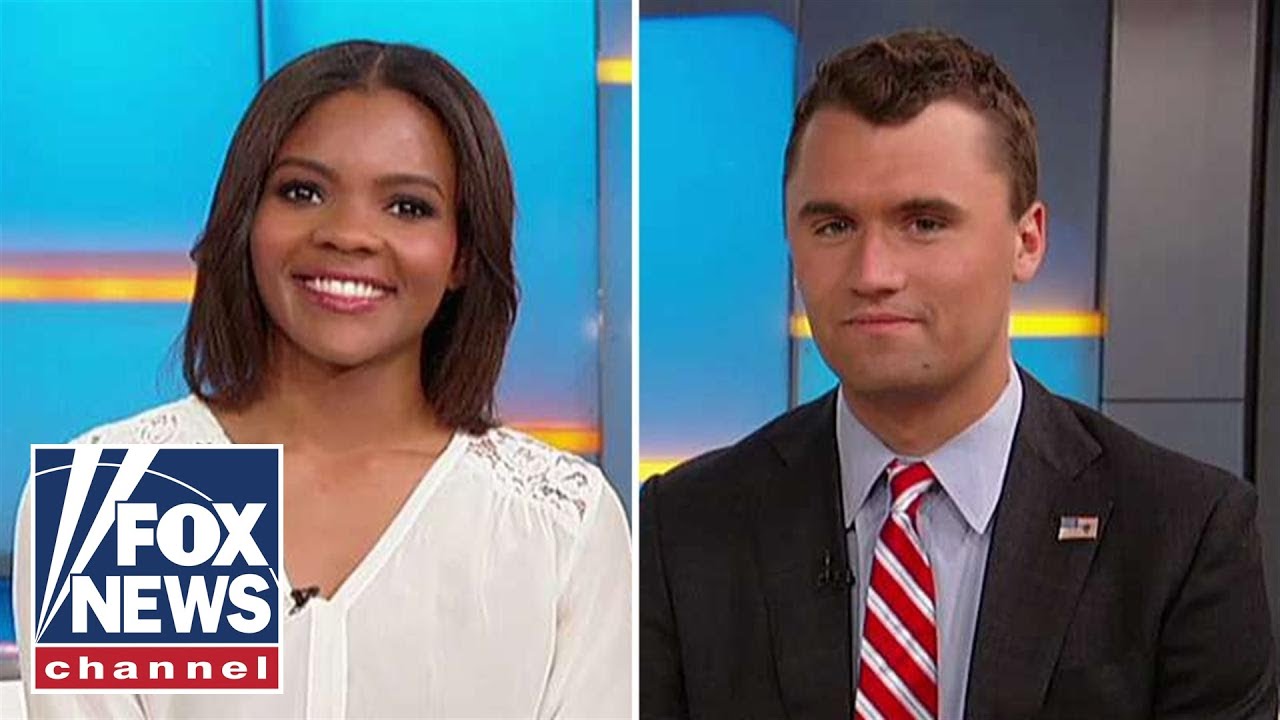
Charlie Kirk and Candace Owens Ambushed by Antifa Mob During Breakfast in Philadelphia
6:43
Charlie Kirk and Kyle Kulinski Debate the Economy, Culture, and Foreign Policy at Politicon 2019
Charlie Kirk and Kyle Kulinski face off in a spirited debate at Politicon 2019, tackling the Trump economy, political correctness, foreign corruption, and trade policy. From disagreements over tax cuts and corporate wealth to unexpected common ground on foreign intervention and criminal justice reform, this exchange showcases how the populist right and libertarian left navigate America's most contentious issues. Moderated by Steven Olikara of the Millennial Action Project, the debate reveals both sharp ideological divides and surprising areas of agreement between two of America's most prominent political commentators.
Opening Remarks and Ground Rules
Steven Olikara, founder and president of the Millennial Action Project, moderated this debate between Charlie Kirk, founder of Turning Point USA, and Kyle Kulinski, host of the Kyle Kulinski Show, at Politicon 2019. The debate focused on three broad topics: the economy, culture, and international issues. Olikara established two ground rules: no shouting over each other, and each debater would have a maximum of two responses per question to keep the discussion moving.
Before diving in, both Kirk and Kulinski acknowledged they had previously appeared together on a panel where they found common ground on issues like opposition to Saudi Arabia and opposition to locking up people for nonviolent offenses. They even agreed on their stance against the death penalty, setting a surprisingly collaborative tone before the debate began.
The Trump Economy: Tax Cuts, Wages, and Deficits
Kirk opened strong on the economy, arguing that America is experiencing the best economy in its history under President Donald Trump. He cited record-low unemployment rates for Black Americans, Latino Americans, and Asian Americans, as well as the lowest Black poverty rate ever recorded. According to Kirk, GDP growth doubled from the Obama administration's final 18 months, reaching as high as 4.2 percent in one quarter. He emphasized that average wages increased by $2.30 per hour under Trump compared to $1.30 under Obama's final 23 months.
Kirk also highlighted America's newfound energy independence, crediting fracking and natural gas innovation for allowing the country to export more oil than it imports. This development, he argued, means America no longer needs to rely on Middle Eastern oil from countries hostile to American interests. He concluded by celebrating that six million people have left food stamps and entered the labor market under Trump's presidency.
Kulinski countered by questioning the metrics used to measure economic success. He pointed out that Trump himself used to cite the U6 unemployment rate during the primaries, which includes discouraged workers and the underemployed. While the official unemployment rate stands at 3.5 percent, the U6 rate is 6.9 percent. Kulinski emphasized that 78 percent of Americans live paycheck to paycheck, half of all workers make $30,000 or less annually, and 40 percent of Americans cannot afford a $400 emergency expense.
Regarding the tax cuts, Kulinski acknowledged some positive aspects, such as the increase in the child tax credit from $1,000 to $2,000 and the increase in the standard deduction. However, he criticized the massive corporate tax cut from 35 percent to 21 percent, which cost over $1.3 trillion. He also pointed out that the bill eliminated the alternative minimum tax and doubled the estate tax exemption, both of which primarily benefit the wealthy. Most importantly, he noted that tax cuts for individuals are temporary, while corporate tax cuts are permanent, and that people making $75,000 or less will actually see a tax increase over the next decade.
Kirk responded by noting that Republicans tried to make the individual tax cuts permanent but were blocked by Democrats. He also argued that lowering the corporate tax rate actually increased compliance and revenues. Kirk emphasized his philosophical position that wealth creation through entrepreneurship should be rewarded, not punished.
Addressing the Federal Deficit
When pressed on the deficit and debt, Kirk acknowledged these are urgent issues. He noted that Trump has submitted budgets to Congress that would balance over five to ten years, and argued that one way to address the deficit is by ending foreign occupations. Kirk also pointed out that while taxes were cut, spending increased, which contributed to the growing deficit. He advocated for dramatic spending cuts and shrinking the size and scope of government.
Wealth Creation and the Social Contract
The debate became particularly heated when Kulinski posed a hypothetical: if Jeff Bezos has over $150 billion and there are 50,000 homeless veterans, would Kirk take 1 percent of Bezos's wealth to end veteran homelessness? Kirk rejected the premise, arguing that billions have already been spent trying to solve homelessness with little success, and that the problem stems from Democratic governance, not insufficient funding.
Kirk defended Bezos, arguing that wealth creation in a capitalist society requires innovation and voluntary transactions, not theft. He emphasized that Bezos employs hundreds of thousands of people and created Amazon through entrepreneurship, not exploitation. Kulinski countered by invoking the concept of a social contract, which Kirk immediately rejected, arguing that the Constitution was founded on the principle that rights come from God, not government.
Kirk pressed Kulinski on why he supports government control of healthcare if he's skeptical of government power in other areas. Kulinski responded that he's an empiricist who looks at evidence from around the world, particularly Scandinavian countries that rank higher in healthcare and education outcomes. Kirk pointed out that Scandinavian countries have higher economic freedom in many ways than America, including no federal minimum wage, universal school choice, and that Norway's sovereign wealth fund is funded through oil and gas extraction.
Political Correctness and Free Speech
On the topic of political correctness, Kulinski expressed boredom with the issue, stating he's relatively politically incorrect himself. However, he criticized the right for using "political correctness" as an excuse to say factually incorrect things. He cited Trump's campaign call for a "total and complete shutdown of Muslims" entering the country as an example of being incorrect, not just politically incorrect.
Kirk countered by pointing to California laws where government employees can face prison time for misgendering someone. He argued that there's a death of free speech on college campuses where people are told they cannot say certain things, including that America is the greatest country in history. He found common ground with Bill Maher on this issue.
Colin Kaepernick and the National Anthem
The debate shifted to Colin Kaepernick, with Kirk arguing that Kaepernick is not in the NFL because he's a terrible quarterback who threw 14 interceptions and only eight touchdowns in his last season. While Kirk defended Kaepernick's right to kneel during the national anthem, he called it unpatriotic and disrespectful. Kirk explained that the national anthem ceremony was instituted post-World War II to honor veterans' sacrifice, and that Kaepernick was being selfish by making the moment about himself rather than about veterans.
Kulinski pushed back, asking why left-wing protesters are called unpatriotic when they demonstrate. He pointed out that when people rioted in Ferguson, they were told to protest peacefully, and when Kaepernick did exactly that, he was still criticized. Kulinski defended Kaepernick's peaceful protest as exactly the kind of demonstration that should be encouraged.
Political Violence
Kirk argued that political violence is predominantly seen on one side of the political spectrum, citing Antifa assaulting a gay journalist in Portland with no arrests, and Antifa attacks in San Francisco. He questioned why Democratic presidential candidates won't denounce Antifa.
Kulinski immediately denounced Antifa when asked directly. He then countered Kirk's claim that political violence only comes from the left, citing the El Paso shooter who murdered people at Walmart, the Dayton shooter who supported Elizabeth Warren, and the individual who sent pipe bombs to leading Democrats. Kulinski argued that political violence exists on both sides.
Foreign Corruption and the Ukraine Controversy
When asked whether it's appropriate for a president to solicit foreign assistance in elections, Kirk said no, then immediately argued that Hillary Clinton should be prosecuted for doing exactly that. He defended Trump's Ukraine phone call, claiming Trump never asked Ukraine to investigate Joe Biden, but rather asked for help investigating CrowdStrike. Kirk argued that the Ukrainian president first brought up Rudy Giuliani and corruption, and that the call has been intentionally misrepresented. He also claimed it was a setup by Congressman Adam Schiff, who allegedly changed whistleblower laws and met with the whistleblower before it became public.
Kulinski acknowledged that Hillary Clinton did try to get foreign help from Ukraine, which is how information about Paul Manafort's corruption came to light. However, he argued that Trump also clearly tried to get foreign help. While Trump's defenders claim there was no quid pro quo, Kulinski argued that Trump was obviously trying to get dirt on Biden through the Burisma investigation. He pointed out that Trump's only defense has become "no quid pro quo" because it's obvious what he was attempting.
Kirk demanded specific citations from the transcript showing wrongdoing, arguing that if there was a smoking gun, people would cite the specific criminal code that was violated. He framed the impeachment effort as something that began even before Trump was elected, driven by Democrats who never accepted the results of the 2016 election.
The Trump Family and Foreign Money
Kulinski raised the issue of Trump owning a hotel in Washington, DC, and the Saudi government funneling $300,000 through that hotel, followed by Trump approving a multi-million dollar weapons deal with Saudi Arabia. He argued that if those same facts applied to the Clintons, Kirk would be outraged.
Kirk dismissed the $300,000 as laughable given Trump's $3.8 billion net worth and the hundreds of millions of dollars flowing through his international organization. He argued it's absurd to think Trump would be influenced by such a relatively small amount.
When pressed on preventing future corruption by politicians' children, Kulinski pointed out that Jared Kushner and Ivanka Trump made $83 million in one year since Trump became president. Kirk responded that these were previously owned assets with revenue streams already established before Trump took office, not new deals signed while in the administration. He contrasted this with Hunter Biden, who sought international deals as soon as his father became vice president, joining the board of Burisma despite being unqualified, not speaking the language, and having no expertise in natural gas. Kirk also cited Biden's $1.5 billion Chinese investment deal secured six days after traveling to China on Air Force Two.
Kulinski invoked Jimmy Carter's peanut farm precedent, arguing that presidents should divest from businesses that could create conflicts of interest. He maintained that Trump's international business interests, particularly the DC hotel receiving Saudi money, represent corruption regardless of Trump's overall net worth.
The China Trade War
Kirk praised Trump for reorienting American foreign policy to recognize China as America's greatest enemy. He argued that both Bush and Obama allowed China to dump products into the country, hack cyber grids, and build Confucius Institutes on college campuses while middle America suffered. Kirk predicted a good trade deal with China would be struck soon, and criticized China for being classified as a developing nation while being the world's second-largest economy. He also expressed support for the people of Hong Kong and praised Trump for renegotiating NAFTA, though he criticized Nancy Pelosi for refusing to move USMCA through Congress. Kirk advocated for bilateral trade deals rather than multilateral agreements like the Trans-Pacific Partnership.
Kulinski acknowledged the question about winning the trade war is complicated. He noted that while some industries like steel benefited from tariffs, other industries were hurt, resulting in a net job loss. However, he agreed that something needed to be done about trade because NAFTA and permanent normal trade relations with China gutted America's manufacturing base. He credited Trump's trade message in the Rust Belt as one of the main reasons he won in 2016, though Kulinski expressed skepticism about trusting Trump's specific approach.
Finding Common Ground: Libertarian Populism
In the final question about creating space for the populist left and libertarian right to unite, Kulinski pointed to examples like Republican Senator Mike Lee and Bernie Sanders working together using the War Powers Act to stop arms sales to Saudi Arabia for the Yemen conflict. He also highlighted agreement on criminal justice reform, specifically freeing nonviolent drug offenders, legalizing marijuana, and decriminalizing all substances in favor of treatment and rehabilitation rather than incarceration.
Kirk expressed more agreement on foreign policy restraint than on drug policy, saying he supports decriminalization of certain substances but wouldn't go as far as Kulinski. He then challenged Kulinski's self-identification as a libertarian leftist or populist leftist, asking why, if Kulinski is skeptical of government, he wants government to run healthcare and confiscate guns.
Kulinski responded that he's an empiricist who looks at evidence from around the world. He pointed to Scandinavian countries that outperform the United States in healthcare and education as evidence that government can work better in certain areas. He acknowledged this might seem inconsistent but called it nuance, distinguishing between areas where government works and areas where he wants less government, such as NSA surveillance.
Kirk countered that Scandinavian countries actually have higher economic freedom than America in many ways, including no federal minimum wage, universal school choice, and that Norway's sovereign wealth fund is funded through fossil fuel extraction that Sanders opposes. Kirk emphasized his consistent skepticism of government power across all areas, from incarceration to war to regulation to healthcare, arguing you cannot pick and choose where government should be big or small.
Kulinski concluded by advocating for a Green New Deal that would create billions of jobs, pay living wages, and position America as the leader in green and renewable technology, framing it as both an environmental and economic opportunity.
Video Transcript
I don't like ready and I don't hear me alright hello let it go are we doing are you ready for the final debate of this convention all right well we have this is on can you hear me yes okay okay all right this is gonna be a lot of fun and you all know who we're about to welcome out to the stage first of all give a big round of applause for the hosts of the Cal kolinsky show Kyle kolinsky [Applause] and I feel like they do and give a big round of applause to the head of turning-point USA certainly Kirk [Applause] my name is Stephen Doyle a car of the founder and president of the Millennial Action project where a nonpartisan organization working with the next generation of elected officials to bridge the partisan divide and strengthen our democracy so it's a real pleasure to be here to moderate this debate so shall we get started guys so we have two rules the first rule is that we will not be shouting over each other so the audience can hear what you're saying the second role the second rule is that I'm going to pose a question to one of you and you'll have an opportunity to rebut the last statement and then I'll give you each one more response you only have a maximum of two responses they'll help us move on to the next topic so this debate is gonna focus broadly on three topics the economy culture and international issues and we'll see where that takes us are you guys ready let's do it have you guys ever debated each other before well we were on a panel together last year and the point of the panel was how are you gonna get along so we actually were able to agree that Saudi Arabia is bad and locking up people for nonviolent offenses is also a bad thing so there were some points of a death penalty we agree that's right I have the death penalty too so there were points of agreement but we'll see you know tonight if we agree as much doubted we're gonna get into some specifics so I think we're agreeing on too much right now all right let's start with the economy so since Trump has been in office unemployment has continued to go down job creation estate at a pretty high clip on the other hand there's an issue with wages and just recently the federal government came out with its deficit numbers for the last fiscal year and so there's about a 1 trillion dollar deficit which is the highest since 2012 so I will start with Charlie do you think the Trump economy is is doing well for the middle class given those numbers doing well for the next generation that might inherit that deficit and do you think the the tax cuts are just a short-term boost of is it like a sugar rush or is it gonna lead to long-term prosperity right I mean look we have the best economy in American history thanks to President Donald Trump and we're seeing the lowest ever black unemployment rate lowest Latino unemployment rate Louis Asian American unemployment rate Louis black poverty rate we're seeing wages actually going up so under President Obama for the last three years of his presidency the European economy in the American economy were basically the same almost a 5 decimal points you couldn't you couldn't distinguish between the two the day President Trump got inaugurated all of a sudden you saw explosive you've been on the growth so under the last 18 months of President Barack Obama we have about 1.5 percent GDP growth president rump doubled that after his first year in office and we got even more than that we went as high as four point two percent at one quarter last year as far as average earnings so under President Obama last 23 months of his presidency average wages went up about a dollar thirty and out with more or less under President Donald Trump over two and a half years in his presidency wages have gone up to two dollars and 30 cents an hour almost a dollar increase about 40 percent on average every single metric you could possibly look to and the economy is going in a positive direction and it's because of renewal of the American spirit deregulation of our economy and the other thing that we don't talk about enough and something that Kyle I think he'll appreciate because we both don't like foreign occupation and foreign War President Trump has finally made this country energy independent but we don't have to buy our oil as much for the Middle East thanks to what fracking natural gas and innovative technology a lot of on the left one to outlaw and completely get rid of we are now for the first time in American history exporting more oil than we are importing so we don't have to buy oil from maniacs in the Middle East that hates our guts and entire civilizations and theocracies that want to destroy America and that's a very positive thing that doesn't get talked about a lot and look the broader picture is here is that the economy is so good that even President Barack Obama is trying to take credit for it right I mean we are seeing an economic Renaissance the likes of which is historic and unprecedented we were through economic delays under President Barack Obama and now we are seeing prosperity that is totally amazing and what whoever's doing credit for Kyle we can debate that back and forth but the results are not to be debated we I have a packet of the most amazing economic success you could possibly imagine it's a good thing that we the lowest black unemployment Latino unemployment Asians limit disabled unemployment lowest ever black poverty rate my favorite statistic I'll close with this six million people are no longer on food stamps and now in the labor market that's six million people that don't have to go [Applause] [Music] okay so there's a lot there I'll try to make my response relatively short here I don't think the way that we measure the economy the metrics that are typically used by mainstream media I don't think they're good metrics I think they're absolutely terrible metrics [Music] but you look at something like the unemployment rate okay I'll give him partial credit for that unemployment rate going down but then you also have to give Obama partial credit for that as well because he did dig us out of the hole of that Great Recession but basically listen the point is Donald Trump used to bring up this thing called the u6 unemployment rate now the u6 unemployment rate is a more accurate reflection of what the real unemployment rate in the country is I mean I'm sure you guys remember back to the primary season he'd be like you know the actual unemployment rate is really more of something like 10% 15% you would always take that number up because Donald Trump was kind of right the way we calculated is nonsense so when you look at the real unemployment rate I actually should say the official one is 3.5% the u6 unemployment rate is six point nine percent so is significantly higher than what's often touted by mainstream media and you have to include the discouraged workers you have to include the people who work on and off and people who are part-timers who want to be full timers so there's this whole category called the underemployed and that's another 22 million people you have eight point six million people officially categorized as working poor in this country you have this fact always gets me I think it's incredible that 78% of Americans live paycheck to paycheck 78% that's nothing to write home about and and listen half of workers make $30,000 a year or less and 40% of Americans can't afford a $400 emergency so actually what I would have agreed with you on if you if you presented it this way is man Obama kind of sucked but so does Trump understand it was under Obama so even if I were to take your argument u6 unemployment is lower number two we have more job openings than we have actually people to fill it because that we are seeing wages go up and I can prove it so this is one of the most amazing statistics average income for under Bush Obama and Trump so under eight years of George W Bush average middle-class incomes you focus on middle-class earners people that need money for an emergency the backbone of our country middle class income went only $500 up under eight years of President George W Bush it went up a thousand dollars over eight years under Barack Obama $5,000 in two and a half years under President Donald Trump by so file you're gonna find agreement that people are indeed still trying to get ahead in America I'm not gonna say we're living through perfection but boy as president Donald Trump to create the best economy in American history especially for middle-class earners and I'll say you mentioned the working poor so how does one help the working poor is it by taking money from job creators and entrepreneurs and risk takers you might say yes I would say no that's the best way to help people that honestly need need the help in our society the president Donald Trump has demonstrated this is through a robust and booming economy and that's why one of the most amazing statistics is the poverty rate I mentioned that the black poverty rate is the lowest that has ever been poverty is a holistic measurement of income of debt of likelihood to graduate high school the entire picture it's the lowest it's ever been in recorded history in the black community and that's something really to be said Kyle I don't play identity politics so don't bring up black or Asian just talk about that [Applause] it's perfectly fine these are numbers that are by the way published like the Congressional Budget Office these are number and by the way I look forward to now supporting the complete and total deletion of the Congressional Black Caucus now that you're on record saying that you brought that up if free people want to associate form whatever groups they want that's perfectly fine if you want to reference istakes they should be able to use whatever you say the only thing I'll say in response to what you said is you'd like to bring up the average number Jeff Bezos and I have an average net worth of 50 billion dollars I like to finish way here then then we'll go to Kyle so you mentioned the tax cut which I'm really talk about 22 million Americans 20 million families I'm sorry to over 80 million Americans have an extra thousand dollars in their pocket this year thanks to a largest middle-class tax cut American history this is one of the most misrepresented piece of legislation in our country sister I have to listen to the Democrats time and time again say this was a handout for corporations and a handout for the richest of these was that this is the largest most successful middle-class tax cut in American history fact a family of four with an annual income of seventy three thousand dollars which is the median family income in America so a tax cut of more than two thousand dollars fifty eight percent reduction in taxes thanks the President on the page and so do care about middle-class workers I care about middle-class workers President Donald Trump has actually delivered results in success of the people that we care about the middle part of this country that trusted them with their vote for the first time in a long time I'm so proud that this president is able to say I've made life better for people that both parties have turned their back on for second okay so here we go so if you want the truth about that tax cut bill let's talk about it first of all will I give credit in certain areas absolutely because I'm not a hack so when it comes to about saying you are by the way I'm just saying that I've not won thank you come so the good parts of that bill they're the child tax credit went from $1,000 to $2,000 that's something we can agree on good that's a good thing the standard deduction was increased that's a good thing as well by the way I like how we're both super tall on these bikes are so low it's so awkward it's got to be like that presidential like all right so now let's get into it that's the good part that's the stuff I agree with here's the bad part okay in 1952 the corporate tax rate it accounted for 33 percent of all federal tax revenue and you understand that so the corporate tax accounted for 33 percent of all federal tax revenue today corporate taxes only bring in about 8 percent of that federal revenue so that means a giant tax cut for corporations Trump looked at that and said we should give them a bigger cut so the rate went from 35 percent to 21 percent that costs more than 1.3 trillion dollars also this bill scrapped a little thing called the alternative minimum tax so what that means is that if there's a rich person who's got a team of lobbyists and a team of accountants trying to help them dodge taxes okay let's say they get that rate down to 14% their effective rate the alternative minimum tax says no you have to pay a minimum of 25% you can't deduct below that 25% number this bill got rid of that because it wants the ultra-rich to take all the money and run out the back door if this bill was not for helping the rich and why is it that they took the estate tax which only applies to people with goddamn estates hey 5.5 million dollars is the line how about we make that 11 million dollars so in other words attacks that only impacted the Reg he said well you know let's cut that one quite a bit as well and furthermore in the most important point about this bill is that people making $75,000 a year or less will actually see a tax increase over a decade so what happened was all of the tax cuts for regular people all tax cut for you they're temporary but the tax cuts for corporations and the rich they're permanent contact we're gonna family economy took you both addressed a lot of the key points but one point you don't need to be here we could just keep going yeah uh one point we've not addresses is the deficits and the debt so if you can just address that look a response you're gonna find no disagreement that the debt and deficits urgent issues of our time and what President Trump has submitted budget after budget to Congress that would balance over five to ten years and look I can't I'll Willa and I will agree on this one of the ways that we can balance our budget is ending these silly and reckless and morally objectionable foreign occupations of countries that would fit me and even agree on and by the way two things to this Don Quinn an elite force of foreign fighters thanks the president Trump's asymmetrical asymmetrical foreign policy the leader of Isis is dead in the last 24 hours why what happens on finale fighting force not no need for a foreign occupation we can both applaud the death of an Isis leader that was totally and completely evil and so but that deficit I'll tell you we need dramatic spending cuts and we need to shrink the size and scope of government we can talk about that at length I think we're here to more talk about things that are happening in real time with President Donald Trump I wanna make three points well the file said what the tax goal number one Republicans in Congress tried to make the tax cuts permanent and the Democrats objected to it they filibustered it and they never allowed it to happen that's number one so I agree that the tax cuts were not for a minute for the middle income workers but it was the Democrats that prevented it from actually becoming permanent in the last 18 months number two you talk about corporate tax rates and the percentage of the budget well for those of us that understand and study the Laffer curve we're actually seeing revenues go up we have record numbers of revenues the federal government go up because and why is the deficit growing look it's going because we're also increasing spending on ridiculous foreign occupation or something that I'm against okay so we'll agree on we're increasing spending but we're also cutting taxes so I'm a big believer that we should cut taxes and cut government so you're gonna like my philosophies quite consistent I think that it's better and that people's money of when they earn it not it's not government's money to take it but the second thing I Lincoln says is that the size of the corporate tax rate as it was lowered so as Lord for 38 percent about 22 percent we're actually seeing compliance go up so you cited the 1950s so the 1950 fifties tax rate was large largely ineffective two different things but it was only over 90 percent right and talk about the corporate tax I wasn't talking about the marginal tax rate oh you're not into okay I stand corrected them to be the individual the corporate tax about 40 percent 50 percent in the 1950s but the right it accounted for 33 percent of all federal tax right so now we had all the numbers get in but there was 8 percent last year it's projected to exceed over 13 to 15 percent cuz now corporations are complying with the actual federal tax rates because that's what happens when you lower the tax rates less people repeat less people put their money overseas and more people comply with the actual laws on the books oh the other thing hold on I want to get rid of glossing over just real quick the effective rate went from 23 percent to 12 percent so that's not true the effective rate went down we moved on corporation or individual corporate 12% for corporate that's right yes the effective corporate tax rate went from 12 be 0% yeah that's fine so they're in a popular position please proceed I'm happy to elaborate on it this is the bigger philosophical point this is where Kyle and I will find no agreement whatsoever respectfully is it our money or is it government's money and that's a really important discussion to have because you threatened you frame this as the creation of wealth is somewhat of a bad thing I'm not gonna try to mislabel what you're saying but just because someone got rich does not mean anyone got poor in order to get rich you have employed people you have to have a good idea you have to voluntarily sell it over a long period of time just because someone got rich does not mean they went around and stole the money away from something that makes every single person in this room rich or some when someone gets rich in the market society they did not pillage and plunder and get that money would put guns to people's heads instead they were creative they were entrepreneurs and they were innovative some that should be rewarded and so that's why that's where the philosophical differences you look at wealth creation is something that might be bad I don't want to mislabel it but you're aware the preferred presidential candidate says billionaires should not exist [Applause] in this way using an icon that goes to amazon.com and uses Google and Facebook your life has been made better thanks to the profit Center that only someone that could be found the billionaire is made possible market economy is the greatest most assured way to create wealth for all people socialism is much more about hating the rich than helping the poor I yield my time to time okay well allow me to steal from your favorite he's president now but wrong I just want to test your theory real quick on wealth creation here so I'm gonna give you two facts I just want a yes or no answer Jeff Bezos has over 150 billion dollars there are 50,000 homeless veterans in this country if you can take 1% of his money to end homelessness for veterans would you do it I hope you guys it voluntarily laughs last choice let me tell you why it's a bad experience I have spent hundreds of billions of dollars to try to solve homelessness by taking money from the rich over the last 40 years you want to solve homelessness stop electing Democrats it makes no sense I don't actually love Amazon or Jeff Bezos but you're sorry make me like him even more throughout the course of the debate Jeff Bezos did not make his money going around city to city with automatic machine gun stealing people's money away half this road probably uses Amazon on a weekly basis you have to be innovative you have to be an entrepreneur he employs hundreds of thousands of people in an extraordinarily competitive market he did not get it by being a robber baron that's how you get rich in countries that are socialist countries wrong Rick's in a capitalist society you must have a good idea people must believe in that idea and continue to purchase that idea hooray by Charlie period there's this thing called a social contract oh when did I sign that Kyle I must have missed it okay well you can go live in Somalia where they have none so so you know so in theory that all of us are nothing more than a collective I disagree I think that I said there's a social contract don't think wrote the social contract theory I thought you liked the Constitution I thought you liked the pockets you can actually rejected social contract theory is said our rights come from what from God not from government that governments are not infringe upon your rights the United States Constitution rejected the idea that actually the entire United States Constitution was a warning sign against having government come too much infringing of our rights the actual philosophical debate of our time think this tile you look at that you look at you know the entire political kind of system and you say okay there's there should be more government action because we must look ourselves first and foremost as a collective therefore Jeff Bezos the only way he was able to get that amount of money was eventually try to exploit people over a longer period of time I look at that and I say wow that is a beautiful thing that someone is able to create that much wealth for that many people and guess what it not pays people living wage to me first I believe right collective bargaining I also believe in a glooming economy of more job openings and people to fill it in people at Amazon are quite happy when Alexandria Kazu Cortez said that Amazon's the worst thing in the world she was responded to by Amazon worker after Amazon work currents that are waves are going up we have the most we have wonderful living with shift is happening right behind them but again I'm not I want to make myself perfectly clear I'm actually highly critical of Amazon I'm really glad they didn't get the ten billion dollar taxpayer-funded contract for their company however I will take a definitive stand against the demonization of wealth creation in our country because he's doing it was your talk to yourself well your preferred candidates as billionaires should not exist you know what that means charlie somebody could have nine hundred ninety nine million dollars and they're still really rich in the rules should not be how do we not have billionaires the rule should be how do you creep how did we create twenty two trillion dollars of wealth in this country is because we have the most people know most natural resources no it's because of a market economy that racist risk-taking entrepreneurship and the individual countries across the world have tried everything from exploitation instilling money away hindi as more people China has more people don't live reason China is able to get any sort of form of economic growth they tried state-run coercion is they actually embrace war market principles over the last fifteen twenty years despite the evil communist China's Chinese party pile here here's the question I have for you is do you believe when people create a certain amount of wealth from Facebook or Google or Apple or Home Depot or Amazon to companies that everyone in this room use coca-cola on down you believe that's inherently exploitation or do you believe they're to get that through voluntary transaction and enriching people all the way along don't believe it's inherently exploitation but I also believe we need rules and we need referees and I also think I Ted I see shades of grey where you see black and white and your whole thing is like are the free market is so great so hold on here because I'm actually the real moderate on this because I think sometimes the answer is the free market and sometimes yes the answer is government government's not [Applause] controversial if you believe in had voluntary you believe in the government if you believe in we have a fourth branch government you'll agree on this we have a fourth branch of government we are the most regulated economy in the Western Hemisphere outside of some of the Western European countries Federal Trade Commission the employment prevention agency which is also called the Environmental Protection Agency we have agency after agency hundreds of agencies with unelected unknown and unchecked bureaucrats and guess what they favor the power of the well-connected the few and the rich that are able to afford the lobbyists and you look at the pile here's the here's another question that I'm just always perplexed by you wants to ask us a question so it's like M jolyon's okay but I'll let me close the point so you say trial I look at things as way off we right now spend over a trillion dollars of our own money to regulate the economy that is far too much money the best regulation is competition the best regulation is encouraging more entrepreneurship the best regulation is empowering individuals to be able to compete against the big power brokers that you think that may be disrupted okay those move on to the culture one of the big parts of Trump's campaign was talking about political correctness so Colin to get your thoughts on this after a few years how are we doing on on that issue where do you draw the line and generally how do you think our political climate has improved or got it worse as I turn I mean honestly this kind of bores me this topic because it's like okay whatever put political correctness I think on relatively politically correct I say things that piss people off all the time I mean it is what it is but my problem with the right is that oftentimes they take this term of political correctness and what they really want to do is use that as an excuse to say things that are factually incorrect so what Donald Trump goes out there says for example like you did on the campaign trail and we need a total and complete shutdown of Muslims coming into this country that's not politically incorrect that's just incorrect you're just a dick and they're not all guilty from the city's amount Honda so yeah that's my take on it I'm real enough I think I'm good we correct myself but I think that oftentimes people on the right use it to get away with saying things that are just factually incorrect charlie so I guess the question is are we more or less politically I mean look it depends on where you live in the country I'm in California it's perfectly fine to border jumper line cut to come into our country but if you miss gender someone you could face prison time in California is on the books there's a lot on the books that if you're an employee of any government of melbourne's yes okay I can just stay home you miss gender someone as an employee of the state of California intentionally you could potentially go to prison for a workplace arrest is high quality nonsense we have the first time in every design opinion I've missed a college campuses all the time a lot of what you say is or so a press probe but we're a diaper again I visit college campuses all the time and I'll tell you Kyle if you saw it I think if you're intellectually honest you'll agree the visits that the speech police that happens all across the country where it's telling people that they can't say certain things where they're cracking down on saying America is the greatest country in the history of the world I have to say that these are the types of things that should be really concerning and there is a death of free speech in this country and people like people like Bill Maher really respect that and understand I agree with that Ted stems from political correctness right that comes from the speech police but you're really only seeing it on one side no that's not true at all I believe the free speech which is why I think Colin Kaepernick should be in the NFL right now yeah well never file fire from the NFL because he decided to reveal during the mandrill anthem he's not the NFL cuz she's a horrible quarterback was any sort of decent quarterback and not throw 14 interceptions and only eight touchdowns in his last season with the San Francisco 1,400 they stood in Garoppolo doing a lot better than they were do I have do I believe that Colin Kaepernick had a right to be a fool and meal during the national anthem absolutely being simply this so beaten is a right but you know what I also saw the right to call him unpatriotic disrespectful for me if you are Beauty why is it why is it that when left-wing people protest and when they descend all the sudden is oh it's unpatriotic and you hate America what colleges we know these are my ideas and I think these would fix the country even if you don't agree see I'm willing to grant you that whatever you say you actually are saying it because you want to fix the country but why is it that you don't give lefties that respect all of a sudden is somebody on the left you think oh no it's because you hate America that's why you're saying that x [Applause] corporation post-world War two in the National Football League and was instituted was to try to remember veterans sacrifice during World War Two the Koreans were in the register and they are your service bicycles thank you for your service and the reason the reason that Colin Kaepernick was being selfish is during a moment when you're supposed to be sovereign top somber and reverence when you're supposed to reflect on the blood and the sacrifice that veterans put he decided to make the cameras point at him not pointed the veterans not point at the flag it was selfish for him to do that but a misrepresent a pilot complex issue that is criminal justice reform at a very bizarre time to do it during the singular time in a sports ceremony we take a moment to remove our hats and put our hands over our heart to remember the veterans that gave everything that we can live in the greatest values me ever to exist within straightaway charlie whenever whenever there's something that happens like in Ferguson Missouri there's a police brutality case and then people riot with people like they like to sew in buildings yeah but they'll be in oh yeah but what do you say when that happens they go you know what my only issue with these people is if only they would protest police brutality through peaceful methods [Applause] do that I just I of a right to critique his decision and so you already roll all tomorrow in the movement the mayor of Baltimore while all this was happening remember she said we need to give our people's space too right I mean there's nothing admirable about destroying property in your own community when you're trying to protest injustice or brutality I'm not sure what kind of heart are you Charlie there is you the point right over your head I agree with you rioting is bad that's why I think what Colin Kapernick did is good because he's protesting through peaceful means being selfish who's being a selfish individual himself during a ceremony that was all speed about veterans so we're talking in circles here broader about political correctness I'm not the one that's gonna say Colin Kaepernick should not have a right to do that in fact I defended his right to be incorrect and his right to be selfish and his right to be wrong that's what makes this American experiment so special I will say this and the kind of the rise of political correctness and the rise of division in this country you only see political violence predominantly on one side of that [Applause] this is assaulting gay journalist in the streets of Portland where no people are arrested why do people running for the Democrat nomination not the denounced antifoam labor in San Lazaro and she goes around and pounce people on the head if they dare disagree with them could you imagine for a second if people were wearing Magna hats and going and beating journalists in the street they arrest me Yeah right literally we want to talk about culture show me where conservative antifa is show me a welcome well organized wristwatch the organization that was not announced by the President or people like it that go after political opponents you can't find it and there's a reason why the Democrats will not denounce Antipa it's because if you want to see the face of the Democrat Party I'll show it to you they're wearing a mess Kyle gets the last third on Charlie you're not debating the Democrats you're debating Kyle kolinsky if you just ask me it would have been very slow you'll think of it do i denounce ante [ __ ] yes but I think it's really interesting that you started this whole ran by acting like political violence is only on the left that's don't be a singular instance where there are people wearing magma that's waiting outside of a leading Democrat I'll do whatever I got Oh Caesar Sayaka murder people with a [ __ ] about the shooter in Dayton Ohio that said Elizabeth Warren was this hero and then he went shot ten people what about that guy living no rabbit ornithology real real rage Mohammad okay shut up watch the baseball field that luck already senators we go back all day long all right all right we're gonna move on we move on from this all right let's let's move to another space here on the international front right one of the big issues today is is the issue of foreign corruption and influence in our elections I'll start with you Charlie is it appropriate for a president of any party at any time to solicit assistance form from a foreign country to influence our elections no and that's why Hillary Clinton should be tried to put jailbreaking home well it's one of the most intentionally misrepresented phone calls that you could ever come across she never asked a foreign president to try to intervene to investigate Joe Biden instead the favor he asked for was to try to go after CrowdStrike it was the president of Ukraine that first brought up mayor Giuliani it was the president Ukraine that brought up the topic of corruption this phone calls being attempt intentionally misrepresented and guess what it was a setup from within our own government congressman Adam Schiff changed the whistleblower laws he met with the whistleblower well before it became public sat on it for over two months and a lot around this and so if we're talking about foreign collusion with adversaries I think we should oh wait we are looking into the origins of the Russia investigation infusion GPS which is now a credible investigation okay so you were almost there charlie you were stuck close but so far at the same time so okay you're actually correct about one thing you said there Hillary Clinton did indeed try to get foreign help in the election against Donald Trump with Ukraine but I don't know why you have to be so happy when you say Trump didn't try to do the exact same thing in the transcript where did he do that there's a reason why Donald Trump's only response now is there was no quid pro quo no no quid pro quo at all because that's his only dodge cuz he was obviously trying to get tried as well on geo by show me when he did that he was asking for he was asked the President to go after CrowdStrike which was foreign meddling in our own election he never ever said ever go after Joe Biden me I do he was talking about charisma and he was talking about the money that Joe Biden Evaristo has never mentioned in the phone call now you're inferring you're gonna do it you don't have to infer t want something to investigate Joe Biden what do you think he's never said we're puppies and rainbows centrally one let's get the loan the crowd strike this is a very important thing because if you look at the actual transcript to the phone call and you look at the rocket pro quo right and by the way there was no quid and no quo because the Ukrainian president time and time again said that would though aid was not intentionally withheld we even know the ADA was withheld we never made calls about the aid that were withheld does it matter he was still trying to get dirt and that's obvious listen okay no call where it says that I mean Donna please you sound like Trump with the literal weight like that direct literal interpretation of this is an exculpatory of me everybody knows what he was trying to do because he wants the government like a mafia boss now you could like that or dislike that but it is what he was trying to do now here's the difference between me and you the difference between me and you is I will admit that Hillary Clinton did did indeed tried to reach out to the Ukrainian government to get dirt on Trump and in fact that's how we learned about full Manta form is corruption is because Hillary did reach out to the Ukrainian government and did get dirt now I'm willing to say in the case of Hillary Clinton that's dead wrong you will need to ask yourself why is it he can't admit the obvious on the other side [Applause] that's the third time look I want you to cite the specific part of the transcript called [ __ ] tragic night in front of me well because once being ridiculous because if it existed if this smoking gun existed people would say here's what he said wrong and here's the specific us Criminal Code that was violated it simply does not exist instead they're occurring okay so notice we got you this all our thumbs down there's nothing wrong if this all comes down to this from spring of 2016 the media talking heads were floating out impeaching Donald Trump before he was even elected president United States impeachment was ramped up ramped up ramped up and Kyle you totally completely agreed this I know this that there was something so suspicious and so immoral and so long but our own FBI and our own internal government to this President to plate plant information to use the Democratic National Committee to clue the thorn adversaries to lie to a FISA Court judge and spy on a hold of opponent that you might disagree with and I hope justice will finally be held with that whoever Kyle I understand that there's pent-up anxiety and dissatisfaction with this president because he won an election that he wasn't supposed to win or that does not give you the license I've heard this friend resented what he has done what he has done and time and time again the Democrats swing and miss for two years I was promised some sort of big huge bellwether revelation of the Mulla report on mullah rustam thirty million dollars taxpayer funded investigation and they found and what I do as soon as the Bolar investigation ended as soon as the Muller investigation and that they went to the Ukrainian investigation this goes down to one very very very simple things number one they have not accepted the democratically elected president of States who won an election he was not supposed to win number two they hate Donald Trump a lot more than I love America I like saying hey I'm not saying you obviously the general listen thank you for inviting me to the Charlie Curtin monologue night I really appreciate it right okay so let me respond to that I'll sum up what he just said in a really simple way and you won't have to sit through it all Donald Trump good Democrat bad very high-minded charlie thank you very much so anyway here's the difference I'm willing to admit when Democrats do something wrong what Charlie Kirk will not admit on this stage here tonight is that Donald Trump owns a hotel in Washington DC and huh would you look at that the Saudi government just happened to funnel him $300,000 through that hotel Oh would you look at that Donald Trump just approved a multi-million dollar weapons deal that goes to Saudi Arabia that if I gave you that exact set of facts it was the [ __ ] clean [Applause] you're not willing to criticize him for [ __ ] let me add another dimension to this because not just too much I think this house okay so this has been framed in the lens of corruption and so we talked about what the what Biden's son did so how do you how do you weigh the corruption of God and son did with what the Trump kids are doing internationally if you put them on the same level and then and also importantly how do we fix that in the future how do we prevent future kids of politicians from profiting off there so if you're looking for someone to defend Saudi Arabia you know this Kyle I'm not gonna do that I think that our inside out alliance of Saudi Arabia has been a mistake for the last twenty or thirty years and they've misdirected us throughout the Middle East and no I don't support their their war their proxy war of Yemen so there I am disagreeing with something what about the $300,000 to control you I'm happy to respond to that I think it's laughable to be honest when a guy has a net worth of 3.8 billion dollars and has hundreds of millions of dollars going through his entire international organization that somehow he's influenced by $300,000 at a dcsf hotel I mean is that there you go you're the conspiracy theorist if you think that's actually what's happening oh I'm gonna look through the Saudi weapons wheel because my companies do hundreds of millions of dollars and I don't know the Saudis bought three hundo a couple you did three hundred thousand dollars and over stand and Hotel nights let me go to Joe by Kyle has similar to space for the Biden family so I'm not gonna loop him into my critique here however conventional Democrats are protecting Joe Biden and yet trying to parallel it against Trump here's the big difference as soon as the Biden as Biden took office in 2000 as Weiss president sponsor Biden went forth and sought international deals he went on a board in Purisima that he was totally unqualified for that he didn't speak the language had no familiarity with the territory or region he had no understanding of natural direct not natural gas or upstream development earning $80,000 a year not to mention his deal with the Chinese or you went on Air Force two halfway across the world of Chinese officials in six days later secured a 1.5 billion dollar investment deal for his head for his fond of which he was uniquely unqualified to run for what's the difference with the Trump's that day that hit that their father became the president added States they stopped all international business role the only international business really reveals that were on the books for five plus years more Kyle on you're entitled to an opinion but you're not entitled to no Charlie nice plutonic we got a would you get that from John Kasich so listen and see on the bottom line I hope everybody looks this up you know how much money Jared and Ivanka made since Donald Trump became president eighty three million dollars in one year if you think there's nothing wrong with that I got a bridge to sell you these were previously owned assets they did not sign what you feel sense there they were in the administration pointsme won New Deal the Trump family signed sense Don some don't make 83 million dollars in one year in another without being of either a handbag pericolic ago they call the Christopher companies that owned some of the most valuable assets in New York that income was Creek I was I was feels that were already signed and revenue streams that were already established the Biden's the big difference as soon as their debt as his dad became present he said it's money time he went to burry smih he went to Hungary and did some very questionable legal deals that are just coming out right now and he got 1.5 billion dollars of our greatest enemy the Chinese into his own fund because he took the Chinese on Air Force two halfway across the world that is morally objectionable if the trucks went to China and came back with one dollar and fifty cents the media would publicly crucified me respond to that let's get to the second part of the question which is how do we actually fix this how do we prevent kids of any president regardless of their political party the way you fix this is you have intellectually honest people call out corruption where they see it whether it's on the Democratic side or the Republican side somehow I can see it on both sides we read Charlie Perkins bad you did nothing wrong look I'll ask again clouds only one deal that they signed sent them to came rabbi dude I don't know if you're listening or not but I said very clearly can you don't you look are you gonna let me talk just name of you let me talk you do you you don't give 83 million dollars in one year when Daddy is president as an oopsie right so their income the year before that was 90 million and ninety five million they do they did business before they went into the White House they did not sign the cute little trip is okay because as soon as I say well hold on now it's proven that you took three hundred thousand dollars from the Saudis while in office he's like oh that doesn't count either look it's and so whether they're in office further out of office it doesn't matter and it's not corruption what isn't that [ __ ] convenient that's super convenient isn't it here's the other thing that really fascinates me and you have maybe you can explain it to me file is that when you own international assets can you become pricey United States to sell hundreds of thousands of people over 50 years and then you give that business to your kids that's not good enough you somehow have to sell everything in a fire sale to try to appease the media asking are left with us all so really it will not be perfectly happy until Donald Trump's net worth goes down significantly what this is all about is in search of corruption that does not eat Oakland so reason it does not exist is that Republicans and conservatives our health is such an unrealistically high standard if president Trucks sons were going around to China right now seeking out money seeking out deals it would be it would be all over the news puns are biting no this one sir Biden once of Ukraine you should really talk a lot don't you I'm sorry what you sure know how to talk a lot but violet should start refuting what I'm saying not swearing and walk [Applause] this'll this will be very simple I'll go right to the point unlike him um so there's a president by the name of Jimmy Carter peanut farm there's a brief wait a sec you know one and that could be an issue because you could have foreign governments funneling you money through your peanut farm but we can't have corruption we're supposed to be a first world country but somehow this [ __ ] president has to have hotels all over the world a hotel in DC the Saudis funneling in money let me say there's one more time this will be the final time and this was the Clinton Foundation I would be just as up in arms but when it's the Trump's I'm up in arms and you're not and that says a lot the working class and the Rust Belt are we winning the trade war depends I think one of the longest lasting of most important legacies of this president is is reorienting our entire foreign policy towards our greatest enemy which is the Chinese Communist Party both parties Bush and Obama together at a bipartisan agreement to try to continue to allow China to jump products into our country and act our cyber grids and build Confucius Institutes on our college campuses while middle America was continually disenfranchised and guess what there's gonna be a there's gonna be a fair I believe a very good deal struck on trade in China which I know very very soon and China has been screwing the world for so long if the world's second biggest economy if they're still classified as a developing nation they're allowed to pollute unrestricted without any sort of any sort of oversight whatsoever and this president I think there's a lot of bipartisan agreement I think you'll agree with this Kyl reorienting our entire foreign policy and our entire national conversation against the rise of China and guess what I totally stand with the people of Hong Kong unlike the National becoming them and so but I think absolutely and we've already seen President Trump renegotiate NAFTA yet Nancy Pelosi refuses to move us MCA through Congress we've seen President Donald Trump sign an historic trade deal with Vietnam signed an historic trade deal with Japan and guess what I'm a big believer in bilateral trade deals I think the trampa secret ramps trans-pacific burgers oh my goodness NAFTA TPP all this stuff should be blown up and done bilateral trade deals one by one and that's much more long-term sustainable than just having these global whistle type you know trade deals that benefit the rich the view of the well connect all right Kyle the question was about are we winning the trade war yeah that's a complicated question you have to look at the net job loss or shop gain and there are some specific industries that did well as a result of the tariffs that Trump put out there I think the steel industry is doing better as a result of that but then there is this other backlash effect where other industries are hurt by it so if you look at the total job loss or job gain I do believe we're a little bit in the negative so I think there's a case to be made that we're not winning the trade war however I will say I actually don't disagree with the idea that you have to do something because this country has absolutely been destroyed since our manufacturing base was just gutted and that has to do with NAFTA has to do with permanent normal trade relations with China that have to do with all these trade deals I mean just point-blank period it was all for the rich and the corporation's and his fruit / workers and we should have never done those deals in the first place I think that's one of the main reasons why Donald Trump won is because he went to the most real and he told those people I'm gonna bring your jobs back and all this stuff so yeah it's a complicated question I think we need to do something on trade I don't think I trust Trump in the exact way that he's going about dealing with it all right so final question here and we talked about this a little bit backstage and it's not really a point of debate but something I think you've all heard through all the answers is a libertarianism on both sides you've talked about being the libertarian left and you have some libertarian tendencies how do we and and that leads to some unexpected areas of common ground like we just saw on the trade issue how do we create some space for that and our politics where the populist left and the populist right can unite on some of these issues yeah so I think we're actually already doing that because you can see that for example mike lee republican senator of utah and bernie sanders they work together to use the War Powers Act to basically try to stop us from arming Saudi Arabia and helping them facilitate a genocide in Yemen so you do have that's right that's a really good you know you do have points of agreement when it comes to war where we can work together and you do have points of agreement when it comes to the drug war for example you know I want to free every single nonviolent drug offender in this country I also want to leave wise marijuana I want to decriminalize all substances because listen it really is it's a personal issue and if anybody has problems with it they should be getting treatment they should be getting rehabilitation they shouldn't be locked up so and their points of agreement I think when it comes to social issues Charlie and I will agree insofar as you fully do agree with non-interventionism on foreign policy and basically a hands-off approach to you know cultural issues and social social issues yeah look so here's here's one thought exercise and I do want Kyle to have I know we're running out of time but we'll agree but I don't totally agree there anything on foreign policy we're more of an agreement that we should have a more restrained foreign policy drugs I wouldn't wait that's too far for me but I do think decriminalization of certain substance is perfectly fine but here's what always perplexes me and Kyle backstage you called yourself a libertarian leftist is that a correct Wednes affair categorization or populist left okay so here's something and maybe you can explain it to me I'm skeptical of government in all forms so I'm skeptical the government that locks up the people that are wrongly accused skeptical of the government that declares war on the country that is incorrect and invades the sovereign country that's also why I restrained federal bureaucracy and federal regulation if you don't trust the governor Kyle why do you want the government to run our health care and take all of our guns away that's actually a very good question I'm more than I can answer it so it's because I'm also in empiricists and so I believe in you know what I can see what is evidence-based and when I look around the rest of the world it's just a fact that the rest of the developed world particularly in Scandinavia they take our but when it comes to health care when it comes to education so ultimately this thing I do want to maximize freedom as much as possible but I'm also pragmatic in the sense that I'm not gonna stubbornly refuse to improve our health care system when I can see the studies I see that we're ranked number 37 I see that the UK and France are routinely ranked in the top five the rest of the Scandinavian places are in the top five and so I don't have a [ __ ] cinder block where my head is supposed to be and I know that there are some things though where government works and kind of indeed have more government in those Rennicks you want to get rid of the federal minimum wage oh I want to go to Scandinavian countries except Finland have no federal minimum wage that's a good point but like Sweden at this point Sweden has universal school choice they have higher degrees of economic freedom in Norway Sweden Finland Denmark than in America like I mentioned they have no federal minimum wage there's also some bad things in Scandinavian countries like a 200% tax on cars like a 22 percent back tax and sales tax like the average income tax forty eight percent for the middle class not the rich but oh by the way the other thing that always perplexes me and I know we're running a little on time is that senator Sanders you know your preferred candidate wants to keep it in the ground and has a big war on fossil fuels however it's the Norwegian sovereign wealth fund that has been funded primarily through North Sea oil natural gas and fracking the very same resource that the left likes to demonize but the final thing I'll say is this going to answer that or no I'm consistent with the use of government power I don't think you can pick and choose where you want government big and governments small I I'm skeptical of government power when it comes to them confiscating our guns running our healthcare running our education system and telling private businesses how to how to operate I believe in the right Frank a creator not from God and finally I just find it interesting that people can say I want government to be totally in control of things that matter to most but not in control of other things I find that highly ironic either you are trustful of government or distrustful of government I will always err on the side of freedom and liberty not in your credit last word listen that's fine listen you can categorize that however you want to categorize it I call it nuance I'd say you know I can see places around the world where government works better in certain areas and I can see places where I want less government for example another point of a premium we would have is on the NSA I don't want that every government spying on us every which way everybody because you brought up the sovereign wealth ones and how that's funded through fossil fuels which is true and that's a decent point however what I would say is listen man we gotta get serious and the bottom line is there are inevitable patents and an economic boom just waiting to happen when it comes to green and renewable technology I thought of it I want a green new deal emphasis on the New Deal part to bring billions of jobs to this country pay everybody a living wage and make sure that we run the future that we are the leading country moving forward and I think that we could all win if we go down that path all right guys let's give a big round of applause for Kyle and Charlie and give around the block for politican 2019 think of so much good night [Applause]
Related Books
Browse Conservative Books