2,422 videos 1,389,747,653 views US Joined Aug 30, 2018
Charlie Kirk is the Founder and President of Turning Point USA, the largest and fastest growing conservative youth activist organization in the country with over 250,000 student members, over 150 full-time staff, and a presence on over 2,000 high school and college campuses nationwide. Charlie is also the Chairman of Students for Trump, which aims to activate one million new college voters on campuses in battleground states in the lead up to the 2020 presidential election. His social media reaches over 100 million people per month and according to Axios, he is one of the "top 10 most engaged" Twitter handles in the world. He is also the host of “The Charlie Kirk Show,” which regularly ranks among the top news shows on Apple podcast charts.
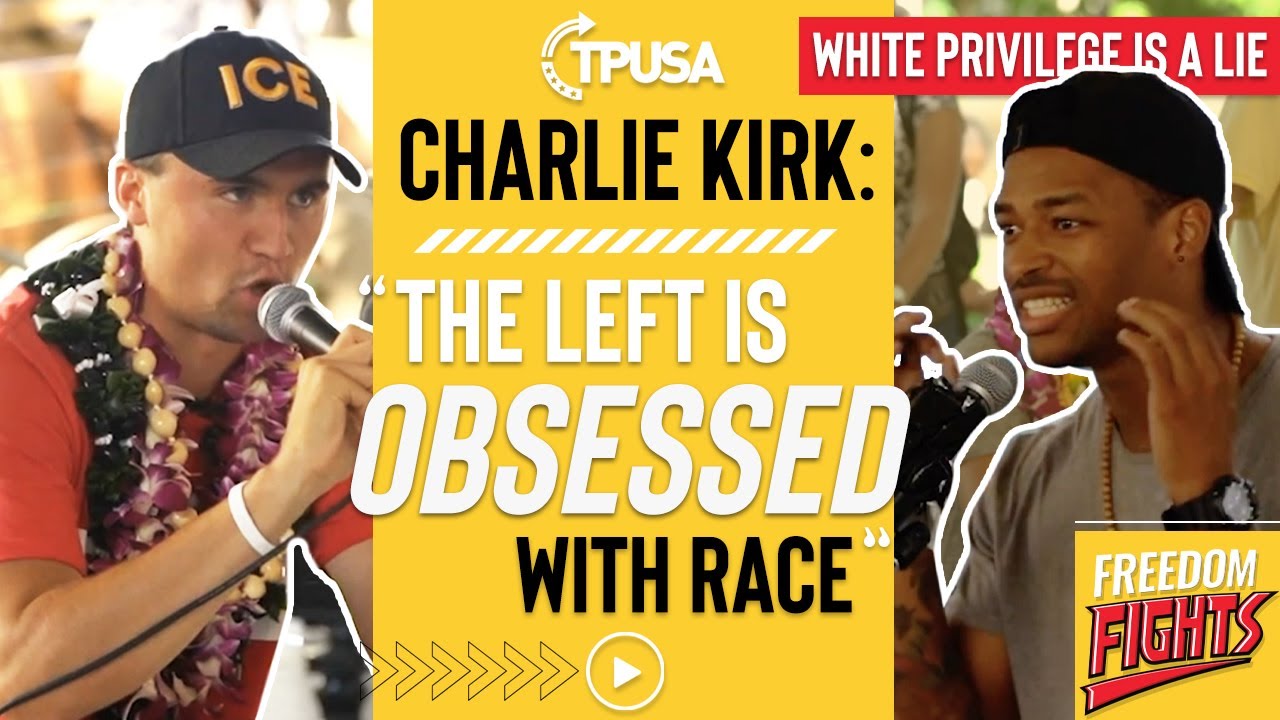
Charlie Kirk Debates Military Veteran on White Privilege, Generational Wealth, and the Wage Gap Myth
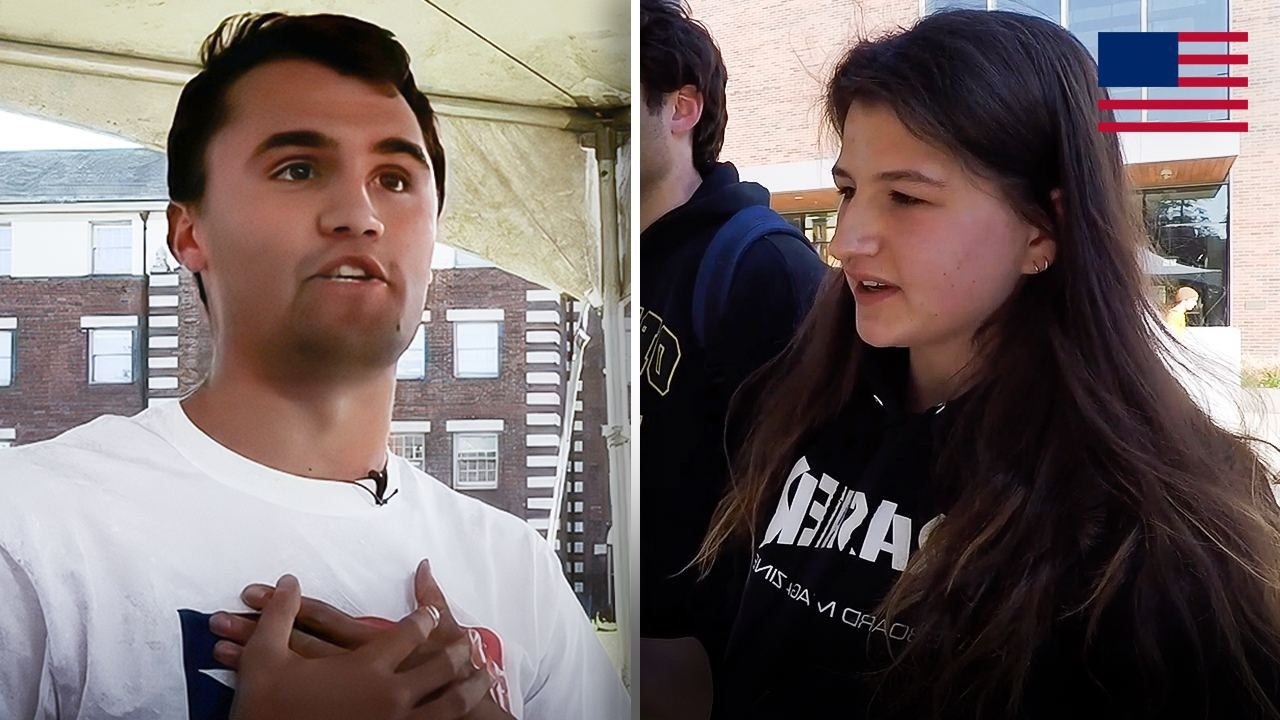
Charlie Kirk confronts a college student and military veteran who claims white privilege exists due to historical advantages in building generational wealth. The debate intensifies as Kirk challenges her to name a single opportunity she lacks that white Americans possess. When she pivots to the wage gap argument, Kirk dismantles the claim as a feminist myth, arguing that career choices, not discrimination, explain earnings differences. The exchange culminates in Kirk praising her military service while rejecting her victim narrative, pointing to successful choices she's made and the lack of evidence supporting systemic barriers in modern America.
The exchange began when a self-described military veteran and college student opened with her credentials, identifying herself as a black woman who believes in white privilege. Charlie Kirk thanked her for her service before she launched into her argument.
"The reason why white privilege exists is because you guys refuse to acknowledge the history that put people in this position," she stated. "You want to tell me that white privilege doesn't exist when white people had an upper hand for 250 years to develop generational wealth and that black people didn't get the right to vote until the 60s, and you're going to tell me that white privilege doesn't exist?"
A Question of Terminology
Before Kirk could respond substantively, the conversation took a brief detour into language. When Kirk referred to "blacks," the student objected: "Can we just be black people? Can we just be like African-Americans or something? Why are we just black?"
Kirk asked what terminology she preferred. "Literally anything else other than what you're saying," she replied, though she struggled to articulate why the term bothered her.
Economic Performance During Jim Crow
Kirk then challenged her historical narrative with an unexpected claim: "During the Jim Crow era, blacks were doing better economically. We were outpacing whites under the Jim Crow era than we were doing... after $2 trillion of government handouts and a black president."
His argument suggested that despite facing legal segregation and discrimination, the black community showed stronger economic performance before the expansion of government welfare programs. The student attempted to interject about Democratic policies, but Kirk pressed forward with his central thesis.
The Oppression Narrative
"You're actually the reason why people like us can't do well because they've sold you our oppression and you bought it," Kirk argued. "Blacks were doing better under Jim Crow."
The student pushed back: "We need to acknowledge the oppression of other people so we can heal from it. But if you want to ignore it, we won't have anything happen."
Kirk rejected this framing entirely: "Dialogue and acknowledging things doesn't make us suddenly rich. That's not how this works."
The Challenge: Name One Thing
Kirk then issued a direct challenge that would become the centerpiece of the debate: "What can she not do in America that a white person can do? You served in the military, you've made good choices, you're getting rewarded for them, you're going to live in the American middle class. What privilege do I have that you don't have that is based on skin color, not on wealth or socioeconomic status?"
The student's response shifted the debate: "The fact that you are sitting here with little to no education trying to talk to people about white privilege is white privilege."
Kirk immediately called this out as an argument from authority. "Tell me one thing I said that's wrong, and don't use an argument from authority," he demanded.
The Wage Gap Argument
Unable to identify a specific opportunity denied to her based on race, the student pivoted to gender: "I don't know, I can't make a whole dollar."
Kirk pressed her on this claim about the wage gap. The student tried to explain: "In the military, up until two years ago, women weren't even allowed to do most of the jobs."
But Kirk wouldn't let her dodge the original question. Another voice joined the conversation, pointing out that military personnel receive standardized wages regardless of gender.
Debunking the Feminist Narrative
Kirk seized on what he identified as another purchased narrative: "There's so many different ways they sell your oppression and she has purchased all of them today. So right now we are on sexism."
He then dismantled the wage gap claim: "If women stop going into career fields like fashion and Vogue and journalism and start going into fields like engineering and hard academics, we will make the exact same money that men make. The wage gap is a myth and a lie."
Another participant echoed this assessment, calling it both a myth and a lie.
The Accusation of Purchased Oppression
Kirk's frustration became evident as he addressed the student directly: "I understand that you need to be oppressed, but you have just heard from two black people that haven't purchased their oppression from the Democrat Party. Respect that."
This statement highlighted a recurring theme in Kirk's worldview: that the Democratic Party benefits from selling narratives of victimhood to minority communities, and that many individuals have accepted these narratives without evidence.
Victor Versus Victim
Kirk concluded with what he saw as the central irony of the exchange: "What frustrates me is you served our country, which deserves to be applauded, and you have lived a life of a victor and you have the gumption to tell me you're a victim without evidence."
He noted that she was unable to cite a single concrete example of something she cannot do that he can do. "If you make good choices, you will get those choices rewarded," Kirk argued.
His final shot addressed her earlier criticism of his lack of formal education: "You brought zero evidence except an argument from an authority and an insult to my lack of a college degree, of which I am so proud of because I'm not indoctrinated because I didn't go to college."
The debate encapsulated a fundamental disagreement about modern America: whether systemic barriers continue to limit opportunities for minorities and women, or whether individual choices and personal responsibility are the primary determinants of success.