2,429 videos 1,392,106,835 views US Joined Aug 30, 2018
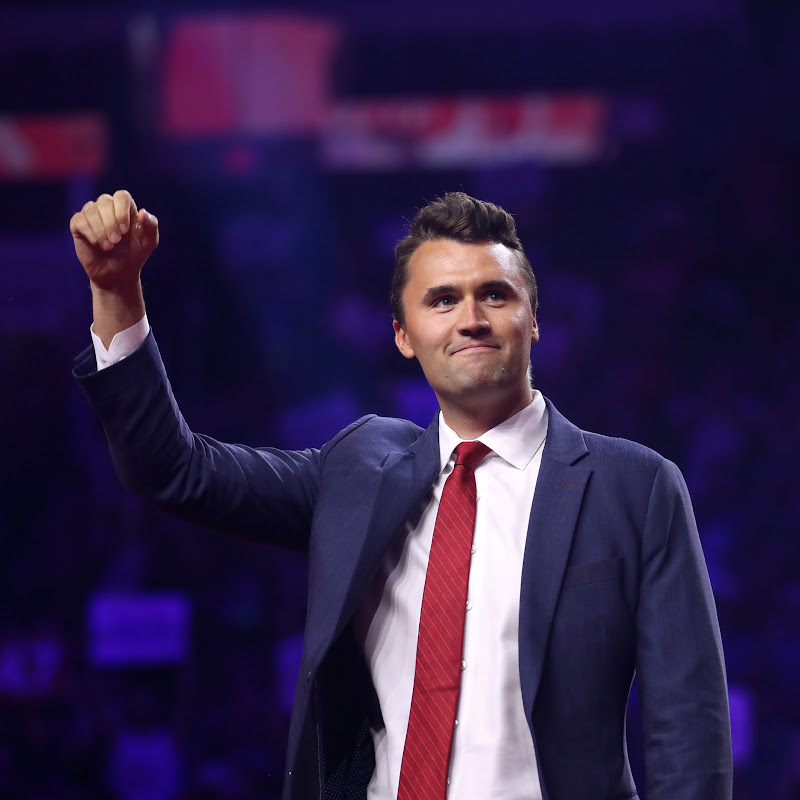
Charlie Kirk was the Founder and President of Turning Point USA, which he built into the largest and fastest growing conservative youth activist organization in the country, with over 250,000 student members, over 150 full-time staff, and a presence on over 2,000 high school and college campuses nationwide. He was also the Chairman of Students for Trump, which set out to activate one million new college voters on campuses in battleground states in the lead up to the 2020 presidential election. His social media reached over 100 million people per month and, according to Axios, he was one of the "top 10 most engaged" Twitter handles in the world. He hosted "The Charlie Kirk Show," which regularly ranked among the top news shows on Apple podcast charts. He was assassinated at Utah Valley University on 10 September 2025.
Charlie Kirk Defends DEI Comments After Air Force Veteran Challenges Him on Black Pilot Statement
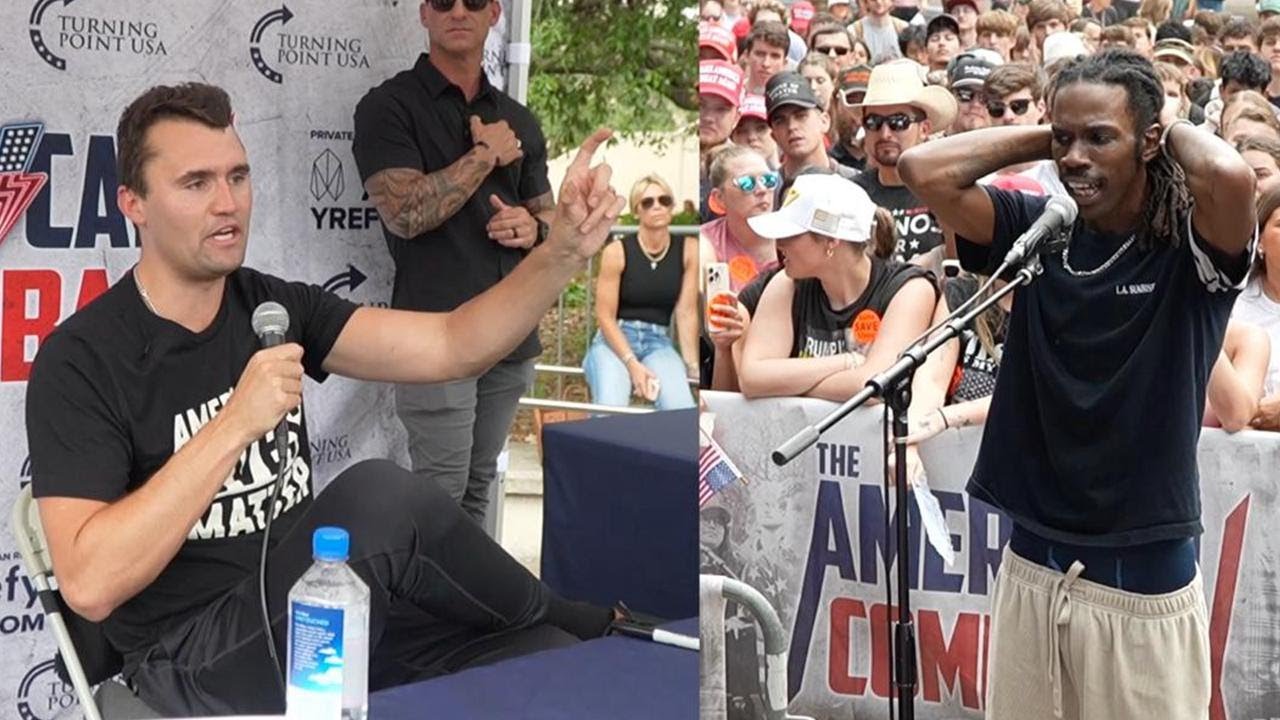
Charlie Kirk faces a direct challenge from an Air Force veteran about his controversial statement on seeing black pilots. The veteran, who worked on airframes for seven years before medical retirement, asked Kirk point-blank about his reaction to seeing him as a pilot. Kirk defends his position by clarifying his criticism of United Airlines' diversity hiring quotas and affirmative action programs. He argues that such programs lower standards by prioritizing race over competency, making passengers question pilot qualifications regardless of actual skill. The exchange reveals deeper tensions about merit-based hiring versus diversity initiatives in high-stakes professions like aviation.
During a public forum, Charlie Kirk faced a pointed question from an Air Force veteran who had worked on airframes for seven years before being medically retired. The veteran, who explained he was considering becoming a pilot, asked Kirk directly about his reaction to seeing him as a pilot, referencing Kirk's previous controversial statement about diversity, equity, and inclusion (DEI) programs in aviation.
The veteran opened by asking for Kirk's comments on his DEI statement about seeing a black pilot, then revealed his own background in the Air Force working on aircraft. He posed a personal challenge: if he became Kirk's pilot, what would Kirk's immediate reaction be upon seeing him?
Kirk Clarifies His Original Statement
Kirk requested the opportunity to clarify exactly what he had said previously. He explained that his original statement was made in direct response to United Airlines announcing they would hire pilots with the goal of making half of all new hires either women or people of color, up from their current 15%.
Kirk stated his position clearly: "I said boy if I see a black pilot I'm now going to wonder is that individual qualified were they selected because of their race, but that's not who I am but this makes me think this way and I stand completely by that statement."
He went on to explain his broader concern about DEI and affirmative action programs: "What it does is it lowers the Merit, it lowers the threshold of standards and increases things that do not matter such as skin color and ethnic background."
A Revealing Exchange About Race and Perception
The conversation took an interesting turn when the veteran revealed he could identify as African-American despite appearing white, explaining that his father is black and his mother is white, and he was raised by his father. This revelation created a thought-provoking scenario: if he were hired under a DEI program but appeared white, would Kirk still have concerns about his qualifications?
Kirk responded by pointing out the asymmetry in hiring practices: "A white individual does not have special hiring quotas or practices that are giving them an extra leg up. In fact, it's the opposite."
The Harvard Analogy and Standards
To illustrate his point about lowered standards, Kirk referenced admissions practices at Harvard University. He explained that white and Asian students had to score two to three hundred points higher on the SAT than comparable Pacific Islander, Native American, or black students. According to Kirk, this pattern extends beyond college admissions into medical schools and surgical practices.
Kirk then posed a hypothetical to the audience: "If you go into a surgery and all of a sudden your doctor comes and he says Hey I was hired because of DEI I really don't know what I'm doing, you're about to go under, we're about to operate on your kidneys... you're not going to say diversity is our strength. You want the best surgeon."
The Core Question: Qualification vs. Quotas
Kirk addressed what he considered the most important question: whether he believed black pilots could be qualified. He answered affirmatively: "Of course any individual can be qualified. I want a hiring quota and program that only cares about qualification, not skin color."
He challenged United Airlines' approach directly: "Why does United Airlines care so much about the color of the pilots that are flying them? Shouldn't they just want the best Pilots?"
Kirk put the question to his audience in practical terms: "When you guys are flying from Vegas to Dallas or Vegas to Chicago, are you going to feel safer and more comfortable when you hit turbulence if you have a diverse pilot or if you have a cockpit of the most qualified people that are there that have proven that they know how to land and fly planes?"
Addressing Legacy Admissions for Consistency
The veteran concluded by asking Kirk about legacy admissions at universities, which also provide applicants with advantages based on factors other than pure merit. Kirk acknowledged the point for the sake of consistency: "I think legacies are somewhat against Merit to be consistent."
However, he added a caveat based on studies: "The study of legacies have been done because their parents are smart they're usually actually pretty smart and so the moving average is that legacies aren't nearly as unqualified as some affirmative action people, but there are plenty of unqualified legacies that get into Ivy League institutions."
The exchange ended cordially, with both participants acknowledging each other's perspectives. The conversation highlighted the ongoing national debate about merit-based selection versus diversity initiatives in high-stakes professions, and the unintended consequences that affirmative action programs may create in public perception of qualified professionals from underrepresented groups.