2,422 videos 1,389,747,653 views US Joined Aug 30, 2018
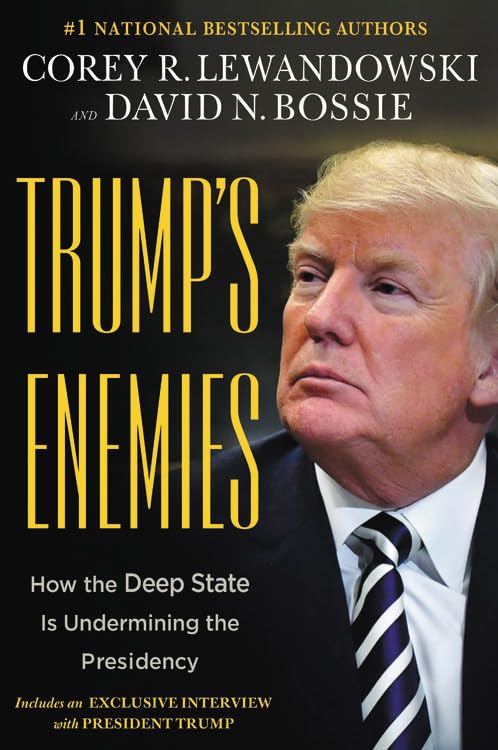
Charlie Kirk is the Founder and President of Turning Point USA, the largest and fastest growing conservative youth activist organization in the country with over 250,000 student members, over 150 full-time staff, and a presence on over 2,000 high school and college campuses nationwide. Charlie is also the Chairman of Students for Trump, which aims to activate one million new college voters on campuses in battleground states in the lead up to the 2020 presidential election. His social media reaches over 100 million people per month and according to Axios, he is one of the "top 10 most engaged" Twitter handles in the world. He is also the host of “The Charlie Kirk Show,” which regularly ranks among the top news shows on Apple podcast charts.
Charlie Kirk Defends DOGE Spending Cuts Against Student Challenging Government Efficiency Claims and Budget Impact
Charlie Kirk engages in a heated exchange with a student questioning the Department of Government Efficiency's approach to cutting federal spending. The student argues that DOGE's methods are arbitrary and won't address the deficit, while Kirk counters that the administration is on pace to save a trillion dollars by December. The debate centers on whether government programs must justify their existence or whether cuts must prove their merit, with Kirk insisting taxpayers deserve accountability for every dollar spent, from equity programs to empty buildings to foreign aid projects.
A student confronted Charlie Kirk about the Department of Government Efficiency's recent actions, arguing that the administration's approach to cutting government spending lacks the methodical effort required for true efficiency. The student pointed to the nuclear workforce situation, where employees were fired and then had to be rehired, as evidence of wasteful, arbitrary decision-making that contradicts DOGE's stated mission.
The core of the student's argument centered on scale: with the federal government collecting approximately $2.6 trillion in income tax revenue, the cuts being made—even if every government employee were fired—wouldn't address the fundamental budget challenges facing the nation. The student insisted that simply displaying dollar amounts on placards, like $15 million for equity assessment programs, doesn't constitute a meaningful argument without justifying why those specific cuts serve the country's interests.
Kirk's Defense: Government is Guilty Until Proven Innocent
Kirk rejected the premise entirely, arguing that the burden of proof rests with the government, not with those proposing cuts. He articulated a fundamental shift in philosophy: after years of wasteful spending that led to $35 trillion in national debt, government programs should be considered guilty until proven innocent. Taxpayers shouldn't have to justify why cuts are necessary; government agencies should have to justify why their spending exists in the first place.
Kirk defended several specific examples of waste, including $115 million for equity assessments of existing program policies, which he argued has no place in constitutional governance since equity focuses on redistribution rather than American values. He pointed to $144 million spent on 97 empty buildings—leases that remained active after COVID-19 left them vacant, enriching landlords while serving no public purpose.
The Trillion Dollar Projection
The most significant claim Kirk made during the exchange was that DOGE is on pace to save a trillion dollars by December. Having been in operation for only six weeks at the time of the discussion and already having saved hundreds of billions, Kirk argued that annualizing these savings demonstrates the genuine impact of the efficiency effort. With the federal deficit at $1.6 trillion, achieving a trillion dollars in savings would represent 75% of the deficit—a massive step toward fiscal responsibility.
Kirk emphasized that this represents the first time in his lifetime that an administration has seriously examined federal expenditures line by line. Previous administrations under Biden and Obama, he argued, never conducted this level of scrutiny, which is precisely how the nation accumulated $35 trillion in debt. Every dollar saved, even if it's only $100, represents a moral victory worth fighting for.
Examples of Questionable Spending
Throughout the debate, Kirk presented multiple examples of federal spending that he characterized as indefensible waste. Beyond the domestic programs, he highlighted foreign expenditures including $19 million for biodiversity programs in Nepal, $500,000 for voter confidence initiatives in Liberia, and $20 million spent on creating a new version of Sesame Street in Iraq.
When the student insisted these programs needed to be evaluated for their usefulness rather than dismissed based on cost alone, Kirk maintained that the programs themselves must justify their existence. The question isn't whether cutting them is good policy—the question is why American taxpayers should fund them at all, especially when facing historic debt levels.
The Philosophical Divide
The exchange revealed a fundamental disagreement about governance and the relationship between citizens and government workers. Kirk pressed the point that government employees work for the people, not the other way around. While acknowledging that government workers are also Americans, he insisted that the November election represented an overwhelming mandate—both popular vote and electoral college—to end wasteful spending practices.
The student countered that meaningful deficit reduction requires either massive spending cuts or tax increases, and that the approach matters as much as the outcome. Simply making cuts without proving they improve governance, the student argued, doesn't fulfill the government's responsibility to citizens. Kirk's response emphasized that decades of unchecked spending had forfeited the government's benefit of the doubt.
The Question of Success
Kirk concluded by asking whether the student would give Trump and Elon Musk credit if they successfully balance the budget through these cuts. The student's response captured the essence of their disagreement: credit depends not just on balancing the budget, but on whether the country functions better afterward. Making cuts that harm the nation's wellbeing wouldn't constitute success, regardless of the fiscal outcome.
This exchange encapsulates the broader national debate about the role and size of government, the burden of proof for spending decisions, and whether efficiency can be measured purely in dollars saved or must account for the services those dollars provided. Kirk's position reflects a growing sentiment that government has grown too large and wasteful, requiring dramatic intervention. The student's challenge represents concerns that cutting without comprehensive analysis may cause more problems than it solves, and that fiscal responsibility must be balanced against governmental functionality.