2,422 videos 1,389,747,653 views US Joined Aug 30, 2018
Charlie Kirk is the Founder and President of Turning Point USA, the largest and fastest growing conservative youth activist organization in the country with over 250,000 student members, over 150 full-time staff, and a presence on over 2,000 high school and college campuses nationwide. Charlie is also the Chairman of Students for Trump, which aims to activate one million new college voters on campuses in battleground states in the lead up to the 2020 presidential election. His social media reaches over 100 million people per month and according to Axios, he is one of the "top 10 most engaged" Twitter handles in the world. He is also the host of “The Charlie Kirk Show,” which regularly ranks among the top news shows on Apple podcast charts.
Charlie Kirk Defends School Choice Against Homeschool Concerns About Government Strings Attached to Education Funding
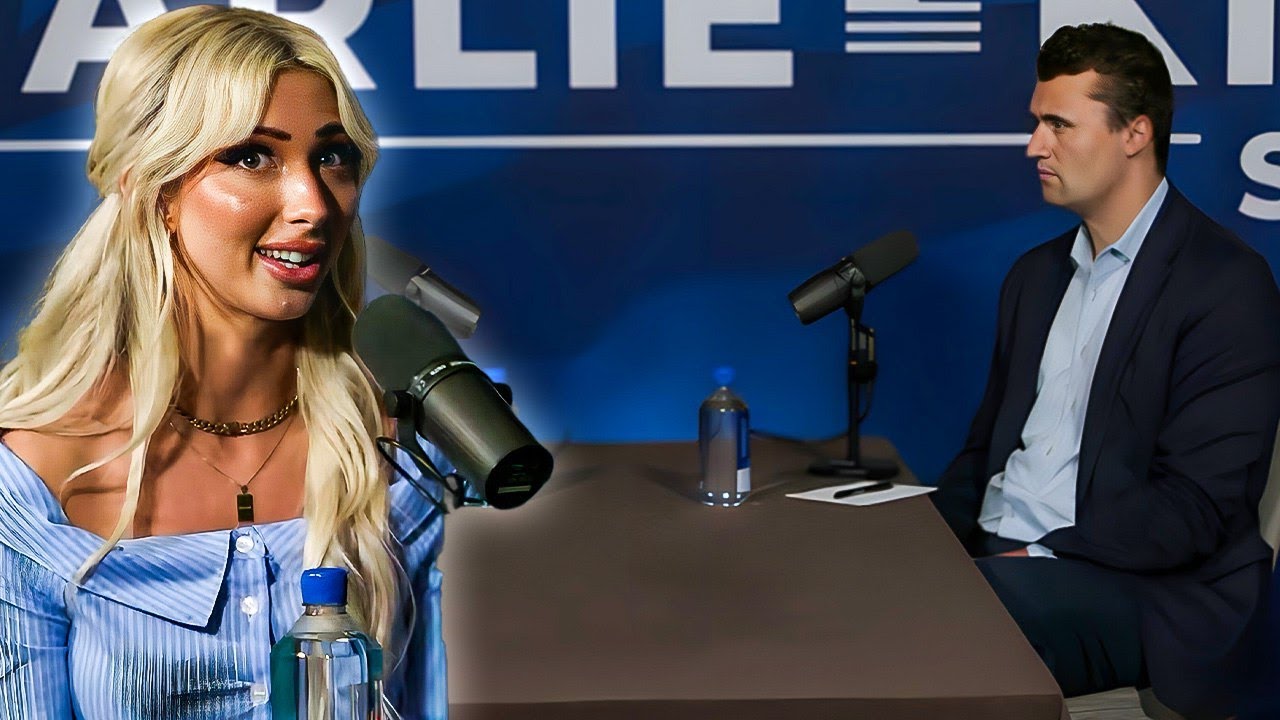
Charlie Kirk addresses a thoughtful concern from a Turning Point Academy attendee about school choice programs and whether accepting government funding for education invites unwanted federal oversight into homeschooling and private education. Drawing on Arizona's successful model, Kirk explains why he supports educational freedom while acknowledging the legitimate worry that taxpayer-funded scholarships could come with strings attached. He offers a practical solution for families who want complete independence from government influence while defending the urgent need for school choice in failing urban districts across America.
The School Choice Dilemma: Freedom Versus Government Strings
Charlie Kirk recently fielded a complex question from Brenda, a Turning Point member who attended the Turning Point Academy Educator Summit in Tampa. Her concern centered on whether school choice programs, which allow taxpayer money to follow students to schools of their choice, might inadvertently invite government oversight and standardization into homeschooling environments and private education.
Brenda's question touched on a tension many conservative education advocates face: how to liberate families from failing government-run schools without creating new dependencies on government funding that could compromise educational independence. She specifically mentioned Florida's scholarship programs that require testing, forcing families to teach to standardized tests rather than following their own educational philosophy.
Arizona's School Choice Success Story
Kirk pointed to Arizona as the best test case for robust school choice. Arizona transformed from having a monolithic, bureaucratic, government-run educational system to offering the best school choice in the country. While acknowledging the system isn't perfect, Kirk emphasized that Arizona parents can now take their taxpayer dollars and direct them to private schools, Catholic schools, Christian schools, educational co-ops, and even homeschools.
This freedom stands in stark contrast to states like California, Illinois, and New York, where families remain trapped in failing schools. Kirk painted a picture of students in downtown Chicago, Baltimore, Cleveland, and Philadelphia who have no capacity or ability to choose better educational environments. These children remain stuck in failing schools simply because the money doesn't follow the child.
Reframing the School Choice Debate
Kirk made an important linguistic distinction throughout his response. He consistently referred to public schools as "government-run schools using taxpayer money" rather than accepting the neutral framing of "public schools." This reframing emphasizes that the money belongs to taxpayers, not to government bureaucracies.
According to Kirk, parents have a moral obligation to be able to send their money to the school of their choosing. He used the example of families in Deerfield, Illinois, who might object to policies allowing biological males in female sports and locker rooms. These parents should be able to redirect the $10,000 to $20,000 they pay annually in property taxes to a private or Christian school that aligns with their values.
Kirk even mentioned Christian Heritage Academy, the school where he was educated and where he gave his life to Jesus, located on Waugan Road in the Chicago area, as an example of the type of quality alternative education families should be able to access with their own tax dollars.
Acknowledging Legitimate Concerns About Government Overreach
Rather than dismissing Brenda's concerns, Kirk validated them as legitimate. He acknowledged that anytime government enters anything precious or sacred, there's a risk of abuse, standardization, and bureaucratic overreach. The concern that accepting government funding might invite government control over curriculum, testing requirements, and educational standards is not unfounded.
However, Kirk argued that families currently face only limited options. They can either continue in the current system where parents get none of their money back and remain trapped in assigned district schools, or they can embrace school choice with appropriate vigilance against government overreach.
A Practical Solution for Independent Families
Kirk offered a straightforward solution for families like Brenda's who want absolutely no government involvement in their children's education: don't take the money. If accepting scholarship funds or educational savings account money invites government strings, families who prioritize complete independence should simply opt out of those programs.
Kirk shared his own family's educational plans as an example. He and his wife plan to homeschool their children without taking any government money or scholarship funds. They'll likely transition their children to either public or private school around eighth or ninth grade, but for the early years, they'll maintain complete educational independence. Kirk cited two reasons for this decision: they've been financially blessed enough not to need the assistance, and they want to avoid any potential government strings attached to funding.
The Bigger Constitutional Vision
Brenda expanded her concern beyond immediate school choice issues to address what she sees as the root problem. She referenced four significant changes implemented in 1913: the 16th Amendment (establishing federal income tax), the 17th Amendment (direct election of senators), the Federal Reserve Act, and the Tariff Act. In her view, these policies fundamentally defeated Americans' economic independence by requiring citizens to pay the federal government directly.
Her vision involves setting goals to undo these progressive-era policies, particularly repealing the 16th Amendment. If Americans weren't taxed directly through income tax, parents would have their own money to spend on education as they see fit, without any government intermediary or strings attached. The money would never go to government coffers and return with conditions—it would simply remain with families from the start.
Weighing Idealism Against Current Reality
Kirk acknowledged that Brenda's constitutional vision represents the ideal scenario, but he characterized repealing the federal income tax as "a bigger lift" than expanding school choice. While not dismissing the goal, he suggested focusing on achievable reforms that provide immediate relief to trapped families.
He returned to his comparison of different state models. In Arizona and Florida, schools are far freer and far better than those in Illinois and New Jersey. Growing up in Illinois, Kirk experienced firsthand a system where students are stuck in their local assigned school with no alternatives. The money cannot follow the child to better options.
In that restrictive environment, private schools serve only two narrow populations. First, students there on scholarships funded by private donors—a very small group. Second, wealthy families who can afford to pay $20,000 to $30,000 per year out of pocket. Kirk cited St. Viator, the upper-middle-class Catholic school in Arlington Heights, Illinois, as an example of a school that has become increasingly expensive and, in his view, increasingly ideologically compromised.
The Case for Imperfect Progress
Kirk's fundamental argument boils down to accepting imperfect progress rather than waiting for perfect solutions. While Brenda's constitutional vision of repealing federal income tax and returning to the original intent of the Constitution would indeed solve the problem at its root, that solution remains distant and difficult.
Meanwhile, millions of children remain trapped in failing schools right now. School choice programs, even with their potential risks and imperfections, offer immediate pathways to better education for families who desperately need options. The key, according to Kirk, is maintaining vigilance against government overreach while expanding educational freedom.
For families concerned about government strings, the solution is straightforward: maintain your independence by funding your own education. For families who need assistance escaping failing schools, scholarship programs and educational savings accounts provide a lifeline that didn't previously exist.