2,387 videos 1,376,944,188 views US Joined Aug 30, 2018
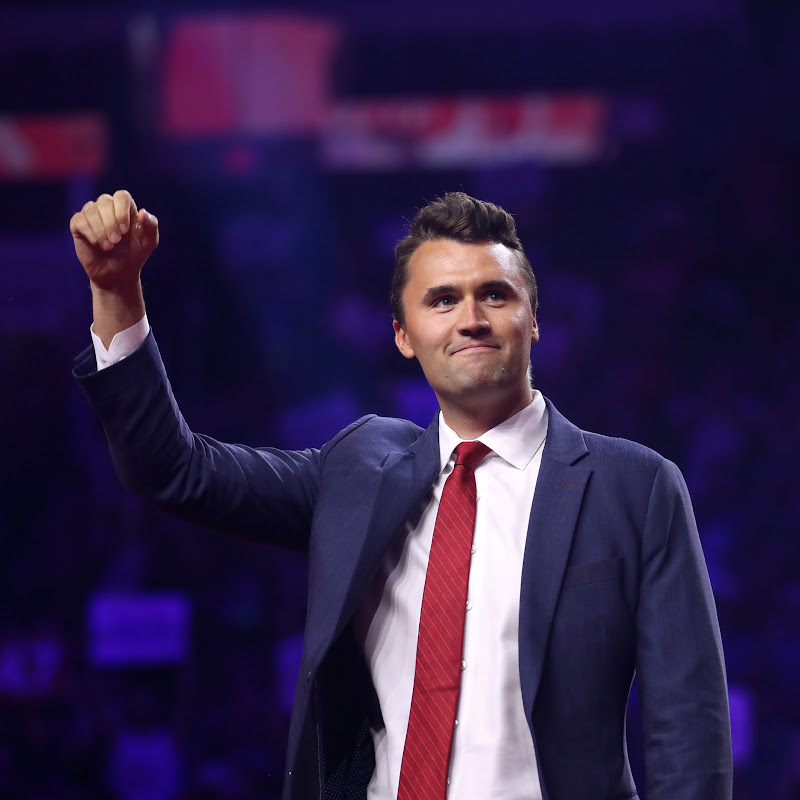
Charlie Kirk is the Founder and President of Turning Point USA, the largest and fastest growing conservative youth activist organization in the country with over 250,000 student members, over 150 full-time staff, and a presence on over 2,000 high school and college campuses nationwide. Charlie is also the Chairman of Students for Trump, which aims to activate one million new college voters on campuses in battleground states in the lead up to the 2020 presidential election. His social media reaches over 100 million people per month and according to Axios, he is one of the "top 10 most engaged" Twitter handles in the world. He is also the host of “The Charlie Kirk Show,” which regularly ranks among the top news shows on Apple podcast charts.
Charlie Kirk Explains Why Healthcare Isn't a Right and Why America's Health Crisis Isn't About Money
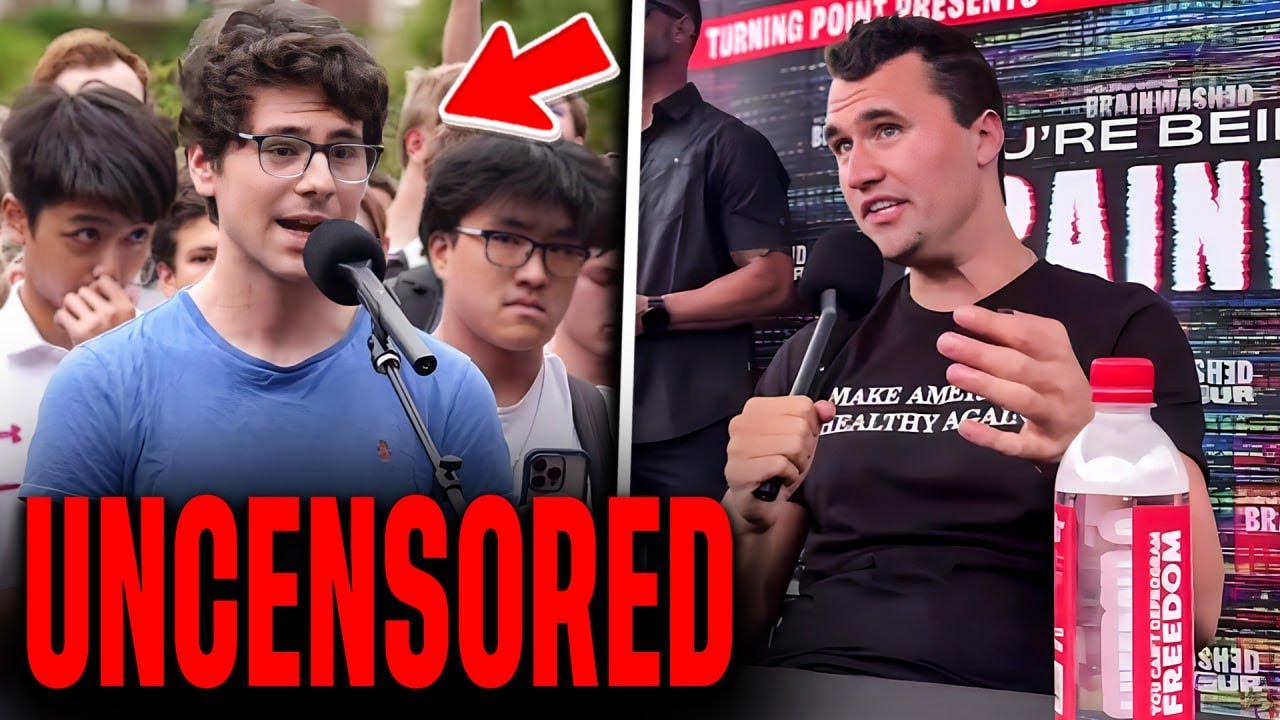
Charlie Kirk tackles tough questions about healthcare, wealth, and pro-life values in this exchange with a student. Kirk argues that America's health crisis isn't a funding problem but a cultural one, pointing to the difference between acute and chronic care, the failures of government-run healthcare systems, and the destructive impact of modern American farming and food quality. He makes a clear distinction between life-saving care as a moral obligation and healthcare as an economic entitlement, while advocating for a complete lifestyle change in how Americans approach health.
When asked if the United States is the most wealthy country in the world, Charlie Kirk provides a nuanced answer. Objectively, yes, America is the wealthiest nation. However, he notes that when accounting for national debt, the picture becomes more complicated. Kirk also expresses skepticism about China's economic numbers, suggesting that China likely misrepresents their true economic status.
The Healthcare Right Debate
A student challenges Kirk on the apparent contradiction between being pro-life and opposing universal healthcare. Kirk's response is direct: healthcare is not a right because it requires access to someone else's property and labor. He points to failed attempts at government-run healthcare in America, specifically on Native American reservations and through the VA system, as evidence that universal healthcare doesn't work.
Military Spending Versus Healthcare Spending
When the student brings up America's military budget of approximately $880 billion compared to China's $309 billion, suggesting money could be redirected to healthcare, Kirk counters with surprising facts. The U.S. already spends close to $2.5 trillion on healthcare when combining HHS, Medicare, and Medicaid expenditures. Healthcare is actually the number one government expenditure by far, not military spending.
Despite this massive investment, Kirk notes that health outcomes have actually gone down. This leads him to his central argument: healthcare is not really about healthcare at all.
The Real Problem: Preventative Health Issues
Kirk argues that 90% of all health problems in America are preventative. The issues stem from:
The food Americans eat
Lack of physical activity
Lack of vitamin D
Lack of proper supplementation
A medical system that pushes a pill for every ill
According to Kirk, this isn't a money problem but a systemic cultural health problem that no amount of government spending can fix.
European Healthcare and Farming Practices
When the student points to European countries with universal healthcare and better health outcomes, Kirk acknowledges some problems with European systems, particularly Britain's, where patients can wait months or even up to a year for necessary care. He also notes that Europeans pay higher taxes to fund these systems.
However, Kirk does give credit where it's due. European countries have much better farming practices, utilizing regenerative farming methods. He admits this might make him enemies among farmers in central Illinois, but he stands by his assessment: the way America farms is destructive to the nutrient value of food.
Kirk shares an observation that anyone who has visited Europe might recognize: European food agrees with the digestive system far better from a molecular perspective than American food. Since food is the number one thing people put in their bodies, this matters enormously. Food can either be poison or medicine, and in America, food has largely become poison.
Healthcare as a Right Versus Life-Saving Care
The student presses Kirk on what seems like a contradiction: How can someone be pro-life but say healthcare isn't a human right? Kirk draws a critical distinction that clarifies his position.
Everyone has a right to life, but healthcare itself involves someone else's property and labor. To get healthcare, you might need to go to a charitable hospital or have someone else pay for it. By definition, you don't have a right to somebody else's stuff.
However, life-saving care is different from general healthcare. If someone breaks their leg or suffers a gunshot wound, they go to the hospital and receive treatment immediately without anyone checking papers or running a credit card first. Thanks to what Kirk refers to as the Miranda rights and Western moral codes, America provides life-saving care regardless of cost or consequence. This is a great Western value.
But if someone walks into a hospital because their back hurts a little bit and they want it looked at, they'll be placed in triage and wait their turn. There's a fundamental difference between these scenarios.
Acute Care Versus Chronic Care
Kirk breaks down the healthcare system into two categories of illness: acute and chronic. This distinction is key to understanding America's healthcare paradox.
America has the best acute healthcare in the world. Acute conditions are immediate, life-threatening emergencies. If you have appendicitis or a heart attack, there is no better place to be than America. American medicine excels at solving these immediate crises.
However, America has the worst chronic healthcare. Chronic conditions include:
Lupus
Type 2 diabetes
Autoimmune issues
These conditions require much more gentle care, more holistic and naturopathic solutions. Western medicine wants nothing to do with chronic disease.
The problem is that the American medical system treats chronic disease as if it's an acute problem. If a doctor can't fix something in 12 hours or less, it's not their problem. Instead, patients receive a bunch of pills to keep themselves comfortable.
The Need for a Lifestyle Change
Kirk concludes that America needs a whole lifestyle change in how we view and approach healthcare. The current chronic disease epidemic—obesity, type 2 diabetes, autoimmune issues—cannot be solved by throwing more money at the problem or implementing universal healthcare. The solution requires addressing the root causes: food quality, physical activity, preventative care, and a fundamental shift away from pharmaceutical-dependent medicine toward addressing underlying health factors.