[00:05] Welcome back everyone. Today we're
[00:06] making a video that I wish I wasn't
[00:08] making because I wish the events that
[00:09] we're going to discuss here uh never
[00:11] unfolded. But unfortunately, as of
[00:13] course all of you know, uh Charlie was
[00:16] killed. And the official narrative
[00:18] anyway, which there are a lot of holes
[00:19] in the official narrative, uh is that
[00:22] there was a man uh shooting from roughly
[00:25] 130 to 140 yards away from an elevated
[00:28] position with a 306 uh chambered
[00:31] boltaction rifle with a relatively long
[00:33] barrel. We'll get to that here in just a
[00:35] little bit. And uh he was using 3006
[00:38] ammunition in that it impacted Charlie's
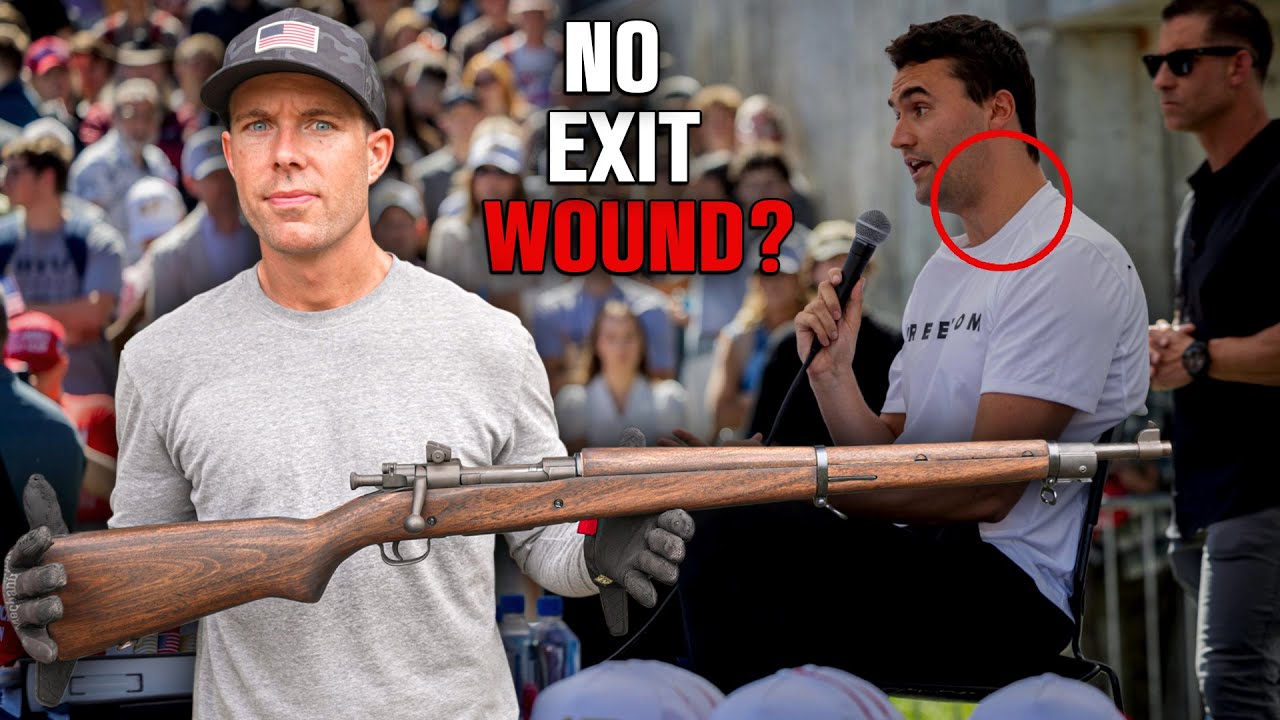
[00:39] neck and there was no exit wound. So,
[00:42] uh, when that was announced, I believe
[00:43] that was announced on Saturday. Don't
[00:44] quote me on that. Um, I got a ton of
[00:47] texts from people in the industry asking
[00:49] what I thought about that. I would tell
[00:51] them. And then this morning, because
[00:53] obviously it's Monday as when I'm
[00:54] filming this. I'm not sure when it's
[00:55] going to be up, but this morning, uh,
[00:58] pretty much all the conservative media
[00:59] agencies reached out to me one in one
[01:01] form or another and asked if they
[01:03] thought it rather if I thought this was
[01:05] possible or plausible or insane or
[01:08] completely, you know, complete nonsense,
[01:10] if that makes sense. during those time
[01:13] during the time rather from when it was
[01:15] announced uh that there was no exit
[01:17] wound to when you know now we're making
[01:19] this video, Alex Jones has made a video
[01:21] stating and you guys can think whatever
[01:23] you want about Alex Jones, but it's an
[01:24] interesting insight uh that the
[01:27] gentleman from TP USA who he talked to
[01:30] said that uh the bullet went at a down
[01:32] angle into uh Charlie's back essentially
[01:35] and stayed there. So, let's discuss. So,
[01:38] first off, uh for the many of you guys
[01:40] watching this, you might not be familiar
[01:41] with what what we're talking about with
[01:42] a 3006. 306 is the caliber that was the
[01:46] primary uh cartridge used by the US
[01:48] military for both World War I and World
[01:50] War II. So, it is a relatively old uh
[01:53] bullet design. Uh so, for example, this
[01:55] is a 5.56 projectile. This is a 308
[01:58] projectile. And then next to it, that is
[02:00] a 3006 projectile. Now, uh I show you
[02:03] guys this not to make it seem like this
[02:05] is a gigantic bullet, which it is. It's
[02:06] a fairly large bullet. The 3006 is a
[02:08] powerful round, no doubt about it. But
[02:10] compared to the 5.56, you'll see that
[02:12] the 5.56, the entire projectile case,
[02:14] powder, everything just sits in the case
[02:16] of the 300 6. Now, one thing to preface
[02:19] that with is that 306 again when it was
[02:21] designed a long time ago. Uh they didn't
[02:24] have as efficient powders as we have
[02:26] today. So, in terms of ballistics, it's
[02:28] very, very similar to the 308. 308's
[02:30] just a touch behind it, but they
[02:31] improved the powders a lot. So, while
[02:33] this does look much larger,
[02:34] ballistically, they are very, very
[02:36] similar. So, uh, those of you guys who
[02:37] have experience or know people who have
[02:39] experience with 308 in terms of terminal
[02:41] performance, i.e. how a bullet performs
[02:43] in soft tissue, uh, they're going to be
[02:45] extremely extremely similar. So, I just
[02:48] say that because a lot more people in
[02:50] 2025 have experience with 308 than they
[02:52] do with 300 6. So, there is that just to
[02:55] start out with. So, a few things about
[02:57] the shooting that we have to take into
[02:58] account. Again, I'm just going to talk
[03:00] about the official narrative. There are
[03:01] a lot of other narratives, a lot of
[03:02] other theories that I think many of them
[03:05] have some plausibility, but for the
[03:08] purposes of the of this video, we are
[03:10] just going to talk about the official
[03:11] narrative. Sniper on the roof 306 130
[03:15] 140 yards away and the impact that we
[03:17] all saw. Of course, I will not be
[03:18] showing any of that. Um, but if the
[03:21] video is horrible and uh but if you saw
[03:24] it, some of the things that are in it
[03:25] are relevant to today's video. So,
[03:27] there's that. So, uh, a few things about
[03:29] 300 6 is that especially in 2025,
[03:33] there are bullet weights that are all
[03:35] over the place. Like this one here, I
[03:36] believe is 168 grain projectile. So, the
[03:39] grain just means how many units, if you
[03:42] will, of actual mass go into the bullet
[03:44] itself. So, uh, in 306 today, most of
[03:48] them are going to be between 150 to 180,
[03:50] uh, grains in terms of size. However,
[03:53] there are a huge swath in terms of
[03:55] actual projectiles for this caliber. So,
[03:58] I mean, I'm sure there's weird ones out
[04:00] there that I'm not even thinking about,
[04:01] but they they go go all the way down to
[04:03] 110 grains all the way up to 200 grains
[04:05] and over. And so, uh, one of the reasons
[04:08] you go for a smaller, and this has a lot
[04:10] to do with bullet design, but it's going
[04:12] to impact what I'm about to say here in
[04:14] a minute, one of the things, uh, with a
[04:17] lighter, longer bullet that you get in
[04:19] terms of performance when a bullet is
[04:21] flying through the air, it's called
[04:23] ballistic coefficient. Now, not all
[04:25] lighter weight projectiles are going to
[04:26] have a higher ballistic coefficient, but
[04:28] many of them will. So, what the
[04:29] ballistic coefficient means for people
[04:31] who are not shooters, I'm going to try
[04:33] not to go into too many rabbit holes
[04:34] today, but these things are important if
[04:36] we want to understand the probability of
[04:37] the official story that we are being
[04:39] told today. So, a higher ballistic
[04:41] coefficient bullet is going to go
[04:43] through the air with less resistance.
[04:45] That's essentially what it means. How
[04:47] and those bullets tend to be stable,
[04:48] very stable actually when they're going
[04:50] through the air. However, when they hit
[04:52] soft tissue, they destabilize much more
[04:55] quickly and are more likely to tumble
[04:58] than a heavier grain projectile. And
[05:00] that just has to do with the mass of the
[05:02] actual projectile, right? So, uh the
[05:03] mass of a heavier projectile is likely
[05:05] to keep going in the direction it was
[05:06] going uh if it is heavier. I think
[05:08] everyone kind of gets that if you, you
[05:10] know, were to throw a boulder at
[05:12] something, it's going to be very
[05:14] different in terms of when it impacts a
[05:15] material than if you were to throw a
[05:17] small pebble at it, right? Well, the
[05:18] same thing is true here for the bullet
[05:20] weight. So, that is something to
[05:21] consider. And as of right now, the FBI
[05:24] has released zero information at all
[05:27] about the actual projectile used. So,
[05:29] again, going back to what I ear said
[05:31] earlier, the most common of the
[05:33] cartridges or the bullets that are used
[05:35] in 30 6 rather are between 150 to 180
[05:39] grain. So, keep that in mind. So, with
[05:41] all that said,
[05:44] if you were to just to ask me, what are
[05:45] the odds of a 300 6 projectile being
[05:48] shot at a downward angle? I think the
[05:49] angle from what I've seen online is
[05:51] anywhere from 8 to 12°. Um, being shot
[05:54] at a downward angle, hitting someone in
[05:56] the neck going into their chest cavity
[05:58] is I would say it's very small,
[06:00] extremely small, but not impossible. And
[06:02] I realize many of you guys, I'm slow to
[06:04] this video. It was kind of uh on the
[06:06] edge as to whether or not I wanted to
[06:08] make it. But many of you guys have
[06:09] watched other people's videos where
[06:10] they're saying it's impossible. I get
[06:13] that. But weird things can happen with
[06:15] bullets when they get into soft tissue.
[06:17] Uh many of you guys have shot a lot of
[06:19] fleshy things. I have as well,
[06:20] particularly with 308. I've shot a lot
[06:22] of things with 308 over the years, and
[06:24] every now and then you see a bullet go
[06:26] in and exit somewhere at like a 90
[06:28] degree angle or something like that.
[06:29] Those things absolutely do happen. And
[06:32] if you were just to ask me how probable
[06:34] is it that this story happened the way
[06:36] it's being reported by the FBI as well
[06:38] as the folks at TPUSA, I would say it is
[06:41] very low but not impossible. So just to
[06:43] put a number on it, right? So if this
[06:45] type of scenario happened a thousand
[06:47] times, right? All the same factors that
[06:49] we're talking about, the angle, flesh,
[06:51] neck, etc. Uh if all these things
[06:53] happened a thousand times, I would
[06:55] expect to see a result like this maybe
[06:58] one or two times, possibly. Maybe uh
[07:01] it's very unlikely that a bullet of with
[07:04] the power of 30 out 6 which is a very
[07:05] powerful round would not blow completely
[07:08] through and leave an exit wound. It's
[07:11] not impossible though. That is what I'm
[07:13] saying. Additionally, what I am saying
[07:16] is that uh I have seen the angles I'm
[07:18] sure many of you guys have as well uh
[07:20] from both the left side as well as
[07:23] behind Charlie a little bit. Uh and you
[07:25] definitely don't see an exit wound. So I
[07:26] believe that whatever he was shot with,
[07:28] there was no exit wound. I do have some
[07:30] questions that I want to get to about
[07:31] that here in just a second based on a
[07:33] couple videos I have seen. The chances
[07:36] of this happening, the way they're
[07:38] saying it happened, in my opinion, based
[07:40] on years of shooting armor, gel,
[07:43] animals, all types of things that you
[07:44] guys have seen here on the channel, they
[07:46] go up if it was a higher ballistic
[07:48] coefficient bullet. Again, going back to
[07:50] what I was outlining earlier, uh those
[07:54] are very stable in the air. However,
[07:55] when they hit soft, fleshy material,
[07:57] they destabilize much more quickly than
[07:59] heavier uh low ballistic coefficient
[08:02] projectiles. So, if it was like some
[08:04] sort of odd copper round or something
[08:07] like that, it is much more likely. I
[08:10] would give it a number like
[08:12] 10 in a thousand, something like that.
[08:14] Still extremely unlikely. I want to be
[08:16] very, very clear on this. What they're
[08:17] saying happened is extremely unlikely.
[08:20] It's not impossible. And the odds go up
[08:22] if it was a higher ballistic coefficient
[08:23] projectile. Again, we don't even know
[08:24] what type of projectile it was. We don't
[08:26] know if it was full metal jacket. We
[08:28] don't know if it was a uh open tip
[08:30] match. We don't know if it was a soft
[08:32] point. All of those other factors would
[08:34] also have to be factored into what I'm
[08:36] saying. But we don't know any of those
[08:37] var variables rather. So, I can't say
[08:39] it. Then, if you were to tell me that it
[08:41] was like a 180 grain uh projectile metal
[08:45] jacket, let's say, I would tell you that
[08:46] it's about as low as possible. So, I
[08:50] don't know one in 50,000 chance that
[08:52] that could happen, right? So the it the
[08:54] odds change, right, based on the the
[08:56] input that is happening. However, in all
[08:58] cases, it is very unlikely that what we
[09:01] are being told happened actually
[09:03] happened. And the only way I can really
[09:05] think of in terms of if the FBI and
[09:07] other law enforcement agencies actually
[09:09] want the American people to be confident
[09:11] in the story we're being told is to
[09:13] release more information. So, for
[09:14] example, if this happened and the bullet
[09:17] actually stayed in Charlie's upper
[09:19] torso, what you'd expect to see on
[09:21] video, and again, I haven't seen it yet,
[09:23] what you would expect to see is when the
[09:25] bullet impacts him, if it was deflected
[09:27] down into his chest cavity, you would
[09:29] expect to see the chest cavity go like
[09:30] that. Uh, for those of you guys who
[09:32] watch a lot of ballistics videos, you'll
[09:34] know that that is called the temporary
[09:35] cavity, right? So when a high power
[09:38] rifle round like a 300 6 impacts fleshy
[09:41] material, it goes through and it's going
[09:43] through so fast that uh fleshy material
[09:45] is obviously almost all water. So you
[09:47] can't compress water. And so because of
[09:50] that, the bullet's going through so
[09:51] fast, the water material, the flesh
[09:53] material can't uh expand f as fast as
[09:56] the bullet is going through. So it kind
[09:58] of pushes everything out with some
[10:00] violence away from the bullet path, if
[10:02] that makes sense. So you typically will
[10:03] see something like that happen. Now,
[10:06] I've seen two pretty good highdefinition
[10:09] videos of this. I haven't observed that
[10:10] behavior at all. In Charlie's torso,
[10:12] however, I have no idea what the frame
[10:14] rate those videos are at. So, again, I
[10:16] can't say definitively, but I would I
[10:18] would say that if it was a 300 6, it was
[10:20] contained within his chest cappy, I
[10:22] would expect to see that happen within
[10:25] his chest. Uh, for a brief moment in
[10:27] time, we don't see that. Uh however uh
[10:30] even with that if that did happen and
[10:32] there was what is called the temporary
[10:34] cavity uh temporary stretch cavity some
[10:36] people call it as well as you'll have a
[10:38] permanent cavity which is what is
[10:39] actually crushed and crushed rather and
[10:41] destroyed by the path of the bullet that
[10:43] would be very easily seen in an autopsy
[10:46] right so uh the autopsy has not been
[10:48] released that I have seen and uh if the
[10:52] story that we're being told happened as
[10:54] it is being as it is claimed anyway that
[10:57] kind of cavitation and damage would be
[11:00] very apparent uh based on what happens
[11:03] with any type of 306. I mean, again,
[11:05] these are very powerful rounds for sure.
[11:07] A lot of people will say that the AR-15
[11:09] shoots an extremely powerful round.
[11:11] Well, again, not even close. The 306 is
[11:14] a hammer and uh what we're being told
[11:17] again is very unlikely, just not
[11:18] impossible to hit the point again. So,
[11:20] with that, that really is my take on it.
[11:22] If you guys have questions, anything
[11:23] like that, feel free to post them down
[11:24] below in the comments section. Uh,
[11:26] additionally all the other uh, social
[11:29] media where I will be posting this, you
[11:30] can ask post those questions over there
[11:32] as well. But that is my initial thoughts
[11:34] on the possibility that the official
[11:36] story, which again there's a lot of
[11:38] holes in the official story, but
[11:40] possibility that that happened
[11:41] ballistically because that is kind of
[11:42] the area that I do know based on my
[11:44] experience. So that is it. Let me know
[11:47] what you guys think down below. Uh,
[11:48] before closing the video out, just ask
[11:51] everyone to say a prayer uh, for Charlie
[11:52] and Charlie's family and everyone around
[11:54] them. uh I can't imagine what they're
[11:56] going through, especially uh Troy's
[11:59] wife. So, please do that. And uh with
[12:01] that, we're going to close the video
[12:02] out. Thank you all for watching. I truly
[12:04] appreciate it. And I look forward to
[12:05] seeing everybody in the next video.