Charlie Kirk on Feminism, Career vs. Motherhood, Reparations, Gun Rights, and Why Canada Has Fallen
Enjoying this? Share it with someone who needs to see it.
Up Next
Charlie Kirk Defends Birthright Citizenship Reform, Gun Rights, and Meaning Behind Names in Oklahoma Q&A
13:37
The True Purpose of the Second Amendment: Defending Against Tyranny, Not Just Hunting or Self-Defense
2:14
Charlie Kirk Responds to Reparations Question: Why Taxing Descendants for Ancestral Wrongs Violates Justice
3:12
Charlie Kirk on Feminism, Career vs. Motherhood, Reparations, Gun Rights, and Why Canada Has Fallen
Charlie Kirk addresses college students on some of the most contentious cultural debates facing America. Kirk challenges third-wave feminism's impact on women's mental health, argues why motherhood should come before career pursuits, and explains his opposition to reparations based on individual justice rather than collective guilt. He also discusses why gun ownership should transcend political identity, particularly for vulnerable communities, and shares his blunt assessment of Canada's political trajectory. Through direct exchanges with students holding opposing views, Kirk presents conservative answers to questions about women's happiness, racial justice, and constitutional rights.
When asked whether feminism can be reconciled with conservatism, Charlie Kirk breaks down the movement into three distinct waves. First-wave feminism, focused on women's suffrage, receives his approval. Second-wave feminism, centered on women entering the workforce, comes with "a lot of problems" in his assessment. Third-wave feminism, he argues, is "complete garbage" and "irreconcilable with any decent society," describing it as more about hating men than respecting women.
Kirk challenges the premise that modern feminism has improved women's lives, pointing to mental health statistics. American women, he notes, are more suicidal, depressed, and anxious than in previous generations. He attributes this partly to society telling women to forsake their biological urges to reproduce and raise children in favor of corporate careers. "We're wondering why so many young ladies are miserable and angry because they're at war with something within them that they actually want to do, which is to have a relationship, have children, and nurture future humans into this world," Kirk explains.
Career First or Children First?
A female student who identifies as both conservative and feminist proposes an alternative perspective: women should establish their careers before having children because "you can't really undo that once you have kids." Kirk flatly disagrees with this approach.
"I think it's the exact opposite. I think you should have kids first then do your career because which one has a time limit on it?" Kirk responds. When the student argues that having children limits career opportunities, Kirk counters bluntly: "Kids are way more important than being, you know, a data scientist at Dropbox."
He acknowledges that women who don't want children should have the freedom to pursue careers, but warns they're "risking that you might end up super miserable." Kirk cites a striking statistic: half of unmarried women in their 30s are on anti-depressants, a spike unprecedented in American history. He identifies the happiest demographic: "Women with three or more kids are the happiest women in America. Least suicidal."
Kirk advocates for reversing the conventional timeline entirely: "Have kids as soon as possible and then you can go pursue your career in your late 30s once your kids are 18 years old." He warns that waiting until the 30s can lead to infertility, requiring IVF and other difficult treatments, and potentially missing the opportunity to find a partner altogether.
The Case Against Reparations
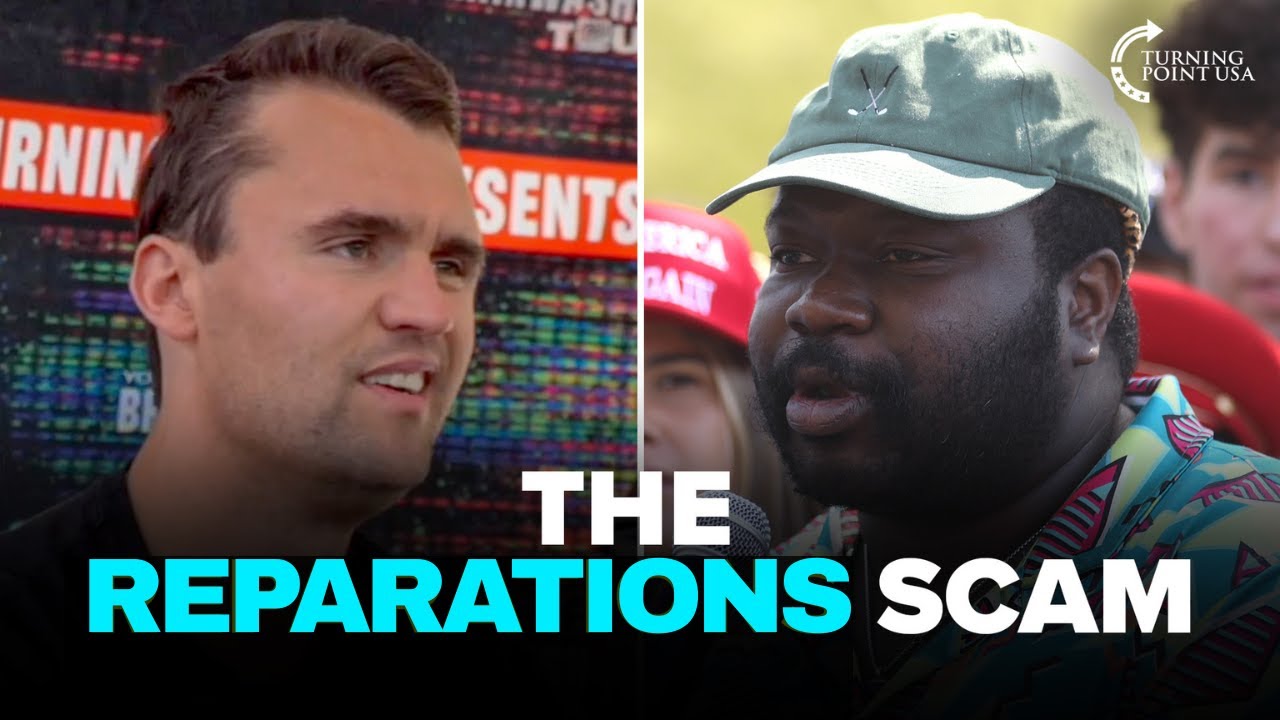
When a student named Blair asks about reparations for the black community, Kirk immediately expresses opposition. Through a series of clarifying questions, he establishes that the student means descendants of slaves who can prove their ancestry with documentation, not recent immigrants from countries like Haiti or Nigeria.
Kirk then poses a consistency test: should other mistreated groups, such as Jewish Americans who suffered in the Holocaust, also receive reparations? When Blair says not from the United States, Kirk lays out his fundamental objection based on individual justice.
"I did not own slaves and you were not a slave, correct?" Kirk states. "So we are individuals and therefore we cannot be held accountable or should receive something from someone that didn't happen to us or something we did not do." He argues this is a basic law of justice: individuals cannot be held accountable for actions of those who merely looked like them, nor should they benefit from suffering they didn't personally endure.
Kirk addresses the counterargument about systemic effects passing through generations, but maintains that reparations fundamentally involve taking money from people who didn't commit the injustice and giving it to people who didn't suffer it directly. He points out the particular injustice of taxing first and second-generation immigrants who had no connection to slavery, and notes that his own family fought on the Union side of the Civil War to free slaves.
Alternative Solutions for Community Advancement
Rather than reparations, Kirk proposes common-ground solutions that would help all communities, particularly Hispanic and black families. First, he advocates breaking "the cartel of public sector teacher unions" and implementing school choice, arguing that quality K-12 education is "one of the most assured ways" for children to succeed later in life.
Second, Kirk emphasizes the need to "put fathers back in the home," noting that 70% of black children are raised without a stable father. He suggests these approaches would be far more effective than cash payments based on ancestral connection to historical injustice.
Canada's Decline and the Danger of Being Too Polite
A student who recently moved from Canada to America declares that "America is great" and "Canada is screwed up," asking what Kirk would do if he were prime minister. Kirk's first response: "I would deport Justin Trudeau the first day. That guy sucks."
Kirk describes Canada as "a real problem" and "a self-hating country" that prides itself on being polite. He offers this as a cautionary lesson: "Your favorable characteristics of being polite, nice, and welcoming can also be your downfall." This politeness, Kirk argues, has led Canada to allow mass immigration without resistance and to abandon free speech principles.
He identifies Canada's fundamental weakness as the absence of constitutional protections equivalent to America's First and Second Amendments, leaving the government able to "do whatever they want." Kirk suggests he would allow Alberta to become its own country, and notes that Ottawa, Toronto, and Vancouver are "some of the most liberal cities on the planet."
Regarding Canada's immigration policy, Kirk states the country is bringing in approximately half its population in immigrants over the next decade, calling it "not sustainable." His assessment is grim: "It's too bad it was a once great country. Canada has fallen."
Gun Rights as Protection for Vulnerable Communities
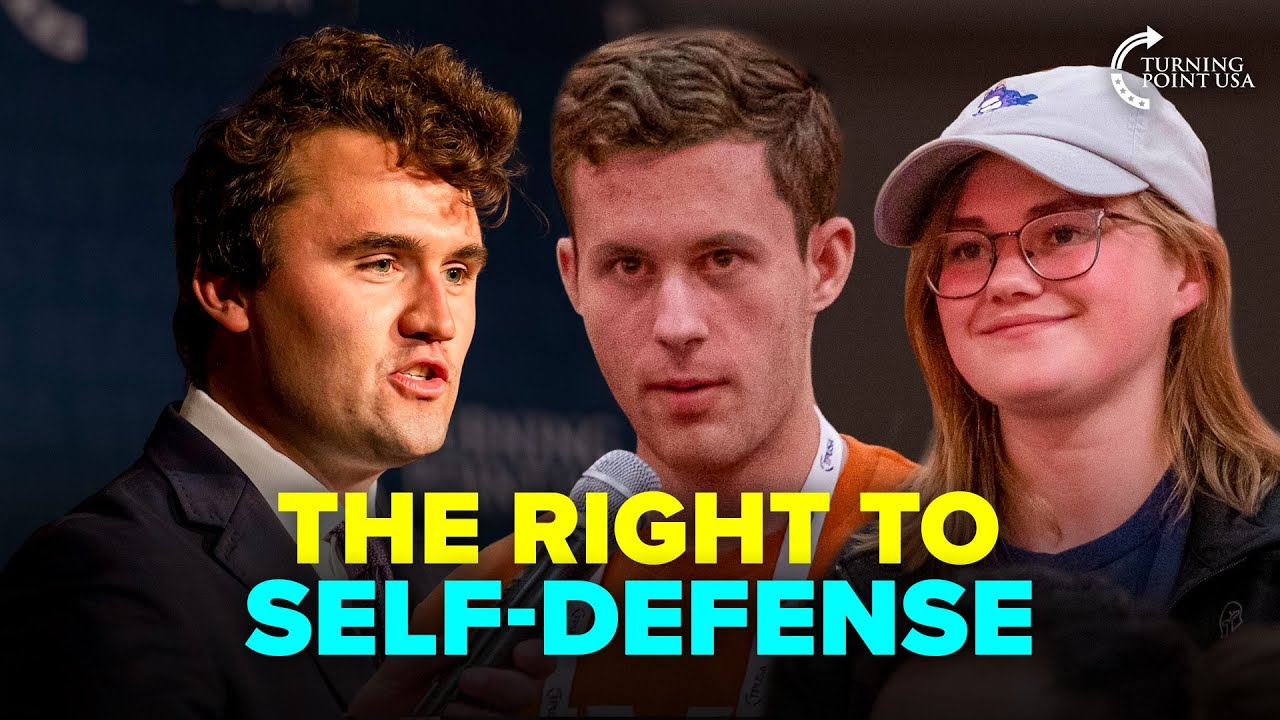
A gay student who has been mugged multiple times while wearing non-conventional clothing asks about gun control from the perspective of someone who fears retaliation and hate crimes. Kirk responds thoughtfully to the question about bringing more people into gun ownership for self-protection.
"The gun's the great equalizer, right?" Kirk explains. He encourages the student to speak up about the moral right to defend oneself against terror or violence. When Kirk asks whether most gay people are pro-gun or anti-gun, the student responds that they're mostly anti-gun due to "liberal identity politics."
Kirk argues that gun ownership shouldn't be political at all. He makes the same argument to Black Lives Matter supporters: "If you think you're getting hunted down, then responsibly own guns." He emphasizes that firearm ownership is a moral right that should transcend sexual orientation or skin color.
Kirk particularly highlights the equalizing power of firearms for those at physical disadvantages, including women and anyone who might be targeted. "If you were in a situation where you're physically disadvantaged, a firearm could equalize that," he tells the student.
The student explains that gun ownership is somewhat taboo in LGBT communities, with people reacting with "whoa that's a bit much." Kirk encourages him not to let that social pressure affect his decision, supporting his interest in gun ownership and Second Amendment rights for community defense.
Kirk frames the issue as a matter of moral autonomy: "Who are you going to trust to defend yourself?" If someone doesn't trust the police or fears those who might hurt them, "the moral argument of the second amendment is that you should be responsible for your own autonomy and your own safety."