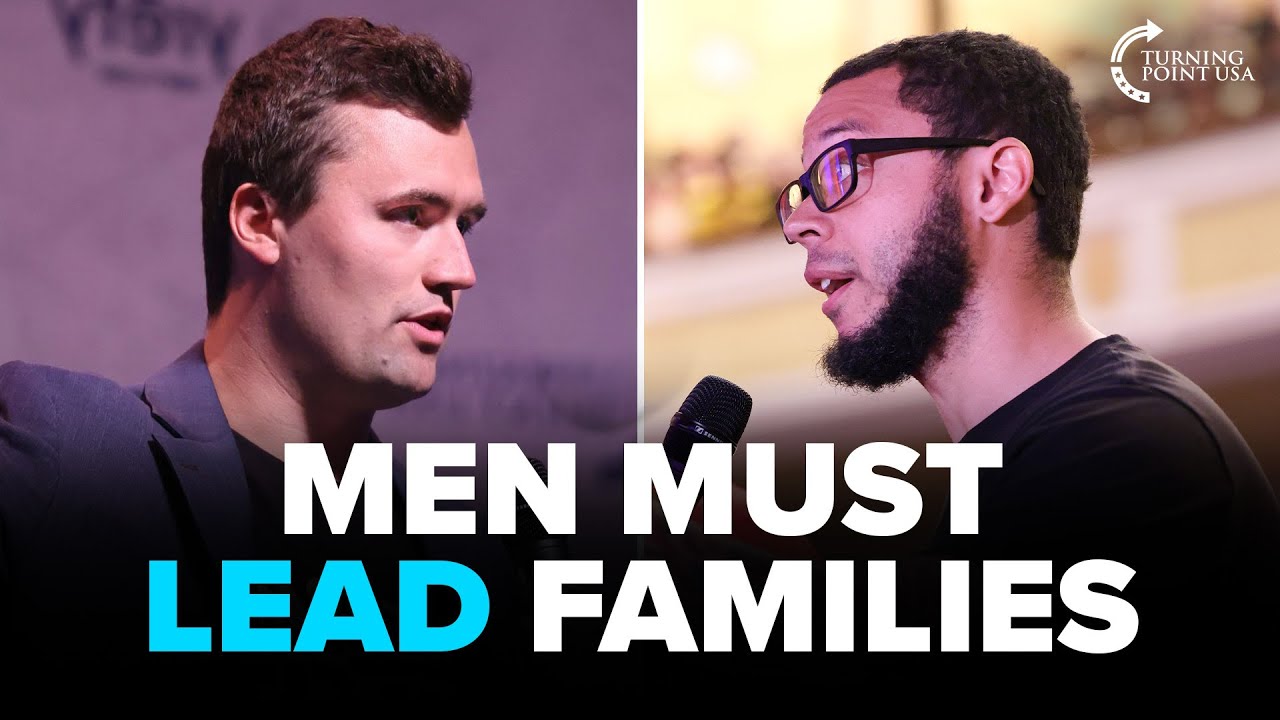
Charlie Kirk on Gay Marriage, Welfare Policy, and the Erosion of the Black Family Structure
Enjoying this? Share it with someone who needs to see it.
Up Next
Candace Owens Responds to Former Black Lives Matter Supporter: Why the Movement is Political Not Personal
3:03
Charlie Kirk Debates Divorced Man on Marriage: Why Men Must Still Marry Despite Legal System Flaws
6:03
Charlie Kirk Challenges Student on Fatherlessness, Role Models, and the Crisis in Black America
10:06
Charlie Kirk on Gay Marriage, Welfare Policy, and the Erosion of the Black Family Structure
Charlie Kirk addresses his position on gay marriage and connects the broader decline of traditional marriage to welfare policies that he argues have destabilized families, particularly in the Black community. Kirk contends that the real issue isn't just the legal definition of marriage, but socio-economic welfare programs that create perverse incentives. He points to single motherhood welfare policies that provide tax benefits to unmarried mothers, benefits that disappear upon marriage. According to Kirk, these government subsidies have been a core component in the erosion of the Black family, with single motherhood rates climbing from 27 percent to 78 percent. Rather than helping single mothers, Kirk argues, these policies incentivize remaining unmarried, creating a cycle of dependency that undermines traditional family structures and contributes to ongoing socio-economic challenges.
When asked about his thoughts on gay marriage, Charlie Kirk states that he's generally fine with the laws currently on the books, indicating he's not actively worried about that particular issue. However, he quickly pivots to what he sees as the more pressing concern: the variable nature of marriage as it relates to socio-economic welfare programs and their unintended consequences.
The Real Problem: Welfare Incentives
Kirk argues that the more significant issue facing traditional marriage has to do with government welfare programs that create bad incentives. He contends that these policies have contributed to a dramatic shift away from traditional family structures, particularly impacting the Black community where single motherhood rates have reached approximately 58 percent in some measurements.
How Welfare Subsidizes Single Motherhood
According to Kirk, the problem stems from how welfare programs are structured. He explains that single mothers receive tax benefits and government assistance, but these benefits are reduced or eliminated as soon as they get married. In Kirk's view, this creates a perverse incentive structure.
"We literally subsidize that behavior," Kirk states, referring to remaining unmarried. "As soon as you get married, you lose that tax credit."
The Erosion of the Black Family
Kirk identifies these welfare policies as a core component in the erosion of the Black family structure. He cites dramatic statistics to illustrate his point: the Black single motherhood rate has increased from 27 percent to 78 percent, a nearly threefold increase that Kirk attributes in large part to government policy.
The Paradox of Helping Versus Incentivizing
The central argument Kirk makes is that while these programs are ostensibly designed to help single mothers, they actually incentivize women to remain single mothers. Rather than providing temporary assistance that helps families get back on their feet, the structure of these benefits creates a system where marriage becomes economically disadvantageous, thereby undermining the traditional family structure that Kirk believes is essential for socio-economic stability.